AI Made Simple For Business Owners
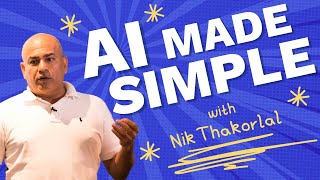
A conversational YouTube interview (David Jenyns with Nick Thak) about practical AI adoption for business owners. They explain how modern LLMs (larger context windows) enable rapid research, role-based analysis, and decision-making, describe an "AI-first" approach using small testable agents, and demonstrate a real product use-case (LeadsHook) that auto-generates decision-tree funnels and landing pages from minimal inputs or a URL. The discussion emphasizes starting small, mapping critical business processes, removing cognitive cost for users, and the competitive risk of not adopting AI.
Chapters
It's fascinating. If you ask the AI to create different people to look at the problem, solve this problem as a consumer psychologist, as a direct response copywriter and have a robust discussion among yourselves before giving me the answer, you'll actually see that it gives you that One expert said this. Yes, and the other experts said that and they're actually having a discussion.
Welcome. Today we are talking about AI and its impact on business. I'm joined by a good friend and mentor of mine, Nick Thak. Nick's a little bit of a legend in my world. He's the guy behind a product called Leads Hook, which is a personalized quiz lead generation tool. We use it here at Systemology. I actually met him at a conference, probably must be more than 15 years ago now. And he's always been my go to guy when it comes to tough business questions. He's super smart, always on the cutting edge and the other day we were chatting about AI and I said we should record this. There's so much good stuff here. So maybe first things first. Just like to welcome you to the call, Nick.
Thanks Dave. Thank you for the warm intro. Hope I live up to the introduction and the hype.
I'm sure you will. If we dive straight in, then when you think about AI, I'd love to maybe even just start with what is it and why is it so disruptive in your eyes for business?
All right, okay, so.
I guess what is AI? I'll leave it to the research papers to, to, to answer that we look at the outcomes of what, what AI allows you to do because obviously there's different types out there. You can, you know, build your own models and all sorts of stuff. Maybe we limit our, our chat to what most people use, which is kind of like your chat GPT variant, which is a large language model, the LLM version, then it may, that's the one that obviously is most applicable for most people anyway. Plus the LLMs are becoming so smart and the context window is increasing quite rapidly that the other stuff is, has become largely economic unless you've got a very industry or domain specific application. So what I mean by that is when ChatGPT first came, came out, you could only do 4,000 tokens, which is kind of half a page or a page of whatever it is. And so you really had to, you really had to be a, be a miser in what you asked because if you, if your prompt became too big, if you, if your, if your lines that you requested became too big, then you wouldn't give it much Space to send some info back to you. But with things like Claude, you know, which I've got context of about 200,000 tokens, or if one of the older models has got about almost a limit of a million tokens, you self host with things like llama, whatever, then it's almost limitless in terms of what you can do. So those, when those limitations get removed, it really opens up what you can do with it. So I'll share an example and then we can go down the different directions. So if I can upload say a competitor ad and I can ask the AI to give me the emotional impact of the ad or to give me.
What type of framework is the ad using and I can give an example saying, hey, you know, for example, problem, problem agitation, solution is one of the frameworks there. Many others, please look in your repertoire of, of billions of reserves sitting behind you and work out for me what the hell am I looking at here? And it can actually kind of come back saying, oh, this is what I think it would be, or it'll give you options. And so you can do that sort of stuff. And so I guess that's the real use of it, is that you only need to bring a question to.
The LLM and it can give you an outcome in a way that you probably have not even thought of.
So I guess another example would be I can say that I want you to evaluate this as a consumer psychologist and I want you to evaluate this as a direct response marketer that will give you two different responses right now you can do that across 10 ads that you see of your competitors and you can ask it to compare and contrast between the different competitors. And really within, you know, a couple of minutes you get this nice little breakdown of what's actually going on in a market, whether you're already in it or you're thinking of going in it. Does that. How's that for any kind of intro into the topic?
Yeah, look, it's one thing I've started thinking about it. I think you might have mentioned something a long time ago. You've always been obsessed with this idea of data and how valuable it is and big data. And.
It'S almost like I find the AI is a great way to refine that data and turn it from this big blob of.
Maybe unkit what, what seemingly might not appear very connected, but it can draw out the patterns and process it and almost like refine that, that data and then turn it into gold. I think that's one sort of.
Yeah, no, well, well, actually, what, what, what amazing is that you can actually give it input A and input B and in your mind they're not related or you can't find connections and you ask it to give me connections intellectually merge it together for you.
Yeah.
In ways that, that you have not thought of or you can't think of. So, so for example, I guess I've got this book on my, on my, on my desk here saying slide of mouth for NLP. Right. And I've got, and I've got Gary Bensonvanger benaving 100. Right. I can, I can tell the AI to maybe I can scan a couple of pages out of this and I can scan the pages out of this, the different patterns of sleight of mouth and I can say can I apply Gary's stuff? How do I apply Gary's stuff in this framework? Now if I were to do that manually, I probably need a month or two because the amount of data I'd have to absorb and really know intimately to draw those conclusions would take some serious study. It'll give that into me in about five seconds. Yeah, right. And then obviously that doesn't mean that they, that actually is true. Okay, so we want to, so this is where, you know, your judgment comes in as a, as a, as a, as a marketer or a business person or whatever the, the topic you're working with. And then now you need to see if this, you know, passes a smell test and, or if you're in the online world because the cost of ads are reasonably cheap in terms of you can set an ad up and just spend only, you know, few, few dollars on it. You can send it into the marketplace and, and, and test it out. And that's, that's, that's the, so what it does, it takes, it takes perhaps a, something you may have thought like, oh, one day I'll get to it. Well, you don't have to do that anymore. You can get to it tomorrow or right now and, and, and put into the market and see what happens. So it opens up the universe of possibilities of, of combining stuff or any wild idea that you have. You, you don't necessarily have to go into the study about it. You can just ask it to use that particular framework because it's already got all that inside. It's, it's, it's massive knowledge base and, and all you, and, and our job becomes.
To, to bring it into its focus and that's what the context is. So that's why, you know, a lot of the prompts would say act as, you know, a psychologist or, or you are the world's best, you know, you have a PhD in whatever in persuasion or data analysis or whatever. And so, so now it's got like, okay, cool, so now I have a reference point from which to act. And that's usually the, the way to, the way that prompting happens. But, but at its core, all you want to do is you want to say, here's what I'm looking for, here's what I'm not looking for, here's what a good output looks like, here's what a, a bad output looks like, here's an example. And.
As long as you have those five things, generally speaking it spits out pretty decent stuff and then you can start working with it. The problem that I see is most people say, they'll say things like this one line, say, can you write me an article that's going to rank on Google for, I don't know, SEO something or whatever, whatever the keyword is. And that's usually going to produce stuff that reads like a machine, but if you give it a, a large amount of context, if you upload your own writing, how you write, and you can say, I want you to absorb this and understand my writing style and, and then use that to write article about this topic, all of a sudden it actually writes like you.
Yes. Yeah, I think it's.
It'S amazing when you think in terms of what search engines did. And when Google came out, everybody was like, oh wow, this is the game changer. It was just a small box, nothing else on the screen, and it didn't serve up any result until you told it what it, it was that you're looking for. Like you would type it in and then it would go off and basically bring back all of these sources and it just goes well, based on what you searched. I found this, this, this and this. Whereas with AI now, it's basically still has a pool of a huge amount of data and then it's able to tailor a result very specifically to what it is that you've asked. And then.
Yeah, so the main, the main difference is that Google gives you links and then leaves the responsibility or the, or the problem of, of understanding what those, what those links are giving you to collect the data, synthesize it or however you want to use it. So it leaves bulk of the work to you, while AI can take care of that part as well and only give you the outcome you're looking for. So let's say if you're looking to Research on.
What mountain bike to buy at the moment. If you go to Google, then you get a whole bunch of links and you run into promos and all kinds of, you know, review fake review sites and all kinds of. And so you do have to go through a lot of filtering and sorting out to really find out what is going to be useful for you. While I can go to the AI saying this, I'm looking at the mountain. Mountain bike, I don't mountain bike very often. I'm unfit as hell, but I am a recreation guy. But I want to look cool when I, when I am going down the mountain, you know, what do you recommend I look at or what are the things I should be thinking about that I don't even know what to look at? And it'll give you like a criteria that you can use now using AI models like Perplexity, which actually has an Internet connection, it'll actually do searches. It'll search Reddit for you. It'll search, it's doing it on your behalf, you know, asking you to search Reddit, but it'll actually look at a wide variety of resources, compile it, compress it, and then give you the breakdown. So it's actually giving you almost, it's doing a Google search plus that. Filtering, sorting, organizing and then giving you the output which you can ask for in a table or in a graph or whatever. Yeah, yeah. That's the beauty.
It is able to make decisions and.
Apply based on what you've asked and what I understand you're looking for here is the best result that I can come up with while tailoring that to you making the decisions. It's almost like that decision making process that really.
Yeah, well, it can make decisions for you. So that's, that's, that's the big leap here. Yeah, So I think every tool we've ever had in the past is only largely worked in giving you more output. Yeah, so, so you know, we went from digging with our hands to a spade to a tractor to, or whatever. Right. It's, it's, it's, it's a, it, it's, it allowed you to work faster. This one here allows you to make a decision. Yeah, and, and that's, that's the difference between what we've been able to achieve so far with the tools and, and, and, and what this particular tool does. So which obviously opens up a.
A lot of other social type issues which I don't know if you want to touch or not, but I'll leave that to you.
I think that the challenge here is the.
Possibilities because it can do so many things. That's, I mean, business owners, that's where you get stuck, which is, okay, well now where am I going to apply this? How am I going to apply this? A couple of questions. I'm curious to know your thought between sort of learning about AI and when you discovered it to implementation. Like, because this also takes time. Like, business owners, a lot of them, they saw chatgpt when it came out and that was the big moment for a lot of business owners. They're kind of like, oh, wow, now I can see where AI is up to and what it can do. Like, there were previous versions of OpenAI and other models that were floating around, but it was kind of like the ChatGPT moment that had everybody go, ah, okay. And then there's still a lag time between seeing it and then going, this is useful. And then I'm going to implement this into my business. I'm curious to know for you, like, was this something immediately obvious to you where you're just like, wow, it's like we're going from the dark ages and there's a huge opportunity.
So I had a look at GPT2 whenever it came out three, four years ago.
And you could see where it's going, but the output was pretty crap, as in you couldn't just use it. So the point was, why would I get an article that was only 40% done and then spend another 60% correcting the 40% and you might as well just write the damn thing yourself? So the utility quite wasn't there. It was more of a tool for, I guess academics maybe would probably how I would put it. And then when, when GPT came out, OpenAI came out with, with its, with a chat type interface. The product also was actually quite good. Now my first use was in coding side of things, so getting it to spit out JavaScript, you know, scripts and things of that sort. So I started using that side of it first, much less the marketing side, because I think it wasn't until version four came out, at least on the GPT world, that it was good enough to be used in, in, in that sense. So I, I still didn't find the quality to be good enough. But code is code, right? It's, it's. And, and so that for that. So my, that's where my use started. So I, I had less reliant on my, on my, on my, my development team anymore. I could just go in and hack out a script and quickly go and test it. Out or if I saw a script that I didn't quite understand what this was doing, I could copy and paste in saying, hey, can you break it down like as if I'm a 3 year old? And it would kind of describe what's actually happening. And then you say so you could chat with things that you did not understand. And that's what its use was. The other way I started using it was you would read a journal article of some sort or you're looking at some very densely written research paper and, and you know, you, because sometimes it'll take hours to consume that you can just copy and paste in the whole thing or you can, well now you upload it, but back then you just copied and pasted it into a text file and, and then you just would tell it, hey, listen, can you, can you explain to me what the hell is going on here and what is it trying to say? What are the conclusions? And it would go in, you know, work its magic. So that's where my use of the whole thing started. My, my use in marketing is, has been more recent actually. After, after version four came out is when I felt that it was good enough now to be used. And, and it was more a function of not so much the version, but more it's, it's, it's context window. The, how much you could put in. Because the, the kind of prompts that I use now, at least on the marketing side, they usually go for seven to 10 pages. That's how long the prompt is.
Yeah.
So, so in order for that size prompt to be used, you, you'd need a reasonably large context window, otherwise you would run out of tokens.
So. Yeah, so, but, but that tech is improving a lot. We're already at 200,000 to about a million. I'm, I'm guessing by the end of the year we'd, if not, if not early next year, we'd probably be a million across everybody and a million ends up tokens is, I don't know, maybe, I don't know, a book, maybe the size of a book. So you could really feed the whole book in and, and chat to it, which is, which is a significant.
Amount of capacity. And so therefore your ability to dump like, like, I don't know, like 30 documents in there and then say hey, can you make sense of everything I've just given you for a human to do that?
Firstly you would need a very high amount of expertise in all of the subject matter that's there first thing. And secondly, weeks and months to consume and, and digest and all that sort of stuff and then finally be able to use it, which you don't, which you don't even have to do that anymore. You can just say, hey listen, can you build me a framework for an application for X?
Yeah.
And it'll give you a framework. Obviously that does not necessarily mean that it's going to work. It just means that at least the, the, the idea to test something has become literally seconds from months to seconds. And that's the scary part about this whole thing for society and for marketers. So for business owners, obviously everything's going to move faster. You can, you know, you can do days, weeks, months worth of work in, in an hour or two. And obviously along the way it eliminates a whole lot of manual labor type stuff. And yeah, it's so, so my, but my, my curiosity about it also has been what does it mean for, you know, all of us as in the world? And yeah, there are some, it's one.
Thing I notice when you start using it like you, you come to it asking the questions that, that you have some knowledge about and oftentimes you, you, you don't because it is so limitless. You need to get quite good at the questions that you're asking. And then generally the first things that you start using it to solve problems for you are the things that you know about or the things that you're working on. So for business owners, sometimes you, you don't, like you mentioned, you're using it for coding and you're using it for marketing and there are all of the other parts like every team member should be really thinking about.
How can I use AI to help me do what I'm doing faster? How can I ask better questions to get better output and build up that muscle? Just like we have a muscle for using Google, Hey, I don't know how to do something. We just Google it. You kind of really want to replace that with hey, I don't know how to do this thing, I should just go chat with an AI.
Correct. It's, it's become to me more like a, like a colleague that sits next to you. Yeah, you can bounce ideas off it, I guess would be the best way to put it. And so, so you no longer have to do a whole lot of Googling and then get to a place where now I kind of understand what my problem is. You can just say, hey, listen, I'm thinking about A, B, C, D, E, X, G. What.
Do you do? You know, what's your take on this? Yeah, Tell you, and that's the, that's the powerful thing about it is that it speeds up even your own question. So I, I also use it a lot to, to define what I'm trying to do because I'm like, you know what? I've got this idea and I've got this idea and I've got this idea. I don't quite know how they connect. Can, can you, can you build me a bridge that, that puts everything into the one place or in, in some sort of a cohesive. Can I make sense of this? And so traditionally you, you'd spend weeks, days, hours, or you know, if not never to get that understanding. You don't have to do that anymore. Yeah, yeah.
So I'm wondering like how a business owner would approach this, obviously using it for themselves personally, like in that research mode and using it for yourself. You know, there's a little bit of talk about this idea of becoming an AI first company. And what does that actually mean? To have problems in your organization and then to first look with AI as a solution. How can an AI.
Okay, so I suppose if that's the concept or that's the idea, then.
Every function in the business will be automated and palmed off to some sort of an AI. And that's the whole agent thing that's popped up in the last year or so and things like Crewai and whatever the different frameworks for building agents that do one thing.
So my vision for that is, and obviously this is very new, so could be obsolete by the time someone listens to this even is the idea of create a tightly defined group of almost like players on your team. I think the fancy word is called agent, but they all totally define. So one person just edits your. So let's say for example, if you were going to do ads, if you're running ads for Facebook, so you would have a research agent, then you would have.
A copywriting agent, and then you would have a proof checking agent, you would have a Facebook compliance agent, and you would have a agent who uploads the stuff onto Facebook using the API. So you've broken the task down into small finite agents and they all work together to get the outcome, almost like a human does. The difference is that a human would do many more bits, at least in its current form would be like a human is many agents in one. While at least as far as AI is concerned at the moment, the way to make it all sort of work is to really break it down into more finite pieces. And the reason why you want to do that is because the finite agent needs to be testable. It needs to do only one thing. And if it does five things, then it gets much harder to test. So that's why you want to basically have an AI that just writes, for example, your Facebook ads. So you'll input a bunch of stuff on one side and.
Out comes the ad. Right. So that way, if it's not doing a good job, you can then work on it by either giving it more context or however you want to improve it. But if you say that my agent's going to take the copy, it's going to do the research and it's going to write the proof and blah, blah, blah, blah, it does 50 things, and if the output is crap, then you're like, well, I don't know which part of the whole thing didn't quite work? And so it becomes harder to test. So the smaller you break it up, the task, the easier it's going to get. So from an AI, first, sort of a company that's I picture at this point in time anyway, that's how it's probably gonna pan out, that you're gonna have, you know, one human who has been able to somehow create, or a human has been able to use an AI who's been, who's been able to create a whole bunch of agents.
Yeah.
And they're all working together to, you know, do social media posting, social media commenting, you know, doing a cold outreach message based on some new news article. I mean, there's, there's, like, if you think about it, if you were to map out what your organization does from. In fact, a good framework to follow would be your, your, your client.
Yeah, that's it. Yeah, that, that, that would be a good place to start because it identifies the main steps and then you would. And then you would. So at a practical level, you want to. Where is most of your cost being? Being, being consumed by cost. I don't necessarily mean the, the invoice you get every month cost, but where is your, your productivity? Really, really low. So, for example, if you are only able to launch one marketing campaign a month, then can you make it to one marketing campaign a day?
Yeah.
And because that's the true cost, it's not the fact that your marketing manager is charging you 100 grand a year, it's the fact that you can only produce one campaign a month. But if you, if you had one came in a day, then you've just, you know, you know, it's, it's not even.
It exponentially grows if you can do that kind of capacity. So, so that's what we've been looking at here.
Hope that sort of answers the question in run.
What kind of like an AI first type of a business means. But in order to get to that stage, you obviously need to, need to just get good at just getting it to give you a good ad article, financial analysis, or whatever the use case you want to use it for. You need to just get almost as good an output as what you can do on yourself manually. And the minute you do that, you would have worked out how to talk to it properly in the way that it wants to be spoken with. And that's, that's, that's when the magic happens. That's, that's, that's when you cross, just when you cross the chasm in. I can use that analogy where like, holy crap, I didn't realize this is how you work with it.
Yes.
And that's why like most of the prompts that I create, they're actually quite long.
And I know that most people don't have the patience for that stuff. But the minute you do that and you put it in and out comes an article that looks exactly like how you wrote it and you can't distinguish it between how you wrote it versus a machine writes it, all of a sudden.
The question is how many more can you produce? And the answer is for 20 bucks a month, I mean, it's how many times you want to prompt the damn machine. Right. And so that, that's the manual part, I guess the agent part is the agent is going to prompt it over and over and over and over again, which means that your, your ability to produce something has become unlimited. That's from an efficiency standpoint.
Yeah.
Right. Now that doesn't mean that it's effective. And so obviously you still need to step back and say, well, what drives value in my business? And beyond a certain stage, just because you can produce 5,000 articles a month does not mean you're going to generate a lot of value out of it. So, so that's where I think the, the human part is still required, or at least at this stage is required, whether, whether that's replaced by AI at some point in the future, who knows. But this way you would want to look back at your business and say, well, where is, well.
Where am I spending a lot of my time? But I'm not getting the output out of it. Or if we do get output, it's, it does not have the success rate that I would need to move the needle. So your critical client flow is a great framework to use and that is also almost a metaphor for mapping out entire business. So you have a very good understanding of what's actually happening.
Hey, I know you're tuned in right now, so I'll keep this super quick, but you like awesome YouTube videos, don't you? Well, there's not really that many YouTube channels that create great content about how to systemize your small business. So I want to make sure that you catch every video that I publish. So if you haven't already, firstly give this video the thumbs up and then go ahead and subscribe to my channel. You can even hit the bell notification to make sure that you're the first to know when I publish anything. So go ahead, do it right now, I'll wait a sec and then I will transfer you back to the video.
Yeah, I think that's where a lot of people get lost with AI because they see, ah yes, I can create 300 cat videos and put them on YouTube and social media. And you weren't doing it before and it wasn't adding any value to your business. So why are you now trying to add that in? I think looking at what you're currently doing that is critical to the delivery of your product or service or solving your problem or just the kind of.
Lifestyle you're looking for. Maybe, maybe it's not about doing more work. Maybe it's doing less work to spend more time at home or with your kids or whatever. Right. And so that could be also part of the. Because I don't think the point of life is to just work yourself to death.
It's you do you right. And yeah, some people enjoy working. Great, knock yourself out. But if you're one of those people who would rather not do anything, then you know what, maybe getting a whole bunch of agents that are doing for you, working for you, is the great outcome, but the path to get there means you do have to, you're going to have to put quite a few hours in to make sense of all of this new stuff and all of it breaks and it's inconsistent and it, and it, it's volatile. Yeah, like, like the same prompt, you know, each time you run the same prompt, it gives you a totally different article. Yeah, that's just the nature of the game. But obviously when you are an early adopter, you will have those problems. But then you also get the benefit because you're the first one who's worked out some way.
To break into the market that others haven't. Worked out yet. So that's the arbitrage. Right. Risk reward.
Definitely. At the moment.
There is that first mover advantage of. Well, we know this is a big thing. We know this is not going away. We don't know exactly where it's going to go. Like, I mean, the idea of AI agents and how that'll evolve and how businesses will create those and how.
People can.
Well, let's put it this way, the, there's already working templates of a lot of this sort of stuff. It is very deflationary, there's no doubt about that. It just, yeah, it just takes the cost out of knowledge work really, really quickly.
Yeah.
They've even got, you know, you know, you know, robots now that, you know, do bricklaying or whatever. So, so it's not like, like, like if I'm a tradie. Yeah. Bricklayer, somehow it's my, my job is safe, you know, so, so it's, it's, it's, it's, it's coming everywhere. Yeah, yeah. I'm, I'm, yeah, I've had, I've had some people who get quite angry when they talk about AI because, you know, they think it's going to take their job or whatever. But I'm like, that's, that's just the way these things roll, you know, at every. Yeah. So, yeah, I'm not really sure what the answer to the societal type questions are, but, you know, I'll leave that for the government.
Yeah, it's going to be like if we accelerate, like the amount of change in the speed at which it's changing, like over the last year or two and how quickly these models are rolling out updates. It's hard to know exactly where it lands. One thing that I do know is it's, it's happening. So you, you might as well start using it thinking about the applications in your business because just doing that will then open up the opportunity for you and then you'll see the opportunity. Until you start using the tool. You don't really know how and where it's going to fit, but you've got to start talking to people who are applying it, how are they using it, where are they getting the wins and how can you then start to employ that in your own business?
Correct. Yeah, exactly. Yeah. So, yeah, I'm not here to like, you know, this is not about, you know, judging anybody for wanting to use it, not using it. This is the, another new tech that's come out. Use it if you think it works for you and don't use it if you don't. Yeah, unfortunately, it's so deflationary, anyone who doesn't use it is probably going to get priced out. Yeah, that's the, that's the, that's the other side of it. That's the more pragmatic side of it. That's the way kind of. I'm looking at it.
Yeah.
How are you using it in leadshook? Like what, Obviously you're using it personally.
What's the way that you're approaching it in your business?
Okay. Yeah. So, for example, so lead to. We can. We make quiz funnels, decision trees, as we call them. We have an update coming out where all you got to do is answer three questions like your market, your product, and it actually builds the whole thing out automatically. Yeah. We've got another update coming out very soon where based on that, it's also going to build out your entire, your landing page automatically, including the design. So, so, so we're so. Because the, the feedback we have gotten over and over and over again, and I'm assuming that's with every SaaS company, is.
It'S like, it's a great tool. This is all the people who, who leave us and, and a very small number do. But we do get feedback when they, when they do leave and they're like, oh, I couldn't work out how to use it or I couldn't get started. And we've got templates and we've got all kinds of stuff, but unfortunately. But they still account, they still at cognitive cost. Right. For example, I just signed up to Xero for helping someone do. Do the accounting. And, and so I've never used Xero. And while I understand the nuances of an accounting platform, I've had to spend a little bit of time clicking around. And, but that's, that's the cognitive cost I'm talking about here. It's not, it's not like, you know, making, you know, rocket science. And, and so the customers aren't even willing to do that. All right.
Yeah.
And, and that's me too. I don't want to do that either. Like, when I, when I logged in, I'm like, oh, come on, are you kidding me? Like, would you ever click around trying to work stuff out? And so when, when I had that experience, I went back to, I pulled out all of the customer research that we have of people who. And I said, what's the most common thing? And I used AI for that. I said, yeah, give me a breakdown of what are the major issues that People are telling us, and pretty much no one has ever left us saying, you don't have a feature. No one has ever left us because we are too expensive. And almost 90% of people have left us because they couldn't find the time or the ability to work out what to do with it.
Yes.
All right. And so, so I said, okay, well, how do you address that? Well, you address that by just asking someone, what the hell do you want? Yeah, well, I want a decision tree. I want a, a, A marketing funnel about X. And you wait five seconds and it gives you all of this, all the details about it, and, and you either can change it or you can say, yep, built, and you press the button, you wait another five seconds and the entire DIS is done. Right. That's what we got working in prototype right now. Right. So, so, so, so what?
It's done.
It's, it's. No, it's removed the cognitive cost of learning the software. It's removed the cognitive cost of what the hell do I do in my marketing? What do I say about my marketing? I, I know those are the big questions that people already struggle with.
Yeah.
So, for example, I've got people with years of experience in their business and I say, okay, cool, what do you want to do your marketing about? And they actually have a bit of a blank. Yeah.
And so that's the bit that we wanted to solve because that's the bit that stops everybody. And in order to resolve that, at the moment, you would have to have a pretty deep understanding of your own business, have a very deep understanding of the customer, and you need to have a very deep understanding of how to bridge and be technical enough to be able to apply that in a strategy to, in a software, for example. Right. So as you can see here, there's a lot of steps, and that's just not my product. It's your product too. Every bloody software product on the planet faces that problem. And so we basically. So the approach we took, we said, well, I don't know, what do people know? Well, people know what product they're selling. People have some idea of who they want to sell to.
Can we build something from just those two data points? Yeah.
And the answer is yes. In fact, yesterday I was testing, I said, why don't we just say, put your URL in, we'll read the URL and we'll work out who the customer is and what the product is. And so, so you don't have to. So as long as you can copy and paste the URL we can build your marketing funnel. Right. That essentially is where we, where we're heading for.
It's almost like there is in the background. I mean, this all centers around process. You have a process for the way that funnels are built out and it's trapped inside your head and it's also what you teach. Now we're talking about, well, can we create the workflow that the machine, the AI can follow to go through it where we just give it its inputs, but then it's just following what you would do and how you would prompt it.
All we've done is we've taken all the manual processes.
Yeah.
And we just put it under the hood.
Yep.
And similarly, like, like I don't quite understand how a car works.
Yep.
And that's exactly what the market is telling us is I don't want to understand how your software works. I couldn't give a crap about the software. All I want is if I'm going to spend a dollar, I need to bring two back. Yeah, that's it. And, and as long as, and if you can hide everything else between those two points. Yeah. So we said, okay. Until now none of that was possible.
Yes.
Because, because, because it required some human input, which is there was, was either I did it, you did it, or somebody else did it, but there was some human involved at some point in the, in the, in the, in the, in the loop. And so we've just removed.
All the human interaction where we can go from a URL of your business to a completed marketing funnel that you can, you can take to market. I mean, I mean, I guess the next step would be to write the ads and press a button and we'll upload that into, into, into, into Facebook or Google or wherever.
Yep.
I guess the next step after that would be just press a button and we'll even manage your money for you.
Yes, yes.
I mean, I mean, it's almost getting to that now.
And I feel like that same level of thinking could be applied in any business. We're talking about software businesses here, but even like service based businesses.
Absolutely.
If, if step number one is like a, you know, if there's a human in the loop component, if you're a service based business, you know, you're an accountant or you're a. I'll run with the accountant. There's certain things that you do in the background that happen under the hood that effectively your clients don't know because you, as the human are executing them. But if we can take elements of that.
So a very Good example for an accountant would be a service based business is what drives a lot of value to a client in an accounting business is, is the client getting notified that there's movement on his, on his file, like you know, the tax returns or you're making progress with tax returns of the bankruptcies are getting done, all that kind of stuff at the moment what happens is, you know.
The accountant will do that, all that work and then somehow send you an email and you might get notified. Can you imagine there's an agent that's just watching you every time you log in and you do something and at the end of the day it summarizes what you did and just sends literally like a five bullet point email or SMS or whatever the heck it is.
Yeah.
Today we worked on your file. We did the bank rec. We did this, we did this, we did this. We did the best, we did the whatever done. And you don't have to do anything. Right. And so, so that, that would be a very easy and simple win because it means that the, the client doesn't think because by the time they contact you you're a little bit pissed off. Right?
Yes.
What's going on man? You know, like why isn't my best done or why isn't my bank record done or whatever. It's never going to be like, you know, you know, it's, it's only because they've reached a certain threshold where okay, now I have no choice but to contact you and maybe they're pleasant about it or hi, you know, how are you doing or whatever, you know, but, but literally you've gone past the threshold otherwise they wouldn't be contacting you. So why don't you just be both proactive and having an AI agent that's just watching, you know, QuickBooks or Zero or whatever the platform is. And end of the day it summarizes what the actions of the day were and just sends a message. So they're like, oh cool, okay, well you know, I'm glad that's done. Thank you very much. And so that way they don't have the need to contact you. They feel like you're being, they've been looked after because they've been kept up to date. A lot of, a lot of things that people call say was a amazing experience is, is just, is just communication of what's actually happened. And, and oftentimes I find that just communication is, is, is most of, of customer experience.
Yes.
So, and that's the one part that's probably the easiest to automate yeah.
So I feel like, like anybody who's listening to this will be thinking in terms of, through their lens, thinking about their business and then going, you need to start to obviously use the tool to know what's capable. Then you want to start to think about your business in terms of what are those essential processes and where can we add some value and make it more efficient by leveraging the AI and then go to work on some of those chunks. Firstly, it might be the human that's just using chat GPT to accelerate what it is that they're doing. But then over time you kind of evolve and that might be a workflow process that then strings a whole of those together. And then, I mean, if you even want to go step beyond that, which is kind of what we were talking about when it comes to SaaS, is then you might just have this whole thing that happens completely under the hood, this workflow. You ask for one or two inputs and then it just gives you the output. And that's kind of at the other end of the extreme. But you know, I was chatting with a lady who is going with an AI first approach in her accounting business and she's effectively built a lot of those tools internally for her accountant. So it's not something that's necessarily publicly available for through a sas, but she builds those tools out for her accountants to get so much more output and deliver better outcomes for the clients at a lower cost or she's able to get.
Yeah, yeah, and, and yeah, because you're never going to find a client who says please raise the price.
Yes, yes.
I mean, I mean, I mean there's one truth in business is everyone wants something for cheap.
They want it cheap. And then the challenge is always at the moment the staff want more, so they want to be paid more, the client wants to be paid less. So really the only way to solve that is, is with AI because now we can pay you more because we can get more output from those team members if they're using their intelligence and working on the highest value tasks and letting the AI work on the.
Those lower value tasks.
Well, unfortunately into the stage where even the high value stuff is being, is, is being done by the AI. So for example, if you, if you ever ask an AI what marketing strategies would you like to use for this problem, it'll actually give you a pretty decent answer actually depending on how good the input is. So it's actually.
I think.
Is already working or in aspects of the industry, I, you could say already at a level of a Decent human being in terms of here's my problem, how do I solve this? It actually does a pretty damn good job in some cases. You can't even compete with it anymore actually. Yeah. So there's I teaching course right now and early this morning I showed people how to remarket segmentation using AI and people are just like blown away. They're like not even a million years have I seen anything like this, nor would I ever know how to do this. And we did it in like two prompts.
Yeah.
Right. And so that's the, that's the, the, the, the true power of that. In fact there's one of the guys on the, on the course, he actually is X Large Ad Agency. Yeah. And I said, I asked him, so what do you think of this? He goes, I don't know how the agencies are going to survive. Yeah. Yeah. So literally, because this was weeks of work that has been, that is, it was done in literally, I don't know, 10 seconds.
Yeah.
Having said that, I have spent well over 10 hours to build the damn prompt. So testing it, all the other stuff. So, so it's not like, like the, the use is, is almost costless or free but, but the building is not.
Yeah.
We have to, I don't, I don't want to over sell this AI thing. I want to over. I don't want to trivialize it like you don't. You just, you know, just of wake up one morning and just type in two things and it just produces this stuff. We're not quite there yet. Maybe we'll get there soon enough. But as of now there is still quite a bit of work in the building testing and a little bit of the tinkering stuff that you still have to mess around with.
Yes. I think that comes back to why an understanding of process is key here. Because effectively prompt engineering, your.
Engineering a process for the AI to follow. So you have to know what outcome you're looking to get. You need to think about what are.
The steps and the, and the language that it needs to see things in.
Yeah.
And it, and, and there is something to that.
Yeah.
There is a particular style that, that, that it likes to be. There's a language of AI. I don't know, they're probably not the best way to put it but, but there's a specific way, at least for now of how it wants to be communicated. And so by if you communicate in that way. And the amazing thing is that a lot of these things are, you know, what they, you know, I don't know the PhD word or whatever the master's level word would be, would be these are emergent properties. These are things that they're discovering after the AI was built. They're like, oh, AI actually does that? And we didn't know it did that. And so.
That area.
Is the unknown unknown at this point in time. And there are some very interesting and amazing things coming out of that part. They're like, I didn't realize that this is an emergent property of, of what we've built.
Yeah.
The person who's building it didn't quite appreciate what could happen as a result of that. And so, so, yeah, so that's why I'm actually follow quite a few of the, of the geeks in the space who share all kinds of fancy new ways in which they're prompting or some new innovations that are coming out. And it's kind of like, I guess that's part of the job. And, and I'm really, it's really fascinating to understand and learn that even the person who was building the AI didn't fully appreciate or understand this, what could come out of it.
So, for example, if you say to the AI, explain your reasoning, it gives you a better output than if you don't say that that came out of a paper that came out saying just ask it for a reason. And it does that. The OpenAI guys were doing research on something called the MetaPrompt, which is a prompt that executes other prompts. Right. And I think, I'm not sure if that's an emergent property or not, but it's fascinating if you ask the AI to create different people to look at the problem. Right. So you're saying, you know, solve this problem as a consumer psychologist, as a direct response copywriter, as a this or this or this, and have a robust discussion among yourselves before giving me the answer. You'll actually see that it actually gives you that one expert said this and the other experts said that and they're actually having a discussion.
I just uncovered that earlier this week. And so now I'm actually quite interested to see how can I sit on the side and just get all of these experts to debate for me?
Yes.
And just give me the answer.
Yes.
Because if you were to get, you know, a round table with a, with a world class consumer psychologist and a direct response copywriter and a anthropologist and a whatever ologist, it'll cost you too much and frankly, it'll never happen.
Yep.
And this is kind of like the next best version of it. So like that. So so, so, yeah, so there's some. Yeah, I know. It's. It's a, It's a. It's a fascinating space. I'm using it, you know, not just for business, but just. Just curiosity. Like, I wonder, if I say this, what's going to happen? Yeah. You know? Yeah. So you can even say things like, I want you to dream like a customer who wants to buy life insurance. You know, how do you feel about something?
Yes.
Election will tell you, Tell you how it feels. And then you can say, well, how does it reconcile to a real human being? And it's, it's, it's in a lot of different ways. It's, it's. It's on point. Yeah.
I definitely feel like the cost to not embrace this as a small business owner is too great. There's no real option to not I. Either you. You're going to do it or you're.
Competitive, depending on the field. Some of. Yeah, they may be in. At least. At least in. In a. In some class of businesses. I don't know what they are. This would be almost, you know, death if by. If you did not embrace it.
Yeah.
Because. Because if, if your competitors do, then they'll be able to drive the cost out. And so, and as we all know, the person can bid the most gets the customers.
Yeah. Yeah.
Because all of a sudden, they can bid more for customers.
Yes.
They can outgun you.
In more. More ways than one. Not just outspend you, but intellectually bring firepower of.
Of.
Of AI to the. To the drawing board or to the. To the table, so to speak. Yeah. It's hard to. Hard to compete with that advantage.
Yeah. Yeah. Well, I'm hoping we inspired a couple of people just to even set off the train of thought, get people thinking about how it might apply in their business. I know you're, as we said, gone all in on it for Leads Hook. I'll pop a link through to Leads Hook. And I know you've got a Facebook group also where you kind of talk about some of the ideas and what's current for you, so I'll pop a link to that as well.
Thank you. Appreciate that.
So, yeah, thanks for that, Nick. Always a pleasure.
And yeah, thank you so much. Bye.
More from David






Remember me? Subscribe To My Channel For More Free Business Systems Content 📈




