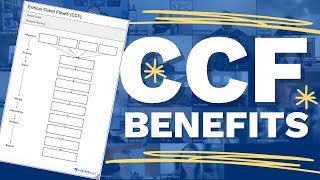
In this Systems Champion certification session, David Jenyns leads a group discussion with Summer and Mike about the Critical Client Flow (CCF), a high‑level systems tool designed to simplify client‑facing processes. Summer explains that CCF provides a "100‑foot view" that prevents teams from getting lost in unnecessary detail, using a five‑year‑old analogy to distill the core steps of a client interaction. Mike shares how the CCF helped him recognize he was over‑engineering his coaching journey and revealed opportunities to delegate tasks to an executive assistant. David expands on these insights, describing CCF as a focusing and scope‑setting framework that yields 10‑15 initial systems, makes onboarding and delegation clearer, and visualizes how each team member adds value. The conversation emphasizes that keeping the flow simple yet thoughtful enables easier documentation, delegation, and sprint‑ready implementation. The clip concludes with a brief promotion for the Systems Champion program and Systemology.
Chapters
As far as the critical client flow is concerned, I'd love to get some ideas as to how you think it can be used, what problem does it solve and how has the critical client flow started to help align your thinking around this systemization journey? So I don't know if anyone has any insights. Summer.
So the critical client flow helps us to zoom out and get like 100 foot view of some of the details that you tend to get sucked into and it just becomes overly complex and you're like, oh, I have to put all this detail in here or everyone's going to be super confused and they won't know what to do. But this allows you to just step back and see. Okay, if I were explaining it to a five year old, which not to insult your workers or anything, but sometimes you need to start at that level. So if you're explaining to a five year old, what would the steps say? Okay, so I talked to a client. Okay, the client wants to buy apples. Okay. So then I have to weigh the apples and that ends up being your jump off point from which you can then split out and detail as much as you want about it.
Yeah, I love that. Does anyone else have any other insights how the critical client flow has helped them or the way that they think about it or why it's an important place to start and why it's important to get it right? Mike, do you have any insights? I don't know if you want to jump in and let us know what you're thinking.
I think for me, because you did the little review on my critical client flow and I think I was getting too much into the weeds a little bit.
Yep.
On the critical client flow and I was trying to break down all the components of my coaching journey with my clients and realize I really don't need to do that. I think one of the things that I learned is I've been really struggling trying to find out because I'm just basically a solopreneur, how an executive assistant could help me. As I started going through this, I started to realize that if I can systematize a lot of these things, there are things that I would be comfortable handing off to somebody. I'm just not comfortable doing that right now.
Yes.
What I learned.
Yeah, Love that insight. Does anyone have any other insights that they want to share? The key here is the critical client flow is a focusing tool. Answers the question, where do you start? Gives you 10 to 15 systems, gets you to capture the most probable. It's actually very easy to add detail in A lot of business owners in particular, when you're in, it's automatic to think about all of the detail. So to be able to capture it at a high level, at the highest level and do it simply and elegantly is actually a little bit of work. And oftentimes the most simple things have the most amount of thought given to them because you have to think about what to leave and what to put in. So you want to continue to workshop this and it helps to set the scope and the frame for what it is that you're going to start. Makes this a very achievable sprint. It's something that you can use to take, teach and onboard team members can help them to understand where within this business do I add value? As in, every team member should be thinking about how they contribute to the business and adding value. And this can help them visually represent. We know this is how the business delivers value, this is how the business makes money and then helps them to understand what happens before and after them. So that's why we actually spend a little bit of time getting it right, because it will translate into what is documented. Who are we targeting? Where do we split up those systems and provide some of the pathway to what Mike was talking about, which is. And then where can certain team members take over chunks of this? As you get clearer on certain chunks and get things, things documented, it actually makes it easier to delegate and hand off because you clearly identify and articulate what your expectations are. Just a heads up, that clip was taken from a session in our Systems Champion certification program, which is the world's first and only program for systems champions to help you build a systems culture and develop an AI first approach and roll it out inside your organization. To find out more, head over to systemology.com systemschand and I'll see you in there.