Business Owner Exit Strategy
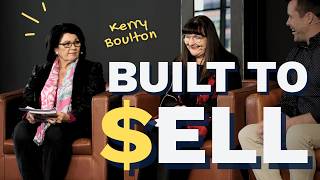
Kerry Bolton, Sandra Allars, and David Jenyns discuss how to build a business you can actually leave. Sandra scaled her massage company from solo to 60 people across multiple states by systemizing operations and hiring a systems champion. Kerry outlines five stages from stepping back to divesting, and warns that death, divorce, disability, disease, or disagreement can force an unexpected exit.
Chapters
Coming up, we've got conversation around exiting your business. Whether that means you literally exit the business and sell, or it means you're in a position where you can exit and just collect dividends, but you're not relied to be the person that's relied upon to be in the business all the time. So you have choice. We have conversation around finance, we have the future of AI coming up as well and then we're going to tie it all together. So in order to get to that, we need to start with the fireside chat around, exit, exiting. Is anyone looking to exit their business at some point, whether that's selling or whether that's just being free from it, free to choose. So it's a building to sell is a good systems approach when it comes to business because then you're building in freedom from the beginning rather than potentially entrapping yourself and then being like, shit, what have I done? I need to now not do the way that I've built it and I need to think strategically after the fact. So thinking of exiting at the beginning is a fantastic way if that's your future goal. So in order to lead this conversation, we have Kerry Bolton from Exit Strategy, we have Sandra Allars from Taking Care Mobile Massage and is it Dave? Yeah, Dave Jennings from Systems Something going to be having a conversation around, around Exiting. I've worked with Sandra in Taking Care Mobile Massage from like a marketing and website perspective. But enough about me, we'll bring them on. Please give them a warm welcome.
Yeah, fantastic.
Thanks, Simon.
Q. I thought it would be good to get a few people that I've known for many, many years and share a little bit about their journey and their story. So that way you can connect with that and go, ah, that sounds a little bit like me. If Sandra can do it, I can do it. Has anybody read the Systemology book? Okay, does anybody remember the story of Diggy Doggy Daycare? Yes. So I was trying to get Jeanette to come along, but I think, I think she's just moved to a farm or something like that.
Mid North New South Wales coast.
Yes. And then last time I tried to catch her, she bought a caravan and was traveling around Australia. So we ended up doing the interview with her sitting inside the caravan after she had her tremendous exit to Petstock. And I thought her journey, it's so great. That's how I got to know Kerry. Kerry kind of guided her through that particular exit and that's when we realized how important systems are in that exiting journey. And as Simon mentioned, whether that's exiting from the day to day operations or if it's exiting to sell, you want to be building a business that someone would want to buy because they're just better businesses. So we'll explore that a little bit more. And. And Sandra. I met Sandra 10 years ago. 10 years ago. And it would have been at a conference maybe a little bit smaller than this. It was at the Blackman and it was just when Systemology was a twinkle in my eye. I was in the tail end of Melbourne SEO Services and I decided to run this event all about process because for some reason that sort of loaded my boat. And I remember when we connected, you were on this journey and you just started it. And I think that's probably what we'll explore a little bit more today, like what's happened in the last 10 years and where are you now? But maybe we'll start with Kerry. I don't know if you can maybe tell us a little bit about yourself and a little bit about Exit, because you are the bee's knees when it comes to exits.
Well, thanks very much. Thank you very much, Dave. I pivoted to start talking about exit planning back in 2012 when I recognised that there were so many baby boomer business owners not even thinking about it and I had the chance. I was very lucky, actually. In 1987, yes, I am that old to do a management buyout of the business that I was working on with, which happened to be a division of Main Nicholas. Now, some of you might remember Main Nicholas, it's gone to God now in some other form. But the business that I was general manager of called Freight Management International, Maine's decided they wanted to change direction strategically and were selling a lot of other businesses. Anyway, I was able to put my hand up and say, yes, I was interested in buying the business. And as luck would have it, a book was just published by two professors from MIT called How to Write Plans that Win Dollars. So I went to a dear mentor and friend and he said to me, kerry, you write the plan. If you can convince me, I'll help you get the money together. Because we needed a million dollars in 1987. That was a lot of money. It's a lot of money today, regardless. Anyway, I read that book overnight, wrote the plan by the book and my mentor was true to his word. We got the money and bought the business. So the day I had to sign the contract was the day that my daughter was born, my first child. So it was the 15th of May, 1987. That's 38 years ago now she's just delivered me the first grandchild too. So I'm very happy about. Anyway, that was. Thank you. Yes, I think that's a great. I've had nothing to do with it, but it's a great result. So that business was 63 staff, five offices around Australia, 120 international agents and a newborn. So the strategy that I decided that we wanted to focus on and I learned about from that book, the fact that I actually had to have an exit strategy because I was looking for investors, they needed to know how they were going to get their money out. So our plan was to grow the business and make ourselves attractive to be able to sell to an international group somewhere between the 5 and the 10 year mark. The beginning worked out, surprise, surprise, the end worked out. We had someone came along and made us a really good offer and at seven years I had a two year earn out and exited the business in 1996. So everything in the middle of course did not go to plan. We had absolutely everything go wrong that could go wrong anyway. We haven't got enough time for me to go through all of that today. But the beginning and the end worked out. The message in that really is that it's the exit strategy part that I would not have thought about had I actually not read it in the that book. And it's the exit strategy part that many business owners don't even think about at all today. I have to say that on top of the business, there are other things that are really important about having an exit plan and it's not, it's not only your business, it's a business readiness, it's personal readiness and it's financial readiness. Stakeholders, family, it's a village that's required to help you get through that process. When I did exit that business in 96, I retired for the first time for two weeks.
Oh my goodness, I was so bored.
Two weeks and I was not staying at home. I had a second child by that time. I was not staying at home to look after the children. So my husband and I actually then took equity in the residential real estate business that, that he was working in. And I started another business, as you do in business coaching and saw that through for the next nine years as well. Then in 2007 we were made an offer too good to refuse for our real estate business. Now let me tell you, that's something that Carey Packer said when he sold Channel nine. He said every business needs needs to be ready for sale no matter what because you Never know when the Allen Bond's going to come along in your lifetime and usually you only get one and I've had mine. That's what he said. And of course he bought Channel nine back two or three years later for a quarter the price. We had that offer in 2007 and so we sold. We weren't necessarily selling, but the business had as part of a franchise was always ready for sale. And as it turned out a couple of years later my husband was diagnosed with bowel cancer. So he actually stayed on and the business wasn't contracted to, but needed something to do as well. But so that would have been a real issue had we still had to have the business anyway, although we had everything in place, we had all the right documentation, we had all the insurance plan policies, we did all that stuff, the things that I actually talk to people about today. And then in 2011 we started again. He got, well, started again 2011, started another residential real estate business and that's when I pivoted to be able to talk to business owners about exit planning. It's a passion that I've had for more than 10 years just to heighten awareness and be able to understand what's involved. And there are really five exits. The first one Simon alluded to already, which is getting yourself out of the day to day, getting off the line. Then number two, you might then be in the management role. So then the second exit is getting yourself out of the management role so you're not still doing the day to day stuff. The third is then looking at being in a CEO role where you have got team really working well for you. The fourth is moving yourself from the CEO to the board and ultimately the fifth is as your ultimate exit so you actually divest of the business and take yourself out of it. So it's not just one thing, it's an array and there are different stages and no matter where you're at, I think everyone in this room is actually breathing. I can't see anyone who's not breathing yet. So we're human, right? We're not AI, we are all human. So we are exiting our businesses one day. So be ready no matter when that comes. And don't be at the effect of someone else's timetable or suddenly find yourself, as I found just recently with a client who rang who was just, just diagnosed out of the blue with brain cancer. So now she's forced to sell the business. No matter what, she has to get out. So be ready, do what you need to do, start thinking about that ultimate aim somewhere down the track, because we're all going one day, whether we like it or not. So you can make a decision around how well you want to plan for that and start to put in place the stakes in the ground to make sure that you have everything as good as it can be and be in as much control as you can be.
I've got a question for you. What do you think is the number one reason that people can't exit or don't sell or have a business that's ready to sell?
Really the number one reason is that they're the business. They've got themselves in the day to day, way too much. The business has to be transferable so someone else can actually run the business, which is the foundation of having systems. Quite frankly, we have to have systems and if we approach our own businesses as if it is a franchise, whether it is or it isn't as well, that's a good way to think about it, you know, because then you've got a package that is absolutely transferable. So someone else needs to be assured of their future revenue. So they talk about, they want to know what income that they're going to have for the future. They don't want to have it so that it's. If your business is really reliant on you, that's really the number one reason.
Yeah, so it sounds like there's this journey of exits with multiple exits along the way, different milestones that everybody passes through. Getting off the tools, getting out of management, having the business under management as you continue further down the line. I'm curious, Sandra, if you can tell us a little bit about your story and where you are on that journey and maybe even where you got started and how you've progressed through some of the milestones. But I know a lot of them. The audience here won't know much about your business. So maybe we'll start a little bit there and we'll follow along.
Okay. So I started the business 21 years ago. I'm a remedial massage therapist. So I massaged everyone, anyone who wanted a massage. And then as time went on, we specialize now in the privilege of going into people's homes that over 65s under support at home, which is the new government funding ruling. So when I started out, I was the brand, I was it. I had three small daughters and I ran from daycare, kinder school, massaged, ran back, picked them all up and then did night massages as well. I did that for quite a few years and then I got business mentors and started gaining people, contractors, subcontractors and started to build a business. And then we started to specialise just in aged care for the over 65s and massage. Then we grew from there and realized that I only have one set of hands and there's only one of me, so I need to multiply myself. So in that respect, after 12 years of massaging, I had to let go. The team was big and I went, I understand that process of letting go going now. I need to hire people and I'm in that management section and I was hearing all the HR people and cringing because of all the mistakes I've made. I've hired badly, I've done emotional stuff. AI didn't exist. And when I started out, Facebook was only new, it was like 21 years ago. So there was no Instagram, TikTok, it was just word of mouth and letterbox drops. Then the next section was moving out and hiring a team of staff. So now I have different sections in the team. But also four or five years ago when we met, I did the exit strategy, read the book, then we did the value builder, then we did eos. But before that, I have to say a big thank you to Dave and the systemology. You all must do it, because we now have a team of 12 people in the Philippines that I would never, ever, ever have if we hadn't had the systems in place. So when I first, 10 years ago, first met Dave, I thought, yeah, Simon, I can do this, I know how to do systems, I'm organized. Not a chance, Not a chance. I was terrible. So in the end, 12 months later, we got Lisa, who is our systemologist over there with my daughter, and systemized the whole company and it took 12 months. So they.
And that's Abby, your systems champion. That was one of the first systems champions where I really recognise this role. I mentioned it briefly in the book, but your story and the way that Abby worked alongside Lisa and watching the transformation happen, because most business owners, they know how important systems are, but they're pretty rubbish at it. It's not really their area of expertise, they don't really enjoy it. And then that's when I realized, and not only that, it was the mother daughter relationship, which I'm seeing pop up more and more where you've got the mentor and then it's the mentee is effectively the systems champion. And I've seen, I mean, we're going to hear from Ryan and Erin a little bit later. Another perfect example of a systems Champion, who's a family member. But yes, sorry, that's right.
So that's how we've grown the business. We've used the systems and now I have a team of 60 massage therapists and physios out on the road in three states. But exactly what Kerry said. Different stages of where we're up to. I had to give up the tools, then I had to go to management and hire people. And I don't do well at that, being the entrepreneur, because I could hear someone going, oh, I've come up with a really good shiny idea, let's do this. And then I come up and I'd go, oh, they know me. And my staff hated it. They're like, oh, no, she's in the office again. So each role. And then I had to. After that section, then I had to bring in an integrator through the EOS process. And now I have Henry, who's my dream person. Henry is my ops manager and he did clinical services, services and operations. And now we've grown even more that I've split that role and he's going to take over my role as CEO and we're just moving to the board. So I've promoted it over the 21 years. Lots of mistakes. We had Covid happen, no staff, no one wanted to go back to work. All of those issues. And like everyone says, business is not straight up, it's up, down, up, down. And the main thing is you need the grit and tenacity to keep going, you know, and that's the hardest thing. The other thing is exiting. When we first met, what was that? What was that look like? I've got to hold on, you know, no one else can do it as best I can, you know, and realising that everyone can do a better job, I just have to release them to do it. But that's the main thing, I think the main thing, the other thing is having people around you that are better than the information that I know, like hire other people, people what you don't know, like mentors. Go to conferences and learn from other people and work your way through. So I'm pretty much almost at the second last stage where I've got someone else coming in and they're going to be kind of telling me what to do and you can only have so many emails and you're not here, which has been a huge process of me letting go, really, because I get classed as the founder and director.
Yeah.
So that's where we're up to, I.
Think one of the most exciting Events. And you may not even remember this now because you've had so many holidays, was when you were able to take your holiday for a week, wasn't it, Simon? To Adelaide.
Yeah.
You took your laptops. I know, but it was almost the first time in 20 years, just that you'd been able to take a break at that point, or not quite 20 years, but, yeah, a long, long time.
And we've had holidays since then. We went to Turkey last year for three weeks and I didn't answer pretty much an email at all. Henry looked after the whole place. It was his baptism of fire and said, I have hired you and in a couple of months I'm actually leaving for three weeks. So you need to know how to run the business. But he's great. But it's having the right people in the right seats that's probably the most important thing. And if we wouldn't, the Philippines. And we use all the systems to hire all our therapists as well.
Yeah.
So what Lisa and Abby did was fundamental in changing everything.
Yes. Yeah.
I think one of the other areas that's important to highlight as well is, I mean, we're all talking about business, we're talking about AI and the advantages that it actually brings to us, and particularly systems. Systems evolve over time and it's really important to be able to bring your people along with you on those. And I remember when we first started working together and looking inside the system hub systems and seeing the videos and everything that were in there, which were really great. But then the challenges that come with that were really getting everybody to refer to the systems, weren't they? You know.
Yeah, that's actually the story that I tell in the Systems Champion book. So we tell Sandra's story in there and talk a little bit about how there was one particular team member. I used that example where she was quite resistant to adopt. And I mean, you do your best when it comes to your staff. You give them every opportunity to come on the journey with you. They do need to grow and evolve and there will be people along the way that go, hey, maybe this is not the right business for me to be involved in anymore. And I think that's a real key lesson because this was just as we're going through Covid. I remember you obviously, massage, it's high touch. And we all had spacing rules around us and all that sort of stuff. And your business shrunk quite a lot in that period. And then you made some real key decisions of which team members were going to stay on the bus and which ones needed to get off.
I did.
And then almost like pruning, you kind of cut it all back and then it's flourished.
It did.
It got cut off at the knee, I must admit. I had 30 therapists out on the road and I had a whole team in support. I just moved out of my garage. Is anyone familiar with opening up your business in your garage? And then I just rented a property for three years and I was six months into the lease and Covid happened and then we all got sent home and I went, what does that look like? I had filing cabinets of paper. Paper. And we had to shred it all and take photos of it and put it, digitalise it. But if we hadn't had systems and putting, like, I had to figure out who was I going to keep and who I wasn't. And working in the massage industry in aged care, it's kind of like two different camps. Because we deal with the elderly, everyone had to be vaccinated and that was difficult because not everyone wanted to be vaccinated. So I could only take vaccinated people on and prove it, because dealing with aged care, the compliance was this. Now it's this because of the new ruling coming in the first of November. So I had 30 and I went down to 14 out on the road. No one wanted to come back to work, no one wanted to be vaccinated. I had to let staff go. We basically started again and that's where Lisa and Abby did the whole 12 months of systemizing the company and now we've built it back up again and I've just had to restructure. And you're quite right, as I've moved forward in aged care and ndis, not everybody wants to stay on the bus. And I've. In your book, this is the way we do things around here.
Yeah.
And I was like, I don't like that. Sorry.
Yeah.
You know, and that and being an owner, you're not the most favourite person in the room and I've learned to embrace that.
Yeah.
Oh, well, there's the door. I'm awful. I mean, Simon's used to that. He's my hubbies. Came on board, what, 10 years ago and everyone went, how do you work with him? And I went, it's. I'm the problem, not him.
I have a question around, like, this journey that we're going on, you're having to evolve and change and respond to what's going on in the marketplace. Massage is real high touch. Like, literally, how do you think about AI and how is that fitting into your business? Like. Like it's not like your massage therapists are going to be out there using AI tools. So where do you see it fit into your picture of the way that the business is going to run?
The training is more of the compliance and the digital side of things. Like in they have to massage and everything has to be documented. So now the service providers, after every single treatment and it doesn't matter what, whether it's massage, physio, Cairo, whatever, that the modality is going into someone's home has to be documented. And that's where AI has helped, you know, and we have multicultural clientele, that English is not their first language, so they use Google to ask the questions. So all the documentation, AI has helped us a lot in that respect. Not all the massage therapists are quite keen on technology, but it's just the way we have to go.
Yeah, yeah, that makes sense.
Yes. And look, maybe just bringing back some of the criteria around, thinking around Exit, because we will leave our businesses one day. And as I alluded before, you don't want to be at the effect of some of what we call the five Ds. Death, Divorce, Disability, Disease, Disagreement. There's many more Ds you can think of. And I was working with another client. We'd been through the initial questions around Exit and just doing a bit of a gap analysis. And he rang me a couple of weeks later and said, I'm just going to have to press pause. Kerry, my wife's just come home and told me she wants a divorce.
Right, okay.
So, you know, getting yourself in a position where you can put in place everything that will mitigate as much as possible against something like that coming up and giving you a shock is a really good place to start. And it's not hard. It really isn't. It's just about like everything having a bit of discipline, you know, around getting those things and understanding what might be missing at the moment. Just as another example, another client I've been working with and we were going through their formation, documentation and agreements and what have you, which they had, but guess what? They weren't signed. And this is a business that's been going for 16 years. They've got 50 staff, they're a big business. So we can now rectify that. So just these little things to start thinking about already, you know, to make sure that you have those things in place. Because it's not only the business, as I mentioned before, it's the other people who are in your Circle that you need to bring in, it's like a village. It's the same thing like raising a child, you need a village. Thinking about your exit, you actually need a village. So I just am passionate about bringing that awareness to you as much as anything. But bringing it back to the business and some of the other perhaps unrealistic expectations that might be out there. Who has had any sort of value estimate on their business has any idea? So we've got about four hands up. Okay then that's one of the things that I would highly recommend is to get some sort of, you know, toe in the water now to see what your business might be valued at today. Because most business owners have unrealistic expectations, expectations around the value of their business. And actually I've got a bit of an offer for you that we'll put a QR code up for you later on where you can get an idea on that for no charge. So just a high level estimate so you've got some idea of where you're sitting right now and where the gaps might be and what you can work on in terms of understanding what drives your value in your business as well, like the size of the market, having good financials. That's the other thing. A lot of business owners I find are not up to date with their financials. And it's really, really important to be up to date. I have a beautiful client who's out in the country in Queensland, little retail business and a stud farm. They just opened a little cafe next door restaurant. And when I first started talking to them, I said, oh, can you send me your P and Ls and balance sheet for the last two years? Oh, they're not done.
What do you mean they're not done?
So things like that, get them up to date. Make sure they get up to date because if you don't have those things right at your fingertips, then that's a big red flag to any potential purchaser of a business that might come along as well. Well, Being ready for due diligence if someone comes along, being ready and being able to put your fingers on all your documentation that you need is a real red flag. If you're not ready for it, it takes time. Time will kill a deal. If you've got a deal on the table, if you're selling your business, if you don't have that ready, time will kill your deal. And you know, some of the other legal and compliance gaps. If you haven't got your contracts with your staff, customer concentration or supplier exposure that you might have. If you know you might be reliant on one or two particular suppliers, what happens if something goes wrong? So all of these particular elements are really important and understanding where your gaps are now will help you be as value as you can be whenever it is that you might be in control and be able to choose when you want to actually exit your business.
I feel like, I mean, we all know this idea that a business that isn't dependent on you is more valuable because it de risks the purchase for the acquirer. Like the risk for someone looking to buy your business is that the most important IP is going to walk out the door, you and some of your best team members and they're left sort of holding the business. So it's really key to capture that and building a systems driven business, it only makes your business stronger and whether or not you exit or not like that. John Warillo has his book, John Warrilow's book.
So John Warrilow wrote a book called Built to Sell which was.
Has anyone read that one?
Yeah, one of the first books that I read, I think was published in 2012. And that's the premise every business needs to be ready for sale.
Whether you sell or not.
Whether you sell or not.
It's just a business that is ready for sale is a better business.
It is, absolutely. And he's also the architect of the value builder system, which is a framework that I use with all my clients to start with because it gives us such key information. And he identifies the key value drivers which are obviously, number one, having all your key financials ready, hopefully three years of those ready and up to date that we can put our fingers on, understanding whether you have, where's the market, where's it going for the future? And if, if your plan is to sell your business, don't ride it over the top. Make sure there's still a little bit of blue sky in there for the next person who comes along. Then how dependent are you on any, on your customers or your suppliers or your staff? I mean, systems runs through all of this anyway, all the way through. Understanding your cash flow. Do you produce a positive cash flow or are you lagging in terms of your cash flow? Because anybody who might come to buy your business, they're going to have to write metaphorically two checks, one for what they're going to pay you for the business, the second one, what they need in working capital. So understanding your cash flow and the cycles that are around that are really important as well. Then there's marketing. Hey, Warren Buffett. Says, I only ever buy businesses that have a big wide moat around them. So what better way to be able to do that? We learned a lot today with our speakers this morning around marketing. So let's have that complete that really fully systemised as well and understanding what is it that differentiates us in our business from our competitors. Owner dependence we've already talked about as well. The holy grail is recurring revenue, either contracted or sustainable. Like if it's a SaaS business, you know, we were paying subscriptions, but John's second book was called the Automatic Customer. And through the framework of the Value Builders system as well, we go through looking at how you can create that at least a percentage of your business as recurring revenue, whether it's maintenance, cost contracts or if you've got a product business that you can sell on subscription, then lots of other. There's actually 12 ways that we look at how we can potentially create a recurring revenue stream in a business. And then of course there is the customer satisfaction. How can we prove our customer satisfaction? Net promoter score. You've probably heard about that. We've probably all filled in one of those questionnaires. On a scale of 0 to 10, how likely are you, et cetera? So those are just some of the value drivers that we look at.
I'm curious, Sandra, as you're kind of progressing on this and you're working with Kerry, going through, what was your vision for why you reached out to Kerry? Was it you're thinking you were going to exit at what. What type of exit were you thinking about? Has that changed? Yeah, just one.
It has changed. I got to a point where I was fed up of staff and burnt out. I was just over the whinge. I was just like, I couldn't believe. So I've gotten over that and put HR people in a buffer zone between me and the 60 therapists out on the road now. And now what we've done is with the reoccur. I have 260 contracts and we're in three states, so contracts and compliance and all sorts of things. So it has grown, but I have moved myself away from the day to day and the grind so I can just think above and go, okay, which direction do we go in? Do I still want to exit the end in mine? Absolutely. Want to sell it in the long run, realised there was a lot more blue sky in aged care, that I needed to stay and nurture the business. We've also got a massage course that we run for massage therapists. We've developed Our own massage course for aged care. So they can train them but still exit. So what I've. What Simon and I have done is instead of selling the whole business, we've decided to exit slowly and put Henry in place and we'll just go to the board, you know, so it's kind of like in increments what you were talking about, but still want the end in mind of selling the business. Somebody will come along and, and snap us up a service provider that's, you know, Bolton Clark or someone, and they'll attach what we do, massage and physio, to what they already do. And that's our end goal. But look, we could be a couple of years away. I remember Kerry always saying in our meetings, it takes years to exit. I'm like, are you serious? Just someone write me a check, I'll just go away. I don't want to do this anymore. I've had enough. But as we've moved out slowly and just grinded our way out, now we're in a sweet spot and I'm happy.
Ideally three to five years. If you can give yourself that sort of a Runway, that's great. And then it can take another year to do the transaction.
Yes. One thing Sandra mentioned, which I loved, it's popped up a couple of times for me. I remember Michael Gerber, he had said, every business is a school. And this idea that your systems and your processes and your sops are kind of like the lesson plan and the training for your staff. Your staff are the students. They come in, not really knowing much. You train them up and you try and make them as productive in the shortest space time possible. And Sandra, effectively, I mean, you've built all of the systems and processes around finding great massage therapists, training them up and that's, I mean, you've got your, effectively an academy with your training and it all starts off the base of the SOPs, that's almost like another way to monetize the business. And also what a great recruitment tool. Like people who go through that training in that academy, you can pick the cream off. Yeah, cream of the crop. And give them positions.
That's what we did. They've got their remedial, so they go from there trained and then they can do a course with us and then particularly work in aged care, massage, fully trained.
Every business is a school, so that's one of the reasons why you need to work on your systems. In the last little bit that we've got, we'd love to maybe take some questions from any of you guys, for Sandra or Kerry or anything to do with exits. I know Simon is probably going to be able to run around. I don't know. Is anyone? Yeah, Ben, up the front there. Hello, there we are. Great reflections. Thank you. The focus of the remarks have been on the exit from the business. Can you reflect on what works and what doesn't for the rest of someone's life when they're transitioning away from a business into the next phase of their life? Have you seen stuff that makes you really happy as a business coach? And Sandra, for you, what are you thinking about? What is all this hard work looking for in the next phase?
Shall I go first? So one of the processes that I do go through with people is actually to get you thinking about that, what's next, Especially having been in the process myself a few times, in fact, and even having had the experience of selling the second real estate business because unfortunately my husband's cancer came back and he passed away in 2019. So we had to then think about all sorts of other things as well. But, yeah, what do you do? I remember asking my uncle when he sold his business, oh, I'm going to go play golf three days a week, you know, I'm going to have lunch with my mates, we'll do a bit more travel. I said, oh, that sounds great. And then what? So of course, 12 months later he was in clinical depression because he certainly hadn't thought about it enough. And so going through that and, and really thinking hard about what you want to do. Personally, I've been a serial volunteer at our local sports club when I've just passed the baton this year. So that's 29 years I've been doing that, looking and seeing all the little kids come up. Started the Milo cricket program, you know, all that sort of stuff. Woody Cricket, little ass. We just started netball, da, da. Figuring out those sorts of things to keep yourself motivated, finding a passion. And frankly, I do what I do now because I love doing it. That's really what it's about. I'm about to turn 74 in about a month.
Okay.
So I'm well and truly out of past retirement age, but I think everybody should do just. You have to think about what is it that you're going to do. Do you have a hobby? Yes, do a bit of travel. And I've just come back from three weeks. Fabulous travel in Europe as well. I mean, do those things that you really want to do with your family and give it some thought. Not just. You don't just cut it off because then you're in strife.
To answer your question, yes, I will be working because there's no way I'm spending 247 home with Simon. It's not happening. I'd probably do travel mentoring, do some business mentoring. We're about to expect our two more grandchildren. So we'll be doing all sorts of things, but mainly still being involved in the business, but business mentoring as well.
Yeah, we've got a slide, we've got a slide up there that's got a QR code on it. If you would like to get, as I mentioned earlier, a free value estimate for your business, you can do that online. Take you about 15 minutes. And for anyone who actually does do that too, I will send you a complimentary copy of my book. I've written two. So this is the million dollar payday book which I'm very happy to make available to you. It's got all sorts of how to's in it and things like that to get yourself ready. But that's the most important one. If you get in and do the value builder questionnaire and then I can send you the information you'll get. Put your numbers in. Take your time. Put your numbers in it. It's a high level value estimate which is really useful for you.
And also I just got Simon's new book as well. Sandra's husband's written a book about their journey with taking care mobile massage, I think. Did you guys bring some copies? So in the break, make sure you seek out either Simon or Sandra to.
Be on the table.
They'll have some books out the front. It's great to kind of follow along with other business owners. As I said, successful businesses and business owners leave clues. If you keep hearing the same thing pop up again and again and again, it's worthy of your attention. That's why for me, systems and processes, it's central to everything, what drives your business. So thank you so much both for your time and yeah, thank you.
More from David






Remember me? Subscribe To My Channel For More Free Business Systems Content 📈




