David Jenyns shows how to document processes efficiently using a pre-extraction form and five essential elements: system overview, trigger, critical steps, ending, and success criteria. This keeps process documentation concise and actionable for teams building repeatable procedures.
Chapters
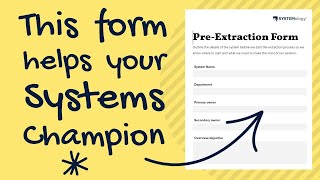
Having a form or something that you can send to a team member before they do their extraction with you just makes it so much easier for them to think through. Like it's a simple form, takes five or 10 minutes, helps them to identify the key main points and they'll share that with you beforehand. So that one, you know what the key steps are, they have it clear in their head what key steps that they want to cover. And once you understand, it makes it easier also for you to guide and direct. You'll get really good at asking questions and knowing when do you need more detail? When is, hey, let's keep this moving, you know, maybe we don't need that point. You've gone down this little side rabbit hole of something that's a very odd exception that's going to very rarely happen and we probably don't need to systemize for that. So you'll get good at reading and understanding that. And part of this is this pre extraction form where you can do some of that thinking. There's going to be oftentimes a lot of people that team members that you meet with that won't fill out the pre extraction form before you meet with them either because they're knowledgeable workers, they're busy, they're doing stuff. So sometimes as a systems champion, you might go, well, let's fill that form out first. And you'll do that right at the start again, just so you've got the full context. Particularly as you're getting started, the better you get at this, you might not need to use it as much because there might be parts of the business that you already know pretty well, but you can already start to get a feeling for how you're going to get to know the business so well. As you move around as a systems champion through all of the different departments, the training covers this idea of what are the essential elements of a system. And the more that I've done this, these really are the key things. If you get this right, you go a really long way to making sure that the system is useful. First you want to cover why that's about setting the context. And one of the areas that we talked about in the overcoming resistance triangle, you just, you want to set a little bit of a context of where does this system fit into the bigger picture and why is it important and what, what that goes into the system overview. Up the top. Next you want to identify the trigger, what kickstarts this system? Is it something that happens on a recurring basis? And you get a calendar reminder, is it Something that is triggered by a client making a purchase or an inquiry coming in. What is the trigger for you to know that this system needs to be executed? Then the next critical component here is this. The critical steps, obviously. Then identifying what are the critical steps that you're going to go through. And we talk about, you know, having those as little, almost like mini headlines. You should be able to read each line of those critical steps without going into all of the detail and still have a flow or an understanding of what steps need to get complete for this to happen. And then you need to finish up thinking about the ending. How do you know when you're done and what happens next? Like is this something that then needs to be notified to a supervisor or marked off in your project management platform? Or do you need to duplicate this because it's going to happen again next month? Like, how does this system close out? And then final thing is wherever you can, what does success look like? If it's filling out a proposal, attach a great looking proposal. If it's completing a particular form, fill out that form and have a great attachment to that. If you put these five essential elements into the system, your systems will become infinitely more effective and clearer for the person who's going through it to understand what needs to be done.