Getting Things Done With Others - David Allen
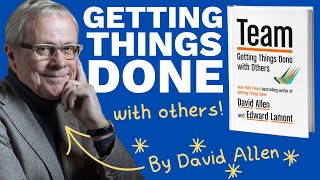
David Allen discusses how Getting Things Done applies to teams, not just individuals. He's releasing a new book, Team Getting Things Done with Others, that focuses on team mechanics like meeting standards, role clarity, and systems before tools.
Questions this video answers
Around 1983–1984 (designed a seminar for Lockheed then).
He 'didn't pull the trigger' on writing the book until 1997, and it then took four years to get it to the shelf.
Team Getting Things Done with Others — planned for late May (the year referenced in the interview).
Chapters
If you don't have a good systematic way to make things happen, then people get very frustrated and burn out, you know, as you keep coming up with great ideas and things to do or whatever. And you know, if you're talking, if you're talking small business, you know, you wear almost all the hats.
Welcome back to Business Processes Simplified, where we dive deep into the world of systems, processes and productivity to help small business owners and to help them operate more efficiently. I'm incredibly honoured today to have our guest joining us. He's someone who's very much revolutionized productivity and not just at the individual level, but has also transformed how many businesses, both big and small, how they think about and manage their work. David Allen is the best selling author of Getting Things Done, which is a must read for every business owner. I'll make sure I include a link to the book if you haven't yet got it. Definitely. Check it out. GTD has become very much a global phenomenon, almost like with a cult like following. With great reason. Like, you'll see as we dive into it, it's a phenomenal system. So we're going to explore how the principles of the book can be applied specifically to small business owners. But first things first. Just wanted to welcome you to the call, David.
Thanks, David. Thanks for the invitation. Delighted to be here.
Pleasure. Now, with the limited time we've got, I'll jump straight into it. I know GTD is very clearly a system. I'm curious to know if you see yourself as a systems thinker. Is that something that you go, yes, that's me. Or do you not see yourself as a systems person?
I guess I am, but only in retrospect. Yes, I never really. It's kind of like the last thing a fish notices is water. And I suppose the last thing a systems person notices is that they're into systems. Yeah, you know, I'm just into lazy, you know, and that means how efficiently can I get from here to there? And so I guess you need some sort of a system to do that or a way to think, a systematic thinking process really. And that's a lot of what I, I think I discovered, uncovered and objectified, was the systematic thinking process that you have to apply in order to have a clear head.
Is there a particular point when you uncovered gtd, like the system where a moment or something that said, yes, I need to bring this to light or I need to get this documented in a book. Was there a particular something that, that was the catalyst?
Particular something was. I'd spent 20 years doing this work of implementing, discovering what this methodology was and making that part of my initial consulting practice and then being asked to bring that into the large corporate world and got thrown into the corporate training world and designing some sort of a seminar around this. So it was really, I didn't write a book and then figure out a business. I just had a business and had a career. And then at some point somebody said, david, you ought to write the book. Because, David, it took me 20 years to figure out what I'd figured out and that nobody else seemed to have done that and that it was bulletproof. So by that point, you know, I'm not a ta da kind of person. I just had to trust that if I was going to put, you know, what I'd learned in my career into a manual, it better be good and bulletproof. So by that point, I had enough confidence to go ahead and write the book. Though I didn't know how to write a book. I had to read three books on how you write a book to get started. So, you know, you know, I started doing this work in 1983, 84, when I designed a seminar around this stuff for Lockheed in California. And then, you know, I didn't pull the trigger on writing a book until 1997. And then it took four years to get it really to the shelf because I was working full time and trying to write a book about all this at the same time. So that's a short version of a very long story.
No, that's perfect. With the system itself, did you. Because you kind of perfected it over the years, was it kind of massaged into place like as in, did you take steps out and say, oh, that step now needs to go before there, and you're testing it with, you know, in the field. Is that how this system developed?
It's really how this system developed. You know, I had the basic core of it with my small little consulting practice that I started in 1982. And I had a great mentor, you know, for a year or two, who taught me some of the pieces of this because he was using that in organizational change consulting. And it was powerful, just, you know, writing everything down and make deciding next actions on anything that has your attention. Just those two things are powerful, powerful things to do in terms of your productivity. And we were doing it, and he was doing it as a way to sort of clear the deck in an organization. So there wasn't a lot of old business hanging around like barnacles on the ship, you know, so that they could then you know, go smooth sailing toward, you know, some desired future. But there's so much old business most people have hanging around. So figuring that out, that became sort of a core of it. And then I started adding pieces, adding pieces to it that I had from, you know, other sources in my own experience. But I have David, I haven't had any traditional formal education in time management product, you know, or business or psychology. This is all street stuff. It was all stuff I learned by doing. And then watching what happened, I did it for myself first because I was into staying clear as my life got more complex and busy. But then everything I discovered that worked for me, I turned around and started using it with my consulting clients and it worked for them too. They got more clarity, more control, more ability to focus more, a bit more space to focus on the critical strategic stuff in their businesses. So that became just part of a key part of what I was delivering for people. But again, it took me that long to figure. I thought anybody making a lot more money than me would have already figured this out. Not true. So what's fascinating is the people most attracted to what I came up with are the people who need it the least. They're already some of the most productive, aspirational, positive thinking, forward looking people. They already know the value of system, they already know the value of getting organized. They already know they can produce value because they got them where they are. They just run out of room, they got no more space. So their hurt is, you know, I coached a guy in one of the, one of the top entrepreneurs in the world by anybody's standards. And you know, I asked him why are you calling me? I got no more room. I wake up with million dollar ideas, I got nowhere to put them or who to give them to. I don't know what to do with all that. So I, I worked with him for a year, you know, working, coaching him with this methodology and he's still a big champion and a friend. So you know that I, and you, you mentioned cult in there. What's strange is the people attracted to this are the most non joining people you'd ever meet. Because this whole methodology is about self management. It's about being independent, it's about not being dependent on anybody else to get your life and work in order. So it's, what's interesting is that I wound up sort of being well known in a fairly large community out there of some of the most independent, self generating, self organized people you'd know.
There's definitely, people can get quite fanatical about it. I think the sign of a great system is something that stands the test of time. And I know you mentioned you've been working on this for ages and even with all of the technology changes and things that have changed, like when you go back to the five steps, it's still as true today as it was great back then. And I feel like that it's got.
Just as true as it will be in 2090 when we fly to Jupiter. They still need to capture what has their attention. They still need to clarify what, what are we going to do about this and what's reference material and what's trash and you know, and what's this, what are the outcomes that we're committed to complete about this stuff and where do we organize the results? We can't finish it in the moment so that the right person can review and reflect on it, you know, at the right time and space so that when we engage with whatever we do, it's from a level of confidence, not hope. So it's universal stuff. And I think we did a pretty good job of making this as evergreen as you could make it. See, a lot of people want to add the digital world. They want to add the computer stuff and the applications to, to solve stuff. They won't. It's going to make it harder, actually. It's going to give you another project to try to figure the thing out and how to use it. So you need the thought process first. Then you can make any tool work. You can make pen and paperwork. Can't beat that.
What I love is probably in about 60 seconds there, if someone goes back and listens, you actually went through the system like it's simple enough that you can just roll through. And yet if you want to go into more detail in each stage, it's there. I'd be interested to know with some of the changes and after the book has been launched and all of its success, like your learning has continued, is there anything that you either wish you added in or, you know, an additional chapter or something where you're just kind of like, oh, now I've seen this rolled out millions of times. What, what has stood out for you for lessons?
Well, I don't know when you're going to publish this, but I have a new book called, which is exactly that, that's coming out in May, late May this year. It's called Team Getting Things Done with Others. So yeah, because, you know, over all these years, anybody gets this methodology, they go, God, I wish everybody around me got this. It would make life and work so much easier. But I never had the bandwidth or a good template or a model to share with people about that. But I co authored with Ed Lamont, my, my GTD partner in the uk, who spent a good bit more time than I have in the last couple of decades working with senior teams that he's trained with GTD and then watching how that affects, you know, a team culture. And, and so he and I then have spent the last two years crafting this book and it's, that's the blank that needed to be filled in, you know, because people get it and they say everybody around me needs to get this. How do we do that? So we wrote this really as a manual and it will be a manual for anybody. It's going to be, it's very thick and thick, meaning there's so much stuff in it. What it is basically the getting things done principles applied in a team context. How does a team capture. Yeah, right. If you're on a team, that means. And you're on a team, by the way, if you're married or if you had, or you're going to taxi drive or you're, or you have kids or, you know, are you trying to start a company, you know, whoever that you need to get stuff done with makes you a team. So, you know, what does the team need to capture? If I walked in as a consultant or a coach to any team, I'd say what's got the team's attention right now?
If I was, that almost feels like that would be step number one in the system. If I went back to step zero. I'm curious to know like how in a team setting you would look at getting the team to buy into this. Because changing of culture is oftentimes one of the hardest things here before rolling out a process. And no doubt you've done some deep thinking on that.
Well, we have a couple of chapters on standards. How do you, you know, what are our rules of engagement, how we run meetings, what are our rules of engagement about? How often we respond to email. And we really wrote just the mechanics, not all that high level stuff about charisma and collaboration and all that things that you read in all the leadership stuff out there. We talk about leadership, but how do you lead a team to make sure it executes your vision? You could be a visionary, but then have systems that suck in terms of how you get, how they, how they happen. So you need to combine both of those. So that, that's why, that's what we've tried to address with this new book that will. Because you really, you really, if you can't, if you don't have a good systematic way to make things happen, then people get very frustrated and burn out. You know, as you keep coming up with great ideas and things to do or whatever. And, you know, if you're talking, if you're talking small business, you know, you wear almost all the hats. And so you have to be. You have to be a financial person at some point to see if the check bounced. Then you have to be a party person. If it's. You were trying to party in PR and you have to wear all those different hats. And so understanding what are the different roles that need to get handled in a team or a group context. So we talk a lot about roles. How clear are the roles? You know, if, if you and I sort of say, yeah, let's get this done and we don't have a further conversation about, well, what are you going to do? What am I going to do about that? Then that creates a whole lot of stress and friction that's not necessary. So it's really more the mechanics. What are the mechanics of a good meeting? Do you want to let people. You are allowing people to come in with three digital devices and not pay attention to the slides that you're trying to present. Are you letting people come late to the meeting? Are you inviting the right people? Given the purpose of the meeting? Do you even know what the purpose of the meeting is? And therefore, who do you need to invite? Are they clear about what purpose they're trying to fulfill by being in the meeting? I mean, these are, you know, this is advanced common sense stuff. And a lot of teams kind of do these automatically because they somehow have emerged, you know, being a pretty successful team, but they couldn't replicate it. They don't know what they did. Right. So all we've done is say, here's what you do. That's right. Here's one of the things that create dysfunction. And then you can pick and choose which one of those you think your team might need to use to enhance its high performance. We talk about high performance, high, you know, sustainable high performance, which means you're. A lot of people are doing high performance, but they're burning people out and themselves because they're not paying attention to what's the sustainability of how we're doing what we're doing. And then a lot of people are into, let's Kumbaya, hold each other, be nice, have a collaborative thing. But they're not going Anywhere they're not producing what they think they ought to produce. So you need to have healthy high performance and those are the two aspects of it, the high performance aspect and also the healthy aspect. And those need to be synthesized together.
My brain can't help but default into the system. I think that's almost how I'm naturally wired. And I'm imagining here the start of the system, there's some form of standards for this new book. Then I'm imagining like some sort of meeting cadence or something with certain agenda items to be able to, you know, have a way for capturing and clarifying and even later on in the process with, you know, even organize and reflect. Reflect might be part of a either annual Review or your 90 Day Rocks or. Am I kind of on the right track for the new book?
No, no, no, you're on the right track. We just, we couldn't, you know, people have been knocking on our door saying are you, are you going to create a training out of this book? No, I don't think so. It's more like a consulting manual because every team is very different. Every team and what it needs is very different. It even is going to need different things two weeks from now when three of your people leave and you got three new people on the team. Right? So. So things are, especially these days with things flattening and becoming hybrid and becoming virtual and becoming. And all those different little factors that are making change faster, more complex these days in terms of how you work with other people. And so that's so unique to the situation. They're not a high performing teams. They just again don't know how they got there. They need to recognize what they did so in case their team changes or they go to another team. They know what worked and what didn't work and how to rehow to rework it and reconfigure it. But that could be very different. Some team needs to. Some teams need to focus on purpose. Some teams need to focus on their principles and standards of how they operate together. Some teams just need to capture better. They got a lot of stuff banging around in the halls and around the coffee machine that nobody's grabbed that has the team's attention. You know, they need to. Some teams need to clarify better. Yeah, they got a big list up there, but have they actually gone through the is. Are we, are we going to actually move on this? Would moving look like it? Who's doing it? And a lot of teams need to organize better. They may have had those great conversation but where'd they park the stuff, you know, in some place that people will see when they need to see it or be reminded about it. So every one of the aspects and we cover the three basic models that I covered in getting things done, which are the five phases we've talked about, the six horizons of commitments that you have, and then the natural planning model, which is how do I take a situation or project and walk it through the right thought process? So it, so we're optimally engaged if.
Each organization is a little bit different and the five steps still apply and then I'm imagining tools underneath each step that then can be specifically applied to a team environment, correct?
Yeah, yeah. And most people don't get that. These are, these are very different. They all can come together very quickly. Capture, clarify, organize, reflect. But, but it's a very different process to capture than it is to clarify, than it is to organize, than it is to reflect. And so there will be different tools that one could use. Capture could just be Kanban post its on a whiteboard. Right. Capture could be, hey, let's just get together folks and go up to a whiteboard and somebody say, what, what's got the team's attention right now? And somebody's just making that list. Could, could look like a lot of things. So the tool doesn't really matter. What matters is the process that you go through and the content you generate with it. And then how do you clarify? Well, that's a. You know, there are a lot of tools out there. You know, they're over. There are probably over 300 apps that have been built supposedly doing the GTD model. And they're all basically just list managers. You know, how do I, where do I.
More from David






Remember me? Subscribe To My Channel For More Free Business Systems Content 📈




