How AI Is Transforming HR Departments
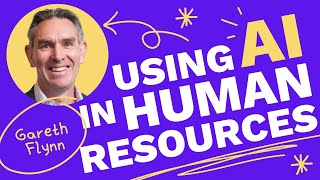
Gareth from TK Solutions explains how HR departments can use AI to automate high-volume work like recruitment and onboarding. Start with your biggest pain points and existing tools, then layer in AI incrementally. Interview-scheduling automation alone can save thousands of hours.
Chapters
But a lot of it is about doing some of this stuff quicker, which in turn will mean we can conduct projects more profitably because we often operate on fixed pricing. So the less human hours involved, the more profit we will have on projects are looking for things where we can speed up and reduce that human effort, which means we can also spend more time doing the higher value human activity.
AI can be used in a variety of different ways. Different team members, different tasks, different, different departments. Everybody thinks about it a little bit differently. Oftentimes people just tend to think about it from the position that they're sitting in. So a marketing person thinks about, well, how is this going to be applied to marketing tasks? A finance person thinks about, how can I help it accelerate the tasks that I'm doing in finance? So today I really wanted to kind of dive a little bit deeper with an HR expert and think about, well, how can some of these new technologies be applied in the HR department? And I actually got connected to our guest Gareth through Shannon Smith and he's the founder of TK Solutions. He's been in the game for over 25 years. He's a speaker, thought leader, expert in the space. And really the idea of these emerging technologies has caught his attention and he's thinking deeply about how to apply it into the HR space. So maybe first things first. Gareth, just like to welcome you to the call.
Yeah, thank you David. Nice to be here and thanks for the introduction. Sorry, Kai.
Yeah, let's dive in. I'm curious to know from firstly when you saw AI, I don't know what it was that first grabbed your attention to go, something's big here to also then the point at which you said, I'm going to start applying this in my business. I'd love to know a little bit about how it caught your attention.
Yeah, look, I think we're a consultant business, David, so it's our job to follow trends, particularly around technology. We do a lot of work advising in tech. And look for us, AI has been in and around our space for five, six years, pre Covid for sure. And you know, you had companies coming out to market with AI based video interviewing platforms that were ultimately screening candidates. Now a very well known American technology business ended up on the front page of the Wall Street Journal for bias and they got sued for sort of systematic bias within the AI and that platform itself. So it's been a really interesting time because lots of companies are exploring that technology and thinking it would be a great white hope for what is a quite painful part of that process for recruitment and I think that then everyone took a back step when that took place. And I think with COVID more technology, more digital technology, more AI technology was being brought in because we were suddenly remote. And then really obviously last year with Gen AI hitting, I think now it's going to become a lot more mainstream in the people functions. But they won't forget that large American technology company in the front page of the Wall Street Journal. So there is a distinct nervousness within the HR and people communities about the use of AI and, and I think a lot of HR functions, whilst they're looking at it for themselves, they also own on our custodians of people systems which touch everyone in the organization.
Yeah.
So they do often see themselves as a bit of a guardian or custodian to some of this technology. So yeah, that's the kind of context and I think at the moment we deal with enterprise customers, so all the larger organizations, mostly here in this region in Australia and it's on everyone's lips, we need a plan, we need to know what we need to do. We need to, we need to challenge ourselves, we need to redesign our processes, we need to see what our incumbent technologies are doing. We need to look at emerging technology. So yeah, it's consuming a lot of bandwidth at the moment.
How do you approach that as far as. Well, there's a huge amount of opportunity here, but there's also some things we need to be mindful of around privacy and how we approach this. Yeah, when you think about identifying the AI opportunities in hr, like what are some considerations or how do you think about where someone should get started?
Yeah, look, I think a lot of people don't know what they don't know. So yeah, I actually think it's a question of do some research to start asking questions, not necessarily of new shiny toys, but most HR functions would have a core HR platform. Could be SAP, could be Workday, could be Oracle. They're all producing AI roadmaps into core technology. Most of our clients are Microsoft Teams customers, Microsoft pumping AI into everything they're doing. So this isn't about going and finding the new shiny toy, it's about understanding what your current vendors and incumbent technology are doing and where are potential use cases based on your problem statements. So I think when we work with customers it's a case of what's your pain point? What are your problem statements? Were you trying to solve what's really important for your business that we try and fix? And then you know, what is the fix? Is it, is it human or is it digital? If it's digital, is it AI? Is it, is it, is it something your incumbent technology can do or do we potentially need to go out and buy something? But start with a problem in mind and, and then start working through what your options are.
Yeah, I love the advice there. Firstly look at what you're currently doing and then thinking, well hey, how is AI going to help us do this faster, cheaper, better? Because we're already doing it, so we know if we can improve upon that, that's going to drop straight to our bottom line. So that's definitely a huge win. And I think leveraging your existing tools because a lot of these are already thinking about that makes sense. When it comes to the actual process like you mentioned, people processes like the HR department is very process driven. I love your take on where the idea of process fits in to this and what part does it play in the role of developing AI strategies and re engineering the way you're doing things?
Yeah, great question, David. I mean one of our roles when we go into people function, I mean we could be reviewing how they recruit or how they manage mobility and development. We always look at process and we identify what they're currently doing today and try and find frustration points. So if I use, let me use recruitment as an example, it's riddled with frustration points. It could be a manager that doesn't use the HR system very often has to navigate their way around the system. It could be screening candidates for the recruiters, which is a really time consuming process. It could be interview scheduling, which is a notorious time sapper of someone who's got to do that. And when you start thinking about some of these processes, normally the core technology hasn't got the smarts to make that an efficient process or experience and humans are actually band aiding it. And you can see in any process, whether it's contract generation or whether it's some of the learning intervention processes, there are frustration points throughout and it doesn't take a sort of brain surgeon to recognize that there are smart pieces doing it and in particular AI, whether it's gen AI or just some basic automation behind the scenes that can resolve some of those frustration points. So this one we have a slide we share with clients quite readily which is four imperatives for this year and one of those is process redesign and actually looking at your core processes, the high volume processes that run through a HR function and just pull it apart. What are you doing today? Where's the pain? Where's the frustration? Where can you do Things smarter and better and where could technology support you? And that's just fundamental advice that we would run through any projects at the moment.
And I love you touched on some ways once you identify and uncover the frustrations you touched on a couple of ways that then you can then get started as in firstly it could be generative AI and just thinking about hey can we craft some prompts to accelerate drafting position descriptions or contracts or things like that that very quickly can get a win with gen AI. But then the step beyond that might be some of the automation side of things where maybe we create workflows and we bring together a series of of things and effectively take what you're currently doing and then just get the machines doing parts of it. Is that yet part of your approach as to identifying the frustrations and then how you look to solve them?
Yeah, two things there David. Historically we have identified the frustrations and problems and then sort with the organization to work through how they're going to resolve it. Typically with kind of third party technology providers we're actually in a collaboration at the moment with a startup business for us to actually bring code in through AI through Microsoft Copilot in particular so that we can actually help customers directly solve some of these frustration points through intelligence as a service where we're not needing to lean on third party providers. But I mean a classic example you've already called out there going back to my case around a hiring manager infrequently hiring. I could be new to an organization if I can just chat into Microsoft Teams. What do I need to know about recruiting at XYZ company and something retrieves from wherever it's based, the policy statement, the how to, the job job description template and then can walk me through some of that process. We're going to save a bucket load of time and calls that I'd be making to my HR business partner or all the talent acquisition function and it's not overly complex technology that's doing this and you can pretty much solve frustration point by frustration point one at a time until you actually really streamline what you're doing. So we are, we, we historically have identified issues and then sought to resolve through third party technology but we are looking at a collaboration at the moment with a essentially an AI company that would help us do that directly.
I think that use case there, I love it. And if we extrapolate it and think about it across an entire organization, every role could have a chat based interface trained on the sops and policies relevant to their role that can help to answer frequently asked questions and be the go to point. I feel like that is a magnificent use case that every business in every role could quickly apply.
Yeah. And I think for me that's kind of base one. You know, we're working with some pretty large organizations at the moment and I think a lot more interesting AI use cases for that. There's a concept called skills based organizations and what businesses are calling opportunity marketplaces where me as an employee can create a profile in the system. AI will help me identify my skills, I can play around with some career pathing options and the AI will also help me identify my skills gap on roles I'm interested in, recommend learning courses or development courses or other jobs that I need to go to to get that skill. And this is where it gets really interesting. You know, the AI is basically an inference engine that's starting to map opportunity to person. But I think there is a role in that ecosystem for a Gen AI career coach. So I can see the platforms are, a couple of them are working on it at the moment where it's, it's, it's got, it's a, it's a coach I can just through Gen AI talk to about my career and I think that's going to be a really, that's. So I think every employee in time is going to have a career coach.
Yeah. I remember a quote Michael Gerber said which is every business is a school and I can see now how, you know, your staff, they're like the students coming on board and every team member could have a tailored coach that knows exactly where they're up to, what they're learning, what they need to work on next and will be able to engage with it both in chat and voice. I mean it's pretty extraordinary what we're seeing with voice also.
Yeah, I totally agree. And I think we're dipping our toes in the water here in Australia. I do think we're a little bit gun shy and conservative relative to other countries. I, I do go to quite a few conferences overseas and you know, I do come back a little bit despondent about how I think some organizations have just got head in sand and then others are just letting you know they're happy to be slow Followers is the expression I use. They want to see others go through the journey, make some mistakes, get bruised and then follow. Yeah. And it is surprising how few are taking this opportunity to move ahead. There are some, unfortunately we're working with a few which is great. But I think one of the challenges David we're facing when. So I'll give you an example. There is a customer of ours, a very well known brand who wants to introduce a point solution. So it's tiny and it's a chatbot based technology that's going to solve some real issues that they've got. But it's taken them 15 months to bring that tiny technology into the ecosystem because procurement are buying point solutions as if they're a mainframe from 25 years ago. And then there's the layers of infosec and privacy and the governance that goes with it, that it's just slowing things down. And also with point solutions it's 4/5 in line to a bigger system. You can't get attention on it. So our actual acquisition of technology is dreadfully slow here. I mean really, really slow. Big companies would be 12 months plus and that's not helping matters. So I think the way in which we adopt bring technology in, we've got to procure it differently. I actually think there's a market. I said so on a call yesterday to a customer. Every client assesses the same vendors for their acquisition of that vendor. But yeah, so there's a product we're looking at introducing to a customer. I've got another eight customers who have introduced it in the last 12 months, some of whom are quasi government, some of whom are financial services, some of whom are big retail companies. Why does every single company need to do the same thing and go through the exact same process as every other company? I think there's got to be a smarter way of doing it. And I don't know what the answer is, but I think there's a smarter way of doing it.
I think this represents the huge opportunity for small business to move quickly and step leaps and bounds ahead because we know that this is such a disruptive force. We know that larger companies have to move slower, they got more hoops, more red tape, all that sort of thing. So then for the quick thinking business owner, I think they can get a real competitive advantage. What, what sort of applications are you seeing? I mean we touched on a few and when we were talking about some of the, you know, generative AI applications, but what are some of the other. And chat bots? Where are you seeing IT work in hr?
Yeah, I wouldn't say I'm seeing IT work extensively in HR at the moment. I think they're slow to adopt. But I think Obviously you mentioned FAQs earlier on. I mean there is an enormous role for that level one query or you're an employee, how many days holiday ever got left. So there is the kind of level one query FAQ which I think will really start to come. I mean that would just become table stakes. You mentioned workflows earlier. Let's look at onboarding.
Yeah.
Onboarding has historically been a dreadful process for many companies and pretty reliant on humans. There have been great technologies. There's a product out of Australia called N Border that introduced smart workflow and automated workflow that could be preset. And we're much more experienced, engagement led. They've done really, really well in onboarding. Now we can bring AI in again. The AI could be almost a brand advocate and an induction coach. Yes. It can extract all the data and information it needs to do. But I think that onboarding space would be really, really early mover in terms of adoption of AI. I think it's really ripe for it and I definitely think the recruitment process, we're going to see some AI adoption, talent acquisition or recruitment is traditionally quite innovative. It's probably because it is such a linear process. Yeah, it's probably the one area where companies are going to have a look at. And it's also quite headcount heavy. Yeah, it is seen as a, a lot of businesses, I mean, I think unfortunately see it as a transactional process engine room. It isn't, it's a lot more than that but that's what a lot of companies see it as. So if there's an opportunity to trim headcount by 10, 20% they're going to look at it because it's a, it's a heavy headcount function. So I definitely think the FAQs, I definitely think recruitment, I think onboarding particularly is going to be another one. And we're already seeing AI emerging in this skills world which is a very emergent discipline in businesses that's going to fuel skills based organizations. So that's a very, I mean I'm knee deep in a big research project on that at the moment but I think that's going to be, I mean that is AI first.
Yeah.
And I think that's going to be a very, very interesting place for companies to play. But only the progressive ones.
Yeah, to get down into some tic tacs and thinking, let's say the recruitment and we're seeing things like, I mean like you said, it's a very linear path and at each step we can go, okay, well how could it be genai be used for generating position descriptions and job ads and things like that. And then okay, well when the interviews happen, well, can they help to develop the initial recruitment questions that then maybe can be asked by the robot online so then things can be recorded and transcribed and pre analyzed prior to making recommendations for top candidates. Like we're seeing down to that level. I know I'm seeing some of that. And like you said, maybe Australia is a little bit slower to adopt. I'd love to know some of those types of ideas. Is that what you're talking about? Them being a little bit slower to go? Because the technology is there and people are using it.
You don't need a recruiter in your business today. You don't need one human doing anything. I mean, there's a platform in Europe called Scotty AI. They've automated the whole recruitment process and they're using voice to guide and data capture and get the information at once and everything else is automated thereafter. Is very pointed towards volume hiring. It could be hourly shift based hiring. So we're seeing it coming in there and it's automating completely the hiring process. Now. I don't think we'll get that en masse across professional roles, but we are starting to see it in graduate in that volume hiring. And it will. Yeah, it's taking the heavy lifting out of the sourcing and screening. Interview scheduling, obviously assessment. There's some, there's some decent assessment tools that are heavily using AI as well. And what it's actually doing is at the top of the funnel. It's just, it's, it's rapidly speeding the top of the funnel.
Yeah.
And the humans come in at some point depending on what role we're hiring. And the human will then guide the rest of the process. But importantly, unlike the example I gave you earlier, these are no longer being used to make decisions that are being used to make recommendations of which the humans are then reviewing. So I think there's a really, there's a big distinction between what we're trying to do today to what we were trying to do five, six years ago, where these things were making decisions for us.
Oh, hey, I know you're tuned in right now, so I'll keep this super quick, but you like awesome YouTube videos, don't you? Well, there's not really that many YouTube channels that create great content about how to systemize your small business. So I want to make sure that you catch every video that I publish. So if you haven't already, firstly give this video the thumbs up and then go ahead and subscribe to my channel. You can even hit the bell notification to make sure that you're the first to know when I publish anything. So go ahead, do it right now. I'll wait a sec, then I will transfer you back to the video. I remember an insight from Ray Dalio wrote a book called Principles and he talked about. They're like a big hedge fund company, but they developed some of their software systems and they would use it just like you're talking about where they would run it alongside the human. The human would then make their decision and then it was just a way to kind of cross check and reference and go, hey, there's nothing I might have missed here. Yes, I've now increased the likelihood that this is the correct decision.
Yeah, yeah, look, I can definitely see it. And I think the. I mean there are a number of products. I mean, Microsoft's got a product where if you're video interviewing, it will some really interesting stuff actually they're doing. It'll obviously do all the transcripting and so forth and heat map various bits, but it will coach the manager who's interviewing if they say something wrong or inappropriate or if they're talking too much or. So it's, you know, there are coaching things built in which are really neat as well. I think the other interesting one, David, we are seeing, we do talk to our customers about. Whilst corporates are slow to adopt, the candidates aren't. So there's a number of products in market for candidates to apply for jobs. As one allows you to apply for jobs, up to 2,000 jobs a day, it will automatically do it for you. It's a bit of a problem. I think there's another product called Final Round where I may. As we're in. If we're in an interview today, David, I may have final round of my screen here. I've sent it the job ad or the PD a bit about the company. You're interviewing me, it's listening and it's prompting me the answer that I need to give you. So.
Wow.
So the question is, are you hiring the person? Are you hiring an augmented person or are you hiring the AI? And there are other products as well that are helping candidates, obviously with online assessments which are putting some very sort of quite sacred care assessments the company has been using for years. Are they really worth it anymore unless it's in person? So I think the use by candidates, particularly early career candidates, is rife. And then again, going back to my earlier point, we need to start thinking about designing or redesigning some of our core processes. We're not a fan of deter or detect because we don't think, I mean if you determine, if you try and deter, what's that say about you?
Yeah.
If you detect, what are you going to do about it? So therefore we, we're an advocate of designing for that use case. Sure. You've got the appropriate assessment and selection protocols in place that will counter or take into account that, that activity. Because it isn't going to go away. That genius. Well out of the box.
Yeah, I reckon that's the, the key. I mean business and small business has no option at this point other than embrace it. Because if this is here, we just need to think about how to, to make the most of it. That's definitely one of the challenges, I'm trying to think other challenges that you might see in the HR space for businesses adopting some of these new technologies and you know, where levels of resistance might come from? Team also like we're talking about changing roles significantly and responsibilities and I'd love your insights there.
Yeah, look, I think there's a couple of things on that I'll share with you. An example. We were involved in a recent procurement exercise where we were demoing a whole range of AI skills products for a quite well known brand and they had a head of AI governance on the demo and we had a private chat going that only the client side and us could see and the vendor was talking about the use of AI inference models and the individual was quite forceful. Individual wrote in the chat in capital letters, you must never ever, ever do this. Exclamation mark, exclamation mark, exclamation mark. Which I found, I mean I found quite. I thought it was the wrong thing to do because there may be really good use cases for AI inference. It's the way in which it's communicated, it's a way in which it's used. But there was this carte blanche, do not do this.
Yeah.
So there was that conservatism coming in a kind of blanket. You can't, you can't, you can't do that in this space. So I think, I know I've laid this point a bit but that conservative nature of some of the leadership of HR functions I think is a problem. Yes, that's gonna, that's gonna just not. It means things will not happen. So, so that's one issue. The second issue, I think you're right. Understandably, certain members of the HR recruitment people functions are going to be nervous because if Your job is 60, 70% administration and no one normally admits that, but if they really think about it, they can see that it is. You probably don't want this thing to be embraced because you know you're going to be vulnerable now. Sure, a lot of companies can redeploy staff into hopefully more interesting work or move them into new roles that didn't exist before. But there's definitely going to be loss of heads without question. And if you look at the economy at the moment, no one wants to be going into the job market if they've got a large administrative skill base. So I think I wrote something a few weeks ago that organizations need to be bold and they need to be on the front foot when it comes to AI, but they also need to be responsible. I think that we've come out the pandemic as a very human centric business world. We are reverting a little bit back to type at the moment. And I think there is a. The role of the people function is to wherever possible reskill, seek to upskill, redeploy. Which is why this whole skill based movement is really important because can we move that group that's being disrupted into other areas of the organization where there is need? What's the delta of upskill that we need to do and is it feasible as opposed to just casting them out into the streets? I think there is a bit of a duty of care for organizations to have that responsibility to do what they can for work is disrupted.
Yeah, we definitely try and embrace this idea of from a systems perspective, like the aim of the game is always to delegate tasks down that you're working on to typically less skilled or lower cost team members, to free those highest skilled team members to work on the highest value tasks that don't yet have process that require innovative thought. It's going to be interesting to see how this happens. Because now, you know, part of this is delegating down to robots. So I think and in a call that I was having with Shannon, our mutual friend, she was saying, hey, staff want to get paid more and we need to make sure that they're able to deliver the value to warrant that extra pay rate. So really staff have no option then to embrace AI, to then make their output and make themselves more valuable to therefore justify the, the higher rates. So it's making a real interesting dynamic she's seeing at least in the finance space. I don't know if you have any thoughts on that.
Oh, I, I would completely agree. Again going back and I'll use recruitment again as an example. If my assumption that recruitment is largely administrative process today is true and that we've conducted lots of time studies on this with clients and it. Let's, let's say it's 60% administrative, David, roughly, if that is true. Therefore the type of people that the organization is hiring into these seats has a skill base to manage an administrative process. Yeah, we are stripping that and moving much of that to technology. The expectation is that individual or those teams will do high value activity. So my challenge to the industry has been over the last couple of years. So what are you going to do? Are you going to go into brand recruitment, brand marketing and employee branding? Are you upskilling people and data analytics? Are you just going to become the best career coach and advisor possible where you can really add value to the leader and the. And the candidate through that process? I. E. What are you going to do that's you're not doing today because 60 of your time is stuck doing admin? Yes, I, you know, there are absolutely people in the industry that are embracing this and are doing courses or attending master classes and thinking about okay, this is happening, where am I going to go? Absolutely people there. But there's a lot. I think you're going to get this wave crash over them and they're not prepared.
Yeah.
And I. So yeah, I think there's certain parts of our people functions where unless they are really actively encouraged by their organization or they have the self awareness of what's going on, there will be people that get left behind in this space.
As far as suggestions on where team members might move and where, like it's very hard to predict exactly where this is all going to end up. I know some things people are like oh yes, AI is going to come for design and music and those sorts of things last. And then it ended up coming for those things first. And now we're seeing other areas. So it's to think about, well, if we were skating to where the puck is going to be, what should people be thinking about? I think one thing that's obvious to me is that data is very important and how that data is collected and organized inside an organization is so critical because that's going to be feeding the AI. So there's something there. And I think you mentioned there are going to be those that embrace AI. I think that's the other important thing. The more you embrace it and use it and leverage it, the more valuable you're going to become. Are there any other obvious areas for you where you're just like hey, if you were moving in a direction, go.
In this direction, advisory more broadly. So if I Again, this is not just about the talent recruitment function, but I say the people function more broadly. It's advisory. It's advisory services to your customer who is the business. And that could be strategic advisory around workforce composition, workforce strategy, workforce retention that an HR business partner could be doing. Or it could be advisory in a recruitment sense where you're genuinely challenging the manager on what they need to bring in when they're recruiting, advising them on the external market conditions and what's possible outside, advising them on the internal market conditions and what they could potentially get from within. But to advise, you've got to have intelligence and it goes back to what you just said. Intelligence needs data and insights. So I think the biggest unlock for individuals who are currently in some of these seats is get really dirty and friendly with data and be prepared to start using data for influence and for insight and for advisory. Because advisory is a trusted human skill.
Yeah.
And it needs. It needs data and it needs information. But we've got to do stuff with it and contextualize it for the company or the market or the objectives for the business. That's where the human skill will come in, the AI and the technology will give us all the inputs. We've got to analyze it and do something with it. And that skill, regardless of what your role is, that skill is not going to get replaced as quickly. You may get replaced in time, but not as quickly. And that's where I'd be suggesting people need to look at.
Yeah. If we narrow in maybe a little bit on the business owner, are there any suggestions or thoughts on final advice for the business owners around? How to embrace some of the opportunities. Here we go. Probably some general advice around that could apply equally to business owners and employees thinking about data and advice and things. But I'm just wondering if there's anything that we can think of specifically for business owners.
Yeah, look, I mean, we did. I'll share a case with us, David. I mean, just for context for your audience. We're a 30, 40 strong business in consulting professional services. We only operate in the HR and talent space and we've been going for 16 years and. And all of our work is very human heavy and we have been, because of what we do. We're really. Curiosity is one of our key capabilities. And so we've been playing and experimenting with some of this stuff ourselves and testing it and some of the activities that we traditionally would have just done through human work. So we're experiments, we've been experimenting. So that's the first thing, just experiments Is is what I'd suggest and again I'll bring that to life. I had to or I wanted to produce a capability framework for my business about a month ago and ordinarily a couple of options. I could have gone to a vendor and bought a competency or capability framework and spent I a couple thousand dollars on it or I could have spent a good week with me and one of my team actually building it from scratch. I did it in two and a half hours using GPT and I got a couple of, I got a couple of refinements and iterations but it's pretty, pretty there. It's very good, very robust. Just, just an example. We had an off site two weeks ago and we just did an ideation session. Where can we use it? Where should we use it? Who's using it to do what? Which was also very surprising because there's a lot of people doing it for things that no one knew about. So the other thing is actually find out what people are doing because some are already embracing it in their day to day activity. Some aren't. So can we, can we share. I mean a really stupid example. Several of the team are using the AI Calendar scheduling feature in Google. Half the team weren't.
Yeah.
And they were still scheduling meetings through email with exchange backwards and forwards and backwards and forwards. Really mine stuff. But anyway and then we've now identified a few things we want to go after and a few things we want to experiment. We want, we do want to try and build our own private GPT so we can upload information and do some analysis using GPT without pushing stuff into a public one. And there are various things we are looking to automate within the world work we do. Again, I'll bring that to life. We do a lot of work surveying businesses. When we go into a review project we often survey leaders or workers and we, in some cases it could be hundreds of responses we get and we do, we, we have a quant survey and we have a qualitative survey. Now the quant survey, the system spit out all the nice fancy graphs but the free text or verbatim stuff was pretty time consuming before. So we're just running some of that through a couple of platforms at the moment to stress test it and it's pretty good and it's saving, it's going to save hours of time. We've been doing a bit of parallel running as you kind of hinted earlier just to prove that this, this thing's not, you know, producing stuff that's not right. So Far it hasn't been wrong. I mean clearly as a business owner, you know, I mean I zapped it into, I zapped my P and L into GPT to do some analysis and run some graphs I could share with some members of the team. That saves hours.
Yeah.
So yeah, experimentation, understanding what everyone's doing and can we, can we share that and then where are we going to get biggest bang for Buck as a collective that we can go after as a bit of more kind of priorities for the business moving forward. But a lot of it is about doing some of this stuff quicker which in turn will mean we can conduct projects more profitably because we often operate on fixed pricing. So the less human hours involved, the more profit we will have on projects. So we are looking for things where we can speed up and reduce that human effort which means we can also spend more time doing the higher value human activity.
Yeah. Do you have any examples, almost like a final concrete example where you're like hey, we identified this process, we re engineered it and the business saved a thousand hours a year or increased, you know, X amount of additional efficiency sometimes because there are so many little wins that you just mentioned all the way through this. And I'm imagining how they all, all stack up to have tremendous outcomes. I'm wondering if, if there is. Yeah, some. An example that we could just go. Let's just pull out one.
Yeah, yeah, no, not from my business, David, because we're on a journey and we haven't done the retro on it yet. But we, you know, we, we have a customer. I actually shared the slide at a conference the other day. So I've got the numbers in my head. We work with them. This is again it go back to interview scheduling. Really simple part of the process that zapped time, new technology came in and it saved them 20,000 hours.
Tremendous. And that just drops straight to the bottom line.
It does. Or you move those 20,000 hours to do something else. In which in their case they did. They remodeled the work that was being done in their function and they pointed those folk at way more high value activity. But that was a brilliant example of bringing technology in for a frustration point. That's just unlocked capacity, much needed capacity that could be used elsewhere in the function.
So that would be unlocking or re engineering the recruitment process which would have various parts. And we suggested a whole bunch of those things through today's call. What sort of like volume of recruitment are we talking for that organization? Are they hiring, you know, a couple of people a month? Are they, you Know what sort of size recruitment are we talking about that they'd be doing?
They would be hiring somewhere in the region of two and a half to 4,000 people a year.
Yeah. Yeah. So huge.
But we're only talking about one part of the process.
Yeah. Okay. So not, not the entire.
So I'm just giving you the example of the one part of the process. So they're also working on optimizing various other elements within the hiring. I'm just giving you that one example from that, from that, that particular piece.
So, and, and the, the thing that they did for that one particular piece, was it analysis of the interviews? Is it like just scheduling?
Just, just.
Wow. Yeah. Extraordinary.
Just scheduling.
Yeah.
Stuff we're not talking. So I mean half this stuff isn't about reinventing the wheel. It's just do things more smartly.
Yeah.
It's. I mean. Yeah. And obviously they're on a roadmap for evolution and so they'll do some more funky stuff in the next couple of years. But we were just again going back to my early point, ticking off frustration points one at a time.
Yeah.
And if you, if you optimize over a 12 month period, you can make a real dent. So yeah, just scheduling.
I love that. And I think, I mean that's a great final little takeaway for someone looking here. It's all about stacking these little wins on top of each other that have a compounding effect that then lead to the extraordinary outcome. Sometimes, at least when you're a small business and you know the, the larger business you were talking about there, recruiting so many staff and that one little thing, it was immediately obvious and the, the big win for them straight away. For small business, sometimes it's the stacking of all of those little wins that end up having the tremendous impact. So it's a matter of just sticking with it. Figure out what are you currently doing, where are those frustration points and how. And where can we apply some AI solutions?
Yeah, Problems to solve. Problems to solve. Problems to solve. It all goes back to that. David, you need to work through that first.
Yep.
Prioritize them, link them back to what's most important to the business and then solve them one by one. If you can get a tool that can solve three or four of them, great. But get them on a roadmap and tick them off and that's where you'll get the best bang for buck.
Yeah. Perfect. Well, in sort of wrapping, thank you so much for just your insights and sharing. I'll pop a link through to TK solutions for companies that are looking for some extra support around re engineering their HR department and some of the talent work. Is that the best place to keep an eye on your work?
I do a lot of work, David, on LinkedIn. A lot of work on LinkedIn at the moment. So we're pretty active as a business, and that's the place to follow and. Yeah. And get information on what we're up to and what we're seeing. So, yeah, follow me on LinkedIn, connect with me on LinkedIn, is the best place to go.
Perfect. I'll pop a link over there. Thank you again, Gareth.
No worries. Well, I hope to see you down at Mount Martha at some point, so. Nice. Yes.
Let's do it. Booking a coffee.
All right, mate.
Sa.
More from David






Remember me? Subscribe To My Channel For More Free Business Systems Content 📈




