How Documented Systems Doubled Valuation & Sped Up Acquisition
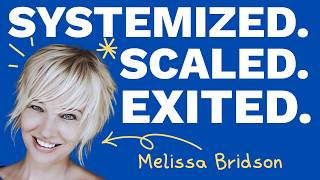
Melissa Brydson built Schoolstream from a school communication app into a multi-product SaaS acquired at a higher valuation after implementing documented systems. When rapid growth in 2019 exposed chaotic documentation, she adopted System Hub for onboarding and policies, making documentation a KPI. The fully documented systems enabled a record-fast acquisition transition and powered an AI support tool that achieved 89% resolution rates.
Chapters
it was all in System Hub. It was almost like handing a franchise over, like, here you go, it's all our systems. And literally, that handover was completed in record time, and the buyer was definitely an influencer in the transaction.
Welcome. Today we are joined by another one of our clients. We've got Melissa here, Brydson, from Schoolstream. She's been a client from a good number of years now. We were just talking back 2019 or thereabouts, and recently we got a message through that she was looking to leave System Hub. And whenever that happens, it's always like, ah, tell us what's happened, you know, why are you leaving the platform? And, uh, it was such exciting news. She has been acquired. And while it's sad to see clients leave us, it's also You know, we're torn because we're really happy when business owners get an exit. This is oftentimes one of the big goals that our clients are working towards that we help them to achieve. So we love to celebrate that. And I thought, oh, Melissa's got a great story and let's dive into that and see if we can inspire some other business owners. So maybe to start, Melissa, if you could tell us just a little bit about Schoolstream, a little bit about what you guys do and whom you do it for.
Yeah, well, Schoolstream was founded back in, I think, around 2012, and it was developed interestingly to solve a pain point that I was personally experiencing. But also I was working— I had a design agency before Schoolstream, and I was working with a lot of schools at that point doing a rebrand. So obviously with the name school in it, our market is schools. It's— we're in the edtech space. Schoolstream was developed to massively improve communication between school and parents. So for me, I was missing critical information which caused friction in my actual relationship with my daughter. And I was getting— here I was rebranding all these schools, they were paying me a lot of money for the new logos, uniforms, website, the whole lot. And I had a particular incident where I missed out on a milestone in my daughter's school life, and I was so furious at the school for failing to get that information to me. And I was like, well, you know what, I don't care about the logo, the uniform, the website. I actually care about good comms.
Yeah.
So anyway, that's how Schoolstream began. Um, so I worked with my co-founder to develop an app that was piloted in schools to begin with, and then we moved to a full software as a service business model. Obviously doing the startup is, well, you're rolling up your sleeves, there's a lot of hard work, it's a tough journey and particularly in the edtech space which is a particularly aggressive market because of the stickiness of those types of customers. Yeah, so 13 years to the day the business was sold which was which was weird on its own. When I saw the actual date, I realized it was a day that I started Schoolstream, um, 13 years before. Um, so yeah, software as a service, primarily servicing the edtech sector. We did have a sister product called Gopher, which was used in the commercial space, same tech stack, different brand name. And festivals like Splendour in the Grass and some of those big names used to use us to manage all their teams. When they're running festivals. Uh, then COVID came along and killed them. Yes. And we pivoted and we were used largely by the union. So, so two products there.
Yeah. I'm curious, were you building with the intention of selling from day one, or did that just present itself down the line?
Um, I think in the beginning it was really about solving a, a problem, and I didn't actually think I didn't have any idea it would do what it did. It literally took off in a way that I didn't expect and wasn't prepared for. And I think part of what happens to founders is you become CEO by default, right? I didn't, I'd run a business previously, but I had never run business with big teams before. And that was baptism by fire.
Yes.
Psychology degree would be helpful, I think, all future founding CEOs. Yeah, so I just forgot what we were talking about. What were we talking about?
I was thinking about whether or not you were building with the intention of selling or if that kind of presented, it kind of feels like you just fall into the role of CEO and you do the do.
Yeah, yeah. So initially just solving a problem, didn't expect it to get the momentum or scale that it did.
Yeah.
And obviously as things progressed and we started getting approached as early as I think 2015 for potential acquirers.
Yeah.
So very early in the piece, I realized that that was the end game. But that's, you know, that's what you don't want to be doing is diluting your focus from scaling your business to selling your business too early in the piece because obviously there's a formula around how valuations are worked out. And, um, yeah, so too early can be too, too soon.
Um, yeah. Was that the sort of trigger for you to start to think about systemization? Was it the scaling and the wheels are falling off, or was it, hey, someone's knocking on the door and we know we'll increase our valuation? Like, what, what was it? Because you said you started to get some people knocking on the door, and that was probably just a touch before you really started getting serious about systemization.
Uh, yeah, it was way— it was actually way before we started getting serious. Um, what we realized is, I think around 2019, we— our team was growing very quickly.
Yeah.
And as was a lot of the, the way we did business, if you like. You know, how we started versus how we ended were very, very different. Um, and we were using, uh, G Suite Google Drive to store all of our documentation. And it was a big soup. Like, I was getting increasingly frustrated at trying to find things on the fly in the hurry without knowing the exact name of the file or the exact name of the folder. It was, it was hard to locate things quickly and easily. The other thing that was happening was we were onboarding. We expanded our team quite significantly in 2019. So you've got inductions and onboarding which were becoming extremely resource hungry, um, and it really was just a duplication of the same thing over and over and over again. So we decided we need better, better systems for onboarding. Um, team members was a really a primary driver because you've got policies, but we had different areas across the business, whether it was customer success support, sales, accounting, account management, all the various different roles within the business. So we wanted each role to be well documented so that we weren't having to have this real hands-on onboarding approach. So it would be a self-paced onboarding for new team members as they joined us. So that was a, that was a key one which proved to be incredibly valuable throughout COVID and post-COVID because we were recruiting remotely, and we went to a remote business model, um, post-COVID because we saw how well it could work, um, when we were all forced to work from home. Um, so then that became an incredible tool for onboarding, um, remote employees. Um, and obviously we had all of our policies, all of, uh, any question It was like our internal Google for the business. So you get team members who, some have been with us for years, want to ask the same questions again, or, or we'd have new team members asking questions, and by simply logging into System Hub, they could search for whatever it is they needed an answer for. So we'd say, go and find it in there. If you can't find it in there, come back to us, to try and create a culture where we didn't have this demand of people asking the same questions over and over again. So super powerful in, in, in that instance. And then obviously there's processes from a management level as well, you know, um, that I was able to find really easily because the, the structure of System Hub is, is really, really, uh, it's easy to navigate everything. You've got all your folders down the side, you can see which sections to search for, um, various documents. So yeah, we, we loved it. Um, probably the toughest part for us initially with setting up System Hub was getting people to write the documents. Um, yep. But what we, we did was we ended up making it a KPI. So our team members have KPIs each month, and part of that KPI became to complete X amount of documents, and we, we ended up getting it all done successfully that way. Our team were rewarded for hitting their KPIs with what we called an amazing day off each month, so there was good incentivization to get that documentation done and completed.
I love that, and you guys did it when it was hard work, as in AI now has accelerated the development of process and policy and training so much. Um, and I love seeing the story of when business owners invested in that stuff pre-AI, because it's hard going, like, and there can be resistance from the team, and not everybody gets on board. So I love the idea of incentivizing and having a KPI. Did that come from, like, were you— are you a systems person naturally, or is this something that you uncovered? I mean, You're a mum, so mums I feel like are naturally organized, they're hardwired. I'm just curious though, do you see yourself as a systems person?
Well, I think without systems things can fall apart pretty quickly. Yeah. And certainly, look, in the infancy of a startup journey, you are under-resourced. You know, there's so many hats you're wearing, there's so many jobs you're doing that systemization just feels like another time sink and you don't have that time. But it's like anything, the further you kick that stone down the road, the bigger that job becomes up ahead. Yes, in answer to that question, I definitely love systems and I love data because systems don't fail me and data doesn't lie. And they were, for me, they were two I guess, of the key things across my company that helped me get where I was going.
Yeah. How did you come across Systemology and System Hub in particular? Like, when it came to kind of making some choices, I mean, we've made some very deliberate choices with System Hub around simplicity, which you kind of identified before, which is it's just easy to navigate around. And a lot of people, I think, overcomplicate process. I'm just wondering, yeah, how you came across System Hub and what made you go, yeah, this is going to be the platform we grow with.
We actually— our CFO at the time mentioned a lady that he knew who specialized in systemization. And he recommended I have a chat with her and see how she— because at that point we had so much going on, but we needed to address this issue. Yeah, chat with— and her name from memory was Linda, but I mean, Linda McMahon, I think.
Yep.
And she came into the business and she had a look at the, the mess that we had. She helped us with her system, which I think maybe is another of your products. And the structure because it seemed so big at the time and without some sort of structure, it felt like something there's no way anyone ever wanted to do. So she's the one that introduced us and recommended System Hub.
Yeah, and the, the journey to systemization, you're right, it's a— for many it can be a big beast and where do you get started and what do you document first and how much detail do we put into this? Like there's a lot to navigate through. At what point did you go, this was the right choice and building systems is working for us? Like, because there's a lag time. You put a couple of systems in place, you don't see your return straight away. This is actually why a lot of business owners sometimes fail to systemize. They start a little bit, they stop, they forget about it, they get busy, and then they go, oh yeah, we tried that and it didn't work. But I'm wondering, over what period do you feel had to pass in doing the work before you really started to go, ooh, this is working for us?
I would say it was fairly swift for us, David, to be honest. I think because we started working on the systems in 2019, which was just pre-COVID.
Yeah.
Obviously by 2020, I can't remember, '21 maybe, we were moving to a fully remote model. So all of a sudden we had all these incredible resources for onboarding remote team members. So it was, it was really immediate. And, and that included all the policies and everything else like that too, just having everything in, in one place. Um, yeah, so I would say it was very quick. Yeah, look, there was, like I said, there was quite a lot of resistance initially, including from myself, you know, because my workload was already— well, yeah, because it's, it's not enough hours in a day. Um, but once it was all in place, I was, I was, I was so pleased that we'd done it. And it became obviously not only useful in that instance, but it continued to show its usefulness as we went forward and, and part of what I never thought of back in 2019 when we started this is this documentation that had been prepared and part of the team members' KPI was to make sure it was updated and relevant because obviously in tech space, certainly things like the way we manage support queries or various things across the business processes change. When we started implementing AI for customer support, Yeah, that documentation was already done, and that was incredible for us. You know, that, that had us up and running a lot more quickly than if we had to start from scratch.
Yeah. Oh, hey, I know you're tuned in right now, so I'll keep this super quick, but you like awesome YouTube videos, don't you? Well, there's not really that many YouTube channels that create great content about how to systemize your small business. So I want to make sure that you catch every video that I publish. So if you haven't already, firstly, give this video the thumbs up and then go ahead and subscribe to my channel. You can even hit the bell notification to make sure that you're the first to know when I publish anything. So go ahead, do it right now. I'll wait a sec and then I'll transfer you back to the video. I'm definitely finding the clients, our clients are moving a lot quicker with AI because they're clear on the process and then they can go to AI and say, hey, how do we do this faster, cheaper, and better? And we, we already have that clear, well, here's how we're currently doing it. When you saw the AI opportunity, was it like immediately obvious to you or did it take it a bit? And how have you gone translating some of what you were already doing and re-engineering and thinking about, well, where does AI fit into this?
Well, we introduced Feed into the business for both customers.
Yep.
But we also used it internally for team members. So a lot of the data that had been prepared in System Hub was dumped into Finn. And so that's where it became powerful because getting people like AI's, AI is only as good as the input, like the output can only be as good as the input. So a lot of the, the out, the, the, um, the input has to come from you. AI doesn't miraculously understand your business without it being fed that information first. So that's where it became very powerful for us. A lot of the work was already done.
Yeah.
And obviously AI is smart and what's machine learning, it keeps getting better and better, but you've also got a base level to begin with. And we had all that information to dump straight in there, which, yeah, we were ready to go to market very quickly with it and launch live. And I mean, our customer satisfaction rates were 100%. Our support resolution times were resolution was around 89%, meaning I went from having a massive team—
yep—
a much smaller team.
Yeah.
And, and I attribute part of that speed to being able to roll that out, to having all that documentation previously prepared in, in System Hub.
Is, um, it's sometimes hard for me to like quantify the impact that the systems can have on a business because it's so wide-reaching. It touches every role, every department, every part of the business. Like, systems is about capturing best practice and making it repeatable so we can start to transfer the knowledge and get everybody following the same way. Um, is there any way, like, how Could you, is there a way to articulate what the ROI of doing systemization has been for you? I don't even know how you would calculate it.
Well, I mean, at the end of the day, a business or a company is a system, right?
Yeah.
There's a lot of systems within a broader system. And I guess for context too around our recent exit, That made a huge difference in the handover. It made a huge difference in the value offer for the buyer because the business was completely documented, systemized. So often part of— I mean, everyone's story about being acquired and the handover and the transition, it varies, and it can be quite lengthy because you're having to get all that intel and all those systems and structures translated and over to the buyer. It was all in System Hub. It was almost like handing a franchise over, like, here you go, it's all our systems. And literally that handover was completed in record time, and the buyer was— I'd say it was a— it was definitely an influencer in the transaction. Um, because you can imagine how expensive— the longer and more protracted that handover is, the more expensive it is on, on multiple levels, whether it's productivity from the, the new buyers and the, the cost, the duplication of running dual services, people, and costs for that transitional period.
Um, definitely see— I mean, when someone's buying a business, they want to de-risk that purchase as much as possible, and we always see well-systemized businesses command much higher multiples because the risk is lower, because you're able to remove key person risk and you're able to demonstrate that the business can run without the founder. And like, these are things that the buyer is considering. So it's, it again, depending on what the exit is and the valuation, like, it can be hundreds of thousands of dollars, if not millions, as a result of having a well-systemized business. So it's, um, things like that. Like, sometimes you only learn that after the fact, um, and you have no doubt you've probably learned some really interesting lessons along the way. Like, if you look back on the journey, were there any additional things that maybe you really have taken away from going from start, systemize, scale, and exit? Are there any things that stand out for you?
Oh God, I mean, so many. There's so much learning that happens in this journey. Um, and I don't, I don't really even notice where to start with a question like that because it's, it's a little subjective. It's you know, it's what you know at the time, you do your best with. And certainly I can see why people who do startups and exit, that the next, maybe the next time they do something like this, they can go straight to success a lot more quickly because there's so much to learn on this journey. But I would say that I think systemization is a critical It should be set up right from the start. Yeah, I think it's really, really important because systems, systems very rarely fail. Humans fail. Humans forget that it's reliant on people's perceived idea of how things should be. It's not as reliable as a system itself because there's no emotion in a system. It's just that. So I think it's a really important part. What have I learned? Having systems really helps manage people as well. I think the toughest parts of this journey for me was people, humans. And I don't mean that— I love my fellow human, but yeah, it's everyone generally has a— is motivated in different ways. You know, I always thought money was a big motivator, but works out that, that the way they're treated and how they feel in their role and their time is more valuable. Like, all these— there's so many things if I hadn't known early on that I would have done a little differently. And that your team is your engine. You've got to get that right. Um, and part of getting that right is having really good systemization and framework within the organization that still supports innovation. And people to be who they need to be to thrive in their roles. But that core structure, it's like anything, without it, everything kind of just doesn't work and flow so well.
Yeah, I love that. Um, if you look back now, is there anything that you're particularly proud of about how the business was run? Like, now that you kind of go, wow, I've done that journey, because like I said, in fact, I said this just before we hit record, the vast majority of business owners don't get the exit. And they take on so much risk. They work so hard. They grind it out. And maybe they pull a wage as they go. But when you dollar cost average out, that wage is probably not great. The biggest payday that they get, the reward for taking on all of that risk is the exit, and so many of them don't, don't get it. So there's a lot to be proud of just getting to the finish line. Um, yeah, I don't know if there's anything that you look back now on and go, I'm just proud of what we did because we did it this way.
Yeah, I mean, I think there's a lot of things I'm proud of, David. And I mean, first and foremost is I was able to solve a real problem. With communication between schools and parents, and that is that I was able to— I mean, there were so many things at play there, you know, family structures in modern societies are not, you know, they're complex. Maybe parents aren't together, they've remarried, they've partnered, they've had more children with them, etc., etc. Just making sure that you can keep school life really inclusive for everyone in the family. Yeah, language barriers. So our app translated in over 100 languages, and Australia is very multicultural. Bringing that inclusion into school environments, making sure that kids' milestones weren't missed. I'm super proud of all that. Not to mention, I mean, I am Byron Bay girl at the end of the day, but we did save a lot of freaking trees. Yeah, that's something, um, That's, you know, we did the math one year. It was, it was an enormous number. Um, yeah, everything was now being pushed out through the app. So I'm proud of that. I'm proud of the journey I was able to take my team on, some of which were with me nearly the whole journey, and see them come in in these very sort of entry role levels, moving into management, and now some of them in global management roles.
Yeah.
Super, super proud of that. The state of the business, so that was some of the feedback was they had never seen a business in as organized as in good shape as ours was.
Yeah.
And that in many respects System Hub plays a big role in that and that taught us about the importance of these systems. So I've got really good When I think about what I do next, obviously advisory and consulting is going to be a big part, but I think that being able to let people, educate people on the importance of the systemization, I think is something that I would be particularly good at now. And then from there, surviving a 13-year startup journey, that's something I'm proud of. As you mentioned, there's not many founders that get to enjoy that achievement. And I think one of the number one important things is our customers loved us. And this is something that the buyer just wrote to me about recently and said, wow, you know, like, not many founders out there have done a job like you guys have done. Like, not only are you delivering a great product, the customers absolutely love you. And that means that we did our job well. So I could keep going, David, but yes.
Yeah, yeah. Well, I, um, I appreciate you just taking some time and sharing that story because someone will hear this and then they'll go, wow, I see a little bit of myself in Melissa. And they go, you know, if she can do it, I can do it. I mean, that's a big part of what we do and, and just so happy for you. I mean, equally, you're kind of like a success story for us. While you did leave the platform, you know, you're with us for a huge part of that journey, and we played such an important role in, in getting the fairytale outcome, which is what we're really here to do. Um, so yeah, just, just wanted to say thank you so much and looking forward to watching what happens next. Actually, maybe that's the last question I want to ask is Um, you mentioned about some consulting and moving into that space. Have you, have you thought about, you know, that there's a big part of your identity now that's changed? You, you used to be the, the owner of School Stream and now you're not. So what now?
I know I don't have an issue with that. I, I'm ready for the next, um, phase, I guess, of my journey. And what I do want to be able to do now is share the intel, the wisdom, the experience that I've had with other founders because it is a tough gig. It's not easy. It's not for the faint-hearted. You are literally like a racehorse. All these laps around the track and you're not particularly well supported. And even when we look at the investment world, you know, they're putting all this money behind startups and in particular founders, but they're not looking after the founders. So I really want to move into that work where I can support other founders in their journey, give them some sound advice on what I've learned, including things like the importance of setting up systems and just generally help them get to their destination more comfortably and better armed. And I think also the importance of looking after yourself. Like I was, after 13 years, I was cooked.
Yep.
I'm not gonna lie. It's, you know, that's why I'm taking a bit of a rest now. It's been a lot because you're running, you're running fast and you're not like when you have 2 weeks off, you have 2 weeks off. Things still happen and you never stop thinking about the business. So yes, future goal is to go in and support other founders in their journey. and help them. I mean, another strong area, an area that I was really proud of in our journey, is we in 2019, the same time that we, um, started looking at systems, we also started working with a behavioral economist. And I think what a lot of startups don't do well initially is the monetization, because there is a relationship between their idea of what the product's worth and what it's really worth. And we doubled the price of our product in 2019 and our CFO at the time was shaking his head. He was like, what are you doing? I'm like, well, if we don't start making some good margins here, we might as well just shut the door and go to the beach. Like, this has to happen. And we increased our prices by 100%, but we had two markets. We had a new market and they don't, you know, it's apples for apples. They don't know what they don't know. We had existing customers, some of which had been with us for quite some time. We were doing this massive increase. So I think that that's a really— I see that in a lot of startups, the actual— they're too cheap for what they're delivering. And I think that software as a service, it is a service at the end of the day as well. And it's not just the product that they're paying for, it's the support that comes with that and the training, if you like. Yeah, and seeing startups get that right, start monetizing properly early on. Otherwise, you're going to need more funding. The more funding you need, the more stressed you become. It's, you know, it's, there's a lot of clever strategy that can be utilized to get where you want to go quickly. Well, I can't say how quickly you're going to get there, but save yourself a lot of years of learning the hard way.
I love, uh, because I try and spot patterns when I can, and when I chat with different clients that have got different exits, I've seen this pattern a few times where they say— and you hit both on the head— where they said some of the two key biggest drivers for a great exit, uh, financial performance, which goes down exactly what you're talking about, making sure that you're priced correctly and you're making good money for it, and the systemization. So I'm looking forward to watching the next chapter of your journey. I hope we have a part 2. I'll let you catch your breath and just adjust and figure out your next thing. And yeah, it'd be great to kind of check back in with you and see where you're at a couple of years down the line.
Thanks, David. It's been good chatting. And yeah, and thanks for all the years of supporting us and helping us realize our dream through your product. So, well done.
The pleasure is ours.
More from David






Remember me? Subscribe To My Channel For More Free Business Systems Content 📈




