How To Become A Business Process Manager - Case Study
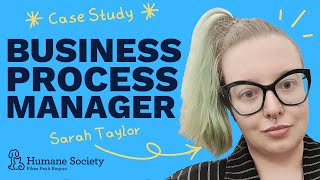
Sarah Taylor, Operations Training Manager at the Humane Society of the Pikes Peak Region, built systems across five locations with 250 staff. She cut trainer time by replacing manual onboarding with documented processes, made systems stick by reducing clicks and adding search keywords, and says small businesses should start with one process owner instead of trying to change everything at once.
Questions this video answers
Operations Training Manager
Five locations
Approximately 250–260 staff
Since August (year not specified in transcript)
Chapters
So if you are looking at creating a system sort of approach, make sure that you really are upfront with your staff, that it is a very large endeavor, so that they know that you're aware of that and support your staff through that process.
Hey, guys, it's Dave from System Hub and Systemology. Today. I'm here with Sarah Taylor from Humane Society of the Pike Peaks region in Colorado. Now, for those of you who've been watching along, you might have seen the interview that we had with Julie Justman, who is the vice president. And in that call, you might remember, we were talking about the systems champion. Sarah and I oftentimes don't get to chat with system champions enough, and I really like to shine a light on the work that they do because they're such a big driver in getting the work done and building a systems culture and really just being the champion. So I thought, yeah, if I got the opportunity to chat with Sarah, it would be perfect. So maybe, Sarah, just to start, I don't know if you can tell us a little bit about how you see your role and the work that you do at Pikes Peak.
Yeah. So I've been on several different roles, but my current role is operations training manager. And Systems plays a really big part in that because we have to have a way for people to not only get the training in person, but oftentimes there's training afterwards that they need to look back at. So I need a place to make sure that they can easily get that information. And a lot of the trainings also relate directly to, like, standard operating procedures and different documents and things like that. So finding a way to make it to where they can easily navigate through that is really important, especially for your line staff who are really busy, you know, with customers all the time or what have you something to make it easier for them. And that's where my role is, is to try to get not only that training out to them, but to also make it accessible.
Yeah. And for those who don't know too much about the Humane Society and might not have seen the earlier interview I had with Julie, can you tell us just a little bit about what you guys do and whom you serve and maybe even a little bit about sort of the size of team.
Yeah. So the Humane Society of the Pikes Peak region actually has five different locations that we actually are a part of. We have an animal law enforcement contract, and four out of the five of those locations. So that's a big part of animal law enforcement. And then we have two brick and mortar Shelters that really take lost animals as well as adopt animals out. We also have a lot of individualized programs like a foster program, trap, neuter release for community or feral cat populations that are just really big. And then we actually have wellness and vet services for both our community and our shelter animals. So as you can imagine, all that in five locations equals a lot of employees. Usually has about 25 to 30 staff members. So a significant to our very small but mighty teams of two or three. So we needed stuff that could hit, you know, both of those. And the unique thing too is some of those teams work together but at different locations. So we needed something that could easily make it to where they could still be seeing the same information even if they weren't in the same place.
I didn't quite catch it because it dropped out for a second. But what would the total number of staff be across all of the locations?
Roughly about between 250 and 260 right now.
Yeah. Okay, so really large team. And with your particular role, how long have you been in that one? And how were you kind of identified to be the systems person? Because I know you're doing some of the training. So did it kind of make sense that it went hand in hand?
A little of both. So I've been in this position since August. It's a fairly new position. So it's a fairly new training process that we're going through. But we've been working on kind of the system side of it. When I say 2019 or 2020, one of those. One of those years, they kind of blend together with everything that happen. But when I was here at the shelter during that time, I was operations manager at our smaller location. So it was really important for us to have somebody who could kind of champion the system and figure out how it could be relatable to our staff, Especially when so much of like our vice presidents and our directors and all of that were at the Springs location. So I kind of started pulling the system side at that point and trying to get it going. So then it was just kind of a natural fit for it to continue to be a part once I took this role.
Yes. Yeah. For a systems champion. I know for smaller businesses, sometimes it can be hard for them to identify this role and allocate resources to it. It makes sense. Like being larger, like you guys have 250 staff, so having someone dedicated for training and systems and thinking about new recruits and onboarding kind of makes sense. I'm just wondering what your thoughts are. I know it might be A bit hard to speculate because you've been in this role for quite some time, but how you think this would be applicable for smaller businesses. Like is this something that you intuitively go, oh yes, you need something like this in place or it's important because you see the result of it now. But it's a much larger.
Yeah.
I'm wondering your thoughts on. Yeah. Applying.
I definitely think so. I think small, small corporations or small businesses still need to look at something because relying on word of mouth only gets so far. And I feel like with smaller corporations when they don't think about like systems champion, like a, a very applicable way to get information across to people in a very accessible way, you, you falter and you find a lot of things that you thought were happening that aren't happening. Or there's just like this very minor shift that just grows and grows and grows where you get further and further away from what you were originally looking at. Right. And that migration is just natural to happen, especially with different people. And you know, if you have people that are promoted up or, you know, moving or different things, and that's not new just to a large corporation, you know, small, small corporations deal with that too. So I think it's really important to have somebody who really is dedicated to making sure that system is working and that, you know, if they were to leave, there is somebody there who can kind of pick up and make sure that is continuing to go and be most usable for everyone. Especially if you have people on different shifts or anything like that.
Yeah, yeah, definitely. Tribal knowledge can only get you so far and then you, you definitely get unstuck as you get larger when you think about yourself and really the qualities of a systems champion, like I don't know if you can think about yourself, what makes you good at the work that you do that might help business owners when they're thinking about who might make a good systems champion, what qualities to look for.
So I definitely think there is a part of being detail oriented that is necessary, but it's a balance. You need somebody who can be detailed oriented to make sure that it functions appropriately, but they also need to be able to still understand a big picture of what you're trying to go for. Because, and this is from something that I have learned throughout this process, if you get too caught up in the itty bitty details when you are looking at system building and stuff, sometimes you don't make progress the way you should. So it's really important to be able to still have somebody who can Orient to that big picture and know when to be detail oriented. I also think it's very important for them to be able to understand that there's different ways of learning, different ways of thinking, different ways of teaching and training. And when you're looking at a system, you want to make sure that you have all of that in mind. If you do have, you know, somebody who is on the floor all the time versus somebody who's at a desk all the time, you need to make sure that it's going to work for both. You need to make sure that person who, you know, does really well with videos has a way to look at that, but they also have a way to. The person who, you know, sleeps at the movie theater, no matter how good the movie is, they need to be able to get that information too. Right. So it's really important to being able to understand those different sides of it. And if you don't know, because we all have our, like, best ways of learning or best ways of doing things or completing a project or whatever, expand it and ask and talk to people about how they would look at it. And that can kind of open up your mind to figuring out how to make it work.
Yeah. Because you're newer to the role, it sounds like you inherited quite a bit of systems and process. And I know, you know, that Humane Society was already using System Hub and had some of the structures in place. As you've come into the role, is there anything that you either look at with fresh eyes or as you've been going where you're like, oh, I wish I knew this sooner about building a systems culture? Like, have you learned anything where you're just like, oh, if you do this, it makes your job easier?
Yeah. So I've noticed if you can package things together to deliver to people or the less clicks that somebody has, the better. Even though it's the same amount of information or material or even the same website, those sorts of things, if they feel like it's less clicks that they have to go through, it's something that messes with their brain to where they think that it's less that they're doing. So kind of figuring out how to, you know, the learning tracks and System Hub are an example of that of, you know, where you can kind of see through everything. Is it really easier than doing a search if you knew exactly what all the searches were? Maybe not. But does it feel easier for staff? Yes. I can also speak to the fact that I was part of getting a lot of the policies and stuff up onto System Hub in my last roles before my training manager position and that was a huge endeavor. So if you are looking at creating a system sort of approach, make sure that you really are upfront with your staff, that it is a very large endeavor so that they know that you're aware of that and support your staff through that process. Because at the end of the day it helps so much. But there's a lot of front end work to put in before you can really, you know, it's not one of those things like you put it in the microwave and two minutes later you have that satisfaction. There is more work to it, but it is beneficial and you just really need to make sure that your staff know and you keep reminding them and giving them the support of. I know it's hard, but we're making a lot of progress. And then they see the results and making like those, you know, celebrating the minor accomplishments, you know, you got your first, you got your first policy, your first training up on it, you know, you sent your first new hire through the systems or you know those sorts of things, celebrating those. Because that means a lot for your staff as well as the people who have been working on it.
I know you do a lot with the onboarding and it's like one of those initiatives that you're really digging into at the moment. Is there anything? Because I feel like that's such an important piece because it's the bit that helps a team member to say, this is how we do things here and it's that early indoctrination of those processes. Is there anything that you've thought about where you've thought we could build the systems thinking into that onboarding or how do you show the team that we have a way of doing things and this is important to us and this is how we do things here. Do you have any insights there?
You know, I think that's something that we're, we're still doing a lot of trial and error to figure out the best way to, to use it and to look at it. I think a lot goes a long way to give the new employee access to play around in systems. You know, I think that goes a very long way. Making sure you're using like your search words and stuff like that really well. You know, that's something that I've thought about when I've had staff who have come to me and they're like, we know that this is a process, but we can't find it because you know, we have 800 processes and policies and they're trying to use the search function, but it's not like at the top result or whatever. Talking to them about what search words are you using to try to find that and maybe adding it into your search words. Because new staff have different ways of looking at things, and we may not think of those words or that way of searching for something. So just realizing that you can learn from them as they're working through it. Also making your more senior staff feel very comfortable so that they can help point them in the right direction. It really is like a entire cultural fit for the organization. It doesn't just end with the training manager saying, like, hey, we have this. You have to bring it up constantly throughout the training of like, hey, that's a great question. You know, where you can find that information. Let's practice going on and looking for it. You know, different things like that I think is really significant when you're looking at that onboarding process of making it more useful.
How do you create a culture of, like, updating the systems and processes? Is this something that you encourage team members to put suggestions through? Is there a particular owner or can anybody do it, or how does that work?
Currently, we have specific owners. That was something that we decided on when we first started looking at the systems specifically because we are in so many different locations and a lot of policies go across, sorry, I'm in a shelter. So there's dogs barking. But there is a lot of information that goes across different locations or different departments. So it's very important for us to have owners so that we made sure that, you know, the customer service team in Pueblo didn't update something that affected the customer service team in Springs that people didn't recognize yet or have a conversation with. So that's kind of where we went with the owners. We are really trying to create a culture of, like, a schedule of updating things, of looking at, like, what owners have, what responsibilities and, you know, best practices to really look at these things annually because you have that migration and those sorts of things at least. So we're really talking about, with different employees, who the best group is going to be to do that. It may not be managers. It may be, you know, your lead staff members. We brought them in a lot when they were creating policies because they're the ones who do the work. So we wanted to make sure that they had an outlet to talk to people about, like, I like what your process is saying, but that's not how we're doing it. We need that kind of check and Balance. So we made sure to always filtrate it out to, like, the. The smaller group that it affected the most, make sure that they gave editing and ideas before we created it and put it, you know, fully into the system and push it out to everyone.
Definitely find team members often support what they help to create. So I love that idea of getting them involved. Then it makes it much easier for them to go, well, we built this. This is our thing. So I really like that. Are there any stories that you can think of or wins or something where you're just like, hey, having the process captured here or onboarding a new client, you know, it really helped here. I don't know if there's anything that comes to mind where you're just like, it would have been an absolute mess without it.
Yeah. So we had, you know, when I was down at our smaller location, we had a big turnover rate happening. And at that time, we also had lost our most senior staff member on the team, who had also been our trainer. And what we didn't realize is that a lot of the training materials and stuff that they had used was with them. We didn't have it, like, as an organization safe somewhere, which were like, oh, no, like, now we have to kind of start over. And we had a very competent person to come in and take on this trainer role. But, you know, it's kind of like learning how to swim. Right. You know, if you don't have anything, it's hard to know. So being able to point her to systems of like, hey, these are all the sops that us as managers and supervisors would like for them to know. Here is also, like, the policies that we would like for them to know. She was able to take that and kind of compile a training manual that helped her train the new staff. And she also was able to create checklists based off of the policies. And, you know, those things that do get forgotten. You don't forget the two primary functions of your job, but you forget the ifs and buts when you're training somebody. So it was really helpful that way. Also gave her a lot of insight. She hadn't had a lot of insight on, like how to write a checklist or how to write a standard operating procedure or anything. And that's something that she wanted to make a goal for herself. So it helped give her some really good examples and tools of what to look at and ability to kind of play with it and try it before we went somewhere. So I think it really did help her in that way. Instead of Having to rent all the different departments and figure out like, what is your policy on this thing. We were able to look at it there.
Yeah, I love that. I think the work that you and the team do there, it's just a great example of what this looks like at scale when you're operating. And I think a lot of the problems and challenges that you see for your business, it's almost like they're magnified because you've got turnover and new staff coming in and then it makes it really obvious when something falls off the rails. So I think at that end of town, systems and processes are important. I always like to kind of bring it back to the small business owner as well. And a lot of them, like big problems often start out as small problems. And it's very hard to change culture in an organization of your size. Like if you guys tried to roll out process now and you had in place, it would be such a challenge to do because you have to change the mindset of 250 people. Whereas the easiest time to do it and build this into the DNA of the business is when you're small. I don't know if you've got any thoughts on that and the idea of changing culture and what it takes.
Yeah, I mean, so like I said, I was here before System Hub was brought on and then helped through that process. And then on the other side of it now to where it's not new. But you know, there is something that is change burnout, you know, so you do want to be very cognizant of that with your staff. And if you are going through something that's going to be a big change, which systems would be a big change. Right. Even for a small business, it's still a big change in how you do or how you work and how you function. You want to put in a lot of effort into that and really let them know the pros at the end of it and also, you know, make their feelings heard of. Like, you're right, this really does suck right now. Like, there's no way around it. It does suck right now to do this. We know that that's a hard process to do. But letting them know that there is that humanness to it and that, you know, in the end it's gon be helpful is really important. Bringing them into the change as much as possible or that cultural shift as much as possible, I think is something that's really important. And you know, there's ways to do that where you let them know that this is being done. Because you heard that it's really frustrating that, you know, I'm getting inconsistent information from different departments. Yeah, we heard that. Is your. Your one of the areas where we can improve and this is a way that we can improve that. So making sure to bring it back to their emphasis in it, because it really should go back to what their problems are and what their problems with the culture are and different things like that. We also knew that for the shelter, we really wanted to create this culture of continuing growth and also of transparency. So that was something we really talked a lot about is, you know, do you know standard operating procedures for animal care have to be strictly password driven, where you can only get to them if you're animal care. And, you know, when we broke that down, it was like, well, no, it doesn't. And just bringing back some of those layers of, you know, secrecy that you didn't realize were there but just kind of happen, I think promotes a lot of trust and you have to have trust to. To get that culture change.
Yeah, I love that. I think, like a lot of people, they just, once you. They see the benefit to them that that's the biggest thing and letting the team members see that. We're putting this in place to help you. And all problems in system. In business are systems problems. So I think presenting it that way. We heard that you said this and by us rolling out this, we are looking to adjust the way that we're doing it, which, which fixes things, which makes your job better. I think the last question I'd like to ask you is around now that you've seen, because you were there before and now you're there after. So I don't know if, if you've got any insight, you know, the differences between a more systems driven culture versus one that's not. If. If there's any notices that you have on that.
I do think there are some really noticeable things. So the transparency is big one for us. You know, it's transparency amongst the departments which I felt was very kind of blocked before. So it kind of opened up to that. It also opened up this idea that staff could kind of fix their own problems or get some of the knowledge that they needed on their own. So if they got, for example, a parakeet in and they had never dealt with a parakeet bird, they knew that they could go on to systems and find a care sheet that told you the basics so that you could take care of it, the basics for it until you found somebody who may know more. So it took some of that reliance on management for those like putting out fires, we like to call them, that aren't really fires, right, and being able to make them more aware and use their tools. I also think it has helped a lot with starting communication between different departments and different locations. Before, there wasn't really any type of.
More from David






Remember me? Subscribe To My Channel For More Free Business Systems Content 📈




