How To Build A Positive Company Culture - With Cameron Herold
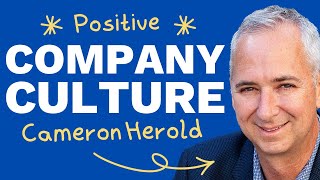
Cameron Herold scaled 1-800-GOT-JUNK from $2M to $106M by building systems early and keeping them simple. He explains how to hire for interdependence, create a no-blame culture, and prioritize which systems actually drive revenue instead of just documenting busy work.
Chapters
These are systems in the Invest in your leaders course that I use to train all of the leadership team at 1-800-GOT junk, which we took from 14 employees to 3,000 from. I was there as the second in command and we went from 2 million to 106 million. So I trained everyone in the company in these systems that I created and I rolled out.
Today I'm joined by Cameron Herrel. He's a Canadian entrepreneur who I got to know when a friend of mine suggested I read his book the Vivid Vision and then suggested that I write the Vivid Vision for Systemology, which I did. He also suggested I read a bunch of other books like Double Double, which is another book of Cameron's. And I've just recently read the latest book, the Second in Command. And it's clear Cameron knows his stuff when it comes to growing and scaling companies. He's done it numerous times before. I think one of the most notable companies being 1-800-got- junk, where he was the COO and and took it from a $2 million turnover to $106 million turnover. And under his leadership, 1,800-got- junk also got named the number two company in Canada as the most desirable place to work. So he's a master of building great team cultures. So we'll talk a little bit about that. He's also the founder of a company called COO alliance which is a community for second in commands. And I couldn't be more excited to have him join us today. So without further ado, Cameron, love to welcome you to the call.
Hey, David, thanks so much for having me. Appreciate it. And knowing that you're from Australia and that you first learned about me from the Vivid vision. I just dropped in what I used to call the painted picture, which is now termed the vivid vision. But I just dropped in the painted picture for Red Balloon days that Naomi Simpson wrote. This is going back a long time. This is probably 2010, so a 13 year old, you can see how small her company was back then. And now I think she's on, you know, Dragon's Den in Australia. She's a pretty big name in the Australian market.
So yeah, she is an amazing force for female business here in Australia. So I'll definitely, I'll include a link to that painted picture along with this interview. I think what a great way to start. One of the things I'd love to explore with you is firstly because we talk a lot about systems and processes just to get your thoughts on systems and processes. Like how do you feel about it? Some people like them. Some people don't, some people actively avoid it, and some people are systems junkies. I'm not sure where you fall into that spectrum.
Yeah, I wouldn't say I'm a systems junkie because I'm an entrepreneur. And most entrepreneurs, from what I found in Dataset over the last, I've worked with entrepreneurs in 28 countries, physically in person in 28 countries with entrepreneurs. Most entrepreneurs like the idea of a system for everyone else, but not for them because for us it tends to kind of get in our way a little bit. So I wouldn't say I'm a system junkie. However, I believe in systems probably more than most people because I've built a few different franchise organizations and the only way you can truly scale a franchise organization is to have really good best practice systems in place that the worst franchisee in the worst market with the worst employee can, can actually deliver at the highest quality. Focus areas. Right. So systems are critical for scale and critical for delivering on your promises to the customer.
When did you discover them or how did you come across it? Was it.
Yeah, well, I was groomed as an entrepreneur. I grew up in an entrepreneurial family. My dad was an entrepreneur, as were both my grandparents. My brother and sister and I were all raised to be entrepreneurs and we've been running our own companies pretty much forever. When I was 20 years old, I had 12 full time employees and I signed a franchise agreement as part of a house painting company that went on to become the largest house painting company on the planet. So when I was 20, I was given a 360 page manual with all of the systems on how to run this house painting business. And I was so nervous of failing that I pretty much memorized this manual. I mean, if it said a yellow keychain, the keychain had to be yellow. Like I didn't even question anything. It was like, I know if there's a better system, they'll tell me. So I'm just going to do what they tell me. And that was really what showed me how easy business can be once you follow the cheat sheets. So I think of systems as the cheat sheets for business.
And when you're starting a new business or I'm wondering at what point in time you think it's time to put systems in place, if it's from day dot or when is the right time?
Right away. And it's interesting, there's a really great book by Michael Gerber called the E Myth or the E Myth Revisited. And he talks about the fact that people don't fail, systems fail. And at the earliest stages of building your company to put systems in place as if you're going to franchise even if you have no intention of franchising. And by doing that, by systemizing everything, it allows you to delegate faster, it allows you to find ways to actually scale the business in a much more profitable way or a faster way. It allows you to put kind of predictable measures in place. It also forces you, I think, to think through the business and have a lot more clarity into it. And the easiest approach that I've ever found for creating systems, if you can't write the system down on a post it note like that simple 2 inch by 2 inch piece of yellow paper, then you're over complicating it. Right. A system should be able to be written down on a post it note and then you can stress test it in a Google Doc or a Google Sheet for a while and then after you've perfected it. So but I think so many people overcomplicate it by trying to put their system into a software program when they haven't put it onto a post it note and just worked off of that for a few weeks.
I think that keeping it simple obviously makes it easier to get followed and adopted because that's always one of the biggest things like how do you build the culture of. This is the way that we do things here and we follow process like it starts with you but then. Yeah, passing that onto the team.
Yeah, we learned this back at College Pro Painters. Again I got to the very senior level at College Pro Painters, which was this world house painting company where I was recruiting franchisees and then training franchisees. So to give you a perspective, we had to go out and franchise or sign 800 franchise agreements in four months. And then those 800 franchisees had to hire 8,000 university students in six weeks. And then over the course of a four month summer, we would paint $64 million in houses and then all 8,800 kids quit and went back to school and we had to do it again. So I learned very early on how to create these systems and how to put these systems in place and how to follow these systems. So what was the starting point of.
Your question though, I'm wondering then because you fell in love with the result that systems brings and you follow it, but then it's passing that on to the team and building a culture.
Yeah, so the culture that we found was hiring for what we call interdependence. So we looked for franchisees that were dependent enough that if a system existed, they'd follow it. But they were independent enough that if there was no system, they wouldn't freeze up, they'd wing it, they'd figure it out, they'd do something on their own. So we wanted someone in the middle. So we didn't want a pure entrepreneur because they would just. They'd break all the systems and do it their own way. And we didn't want an engineer or an accountant that just had to follow all the dots. And if there were no dots, they'd freeze. So we called it interdependence. Right. Dependence and independent. Yeah, when you look for that style of. So if you're hiring for that kind of a person today, you know that they'll follow those systems. The second part is we flip the org chart upside down. So I have the CEO at the bottom supporting the VPs who are supporting the frontline staff who are supporting the customers. My job is to create systems to help the team. Not to manage them, not to hold them accountable, but to help them make their jobs easier. Right. To help optimize and automate their workflows. So if I show up trying to create systems to make it easier for them, they're much more apt to adopt them. But if I'm putting a system in place to manage them, well, we're human, we're going to push back against that. So as an example, my sales team, I told them right when I started hiring them, I need you to use a CRM. I will never log into the CRM. I won't even have a passcode for the CRM. But I need you to use a CRM to help you sell more, to help you be more efficient, be more effective. So for the last three years, my sales team has used a CRM and they laugh about it today. They're like, you don't check any of our notes. I'm like, no, the notes are for you. These aren't for me. Right. So that's. Then they're apt to adopt the system because they're like, oh, you just want us to do this to make more money? Yeah. Then they're going to use the system.
And is that something that they're exposed to? If we keep running with the sales example when they first start with you, like, is there a process of indoctrinating new team members into this approach?
Yeah, I have an onboarding system that is systemized. Right. We have an onboarding that's over four weeks where they talk to all the team Members listen to calls with customers, follow up with customer service. There's blind CC done emails, we have a full documented onboarding process. And then I have a documented leadership training process that they go through. And then I have them document their processes to me to show me what they're doing so I can help them tweak and optimize and automate some of their processes. So they show me how they're doing a sales call, I listen in, I'm like, hey, I saw you did this, here's some, some potentially better ways. Or I saw you said this, have you thought about this? And all I'm trying to do is help them be more efficient, which helps them close more, which helps them make more commissions. So when they see that I'm showing up to help them, they're again, much more apt to follow those systems. And at the end of the day for me, I end up with the team that is optimized and automated and using great systems. So then the company scales and we make more money.
Is there anything in that recruitment up front that helps you to identify someone who will either follow process or be resistant to process? Like, I know you mentioned it from the franchisee perspective, but I'm wondering from the staff perspective.
Yeah. In the job postings that I send out to people, about a third of the way down it says, if this sounds like the kind of company that you want to be a part of, send me an email and put in the subject line, you know, fly to the moon. Or put in the subject line, group interview. And it's usually like a two word or three word phrase. And then I say, and then let me know what your favorite food is. Example, chili fries. So that's the first thing. And then about 3/4 of the way down it says, in that email that you're sending me, I need you to send me a two to three minute video that tells why you want to work here and what you love about my vivid vision that I've included. And if I don't receive this video, we're not even going to talk and I'll never look at your resume. So I made it very clear that I'm not even looking at your resume until you follow, reply and send me a video. Now even in the job posting, I'll even swear I've like dropped a couple of F bombs in the actual job posting. So I push people away who don't want to work with this very entrepreneurial guy. And then if they don't send me a video, I'm like, well, you don't follow basic systems or if they reply and they don't put group interview in the subject line, then they can't follow the basic systems.
I love that.
So why would I, like, why would I waste my time looking at a hundred resumes when now all I need to do is look at nine resumes because I got nine videos. So now I actually watch the video and I know within 30, 60, 90 seconds if they're the right candidate to spend the time looking through their resume.
Are there any other little tips like that that you've got around keeping the systems front and center? Because it sounds like you use it as part of the recruiting process. It's part of the onboarding process when someone gets indoctrinated into the business and the way you do things. And then once we get into the day to days, are there things that you do to keep them front and center?
Yeah. So we've created what we call a no blame environment, where again, it's following that Michael Gerber idea of people don't fail, systems fail. So when something goes wrong, no one gets blamed for something going wrong. We look for the missing system. Right. What's the system that's broken or the system that's missing that we can put in place so that that doesn't happen again. And if somebody puts their hand up and says, hey, I'm scared, or hey, I'm nervous, or hey, something's not working, or hey, I'm frustrated. Cool. Nobody gets in trouble for that. We step back as a team and we figure out what the missing system is. So it's by creating that no blame environment that allows people to feel comfortable about, hey, let's systemize that. And so we talk like they know, like they. That's become almost a colloquialism inside the company, you know, a no blame environment or people don't fail. Systems fail.
Yes. Yeah. And then once that's identified, because it's always the system's fault, assuming that there wasn't a system so someone couldn't follow it. And obviously if there was a system, then the issue is that they didn't follow it.
So it could be, it could be a training system, it could be the optimization of a system. It could be an interviewing or a hiring system. It could be that we followed people that just hate systems. So then we're going to back up and say, well, how did they get through our screening process? Yeah, Were we interviewing for like. So you go all the way back. It's like, yes, they follow systems yes, they like systems. Well, why didn't they follow this one? Give you a really good example of a system that is so sorely missing. And I'll use Australia for a second. Do you guys have, and I already know the answers, but do you have speed limits on your highways and your roads in Australia?
We do.
You do. And do you have police out there with their radar stopping people and say you're going too quickly? Right. So what's the missing system to prevent people from speeding? It's not the police, it's not the signs, it's not the big speed on your dashboard.
The first thing that popped into my head is they need to put speed limiters in the car.
Bingo. Exactly Right. Just like in the golf carts. When you go and drive a golf cart, you can't drive 30 miles an hour in the parking lot. It goes down to like 3 miles an hour or 5 kilometers an hour in the parking lot. As soon as you're out on the golf course, you can go 30. So you put a governor, a speed limiter in place and then the car is automatically like, the Tesla knows what the speed is on that part of the highway. You could literally self regulate the cars down to a specific speed. You'd have no more speed signs, no more speed traps, no more oh, but they don't have tickets and they don't get their money for ticketing. See, they don't really want to solve speeding. What they're trying to do is collect more revenue. So. But if you, anyway, you follow my, my idea, right? If a system, if a system is designed properly, you eliminate people and it works perfectly.
Yeah, I definitely think that's one of the biggest things to get across to resistant team members or especially when you're introducing systems to an existing business that might not yet have systems in place because that's always another challenging time. Like you said, it's best to do it from day dot and the next best time is probably now. But it's helping the team member to understand that this benefits them and it.
Makes, and it's also, it's also ongoing. Right. So you're always looking to first off what we're doing instead of systemizing what you're doing. Do we need to do it anymore? Right. Because sometimes the work that we're doing we don't even need to do so you can stop it. The next thing you need to do before you systemize it is optimize it. Don't put a system in place for bad work. Think about how do we optimize the work. How do we do it in the best way, the fastest way, the most efficient way, the most cost efficient way. And now that we've got that efficiency built in, now let's document that system, right, on a post it note, try it out for a while, teach people and then you can document it in process, street or suite process or wherever you're going to document. Right. ClickUp. Once it's documented, then it just becomes part of the loop, right? So then you can go back and revisit it to say, can we optimize it and then can we automate it? Or can we automate parts of the system like the speed governor or using Zapier or just integrating the software so that things can happen automatically?
And whose role is it, do you see, to document some of those systems and processes and improve that? Like do you talk about a systems champion or anything like that? Or is it everybody's job?
It depends on the size of the company, right? So. And I think we have to be careful with letting the tail wag the dog, right. If you're a small company, you can't go out and spend, you know, all year documenting systems and processes because then you forgot about revue and margin and all of a sudden you're out of business. You got a perfect system, but you're out of business. So it's a bit of a balance between always systemizing and always getting work done. One thing we did very, very well again back at College Pro Painters was we only revisited certain systems once a year, even though we could always be perfecting it. We would look at our marketing systems for one month and then we wouldn't touch them again for 11 months. We would look at our operating system over one month and then we wouldn't Touch it for 11 months. And that, that had us focus on fixing things and then getting back to work. And I think that was a very kind of elegant, simple process.
Yes. Yeah. And how, like what parts of the business?
But to answer, sorry. And to answer your question, if you're a smaller company, you might have a freelancer or a fractional person that's coming in to help you design systems and processes as you scale. It's probably a project manager or somebody who's really good with automation. One of the things that we're finding right now is that Gen Y and even the older Gen Z are very good at leveraging technology and putting in place technical solutions to automate systems and processes that the baby boomers had no idea could even be done or how to do. It. So I think you're often looking now for systems to be automated by someone much younger than the people who recognize the system is needed.
Yes. Yeah. And what kind of governs where your attention goes for the development of systems like the, like we talked about a lot of things that you have in place that would take a long time for a team to get in place. And it's like, where do you start and which bits do I go for without feeling overwhelmed?
So I like putting the systems in place first that are going to drive revenue and gross margin.
Right.
There's not a single problem that exists that writing a check can't solve. So if I have more revenue and more gross margin, I can buy my way out of any other problem. But the perfect IT system or the perfect finance system or the perfect OP system doesn't necessarily help me. So I first put in place systems that are going to drive revenue and gross margin. Secondly, I try to put systems in place that are going to pay dividends for a long period of time. So how much energy does it take for a satellite to orbit the Earth?
How much energy? Not much.
Right. It's free. Once it's up in. Once it's up in orbit, it just goes around forever for like 20 years. It just keeps going around. So there's a lot of energy or inertia to get that satellite up into orbit and then it's in orbit forever. So I like putting systems in place that are like launching a satellite that if I work really hard on this one system, it's going to pay dividends for 20 years. That's a good system. Right? So that might be one of my clients, one of our COO alliance members has a system in place for his medical offices right now. Four years ago they had 30 Google reviews. Now I think they have about 3,000. Every patient that leaves their office automatically gets a text message, says, we love that, you know, hope you had a great experience. We'd love a Google review from you. So they leave a Google review. That system didn't take a lot of work. Now it's automated and it's paying massive dividends because now all those Google reviews, those are working for clients for the next 10, 20 years. So those are the systems that I like, are the ones that pay dividends for a long period of time, I guess. Lastly, it's the ones that are. I was a simple student, right? I didn't do very well in school. So for me, I needed the cheat sheets. I needed the easy path. So I like the systems that are easy to put in place, that don't require a lot of time and don't require a lot of money. Right. That the low, I call it the PETA factor, the low pain in the ass factor. Those ones are good to put in place too because your team doesn't feel like we're bogged down with it. It's harder for me to go after the CRMs or the ERPs, the big technical solutions that sometimes don't actually pay very many dividends at all. Sometimes they become like an ongoing forever amount of pain in the ass and work and money that you're like, why are we doing this? It feels like we're working for the IT company now, not for ourselves.
I do see some people, they go a little bit crazy and over document and that really kind of holds the organization back because then they get caught up in all of this red tape. And I think your idea of just thinking in terms of post IT notes and keeping it simple and thinking about what drives revenue, Are there any other, Once you get through some of those original thoughts with profit margin and revenue, like you also touched on like the onboarding and there are probably some management systems and like how and when do you start to think about some of those?
Yeah, so what I do is I take a look at the opportunity to systemize something and then I say, you know, what's the best result of putting this system in place? Right. What's the result that we're going to get from it? And then what's the worst result if we don't put it in place? And then what's the ROI of our three inputs? Right. We have people, we have time and we have money. So from the people working on it, how much time is it going to take them? How much effort? How much bandwidth? Right. How many days or weeks or months is it going to take to put this thing in place? And how much money is it going to cost us? And then what's the return on those investments? Is it going to make our people happier? Right. How will it increase our employee net promoter score? Is it going to make our customers happier? So how will it increase our customer net promoter score? Will it drive more gross margin or profit and how and how much? And then will it increase revenue and how and how much? So then based on those simple questions, I go, yeah, it's pretty good, but we've got a whole bunch of other projects that are going to, you know, easier to put in place and are going to drive three or four of those major goals. Let's do those instead.
Yes. Yeah. And then this just sounds like an iterative process, like you're constantly going through that evaluation and whatever challenges are going on in the business, you're recognizing that all business problems are systems problems. And then you just go to work on the system that is going to get you that highest return and tick as many of those boxes as possible.
Exactly right. Yep. And I actually have even what I call a decision filter for that. So it's a worksheet. I'll drop it in the chat. You can share it if you'd like. It's a worksheet that, when we come up with an idea of putting a system in place, we run it through this decision filter first to see what the amount of effort and energy is going to be and then what the inertia or the output is going to be. So we might sit down and look at seven systems we're going to put in place. We'll fill out one of these worksheets for all seven systems. And then based on what we see, that allows us to prioritize which ones we're going to do now and which ones we might do next quarter. It prevents you from. It prevents you from. From falling in love with that great idea that in the grand scheme of all the ideas might not be as, you know, the PETA factor might be too high.
Yeah. Which I know a lot of, you know, visionary founders, they can get caught up with a new idea every second. I know you do a lot of work, like, you're obviously a founder, but you also do a lot of work with the coos. I'm wondering if, like, how do they get. How do COOs get some of this across to their untamed, wild, visionary founders that are off lobbing ideas at them every second?
The COO is often the leash to the entrepreneurial dragon. So you're right. They're all. So there's a. There's an art to saying, hey, I love your idea. Let me ask you some questions. So I understand your idea even more. And then once I understand it more, we can decide when we're going to do it. Because for the most part, most entrepreneurs want to take all these crazy ideas of systemizing something or an idea we want to put in place. They don't have any more room in their brain. It's like their hard drive is full. They need to get it out of their brain and into somebody else's. So they'd kind of delegate it or drop it onto the lap of their bewildered coo. So that's the art to handling the entrepreneurial CEO is to say, I love your idea, let me ask you some questions. The reason you say it that way is so when you start asking all the questions like the who, what, when, where, why and how to really understand it, the CEO doesn't feel like you're arguing with them or debating them. They're like, oh, you like my idea because you told me. And now you're just asking questions to understand it. Because remember, for the entrepreneur, they've probably been rolling this idea around in their head for an hour or two days or two weeks. They in 32nd, they can't just tell you the project and let you go with it. There's more there. So we do have to ask some questions. But the art is to say, I love your idea, let me ask you some questions to understand it more because.
You have tremendous insight into both of those roles. Do you have any suggestions for the CEO? Because I find a lot of COOs, they resonate with the idea of building systems and process and it's part of what they do. But sometimes when they're trying to make the case to the business owner and the business owner might be resistant, like you said at the start, some of them like the idea, but they don't want to follow the rules. I don't know if you've got any advice for them.
Yeah, it's really by sitting down with this decision filter, this one page, and getting even, going for a walk and talk with the CEO saying, hey, let's go for a quick 10 minute walk, let me ask you some questions and just jot them down so I understand it more. And then the COO can fill out the decision filter because God knows the entrepreneur is not going to. But the COO can fill out that one pager. And then on their weekly meeting with the coo, or when they're off site for a day, just hanging out, you can go through seven decision filters and show them your thought process behind all these great ideas. The CEOs love that because it's like an executive summary. It's well thought out and they can skim through it really quickly.
As in the COO might go through the decision filter saying, hey, we need to build up systems and processes in our organization. Here's the thinking that I've done on why this is a good idea and then present the decision filter to the C. You know, the, the company owner is that. Did I interpret that right?
And I would, I would even go down from the third. That's kind of 30,000 foot level saying we need systems I would drop down to. And here's five I was thinking about. Here's five separate systems I'm thinking about. And I filled out a decision filter for each of the five. Let me brief you for five minutes on those five things and see what you think.
Yeah.
Then the CEOs like, oh, I get it. I understand this system and what the output's going to be and what the risk is of not doing it and what the upside is. Oh, I see how much it's going to cost us. Yeah, let's do that. Right. Sometimes the COO also, by going through that system says, hey, this is a good idea, but not this quarter.
Right.
Based on the people, time and money, we don't have the resources of it this quarter. We don't have finance backing or we don't have the operations people because they're too busy on six other projects. So even though it might seem like a good idea, it's just not now.
Yeah, yeah. Have you ever seen a business grow beyond the founder without great systems and processes in place? Or is it a prerequisite for growing and scaling a company?
Oh, it's absolutely a prerequisite. I mean, what tends to happen is as the founder scales this to a certain size, the people that they start hiring put systems in around them sometimes to save the CEO from themselves. But it's impossible to scale a system, a company, without systems and processes. The problem is now can you do it without becoming bureaucratic? Can you put systems in place? I was being mentored by the COO at Starbucks and they had a huge saying up on the wall, this massive in 18 inch letters, and it said, grow big, act small at the Starbucks head office. And I love that thought process around, you know, scaling the company but staying entrepreneurial. Right. Don't let the systems become so bureaucratic that it's like this giant hairball that you're trying to orbit all day.
We definitely see that a lot with some companies who end up thinking, I want to get ISO accreditation and let's just put systems in because I need to tick a box. And it's not Systems for Systems Place. Yes. Yeah.
And that's where. That's where unfortunately, the tail starts to wag the dog. Right. It's like an engineer or a project person. We have to remember that there's a front stage and backstage. Right. The front stage is like the actors on stage, the actresses on stage, the singers. The backstage is all the people that make the production work. You need both well, the backstage is like it and engineering and operations and finance, and the front stage is like sales and marketing. So we need the systems to allow the business to scale rapidly. We can't be having to drive revenue just to pay for all the systems. The systems have to be driving revenue. Right. The systems can't become so bureaucratic and heavy that it's slowing down the scale or it's making the company more profitable or it's making employees unhappy.
Yeah.
Or customers, frankly. I just noticed a system that was broken for our COO alliance where people that were clicking on our website to sign up for a call to learn more had to enter their information twice. Once so that it would drop into our email management so we knew who to contact. The second one was to book it into Calendly. I'm like, this is crazy. Why can't they just fill it out in Calendly and then with Zapier, it drops it into ActiveCampaign? So we're redoing it right now. But it was some weird, clunky system that happened because someone didn't see it from that perspective. And for me, it doesn't even matter who did it. Now the team is fixing it because they understand from the customer's perspective, it's a pain in the ass, filling out the same information twice within seconds.
Do you find you've got many people on your team or as you've grown, some of the other companies that have that same set of eyes that you have? Because, I mean, you saw that and it was immediately obvious to you. Are there others?
It's usually the entrepreneurial people tend to notice the frustration, but we're not sure how to fix it. And then the key is to then delegate it to people without blaming, without causing friction and saying, hey, something's broken, it's nobody's fault. Yeah, here's how it's broken. I don't know how to fix it. Can you guys make it fix. Can you fix it and make it faster, make it leaner, make it, you know, more profitable? So when. When you create the no blame environment, it's easy to start identifying problems because it's nobody's fault. Yeah, right. But if there's a person's fault, then no matter who sees the problem, everybody gets upset. Oh, it's not my fault. It's their fault. It's nobody's fault. It's just a broken thing. Let's fix it. Who wants to help fix it?
Yeah. Do you have any other either philosophies like that or systems you put in place for building great culture. Because, I mean, that's another thing that you're just well known for, you know?
Well, one of them, one of them that I've noticed over the last probably 15 years is that Gen Z and Gen Y are very, very tech centric and understand how to leverage technology to automate systems and processes, but they don't really understand the company as well as someone who's more of a baby boomer or Gen X. So I noticed this. I was in the Vancouver Tennis Club years ago, and I saw the wealthiest person in Western Canada. His name is Jimmy Patterson. He was about 85 at the time. He walked into the tennis club holding his laptop and his iPad and his iPhone. And there was this little Asian girl sitting in the corner. And he walked up to her and he pulled 50 bucks out of his pocket and he's like, here you go. And he hands it to her and she goes, okay, Jimmy, what do you want to learn today? He's like, I heard these things can talk to you. Show me how I can get my laptop to talk to me. So she was smart enough to show him how to leverage technology, and he was smart enough as the wealthiest person to turn to someone 23 and saying, teach me. So I think the thing I've noticed is that the younger people can show us how to automate stuff even though they don't know the stuff that they're automating. They don't have to understand your business to know how to help you make it optimized and automated and systemized.
Yeah, I love that. And as far as, like, things to bring like good vibes to the business to build culture, I think that one that you mentioned there is great because then it kind of means that everybody can contribute and they can contribute what their piece that they do well. And similarly, the no blame strategy just creates an option where everybody can bring forward challenges without fear of feeling like fingers are going to be pointed. Are there any other things like that that you focus on specifically for building culture?
Yeah, I'll give you a couple. And they're very elegant, simple systems. First off, the CEO's title is not Chief Executive Officer, it's Chief Energizing Officer. And their job is to raise the energy, to raise the enthusiasm, to raise the excitement in their company, in their teams, with their people every day. Because everything they say and everything they do can either kill the energy or raise the energy. So one simple system that they can put in place at the leadership team is anytime that you set a new goal or roll out a new project. You have to celebrate or praise or thank people for completing a project or hitting a goal that you just completed. Because otherwise you're always going to be growing, you're always going to be driving forward, you're always going to be driving towards the horizon. So when are you going to be happy when you get to the horizon? I don't know about you in Australia, but we can't sneak up on the horizon in Canada. It just keeps getting further away. Right. It's like getting to the end of the rainbow. But what you can do is focus on the horizon and look in the rearview mirror. So now you can say, here's three new goals for the week. But I just wanted to say thank you to Kelly for nailing this goal and thank you to Mark for crushing that goal and thank you to the operations team for really having a best result on this other goal. So it's saying thank you and praising people for everything you're getting done at the same time as you're rolling it forward. The other simple system that we have to put in place is to remember, and it's not so much a system, but it's a mindset. None of this shit actually matters. This is just what we do to make money. What really matters is our family and our friends and our relationships with ourselves and our spouse and our kids and our employees are all struggling as well. And as leaders, our job is to show up and support them and care about them. Because if we care about them, like really care about them, they'll go through brick walls to build the company. But if we just care about our goals in the company, we lose, we lose the opportunity to leverage people.
Yeah, I think some, some really great tips there. And I think all business owners and CEOs as they listen to this, like, you want to be collecting some of these little systems that Cameron's mentioning, list them out on a bit of paper and then running them through that decision filter when the time is right. Building your own systems and process in the back end in your business. And this should be like a snowball. Like, the idea is we put one system in place and it saves you a little bit of time and energy. We put another sister in place system in place, saves you a bit more. And then over time you look back in 6 months, 12 months, and then go, wow, this has had tremendous impact. I'm just wondering in the tail.
Yeah, let me give you one more. That's a really big one. The other one that I think we can systemize is how do we grow our people? Right. The more that you grow the skills of your managers and the skills of your leaders, the more they're going to grow the company. So two years ago I launched a course course called invest in your leaders. And it's all of the core leadership skills that everyone who's managing people need to be good at. It's the stuff that I trained Elon Musk's brother Kimball back in 1993. Right. I was a reference for Elon in his first round of funding in January of 95. Like these systems really work. But the stuff, the stuff that most managers and most entrepreneurs have never been trained in. You know that most entrepreneurs have been hiring people forever and they've never had any training on how to do a job interview. Do you know that most people are running meetings, running zoom meetings, running phone calls, running team meetings. They've had no training on how to run meetings. Or we're coaching people, we're delegating, we're managing time and projects. We've had no training. So this course, invest in your leaders for like $500 a person. It's kind of irresponsible not to put through anybody managing people. I systemized it to kind of give it to you to just run with.
And I'll pop the link through to that. That's investinyourleaders.com and I'll put a link. As you've worked now in numerous companies like personally on the ground, but then also a lot of the ones that you're investing in. I don't know if you can speak to almost like what this course does. Like you've obviously collected best practice systems and the deployability in other businesses. Like is this just a game of as a business owner collecting great systems and processes as you grow and learn and then every new business you start, you, you deploy these systems in place.
Yeah, these are systems in the invest in your leaders course that I use to train all of the leadership team at 1-800-got junk which we took from 14 employees to 3,000 from I was there as the second in command and we went from 2 million to 106 million. So I trained everyone in the company in these systems that I created and I rolled out. I did it to grow an auto body chain to the biggest in the world to help build the house painting company. These are system I've used for 30 years that don't change. You can't actually use technology to make any of these systems better. These are the systems to actually grow and Lead and manage people. So yeah, these are, these have been deployed by companies all over the world. These are the ones like my coaching clients pay me $96,000 a year to coach them for 90 minutes a month. So this is the stuff that they're paying me big dollars for. But this is just in a course.
And I'm imagining like that's out of all of the different areas in business you've identified. Well, the leadership is one of these key leverage points. I'm assuming that same thinking potentially could apply in each of the different departments. Like there's probably a set of systems and processes in sales and marketing and obviously every business is a little bit different. There's going to be different tools and industries and where their market is. But in a lot of the departments, definitely in finance and HR and some of the management stuff, a lot of these systems I'm imagining could be deployed.
In, they work in every department. If you've got, if you've got a manager in finance and a manager in IT and a manager in operations and a manager in marketing and a manager in customer service and a manager in engineering and a manager of field, a manager of sales, they're all managing people, they're all delegating projects, they're all managing projects, they're all handling conflict, they're all doing job interviews, they're all doing one on one coaching, they're all doing like. So these skills, these 12 skills are used by all managers and all leaders in every department in every company. Once you get to about 500 employees, you probably have enough of a leadership team and an HR team to develop all these skills internally. But if you've got less than 500 employees, these are the cheat sheets on how to make business simpler.
And the last question I'll ask on that, I'm just curious because I think I'm biased. But all leadership team members need to have an understanding of systems and processes. Do you touch on that as one of those, like how do you train leaders to have a systems mindset? I know part of it was will you recruit for them up front to make sure that they have that skill? But is there anything else that you would suggest to get people looking for systems solutions and having this iterative process of, you know, constantly optimizing and improving systems?
Really? No, I don't think I've ever touched on that. I think I, I went into the closest would have been around project management. But no, I don't think I, I even went there as a, as one of the systems or skills but that it points out a really good, a really good opportunity to create one.
Yeah. Is it a skill that your leadership team should have and develop, do you think?
I think so for sure, yeah. And I think it's also, it's the skill to develop them, but it's also the skill to notice that they're missing. Right. It's the skill and the mindset to be around optimizing without having to go ISO 9000. Right. Or without going into lean and six sigma and all like. So it's the mindset around efficiency. And you know, I was coaching the second in command and the CEO of Sprint, right, the 82nd largest company in the US for 18 months and I was teaching them how to be more entrepreneurial. Like they didn't need more big systems, they needed more elegant systems, they needed to help unwind some stuff. But yeah, I think it is definitely a skill that makes a lot of sense.
Yeah. Oh, very good. Well, maybe, yeah. In the tail end there's obviously a few resources I'm going to link near this interview for people to check out, but if someone wanted to dig further into your work, is there like a central best place to send them?
Yeah, well, I have a podcast called the Second in Command podcast. So we've interviewed about 310 second in commands from all over the world of really great brands. All six of my books are available on Amazon, Audible and itunes. And then anyone who's in an operations or manager role should check out the op spot. And if your company does at least 5 million or greater, you should check out the COO Alliance.
Yeah, perfect. I'll link to all of those. Just a huge shout out to the work that you do, Cameron, and have done over many, many years. Like your influence, influence spreads far and wide. And as I said right at the start, the vivid vision has had a tremendous impact on the work that we do. So it's an absolute pleasure to catch up today.
Awesome. Thanks, David. Appreciate the time.
More from David






Remember me? Subscribe To My Channel For More Free Business Systems Content 📈




