How to Get Off the Tools & Systemize Your Construction Business
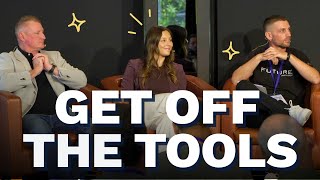
Luke Davies and Ryan Stannard explain how they moved from hands-on building to system-driven businesses using Systemology's System Hub. Luke hired an estimator and built repeatable processes; Ryan hired a systems champion to document daily work despite staff resistance. Both now take extended holidays while managers run their companies.
Chapters
The next panel discussion, you're going to hear from actual systemology clients and someone who has worked with a systems champion and a systemologist, and the results that have. That have come from that. I will allow James to do the introductions here, but we have James Brown and Erin Stannard and Ryan Stannard and Luke Davies as well joining us. So please give a round of applause.
Thank you. Simon, I thought you were going to do the intros today. Take a seat, everyone. So today, really, the reasons why we chose these three individuals is because they've all had different journeys in their different approaches to systemizing their business and we thought the different perspectives that they come from would be really valuable for you to hear. And we've got Luke here. Luke. Luke. A number of people in this room know who you are anyway, but basically Luke and I worked together many, many years ago. But Luke started off with. You had an architectural and a building company when we first met. How many companies do you have now? You've got a few different bits and pieces, fingers and piece.
Yep.
And it's that you've now moved into the education space around builders as well. Yeah. And we've also got Ryan Stanard. If you've looked at anything on the System Hub YouTube channel, you'll probably see Ryan's pretty face. And Ryan is also a builder and he's over in Adelaide, good old Adelaide. And Erin, his daughter, who has been a systems champion. So in terms of how you got into your systemising journey, we know that the whole idea of systemizing your business can be quite overwhelming and a bit clunky and messy. And so, Luke, can you start off by telling us how did you get into it? How did you get into that start of the systemising journey?
It's nice to be on stage with another builder, another building company.
So cool.
I think as builders, we think in systems and process. You know, the way we put buildings together is a systematic, systematic process. So when the time comes to get off the tools and get into the business stuff, you had the sort of same mindset where we're trying to systemize these chunks and just work that process together. And then the way we met is I listened to Dave's book, Systemology. I remember really clearly, I was driving at the time, listening to a lot of audio books and then that just clicked in my head and I went home and got back to the office and started to pull in all the documents and made this real fancy spreadsheet with all these different tabs and started to try and bring it all together. And that's when we got involved and started going through the systemology process.
Yeah. And I do remember looking at all those spreadsheets and I was a little bit overwhelmed at first because Luke was actually my very first systemology customer. So I was a little bit. Had a bit of imposter syndrome. But what I did notice as we started to work together is lots of them were the ideas that you had about how you wanted things to be. But they weren't necessarily born out in a rally, they weren't necessarily boots on the ground type of activities. In terms of getting to that point about having some processes that were in use by a team, how far down the path do you feel that started to actually give you momentum?
So what's the questions around the sheet.
That I made in terms of when you start to get systems and processes, how do you feel that that was like taken by the team in terms of building momentum?
Oh yeah. So at the time, I suppose the catalyst was when I got my first office based person to help out, put on an estimator and that's when I really had to get these sort of systems in place for that person to use. And luckily the person I hired was a call them an A player. I suppose I was just lucky. And they just had a really systems thinking sort of mindset. So it was adopted straight away and everything started to sort of evolve from there and we found some good sort of operating software and the software itself was designed for construction for the industry. And it sort of made me think a little bit different about our systems as well. So it was a merger of finding a software and a system that done things in a certain process that I could then change my process a little bit and sort of merge those two together.
Great. So you had someone already sort of in the business that you could really get it to apply to and they started to build their own mentum too.
Yeah, it's definitely different with the site based stuff to the office based staff site based systems just adopting safety systems and the standard stuff. But in terms of getting everyone on site to watch videos and read SOPs and all that sort of stuff is a bit trickier.
Now Ryan, when we spoke last week, you told me that you only got a few chapters into systemology until you realized that it shouldn't be you.
Yeah.
Tell me how you came to that realization.
Well, I just sort of worked it out that me writing the systems, no one's probably going to listen to me. So when I first started it, I actually just hired a guy, he Knew nothing about building. Fresh out of school, I was like, all right, we're going to write the systems for the business. So I hired this guy and he was my systems champion, and he wrote the first. The systems half the way through the first time. And, yeah, these instructions were just to capture what everyone's doing every day. Just capture the system of what they're doing. No frills. I don't care what it looks like. Just put it in there and then we can go and just play around with it a bit.
Were there any other reasons why you didn't think it should be on your plate?
Mainly because I didn't have time. But also, you know, I was a high school dropout, dyslexic. Probably all the rest of the diagnosis as well, the truth be known. And they probably wouldn't have been able to understand it if I wrote it.
So it's not your love language, it's kind of what you're saying. Okay, okay. Now, Erin, obviously, you're Ryan's daughter. Now, you started off as systems champion because you were systems champion number two, I think. But you were quite young when you came into this role. A teenager, right?
Yes.
How did you go about establishing some, I guess, authority, or how did you make it such that the team took what you were doing seriously and took this teenager who was going and pestering with a whole bunch of questions? How did you get it so they could actually take you seriously?
Well, it was quite a challenge. When I first started, I started in selections, so I was learning about selections and I was guided by someone else. And when I pestered them with that many questions, how do I do this? How do I do that? How do I do this? In my second week, they resigned. So I kind of knew I'm gonna have to fix this and do it myself. So I think that working alongside suppliers, Ryan, I think I challenged him as well. Why do we do this? How can we do it like this? Why don't we do it like this? And then ChatGPT come on board, which changed it completely. But I just. I don't know. I didn't really have a huge challenge with our internal staff in. In getting them to follow systems. The ones when we first did left when we tried to ask. When I tried to sit next to them and say, how do you do this? Some of them would refuse the meetings, be too busy, and then they'd walk out the door.
We lost a few of our key staff members because they weren't willing. We didn't fire them. They just quit overnight because they wouldn't give us the information. So it was clear that they weren't doing their job very well. So it was going to highlight all their flaws. So before they gave up the information, they walked out the door and it.
Was going to highlight the inefficiencies and what they were doing. So, for example, we had a bookkeeper that wasn't doing batch payments. We pay hundreds of bills and they weren't doing batch payments. They're paying them individually the time. So, yeah, now we're looking at all the efficiencies we can improve within our system.
But back to the time when Erin left school. She left school, come to work, 18 years old, and I thought, you know, she told me she wanted to have my job, so I thought, I better get her into the business and I better get her into something pretty, you know, something, you know. So I sent her out. I thought, I'll just send her with the selections consultant, you know, for six months. And then the selections consultant at the time was an architect. So I thought, if I can get Erin to do her job, then I can get her into more architecture. Yeah. And Erin drilled her that much that literally she walked out the door. And then the conversation, well, you made her leave. Now you've got to do her job. So then we got the systems manual and literally me and Erin sat there. She'd been with this only out on about three or four meetings with this lady. And I said I didn't know anything about it because I hadn't done it. So we read the manual and I went to Aaron. We'll say, do you reckon this is going to be the most efficient way? And we made a few tweaks and then I went out, I reckon, to the first three or four selections meetings with her because I thought, I better go and help her out here. Absolutely bored me to tears and I walked out. I reckon she'd been working for us for six weeks, and because of the systems that were already written and then we tweaked them, she'd been to the six weeks, she ran all the selections that we had. There was probably 10 or 12 sets of selections on the books at the time. She had them all under control within a few weeks. And I'm not discrediting Aaron's ability to do that, but without the systems, there's no way known. No, you take it fresh from high school and throw it at the wolves.
Yeah, to the wolves. But to clients of all ages with all types of experiences. We had clients, project managers and the Stuff I learned the hard way. But it definitely helped with improving the processes and the systems to make sure that the next person in selections doesn't have to be thrown in the deep end.
That was actually what I was curious about. So you've been involved in selections early on and then it was accounts Accounts and then into HR as well. So I'm curious how, as a systems champion, how does learning those different ways that the business does work? How do you think that has shaped how you make and how you refine processes?
It definitely has shaped how I make and refine processes in the sense that I really look at why am I doing this task. And if someone's going to come in, how can they tell if they've completed this task wrong? So when I'm writing systems or revamping systems to updated software, I'm really looking at from a holistic point of view, again coming from selections, what I did in selections flows across to purchase orders. It flows across to the next person and the next aspect of the business. So making sure that this system covers that, what was happening before and moving forward, what's happening with that information.
Yeah, Luke, you've said in the past that what you find keeps your team happy is clarity. I'm curious, how do you give your team clarity without having to get too into the weeds, without having to have your fingers in every little detail?
It starts with clear outcomes. You know what we're trying to do. So we have, right from a high level business, we have clear vision, mission, values, the team know all that. That's one of the feedbacks we get when we're doing our career development reviews. We ask a question and people can answer all those questions that most people can't. Down into clear job roles. I can tell with the team member if they're frustrated or whatever. And it all comes down to the clarity. Giving them the key metrics that they have to work to. On our construction projects, they all have our labour versus actual, our materials versus actual our schedule, our client happiness. All that stuff is measurable. So they know if they're winning at work or not. Like someone else said today. And then just continuous improvement. So we have a continuous improvement system in the business that we have a meeting cadence from daily to weekly to monthly, quarterly and annual meetings. And in the weekly meeting we have like an awareness list. So any ideas or frustrations or bottlenecks that happen throughout the week, it doesn't come to me. It goes to the list and then in the meeting, the actual meeting agenda, the big chunk of that meeting is looking at that list and working out what that frustration is and what they need clarity on. And that's like again, what someone else said today. That's the time where they get the time with me to give them the clarity. And it comes from the leadership pretty much.
And do you see yourself at a stage where you can start to step back from some of those meetings, maybe the weeklies? How do you see that progression over time to be remove yourself from further parts of the minutiae of it, to be able to step back even further?
Yeah. So before I went down the systemising process, I was needed for everything. I've got different businesses that are all in different life cycles. Businesses from being born into their prime to the end of the business is all a different sort of stage and a different thing that that business needs. And if you can identify exactly what that stage needs, you know exactly what to work on. So what was the question again? Sorry.
Well, just in terms of you being able to step back further, but I.
Think I step back, yeah. So having good team, good systems that are trained well, engagement directly relates to profitability. They're trained well and they're safe. Those are the core things we're doing. So this year I've been on multiple different holidays without any extra. Like I went on a nine week holiday. I just worked up to the day I left, so I didn't really even talk to anybody. Left come back, everything's still running. You know, there was no rushing around trying to do certain things. The team just know what they've got to do. So I don't need to be in their meetings because someone else in the team can step up and run them. The other day one of my guys had been out doing sales meetings because they couldn't find any spot in my calendar. I hadn't asked anyone to do it. They'd gone out and said, I've just won this job for this because we've got the process and the systems there to do it. So there's always somebody in the business that knows what's got to be done and can step up and do the thing the next person or their manager or their leadership should be doing.
Have you been able to find that processes from one business can actually bolt into another one? Has that worked at all?
Yeah, there's lots of cross pollination of ideas starting with just the way that you think about a business starting client centric with your buyer Personas and looking at your critical client flow and just going through the stages. It definitely makes it A lot easier to start. Or if I'm looking at buying a business, you've got really clear things you can look at to identify it. There is a common theme, I think, like Dave said, success leaves clues. And me looking back, connecting all the challenges and pain points that I've had, there's like, you can find the meeting and the gifting, all that sort of stuff and you put all those bread crumbs together and it makes it a lot easier when you're going forward to building new companies.
Now, one of the things that people who have been in business for long enough realise is the importance of momentum and systemising. Your business is no different. So I'm curious, Ryan, from your perspective, because you try and be as hands off as possible about systemising, what do you see is your role to play in keeping that momentum of having systems getting built in the business.
Probably making changes? So our System Hub is ever changing. As I said, it's been written probably five times and it's all about to get rewritten all over again in 2026. So as soon as there's a new software introduced to the company, a new person with a new role, any of these things happen in the business that you've got to redo 90% of the systems because that wasn't there before. So Erin's on board with, as a systems champion on doing this information which closely is linked to her being our HR manager. So if we hire someone new, she's hiring them, she's done the job description, she's done the training plan, she's done all that, she's updated what she believes System Hub should be for them when they start, then when they start and then we gotta re juggle the puzzle pieces through there. So my role in the. Which is, I think was what the question was and I went off on a bit of a tangent, but my role is just to keep the business headed in the right direction and then Aaron's role is to do the systemisation as we move along. We've just a huge milestone in my company. Two weeks ago we hired a general manager to manage the whole company. I've been wearing all the hats for way too long. People say to me, everyone calls me Rhino, Rhino, how are you going to let go? I said, mate, I'm paying him to do it now, pretty easy, but I'm going to just, I want to just drop back and be the construction manager, which is grassroots. That's where I started. I started as a carpenter and I was saying to David before, you know, As a carpenter, you build shit all day with your head down, doing whatever. And then when you walk into the trailer to pack up your tools, you have a bit of a look around and you see what you do. Sitting in an office punching numbers and dealing with client compliance complaints, you don't get any of that. You know where it's getting back out there. And even though I'm not going to put the nail bag back on, but I'm going to be managing my team of supervisors to create these homes which, you know, I'm really looking forward to. And without a systemized business, there's no way that that would be able to happen.
And you've Luke mentioned he took a nine week holiday and I think you took a, like a six week holiday over Christmas.
Yeah, I have. Every Christmas I head up the river, property on the river just out of Adelaide. As soon as kids finish school before Christmas, I head to the river and I don't come home till February every year. And last year I went away in my caravan for I don't know how long away. A couple of months, I reckon. Yeah.
What was, I guess the tipping point? When did you see or what did you see in the business that you started to go, they've got this like, I'm not needed so much. I can actually be a little bit more hands off.
I think for the first few times you leave the business and you hope, but working with business coaches along the way and the business coach that I had for a long time, he's like, when you want to go away, you go away. That's great because when you come back, when you come back, the first lot of shit that lands on your desk is the shit that's broke and that's what you got to fix. So taking yourself away from the business exposes where you are light on or where you need to spend more time or bits and pieces like that. So if you're there all the time, people will ask you. Yeah. So yeah, I always have a motto in my office. I always call the problems of monkeys. Yeah. You, you bring your monkey into my office and we'll chat about your monkey, but you take the monkey out with you. I don't want an office full of monkeys. My office is messy enough as it is.
And Luke, I'm curious from your perspective. You said you took nine weeks off knowing you've taken different holidays off at periods of time. What was it for you that you saw within the business that you go, they've got this, I don't need to be Here I can trust the team are on top of stuff. What were the characteristics of the attributes that you saw?
I think the first time I just needed a break, just been working massive hours, like I'd be doing everything. And when I got this first employee that I was talking about, I got another someone in the office as well. I just needed a break. But I did feel that we had enough work in the pipeline so there wasn't heaps of sales that had to happen, that everyone on site knew what they were doing. I wasn't sort of getting out the site and micromanaging stuff like I was when I started. So I just felt that things could. If you've got sales and you've got jobs signed up and the team know what they're doing, it works pretty well. And that first holiday I went on, I can remember being by the pool with the kids playing. I got a text message on my phone and it was for her to sign a new contract for like a $1.5 million renovation, I think it was. And it had been put together by the team. I hadn't been in the sales meetings, I hadn't done the contract, I hadn't done the quote. I just had read through the contract and sign it and it ended up being like an award winning home and going through the process. So that was like an awesome moment for me that I'm away and I come back and the guys are like, I'd ran better when you wasn't here. So it's like a bit of a.
Hit to the ego.
And I'm like, oh, well, I'll book more holidays. And while you're on holidays, you get to think and you come back with better ideas for the business and the team all get to come up into a different position and feel more valued and run their own ideas. So I recommend always the business owner. Taking a few holidays a year, it's just got so many benefits.
Yeah. So, Luke Ryan, you've told us a bit about, I guess, the benefits of having the systems within your business. Erin, can you share a bit about. I mean, many of the people in the room may not have even met a systems champion before. Can you give everyone a bit of a day in the life of just so they can understand what your role is and how you play it?
Yeah, I guess it's a little bit different. So I had systems already there as a starting point and then I was able to improve them. So what I'm looking at now over the next 12 months is looking at the efficiencies and making sure that everyone's doing things the most efficient, efficient way. Are we utilising AI and then systemizing that? So it's going to move very quickly. So a day in the life I'm a bit all over the shot at the moment because I'm lucky that when the accounts person did leave I had all the systems. I can just jump on, do payroll and know who to contact if something goes wrong. So my role at the moment, to be truthful is a bit different to how I'm hoping it will be in the future.
Yeah, she's a bit all over the shop at the moment with the system side of things but there's so many changes. Like the introduction of the GM is massive.
You've got a unique approach about how you're inducting your gm. Can you share how you're like what you're getting them to do in their earliest days working with you?
Yeah, so I've identified where the biggest issue is, is in the business and for the first three to six months he's just going to work in, in that part of the business and then I'll peel the other parts of the business. Well, I've been running it all on my own for so long now that we've worked out that our biggest inefficient inefficiencies is from when we, when we sign a contract to when we can get it in the ground that pre construction phase. So we're lucky. The GM that we've hired has actually got extensive background in. He's a trained architect. He's also got a MBA in business management and he's worked on council so bank stick him into that forefront of that and once he gets, once him and Aaron have worked through and systemised that and got that to where it needs to be then I'll bite off the next chunk and then we might give him the financial side of things and then as I'm going to be the construction manager that'll probably be the last place that he'll end up. So yeah, so most people probably they hire a gm, they'll want him to come in there and do everything straight away. I've taken a bit lighter approach on that rather than him just walking and going mate, he's the company, do what you want with it. I'm busting it off into bite sized pieces. So Aaron will be hugely involved with working with him in creating because the systems, if he's going to manage this company, the systems that I had to manage the company, two different Personalities. So you wouldn't think a personality trait would change a system so much, but. But the personality trait of the way the manager is going to manage the people does change the way that way that things are, things have got to be done. But I think it's really important to, when writing the systems, use some creative words that even if it's your idea, you make the employee think that it's their idea by floating it in the conversation. Because if you tell someone to do something, most likely they're going to think maybe they're not going to give their all, whereas if they think the change is their idea, they'll run with it at 110%. And yeah, that's what I've found to be great, because I've learnt from key staff members leaving, because I've tried to find out what they want, I've told them while they're doing it, well, you should be doing this, not that. But at the end of the day, when people leave, if people leave your business, you wave goodbye and you say, thanks for your service, because if they're willing to leave, you don't want them anyway.
But I think to touch and add more to that, that we wouldn't be able to hire the general manager if we didn't have the systems to where they are now. He's going to come in and make them better and make them great, but this is a starting point for him to come in and hold the staff accountable too.
So I think, yeah, I think what this highlights is it's all good and well to have systems in the business, but unless you have the people working with the systems and taking ownership of the systems and having involvement with the systems and whether it's in their creation or their evolution or even the transition of them now taking those responsibilities on, you know, the systems need to be guide rails, they need to work for the user. It's not, you know, gospel. And that's how it has to be. You know, there's some flexibility there.
Yeah. And the old days of a company manual, it was this great wad that sat in the bookcase and no one ever looked at it. You got a company manual? Yeah, we got a company manual. Whereas what Dave's done with System Hub and Systemology's completely transformed that to now it's actually a live document that you just keep editing all the time to make it what you want. And it's, it's there like, you know, and I think as a manager, understanding how these, exactly how these systems are written so that when you're in a meeting with a, with a staff member and you say, oh, because what happened when you did that? And then they go, oh, yeah, yeah, yeah, yeah, yeah. Well, clearly know that they're not following the systems.
So we're going to transition in a moment to some questions from the audience, but before we do, most people in the room will probably feel like this whole systemising responsibility is very much on their plate. As the business owner, I just like the one little bite sized piece of advice each of you would give to those people to help take their first step. Luke, what would you advise them?
Depends what you like to do. If you like doing that sort of stuff, you can get into it, but if not, there's someone in your team, you know, you just got to explain the benefits and someone in your team can pick up that systems champion role and run with it. It's awesome. It's just, I love walking around the office and just seeing these systems evolve and someone's Got Gemini or ChatGPT open doing something and it's all naturally growing by itself.
Erin, what advice would you give to people to take their first step to get started?
Yeah, I've got two tips. I think we're naturally, as human, we're able to point out what's wrong pretty easily. So it's a good starting point. If you go chat, write me a system on this, you'll be able to look at that and go wrong, wrong, wrong. That's where I need to work on fix. So I find that to be the best way to approach a new system. But once I've got those, those systems, I find, oh, I've actually lost what.
I was going to say.
Move on.
How would you get started? How would you.
My, my advice would be don't overthink it. Literally just open mind. Someone's at their desk bashing away on their computer. What are you doing? Oh, oh, you're going to do. You're going to submit something to council there. I'm just going to sit and watch you do it. Just document what they're doing. Don't overthink it and don't think it has to be perfect before you implement it into your business. Just literally it can be just a couple of dot points on a page, if that's what it means. If that's what you think works and someone could follow that, great. Move on to the next thing and then move back through it at your leisure.
That's right. I remember. If you're going to update your systems, I really recommend that you copy and paste the current system because in months time when you're trying to figure out why is something going wrong, what have I done, what's different? Why aren't we getting this outcome? You've got something to go back to to determine the difference. So I really recommend that.
Great. Okay, fantastic. And Ryan in particular, don't let perfection get in the way of getting started, I think is one of the biggest takeaways. So do we have any questions for the audience, for any of the guests on our panel? Just two questions.
Look, we've been with System Hub for around about four years. I'm looking for some advice because we don't use it. We set it up initially put a systems champion which was he's an admin person. We'll get someone in and like you said Ryan, document as much as we could. Overview systems, critical client flow. Then very much just went geez, the business is growing. These are our current systems and it's like the manual, you said the old manual, we sort of treated it like that. And then the business has grown and then we've done it again and we've gone back to that key person dependency sort of aspect within the business. Any advice you could have or have you had any of that experience where your systems have started to drop off and you haven't been able to carry on, I guess. Or have you been able to just ingrain it so much for example with Aaron or someone you've got that. It's just this is a position that has to be in the business.
Yeah, you. Alright, jump in.
You can get stuck in the habit of just giving answers versus asking them where should they look for the answer which can drive them into System Hub. So they have to find the solution themselves. Or if something goes wrong, you're not blaming the person, you're going to find the system that they're supposed to be following. Just as a cultural thing.
Do I make it too easy on them? Is that what you're saying?
But I also think that I was going to say before you employ that person or before you grow, update your system. Because if you employ the person, then update the system afterwards, you've already outgrown it.
I had to write all the systems through Covid. So it was locked down and sat there and just wrote systems. So that's how we got the bulk of ours done and updated, which was. It was good because it was forced, couldn't do much else, couldn't see clients. So that was a benefit of COVID for us.
From what I have seen if we had that question up the back. Simon, from what I've seen in terms of maintaining that momentum, two key things the business owner's got to make sure you're driving the importance and having someone able to do the grunt work. Those two parts of the equation work really well. And the next question. Excellent.
Thanks guys. Systems make a lot of sense and the obvious ones are like your hr, how you're doing your quoting some of your office work and that side of things. I've come up with the issue that when I get to a trade, when you're actually dealing with a carpenter or someone, someone that's really hands on and say how have you used systems for them? That actually hits the guys that are actually on the floor and actually doing. Not everyone's doing the work, but they're doing the hands on building. Do you want to go make it as visual as you can and as simple as you can. We couldn't get any other guys to do their time clocks or sign into site properly so we made a really visual green and red stop start system. When you start the job and leave and finish the job and then just easy access to be able to find information. QR codes on things. Just yeah, simple visual.
They are the hardest ones to get on board though. 100%.
Yeah, it's tricky. It's like. And you're just repeating yourself all the time, you never stop.
Tradesmen might be good at trades but they act like kindergarten kids, you know. So yeah, they might be good at building stuff. So they're definitely the hardest ones, that's for sure.
From a documentation side of things though, setting expectations in your purchase orders is a great way to start. Whether they follow that is another thing.
Luke and I were just chatting outside before because we just got back from Japan and Luke's just about to go there later on and we'll talk about how simple some of the systems are. In the Japanese railway, you don't necessarily need to look at systems and processes as a whole bunch of words on the screen. Some of the most simplistic processes are simple color codings like simple labels or shapes or designs that give that visual cue to help people to remember to do something. So it's not about over complication, just keeping it simple.
Simon, awesome. Thank you so much. Please, big round of applause. Luke, Erin, Ryan, James, thank you so much.
It.
More from David






Remember me? Subscribe To My Channel For More Free Business Systems Content 📈




