How To Scale A Jewelry Business - Case Study
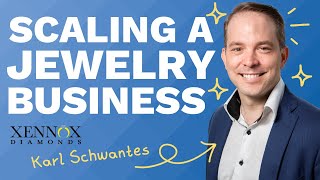
This is a recorded interview (case study) where David Jenyns interviews Carl Schwantis about systemizing a long-standing family jewelry business (Xenox Diamonds) and launching a new company, Reputable. Key points: Xenox was founded in 1976 and is a 47-year-old, second-generation family business; Carl has worked in the business for ~27 years. Xenox had minimal documented systems initially; Carl promoted an internal systems champion (Lauren) into a general manager role, introduced visual process maps, daily 20-minute team 'indoctrination' (15 minutes reading + 5 minutes discussion, plus short system flashcard reviews), and created SOPs and automation. Carl also spun out Reputable after discovering that Google reviews generated significant sales (over 173 sales in one year), and now teaches other businesses how to generate organic leads via review systems. Major themes: systems culture, leadership transition in family business, empowering team members to write SOPs, and the 'start small — iterate' approach to systems.
Questions this video answers
1976
47 years
Approximately 27 years
Over 173 sales
From 9:00–9:15 team reads a book; then 5 minutes discussion of learnings; then 5–10 minutes reviewing core values, systems flashcards and the day's run card.
Chapters
Once you commit to systemizing your business where you probably don't think you see opportunities to systemize, once you start, you'll just start to see opportunities everywhere. Oh, I could systemize that. I could systemize how I do everything.
Hello, it's David here from Systemology and today we are shining the spotlight on business owners and I've got Carl Schwantis here. He's got a really fascinating story. I can't wait to dive in where he can talk a little bit about Xenox Diamonds and also his latest company Reputable. But maybe just to start Carl, if, if you could introduce yourself and maybe just tell us a little bit about the first company Xenox and, and maybe that can edge into where you're at with Reputable.
Yeah. Good morning. It's morning for us anyway wherever you are listening watching this but yeah, Xenox Diamonds is a 47 year old second generation family business that my parents started in 1976. I've been very lucky to, to be able do, to be doing this now for at least 27 years conservatively. You know anyone who's grown up in a family business knows that it probably started a lot earlier than that. I was making my first rings when I was about 14 years old. So it's really the, the diamond things and the jewelry has really been in my blood since a, since a very early age. But everything was going really swimmingly until this funny little thing called Covid came along and it caused, caused me to kind of create another business out of the first business. And what I'd found was in the previous year we generated over 173 sales from our Google reviews. And so I went on a mission now to sort of teach other business owners how they can generate organic leads for their business without spending money on ads. Because I think, I think the Zuckerbergs and the Googles probably have enough money, they don't need any more of mine.
Yeah, I think this transition and I think I'd love to tell a little bit of some of the stories in this journey from both perspectives. I think firstly with the diamond business, very well established business, when you kind of heavily became involved in running it, were there like what were the systems like? Are they trapped in your dad's head or were they documented or how.
No, pretty much non existent. It was kind of like running each day as a fresh day and seeing, seeing what happens. So there was definitely and I guess you know that's always one of those favorite quotes that I love. It's you Know, the era of the old is to mistake knowledge for experience and the error of the youth is to mistake knowledge for experience. And the reality is it's somewhere in the middle. So you know, I guess that's when the next generation comes through and says look, you know, there's a better way to do this. We could use technology, we could use, you know, different ways to optimize and do that. So you know, definitely when I took over the realms, you know, the reins of running the business, it was all about, you know, putting in some systems but you know, recognizing at the same, the same point that I'm probably not the best person to be doing that. So you know, surrounding like my, my I'm more of the, the 50000 foot visionary thinker kind of thing, you know, whereas you know, having somebody around you that loves systems and God bless them because we need people like that in the world to kind of take this idea of what I want to happen and then you know, creating the automations and the systems behind the scenes to make sure that it's not only repeatable but done at the right height, the right level, that we want it done and transferable to every team member.
Yes, that person that we're talking about, your systems champion. I'm curious to know where you found her. Was she in the organization already and you kind of earmarked her for that role or did you find her elsewhere?
No, she was already working for us at the time and just, she just naturally gravitated to that, to that role. She was more, much more systems orientated if you're familiar with like the wealth dynamics profile side of things. She's a lord, what they call a lord or in the, you know, was it the visionary sort of executor kind of thing? She's implementer. She's, she's definitely like one of those implementers. So it was a matter of finding and you know, when you talk to people like that, you know, they just get lit up by systems and you know like they, they can't wait to you know, do another iteration and improve it. And it's like when you find someone like that you just want to say, you know, like you say systems champion, here you go and let's see what else you can do.
Yes. Yeah. And what, what was there a particular turning point or something? You mentioned Covid and that got you to think about the new business? Which we'll touch on in a moment. But was, was that the turning point? Because I find oftentimes especially really well established Business like, what was it that got you to get on the path?
Yeah, I, I can't probably put my finger as to an exact time that it happened, but once I'd made the decision that I didn't want to be really involved in the day to day running operations of the business and sort of promoting the systems champion to actually becoming the general manager of the business, it was now really a case of, well, you know, I don't want to be there. In the early days, it was an interesting transition because if you've ever been a founder or a director and stepping back and letting someone else take the reins is, can, can be sometimes a scary thing. And what I found was, is that sometimes as business owners we can cast a shadow.
Yeah.
We don't mean to do it, but we just naturally cast a shadow to the people that could be absolutely amazing support to the business. So one of the things I did first was actually relocate and get another office off site so that I wasn't there, you know, every day. And that allowed her to even step up more and look to. And then I moved into more of a mentoring role in that space to kind of go, okay, why is it not working? And you know, understanding a little bit about Deming and that whole sort of process and when something drops. So whenever something would, would fall down or it just wasn't running, what we did was we sort of looked towards the system and how could we improve the system rather than blaming the people? Now, don't, don't get me wrong, there are definitely times when, when people aren't following systems that you have to kind of blame the people a little bit. But, but also it's about how can we create the scaffolding around them to make sure that it becomes just really super easy and simple to follow the system.
Yeah. Were there any parts in Systemology that either spoke to you or to the systems champion as you kind of going through this transitional period?
I think, I think having a vision, what I always found is having a visual representation of the system really helpful. Yeah. You know, once you've planned it all out, once you've done it and you've gone through all the testing and measuring and improving and know this one doesn't work is great and we need to kind of do that a bit better. I think for me, always with the team, it's, it was two things. It was a visual representation and it was the daily indoctrination. Yeah, I, I wish, I wish as business owners we could tell our team one thing once and they would just get it and they would just do it perfectly every single time. And, and I think as. As I've been in business now nearly three decades, I've come to realize that it just doesn't happen. You've just got to have more of this daily indoctrination. And so in the morning, one of our systems in our business is that from 9 o' clock in the morning till about quarter past nine I've got a big library in the. Not. Not the one that you can see behind me but because that's a virtual one. Spoiler alert. But I have a library similar to what you see behind me in, in the showroom. And I get every team member to take a book from the library of which you know, I've got systemology here as well. But I get to take a book and we sit down as a team and we read for 15 minutes and then after that we spend five minutes talking about what we've learned and how we can use that in the business. Then after that we go through the next five minutes is things like rules of the game and core values and in that space there we're talking about like you know, where is something that needs to be happened. What's a system in the business? We've got these flashcards that we've made. On the front is a system or something like that on the back of prompting notes to sort of say well how does this show up? When do we do this type of system? What happens if this doesn't get followed? And so then we spend the next five to 10 minutes talking about that and then finishing it. As to what's on the on the run card for the day, what do we need to be doing, what's our focus, etc.
Yeah, I. Some tremendous ideas there as this. I think it was Lauren has taken over with this particular position. How's that worked with like the family, it being a family business and kind of really driving it. Like I'm curious to know. Yeah. How, how that process has gone.
Yeah, well my parents are largely retired now, you know, so they're in. They're well into their, you know, mid to late 70s. So it's really me now and Lauren running the business. I'm there from I guess a sales capacity in. In sometimes because I just quite love, love doing that and, and then to give ideas about marketing and promotion but pretty much all of the implementation and how do we systemize that the automations through email sequences and everything is really handled by her. So yeah, I think ultimately it's about just trying to make the business run as efficiently as possible and at the same time making it a fun place to work. Yes, as much as, as much as I, I don't naturally gravitate towards systems. It's that whole sort of thing is that creates freedom. Yes, yeah.
The, the stepping stone that you're talking about. I think it's actually quite common for business owners, yet a lot of people don't actually get to what happens, what where you're at right now, which is firstly being able to build a business that works without them and has the ability to bring in profit and now your attention that's allowed you, like you have the option of what to do with that business and you're now the business owner and you get the dividends. But then that's also created the space to work on a new business. And I've, I've seen that a few times now. I know we've got a mutual colleague, systemologist James Brown, and he's got his motel business. I see. It was the same thing that happened with me with Melbourne SEO services. Like the birth of System Hub and Systemology came after I felt like I got my last business to the point where it needed to be and then that meant my attention could move elsewhere, which then actually created the great space, just as it has for Lauren now for her to step up and then really take over that. I'd love to now think with your new business with reputable, how you're thinking about systems this time around. Because the first time you were inserting them in after the fact, after it had grown, whereas this one, now you have that as part of your vision and I'd love to know how you're building that in from day dot and, and what you're finding.
Yeah, great question. I think, as I shared with you before we jumped on, is what I never really fully appreciate is that when you, when you're working in a really well established business with good systems and people and everything and then you start a new business, it's like the whole snakes and ladders where you're at the top and you have to take the snake all the way down and relearn things, I think from the beginning and rebuilding, having done that now, obviously with this business, if I had to start a third one, I think I would do it even faster and better than I did the second time. And what I, what I've started to do differently now is I'm empowering team members to go and create their own SOPs. The standard operating procedures and, and things like that and to document things, you know, in an online space. So every time it's like, ah, if I want to do this more than once, yeah, I'm going to create a system of step by step. It's this, it's that, it's this and it's, it just, it becomes so liberating when something happens or someone's sick. I can just go, you know, hey, so, and so can you just go and check out the SOP and run, run this? Because it needs to be done and everything's there, login details, you know, pictures, flowcharts, all of that sort of stuff and it just makes it so much easier to delegate. So that's, that's kind of the process I'm on. But, but empowering where I thought I always had to be the one doing it, empowering the team to be able to go out and create their own has been really helpful.
Yeah. Now that you're a little bit further down the track, you've got that established business, you've got the new one that's up and running and you did mention, you know, if you did a third one, it might even go any quicker. Are there any, either lessons or insights or things you've picked up where you've gone up? Like similar to what you were saying, I could get other team members to do it that you wish you knew earlier. When it comes to building systems culture and building a systems driven business, if anything else jumps out at you.
Yeah, I think, I think it's in the beginning, it's that whole operating in the, you know, urgent and importance quadrant.
Yeah.
In the beginning, I think when you, when you're sort of getting established and you're leveraging between the finding the work and doing the work and then finding the work and then doing the work. What I think I would do differently if I was doing my time over again is just slowing down to speed up and just really making sure that, that I got it. And I'm a little bit of a perfectionist so you know, that's a double edged sword. So at the same time I like to do it because I know it'll be done right. But what I would have done more in the beginning is to spend a little bit more time early on the piece and create the system even if the system wasn't perfect and then improve it, you know. So just get, starting with a draft one, a version one and then just improve it as time goes on. Yes. Yeah.
As this has sort of rolled out, I don't know if there are any other wins that you might be able to share. And it could be in either business as you've done this and you go like what's started to change? Or the result as you've got this in motion now.
Yeah, I think for me there's the way I look at the world now. The, the system is, is part, is one part of the puzzle. I think the other one is it's like that, having that systems champion. It's like having somebody that's responsible or responsible and accountable for that system. I think is, is that because I think sometimes we create the system because I know what needs to be done and how it needs to be done and so forth. But, but I think putting somebody else in charge of that system to make sure that it's followed through, improved and all of that sort of stuff is where is where I'm really sort of expanding my thinking, I think at this point in time is to kind of go, well, you know, a little bit of a let go. You know, the, the other one I've heard of is it's not letting go of the, the reins, it's loosening the grip. Yes. So as, as a business owner, my job is just to loosen like not, not let go, but loosen the grip a little bit so that somebody else. Because like, I've been in, like I said, business nearly 30 years. I've made my fair share of mistakes and I've learned from them, but I've got to let other people make their own mistakes. And it reminds me, I know, you know, you've had the great fortune of being with Mr. Gerber. For me, it's. I got to spend some time with Richard Branson at his home on Necker and also in Africa. And one of the things he said to me was, you know, if you can find somebody that can do it 80% as well as you, that what that frees up will more than compensate you for the 20% that you lose. Yes. Yeah. And so it's. For me, it's kind of like I need to let them learn. I need to let them have their own personal growth and make the mistakes and learn and then. And find new ways to improve that I may not have thought of, you know, that are unique to them.
Yes.
Yeah, I love that.
I had a couple of other. I'm just curious around. When do you think then is building systems into the business? Like when, when is the right time? Because it sounds like if.
Yeah.
When is the right time to put systems in? I suppose that that's my question for you. Like how old, what size? What?
I think as soon as possible, like as early as possible. Like I said, they don't have to be perfect, they don't have to be these elaborate, you know, 20 step systems process. There could be a three step process. Step one, do this, step two, do that. Step three, do this. So I would say that the time is really like what I tried to think of is if I have to do this job more than twice, like more than once, you know, that's then potentially I can create a system around that combination of loom videos, you know, whatever it is to kind of help create that. So that's, I don't think that you have to be a certain size, number of people or whatever. Even if it's just, even if you're a sole follow hero. I think there's still some. What I found also in the transition of the business from, from the first business to the second business and it's that great saying that says if you really want to truly understand something, teach it to somebody else.
Yes.
And so what I, what I've really discovered over the last couple years with the, the evolution of becoming, transforming from the diamond guy to being like the five star Google guy, what was in teaching other people I gained so many more distinctions myself about what it is I do and how I do it. And it's that whole unconscious competence. So my invitation is by documenting and writing it down, you may actually create for yourself some new insights that you didn't even know were there about how you can make it even better.
Yeah, it's interesting when you learn a little bit of an insight early in a journey and then it doesn't fully make sense to you until later in the journey. Because I remember go back to little nuggets that some of the legends have dropped in our lap. Michael Gerber had said to me, look, see every business as a school and that's really what we're doing. We're taking the team members which are the students and we're using the systems and the processes which are really the lessons to teach them in your school. And the idea is how do we take them from unskilled team members to them having the ability to do productive output in the shortest possible time and that's done through the systems in the process. Which also then led to other breakthroughs for me. Like when you're capturing a system, just capture the most probable because they're used for teaching the brand new team member and for the first time they go through you want to give them the underarm pass and the easy task and if it falls outside of the system, then they escalate to the supervisor or then they ask the question. And it's that insight which kind of you just reinforced to me here. It's really about that knowledge transfer. That is what business is all about.
Yep, agreed.
I think sort of in the tail end. I don't know if there's any advice. If we were to go back to an earlier version of yourself or even speaking to another business owner in a similar situation, any suggestions or tips you could give them around the skill of mastering effective business systems development?
I think it's one of those funny things. It's like when you start doing something for the first time, everything seems awkward, unusual, maybe outside of your comfort zone. It's like when I'm working with clients who I'm coaching and mentoring about client journey experiences and then how to turn that into Google reviews and then showing them how to do all of that sort of stuff in the beginning, they can't see it. And then there comes a point in the journey when you've been doing it for a little bit of time that you start to see more opportunities everywhere.
Yeah.
You know, like it's one of those things. It's like people see one client transaction as the opportunity to get a Google review. And I go, well actually I see two to three opportunities there. And I've, I've been in front of a client and I've got a Google review from the husband, the wife and the mother in law that was standing right behind her, you know, so. But I see opportunities everywhere. But then I've been doing it for long enough. So I think in what you'll find is that once you commit to systemizing your business where you probably don't think you see opportunities to systemize once you start, you'll just start to see opportunities everywhere. Oh, I could systemize that could. I could systemize how I do everything. So just starting I think is the key. It doesn't have to be perfect, it doesn't need to be fully encompassing, but starting and then once you get down that road, you'll just see more opportunities everywhere.
Yes, and it's once you see it, you can't unsee it. It's almost like once you see the world through this systems lens, that's just how you look at business. And I think it goes back to what you were talking about earlier, this ability for you to be able to start up, reputable and move that so quickly. And get great results for the CL has come from all of that previous experience and that breakthrough. So I'm going to point people to I'll pop a link through to Reputable Global and then also I think it'd be interesting if yeah, we might link to Xenox Diamonds as well. Just if, if you're looking for Google review or if you're looking for diamonds and you want a systems driven company, then Carl is most definitely your man. But yeah, a huge thank you to you for just sharing and hopefully inspiring some other business owners out there.
Thanks David. It was a lot of fun.
More from David






Remember me? Subscribe To My Channel For More Free Business Systems Content 📈




