How To Stop Being A Workaholic Business Owner
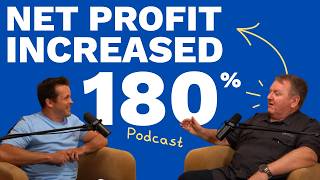
Gary founded an environmental consultancy in Western Australia and worked 100-hour weeks until burnout forced a change. He implemented documented workflows and value-based pricing, which freed up time to earn a pilot's licence and reclaim family life. His turnover grew 338% and net profit 180% over ten years.
Chapters
So the system's really important. But then if you get the key people, I think it's hard to pick.
Yeah.
Yeah. And it's more respecting them, making sure that they don't be encouraged to leave, you know, pay them well, pay them above the award, pay them whatever, give them time if they need it to vanish or whatever.
Welcome, Gary.
Thanks, Simon.
You might not even realise how much of an impact you've had at Systemology. There was a line that you said to me, and it was, I think, maybe 8 years ago or thereabouts, where you said, I think Systemology may have saved our marriage. And that's a story that I tell because I see it all too often, business owners just getting all consumed by their business and everything else just is second priority and it can cause some huge impacts.
Well, it's your baby. You formed it.
Yeah.
You also don't have the regularity of income. So you also have that pressure. I've got to make money doing this. And you just do it.
Yeah.
And you don't know. And then time goes away. And usually because you started doing something because you like it. Yeah. And then you get 100 hours of work a week in and you realise after a few years you hate it. Yeah. But yeah. And you just have no time for your family because you're focused.
And I think, I mean, I'd love to explore some of those themes just as a way to maybe give a little bit of context and set the stage. Can you tell us a little bit about Ecosystem Solutions, what you guys do? Just so if someone hasn't seen some of our previous interviews, they're just up to speed with the type of work that you do.
I'm a very small firm based in Dunsborough, which is in the southwest of Margaret River, Western Australia, in the Margaret River region, most people know of. I started as an ecologist specializing in rare plant and animal surveys. Previously worked with the state government in that and started doing bushfire protection. I saw the need for bushfire protection as we were moving into areas. And to be honest, the environment and the bushfire risk are the two biggest pinch points in most developments. So I went and did some postgrad studies in that and became a really niche little company. I've had various numbers of staff, up to 6. Government policy changes have come back. I've now got 3. I'm looking for another one. And yeah, we've got a lot of work. It's a very niche industry. I think I initially, in one of my early interviews with you, I said there was only 3 level 3 bushfire practitioners in WA. We've now got 11. So it's sort of growing a bit. But I've been in business for 20 years, so we get used a lot.
And bushfire management, like, it's something that's really topical here in Australia. And I know people have probably seen way back when the movie Backdraft. So we have a little bit of an idea of fire and the emotional impact it can have on people. What sort of drew you to that industry? You said you worked in I was—
I worked for the Parks and Wildlife Service as an ecologist in Western Australia. Yeah. And I was there for 10, 11 years and I was under contract. And so I think I had something like 100 contracts in the 10 years. And I thought, you know what, I'd rather take— roll my own dice, take my own chance because I couldn't get loans. No one would give me a loan for a house or anything because I was— and I was halfway through a PhD doing that part-time, I thought, you know what, I could set up my own little business, do my PhD and take control instead of going begging for another contract and doing stuff. So I thought, okay, let's do plant and animal surveys. And I didn't finish the PhD because I started getting work. But then I started to notice that we were going and looking for subdivisions where they're saying, okay, where are the good plants and animals and vegetation. And then we need to put people there. And there was, that was in 2005 I started. The Canberra fires and there was Australian standards coming out for building in bushfire-prone areas. And so there was a lot of assessments and I thought, you know, these two, they interlock. Because the bush is something we're trying to protect, but at the same time people are wanting to clear it because of fire. So where's the balance? So I went and did some postgraduate studies at University of Western Sydney and in bushfire protection, working for Parks and Wildlife. We'd always worked in bushfire. And when I moved to Dunsborough, I joined the local fire and rescue division. So structure fires, car crashes, all those sort of things. And you just realize how much it is a part and how to do it sensibly. You don't need to get a D9 in and clear everything. You don't need to concrete the whole southwest of Western Australia. You know, you can actually integrate protecting plants and animals and bushfire protection for people by smart planning. And it just fascinated me. Yeah, it still does. It's an evolving science. It's very dynamic. It changes every time there's a major bushfire event. CSIRO have done research and then you get, well, that didn't work. So we're now up to this climate change and variabilities of a whole range of things, people impacts. It's fascinating. Yeah, it's fascinating. And no easy answers.
Yes. Yeah. I imagine you've built this business around you being the guy because there's no easy answers. You're an extraordinary problem solver and you look at all of the data and you take it on board and then you make your best suggestions. So you're a prime example of a business owner where they are the technician and they are the skilled operator. That's where a lot of business owners get started. And it's also what, to a certain extent, traps you to the business.
Locksmiths, it's a handcuff.
Yeah, because people come to you, you're the expert, and you very quickly learn also there's a lot of additional skills beyond doing the technical work to run a business. So how did you go in that transition when you're building up your own business and then you start to go, oh, There's leads, there's sales, there's onboarding, there's delivery. And I know in your particular business, because you're so niche and because there's not a huge number of you with your level of expertise, the leads part is not so much a problem for you. It's more the doing of the work. But I'd love to know how, as you've become a business owner, these other areas have started to reveal themselves beyond just you delivering a report.
Yeah, it's interesting. I come from a background of multi-jobs, everything from birdseed packer, I was a repo man for a little while for General Motors, character-building stuff. But I find I naturally, because I like people. Well, I like most people, let's put it that way. And I like that interaction. So I tended to work in a lot of the sales field. I ended up in a bank as a salesperson. I don't know anything about banking, but my job was to go and get the business and take people out for lunch and explain things and do all that sort of stuff. And so when I set my own business, I found it's a lot easier to sell things when you actually believe it and it's you. Yes. Not someone else. So the sales thing sort of came naturally because it was just treating people like people. Yep. So the marketing and sales, a big difference though, because the marketing is that more strategic process. I didn't think I'd need a website and that sort of stuff. And then when I did, I thought as a guy, 'Oh, you can just download things and software and you can do it yourself.' And I get zero and I can do my own books. And because you think you can do everything once you have that Y chromosome, you just think you can do everything. And my accountant, who was a friend of mine I play hockey with, he said, 'Just because you can do it doesn't mean you should.' Yeah. The business management thing is still evolving. Yes, there's— I actually initially wrote it down in a little book, all the stuff-ups I made, things that I wouldn't do again. Just for people that I know that are starting business. I said, you know, buy me a beer, I'll lend you my book. And you learn by trial and error. Luckily, none of it was fatal. Some of it was financially not good. And you go, well, don't do that again. Yeah, but it's hard because you tend to get focused and go, you've got that track. Yeah. And you just go, oh, that's just hit the side of the car. We're still moving forward. But it's hard. There's far more than just being technically competent. Yeah.
And I feel like that's what makes it all consuming.
Oh, totally. And it can overwhelm you because then you do have things like plants and animals. We can only look at certain times of the year for certain plants, animals. There's night surveys and setting traps and you've got to come back in the morning. So you're working really, really weird hours and then you go, oh, I need to get some invoices out because I haven't sent out invoices for 2 weeks because I've been busy doing Yep. As my staff now call it, you're paying us to go bushwalking and you go, oh, and then you do that and then you go, oh, okay, so I haven't kept invoices for 4 weeks. They pay 30 days. I'm not going to get any money for the next 6 weeks. Yeah. Then try and explain that to the family. You go, we're busy. Yeah, we're just not going to do much. My wife was working, so it was a bit easier and she'd get a lot of support, but Yeah. And then, then you come to tax time and you go, okay. And I always used a software. My accountant is a friend. So he said, you're doing this, this, this, and this. And he's bigger than me, so it scares me. And he used to say, if you don't do it, I'm doing it and I'm charging you.
Yep.
So, but you just don't realise the complexities. And even now, 20 years in business as of August last year, when it comes to tax, I still does my head in. I don't really understand it.
Yeah, there's so much.
I put my GST aside into an account, but then there's all this other stuff and they go, oh, you've got to pay this much. And then there's this bit. You just tell me when I need it and I'll try and plan for it. And you just don't plan for that because you're busy being the technical person doing your job.
It's easy to see how business owners get overwhelmed because of that. Even as you're describing it right now, like I can feel what it feels like as a business owner, getting things off the ground. And most people actually remain trapped in there. When you were right in the thick of it, let's say the worst of it, when it was all-consuming, like what was going on? Like I'm imagining if you're juggling so much, you're dropping things. Obviously—
Dropping everything, to be honest. And including, you don't know at the time, but, you know, your mental health's really suffering. You also, you get to— and I imagine a lot of small business, when you're a one-man band, you're too scared to say no. Someone comes and offers you a job and you go, yep. And then next one, next day, and you go, how do you— there's not enough time. You can't make more time. I spring flora surveys. These flowers only flower for 2 weeks. And I said, I'm going to do 6 of them. And then you start to spiral into a little mental health thing going, yeah, where you go, oh, I should ring them and tell them I can't, but that's really unprofessional and they might give me work next time. So, and you end up doing ridiculous hours, ridiculous hours.
And what else suffers then outside of the business?
Because your mental— my mental health went down big time. And that doesn't help from family because, you know, I've since realised and got help. And as a guy, we tend to go into our cave when we get to that stuff and go, no, we can deal with it, we don't need help, we can sort it. And we just work harder. You just work harder and you're just digging more holes. You're ignoring your family because I can't, I've got to go to work, I've got to go and do invoices, I've got to write this report. Yeah. And it's just shocking. So it's really bad. And it's so easy to do and you don't notice. Yeah, you're in it. You're in the vortex. You can't look out. Light doesn't travel that far.
I feel like most business owners' default response at this, just like you said, is they grind it out and you're just like, the only way I know how to solve this is just to put more work in and grind through it. But there's only so long that that can happen before burnout or mental health or something kicks in.
Yeah. And what's worse is then you keep getting offered work when you're overloaded and you say yes 'cause you're too scared you might not have work in 3 months. Yeah. But you haven't given the client a 3-month timeframe. Yeah. And so you go, yeah, yep, can take on that 'cause you're too scared to say no and be very selective on what you're doing. And so you take on everything and then you start dropping balls and you get projects and your client rings and goes, I thought you were doing this. And you said, I was going to do that. I'll do it Monday. Yeah. And you haven't done any strategic thought process of how long it's going to take you. And then, then you start to get into that depressive state where you don't ring them on Monday and say, I can't do this because most people like that communication. You just ignore it to the point where some days you felt like crawling under the desk when the phone rang. Yeah. Yeah. I think, oh God, is that them? They're going to hassle me. And I really know how bad that is because I am a little bit of a perfectionist.
I can tell, like, and all great business owners are. It's like it's, it's a blessing and a curse because that's— you're able to deliver to a great standard and that's why people come to you.
Yeah.
But now you've set this standard and you hold yourself probably to that standard plus some.
And you just get so good at writing a report and you're reading it and you've done it and you go, should I put comma in that sentence or not? And you just go, my God, this is— I didn't finish my PhD, but my PhD supervisor, he goes, finished is better than perfect. Yeah, because you're not writing thesis or a published article for a journal. He goes, does it tell the story what you've done, what your results are? No one's going to notice if it's a common or a seldom cold. Yeah, it goes finished is better than perfect.
That philosophy has made its way into systemology, that idea that you just got to get something down version 1. The business owner very commonly wants things just right and perfect, and they want to design a system the way that they would like it to be. And it means they never get to it. It never gets done. And when really the way to do it is through iteration.
Yes. And that's really hard. Some of my staff, I think we tend to attract the same types.
Yeah.
And I've had two staff members now for nearly 10 years and they still struggle with the same thing going, it's not quite right, doesn't quite read right. Can you read this? What do you think? That I'll go, you know what, let's just send it out because I need the invoice in.
Yeah. Yes.
Yeah. It doesn't quite read well. I said it tells the story. It's done. And they go, yeah, okay, okay. And that one. Yeah.
When you were in that, that moment around that sort of breaking point, how did you come across my work?
I can't, I can't remember, to be honest. I was thinking about it this morning before I came in. I think it might have been in either a LIDA email that came through or I don't know if it's on social. I don't do a lot of social media. I don't know if you were working doing that then at the time, but I was really struggling and there was a point where I knew I had to do something, otherwise I was going to have no marriage. I was going to not see my kids. My business was going to fold. I was going to end up in hospital. I really felt like that. And so I was looking for something and I just put on some part-time staff which was a big thing to do as a one-man band. And I thought, I'll get in another trainee. I got a trainee, apprentice trainee type person and got that person in. I thought, that'll do the admin. But they didn't have the skills, which is part of it. And I just knew I needed something and I can't— there's something, whatever the wordsmith you used in your— I just thought I knew systems had to be the way. Yeah, it has to be. I do have systems. Well, I thought I did, but they were really just a typical guy thing. I did them, it worked. Therefore, that became the system. Yeah. And I just needed something but for the business, not just for the technical stuff. And I honestly, I was trying to think this morning, but I can't remember what it was that attracted me, but I thought I had to do it. Yeah, I had to try something. Because I'd tried thinking it was a software thing. I had to try these project management software. They're all complex and they're expensive and you take more time putting the data in to get rid of it. Basically, we go out and look in the bush, write what we find, come back. We don't need Microsoft Project timelines, you know, but I thought that might have been the case and I tried different things. I employed some people to look at my business and try and put. But again, it was very software based and I don't want to do that. It didn't make sense. Yeah. So whatever it was you did, I saw it and there was that initial workshop series that you had and I tried to look at the date, but because you've updated to System Hub 2, I couldn't see the date on it, which I actually think it was 8 years ago. I roughly thought 10-ish.
Yes, just sort of, sort of did. When we recorded the video was 8 years ago, so we would have been working together for some time prior to that. So it's, it's funny to see sort of down the track and to, to watch the evolution. I think you, you did something and you even said for the mental health thing, and it was the same with Systemology, and I think it's a lesson that a lot of business owners don't get, and men, just stereotypical, is asking for help. Oh yeah. Or looking for help or thinking I can figure this out on my own.
Or no one else knows this. This is my business. I started it in bedroom 3 of my house and no one knows it as good as me. So I'm the one that needs to solve it. And being a man, man, man, man means let's— we problem solve, you know? Yes. You know, the breadwinner of the family and I'm making $2.50, you know, You know, like, no, we, you do the way you solve that is you work harder. Yeah.
I think that insight that you had, because most business owners, again, just stereotypical, they're not wired for process. It's almost like two personalities here. We've got this founder, visionary, creative problem solver, move quick, get things done, solve the problem when it presents itself. Whereas the systems mind has a lot to do with capturing what works, creating a checklist and a process, putting it in behind you, which is always important but never urgent. Yeah. So the business owner only deals with important and urgent because that's all they can focus on, which then means process never gets done.
No.
And to compound that, they're the worst person to lead and direct someone else to do it because they're not process people.
And dead right. And that's where, you know, the system you coached us through. Yeah. Once you break it down, it just became logical. You know, the scientific brain in me just went, that makes sense. Yes. Yeah, that makes sense. And but it's also that fear because you think, well, this is going to take time. And that time I do that, I'm not running around doing, chasing my tail, doing, looking for plants and animals and getting invoices. But I also knew I was on a dead-end street. I had to do something because— so I had to trust the process. Yeah. And that's also hard too, because having spent a lot of money on people coming in, you know, to look at software, this type of program, this one, this is how you do your filing system. You think I spent a little much money. It's just another one of those things. And I thought, nope. Look, there's logic there. It fits into the way my mind works. I'll forgo that. I might say no to this project that someone's asked me to quote on because I need the time to do this. Yes, but it's really scary.
Yeah. To take that.
But it's— when I'm saying it's scary, it's also the consequences of not doing it are probably more scarier. Yeah. And I think there's someone, one of the self-help. It says you change when the fear of change is less than the fear of staying the same. Yeah. And I couldn't stay the same.
I think that happens for a lot of people where you have to get to the point where the change has to happen. Like for me, it was when I found out we were pregnant and we were having our first son and I thought, oh shit, I'm working 80-hour work weeks. I don't want to be the dad who's always too busy. And that was the catalyst for me. And different business owners have different catalysts. Some get to burnout and say enough's enough. Some are on the path to exit and they say, I want to build this to sell it. Everybody. But oftentimes there has to be a catalyst for someone to go, yep.
And, and so I can't put a specific point of what that catalyst was, but the, the Lego pieces had been joined together enough that I— because I was waking up feeling sick and I wasn't sleeping because you're solving problems at 2:00 in the morning. Yeah. And then you wake up and go, I've got to do that and you feel sick. Yeah. And it's just that whole stress, anxiety, and it just spirals down. I've learned a lot about mental health in the last 10 years in particular. And recognizing signs and symptoms before you get to that. But I needed that breathing space that your program provided to give me that option. 'Cause otherwise I wouldn't have been in business, to be honest. I'd be stacking shelves in the supermarket or something.
I feel so deeply for business owners 'cause I get this. And I think what I'm appreciating is your vulnerability to share Because what this does is this allows other business owners to see that and go, I feel that, that's normal. And what makes it again even harder for the business owner and why I appreciate them so much is oftentimes they don't have someone that they can share with because they're presenting a personality to the family, which is, hey, everything's fine, I've got this under control, I'm the breadwinner. They can't share it with the staff because, oh, everything's fine, we're doing this, we're charging forward. And then oftentimes the business owner just has to carry all of this themselves. And if things are not on the right path, it can be an incredibly heavy burden to carry.
Because you think it's only you. You think it's whether it's a flaw or I don't know enough about running a business. I knew I was good at what I did. Yeah, yeah. But then you go, oh, there's far more than that. But what I think you hit the nail on the head. It's all business because when we did, you had that initial thing, there was, I think, 6 of us in that initial thing and we did the Teams type thing or whatever it was called back then. And, you know, there was a range of people from printing people to— there was— and they all went, we were talking the same thing and you thought, I've got the same issues. Yeah, it's the same stuff. So I'm not that alone. This is fairly common.
Yeah, it's amazing. 'Cause we run the Systems Champion Academy still today and we run them in, you know, these little groups of business. And it's amazing to get business owners from a variety of different industries. And you start to realize, hang on, all business really is actually very similar. It's more similar than it is dissimilar. We have to generate leads. We have to convert those. We have to deliver. We've got to manage staff. We've got to manage cash. We've got to manage the direction of the business. Those pieces are all the same. And oftentimes the business owner starts the same. They're the technical person. They know how to do the work. They become the guy, the girl who is the center cog. And then they— all of the habits that they've developed to make their business successful are the same habits then that trap them. Yes. That whole perfection thing you were talking about earlier.
And it's really because whatever you produce when it's your baby, your business, that's you. That's your professionalism, that's your character, that's your integrity that you're putting out there. And it's never right. It's never. And then you speak to some clients I've had for nearly 20 years, planning consultants that come to us and they said, we never noticed any of that.
Yeah, yeah. It's like the duck, the underwater, the legs are going like this.
And they said, and we gave the reports to the clients And one of them, we were talking about it the other day when I mentioned I was 20 years up. And he goes, didn't you think that the fact that you write reports that get assessed by the local, by the state government's Parks and Wildlife Authority, or the federal government stuff for federally listed species, or your bushfire stuff gets assessed by the Department of Fire and Emergency Services, that they were going, yeah, that's fine. You didn't think that that was a pass mark? I didn't really even consider that because it was, it was, am I happy with that? No, not quite. You know, there's still some tweaks I could make on that. And the longer you faff around, the longer you haven't sent an invoice out and the longer the client takes to pay it. And the whole process is crazy. It's really, really interesting.
Just surviving and thriving as you have over the years. Is a tremendous win for the amount of people who come into business and crash and burn. And the level of demand you've had, you had that demand from day one. Like, one thing that makes you a little bit different from some of the, a lot of the business owners that we work with sometimes, well, they don't have the lead flow. That was never your problem. Your problem was delivery and managing and trying to deliver to that high standard that that you want. When you started the Systems Champion Academy program, and it's funny, you said the two staff that have been with you for 10 years almost coincides with the start of the program.
Totally. And it was where it gave me the confidence to go, okay, I can't do everything. Yeah. I either need to say no, which is still was a struggle back then. It's not anymore, but it was then. Or I try and find somebody. And the thing is, What happened was a friend of a friend that works in the environmental field said, oh, I've got a friend and she's moved down to our part of the world. She's just looking for some work. She's a botanist. I said, well, I could use a botanist, so maybe she wants— and we had a chat and I said, maybe do you want to work, say, 2 days a week? You pick the hours, you pick the days. And then she came 5 days a week. Yeah. And, and then she says, oh, we could do with someone else, because then we realize that that's taking some of your work away. Yeah. Gives you a bit more time. To be honest, I still wasn't focusing on that more strategic stuff that I should have. I was still— we just split the workload in two. Yeah. And, and she goes, oh, I've got a friend that doesn't have any environmental background, but she's been running her husband's business and the marriage is broken by whatever. You could do with someone to manage some of that stuff. Yeah. I said, well, she want to come in maybe 1 or 2 days a week and that gives you the confidence. Someone's going, yeah, you don't need to do this. Yeah, you don't need. Plus when you're quoting and you're a one-man band, you might say, okay, I don't tend to do hourly quotes because I just rather quote for value. Yep. Let's say I was quoting $50 an hour and Danny, who's still with me, she goes, no, you leave the quoting to me. And she, and she wouldn't tell me. And she goes, we quoted $150 an hour and that we won it. Yeah. Again, it's that because there's the imposter syndrome that hits you. You think I'm not worth that. Yeah. And she goes, yes, you are, because there's not many people do what you do.
Yep. And you have a line out the door of people who want to work with you. So one way to kind of thin that out, and I mean, we're the same at Systemology, we undercharge and undersell what we offer. I want to try and help as many business owners as possible, but I know it's about value. That's really what it is. Like, what is the value that you're bringing? Yep. And like you, we are the only people who deliver this type of thing in this way to this particular standard. Yes. So it needs to be charged accordingly.
And, you know, we've always had— again, it was another course I was going through my little spin there. I read every book I could find and think. But there was a— there's an American, I think he's a management consultant, but he said charge by value. He said charge by hours. There's only 24 of them. Yes. If you charge by value of the project and you, but you have to be worth that. Yeah. Then, you know, it's like the mechanic that charges you $300 for a 2-minute tap on the thing. Yeah. And it's the 20 years of experience of knowing where to tap. Yeah. But it's the confidence to do that. You don't imagine a lot of small businesses as well.
You—
Very common. You don't have that confidence in yourself. Yeah. And outsourcing that, even though it was in-house, Well, Dani, she can never leave. I've told her she's never allowed to leave. She goes, no. And 10 years later, she just says, you don't know. We're charging a lot. There's some jobs that we do that we now have to charge by the hour. Part of your program's given me the options to actually go and do other things. So recently been an expert witness for the state government on some bushfire appeals. Processors, and Danny put the quote in. Yep, I would never have quoted that much.
Oh hey, I know you're tuned in right now, so I'll keep this super quick, but you like awesome YouTube videos, don't you? Well, there's not really that many YouTube channels that create great content about how to systemize your small business, so I want to make sure that you catch every video that I publish.. So if you haven't already, firstly, give this video the thumbs up and then go ahead and subscribe to my channel. You can even hit the bell notification to make sure that you're the first to know when I publish anything. So go ahead, do it right now. I'll wait a sec and then I'll transfer you back to the video. What I love is watching you and the business evolve over time because the first thing that you started to do, you plug these team members in, they started to handle all of the administration around you and your magic. You do the magic. And sometimes I've seen some business owners, they then bottle the magic and then plug someone else in who can deliver the magic. And other times what we do is we create space around you to just focus on your magic. And all of the administrative stuff. And that was what the girls did. They went through the program. You started to systemize, you started to take chunks of work and administrative work off your plate. I don't know if you could tell us a little bit about that, that journey of the girls freeing you up.
Because the— and I've said this in previous chats. Yeah, yeah. The CCF process was what made it for me. Yeah. I was trying to be everything to everybody. Can you do— we don't do waterways stuff, but someone says, can you do a waterways survey? Yep. Yeah, yeah. And then you go and read papers. How the hell do we look for mussels in freshwater systems? But being able to sit down, declutter everything, go back to the basics. What's one primary client?
Yep.
What's our target? Where do we make most of our money? Which is where I went. Where do we get most of our— because a lot of people come to us, they're one-offs. You know, mum and dad own a farm, they want to subdivide it for some houses. Once that's subdivided, we never get to them again. Yeah. They also know people though. And whereas planning consultants and building consultants and those sort of stuff, that's where we— and I thought, right, okay, so let's just focus on them. I'm not trying to do the 10 million phone calls. Mum and dad's coming and then break down, okay, what is it that we actually deliver to them? Where's the value? What do we do? How do we do that? How do we stepwise that? Yeah. And luckily I had the staff at the time and we actually sat down on the whiteboard and thrashed it out because I also think because it's my business, I'm the worst person to try and pick out some of that too. Yeah. Because I'm very prejudiced because I think I know it all. Yeah. And having someone and I'm lucky, both my, my two ladies that have been with me for now are brutally honest. Yeah. And that's why the they're so valuable because they're going, that's crap. Yeah, no, it's this, this, this. And but it enabled me to declutter the business and have a bit more confidence in saying no, you actually don't fit our ideal client mix, really. Yeah, there are others that are. These are some people that might, but no. And that's really scary. Yeah, that's really scary. But then you actually then become, that's that niche. And you know, people, planning consultants or even the small mum and dad developers, that they talk to Ben. They go, oh, this guy doesn't deal with the big multinationals. He deals with, he's a real person. And they come to us, we make good money from it. We give good value. They still make their profits. And we just weren't trying to be everything to everybody. Yeah, I can survey your mosquito habitats and like, you know, No, we now do rare plant and animal surveys, bushfire protection stuff, generally at the larger scale. And anything else, people come to us, you know, 'cause even to build a house in a bushfire-prone area, you need a bushfire attack level assessment. We can do them. All my staff have now been trained and, you know, $500, $600. We say, ah, it's still a lot of work. Maybe use these guys. But then we get someone, we're doing a 400-lot subdivision and we need to design the stuff. And we can charge a lot more than the $800. Picking out the process from the CCF in particular and then all the other steps in the Systemology process just helped me clarify and declutter and gave me the confidence after the first few months when we go, "Actually, that worked and I don't need to do that because we're not trying to chase our tail on this. We're just doing this." And if we're just doing this, you know what, we could make a template of that.
Yeah.
And then that template. So if I'm doing it or Danae's doing it, or Danny or Kelly or someone's doing it, we'll all use the same colors, we'll all use the same font, and I can actually put that into a computer and we can all access that stuff like that. And you never think of that when you're busy looking for a rare orchid.
Yeah. Yes. What I love as well, you dropped that systems culture in so early into the DNA in the business that when those two team members came on board and they helped you do this and roll out the process, build out the checklists, and, ah, well, this is how we do things here. And then as new team members come on board, they get inducted into that process right from day one. It just, it's very hard to articulate the impact that this has. Like, I know where 8, 10 years down the road. But it'd be very interesting to— I sometimes wish I could be like that Ghost of Christmas Future, and I'd love to show this is what your business will look like in 10 years with, this is what it will look like without, because it's so different. But you don't know in the moment when you're making the decision.
And a good example is because we've had some changes in the bushfire policy. I had up to 6 staff at at some point and it was great. It gave me so much free time and I was still profitable. Yeah, I did some numbers and I'll tell you later on the percentage that it's— I know I initially told you years ago and it's a lot more I found today on the percentage-wise. But that gave me the opportunity to— I got my pilot's licence 2 years ago. I needed it for work, of course, because WA is a big place. Because I had staff doing things, I was able to go and get the 100 hours of flight training in. And I use the— I can hire a plane from our local airport, fly somewhere, do a job, turn around, come back. What might have been 3 days drive. Yeah. So it gave me freedom to do stuff and policies changed. So I had to put some staff off, which is again a business up and down and it's horrible. But then we needed more people because it came back. And so we employed a girl in November. And she comes from Finland originally, so she doesn't have a lot of Australian ecological knowledge. And she goes, how do you do this? And I was able to go through, well, there's the video and these are the dot points. Yeah. And she went, I've never worked in a place that— she's now writing a lot of our reports. She might not know all the plants and animals that we have. She goes in the field and she's learning. She's got a real good interest in it, but she's making— so the amount of stuff she can do just because she goes, I don't need to look at the video anymore. I just look at the dot points and I go, What's the next step? Oh yeah, it's just mind-boggling. And to have somebody, you know, she's only about 28, 29. Yeah. She goes, I've never worked for somebody that was— this is just like an instruction manual. And then it's when her reports are exactly the same as Danny's reports, exactly the same as Denise's reports.
It's just—
I love it.
That's great. You said the magic word there. The magic word I've realized for business owners is actually freedom, because most business owners get into business looking for freedom. They go, oh, well, if I run my own business, I'll be able to call my own shots, I'll be able to run things. But then they end up having anything but freedom because they're chained to it. So they wanted freedom, they got the complete opposite of freedom. And really the gateway to get what they're after is freedom because— sorry, is systems. Because the only way to transfer standard knowledge, how we do things here, to take it from tribal knowledge trapped in someone's head to this is transferable to your new team member, is through having it documented and having it written down. And I know it's not a sexy topic. It's not like—
it is when you're You see it. Yes. And you go, yeah. Again, this consultant that I can't remember his name, he said wealth is discretionary time. And I love that because it's so true. Over a year, I managed to get 100 hours of time to go flying. Yeah. In business hours. Like, yep. Just mind-boggling. And I can now use that in my business because we get remote clients and I go, I fucking hire a plane, we can be there on Wednesday. Yeah. And it's just, you pick me up from the airport because I won't have a car and I'll be an hour on your site to do an assessment for your chalet development. And then you drive me back to the airport and we'll have a report a week after that.
I love this, these new pockets of you you're uncovering. Just before we hit record, you were telling me about your photography also, like, yeah, systems create space and then that space, then the business owner can think about, well, where is that going to go?
Yeah, well, I was naive when I said, you know, I thought I had all these contracts with the government. I'm going to set up my own business. I'll finish my PhD. I'll be able to go surfing when I need to. And yeah, my board's still sitting in the garage 20 years later. I've had a little bit— actually, I need a thicker surfboard at the moment. Moment. But yeah, that's very naive. And I imagine that's because you just get caught in that vortex. Yeah. But again, just setting a process and trusting it because it works. Yeah, it does work. And as a very practical, hands-on sort of guy, it's hard to try and trust something like that. Yes. Yeah. Because it's not you doing it. Yeah. And the best way to make sure something works is for you to do it. But I couldn't go back to the old— I'd be insane. I'd have no idea. I really think I would be packing shelves in Coles or doing— living in a humpy in the middle of nowhere.
It's what I find interesting is the time moves. And we were talking about your kids beforehand and I mean, they're 24 now. 21, 24. And you've been doing this for 20 years and we dropped systems in right in the middle.
Yep.
And it takes time for this to cook and for that to filter through. And that's also some— one of the reasons why some business owners abandon this. Maybe they try it for a month or two and they try and get some process in place. Oh, my team didn't follow the process. Oh, it was very hard to document. This didn't work for me because of that. And then they abandoned, but it's the compound effect. And now we're like 10 years down the line and it's, it's hard for someone in the moment, you know, to realize it doesn't, doesn't happen overnight.
Yeah. And even when you employ staff and you're going through it, you know, you do tend to be looking over their shoulder. Yes. Even though they're following the process. Yes. And it's again, what I've learned is that The key thing is getting the right people, which is— and I've never advertised. It's all mainly because we're in a country town, so it's a bit easier. It's friends of friends or contacts. I invite them over for a coffee if I need somebody. We have a chat, explain what we do because it's a bit niche. And I said, maybe I'll put you on casual for a couple of months and you might not like me or we might not like what you do. And that way we're not bound to anything and you can just bugger off. Yes. Yeah. Everyone stayed. Yeah. You know, we've lost a few recently because they were 28, 29. They got offered jobs. They've been with me for 5 years, but they'd got offered jobs in government. Yeah. So there's career progression, there's things. Whereas we do a lot of the same things. We might be in different places. Yeah. I tell them they can pick up whatever job title they want to call themselves, but it's still the same stuff. And you don't get that exposure to in our field, you know, some of the experts, the experts are in the government, the topic experts. And so being able to work directly with them, it's— so I'm really happy for them and we gave them a good leg up. But when they happen, you think, oh yeah, yeah. But, you know, ultimately I'm happy for them. And this was— but you just got to trust the process and it takes— I would say it took 6 months. Yep. Yeah. And so I was still pedalling like crazy. Yep. And then after about 6 months, I was looking over the shoulder and Danny said, bugger off, just go away. You don't need to be here. She goes, you, you go out and go to a conference. Yeah. You talk to people, tell them what we do. You just send us the work. We'll do the work. Yeah. You just go out and bring in the business. Go and speak at the conference. Go and take people out for dinner. Share a bottle of wine with them. Yep. And then they'll call us.
Yeah, I think that's— it's been very interesting to watch. I mean, you talked about it earlier, getting clear on the dream client and the primary product or service. Let's map this out and let's build systems around that. And then to have your team step up and to be able to deliver that core product, whether you're there or not. And then it frees you up to then think about, well, where am I going to spend my time? And I think having some of your life come back is important. But then also then choosing where in the business you work and you feel most fulfilled and, you know, handling the bigger projects that maybe the systems won't cover because it's so bespoke or high-end, but you're also charging accordingly because they're getting the man. Like you're paying for the man at that point. I think having that in a business is very key. The business owner needs to reach a point where it can make money with or without them, and we can deliver the core product or service with or without them. Like, the— that piece needs to happen. Then that allows the business owner to do their best work, which is they're great at problem solving. So you want them working on these high-quality problems. You don't want them working on low-quality repetitive problems that you've answered. I've answered this question 60 times before and this is the 61st time I'm answering that, that or the 150,000th time. Like that drains the entrepreneurial life force and energy.
And it's, it's why if you've ever tried to ring me, which I think you might have, I don't answer my phone. Yeah. Even my mobile phone. If you're not in my system, which you are now, I don't answer it because particularly bushfire. Yeah, it's very controversial, very topical. People are either petrified of it. Yes. Or they know everything about it. So why are we doing this? I'm just funding your mansion. Yes. Because it's a load of waffle until there's a fire.
Yeah. Yeah.
It's like insurance. Yeah. And so you can end up— I can be 2 hours on the phone Talking to someone that might not even be a client yet because they're not sure. They want to buy this block of land. If I build a house on it, what's the requirements I need? Or can I subdivide this part of my farm? And if I do, what are the bushfire requirements I need to meet the policy and stuff? I could be 2 hours on the phone and then they might go to someone else. Yeah. Whereas they now divert to my staff. Yep. My staff have now been highly trained in the bushfire stuff in 10 years. I sent them on the course. They maybe have not done the tertiary qualifications. I've offered that to them and they They just went, no thanks. Because they just— and even some of the more technical aspects that me as a level 3 practitioner in our field, there's a lot of mathematics and physics and stuff. I put them into the little system stuff. So my staff now can follow the process. They now understand the rationale behind it, but they end up with numbers. They then flick it to me and say, well, we followed your process. And I don't need— and then they know they put that, they put the spreadsheet with all the calculations on it and they flick it to me. They can flick it. I've got something I'll do this afternoon while I'm in Melbourne. Yeah. And I'll check it and go, yeah, that's fine. And the report's done. Yeah. And it's not me having to sit down and grind the numbers. It's just I still then sign it off because I've reviewed it. But it's, it's just it— you can't— I can't express how much difference it makes.
Yes. Yeah, it's, it's hard to put a value on this. Like, I think, I mean, what price can a business owner put on getting the freedom back that they wanted? That's very hard. But some clients are better at relating down to what is— well, show me the numbers, the bottom line. And you're one of those. What, what impact, like if we go beyond freedom, like I think mental health, family, sanity back, like all of this stuff, I mean the price tag, you can't put a price tag on that. But when it comes to bottom line impact on business, net profit, like what things can you attribute to putting system process and rolling out Systemology?
I would say all of it. And I did some numbers this morning, so I just double-checked and I couldn't remember when we first met, but I went from 2015 to let's say 10 years, my turnover's increased 338%. Yep. And net profit has increased 180%. And that's using a figure of last year's net profit, which doesn't include the salary. When I did it 10 years ago, my net profit was my salary. Yes. Whereas the net profit last year didn't include my salary. And that's with time. So that net profit, profitability is up 180% in 10 years with time for me to actually go and do stuff. I'm 5 days here in Melbourne and I'm doing some meetings and that sort of stuff, but I don't have to rush back till Monday, Tuesday. And I know my team will do exactly, if anything comes up, they'll ring me or send me an email. So the business is more profitable and I've got more time. And look, the only thing that's really changed in that is my mindset, which I think has come from the System Pump process. And I'm not trying to blow smoke up your backside, but it's the only thing I've changed is clarifying my thoughts, processes, and then designing my business to move away where we say no, sorry, You're not really— we're probably not compatible to work together. Yes. Here are a list of colleagues that I think probably can. They're new in their business. They'll take on a lot more. People that ring us and they're rude or arrogant, go, sorry, we just— we're not available. And so we've been able to pick key clients that we make money from. And to be honest, what we've worked out, we try and pick people we like to work with. And if we like working with you, you're easy to work with, you pay your bills on time. We've got some of our clients that, pharma types that have got a lot of little projects going. You send them an invoice on a Monday and they pay on Tuesday. And they're easy to the point where they've now got big multinational consulting firms providing advice on planning and traffic and all that sort of stuff. But they still say, we want Gary or his team to come in. From Dunsborough instead of Sydney-based firms too, because they'll tell us the honest truth.
Yeah, they would. One of the, the things that like I just love seeing these patterns and seeing when I see it across multiple businesses, that's what I then try and teach. One of the things that you got as you went through the process and sometimes you don't even realize it till after the fact is the separation between you and business. You initially were the business. And what happens when you do process is just by getting it out and out of your head, you start to create separation and then it sets off a chain reaction and it gets to the point like you were saying, oh, if my business is operating as an entity separate from me, well, of course, well, I'm an employee of the company. I should be getting paid a wage for what I'm doing as an employee if I were to replace myself. And I own the business and as an owner, well, that's a separate role. The net profit and the bottom line, well, I get paid that over and above my wage because that's what I, my role as a business owner.
And that's the return on the risk I've done for setting that up.
Correct. And it's that where a lot of business owners get caught in this trap is again, they are the business and what has to happen in the brain is to have separation from that and then realize the business is a separate entity, a separate machine, though the systems, the processes, the IP that you're extracting out of your brain is actually owned by the business. And that is the, the magic. It's how do we capture your magic, your DNA, because Gary has magic DNA that's made you really successful. And we have to somehow bottle that. And once we bottle that, that's the magic that the business owner or the business now holds that can then teach the other team members.
And once that happens, this little thing over here starts to work on its own. And getting key team members that become that core that are advocates as well. Yeah. And can be brutally honest with me as the business owner. If I'm— all decisions we tend to make now because, yeah, you know, between the three of us in particular, just because they've been with me long enough and they're brutally honest. No, we don't need to do that. Why are we doing this? Why are we doing this? Why are we doing this? And even if they're just playing devil's advocate, because one of my staff members is so good have you— why are we doing this? And we're going to do it anyway, but she just wants me to clarify why. If I can articulate it, then that goes into the system process.
How did you build that culture? Because it's very easy to get yes men and women who will follow orders, even when you introduce process, because there's a common misconception that, oh, we have process in place, I'm just going to have robots But what you've just proven is we have a way of doing things, but we're constantly stress testing and pressing.
There's strength in that diversity. Yes. Yeah. I don't know how. I think in maybe just thinking now quickly, being in a country town where I've never advertised, it's been word of mouth from the first person Kelly went on employed. It was then Kelly's sister's best friend. Danny came in and then Dani mentioned Danae was around and she's an Enviro and she's looking for work now. The kids are going to— and I think it's then also perpetuating in the office. We have an open plan office, which is a bit of a pain sometimes, but it's because as a business offer, when there's a phone call and you hear discussions, you go, yeah, what was that? And then he goes, you don't need to know. And but encouraging that open freedom. And if somebody does criticise something I've done, don't jump on them and say, well, thank you. Yeah. Why did you say that? And then thinking that through and go, yeah, that's actually fair call.
See, that's— I reckon that's from within you. And it's almost like that's part of whatever you've bottled. You've— that's made its way into the systems and the way that you— the people that you hire, because you, you want to reward the behavior that you want to see more of. If, if someone gave you feedback and then you shut them down and you did that publicly, well, you're sending a message to the rest of the team that it's not okay to push back like that. But you've created a culture of, "Hey, I'm going to respect your opinion here, and the goal here is to improve the process and improve what we're doing. That's the outcome. Let's get the best result for the client. Let's have a great bottom line and make sure this is fun." And We need to keep optimising towards that.
Yeah. No, it's the guy that owns my building is a friend of mine. He has his business, he's downstairs and I'm pleased. And he's in the Fibre Gate too. I've known him for a long time and I've often told him, this sounds really arrogant and it doesn't come well across, but I think it makes the point. I say, I'm really lucky in the team I've got. And he goes, no, you perpetuated and formed the team you've got because of the way you set things up. And it's also, you know, respect families first. They've got kids. Kids are sick.
Go home.
Yes. You want to work from home? There's a laptop. Go for it. I trust you. You put your timesheets in. I'm not going to look over your shoulder and encourage that. What do you think? Well, no, we don't want to work with that sort of person. We've heard him on the news and that's not going to work. Or that's, that's a very topical project. Or no, we're not. Should we go on this one? That sort of stuff. It's encouraging and setting that environment where that can happen. I don't ask my staff if they're sick. I don't want sick days. They get their sick days, but I don't want to see a doctor's certificate if I don't trust you. If they say, "Oh, we'll come in at 10, but we'll work till 4," that's fine. I want the job done. You send your timesheet in as normal, but I'm not going to go and analyze it. And in fact, sometimes I more analyse it because I come in on a Sunday to clean and I've seen them in there. So why are you here? And they go, oh, we wanted to finish this job and I've got a 4-year-old and a 5-year-old at home and you've got nice coffee. It's air conditioned. Yeah. My husband's looking after the kids and I can be here and I can do this. This is a nice place to work. And then I find the timesheet. They haven't put the time in. Yeah. So I said, no, no. And I changed it and say, yeah, 3 hours on a Sunday. Double time, whatever it is. And so you've got to respect them as well. And it sounds arrogant to say that and it doesn't sit well for me, but I do think I'm lucky. Yeah.
Yes. I think you've created more luck than you realize. I, I'm curious to know your take on this because I've often battled with this in my head. I think I've come to what I think is the answer because I go, if I had to pick what's more important, staff or systems, and in my head I've kind of chunked it through and I've thought, well, the staff can come and go. Like you said, I mean, they can be with you for a long time and then they're off on their career. Really, the only asset that the business owns are the systems and the, the IP. So I've reached the conclusion that the systems must be the most important asset because it's the only asset that they own. Having incredible people to run the systems and even having the right systems to find the right people, you don't even have it documented, but you have this internal, or parts of your recruitment system are, but an internal sense to, it's almost like there is a process for everything and you've internalised your recruitment process, which goes through to hire the right people. So you have a process for that. But I'd love your thoughts on what is the most valuable asset in the business?
Well, it's a really interesting question and I think it would change on the day. Yes. The staff that I've got are brilliant, but I also know things happen. You know, I had one staff member for 10 years and she moved on. Yeah, which is fine. You know, still missing 10.
What are you going to do? You got to support her.
While it was disappointing, she's happier. That's fine. Yeah. But that system, I suppose it really came when we got Michelle in to replace her and she comes from Finland and so she doesn't have— so doesn't understand the WA legislation, the processes and all that sort of stuff. So November to now is what, 3 months? Yeah. She's writing reports that I don't need to change much. We give her the data from the field and she can put it in the field sheets. She can write the reports with the colors and all our little legends because I don't really care. But the girls know the legends all mean the same thing. So and that's— we have a system. We know what color. Yeah. If we do, I'm bad. I want the content. So if the map and I put the roads are yellow. What? No, they're not. Go to the system. The roads are this color of gray. And so everything looks the same and it does, it looks professional. So you can produce a report. Yeah. And I just review it. Yeah. So the system's really important, but then if you get the key people, I think it's, yeah, it's hard to pick. Yeah, yeah. And it's more respecting them and making sure that Yeah, they don't be encouraged to leave, you know, pay them well, pay them above the award, pay them whatever, give them time if they need it to vanish or whatever.
Yeah.
Give them the flexibility. They give it back. And I don't think it's just because I'm in a country town. Yes. Yeah, they give it back.
Yeah. You definitely need both.
But it's hard. The thing is, the system I can now rely on. Yeah, but it's also iterative. It's when you spoke to me a few weeks ago about coming into Melbourne, I thought, I need to sit down because we're now doing a few different things. You know, I'm, you know, as I mentioned to you earlier, I'm doing a lot more strategic work, presentations at conferences, or I've recently been expert witness and the state solicitor on some bushfire development appeals processes, which are challenging. It gives me a different mindspace. Yeah. And it's also very lucrative. So how does that process work? Yeah. And things like I do have that when, you know, Hayley left and I had to find Michelle. What? How did that? And so I started writing some little dot points and I thought, I really should put this into the system again. Yeah. Just so it's more transposable. And it came to the thing when jokingly we ran my team, I'm going, I'm getting old, walking through the bush. You guys want to look at maybe some profit sharing? So that in 10 years I can retire, you can take on the business. They, the two main ones that have been, they said, no, bugger off. We don't want to run a business. We like turning up at 8, going at 4. You're paying us to bushwalk. We do stuff we love and we don't have to deal with all that politics and the stuff. We just deal with what we do. You shield us from a lot of that stuff. And Danny goes, well, we've got the system we can rely on. You don't maybe need to ever retire. You can put Starlink in your car and go travelling around the world we can do everything based on your systems, flick it to you because you can get internet anywhere now and you can review things. You could be in the middle of some of the Aboriginal community or somewhere. And she goes, you can go, yeah, that's fine. And we can do a Teams meeting and you sign it off. And she goes, you don't need to retire. You can be like one of those law firms you see on American TVs where they have the 90-year-old director in a suit sitting drinking cognac with his cigar. I'm really sure you don't want to buy the business at some point. But that system— she's right. The system can be repeated and be done. Yeah. And even if Danny, Danae, God forbid, should ever leave, they can follow the same process. So I'm still producing— Ecosystem Solutions will still be producing the same document, the same process. We still have the same way we do our surveys. We still have the same things. We still have that level of integrity. The scientific integrity, the way we work, and also the communication style, which isn't scientific literature. We try and not downplay it or dumb it down, but we try and speak it in English because it's really hard, particularly in the fire stuff, to speak English without scaring people. Although sometimes it's worth scaring people because they realize it's serious.
To act. That's right. You are such an inspiration for a lot of business owners, you don't realise it. And I said it partway through about just the vulnerability of sharing what it means to be a business owner. So I wanted to kind of thank you for that.
And it still doesn't sit well because, you know, just a little country town guy that's just doing stuff. You know, I'm proud of what I've achieved, but the mental health stuff, I think the Fire Brigades learned a lot because I went to Fire and Rescue 20 years now. Yep. Men have to learn about mental health and be prepared to ask for help. That's really ask for help because we hide too much. Yeah. And it's not vulnerability. Yeah, it is a vulnerability in a sense, but we have to communicate that and there's help there. Yeah. And from a business or a personal or social, it's really important for guys to get their act together and help.
As a last point, if you were able to speak back to Gary or that business owner that's in that tough spot, and we're talking about asking for help and they're looking for a way out, and you having got the benefit of hindsight, able to look back, and you could offer that person some advice, particularly when it comes to the business side of things and the impact that Systemology might have. Is there anything that you could say to speak to that person if they're in the thick of it now?
Yep. First of all, stop. Yeah. Breathe. Yeah. Go outside, get some fresh air, or go into the bush or go to the beach. Breathe. Put your hand up and ask for some help. Yeah. Really ask for help. And then trust that there's a process that can get you out of that. Yeah. And it doesn't happen, you know, as soon as I've done my first session. It didn't happen overnight. You know, I didn't wake up the next day and go, I have no stress anymore. I'd say it probably took 3 to 5 months. Yeah. Which in the whole scheme of things is nothing. But on the day, it seems forever. Yeah. So set up that because there's logic. You don't actually need to be a Rhodes Scholar to consider this is the way. Ask for help and be prepared to say no. And you, the time you invest, you will get back tenfold.
You're the best. Thank you, Gary.
No, thank you, David. Appreciate it.
My pleasure. Looking forward to a part 2 in another 10 years.
More from David






Remember me? Subscribe To My Channel For More Free Business Systems Content 📈




