How To Systemize A Music Academy - Case Study
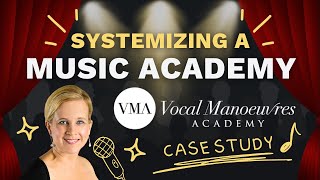
Alison Rogers built Vocal Maneuvers Academy over 22 years but hit burnout without repeatable systems. In David Jenyns' Catalyst program, she documented her client flow, hired a systems champion named James, and freed up founder time. Now she's standardizing her teaching methods to scale.
Chapters
Systemology is my secret weapon to efficient, creative, and productive thinking and action. And it's allowed me to put the right things in my focus or my team's focus at the right time.
Hello, it's David Jennings here from Systemology. I'm with Alison Rogers from Vocal Maneuvers. Maybe just to start, Alison, I know we're going to talk about systemology and how you've applied it in your business. Talk a little bit about the Catalyst program you went through, but I'd love to just start by finding out a little about you and the business and the clients that you serve.
Yeah, sure. It's the Manoeuvres group, and it consists of three different companies. But the Vocal Manoeuvres Academy is our education facet of the Manoeuvres group. And our vision is to empower your authentic voice and harmonize your voice. Voice within the symphony of humanity. And our mission is, how do we do that? We elicit your authentic voice through our unique programs of voice training and vocal coaching. And how do we harmonize that vital resource within the symphony of humanity is through our choral programs and ensemble training. So the Vocal Maneuvers Academy essentially is an extension of. Of my personal mission, which is to honor and nurture the authentic voice within each and every person I come into contact with. And it's an absolute privilege to be working full time in an industry about which I'm passionate.
Yeah. How long have you been in the space for?
Beg your pardon?
How long have you been in the space for?
Yes, all my life. So I started teaching singing at 15, but my story actually starts a lot earlier than that, so. So due to some unfortunate circumstances in my family beyond our control, I lost my father at a very young age. I was five. And I had a beautiful woman who lived two doors down from the home. And my mom was left with five children under the age of 15 to care for. And she was marvelous, a wonderful mum. But this woman who lived two doors down from me looked after me during the day and after school. Now, she was Welsh, and she taught singing. And I sat in her studio all day, many days, coloring in and listening to her teach singing. And the transformations that she would achieve were enormous. And then when I was 15, she gave me the opportunity to run this junior choir. And she was on the piano, and she put me up the front to, you know, do the conducting. And after each session, she'd give me a critique on what I did well and what I could do better. And then she handed the reins to me, and I was teaching singing and running Wires as a sole trader until 22 years ago when it turned into a company. So all my life.
Yeah. Perfect. And then 22 years ago, that's when the vocal maneuvers came. Company was launched. And then you've been running that for 22 years.
Yes, I have, yes.
Yeah. And what sort of team have you got? I know you've got a range of people on staff and you've got contractors and. Yeah. How many people are kind of involved in the business?
Yeah, there's seven in the business in a regular capacity. It did wind down during COVID and we had that went down to two and we're building that back up now post Systemology. So Systemology entered my life at a great time when I could really pick up the business and have a good look at it through the microscope and really work out the next iteration of it from an operational and business perspective. And then we have a number of permanent part time who deliver the service and then a large number of contractors who perform in the business.
And you've been in business for a really long time. And I know when you first start the the business and you get it off the ground, you are everything. You will get involved in all aspects of the business. And I know it's easy at times to kind of fall into habits because certain things will get reinforced that have worked for you, that have grown your business to a certain size and then sometimes those things hold you back. I'm wondering if you have any insight into what some of the problems or challenges that were going on in the business prior to Systemology and you know, as you started to contract some of the staff off the back of COVID that kind of made you think, ah, yeah, I can see there are some areas here that I need to go to work.
Firstly, I need to say I think the fact that I've never been an employee or worked in any other industry is somewhat limiting as well. So I've never seen typical workplace practice and I've never been an employee and that's neither good nor bad. I've just never been an employee. So I don't know how that feels. So reinforcing behaviors. For me it's particularly at the beginning when I, as, as your colleague Mr. Gerber would say, that entrepreneurial seizure, I think, isn't it, where you just jump in and you have these great ideas and you achieve a modicum of success which then reinforces a set of behaviors that during your state of entrepreneurial seizure, you've got it across the line, but it reinforces that behavior that that's what you have to do every time in order to create that result. And my experience was somewhat limited there in I don't need to be doing this particular sequence of events every time. And I was seeking something like systemology to open my thinking to possibility. I knew this could be done. I've not seen it done in, in my industry. I typically see it as a place where people choose to dabble in a hobby, which is admirable in its own. But I wanted more as a business and systemologies cracked that nut for me. And it wasn't an easy nut to crack, but you did it.
Were there particular things like. And it's easy to look back. You know, Hindsight gives you 2020 vision that you could see particular things that were going on that were holding you back. Like, I know wanting to be involved in everything's part of it. Were there any other things that only became obvious to you now that you've got a bit more visibility?
Yeah, ignorance was the big one. I was just ignorant what, what typical. What successful workplace practice would have looked like. And yeah, I just feel I was ignorant to what was possible and I just didn't know how. I knew what I wanted, but I couldn't, I couldn't get the gap, I couldn't close that gap and I couldn't find what I needed to leverage what I thought I might have had a bit of intelligence and I couldn't, I couldn't find the tools to leverage that. And I kept falling into less intelligent ways of managing things, which is making yourself incredibly busy and not creating a salable asset. And so with now the beauty of hindsight, I've sunk a lot of time and effort into this business and I want a tangible business that will provide well for my children and be part of their portfolio when I'm gone, if they choose to take it on or work in it, or at least, you know, profit from it, I guess. And looking back, I can, I get a bit disappointed with myself when I see some of the things that I didn't achieve as well as I could have. So.
You mentioned one or two of the things there around, you know, the amount of time that's gone in. I don't know if there's any other things that jump out for you about like the effect of that working, whether it's on yourself or on your team. Again, just kind of looking back and thinking, okay, that had this impact on either yourself or the team. Does anything jump out at you there?
Yes. So the time invested was exorbitant and then because you're doing it, you have an expectation of your team and your family that they would do similar. And it really strained your relationships with. With your family and with your friends and with your colleagues. So just. Excuse me a moment, Dave, I've just got someone at the door. I'm just going to go and see what's going on.
Perfect.
Sorry, Dave. I just get these beautiful deliveries, but my students. It's so lovely.
Oh, it's a good time of year when that happens.
One of the perks of being a teacher.
Yes.
Yeah, sorry, we're just talking about that retrospective, the time and relationships and team. It's a big one, isn't it?
Yeah. If you think back prior to Systemology and you think about the situation where you. You're in, and I'm not sure if it was before the purging with COVID or prior to that, but kind of explaining or articulating your own position, like, were you like working long hours or was there a particular stress or any sort of catalyst that made you really feel like, oh, you know, something's bubbling here and something needs to change?
Oh, absolutely. Which is why I sought out Systemology. It was a constant state of heightened anxiety. Always on tools, always working. Burying my head in this. In the sand. Completion aversion, I'd call it. I just didn't want. Didn't want to complete some things because the tasks were just so enormous in my head. And it just. It just impacts all aspects of your life really, in a negative manner that you don't. I didn't want that anymore. And it got to the stage where I tried to kill my firstborn, which is my business. And that's when I knew I needed help.
Yeah. Did you go on a search to try and find things to help or. Yeah. Like, were there other things that you did try that didn't work or maybe they. They did help on the journey? What things did you try?
Yeah, I've tr.
Work.
Work the system. Carpenters work the system. I looked at that and did some of the. The free product offering in that. And I mean, I've looked at the e myth and have done some of the modules of that. That training, the emyth technology.
So it sounds like you had a sense that systems was the answer. Is that something that you kind of already knew, this is part of what's missing, or was that something you had to discover?
Systems set me free in my music. So engaging in the scientific of systemizing in your music allows. It frees up your Thinking to be really creative, the more elegant, the more entrepreneurial, the more intelligent, intuitive side of me turns up when the scientific and the circuitry is in place. So whether that's doing a piano concerto or coaching someone or writing a piece of music, when I've got the science in place, the art is extraordinary. And I think that's my secret. I don't necessarily think I'm better on tools than a lot of other people, but I think what gives me the edge is that my science behind my music is very sound. But the science behind my business wasn't sound. I'd never seen it in operation. I'd never seen it in any other industry. I consulted to conservatoriums of music as head of departments at these universities that have music faculties, because there had to be somebody who was doing it, and I couldn't find it. It was always justice, as you say, this amorphous blob of behaviors and anxiety and burnout. And I wanted more because I knew I could get it in my art, in my music, but I wanted them in the business.
You mentioned about the science in your music. When you get down to what that is, what. What does that mean? Is that. Are you saying the science is. Yeah, I'm not even sure I know what you mean by that.
So if we're contracted to do Beethoven's Ninth Symphony in the Singapore Concert hall, the Esplanade Concert hall, then what we have to do is chunk that down. That whole system, that becomes a very big project. And you look at the score and you go, right, it's in German, it's four part vocals. And then you need to systemize your calendar so that the repertoire is covered. And the ABC actually did a documentary on a project that I did called the Curse of the Gothic Symphony. And they were a fly on the wall with me for about three years. And this symphony was called Cursed, or this documentary was called Curse of the Gothic because no one had been ever able to stage it. And because of the systems that I employ. It wasn't that I was. It was the. The man who had my job. The job that I was engaged in before me was Opera Australia. And then he chose not to continue with it. So he's very skilled and very competent. And then it was a hospital pass, really, to me, and I picked it up and I had this ball. I'm going, how am I going to convert this gold? You know, I've got this thing in my hands. And it was purely systems. It was systems that, okay, you've got you know, six movements. You've got to break it all down. You've got to get the practice tracks, you've got to recruit the people, you've got to train them. You've got to have all the sectionals. And that's all systemized for me. I can deliver that service. That service is beautifully systemized.
And where did you learn that? Because I love the fact it's almost. And I see this frequently in creative spaces, because sometimes there's a little bit of a mismatch. People think, ah, if I put systems in place, it's going to remove creativity. And I found in many creative businesses, the systems, as you've just identified, almost do the complete opposite. They set you free. I'm curious to know where you had that discovery. Was that from the earlier teacher? Is that something else that you picked up? Like, where did that systems thinking applied specifically in the creative space come from?
I think initially, because I had outstanding teachers in those formative years of my life, initially, what gave me the edge was my theory. You know, I knew what keys it was in, I knew the chords, I knew what the notes were, and that's what would often would give me the edge. And so that's the scientific elements of music, you know, rather than the execution and the delivery, I think. Not that I am familiar with carpentry at all, but it'd be similar. They would know, you know, what the wood is and what the tools are and, you know, the hammer that they've got and, you know, all that sort of thing. I think that's where I learned that, by watching those teachers and watching how they would work, I think.
Yeah.
And it made me realize that that's what gave me the edge over. Over people who were similarly as skilled as me, I think.
Is that something that you were consciously doing or something that just happened? And it's almost like you had an internal system that you were following.
It's intuitive. And I thought everybody could hear what I hear, and I thought everybody could do what I would do. And what I've learned later in life is to not be so outspoken about what I hear, because now I realize that not everybody can hear. The third of that chord is sitting. Is in tune, but it actually needs to be sharp to make the effect that they. That they know, they relate to my work, that sound. So that that science, that science of music really creates that heightened creative output.
I love the way that this. It's almost like a metaphor for systems and the way that you think about them through the lens of music. Which is awesome.
Well, I think what we call it is that, I think what I feel is that everybody looks at music as a horizontal focus. You know, you think if you're a soloist and you're singing, it's note after note after note after note. But when you enhance that vertical focus, that's where I needed greater rigor and focus to get the outcome of like the Beethoven 9. You just can't do that horizontal. You've actually got to identified the department and then you've got to dig down into it to see what the stack is.
Yes.
And I think, you know, if we're singing Beethoven 9 in Australia, where speaking German is not a typical language that everyone speaks here, I've got to unstick that, I've got to resolve it, and I've got to move them forward productively. So it's the same thing. You've got to define your purpose and you've got to paint for them the vision of the outcome. And then you've got to organize it all into actionable steps that doesn't overwhelm them, otherwise they'll just step aside. And I think the people that work with me and the people that sing with me, so my customers and my colleagues, I have to be clear about what I'm doing. I, you know, they, they love, they love me to win because they know that they're going to win too. And I think if I tell them what I'm doing. This was the first conversation I had with James as well, that you have to be very clear and you have to provide that, that, that clarity provides the juice and the direction. And then you deepen that with your, with your principles of action and the criteria for the excellence of conduct. And I think that makes, makes the difference. So we have a system for visioning. You know, we've been given this brand new piece of opera that has to be put on stage at Sydney Opera House. If I put that music straight into the hands of some of my customers, particularly my new ones, our education system, they can't read that like a book. You and I'd be able to pick up a book in English and read it, and they would too. But we now teach them the systems so that they can pick up a piece of music and read it and hear it in their head without me playing it on the piano. So the first thing we do when we get a new work is we articulate the vision or the outcome which gives them the blueprint for that final result so they know the what. And I think, you know, You've got to be quite clear with that. And then you, you put it into action with them.
Yeah.
And I think that's what's been really important with being successful artistically. But I couldn't find that in my business.
Yeah. And you mentioned you tried a few different things and it didn't work. Quite, quite connect. When it came to systemology, was there. Do you remember what first grabbed your attention? Was it a video or reading the book or.
It was, it was you.
Yes. Yeah.
So what it is about you is that you Audible actually suggested you to me. So that's how I found out about you. It came up on my emails, books, you know how the audible email you get and it says other things you might like. And I saw you and I went, oh, gosh, okay, what's this? They're recommending it to me. And you spoke about your father and you spoke about the scorecard and the list and I thought, this poor man is me sitting in singing lessons. It's part of your DNA, Dave. And as soon as I heard you speak, I went, this man's got the DNA in a, in a skill set that I don't have. And I'm wondering whether it's because it was in my DNA singing wise that I was able to identify it in you like that chart your dad did. And you actually put a graphic of that in the book. And I went, oh, this is, this is priceless. Because I've got all the books of my singing teacher and I say things now. I sound like her at times still, you know, and you must go, I sound like my dad. And you're doing it with your. I remember you said you did it with your eldest son. And I thought, oh man, this man is me. Like in a different industry, but an industry or a system or a pedagogy or a methodology that I know nothing of. And that's, that's, that was the trigger. So I did the, the Michael Gerber and I read the book and I took copious notes and it would, it's wonderful. But you're packaging that book with the Audible and everything was really great. And then the catalyst and I was so excited by it that I actually didn't want to outsource it to one of your systemologists to do. But I wanted to be handheld so I could learn more.
Yeah.
And it was, it was you because you live, drink, eat, breathe it. Like I reckon your everything in your life would be systemized or you would learn to do what I do. When I go to the Supermarket and I'm pushing a trolley and I hear a caroler or music being piped through, I turn off my analysis. I don't go, that's GMA oh, now we're D. Oh, now we're going to E minor. I, I just have to turn that off when I'm pushing my shopping trolley. And I'm sure you're all the same when you walk into a shop or into a business or a service. I think you would know straight away what their systems or what their practice would be like. I would guess I'm not at that stage, but I guess you would be.
It's. Yeah, once you see it, it becomes very hard to unsee it.
Yeah. And unlike that, when I hear a singer or even a person speaking, you know, you know, that's a tenor voice. Oh, that's a good tenet. Oh, that's a pair of good vocal folds in there. You know, I reckon you do the same with, oh, this is a good system. Oh, they've got that under control. Or there's a deficit here. You know, they could benefit from enrolling in my course. So that's, that was, it was resonance from you leading your business, which I think is great. And that's hard to, to capture now to leverage, I would think, because that's what it's like in my art form. But we're working out a way in which to leverage that.
I think the way that I look at business now, you know, I always want to be the best example of what it is that we teach. And I'm so proud of what we've been able to do with the catalyst program because when people first come into the world, they really want to be taught by Dave. But on, on one hand, if I, if it's always just me, then I'm not practicing what we preach. So as we've rolled out, you know, the first couple of catalysts I had run myself and then now, you know, it's, it starts to train the trainer and we've got the facilitator now. And I know you went through with James after you read the book. Were you then thinking, right, I want to go deeper here. And like you said, I. You wanted to be a bit more hands on and so you thought, right, well, the systemologist might not be the right choice for me because I want to really integrate this deep into yourself because you had that connection. Yeah. I don't know whether was there anything that made you think that the catalyst was the next step for you or did anything happen in between I know I've run some other programs here and there.
What I reached out. So I read the book, I listened to the audible, then I went back and read the book again, as you suggested, and made notes in Evernote or something with regard to that. And then I was watching a lot of your, your, your digital work, your YouTubes and everything coming through and it was becoming more ingrained. And then I had a one on one with one of your consultants, your sales team. And I signed up then and there and paid the full amount because I wanted to make that commitment to it. And that's, that's what, that's what made it work because it was so tangible and so honest and not fluffy and it just. And I'm quite skeptical of things and don't easily sign up for things or part with my money as well because it's my hard earned money. But this, I went, yep, that's it for me. No installments, pay the whole lot. Let's go and commit. So I think it was that whole. It was the way it progressed. It was the, the audible, it was the book. Then I watched a YouTuber view in the Netherlands. And it's the fact that you're real, you're not trying to be something that you're not. And you're a little bit personally disparaging of yourself at times. It's relatable because I just go, that's so me. That's because I think you know. And even with Gerber reaching out to you in the early chapters of your book, you made me laugh because it's like some of the backing vocals with some of the world's top artists, the equivalent of the Gerbers in the performing arts world we've sung with. And I find myself going, why me? Why this little downtown Brisbane business? And it's I. That resonated with me too, because I thought that was humble and real and lovely.
Thank you. And did you have any reservations or anything? I know it felt quite easy to make that step, but were there any doubts floating around in your head? Yeah, yeah.
I think it's what you've articulated before. It's like you haven't got Dave. So this person who's facilitating in the Catalyst program has to be good and that, you know, should I have tried that first or should I have had a meeting with him for Hertz or her first before parting with that? So that was the hesitation that I had. But none other. Your team were exceptional with following up. I hadn't returned some signed forms promptly and they Followed up with. With courtesy and appreciation and understanding that particularly when you're doing something for yourself, you don't. Because you don't put it in that urgent and important quadrant that Covey talks about. So if you're doing something for yourself, it usually gets pushed down a little bit lower in the hierarchy. But they were lovely with reaching out and just making sure that the loop was being closed. So you felt cared for. And that made me feel that my investment was valued and that felt good because that's what I do with my people. If they sign up for things, I give them an extraordinary experience. I'm grateful that they put their trust and their money in me and I want them to have a wonderful time. And, yeah, walk away saying, you know, that their vocal range is increased and they're able to sing ACDC or whatever, but I want them to talk about their time with us as being priceless and never ending and the way in which they relate now with their authentic voice is what really matters. And Systemology had that from front foot and that was really good. So I felt cared and I felt like I was cared for and I was part of the fold, so that's really important.
Did you have a particular goal when you came into the program? Like, you're obviously like, hey, I want to get this systems thing. Did you have an idea of what outcome you were after?
Yeah, my goal, and I actually have written it down, so I'll just pull up this goal because you gave me the technology for my goals. So there's actually like, I identify goals annually and they're broken down into areas of domain. And I've got one goal that's two goals that sit under this domain of systems and operations. And this goal says, systemize the VMA working procedures to create scale and leverage. And I say to myself, why do I. Why do I want to do this? So this is why I enrolled in Systemology. I want a lean, dynamic and replicable business that's geared toward maximizing income whilst producing or providing fulfillment, flexibility and freedom. That was my first motivation, and then my second one was Systemisation will create repeatable systems to manage the operations, enabling growth in a predictable and efficient way. It will ensure the business will handle growth as the customers roll in. You know, I'm in such a good situation where I've got these customers wanting to be enrolled and they say that they have to have a PhD in forensic science to find how to get into my business. Automated workflows will free time to spend how I choose that is working on in the business instead of nitty gritty of daily operations. And the final one was get out of my head, exclamation mark. And I had to set time to focus on this business, building and writing of systems and then my next steps. And this goal has kept repeating year after year. And my next steps is so funny because it's gone from a lot of software, but I couldn't find the education. So you know, I spent a lot of money on software thinking that that's going to give me the systems. And then I realized, you know, I could be playing a sine way and still sound terrible until I had the pedagogy in how I depress the keys or how I, you know, expand against the keys. So it wouldn't matter what piano you'd given me, it wouldn't matter what software I had, I still wasn't ending up with systems year after year. So that's why I joined Systemology.
When you went through the program, it's a long program, like it's for six months. And a big part of the reason that you joined it really is hits the nail on the head. Like it's about taking this systems thinking, really internalizing it, making it the way that you see business, the way that you do business. And as a leader, the business owner and as your systems champion, taking that and then trying to almost like bottle it so that it can then be passed on to other team members. I know there's a lot in the program, but was there a particular favorite part or things that stood out for you? When going through the program, you look back and you go, oh, I like that bit.
Yeah. So as part of my enrollment I also got that business systems accelerator. So I jumped into both. So I was doing it rather than on the fortnightly rotation. I really jumped into complete immersion in Systemology and I really carved out the time on the Tuesday mornings to do that, to shift things. But that was really stamped out as my time and no one dare interrupt me, not even my children. Like that was stamped out as my time because I was that desperate to get it right. And the things that stood out to me then were just so many things. But I have to say that what James Brown did to me with regards to getting that CCF right was a game changer. And he There was a lot of self talk going on in my head that I really had to stamp out. And that's been there for years and I'm aware of it and I can identify it when it rares its ugly head it's defiant. It's all things that have stood me in good stead as being, you know, a young business owner back in the day. And then here he was triggering it and, and he was very clear, James was very clear about getting that CCF right. And he just kept, you know, I'd turn up the next week with the CCF and then it'd be like he'd handball it back and I'd have to go back and you know, you get, you get angry and you get defensive and who does he think he is? But then you go, ah, he's got it, he's onto something here. And then I got the CCF right and things started to flow and then James was insistent on getting a dedicated systems champion who wasn't doing anything else in the business. And I went, I've got to recruit and I've got a find, I've got to interview. I don't have time for this. I'm doing systemology for a couple of hours every week and now I've got to go and do this. I was just going to make systemology four hours, five hours a week on top of the homework. And I went, okay, I trusted him with the ccf, now I'm going to trust him with this. And then you gave me the plug and play of here is the ad for your systems champion and here is your position description and I swiped it completely and just changed systemology for my business and it snagged me the most incredible systems champion and that was a game changer. And that was because of the self talk in my head telling me this man knows what he's doing and he's getting the best out of me. He's like the best piano teacher. I always hated my best piano, like a love hate relationship because they just knew how to get the best out of you. And that was one of my favorite, favorite times.
James is a fantastic facilitator and I'm so glad that you got to work with him. Is there anything that we might be able to comment on with regards to James? Whether it's the type of support or help that you got from him or the ability to kind of push. We, we have some discussions at head office and I actually got this advice from Michael Gerber and I'm so glad that you, you've recognized it and you said, hey, even though I might not be the person documenting this, I need to be the one that leads this and I need the DNA in me so that I can pass it on and I can stand behind it. And I had a line that Michael said to me once, he said, don't let the business owner off the hook because that was one thing he felt in the system ology book that maybe, maybe for my next book I'll make it clearer that, you know, it almost sounds like, oh, you just handball this off to your system's champion and they do it, but you need to still get it. And I think that's one thing that James and I talked about is really holding the business owners and the team members that go through the Catalyst program to that higher standard. And I don't know if you got that sense or if there's anything else from working with James that really stood out for you.
Yeah, I really got that sense and he really did hold me to that higher standard. And when that part of me starts the selft talk, that's when I know I've got, there's something on the other side. I've got to go through it, I've got to trust, I've got to go through it. And James did that really well from the first session. So he was really well versed in the systemology, technology and culture and the way of doing things. He was as understandably, anything in the virtual world, you know, or even on site goes pear shaped but he's able to manage those things. You know, when technology drops out or whatever, he just did that with grace and, and calm and it wasn't like the world was falling in, you know, he just stepped through it and you know, have a bit of a laugh at himself and, and go and go on to the next stage. So that was always lovely, was always never pretending to be something other than being a first class presenter, but holding me accountable and getting that CCF right and getting that dedicated systems champion. It's really been wonderful. I'm really grateful for that. And now that I'm not off the hook because it would have been very easy to have handballed it to somebody else. And I was in that situation. Situation. I had an amazing person, a virtual assistant working for me for seven years, working with me for seven years. And after seven years I'm up this, I'm over here and I wanted to be here. And he'd created all the systems and he was running it and even the culture was becoming not what I wanted, not through any other means other than I wasn't directing him. He was doing the best that he could do, but it wasn't where I wanted to be and I, I don't fault him at all. I Don't know how he actually did it, to be honest, but after seven years I woke up and went, what am I doing here? I want to be here. And that's because I didn't keep my finger on the pulse. And now that I did the Catalyst program and I was able to do it myself and try it on for size, I'm going to be able to identify it in my team. When something's not fitting properly, because I've.
Tried it on, I love that. One thing I've found as well, the further that I get down this journey for myself is when you first get started. The central philosophy for Systemology is capture what you're currently doing, not what you would like to be doing. And the whole purpose of that really is just to create enough space for the key team members, particularly the business owner, to then be able to work on it. Because most of the time if there's not cash flow coming through and the person's just stuck in the day to day, there's no visibility on that. But I actually believe the business owner does their best work by then pulling apart systems and re engineering them the way they would like them to be and then helping to have that inserted back in the business. Because that's, that's what we try and often do with systems is we're trying to capture the essence or the DNA of what the business owner is doing and making that transferable. So I think you've kind of got to that point already where you're, you've created some space for yourself to be able to work on those systems and then have that installed into the machine that is your business. I don't know if you found that yourself as you've headed down this path.
That's a really good point because you've prompted me to remember something else in the training. Whereas I could have felt intense shame when the extractions were happening and when the rubber was hitting the road about how poorly my business was performing. So when we did the first extractions with the systems champion, what was brilliant about her was that she didn't stand in judgment because I had enough judgment for the whole business. You know, there are it, you could actually be very disappointed in yourself and very embarrassed that you know your sis, that your business is able to, up until Systemology, it's able to perform at this level, which is wonderful. But when you start pulling it apart like you just said, and you're doing an extraction and the systems champions trying to do an extraction on another member of the team, she tried to Do a systems extraction on the salesperson on our team and she completely forgot to even tell her about the sales automation system we have in Asana. And you know, she just totally forgot to. And there's all these holes in every system. And so I, my, I'm really pleased that James was like with the cat of prod behind me. Why hasn't anyone done their homework? Where are the extractions? Where are the videos of the extractions? I strongly encourage you to get in as clumsy, but do your extractions. And that's when you know, I've got this. Oh, gosh, my business is so poor and underperforming, I had to stop and think, I've achieved so much. Let's just do that extraction. Stay out of judgment, please. Wonderful systems champion. Let's just do this extraction and funnel through like Mr. Magoo and get it, complete it, document it, load it. And then because she's my capture system, I trust her. She's got the technology with the system hub, she's got the methodology with the systems extraction she's captured. Then I'm able to extract that little piece that's completely broken and work on it while she's doing the rest. You know, there's a form, a Google form that's needed or a, a payment or, or something else or another appointment or. There were other things that needed to be fixed. But that advice, capture it as it's currently happening. Draw a line under the sand and say under the line, a line under it and say that's where it is. Broken, dead, in some cases, not functioning, totally dysfunctional. Own it, be proud of it. Allow your systems champion to hold that space for you as the business owner. For the first time in my life, I've got this person working with me. He's holding the space while I pull the broken little pieces out and start working them. And that's. That was fantastic. But the potential. You would probably, possibly. There were times where I'd probably prefer to run and hide and pretend I was too busy to do systemology or rather than face the pain of how broken elements of my business was, because that was painful.
I think the more that you start as you found, addressing the little broken bits as well over time and you fix those and then you move on and it's got a cumulative effect and then you're able to slightly start solving higher and higher problems, which is a better and better use of your time. With that foundation in mind, if we kind of think about, you know, the future and the direction, the course of the Business. I know you've already achieved some significant change. And if any of those things stand out for you, either that's already happened or that you can see is going to happen. I don't know if you can comment to kind of the future direction and then the impact of these changes.
The future direction for my business is that the day to day and the currency of the education, my education part of the business, the training part of the business is going to have greater reach. It's. It's systemized and it's delivering an outstanding product to a lot more people. Because what I possess in delivering the service is at a higher level. Now doing my PhD in that area of music. It's very boutique area. But my team who started with me as students when they were 5, 6 and 7 and are now, you know, 20, 25, they're able to teach. They know my philosophy, they know my education, they're able to teach it, but I couldn't put the tools into their hand to teach it. So the future for the business is that education component is going to be able to reach more people. That's not Alison centric. There's going to be a standardization, standardization in the, in the product and the delivery of the product and that unique way of how we do things in the Vocal Maneuvers Academy, which is then going to free me up to systemize these things that are less regularly occurring. But what actually sets our business apart. So, you know, in the six months of doing Systemology, we had performances in all of the premier performing venues in Australia, except for the Opera house in the six months with anywhere between six to 40 people at any time. And those events don't happen often, but they're the events that people want to come and do their education in because they want to go and do these great events. So they want to train to be the best possible so they can play in the A grade. And then that will allow me, by having all this, I'll have critical mass. Because of systemology, I didn't have critical mass to fuel the events. Everything would break down here, there'd be loss of income. I'd have to put that bread and butter education cash flow cow to sleep while I would go to Perth or I'd go to Tasmania, or I'd go to Adelaide. Now with Systemology, the future for the business is this just hums along like the most beautiful machine. There's no concerns with it there not being a system to address a challenge which will then allow us to leverage into these other events with confidence without Everything falling down. And that's the future for the business as a result of systemology.
I know. I see this a little bit where sometimes business owners, if they've been in a business for so long and they get stuck in that rut, in that way, they start to lose some of their entrepreneurial juice. And that's like part of the magic of what a business owner has. And as they start to lose that. That's really sad. I feel I have seen at times where systemology will. It's like it awakens that part in a business owner again because they can now see the path and they can see how there'll be a cumulative effect of the work that they're doing, as opposed to, again, just be stuck in, you know, the routine of doing the same thing, same day in, day out, for years on end. I don't know if you have any feeling to that.
Yeah, I do, I do. I. I feel. I like to think there's a part of me that's intelligent and I like to think there's a part of me, possibly a bigger part of me that's less intelligent. And I'm not saying that's because of education. It could be that I'm exhausted or burnt out or tired or I'm a mum and I've got, you know, and that possibly can at times be a bit foggy and a bit cloudy. So systemology's given me tricks to leverage that less intelligent part of me when I need it. It's that metaphor, isn't it, that, you know, if you need, if you've. If you need to take something the next day to work or out the door or whatever, or don't forget to take a piece of hardware with you or calculator, for example, you put it at the door or you put it with your keys so that when you wake up in the morning and you just groggy from sleep, you don't need to think about it, it's there. And that's what a system, Systemology gives me, if that makes sense. So it leverages, I think, less intelligence, possibly a bit harsh, but there are times where you're just not in the zone. And I think that's human nature, isn't it? Because, you know, they say that, you know, we're supposed to be having these emotional experiences, we're not robots. And systemology is leveraging that part of me so I don't have to think about where I put that or where, where am I? Where is that? It's just there now. And the Same with a system for, you know, enrolling or onboarding a new student. I don't have to think about, well, where did I put their phone number or what's their parents name or have. It's just in the system now. So that if any of us are feeling particularly tired after a big event or, you know, whatever, whatever force of nature is going on, we can trust that the system has it captured and covered and, you know, we don't need to give it any more thought. I could do it or one of the team could do it.
I like that. It's almost like a. It's a collective intelligence which then means someone else might be onboarding that particular customer and saving that phone number somewhere. And then you have the trust to know, well, now I can go in and this is where it should be. And if it's not there, hey guys, we need to retrain on the system. It's outlined here or if it's not in the system. Great. Well let's now add that in the system so it is there for next time. So it kind of, it gives a great way for managing staff and improving. I think like in the tail end we touched on so many amazing insights and I just love the fact that you've got this creative background and then you kind of. We get to see this through the, you know, the systems through your creative lens. Are there any final things. Yeah. That you might. I don't know whether it's something. If someone was thinking about applying Systemology to their business, something you might say to them, or any final thoughts around Systemology or really anything.
I think Systemology is my secret weapon to efficient, creative and productive thinking and action. And it's allowed me to put the right things in my focus or my team's focus at the right time. And I think it's a fantastic way to enhance what you're currently doing. And you acknowledge us as business owners from the outset. You congratulate us on what we've achieved so far and that we're feeling an element of pain in order to be searching for more. But I feel the Systemology has enhanced the productivity by giving me these trusted tools now. And we actually all love to use them. We all talk CCF and DRTC and SAS and MBS and everything now. And I think that's what's happened with us with implementing the Systemology method. And there were times where I was resisting it and I was resisting that whole process of streamlining the ccf. But I appreciate now that through the Catalyst program I have A critical client flow. And I'm able to replicate that for every service that we offer that's fast, functional and fun, really. They're clear and they're not fancy words or something that's just specific to that product. I think you say it sometimes. It's. It's just as simple as take money, collect money. That's what it is. It's just collect money. And I'm like, oh, no, it's got to be this. It's. No, it's just. You're just collecting money. That's the system and that's. That's critical. And I found I was resisting a lot of that at time. It's too simple. It's too simple. And you break it down very well into the primary systems of the critical client flow. What are those primary systems that you're currently doing for which you're being remunerated? And I was really surprised at the amount of remuneration I was receiving with a broken ccf. And then looking at the secondary systems, which are. Which is more like. So the primary systems of the CCF are like the skeleton. And, you know, you need that to actually build the body. And then with the secondary systems of that minimal viable system, I'm watching that profitability climb up and I'm able to tweak a few things now for next year that's going to see significant, significant elevations in our. In our productivity. And there's been a significant improvement in our financial profitability even in the six months of doing the program.
Wow. I absolutely am thrilled to hear your story. And I think it's almost like once we drop a rock in this lake, the ripples go out. I feel like we might need another part two. I'd love to circle back in a year or two and see what changes happen because we've just. We've adjusted a course now and you've got the right tools to keep adjusting and stay on track. And I think, yeah, what's ahead of you is going to be just magical to watch and inspiring for other business owners. So thank you so much for your time and generosity and, yeah, absolute pleasure.
You're very welcome. Thank you again.
If anybody want to find out a little bit more about you, is it best to just head to the. And I'll put a link near this, but just the VMA or the vmacademy.net au is that the best place for them to go?
Yes, that's fine. Yes, thank you.
All right, thanks, Alison.
Thank you. Bye now.
More from David






Remember me? Subscribe To My Channel For More Free Business Systems Content 📈




