How To Systemize An Electrical Business - Case Study
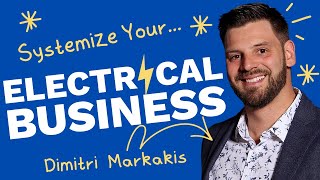
Dimitri Marcakis built Titan Electrical Group in Canberra over four years, then systematized it when he hired his first VA and apprentice. He improved cashflow by setting up Xero reminders and calling clients before invoices were due, and recommends starting with one system per week and hiring people you can teach.
Questions this video answers
July 25, 2024
Founded four years ago ("just over four years ago")
Canberra and surrounding regions
Xero
Apprentice first, then a virtual assistant (VA) shortly after
Chapters
Actually start having documented systems in place to figure out, okay, this is what I'm going to start doing on a daily basis, then the kind of succession planning. Okay, so once I don't need to do this part, like an admin is going to do this and then I can hand over that. So then creating a system to onboard the next person.
You know, I love a good systemization story. I love to showcase business owners at various different stages when it comes to systemization. Find out what, what's working, what's not, and share some wisdom with those in the trenches building out systemized businesses. So today I've got Dimitri Marcakis from Titan Electrical Group, maybe just to start. Dimitri, if you can tell us a little bit about Titan Electrical, what you guys do and the clients you serve.
Yeah, not a problem. Look, thank you very much, David, for having us. It is greatly appreciated. So Titan Electrical Group, it was founded four years ago, just over four years ago, and we mainly focus on residential clients within Canberra and surrounding regions, giving a holistic electrical service from lighting, power points, switchboard upgrades, data, telecommunications security, CCTV installations, and then branching off into air conditioning services as well.
Yeah, awesome. Did you come from working in another electrical group or did you just start your own business or were you kind of freelancing or what was kind of like the, the push to, to start your own business?
Yeah. So my training, I guess as an apprentice and then into like a tradesman role with another company was all big commercial sites, so mainly with defense and government contracts. So I got to see kind of the big picture with how a project starts and over the course of say 6 12, 2, 3 years, see like the progression of those larger projects effectively. So that was the majority of my training, working on some pretty notable buildings around Canberra and the surrounding regions, which is pretty cool. And during that time I'm like, well, I've got people asking, hey, can you install some lights or PowerPoints at home? And naturally, again I was, I've done it in a commercial setting, I can do it in a residential setting as well. And then realize that it's a completely different ball game. Being the way things are constructed effectively, it's not as easy in a residential space that is commercial and saw a bit of a challenge there and thought, well, if other people can do it, why can't I? I've got the experience in leading teams and completing progress and stuff effectively. We had. So I was able to figure out, okay, well if I can do it in a commercial setting, why not do the residential side? So Started creating contacts and doing good work for like family and friends, which is with trades naturally, how it starts off. And then started building a bit of a client and database of like family and friends and then their neighbors and then their friends and family and stuff like that. And then those that had businesses started working and doing jobs for their businesses and it's like, look, this is something, something that I want to step out from doing it for somebody else and being able to provide what I think is a better service for the customers and whatnot. So I saw that kind of gap and I thought that I was ready to do that in 2020, in literally Covid, when I just had. When we. Well, not myself personally, but when my wife had our second child, Aries. So we had two under two and thought, you know what, if any times the good point, the have the kick in the backside to go, yep, let's start a business, jump out on my own and really give it a good crack then, yeah, that's, that's how it all started.
Have you found, like, obviously you were trained to do the technical work and you're still out on the tools getting it done. And I know the team's starting to grow and you got the apprentice, but when, when you moved from doing just the technical work to then running a business, how did you go with that transition? There's a lot of more moving parts and things that you may or may not have been exposed to in your other role. Is that something that was easy for you?
Yeah, like it was actually like a major shock to the system because beforehand there was say everything was verbal, verbally communicated, There was minimal, like systems or processes or anything actually structured. With these other companies that I was working with, even though we were doing something quite large, it was more so just verbal saying, all right, this is where we need to be by X date. Do this, you know, and we kind of work our way through it. So what I would do once I started my business was like, okay, cool. So step one, like what do I need to do to talk to a new client, get a new client into the door and start writing down kind of like a flow of a job to see how it's going to go and try structure it so that each time a new person would call, a new client would call, somebody would have a problem, there'd be an issue to try, kind of document it so that it's just rinse and repeat and it's the same kind of quality going forward and it's something to kind of measure as well. Because it was kind of hard not knowing and how to kind of start and structure a business. Good on the tools, know what I'm doing. That's not a problem at all. Business wise, I could say, like, count the bits of experience, experience on my fingers, you know, like, which is not a whole lot. So it's kind of a massive learning curve at the same time.
Yeah. And as you sort of got into it, was it natural for you to think in terms of systems? Like you mentioned, you started writing things down, was that, and thinking, what is the flow here? Was that inspired by systemology or I know you're also in the lifestyle tradie group, like where, where did that thinking come from? Or was it just your natural tendency to go, oh well, I guess kind of have to identify the flow here? Yeah.
So in terms of systems thinking, it was always there in the back of my mind being like, okay, I need to have a process from start to finish with no matter what task or process it might be. So it was always in the back of my mind, okay, step one is this, step two is this, step three is this. And like we're going towards like step ten. That's the end result. So that was always in the back of my mind. It was only really, really when I went to put on my va. So I was speaking with another local business, Tom Martin from Watertight, who's also got a virtual trade business as well, and he said, look, before we put on a VA for your admin role, because you're going to have them full time, what kind of systems have you got in place? Because they're going to need to know what to do on a daily basis, how to do with like for instance, yourself, like the invoicing, the quotes, taking on customers, customers and stuff, doing a few different bits and pieces task wise. And I looked at him with a bit of a blank face and I'm like, look, I've got a few things written down. Majority of the stuff's up here. Can, can you help us out? And he's like, look, you need to have a look at something like Systems Hub. It's pretty good. Like it's holistic, this is what it kind of looks like. And he showed me what he's kind of done in the infancy stage of like spreadsheets, all documented there and then all his standard operating procedures. So he took me through that briefly and said, this is kind of like a template. Away you go then with the Lifestyle Trading Group, they go into it in a little bit more depth and around that time or just before that time actually is when I first heard your podcast Systemology and started listening to obviously larger businesses and how they talk about a system and go in depth with that. And it's interesting to see that the framework pretty much stays the same with every system, no matter if it's a small company like myself with four employees or massive organizations with hundreds of staff kind of things. So it's. That's kind of how it kicked off and got the ball really rolling to be like, okay, and then start getting things written down, systemized so somebody can else. Somebody else can do what I am currently doing.
Yeah. So were you. Was your first hire the VA first?
I was the Apprentice and then shortly after was the va. Yeah.
Perfect. And how have you gone trying to impart some of this knowledge onto the Apprentice and some of the other team members. Is it something I think I always find when someone's in a role and they've been in a role for a long time, sometimes to change habits, there's some resistance and challenges. Whereas your business is kind of getting off the ground and you were doing this thinking and you're putting some of that early on. Yeah. I'd love to know if that was something that they just adopted quickly or if it's something you've really had to coach and remind the team on.
Yeah. So it was taken by all team members, is actually taken on board really well because it's like, hey, we don't have to bug you for something every waking second of the day when we're working. So VA wise, it was really good. And then we just work through if there's a problem, we obviously look at the system first to be like, okay, cool, where's the bottleneck in the system? Or what's the issue with the system? Do we need to revise it, alter it and go through that way? Then with like for instance, the Apprentice that I've currently got, he's young, he's 18, he's bright eyed, bushy tailed, extremely switched on, and especially from a technological point of view, he uses like an iPhone a lot better than I do. So he actually helps me document the, the systems on how we do things from job to job task, the task, whether that be recording what we're doing and then that way I can just have a look at the recording afterwards and go through and actually write the steps out or I'll be verbally explaining. Okay, so step one, we're doing this, Step two, we're doing this. So we've started incorporating that Kind of in the daily basis of workflow. So if we see something new that we haven't done yet, we'll effectively write down a flow, like a flowchart basically in the van when we're going there. So he'll sit there with the notepad. We'll do like a rough flowchart. So this is what it is, this is the end result. This is what we're going to do to check if there's something that pops up. We need to check this before we can move to the next stage. And we kind of do it like that and just build something. Yeah, like really rough like that. And then later we'll pass it on, convert it and then document it properly.
Oh hey, I know you're tuned in right now, so I'll keep this super quick, but you like awesome YouTube videos, don't you? Well, there's not really that many YouTube channels that create great content about how to systemize your small business. So I want to make sure that you catch every video that I publish. So if you haven't already, firstly give this video the thumbs up and then go ahead and subscribe to my channel. You can even hit the bell notification to make sure that you're the first to know when I publish anything. So go ahead, do it right now, I'll wait a sec and then I'll transfer you back to the video. Yeah, awesome. I love that thinking as you're going through this process, have you had any wins or anything that you can look back on and go by adopting this approach we were able to get this particular result or if something has happened. Yeah. Is there anything that you could share from a wins perspective?
Yeah. So like I was, I was thinking about this long and hard on like the biggest kind of win in regards to this. So one of major killers of small businesses cash flow. One of the things that I noticed with certain types of clients that I'd have, they understand terms and conditions when we're doing a job etc and the payment terms because we clearly communicate that. So what we started to implement was like a follow up system before the due date of an invoice for instance. And we found like a great success. Where is. So our accounting software Xero sends out automatic reminders before the due date as well as afterwards saying hey look, it's a reminder, can you please pay the invoice effectively? What we found that was as soon as we started calling the clients a couple of days before the due date, depending on the payment terms is like just a gentle reminder that you've got this invoice or these invoices due, just making sure that they're in the process of being put into the payroll system and will be paid on time. If there's any issues or queries or anything like that that we can actually look at getting that resolved before the day and not be like, hey, you've now got these invoices overdue. Where, where are we at? Oh yeah, we've actually got these. We've got a question with this one. Or just want to double check to make sure that this has been done. Can you send through photos or whatever, whatever the questions might be surrounding it. So that's probably the biggest win in terms of getting paid quicker with certain clients with like a system in place to effectively get our money quicker.
What I love about that is rather than getting frustrated at the output or the client, you've gone and solved it from a system level and thought, how can I adjust the system to reduce this particular pain point? And then very intelligently thought through and thought, okay, well if we just call them before, that's going to increase the likelihood that they pay like. And there are hundreds of situations like that in small business where business owners may have problems and if you fix it at the system level, you can fix it permanently once and for all and then you move on to the next problem that needs to be solved. So I, I love that. I know you've worked through a bit of material with systemology and in System Hub and the podcast, were there any particular things, if you look back now that either was a breakthrough for you or an insight or a learning or something that you just wish that you knew earlier? I don't know if anything comes to mind for that.
Oh, wish I knew earlier, Jason. How to document the system properly from the start. I guess if like looking back at say before starting the business, I guess if I had heard about systemology and the seven steps, that would have been a massive help. So I could actually, before jumping out of my full time paying job to something where I've got one or two days worth of work booked in a week and start scrambling to find more work kind of thing and not actually having like a full structure behind it, I think that would have really helped to actually start having documented systems in place to figure out, okay, this is what I'm going to start doing on a daily basis, then the kind of succession planning, okay, so once I don't need to do this part like an admin is going to do this and then I can hand over that so then creating a system to onboard the next person. So really the framework of how to create a system at the very start and then to roll those out and implement those before actually starting the business. Obviously you can't have everything ready to go before you start, but something like that would have been a great help to begin with and actually set the framework of the business itself.
Yeah, I'm definitely hearing that more and more. Where Systemology was originally designed for an existing business that has a team and we're almost trying to shoehorn systems into the business afterwards, which sometimes can present some challenges. I've had a few business owners that have had great exits and now when they think about starting a new business, they start with the critical client flow and they bring with them some of the previous systems that they had or they designed some of the things up front. So I definitely think thinking from the start in terms of systems and then building it into the DNA is, is a great way. You mentioned something. One of the last things I was keen to get your insights on is this idea of your apprentice. I'm thinking more and more about this role of a systems champion as really a great gift that you can give an apprentice. Because a lot of apprentices, they learn how to do the technical work but they don't know how to necessarily run the business that sells the technical work. And if you get the systems champion on almost like an apprentice and you think of your business like a school, you're kind of teaching these staff members how to do things in the business and getting them involved. I think that what a tremendous gift that you could give that apprentice. But I don't know if you've got any insights. You've obviously you're quite fortunate to get a really astute apprentice who's kind of just picks things up and technologically advanced. But I don't know if you have any insights and thoughts on how someone might find an apprentice like this that they could then school in the way of systems and process and the way that their business runs with the idea that they can become an incredibly valuable team member.
Yeah. So something like that. Because it's a great point. And when you're talking about it beforehand live in Manly there it was like, okay, well at the moment like I've got that systems champion so badge of honor and looking at passing that on. So between like the young apprentice and then I call him the younger friends because he's 18 and the mature age apprentice which is actually older than myself, it's like, okay, so who, who would I actually give that to? And it's actually the younger of the two. So where it starts from is actually the hiring stage, especially with the younger apprentice, for instance, with him being, well, at the time he was still in school doing, looking to do an asper apprenticeship for six months of the last part of year 12 and then coming on full time. And with that, it's more so, okay, cool. You don't have too much life experience. You've got one job that you've been in for two years at the moment, working on weekends. It's more so saying, okay, what's your kind of character, your personality? Are you teachable? Do you want to actually learn? Have you got that willingness and drive, finding those kind of characteristics that you can't teach somebody? Like, you can. Like, I can teach you how to wire up a light or a PowerPoint within about two minutes and then you'll have that stuck. But if you don't want to learn how to do that at all, then I'm going to be sitting here for weeks trying to teach you how to. How to do that. So I think it starts off with finding the right person before hiring them to see if they've actually got that willingness to learn, if they've got some form of malleable brain that can absorb that and can be molded how you'd like it, into like a good tradesman. Because that's the end goal to it, really. So that's really. Yeah. Where it starts off, I think, is from the hiring stage to make sure you find the right person that can end up taking on that role.
Yeah, perfect. Some really solid advice. I'd love to maybe have a part two. Who knows? You never know where what the ripple effects of building systems, thinking into a business can have when you scoot ahead two, three, five years down the road and you're building the system's DNA in from the day dot. So I, again, I always love showcasing just different stories as to where different people are up to. And you've kind of taken that first step. You started to build a team around you. You're thinking in terms of systems and you're well on the way and adopting systemology for someone who hasn't yet made that leap, because it can feel a bit daunting or a bit scary or. I mean, there's an investment in time and money to create systems and processes, whether it's you as the business owner or a systems champion, that it takes effort. I don't know if there's any final words of wisdom you might be able to offer someone, if they haven't yet taken the steps, what you might say to them.
So I guess it all depends on the individual's goal or like the business owner's goal. So for myself, body wise, I can't be on the tools forever, so I know that I've got to look like into the future what I want to do. So I want to be able to step away from the business completely and have it running like clockwork in the background. So, for instance, if someone's got a similar kind of goal that you want to be able to walk away from your team and then have everything running smoothly, there's no way you're going to be able to do that without systems in place. Like, you might be able to fluke it. But in if there's an emergency, if there's some form of technical knowledge where you're the bottleneck in that business, if it's not documented and easily accessible, then like, they're going to be calling you while you're on the beach or whatever, trying to enjoy some family time. So if that's kind of the goal, then, yeah, look at making a start, even if it's something small, say, like trying to do a system a week or whatever, because by the end of the year, that's 52 systems, you know, so at least starting more with baby steps and then build it up over time, it doesn't need to be a massive sprint saying, I'm going to systemize my whole business in a week or two or a month or two. It does take a lot of time and then you've got the refining part of it as well. So, yeah, definitely make a start sooner rather than later, if you're that way inclined. Because it, it is a bit of an outlay in terms of time and money, but the return on investment is literally invaluable later on.
Yeah, love it. Very good. All right, Dimitri, I'm going to point people over to Titan Electrical Group. I'll pop a link so people can kind of check out and follow along with your story. But yeah, appreciate your time and shares today.
Thank you so much, David. Greatly appreciate it.
More from David






Remember me? Subscribe To My Channel For More Free Business Systems Content 📈




