Levers: The Framework For Building Repeatability Into Your Business
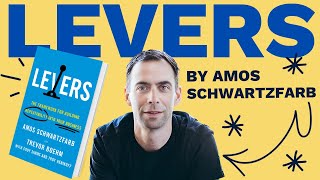
Amos Schwartzfarb walks through Levers, a five-part framework for making businesses repeatable. It covers defining your ideal customer with the W3 method, building a revenue formula, validating assumptions with a priority matrix, tracking leading indicators, and creating a financial model as your operating plan.
Chapters
So what we are hoping to do is provide you with a series of frameworks, which is one overarching framework at the end of the day that when you do this really well, you will understand how to make your business repeatable. You will know what levers to pull, what they do at the most granular level.
I've got another awesome interview for you. This one's with Amos Swartzfab. Now, he's been growing businesses for over 25 years. He's been investing in startup businesses for the past 10 years and he's helped to build companies that have sold to Yahoo, Home Depot and there's over 60 other companies that he's helped to exit through his position as a managing director at techstars, which is in Austin. He's also the bestselling author of Sell More Faster, also the co author of the book Levers, which is what we're going to talk a little bit about today. Long story short, he knows business and he's got some great frameworks to share from you. So enjoy the interview. Well, welcome to the call Moss. Yeah, very much looking forward to this interview and I thought maybe a great way to start. I'd like to know if you see yourself as a systems person.
I would no, I would not identify myself that way. I think I have been identified that way a lot and I like when I reflect about how I approach things, which is I try to look at or when I look at something that's super complicated, my first go to is how do I make this really, really simple so that I can understand it. And I think, you know, if I'm being really honest and vulnerable, it stems from I don't think I like growing up I never thought I was very smart. Like I wasn't a good student. So I had to figure out ways to like get shit done. Am I allowed to. And so I'd be like, okay, what's going on? How do I just make this really, really simple? And I think, you know, sort of like that, that trauma of not thinking I was a smart kid or person was to. To create these like very, very digestible, understandable, consumable, like boxes. Which another way to say, yeah, I guess I create systems. But I don't think of my. No one's ever asked me that like that. I don't really think of myself that way. But probably, yeah, well, I think it's.
Funny when I look at your book because your book is like a system and the, the way to approach and think about business. What order might you get things organized. So, and, and sometimes like you can be a systems thinker, but that doesn't necessarily mean that you like writing out processes or checklists. I know a lot of you, but.
I do like those things because I, because it helps me be organized.
Yes.
Because, you know, I've got, you know, lots of all entrepreneurs. Right. But like, there's so many things in my head and you know, I like, how do you keep track of it all? So like I, you know, I'm sure I'm not by far from the only one. I have voice memos, I've got, you know, to do lists and you know, I've got, I use email for certain things. I've got different notebooks for different things. And it's like, how do you organize your, your, your. How do I organize all of the thoughts that are going on? And that's all levers was. At the end of the day, you know, when Trevor and I first can, you know, there was a process that I put in place and then Trevor and I decided to write the book and we invited Troy and Cody to, to write the segments that they were really experts in. Trevor's is a systems person and he would tell you that he is.
Yes.
But it was, you know, he, he was working for me at techstars at the time and what he said to me was, yeah, you know, it's like there's all this really hard stuff and what you've done really well is you've just tried to break it into what are the five most important things and how do you make them really simple to understand because they're so hard to do.
Yes.
So take one of the hard parts out, make it understandable.
Yeah, yeah. Going from sort of understanding it and thinking of it in terms of a system, then to getting it documented, as in out of your head. And to simplify, how do you go through that process? Is that something that takes a long time or does it just jump straight into your head? How do you think about that? Yeah.
Let me see how I answer this.
I would say if I were being intentional about it and reflecting backwards, it probably takes a really long time. I don't like when it came to writing levers, we weren't intentional about it ahead of time. We created this thing, we talked about it and we said, huh, there's probably like a way to get this to a bigger audience. So this was our thinking, writing levers, right? It was. We were like, if this book exists in some other form, we're not going to do it. We, none of us, none of the four of us could find it. So we're like, okay, we all believe that these are the most important things that every business, regardless of who you are, need to do. You need to know your customers, you need to know your business model, you need to prioritize, you need to understand what your important metrics are, and you need to have a plan and a financial model. We think all businesses need to do that, regardless of who you are.
And.
And we couldn't find anywhere out there that helped someone.
Not.
There are plenty of books that say you should do these things, but there weren't that said, here's how you do them in a really simple way. And so by the time we got to writing the book, we had done all the work, but we didn't set out to write the book. We didn't set out to create the process. We were just, I mean, really, we were just, and I won't say inventing. We were innovating for our own destiny. That takes time. And then we looked back and said, oh, shit, we have something here. So when it came down to sit down and actually writing the book, it took like a few weeks.
Yeah. Yeah, that makes sense. I'm curious because the, like, a great system is a system that can work in a variety of different scenarios. As in, it's like general enough that it works in a lot of system, like in a lot of different businesses, let's say, for this example, but specific enough that someone can follow it. And there's this real fine line between having enough specifics that you can actually follow it and do it and get a result. But you don't want to go too specific. Otherwise it kind of tailors it just to that and then. And the system doesn't work in all scenarios. So how did you stress test that part? Because you, I mean, you apply it to your business, which is at a certain point, but then taking that elsewhere, I'm curious to know how that.
Yeah, it's a super question. And no one's ever asked. Asked that before in, in any way. But I would say again, it wasn't necessarily intentional because there were four people and we did all of those. Even though we didn't know each other beforehand, all four of us, these, these were the things that we did. We didn't do them all the same, but we all did these things.
Yeah.
Multiple businesses, each as operators and as investors. So the stress testing happened because we were literally doing them over many, many years in hundreds and hundreds of companies. And by the Time we got so again like wasn't planned but by the time we got together we're like yeah, you know like I'll give you an example. The revenue formula, you know that, that was something that I picked up from Brian Barnum. He, he, he, he credits, maybe he credits me or he's credit someone else but I credit him. And I remember it was him very distinctly@business.com and when he joined business.com we were like 15, 20 million in revenue. We exited when we were at about 80 million in revenue. And he implemented the revenue formula there. Right. So that's a pretty business where we had raised a bunch of money by that point. And in ju theos to that in my mind I saw how it could be helpful for earlier stage companies. So I started doing that at techstars in my very first year which was now decade ago and I saw how it helped people conceptualize and think about the things they need to do. So there we're like to you know, maybe not the opposite ends completely of the spectrum but we're pretty far apart there. And I watched that type of thing happen over and over again. And as the companies that went through techstars would grow up and continue to use it. Yeah. To figure out the business, you could see that okay. Even over time it is still working. So again like it's not. I, I wish I could tell you that I was so smart that I was like here's how you design it.
Yeah.
I think we, we happened upon something that, that is meant to work in a way that does trans many things and we've even gone so far because we were Trevor, Cody and I have another business where we just teach levers.
Yeah.
Some non profits go through well they don't care about not they don't care about revenue, but they don't care about revenue. So we've even figured out how to adopt the exact thing and we and rather than call it a revenue formula, we call it a value formula. So what's the value you're trying to bring to the non profit? It's not necessarily dollars. It's we want to help you know, more kids learn how to read whatever it might be.
Right.
Yes. Great. So how do you measure that you're actually successful at helping more kids learn how to read?
Yeah, I love that it's and great to see as well like the application into something like a not for profit. Like it's really about.
Making an organization repeatable that you focus on with the leverage and it doesn't levers and it doesn't really matter as much about what the type of businesses and even the size you mentioned, from startups all through to businesses scaling. I'm curious.
When you think about, you're obviously going to start businesses differently now with everything that you've learned with levers and there might be some subtle distinctions on how you might apply levers into an existing already operating business versus hey, I'm about to start a new business and you think about the framework right up front. I'm curious. Yeah. What tweaks or how you think about applying that. Yeah.
And I've, I've tested a lot of things here. You know, when you're, when you're going through, when you're at a very young business, you can just sort of like shove this on. You could shove, shove through this. Right. And a lot of things won't connect yet, but you'll, it'll be really clear why they're not connecting with an existing business. As you're alluding to, there is a tremendous amount more variables including, and, or maybe starting with the buy in from the entire executive team. So you may have complete buy in, you'll always have complete buy in from the CEO, otherwise you wouldn't be there. But that doesn't mean the team is bought in. So like using W3 example, right. Which is how do you figure out who your customer is?
Right.
Like a great sales leader might like say we, we know who our customer is. We're 100% sure.
Cool.
Tell me why. And they can't.
Yeah.
And then ask them to articulate who their sales, who their customer is. And they do it in this very general way. And, and look, I grew up in sales, so nothing against salespeople, but that's how many sales leaders think. And so figuring out how to, and this is, there's a little psychology. So this is one, there's lots of different things. Like if this is a very specific example, there's a psychology that I often have to do with people when I'm helping them through this process, which is how to not make them feel challenged, but excited to question their own beliefs. And there's a, it's, you know, I have screwed that up for sure a few times and pushed too hard or not pushed hard enough. But it's, it's, how do I, the visual that I, when I'm getting, when I find myself in that situation. And it's, every time I'm with a more mature executive team, there's somebody, at least one person, if not multiple people, the the visual that I have is we're sitting around a table.
Trying to solve something, and the person is next to me, not across from me, and we're like looking at a piece of paper together. So that's the visual that I put in and so that I. What the psychology is. I try to use language by assessing them in real time. Like, how do I not make them feel like I'm attacking them for all the hard work that they've done? Because it's not what I'm actually doing.
Yeah.
I'm just going to say, like, help me understand what you believe so deeply. And so what happens from that? Off. A couple things happen from that. But the thing that happens, most common, which I appreciate is, is they don't know how to articulate it, but they actually do know. They just don't know how to articulate it. So I help, I help them figure out how to articulate it. And in that always, they will realize there are holes in their own thinking that they just stumbled on on their own because they can't articulate something like, huh, you know, I don't know. Like, well, cool. Let's, let's, let's, you know, let's go through it and I don't have to name, go back and name. Oh, this is. This part of W3. It doesn't matter. That's. That's ego. If I did that, this. It's like, okay, great. We, we have a question that we don't know the answer to. Like, let's solve it together. I don't know either. You don't know. Let's go figure it out. Yes. Yeah, that's an example. But there's a lot of customization when it comes to more mature teams. But it's more around the psychology of how people accept it than the actual work itself. Because I think for the most part the work is, is it translates really well, which is largely luck.
Yeah, I love that idea of working with them. And, hey, I'm trying to improve things for you and I'm sitting next to you. I, I don't know if you have any idea.
I'm very careful to never say I'm trying to improve for you because it assumes that I know something they don't know and I almost never do. It's their business.
Yeah.
I don't know more than them. What I know is how to use this framework and how to get the most out of the framework. So I say, you've got all the knowledge. Let's put your knowledge into this database. Or this framework and then together we will see what we can spit out of it. But they're the experts. I never profess to be the expert.
Yes, sounds like that. In that particular example you're working a lot with as you mentioned, like leadership teams and things like that.
C level, VP level execs. Yeah.
When it comes to like rolling things out in the organization and getting change there. Yeah. How have you found any tips on how to get cultural change like that? That's oftentimes the hardest bit. I mean levers is great. There are different process methodologies and ways to improve organizations. And sometimes it's hard with legacy behavior, people being stuck in the way that they do things. Well, we've always done these things. Why do we need to change? And sometimes it's helping to build the. The case. But I'd love your ideas on. Yeah. How you get more buy in.
Yeah, it's so I'll start with it's really, really hard. You know that. But I want for the listeners like that the change management like this is never easy. Even if it's like a one degree change, it's still change. I do have a lot of like personal experience helping organizations as a senior leader, helping organizations manage through change.
The book does not touch on change management at all. Yeah, yeah. Maybe we touch on it a little.
Bit.
Indirectly, but not directly. You know, the book is pretty regimented in what it's meant and not meant to do. That being said, what I have found is.
Bringing.
It has to start from the top. So first of all, all everyone needs to be bought in. Which is why it's so important for the executive team to be working together. And what I encourage them to do is once there is some, some principled agreement across the executive team. So for example, as an executive team, we agreed that our W3 is this. And there's a definition that the executive team agrees upon. It's immediate that the head of sales and the head of marketing or anyone else who's touching that, that that messaging is starting to permeate through the entire organization. And as whatever work that they're doing, people are, they're getting carrot, not stick. So for example, if there's a slight shift to the definition of who a customer is through the W3 exercise, that conversation needs to happen right away. And so like okay, you sold a new customer. Hey, great job. Let's understand how this customer does or does not fit into our current W3. Doesn't mean we shouldn't have sold them. It doesn't mean they're a bad customer. But let's just start thinking about it as an organization so that we're starting to as a full organization use the same languages, same definitions, the same things. That's one the other thing and I think like this is what where revenue formula and the KPI exercise become really, really critical.
I'll start with revenue formula. What revenue formula is meant to do a few things but one of the things that is really fundamentally meant to do is say so it starts with here's how the, the math equation we think our business is. That's the top line of your revenue formula. The next couple of steps in it is defining what are the drivers and sub drivers of each value of the math equation that those are to dos. This is a big to do list. And so as you start to define the to do list, it's imperative that this the senior owner of that to do. And sometimes there's multiple starts to bring in the parties that were actually going to be involved in the execution for buy in, for belief, for how to it's all all sort of tied together. And then when it comes to the planning, my belief is in, in.
To empower the team to create the plan or co create the plan with the senior leader. So they're not being hey, go do this thing. But hey, what do you believe we should do? I'm, I'm your senior leader, I'm going to guide it, I'm going to give you the strategy. But I want your buy in by helping us build out what we're actually going to do. So by the if you do this really well and it hard and it could take years before you get into this cycle. Right. But if you do this really well, what happens is every single person in the organization knows exactly what they're doing. They were part of creating it, they know why they're doing it, they know how it impacts the business and they know what they should not be doing because they can say this doesn't, this doesn't translate to any of the things that I'm responsible for. So if this needs to happen, we either need to redefine something, which means I have to have a conversation with people or I need to find out who the owner should be, which isn't me, which is totally okay.
Oh hey, I know you're tuned in right now, so I'll keep this super quick. But you like awesome YouTube videos, don't you? Well, there's not really that many YouTube channels that create great content about how to systemize your small business So I want to make sure that you catch every video that I publish. So if you haven't already, firstly give this video the thumbs up and then go ahead and subscribe to my channel. You can even hit the bell notification to make sure that you're the first to know when I publish anything. So go ahead, do it right now. I'll wait a sec and then I'll transfer you back to the video.
Yes.
Yeah, but it is hard. Like as hard as it was to describe, it is 100 times harder to do.
Yes. I think I've realized someone who's listening to this who might not yet know the levers like high level. I know what I love most about it is the simplicity in getting very clear on, well, what is your customer, who are they buying, how are you creating value for them and ultimately getting revenue and thinking about what it is that you should be working on now and next and what it is that you're doing in building out this plan. But I'm wondering if, how you would describe it, let's say high level for someone who hasn't yet gone through levers and then maybe we can even just briefly touch on the levers themselves.
Absolutely, yeah. So I, I like to think, or we like to think that the title of the book describes what the, what the, the import or the intent is. So the book, the book title. For anyone listening who isn't familiar, it's Lever is the framework for building repeatability into your business. So what we are hoping to do is provide you with a, a series of frameworks, which is one overarching framework at the end of the day that when you do this really well, you will understand how to make your business repeatable. You will know what levers to pull, what they do at the most granular level. So that, that you, we take as much guesswork out of your business as possible and not we, you take as much guesswork out of your business as possible. And we do that by providing five frameworks. There's actually a sixth, which we have it is as an appendix in the book, but when we do a second edition, we're actually going to make it chapter one. Because one of the things we learned is that we made an assumption that most businesses have this and it's not true and it's important, but it's the only one that's not data driven. So would you like me to walk through all five?
Yeah, let's do it.
So the one that is currently in appendix, but we're moving to chapter one is the Only one that's not metrics driven, but it's basically defining your cultural mission statement. And so going back to the importance of change management, it starts with this. Do we all, are we all saying the same thing? Do we all have the same belief of how, of what the business is and how it's going to change the world that it's trying to change? So not the globe, but like you're trying to change marketers and SMBs, how are you going to change that world? So having a unified way to communicate that it doesn't have to be used for marketing purposes. It's, it can be, but it's meant to be an internal way for everyone to talk about the business. What do we care about? What's our vision of mission? So that's one. Once you have that, everything should align under that. So the next one, which we call your W3 framework, which is a framework to help you get to your ICP or your ideal customer profile. So it, it doesn't tell you what it is. It is a framework to help you understand what it is. So it doesn't replace it. It's. It complements it. And it, at its core, it's asking you to have to answer three questions about who you believe your customer is and then collect data to back that up. The three questions is, who is your customer? Defined very specifically and narrowly. And what we usually tell people is, you know, you've done a good job when, when you. That definition, if you meet someone that meets that definition, you will close them 100% of the time. That doesn't mean you close 100% of sales, because something might not be right in that profile, but if that profile is right, you will close them 100% of the time and you can identify that person. And timing is, you know, timing will be part of that. So that's the who. The second W is what, what are they buying from you? Not what are you selling to them. And this is really important. And this, this is a way that you communicate to them. So, you know, rather than say, you know, well, we sell widgets. Well, they don't care that you sell widgets. What they care is they're buying what they're buying revenue, they're buying time, they're buying ease of use, they're buying system, you know, system, systemization. What are they buying from you? Really important to understand what they're buying, not what you're selling. They don't care what you're selling. And then third is why, like, why is it important to the business, why is it important to them as the buyer? And those are not always the same thing, but understanding those two things. So those are the first two frameworks, mission and W3. The third framework is called finding your revenue formula. At its core, revenue formula can be sort of synonymous with business model. But you think about revenue formula. If you close your eyes and picture something, you're looking at a math equation like A times B times C equals revenue. Or you know, your SaaS business, it's you know, number of companies times number of seats per company times dollar per seat equals revenue. Really simple. You know, when you're an early stage business, you may not actually know what it is, that's okay. But when you're a later stage business and you're operating, you have revenue like there is an equation, you just have to define it. The important work comes after you define it. So let's just say it's number of companies. Well, there's a whole list of things that you have to do, understand, build in order to prove that your revenue formula is correct. So for a number of companies, you have to know who your ICP is, you have to know who your customer is, you have to know how to, how to find them, you have to know how to market to them, you have to know what kind of sales team, you know how to, you have to figure out pricing, you have to figure out what sort of internal sales tools, external sale tools. What's the pro? There's all this whole list of things that have to do in order for that number of companies number for you to be able to control it moving up. So, so imagine all of that out for the entire revenue for. So that's the third framework. The fourth framework is a KPI framework. And I would just say like there's lots and lots of KPI frameworks out there. This one is just specific to lever. So it does translate well. It can work outside of leverage too. But it's, it's identifying what are you trying to prove that you're doing and why and what does it unlock for you and how do you measure it. So an example might be if you're an earlier stage company, we want to prove that we can, we can improve Churn.
Cool.
And we're going to do that by building X product feature. And we're going to measure, we're going to measure that. Of course you're going to measure Churn, but Churn is going to be a lagging indicator of whether or not you've been successful. So what are the Leading indicators. These are the KPIs. What are the KPI is one of the leading indicators that you will be able to move and control the movement of Churn over time. And then you got to have to figure out what that is. Is it more usage, is it less usage, is it specific type of usage, is it, you know, that's, you know it's going to be dependent on the company. Makes sense. Yes, 100%.
And then actually, and I jumped over a step, so my apologies. Before you get to KPIs, there's another step. So I apologize to everybody. So there, after you do revenue formula, we have an exercise called validating Assumptions which is taking everything from revenue formula and everything from W3 and more and saying what do you need to do now? And next. And so it goes. It's this framework and this exercise that basically breaks everything into, into a quadrant. And the quadrant is high priority.
High priority, validated, High priority, unvalidated. Low priority, unvalidated, Low priority, validated. And so the book is, if it's low priority already, don't talk about it. It doesn't mean it may not become high priority. But if it's low priority today, we're not talking about it, then we're talking about high priority. High priority validated means great, it works. Go do it, go build it. You've proven that you should move to the next step. High priority, unvalidated. So let's say we're talking about a product future is we shouldn't build anything yet because we don't actually know. We only have beliefs that this is going to do what we think it's going to do. What is the most data that we can get that gives us the confidence to say we should spend time, money and resources to build it. And then once you go collect the data, then it moves over to validated and then you build it and then that cycle happens. So that's the step in KPIs. Once you have that, then you know what you're working on. And those are the, the, the high priority and unvalidated and the high priority validated are the things that you're measuring right now. They're the most important things to measure other than revenue, which is actually a lagging indicator, not a leading indicator of business health. And then the final part, and then I'll take a breath and legit jump in, is all of this work. What this really, really allows you to do is to build a financial model that is an operating plan for your business. Really Important thing for founders to hear here right now so they don't shut their brain off. A financial model in this context is not how did my business do? It is not a financial statement. It is not what is the current health of my business. That's not what it is. It is literally a plan in, in financial model format that tells you what am I going to do next year and what do I think the outcome of my actions will be. And if you, if you build that well, you will have confidence in what every single person in the organization should be doing. Literally every person should be doing what their efforts are meant to accomplish and whether or not you're successful. And whether or not you're successful means how do I adapt as I go along so that I can be more and more successful over time? So when you do all that work really well, you've done all the work, you need to build that model and then operate your business out of that model.
I actually think that last step is one of the hardest for a lot of business owners because everybody's great at going, oh, here's my goal for next year and here's my revenue target and I know what I want to have done. But it's that translation into, and the plan of what you're going to do when you, what hires you going to need, what product lines you're going to be selling. So that, that one in particular I know a lot of business owners struggle with. I, what I think I love most about the system that you outline, it's well, firstly, the aligning of the why. I think bringing that up front is smart because the longer you're in business, the more I think you start to appreciate the why and the values and the mission. And early on you don't realize that as much, but then you realize that is the game. Then after that, getting very clear on who the target audience is. When I think about building systems, I mean, there's thousands of different variations and things that could happen. If the client goes to this, selects this color or goes for that widget, then do this and that. And there's so many different variations. You, you really just want to get the, the most probable or the best outcome for that ideal client and optimize towards that first. And all of the exceptions and variables, they get handled by smart team members and things like that. But let's make sure for the one person that we identify that we want to deliver value to that we do a really great job of that. And then I think getting clear on, well, and what are we doing currently then helps you to figure out how to realign and go, well, we shouldn't be doing that. We shouldn't be or we should should be adding this in. And all of this obviously builds in to the plan. So it's like quite logical in the way that it works in the book title. And I'm curious to know how you move to this. You talk about building repeatability. So when I think about repeatability, I'm thinking about how do we then get the team members to execute on this consistently? Because at the moment you're kind of building the machine and building the framework and you're getting the KPIs in place to then make sure that we're on track for executing the plan that we've just laid out. But what are some extra pieces you think about when it comes to repeatability? Like how do you actually make that repeatable?
Yeah, so, so I'll answer that two ways. One is, I think when we think about the use of the word repeatability there we think about it just slightly differently. But I think what you said is equally, maybe not more important. So I want to address them both.
Yes.
The way we think about it is mechanically, how do we know through data that, that we, that if we do the same thing over and over, we can predict the results and the results positive. That's like our, our definition of it. What you're saying is I, I think what you're saying is which was related, kind of related to your, your change management, your culture question, which is okay, so we know what to do, but how do we get people to actually do it?
Is that.
Am I reading, hearing you?
And, and to go from plan of okay, here's what we're going to do. There's obviously a whole range of different tasks and things that need to go on in the organization and they need to happen consistently whether the business owner or key team member or leadership team members are there. Like it just needs to happen. And I'm just wondering how you think about that piece building in the repeatability.
Yeah.
So I think I'm going to answer your question the way that you're asking to redirect me if I'm not for sure. And I want, I want to say clearly that now we're getting into like my personal opinion and my style versus like my three co authors might approach it very differently, this part of it very differently than me. And I don't think there's a right or wrong. I think this is where people have to collect data if they don't know how to do it and then decide what's best for them. For me, it becomes a combination here of two things being re becoming really clear of the profile of person that fits the business to do this kind of work. And there's lots of dimensions to that, including like I have a no assholes policy.
But you know, not everybody does and that's okay, you know. Yeah. But like that's one dimension. But also like there are people, like I would say people that have like a service or mercenary mindset. People that are, that, you know, when you, when you dig into who they are as a human, they want to be a part of something meaningful.
Yeah.
They want to be helpful. Like I look for those characteristics in the people that I hire. That is, not every company needs that.
Right.
And there's downsides to that too, which is like you, you know, you've got a company where like everyone is so like crazy loyal that it becomes cultish. Right. I like that. But like not everyone likes that, you know, so that's, that's one and then two. I, I personally, and this might be my age, it might be old school, might be because I'm a Gen X East coaster.
I don't know.
I believe in, in incentive plans deeply for like across the organization, not just for sales. So I feel like everyone should be rewarded like if they're doing this, if they know what they should be doing and they're doing a good job of what they're doing or they're doing a great job of what they're doing, they should be. There should be a way to recognize them and not just assume that they're going to do a good job.
Yes. Yeah, yeah, I love that. I think that key piece around getting the right people and that for a lot of businesses. And that's why it goes back to that thing I was asking earlier about trying to add in levers after the fact versus hey, I've got a brand new startup and I'm recruiting the right people for this because it's easier in some regards to get the right people and think about it up front rather than I have this person in the organization who's been with me for 10 years. We're now trying to add in levers and I realize they're not the right person, which then also can be quite challenging.
Happens all the time.
Yeah.
I mean literally I have that conversation weekly with founder that I've worked with. It's a challenge and then decisions have to be made about what do you do with that. Person. Right. And yes, there's many.
Yeah, yeah. You mentioned the idea of a rewrite and maybe version two. Oftentimes you'll pick up a lot of learnings once you put a framework out there and you work with a lot of clients and get a lot of feedback. One of the big changes being to move the Y. Were there any other significant changes or, or critical ones where you're like, oh, that would, yeah, that works better here. Or this needs this. Yeah.
I, I'll talk in more generalities, but I would say there's a couple of other things. One is the stories that we use, the examples, we have so much more data now that I think we can, I think the stories in there are good, but those companies, like some of those companies had great exits. Some of those companies don't exist anymore. And I. So with an update to the, the stories, which I think people relate, you know, here's how it actually works in real life. So an update to them. And then I think for, I think for probably every chapter or every framework, you know, going back to one of your first questions, we look at like complex things and all of us are similar, like, how do we just make it very simple? I think we can simplify it even more so that. Because we, we think about levers as a book you do, not a book you read. Right. So if it's a book you do like, how do you make it the easiest 1, 2, 3 step process for somebody? So I think there's things that we can do to help that. To make that a little bit easier as well.
Yeah, I love that. There's been obviously a lot of changes going on since you wrote the book, particularly around the AI space.
I'd be curious to know how you and your co authors are thinking about AI, where it fits into the picture with levers, if, if you're using it to help you get outcomes, you know, faster, cheaper, better, or if it's something that you not see. Yeah, I'm just curious on that.
Yeah, I, I have so many different thoughts here. You know, one is, and we've even batted this around as a business idea. Although, you know, being candid, I don't think any of us are going to do it collectively or independently, which is how do we. I think there's a way to use AI to help facilitate the process of figuring it all out much faster.
Yeah.
And I don't know, maybe we will do it. Who knows? But. So that's a thing that we have batted around, I think, in terms of collecting information.
I haven't really contemplated offering specific advice of how to use AI on a chapter per chapter basis. But I bet assuming we do write a second edition, I bet you that comes up because it's pretty natural that it would. That being said, I think the most savvy organizations, probably that use it are already figuring out, you know, using AI to figure out things like their W3 faster or their revenue formula, the drivers and subdrivers, specifically. Faster.
Yeah, I definitely think, I love the idea of if you did head down the path of some sort of guided AI that asks particular questions at each of the different stages and the client can provide info. Like imagine saying, interview three of your best clients, transcribe it and post the interviews into this prompt here and we'll. We'll draft out that ideal client for you. Or, you know, here's a bit about my product line and. Okay. And some pricing. Can you help me figure out the revenue model? I definitely think there's something in that because you've. Yeah. Got is a process which may. And there'll be inputs that the clients have. So I think kind of putting the two together because really prompting and. And the system is just the programming for the machines. So the next step is to take what you've already got and stick it into the robot and say, all right.
Take these inputs precisely how we're thinking this maybe as a question for you, because like, this might be a naive assumption, but my assumption is that.
One, what you just described, what we're thinking about, it's not really a hard thing to build. And.
I'm not technical and I think I could probably figure out in a short amount of time how to get that out there. But because of that, is there really a value? And I'll tell you why I'm asking the question this way, but is there really a value in doing that for founders versus versus them figuring out how to do that themselves? And this is a little, again, a little bit of that Gen X in me, which is teach a person to fish, don't give them a fish, and so suggest go do this versus doing it for them. I don't know. Like, these are the thoughts.
If we go through the effort of doing this and putting it out there in the world, are we actually doing something that's additive, that people can easily go to themselves? Maybe it's not as easy as I'm thinking because they're so busy with what they're doing and that they really just do need an easier tool. So that's one of the causes yeah.
Well, definitely having the output, like if you give me the ideal client profile mapped out based on a bunch of information that I provide or that you know about my business, and then it goes through your framework and massages it and then delivers it out in the. The specific output that you think is perfect to move through the Levers framework, I feel like there's definitely some value for there. And some of the things where the client in particular, like I mentioned, step number five, like building out that plan for a lot of business owners is one of the hardest bits. And if you can chew up all of the data from the previous four steps and even just get a starting point where, you know, you start to pre populate and then it's. It's just like, hey, here is your drafted AI answer based on your data. Now you hop in and you customize it and make it just right and suit your business. I just think for the first time, like the first time people go through systems like this and levers, there's a bit for them to process. Easy for you now, having seen it so many times and it's just second nature, but the first go is always the hardest. Anything that you can do to get the first go done makes my iterations that much easier. So.
Yeah, thank you. I really appreciate. I'm actually talking to Trevor on Tuesday about all of this stuff, so. Yeah, this is perfect timing for this. Yeah, yeah, it's really helpful and I appreciate it.
Yeah, no, right back at you. I appreciate you putting together the frameworks and the book's great. I'm going to put a link through to the Levers book on Amazon if people want to find out more about your work. Is the book the best place to start or where should we send them?
You can send them to my LinkedIn.
Yeah, perfect.
Probably the best place. And I do read every LinkedIn message I get and respond to every message that is appropriate to respond to.
Yeah, perfect. All right, well, I'll pop a link into that as well. And thank you so much almost for your time.
Yeah, man, thank you so much for having me. Really great talking to you.
More from David






Remember me? Subscribe To My Channel For More Free Business Systems Content 📈




