Process Alchemy: Using Employee-Driven Solutions To Achieve Operational Excellence
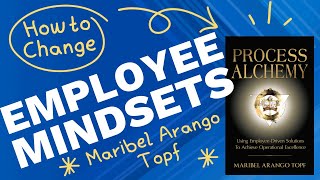
Maribel Topp explains how to build operational excellence through employee ownership of processes. She argues that documenting work, training internal systems champions, and preventing process drift frees teams to focus on higher-value work and prepares them for automation.
Chapters
But over time, somebody found a little trick to get it done a little faster. Somebody else got a little lazier. Stop doing a couple of things. You know, what processes do you have in place, what feedback mechanisms do you have in place to know that the process has gone askew so that you put it back in before it actually crashes or does anything?
Welcome to Business Processes Simplified. As you know, I'm always on the lookout for insights and strategies on how you can best develop systems culture in your organization. Recently I came across a new book called Process Alchemy Using Employee Driven Solutions to Achieve Operational Excellence. And the author, Maribel Topp, has an understanding of what it takes to build culture of continuous improvement. Having led two companies with over a thousand employees through the process. She's also consulted with many larger companies, some with over 10,000 employees, on this journey to reach operational excellence. And we all know that changing culture is hard. And I always say I think it's even harder the bigger the organization because there are just more personalities to manage and people are stuck in the ways of, hey, we've always done things this way, why do we have to change? So introducing this culture of continuous improvement can be challenging at the best of times. So very much looking forward to exploring some of these topics further and just for the full context and thinking about where this idea of continuous improvement fits into the systemology world. Systemology is a lot to do with process capture. We work with businesses that haven't yet said, hey, we have a way of doing things. Let's find out who on the team currently knows how to do something well, let's capture that, that's version number one. Let's make it repeatable, let's put a dashboard into place so that we can become a little bit more data driven. And then later in the process for systemology at the optimizing stage, that's when we think about process improvement and re engineering. But a lot of these thoughts and how to get the team on board involved and build up the culture, it's all intertwined. So yeah, very much looking forward to exploring this. So firstly, I just wanted to welcome you to the call, Maribel.
Thanks David. I read your book and I think it's so spot on with everything that most companies, not most companies, every company needs to understand, learn and implement. Um, and I was mentioning, you know, in our, in our conversation that I sometimes think a lot of companies think this is so difficult or it's something foreign or they have to put so much effort and it's sometimes easier to remind them you're already doing it in some, in some areas of your life. It's just time to expand that into other areas. You probably didn't think to do it. So it's a lot easier than people think it is. It's just really trying to help everyone from owners to employees to really understand how easy the transition could be. A lot of it is a mindset, and once you get into the right mindset, it becomes so much easier when you don't think it's going to be an overwhelming process and you can just get going and get started.
Yeah, well, maybe a good place to start would be for you just talk through a little bit about what operational excellence is, because it's a more common term in larger organizations, but it's not something that's always talked about with small business. So what is operational excellence?
I think for me, when I talk about operational excellence is really about a mindset of all employees. I always say, you know, any employee that you have could wreak havoc in your organization and usually unintentionally, usually does. Somebody doesn't come in and decides that, you know, they're going to do something to put the company in jeopardy, but theoretically they could. And so really, it's about changing the mindset of every employee in the company to be more problem solving, to have a different perception of every work that they do. Your daily work to look at everything and think, how can I do this better? You know, I do this, this, you know, I always tell my, my, you know, my new hires in the company to say, you're the best people to really bring a lot of new contribution into our organization because to you, everything is new. Some things are goofy. The way we do things. Bring it up. Tell us what doesn't make sense to you and why it doesn't make sense, and let's talk about it. So operational excellence is really a mindset. It's really about how do we achieve better processes that serve not just the company and our infrastructure, but for the customer. Is it really the best way that we could do it? Could we do it better? And of course, we could always do it better. And what does that look like? And really challenging ourselves every day to try to make our work easier, that means that we can go home on time. Nobody needs to be at the office 10 hours. If you can get the job done in seven hours and spend the other time problem solving, coming up with creative solutions and doing other things. Doing other things. We need to get our employees to really think about how are they going to contribute meaningfully for their own careers and for the organization themselves. You want them to learn, you want them to become better. You want them to grow their careers and their skill set and everything else while they're contributing to your own business and making your business grow. It should be a win win situation all the time.
Yeah. It's funny, just when you explain that, I'm nodding my head thinking, okay, yes, of course I want that in my business. Because my other question was going to be, and when should you start this? But it sounds like it's more of a mindset type thing in a way of approaching business. So I don't know how you would answer the question. When would you start bringing this into your business? I'm assuming it would be now.
Yeah, day one. And I always tell people a lot of the training that I do with my staff is really or with anybody I work with is really getting them to look at their daily work and their daily life differently. What are the things you is have become so common you don't even realize that it could be done better. And sometimes, you know, when you see a lot of, you know, life hacks on TikTok or Reddit and you think, oh, my gosh, that's so simple. Why didn't I think of that? Well, you didn't think of that because you were so stuck in doing your work the way that you have been doing it forever. You just didn't even stop to think, I could be doing this better. You didn't research, you know, how other people are doing it. You didn't stop and pause and reflect. And when you get to the point where you're having everybody pause and reflect and have a different view of daily, common, mundane stuff and say, you know, I saw that another company did this so much easier, so much better. Or, you know, have we ever considered, once you get into that mindset, it starts to grow, then everything else and all the methodologies start to work together. And now you can apply all these things because you want to, because it's not something that is being forced upon you. You're looking for it. You're wanting to do all these. So it becomes a natural progression when somebody doesn't want to do it. Oh, they're gonna fight you. They're just gonna say, nope, not for me. Until you point out, how many hours do you spend doing this? Wouldn't it be better if you did this in half the time and you could get home earlier? You know, wouldn't that feel better?
One thing I notice, it's Almost like those levels of learning, the unconscious incompetence, and then you're consciously incompetent, and then you're consciously competent, and then you're unconsciously or subconsciously competent as you move through the levels. People are oftentimes at that they don't even realize what they're doing. And I feel like working on process is a way to bring it to conscious awareness so then you can at least become consciously incompetent. And it's the first step to then, well, we're going to re engineer the process and this is a better way to do it that now you can do it competently and be aware of it until the point at which it becomes habit. And so it's almost like process is a documented habit and you keep doing it until the point it becomes the way you do things.
It's more than that, David. So one of the. So I work with hundreds of employees, and the common thing is they think they're unique and they think it's all in my head. I'm the only one that can do it. And I think, okay, well, that feels like you're trying to get job security and that's okay. But I'm like, so how can you ever get promoted if you're the only one that can do this? How do you take the vacation? Because you're the only one that can do it. So that usually helps me get people to translate everything that's in their head out of their head and into that process documentation into those systems, you know, to really be able to visualize it so that it can then be optimized and then institutionalized so that anybody else can do it. And guess what? Now you can seek a promotion. Now you can take a vacation that you can relax and disconnect because it. You have to get people to stop thinking of this as a threatening thing. You're taking my expertise and you're either dumbing it down or you're taking it away from me. No, I'm just gonna take the mundane if you're truly good at your job. And what I have found is most people really are. You know, we want to see the creative stuff, you know, the stuff that only you can truly do. Those ideas, that generation of wealth and, you know, and business ideas and all those creative products and all that stuff. Do you really want to be doing all mundane steps of, you know, data entry and all these things that really, you couldn't pay somebody, you know, else just to take care of that for you? You think this is the Best use of your time, really. So. And again, this is why we have to always work on the mindset. I always joke, you know, I don't work in manufacturing, so the machine is my. Is all the humans I work with, they are the machine and they work a little differently, but they're interesting and they're amazing and they're creative. And it's really trying to get all of that good stuff out of them and sharing and letting them know how positive that can be for their own personal careers as well as their companies that they work for.
Yeah, I love that you mentioned a line there about the machine. And especially with the direction that AI is headed, I have started talking about the idea that really all of your processes are just the documentation for the machine. And the documentation that you create today will end up programming the machines down the line. So some of those mundane tasks, some of them will get, you know, there'll be certain team members that can work with those or maybe delegate it down. Some of them are also going to get executed by the robots to then again free up the team member to work on the highest value tasks, the most creative things required where process doesn't yet exist. And really that's where you want, you know, your best team members working not on things that can easily be captured in process. That's not a good use of their time.
Correct. So there's two things that we've. We've been. I've been working with robotics for years and the common concern is it's going to take away my job. And the way that I usually address that is I have yet to see that happen, what it will do. And this is where it gets crazy. It speeds up the work. Yeah, a lot. So something that used to take you 10 hours and now takes you 10 minutes. Now you have all this work and now you have to deal with this new set. So it just moves things faster and a lot of teams are not ready for that. So you used to be able to pace yourself. Now you don't have to pace yourself that slow because you have this amazing assistant that's pushing things forward. Now we're going to need a lot more creative types to understand how to use that and work that and leverage that into all those things that you said you never had time to do because you were doing all the grunt work. And I always remind teams, you're always complaining that you never got to all these creative projects because you were so busy doing all this grunt work. Well, now there's automation, now there's AI. Now there's all this stuff. And so when those excuses are removed, now what? Now you have that time regained. Now how are you going to leverage? And I. What I find is a lot of people are not ready for that. They're not ready for dealing with. Oh, my gosh, the excuse used to be, it used to take me five hours. Well, now it takes two minutes. So now what am I going to do? Those are the conversations that I'm really having to have with people to say, it's not your enemy. It's an assistant on steroids. But do you even know what to do with that? Do you know how you're going to apply all that time? I'm like, when the work is coming hard and fast, I have yet to see somebody say, oh, I no longer need five people. No, I now need 10. Because it's coming so fast at me that I now have to deal with all this. This extra work that I wasn't anticipating in the past.
Yeah. Kind of speaks to one of the common problems people make when they're trying to introduce systems culture. And you hit the nail on the head is you're really positioning it as to what is the benefit to the team member. I'm wondering, are there any other either common mistakes or things that you've learned in sort of your journey here on how to best approach it, or how do people go wrong when they try and build a culture of systems?
I will tell you, and this has been a very long and painful discovery for me, I would tell you that in reviewing over 10,000 projects. So we log. Every person who does a project logs their own project. So I have a library of 14, 15,000 projects, actually. Small ones, bigger ones, team ones, and all that. I can tell you that reviewing all of those, if I had to guess, over 90% of the root cause of the issue, regardless of the problem.
Yeah.
Was based on misunderstanding and miscommunication. Meaning. And so here's how that happens. Right now, technology is fantastic. But. And I'm sure this is true for you, David, you probably have five, six different chat apps you're managing via your phone, desktop, or anything else. When employees are doing that now, they're having to remember who sent me the message. Where was it? What did it say? Sometimes it's just too much of a bother. And I try to remember by memory what I was supposed to do, but I remembered it wrong. And so I do. I think I'm doing a great effort. Doing the wrong task.
Yeah.
So that's the miscommunication or the Misunderstanding. You and I are talking. You think we're having the same conversation. Come to find out we're using the same word differently. Your definition of good and my definition of good are not the same. I think I did a great job. You disagree because we didn't have a set of standards that we were both using a checklist against to say, yes, this is a great job. Okay, so we have a bunch of. I always say everybody is attempting to do the best job. I rarely see somebody attempting to sabotage or going out of their way to do it wrong. But somewhere along the line, they misinterpreted the directions. And a lot of times, and this is. I sometimes discourage even written instructions at this point, because if we can screen record or video record, then you have a visual of what you actually mean. Because what I've seen is people read the instructions and they misinterpret. They. They think, oh, I thought you meant hit this button. I didn't realize you meant hit this other button. They genuinely think they're doing a good job. And then they get discouraged when somebody gets, you know, says, oh, you know, they got yelled at because they did it wrong. I always say is, you know, we start with the process first and blame the process. Is the process wrong? That the instructions were not taught correctly, were not shown correctly, and that's the other piece. We don't spend enough time sometimes really teaching this, our staff, how to do it. We have it in our heads. We know what it looks like, we know what it's good. We make a lot of assumptions. A lot of times I think of words that are set. It's common sense. Well, it's common sense to you because you've been doing this for ages. It's not common sense to everyone else trying to really calibrate and understand shared vocabulary. To really clarify that, I have had teams that have worked together for years and come to find out that over time, process drift happened, meaning that we all started doing it the same way, but over time, somebody found a little trick to get it done a little faster. Somebody else got a little lazier. Stop doing a couple of things. You know, what processes do you have in place? What feedback mechanisms do you have in place to know that the process has gone askew so that you put it back in before it actually crashes or does anything? Right. So this is all part of the misunderstandings and miscommunications. If there's no feedback to me, I'm going to keep going, doing it wrong until it gets so bad that somebody has to call me back in and we have to look at it and fix it. So once we put a process in place, our system in place, how do you ensure that it stays very well in place? I always talk about the kitchen example. Most people have a good system in a kitchen. They are not looking for a glass. They are not spending 20 minutes looking for a fork. They have a system in place. It doesn't matter how many times they eat dinner, once they wash all the dishes, everything goes back into the right place. Most of our life isn't that well defined. And so we're always looking for things, we're always trying to put things. Because we don't have a process or a system in place to take all that mental space and energy away from mundane things and putting into the right focus.
Yeah, it's definitely. Once you see it and you start to look at the world with, you know, systems thinking, you can't unsee it because that process is everywhere. I think the kitchen example is fantastic because people do have a way of doing things there. If you can take that same thinking and apply it to other areas, you start to realize how much, how many wins there are and how much can be gained, especially when you're working with other people, because the, you know, the system works well for you. But if you're all operating on the same system and you know, well, I'm going to put the fork in here, and I know everybody else is going to put the fork in here, means when I'm looking for a fork, I'm going to find a fork nice and quickly. So that, I think is a, a perfect example as to why. I'm wondering from a. How you, when you're working with clients, help to justify the expense and effort that a business needs to undergo to roll this out. Like, how do you build the case? Because oftentimes it feels like, you know, we're making an investment into this, but the ROI isn't necessarily felt immediately. So, I mean, if you see it and you get it, you're like, yes, let's do it. But there are some business owners that haven't yet said this is something that we need to do. And I'm wondering how you might build the case as to why.
So here's how I usually tell people. Most of us have a car. So this is simple enough to understand. If you don't put any maintenance into the car, you decide that I don't have time or the money to do an oil change, I'm not going to put the brake pads on I'm not going to do all of these things. At some point it crashes. I mean, the car is just going to die. And something that could have been with regular maintenance and put some effort into it. And I get it, you have to take some time out of your day to get the car serviced and you have to think about all those milestones of your car and what should you be doing? You decide not to do it and then suddenly the car dies and it's inexpensive, the engine died. How expensive is that fix? So you're telling yourself, I can't afford to do an oil change, but you can afford to buy a new car or you know, 50% of the value of the car to make it workable again. That's okay for you. And the fact is, I always joke around that nobody, ever, everybody has to deal with reality at some point. All you're doing is delaying the inevitable. You are going to spend the time, you are going to spend the money. The question is, how much money are you going to spend? If you are doing it proactively, if you are doing it strategically, to say, I'm not going to wait, I kind of know that my roof is going and I need to start setting money aside to take care of it. It's expensive, but if I don't and I have a leak through the roof and it damages a ton of parts of my house, how expensive is that? Time wise money wise people. And we see this all the time, David, you have a bunch of people who end up delaying the work that they should have been doing and then suddenly what do they do? They hire consultants, extra people, part time people, and everything to solve the crisis that should have been avoided from the start. You saw it coming. So when you're thinking about process improvement and someone says, you know, if, if they ever even started talking to you, why did they even start talking to you? Obviously there's something going on. They're trying to get some feedback, they're trying to get some solutions. They already know something is happening and they need to address it. So they're already halfway there. It's just a matter of really having them reflect. Tell me about all the times that you chose not to do it and how much money did you spend fixing the crisis that could have been avoided from day one?
Yeah, yeah. So much.
You always end up paying, by the way. You always end up hiring way more people than you anticipated at the beginning and you end up hiring or spending a lot of money on last minute stuff when you didn't need to.
You know, yeah, process definitely is important and for a lot of business I really try and move it up into that quadrant of important and urgent because oftentimes it's not seen as urgent. But you get the biggest reward sometimes by working on those important, non urgent tasks. Seemingly non urgent. But I kind of feel like it is urgent otherwise it will end up costing you.
So for me, I usually put an element of risk analysis. Yeah, okay, let's not do it. So what's going to happen in five months, six months, a year from now if you decide not to do it? What missed opportunities do you have because I didn't take care of this? What other things are going to get impacted? What am I, what else am I not going to work on? You know, if this goes down so you think you can't afford it and it might be expensive, but how much more are you willing to pay if it goes down? Something goes wrong or something else happens and you're having to open up that checkbook right then and there. Any price, just get it taken care of right?
Ah, hey, I know you're tuned in right now, so I'll keep this super quick, but you like awesome YouTube videos, don't you? Well, there's not really that many YouTube channels that create great content about how to systemize your small business. So I want to make sure that you catch every video that I publish. So if you haven't already, firstly give this video the thumbs up and then go ahead and subscribe to my channel. You can even hit the bell notification to make sure that you're the first to know when I publish anything. So go ahead, do it right now. I'll wait a sec and then I'll transfer you back to the video. Yeah, yeah, yeah, definitely. As far as where that investment then is made, I know in your book you talk about the continuous improvement professional. We talk of it in terms of having a systems champion. It's just someone in the organization who takes responsibility oftentimes because the leadership team or the business owner, while they're they need to lead this, they oftentimes don't have capacity or time to be able to, you know, work on it or work with team members. I'd love yes, some of your thoughts and insights around, well, whose responsibility is this? What type of work should they be doing and how might they approach it?
Whoever is the lead in that group owns it. Yeah. So I manage two companies, over a thousand employees, and I technically oversee all of it. Can I truly be a part of all of them? Of course not. So so every department has a lead and every project has a lead. I'm the subject matter expert for this. I become the lead for this project. I completely believe in it being organic, internal. A CI professional is great when you get to the point where you need someone coordinating and facilitating. But until you get to that point, every person is a CI professional. Every person is bringing their best problem solving skills. Skills. Every person is bringing the best that they can. Right. So we want to make sure that you have everybody participating. Every person participates in the organization. If you're big enough, sure. Bring somebody else to kind of help coordinate and document and create a little bit more strategy. That's nice and that's great. But theoretically, every person is a problem solving expert because they're also the subject matter expert. They should be looking at everything you want eyes and ears on the organization from every single employee on the floor. They're the best people to do this. Somebody from the outside cannot possibly do this. It's all your staff, it's all your employees doing this at all times and internally, that role.
Because, you know, the whole goal here is to develop a culture of improvement and thinking about process and we. Making the job easier for the people that come behind you and, you know, helping to solve some of the problems that team members have in the process. So for future team members, they don't have that. So as we start to build that and we get everybody on board, the role that you mentioned or that you do because you oversee, you're working in the organization, so you're, you are not an external consultant. You're in there. The work that you do, is it helping those team members capture, process or guide it or are you. Yeah. And I'd love it if you can explain a little bit more about that role because that's that role that we're talking about right now. While you're not doing every single bits and pieces and you're across a lot of these different projects. It's we, we call that role the systems champion role. And it's. I'd love to know more about how you explain what it is that you do and the value that you bring to an organization.
So I always refine myself as the process expert, very rarely the subject matter expert. So when I come into a team, if I am going to help them out or facilitate, I make it very clear the answer is in this room. And the answer is not coming from me, it's going to come from you. So if I'm in this room, my job is to help you organize your thoughts and look at it differently. And I always try to really emphasize that I truly believe that every person usually has a pretty good method of problem solving. You wouldn't get through life if you didn't. So I try not to create a situation where I'm trying to impose a methodology too quickly or anything. So what I usually tell people is all of these different tools and you've developed a system. There's also Lean and Six Sigma and Agile and Scrum and Kanban. I use a blend of everything. By the way, I always tell people, use what works, use what's natural in your style. Don't make trying to be process driven a new challenge for yourself. It's supposed to work with what you're already doing. So you take that this person, this team champion. So I am the process person. I will have the subject matter expert and the team leader as well. They're going to be responsible for gathering the team, ensuring that we have the right people in the room, making sure that we're going through the process, making sure that everyone is engaged and participating and once we start to get the action items of how, what the new solution is and the new processes and how we're going to move forward, that it's executed properly and that we actually have results. So in our, in our world, my world, we do not approve a project until it has been working for a few months and it can be proven that the solution worked, is holding and is doing the results that the team wanted to do. So if I said I was going to reduce 50% of the time of this task, then the project doesn't end until we hit that 50%. So we tweak, tweak, tweak until we get the new process down. So as an internal person, and I trained the trainers, so every person who does a project is expected to do a similar task as myself. They understand the difference process, the different techniques and tools. They will bring it up with the team. They will experiment until they get to a solution that works, document the solution, implement the solution, and literally not for a month or two cannot tell me that they're finished. Because I want to know, okay, so two months later, is it still working? Did it work as intended or did you. You got 50% down on day one, but on day 60 you're only at 30% efficiency. You lost 20% efficiency and why? So it's constantly trained the trainer. So my job is to have a thousands of me everywhere. It's not about having me because then I become the bottleneck. I Don't want to become the bottleneck. And I'm not the subject matter expert and I'm not going to come up with every solution in sales and finance and marketing and you know, call centers and all of that, they're the experts. And so I really am always trying to challenge everybody, bring your best ideas, your best solutions, your execution, and showing them the process. Because it's also a process on how to lead a project, how to analyze it, how to gather the data, all those things that I read in your book and the systemology. But everybody is trained on it. So the job in my job is not. I learn it. Well, who cares if I learn it? There's a thousand of you, you all have to learn it and understand the fundamentals and be able to execute similarly as well.
Are there any key when it comes to process re engineering, any key lessons that you might be able to share? For example, like one thing we've realized when we're re engineering a process is it's best for that to happen almost external of the machine and you go to work on it first and you figure out what the solution is going to be, then you insert it back in. Because if sometimes if you're trying to work on the machine and change things while you're flying, while you're actually doing the work, it can cause some trouble. So having that machine worked on outside of the day to day sometimes can be really helpful to not confuse team members. And then that way when we are updating process, we can say, hey, and this is what we're doing and how we're rolling it out. But are there any tips like that that you've got around the re engineering side of things?
The biggest thing that I have found when it comes to re engineering is really understanding. Do you even have the baseline and do you even understand that you have to re engineer it?
Yes.
So processes that have been working for a while. I always tell people what would happen if your gas gauge in your car stopped working. Would you even know? Or would you be happy going down the, you know, thinking wow, my car hit an amazing mpg and then you're on the side of the road because you're out of gas. The first thing I always ask teams is do you even know that your gas gauge stopped working, that you need to go back in and deal with a process change? And I call, you know, it's process drift changes in it. How do you go back? And I always tell people if you're fixing something and putting it back to standard, it's not an improvement, it's broken. You have to deal with things and improvement is only if something is not broken, it's working, it's just not working optimally, then it's an improvement. Now we can do process engineering. If it's broken, you need to deal with that and put it up to standard. And do you even have a standard? Do you even know what it should look like? Do you know how fast this process should be, how many things it should produce, or how it should work? If you don't even know that, you have to start really at the basics. If it's working and you know all that, then how do you, how do you know when it's changed or something has gone awry and you need to go back and change it realistically? And this is why I said eyes and ears, eyes and ears. Technology is changing so quickly and things that we thought impossible two years ago are suddenly cheap and easy to do today. And I always tell people, do you have a list of things that you need to revisit all those things that you thought were impossible to do or expensive to do? They might have been expensive five years ago and today because of AI or RPA Robotics or other things, it's not a tough job anymore. I don't have to learn Photoshop anymore. I can do, you know, a quick logo or a quick image in two minutes with a prompt changes everything. I no longer have to hire a designer. I no longer have to hire and do all these extra things that were, I felt were barriers to changes. Right. So I always have to challenge people. You know, have you looked at the process honestly in the last six months and looked at how things have changed and if you can do them differently today than you could have, you thought it was impossible and it sticks in your head that it's impossible to do. Might have been five, 10 years ago. It could have been very expensive and very time consuming. May not be anymore. And if it is, sometimes I tell people, if it's not horribly urgent, put it on the list, but revisit it often so that at some point maybe it becomes easy again.
Yeah, I definitely feel currently there's never been a better time to be thinking about building a systems driven culture and revisiting your process than right now because of all this new technology just creates tremendous opportunity for wins. As far as like, and I'm thinking specifically about how you came into this role. Is this something for the organizations you work that you were recruited for or were you in the organization and found this or how, how did that present.
Itself at snap on? It's supposed to be a revolving door. So it's supposed to be people do this for two or three years. Sometimes they take formal classes, sometimes they don't. But it's a way to help expose different people to different things. I was never rotated out. They were like, you're doing such a great job. And the next thing you know. So I started my, my transition. So actually I have a. I'm a business mathematics major. I'm very analytical. I started with designing customer programs for subscription retention. So I was doing a lot more analytics and that is kind of my focus. So I took this role from a very different perspective than most people would. I did go and get my lean Six Sigma black belt because I felt so uncomfortable taking the role. I'm like, I need to learn something. I can't just come in there, you know, not knowing anything and trying to facilitate a problem solving meeting with no tools. So I did do it, but like I said, and this is where it started becoming very challenging because almost everything in examples come from a manufacturing world. And I'm like, I'm not on a machine floor. I don't know, you know, like, how does this apply with someone in a call center? How does this apply when someone is having issues doing sales and marketing? How does this apply? So I had to take a ton of different methodologies and start to kind of rework them into my world. But yeah, so in our world. And so my team leads do rotate out every year or two years, different people. And I think that's healthy so that people don't become. Everybody feels like it's going to be my turn at some point. So, yeah, everybody expects to learn, everybody expects to be a part of this. It just becomes a common thing that everyone's going to be problem solving. And at some point, whether it's formal or informal, I will be assisting another team member in their projects as well. So good mic for everybody to have.
Yeah, I love it. In a lot of the work I do with some small businesses. One thing that we've really started leaning in on with the idea of a systems champion is especially getting someone who knows how to do the technical work of the business, but doesn't know how to run the business that delivers the technical work. Because the systems champion role gives you such tremendous visibility across the organization and an understanding of how your business is a whole system and how the subsystems interact with each other. And you poke here and something pushes out on this other corner and. And that what a Tremendous gift to give, you know, a junior technician, junior lawyer, junior accountant, junior mechanic, whoever it is, to get visibility on the business. Because a lot of business owners in particular, they don't have that visibility, and that's oftentimes where they get stuck and where the trap is. They're the hairdresser who can cut hair, but they don't know how to run a business that delivers cutting hair. So it's. There's different skills there, and I think this role is the best way to get exposure to that.
Absolutely. I think because I do it at such a bigger scale, and like I said, I get to read everybody's project, so I see a lot of patterns, and sometimes in patterns of teams that are not related. So I will say to somebody in software engineering, you know, the finance team came up with a really cool solution that I think would work for you guys. And they sometimes sit there and go, but their finance. But the root cause of the problem is the same. So you do start. And so we do a lot of sharing. We leverage. So we have presentations every month where team teams from different groups share kind of their projects and ideas that they came up with, so the rest of the organization can. So for me, that sharing process allows everyone to come up with ideas all the time, because I feel like one of the biggest. And again, we are so involved in our work, we very rarely take time. People like you and I are always looking out for different things and cool stuff. This is who we are. But it's not our. It's not the rest of the employees and everything, they're so busy just trying to get their job done and going home, home. So trying to find simple ways to share or leverage other people's cool ideas and go, let me tell you a story, or let me share with you how this team did, you know, this thing or whatever, it starts to create those creative juices of. Oh, I. I wouldn't have even thought about that, you know, and once they start thinking about, well, what else am I not thinking about? Why am I. Why is this taking so long? You know, why haven't I explored, you know, AI. Why haven't I even looked into it? And a lot of people just. I don't have the time. Well, obviously you have the time to do all the grunt work. Wouldn't it be a little bit, you know, just to spend a couple hours to learn about it, to maybe see if it could save you 10 or 15 hours down the line, you know, so we're constantly having to gently challenge people to. To Try different things, right? And not make it so that they don't get defensive. But really to say, I know you have some really cool ideas, and I know that if we gave you some extra little tools here and there, you would shine. You would do amazing things in your role you just haven't explored. Aren't you curious? You know, wouldn't you like to try something different? What if it worked? Imagine if we could cut your job, this horrible task of yours in half. What would that mean to you? Right? You have to get people excited about, you know, the possibility, the opportunity.
More.
Than trying to get them to understand why process is good. You know, everyone's gonna say, I don't have time for that. You know, it's too costly time or whatever. You have to really get them excited on, you know, all the possibilities that they're not looking into. But what if you did? What if you took five minutes out of your day and tried something different? Just what if it was life changing, you know, Aren't you curious? You know, wouldn't you want to know? You know, you have to really kind of poke and prod and really, you have to. You have to get to the human animal. And. And there was a great piece, by the way, if anybody ever wants to look it up. There was a author who followed an animal trainer at SeaWorld and wrote a book on marriage advice based on all of her learnings from the animal trainers with animals. And she basically wrote it from the human animal perspective on how to manage her husband and all these tips and techniques, you know, she was documented like this actually works. But it was a great way of showing that she took something totally different, an animal trainer at SeaWorld to truly improve her marriage. Right? The best ideas come from the most random of places. And you really have to share good stories with people and you really have to get them excited about the possibilities of what do you think could happen? What if it may or may not transform your life? But what if it did?
Yeah, what if it did?
You know, wouldn't you be willing to at least try, you know, and see, you really have to get people's curiosity going and get them to do it.
Have you spot like spotted other people who share this same type of magic that we're talking about here, particularly around process, because historically process has been approached and as boring and necessary evil. And I think you're exactly right. And I get just as excited about it as you do. And trying to then share that, I think is really critical to get buy in. I don't know if you've come across any other resources in your travels, whether it's books or YouTube or thought leaders or people that have impacted your thoughts around process is. I don't know if. Yeah, any resources that you might point to, obviously your book also, which I'm going to link to Process Alchemy because you cover a lot of things in there, but are there any other tips or.
Most of the stuff is in manufacturing, but a lot of. But, but I'll put a caveat. A lot of manufacturing companies have realized that they, that they are becoming more software, more office. So a lot of this has to build into them. So companies like AME for the US has hundreds of videos of creative solutions that they've done. We also have. And the AME also has local consortiums. So I participate with one here in San Diego. And it's so fun because they do company tours. So I have gone into Costco and seen their distributions center, the comp, the side that does all the eyeglasses and hearing all of their challenges, how they implemented robotics. Costco distribution is so fun. They, especially during COVID they had bought a bunch of 3D printers. Well, when they can no longer buy certain supplies for dumb little things that they needed, they realized, oh, we'll just, we'll just 3D print them. You know, how hard can it be to get another trash can, to get another, you know, little container. Container or whatever, just 3D print it, all that creativity. So there's a lot of resources. There is a website, Process Excellence Network that does a lot of these things as well. You can kind of see. But again, a lot of them leaning towards manufacturing. Unfortunately, what I've noticed is a lot of them are software solutions, you know, erp, system stuff. And then they try to put it white papers out, but they're really just trying to get some names. You know, when you talk to other practitioners and there's some groups that you can join, there's a lot of us, by the way. Once you get to the real stories, it becomes fun because some of the stories that people tell, you sit there and you think, wow, I would have thought about that. And, and I have my own series of stories on. For example, you know, I don't want to put anybody under the bus, but this was years ago, so I can tell the story now. But we had a call center where, you know, we thought we had good metrics and one of them has, how many calls did you take? Some kid outsmarted us and decided that he would pick up the phone and Then put it back into the queue and transfer it. Pick up the next one and transfer it. So within an hour and a half, he had met all his daily metrics and nobody questioned it until a few months later. They were like, every call averages like 2 seconds. How is that possible? Well, he was never taking a call. He was just dumping it back into the queue so he could make its metrics and make his bonuses and all those things. Right. So we have to be careful that we don't drive the wrong behavior as well. That was lesson learned as well. Like, oh, my gosh, you have to think about how can an employee cheat the system and think about the 10 ways they could cheat the system to make sure that it's robust. But there's so many. When you talk to other people, I share some stories, but when you hear other people's stories and they're hard to come by. But honestly, talking to other practitioners, sometimes in small groups, most. Most places have groups that you can participate in, visit their companies, talk to employees, and all that stuff. So I would highly recommend if you look at, you know, continuous improvement or Kaizen groups or things like that, there's. There's a ton of them everywhere. So you can always join and. And be the fly on the wall and hear their horror stories where you're like, taking notes and thinking, oh, gosh, you know, I have to look to see if that's happened in my place. Right?
Yeah.
Yeah, there's a lot of places.
Oh, perfect. And I know, well, your book Process Alchemy provides a lot of shortcuts also because you've taken a lot of your battle stories and turn them into lessons and teachings, and it's in the book. So I'll include a link over to Amazon to grab a copy of that. But if people want to find out a little bit more about you, I can point them to processalchemy.net is that the best place for them to get in touch?
Absolutely.
Yeah. Perfect. Well, thank you so much for your stories and shares today. I know, yeah, I learned a lot from it, and so have the listeners.
I was so much of a pleasure to always talk to someone who does, you know, this with everybody else. It's so important, and I think everybody needs to become a little bit more system driven. It's not that tough. You're already doing it. You just need to do a little bit more. So it's always good to try to make it less intimidating to businesses to say it's not a huge leap. This should be natural. Next step in helping companies really improve to achieve all the goals that they set themselves out to do. Yeah.
Perfect. Thank you.
Thanks, David.
More from David






Remember me? Subscribe To My Channel For More Free Business Systems Content 📈




