Scaling A Consulting Business - Example
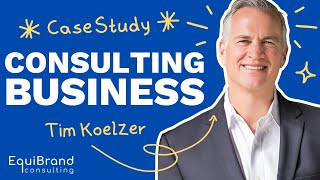
Tim Colzer built Equibrand Consulting into a California marketing firm by shifting to documented systems and a virtual contractor model. He hires and tests people on Upwork, scales with fewer larger clients, and wrote a book called Upstream Marketing about the approach.
Questions this video answers
Equibrand Consulting
California
Upstream marketing (work that precedes SEO, PPC, and digital advertising)
Upstream Marketing
Typically 15–20 years
Chapters
And I think that was kind of the breakthrough of let's just get something out there and we can always improve it as we go, but let's find the right people, let's document the right systems, let's train on how to do that and then kind of test and learn. And as we go, we can modify, which is what we've been doing. And I think a lot of that's been successful.
Hey, it's Dave from Systemology. And in this call, we're going to be shining a light on business owner Tim Colzer, and we'll talk about his company, Equibrand Consulting, and find out a little bit more about his systems journey. So maybe just to start, Tim, if you can tell us a little bit about your business and what you guys do and we can go from there.
Sure. We are a marketing strategy consulting firm out of California. We focus on what we call upstream marketing, which is really the work that precedes a lot of marketing. Many people think about marketing in terms of SEO or pay per click or digital advertising. We do a lot of work that kind of comes before that. That's been our area of specialization. It's really where we kind of focus our work and we work across clients. We tend to focus on fewer, larger clients as opposed to smaller businesses. That's kind of our niche.
Yeah, perfect. And what team do you have?
We have. It's primarily a team of contractors. We found that model to work. I started the business hiring up, staffing up, and then we realized that our. Our business model better supports experts that we find. We've been working with those individuals over anywhere from 15 to 20 years. So it's not people we just pick off the street. We have established relationships, and we've found that that worked well. We knew it before, before COVID but I think in general, you know, a lot of consultants and business owners are realizing they can pull together, you know, people that are specialists. They can work really from anywhere, which is kind of our model. And then we work, we bring them together on certain projects and we have a small cadre of consultants that we go back to time and again.
Yeah, yeah, I love that model. And I agree post Covid. That's kind of really made that really accessible for a lot of people. Once you get the right systems and processes in place for working for a virtual team.
Exactly.
The. The best possible team members at the best rate because you can also offer flexibility in the world becomes a bit more flat. So, yeah, that works well with regards to the way that you think about systems Is that oftentimes creative industry, sometimes the, the head of the business doesn't see themselves as a systems person or I often see that in the marketing space because some people feel like, oh, it's creative and systems don't have a place in the marketing world. But I'd love to get your take on that.
Yeah, I'm actually, I would consider myself kind of assistance person. You know, I recognize the value of that years ago when I started the company, and that was back in the. Around the year two started with this grandiose plan to be systems driven. And so we developed a program or a concept called the, the growth. The Equibrand growth driver. And so the whole intent was, this is the early 2000s, was to do a lot of what people are doing now, you know, capture emails, send them out on a regular basis, build a list. And the problem is, we found is we built this tremendous system, but it just kind of sat there. We were, whatever reason, reluctant to kind of pull the trigger. So we, we spent so much time building this system and you know, dotting the eyes, crossing the T's and it was perfectly laid. But we, we never got around to implementing. And I know that's one of the things you write about in your book is, is start somewhere, you know, and we kind of failed to do that. So that lingered for a number of years, frankly. We, we got interested, we got excited, we, we pursued it. Then we got busy, you know, working on the business versus in the business. And we let that go. And then for many, many years it kind of lingered. And then finally about. It was really part of what was reading your book as well as a few other things. More recently, we've, we've hired the right people. You know, we've got contractors in certain roles in terms of, of, you know, copywriters, you know, and graphics. And we use a lot of the available tools. And so we've, we've gotten more involved in it just in the past probably two years where I would, I would say we've. The vision was like as I said many years ago, but we started finally implementing. And I think a lot of that was just driven by the fact that we said, you know, kind of test and learn. This doesn't have to be perfect. And I think that was kind of the breakthrough of let's just get something out there and we can always improve it as we go, but let's find the right people, let's document the right systems, let's train on how to do that and then kind of test and learn. And as we go we can modify, which is what we've been doing. And I think a lot of that's been successful in its own right.
Were there any other learnings that jumped out for you when you're reading the book where you're just like, oh, that, you know, either reaffirmed something you thought about or was enough to kind of get you moving?
Yeah, I mean, the whole process, you know, the, the flywheel that's. That you've created. Each one of those steps is critical and I don't think you can really pass over one. It was more an issue of, of getting stuck on certain ones. We didn't really know how to break through. The. It makes perfect sense, the logic in terms of, you know, identifying systems and documenting them and training and then. And also some of the other stuff you talked about. Where are you in your business? You know, are you there? Are you just starting or you're looking to exit? And so, you know, I've been doing this for a number of years. So I think one of the other things, beyond this notion of test and learn, but also just a recognition that, you know, I don't want to be doing this forever. So I'm trying to take myself out of certain aspects of the business and apply my resources where only I can do. I've read someplace that, you know, senior business owners took with the smaller business, which we are, should really focus on things that only they can do, you know, and then things that others can do. You can systematize that, which is what we've been doing and what we continue to do. So there are certain things that, that I focus on more exclusively that, you know, more thought leadership and business development, other areas, even though that can be systematized. But that's really where I find the value is in terms of stuff that only I can do as a business leader. And then I can free up others to do things that are more systematized or process driven.
Yes, you mentioned something. I'd like to dig in a little bit more around like the catalyst. What actually got you to make a move? Was there either something that was going on personally or did something happen? Because it's like for me it was found out when we were pregnant. And then for other business owners, like, it's really easy just to get stuck in the day to day and the rhythm and literally years can fly by and I'm, I'm trying to get down to what is it that causes someone to go, oh, now is the time?
Yeah, it's interesting for, for me, it was really just we, we, we do consulting work for clients. But as part of this, about three or four or five years ago, I started to write a book. We pulled everything together in a book we call Upstream Marketing. As part of Upstream Marketing, there's really two key inputs. One is we, we looked at all the work that we've been done over the, over the years, over the 20 years that we've been doing the work for clients. We also did a best practice profile study where we actually went out and we identified and we did, we profiled companies, you know, the biggest companies that people talk about, like Amazon, Apple, Nike, Disney, Southwest Airlines and said, what makes these companies successful? And so that was part of the, part of the study was, yes, let's pull from our own business experience, but let's, let's profile what these great companies do. And we identified a number of principles. And one of the principles is the notion of test and learn that these companies are continually developing new products. And Apple does it every year or a couple times a year they're developing and launching new products. Amazon does the same thing. And what's really behind that is this notion of a commitment to not having it done perfectly. But test and learn, get something out there, let's see how it works. If it works, fine. If it doesn't, what can we do to improve upon that? So a lot of it was just the, the insight that these big companies were doing. I said, well, we can do that ourselves. And because I was kind of hearkening back to having this great system idea but never actually implementing, so we just finally said, hey, everybody's doing this and a lot of your work, you know, I started when I was writing my book. I looked at books that were being written. I became aware of your book and said, you know, just start, start someplace. And so that's where we started. We, we ended up, you know, finding some good contractors through a process that are now on our team. And now they're system. We've systemized that process of, you know, SEO and blog writing and, and digital marketing. So that's really been the driver for a lot of our business. But it was really just a recognition that you don't have to have it done perfectly. You can just get started. And a lot of that came from the research that we had done about how, how great companies, you know, grow is really the essence of the upstream marketing book.
Did your team give any pushback or was there any resistance or even like some of the challenges that you found, especially when you're first getting started.
Yeah, well they, they weren't resistant but I made some mistakes. I hired early and I hired frankly some of the wrong people. I mean this goes back 20 years. Nobody on our staff right now. Yeah, but and, and I hired one person and, and, and, and it didn't work out and I hired another person and it didn't work out. And after about the third person I real, I thought it's, it's I, this can't be done. You know, these people just aren't self starters and, and I, and so I didn't, so I did much of this stuff on my own for a number of years where it's like well if they can't do it, I can do it. And so I was probably in the situation where you were in. When I had a young family, I was working tremendous hours. But then over time I, I took another crack at it and I found there are tremendous, wonderful people out there. But, but I, I didn't invest enough time to figure that out. So hired a few people, had some bad experiences and then said oh this can't be done. So for many years I was doing things that I could have had other people do if I'd taken the time to find the right people. There's a system for that. Right. Finding the right people, training them. And I overlooked that. So it went from you know, doing all the work, my, myself not doing it. I saw a kind of a binary to either I have to do it or, or, or it won't be done. And so finally I kind of through reading your book as well as some other aspects realized. Let's, let's just start slow and, and not bite off more than we can chew, start with a couple of minor things. And that worked. And so we, we've embraced that mindset more recently to you know, spend the time finding the right people because they're out there. I know you talk a fair amount about finding people, you know, even virtual administrator, we've done that. But, but they haven't always been successful. So there is a process I think that you can undertake and, and it, but it does take time and commitment and focus to find the right people to help you. Because there are a lot of people that for whatever reason, whether they're not self starters, you haven't trained them, they're just not going to work out. But I think that's really important is to focus on the people side of things.
Yes. And I don't think you can build a business that is key person independent that grows and scales and is profitable and allows the business to work or the business owner to work on it or in it or really have the choice up to them. Without those people and without those process. I, I think especially, and we touched on it right at the start, but a lot of business owners do exactly what you talked about, which is they might hire that first assistant or they might try working virtually. It doesn't work the first time, doesn't work the second time, doesn't work the third time. And then the business owner goes, ah, this can't be done. And it's the same, I see it with systems and processes where they might start with trying to build a systems driven culture. They come up against a little bit of resistance. All that resistance happens up front and then they abandon it and they just go, oh, my team doesn't follow the process. This doesn't work. Yes, that, that persistence that you had to go after it and then seek out those solutions. I'm wondering when it, particularly when it comes to working virtually, because I feel like that is, can be a great competitive advantage for business owners. I don't know if there's any things that you've learned along the way around some of the systems and processes with working with virtual teams, whether it's.
Yeah, yeah, yeah. I mean, we, you know, we do, we didn't think a lot of, you know, it's funny because before COVID I, I traveled a lot. A lot of consultants do travel. And so, yeah, I was traveling probably, you know, weekly, maybe every other week for three or four days. So it wasn't ridiculous. But I started my career working for Accenture and that was Monday through Friday. You had to be at the client's site. So I kind of get gotten that mindset and I think it really took Covid to, to realize that you don't have to do a lot of this stuff, you know, in person now. Certain things I think are better in person. There's a lot of our work is creativity and collaboration. Some of the things we talked about earlier where I think there is a benefit to being in touch with people, but for the most part my staff is fully virtual. Our client meetings now are virtual. So in the people that we have one group in particular that uses some of the system, like some online systems and so forth, project management. So we use tools, some of the tools you mentioned in your book, you know, we use different providers, but that goes a long way because you do have different time zones. I mean you're, you know, we're at opposite Ends of the day right now as you're in Australia and I'm in the west coast. But, but yeah. So I think that, you know, tools are, have become even more helpful recently because of coven and other things where it's, it's easier and you know, so I think, I think it's, it's only going to continue and it's, it's the model that we, that we, that we operated under for, for many, many years. We didn't know we, we could be doing what we're doing now where we haven't, I haven't traveled, you know, now I'm traveling like past year. I could probably count on one hand how many times I've actually spent time with client. We see them every day, we see them through zoom as well as other things. So that's really helped, you know, get a lot of work done in a much more efficient manner.
Yeah. Once you start the process, I always talk about this idea of you can't unsee it now that you start to see what the systems can deliver for your business. It's very hard for a business owner to go back to not having systems and processes in place and not recruiting correctly. Like a big part of where sometimes business owners go wrong. They don't think about the type of person that they will need and recruiting for a systems driven or a systems thinking person or someone even who's just going to follow process. But once you start doing it and you surround yourself with those people, you go oh wow, like this is amazing. There are people who follow process, there are people who, they want to work this way. And as the business owner you get to choose and even if you're not a systems person, you might as well surround yourself with systems people. Especially if you're not a systems person. I don't know if there's anything, yeah, you can kind of speak to that around the idea of once you see it, you can't unsee it and those impacts.
Well that's very true. And in fact, you know, one of the ways that we find the right people, there's, there's probably a process here which needs to be fully codified. But we, we hire people, we hire more than we need. So for example, if we're working on something to do with marketing, what we would call downstream marketing, SEO writing or website pay per click or whatever, whatever it might be. But, but we will hire on, on some of the platforms like Upwork, you know, some of these marketing, marketing platforms for finding people and part of our, our own system is we will, we will hire two or three at a time. I know it can be inefficient, but we'll test run people. So we do some of that where we hire, where we don't invest a lot of money, but we invest enough money. So it's again, it's kind of test and learn. It's like, all right, we know we need this job. We know, we know we need one or two people. But let's, let's, let's, let's send out the casting call for three or four and give them a little bit of work. And then, you know, almost immediately after the work comes back, which of the one or two or three of the four or five or six, you really want to be part of your team. So it's pretty hard to find out that individual unless you do that. We found that's one of the things that's been very successful for us is we'll over invest a little bit to make sure they're the right person, the right, you know, skill set and so forth and cultural fitness. And then we'll, we'll say, you know what, we're going to go forward with these two or three. And we found that to be tremendously successful as opposed to just because that part of the reason that we do that is because where I was again 20 years ago, it's like we hired and we weren't successful at all. I said, this can't be done. So now we know it can be done, but we're much more mindful of how do we get those people on board in the first place. So we're not just kind of guessing and being unsuccessful. So we've, we've kind of systematized that as well.
That strategy right there, for the person who's watching this, that is a game changer. And if you can figure out exactly what Tim explained just there, I'd rewind it and take another listen to what he has said there. If you get really good at using a platform like Upwork, which gives you access to huge global talent in all countries around the world with all specialties, and you can run filters based on certain level of experience and, and feedback points and all those things, get a small job posted on Upwork over hire for what you need, select the best candidates you can find and very quickly the stars shine because sometimes you can't actually tell a star when you just have a star and they're on their own. But when you see a star against other people and they get back to you quickly, they're efficient, their communication is great, their delivery is excellent, their questions are excellent. Like they, you just know and then you'll start to work with that person almost like on a virtual bench. And if you get to the point where you have more than enough, sufficient work to employ them full time, you, you can invite them off upwork to work with you exclusively or if it's project by project or if it's just a small amount, you work with them through those platforms like that, that system right there is a game changer and I can speak from personal experience. Nailing that process for a business owner can really change the game and then layer in a bit of process on top of that and getting them doing repeatable tasks and helping you delegate down. Yeah, like you've, you've got this. I can, I can 100 tell and you've kind of. This is not just intellectually, this is practically. I can tell.
Yeah. And, and like you said, it's over. Investing, you have to, there has to be a commitment to that both in terms of time as well as money because you're spending money that on, you know, having it done multiple times by multiple people. But in the long run your investment is, the return on investment is going to be that much more significant because you've, you've nailed it. You've. You figured out who can really do this job in a, in a compelling way.
In the tail end. Are there any other insights you can share? Like my thing is obviously around process and because I just see its application in every aspect. Like I see process as the building blocks of great business and it really is just about codifying those systems like you just talked about. That was just one system around the recruitment. But there's probably a whole range of systems and best practice that you've identified whether it's in marketing or other parts of your business as well. And that's, that's what I, I see. It's kind of like where's the best bit? How do we codify that and how do we make it repeatable? I don't know if you can speak to anything around like the, the long term impact on this or if you've got any stories or any that have kind of really happened as a result of applying some of the ideas and thinkings that you've got from systemology.
Yeah, I mean I think one of the key principles that systemology talks about as well as we found in some of our best practice studies is the, the idea of things that are important but not urgent. You know, it's like the four box matrix where they're two by two by two. It's like what's important versus what's urgent. And so much of business success, and we found in our best practice study is really about finding things that are important but not urgent because that's things people tend to put off. I think system is kind of, kind of is that it's like important but I'm not going to get to it today. We're too busy. And, and that's exactly where you need to focus your, your, your, your efforts. Because if you can identify things that are important but not urgent, those are the things I think are right for, for, for systemizing and systematology where it's like, all right, we, we need to invest here and we, we try to look for those things. Because I have limited time as everybody does. I have more time now than I used to. So now I'm trying to focus on like what are the things that are really important but not urgent? Because those are the things that if you have a little bit of time and that's the, is you can free yourself up to do other things. So a lot of things like writing the book or you know, or Digital Marketing or LinkedIn or all these things that you know are important but people tend not to get to. So we try to put those things first. And the way we do that is by systemizing things that are maybe less, some that are less meaningful. It'll freeze us up to focus on things that are very important but not urgent. And that, and then we continue to kind of, it's almost like a flywheel. We continue to kind of focus in those areas. So that's kind of our, the way that we tend to look at certain opportunities is what's really important. And a lot of it goes back to, you know, the principles of insight and identity innovation. And we try to focus those above other things in our business and systemize those things that, that are better for that and then other things that are focused more on strategy and forethought and research. You know, we try to focus there as much as we can. And you can systematize that for sure because, because as you, as you know, you can systematize yourself out of a job, but it's also areas where we, we find are more interesting to us personally. So we try to focus on areas that build the business but are also interesting personally, which a lot of the marketing strategy aspect is.
Yes, I think you can layer some of the ideas that you've shared today on top of each other as well. That whole recruitment piece and going to upwork layer in the idea of, well, systems and processes are important, not always urgent. Let's make them urgent. That's, that's one thing I try and do, make systems important and urgent and going to somewhere like upwork and using the technique that you talked about to find someone who can help document process and potentially leveraging economies where you can get better bang for your buck. For something that sometimes is a small business owner, it's very hard to sometimes justify the cost on something that's important but not urgent because you've got so many urgent things and you just don't the time. But if you can create the space that has the huge impact.
Yeah. And it's amazing. I think I just read one of your, one of your emails, I think before we got on here about you know, finding people for $5 an hour. I think if people haven't used a system like upwork, they would be amazed at the pricing and the efficiency that you can find on these, on these services because you can find people that are very well skilled but very, can do things very, you know, much more cheaply than they can in America or I'm guessing Australia. And so it's really quite a platform to get certain things done. So there's a tremendous cost savings as well. Then you can use that money to reinvest in other things. So, so we found that to be very helpful as well as it's just the pricing, the economics of, of these, these systems and these platforms is really, really substantial.
Yes. Yeah. Well, I definitely appreciate all of your insights today. I'll pop a link through to your website, the eqbd.com so if people want to find out a little bit more, is that the best place to send them?
The best place is probably equibrand consulting.com EQBD is just our email and then also upstream marketing.com that's probably where they'll find the most value. That describes some of our thinking and process related work. So upstreammarketing.com or equonsulting.com would be, would be probably preferred.
Yeah, perfect. Well I'll include a link to that and yeah, just a huge thank you to you Tim for providing some inspiration and some real key insights as well.
Thank you. I really enjoyed the time together.
Sam.
More from David






Remember me? Subscribe To My Channel For More Free Business Systems Content 📈




