SPE03 SYSTEMology Book Launch What Doors Can Systems Open
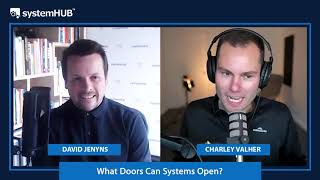
David Jenyns explains how systemizing a business creates freedom and opens unexpected opportunities. He shares how one client went from chaos to collaboration with Michael Gerber on Beyond the E-Myth, and shows how incremental improvements across the customer journey produce measurable gains.
Questions this video answers
18th of August (2020).
YouTube video (episode) created/uploaded August 10, 2020.
Michael Gerber (collaboration on the book Beyond the E-Myth).
Luz Delia.
Melissa (referred to as CEO).
Chapters
This is it. Welcome back to another episode of Business Processes Simplified the Podcast. I am your usual host but again I am the guest as part of the series we're doing for the launch of the Systemology book. And I'm going to hand over straight away to Charlie Valor, our host and I'll let him take control of the show.
Thank you Dave. I'll let you be co host. Really thank you for coming on my semi show. It's been a pleasure to be here for all parts of the series. Now if you haven't already, please make sure you do go and check out the other two episodes because there's even stories in here that I think really add to the book. So if you are going to listen to these episodes and get a copy of the book, I think they can enhance the overall experience. And just to recap on that, the book will be out on the 18th of August systemology and if you are watching the video you'll be able to see Dave is holding up a fresh copy of it. I feel like that's actually the perfect segue into what I want to talk about today. So I was very fortunate to get an advanced copy of the book and as I was reading through it in the introduction itself there is a story that was like a knife just absolutely hitting on a nerve for me in the current moment. Like it really, really was. And it spoke about the idea about what are the benefits of being able to have a systemized business is the opportunities you get to go after that you perhaps wouldn't in others now don't want to give away the story, but I would love you to give away the story. Do you want to share Dave, that introduction story and what you've been able to get up to as some of the benefits of going through this whole Systemology process?
Yeah, I had been really thinking about what is it that comes as a result of systemizing. It's something that I've thought about many times over. Sometimes it's also to think about how can I grab someone's attention to almost like grab grab them by the collar and shake them and say this is so important, you have to do this. And the biggest one that I came up with is because it is the unknown of the opportunities. Like in life you would like to think that everything is linear and you do step one, step two, step three, step four. And at the result of taking all of those steps you're going to end up achieving your goal. And a lot of people think that they might think about what their goal is and start taking the steps towards that. But there's a whole bunch of serendipitous opportunities and events that just pop up that you just couldn't plan for. The world is chaotic and you don't know who you're sitting next to, who's listening to something you might have said or put out in the world. So it really is about, you want to head in the right direction, think about what your goal is, and you just start. Start walking in that direction. But you have to be open and keep your eyes and ears open for the shortcuts, the opportunities, the things that will bubble up next to you that will just potentially leapfrog you. Not just to step number one, you might possibly jump from step number three in your process down to step number seven. And it gets you right to the goal. So you have to be ready for those opportunities. And. And I know I'm dragging out before I jump into this story, but one thing that did jump into my mind was I remember in Talked about Planet 13 in one of the earlier episodes and how we defined the critical client flow, this idea of what is the journey that someone went through when they were attending our rock and roll clothing music store. And even though we had a critical client flow, if someone walked into the store, picked up a Metallica T shirt and said, I want to buy this Metallica T shirt, I wouldn't say, oh, wait, we have to get you into the change room. Because that is the next step in the critical client flow. They've decided what they want. They want to go straight to the cash register. So I just take them straight to the cash register. There are lots of those cash register moments in everybody's life that they might not even recognize are happening these opportunities to maybe they see them and they can't take advantage of that cash register moment because they're too busy or they've got too many things going on, or they can't leave work or whatever the case may be. Sometimes they might not even notice these cash register opportunities just because it's that classic case of you can't see the forest for the trees. They're so stuck in the business that they just don't see the opportunity. So the opportunity that systemization brings to a business owner is the ability to see and take advantage of these opportunities. And the start of the book, the Systemology book, illustrates one of the biggest opportunities that happened to fall in my lap, and that was to work effectively with the Oprah in my industry. So if you think about my industry as business systemization, A name that is synonymous with that is Michael Gerber and even more specifically his book, the E. Myth. Oftentimes I'll say Michael Gerber, and people won't even know who that is. But when I say the E. Myth, they go, yeah, I've heard of that. Just about every podcast that I listen to or every interview, when they ask a business leader, what book would you recommend I read? Usually one of the top three will be the E. Myth. So people have heard that name many times over. So for me, Michael Gerber was the Oprah of my industry. So here I was, plodding along, doing my thing, I'm walking in the direction of my goal, and Michael's wife happened to come across a piece of content that I put out in the world, and it wasn't even to do with systems or processes. She got to know me through my digital agency, my previous life, my previous business. She saw some marketing that I was doing to launch my book, and she thought, wow, he's doing such a good job launching his book. I want David to do that for Michael, because Michael is written the E. Myth. And he'd written a couple of books after that. And he had one final book in him that he wanted to release called beyond the E. Myth. And it was the final book in his E Myth series. And they decided for the first time that they didn't want to go through HarperCollins, which was their traditional publisher, and they decided they wanted to self publish so they could maintain full rights. Michael's getting older in years and he's thinking more about his legacy and wanting to maintain control and rights. So they said, well, let's just do it ourselves. We've built up enough audience and got enough brand recognition that we can just do it on our own. So they still needed someone to lead the charge, though, and that person ended up being me. I got an email out of the blue from his wife, and I didn't recognize her name, Luz Delia, but I recognized the surname Gerber. And the email quite literally just said, call me, and then had a phone number. So that's what I did. I got it in the morning and I called it. I followed that rabbit hole. To cut a long story short, and I don't want to take away from the excitement of unwrapping a present when you read this story in the systemology book. But I ended up working with Michael on a dream project for three months. I helped him launch the final book in his E Myth series called beyond the E. Myth. I dropped everything that I was doing in my own business, the digital agency, at that time. And I went to work in Michael's business for three months. And my digital agency continued to operate because I. I had systemized it. I'd hired Melissa, who's the CEO. You'll learn about her when you read the book. She looked after the agency while I was off chasing this opportunity that for me now has opened up a tremendous amount of doors and opportunity has given me some invaluable connections. I still work with Michael to this day. Michael's now written the forward to the book and has effectively done the hat tip to basically say, you know, this is the extension of the E myth. This is. Once you read the myth, you read Systemology next. Now that is just an epic opportunity that came to me out of nowhere. She didn't even know that I was working on systems and processes. That was that leapfrog moment. I just took the step because I had a well systemized business, which gave me the space to take advantage of that opportunity. And then it was kind of jumping from level three. I got to jump to level 100 in the space of about three months. It was the shortcut move that you couldn't plan for that you couldn't organize. And if you didn't have the space to take advantage of that opportunity, I would have missed it. And that's. I feel Systemology gave me that. It gave me that space to take advantage of it.
We've often joked about the idea of. And I know I made this comment before about like, can you really trust a skinny chef?
Yes.
And of course, I'm trying not to make a weight reference or have it anything in that. But it's like if you're a really good chef and you'd want to think that you're eating your own food, you really would. Maybe you got a high metabolism. But what I love so much about this story is that we, we live in an era where basically becoming a guru is around the idea of you can create a Facebook ad. You can be presented as someone who's an expert or a guru. But very few people, when you look behind the scenes, actually live a lifestyle in accordance with how they want to represent themselves. And when I heard this story and then could verify it was true, and you'll hear more about it in the book, it's just such a representation of I do what I preach like this. It isn't a book of theory. It isn't an idea that sounds cool and looks good on a whiteboard. Like, it's something you've been able to experience the result of. And it's something I've witnessed you experience the result of and it's been really, really magical. But the question I always come to when you, when you look at the average business owner today, if that landed on their doorstep like Gerber could be on their front door knocking and they'd miss it.
It's sad because there are so many opportunities. We've all heard that line, the opportunity of a lifetime comes around every second week. And it is true there are huge opportunities. Yes, there are some opportunities that only come once in a lifetime, but there are a heck of a lot of other opportunities that you might not even be aware of or ones that you are aware of that you've just had to say no to because you weren't in a situation. Systems give you ultimate freedom in a few areas. It gives you time freedom, it gives you money freedom, and it gives you freedom to work on the projects you want to with the people that you want to. That's ultimately when I think about what freedom is, that's what it is. It's time, money and people freedom. And there is no other way to get to it. So that's again, that's what I get excited about with systems. I, I don't get excited by the idea of the micro detail of writing out the step by step and thinking about what screenshots am I going to use. And like all of that's the little detail. I get excited by the result that I know a systemized business can bring and how liberating it can be. And it is a core philosophy of mine to be the best example of whatever it is that I'm teaching. Like, I don't know how to do anything. But like that's programmed in early. I don't even know where it came from. If I had to guess, it'd be something like Jim Rohn. No doubt it was an early tape set I might have listened to or something like that. But there really is no other way. Like, how can I teach someone to do something that I'm not doing? So it's a constant reminder. Sometimes when I write a book, it was the same with Authority Content. My first book, I I it's almost like a reminder to myself, like, here's my roadmap. The way that Systemology was written was using the Authority Content formula. Like the system that I outlined in Authority Content, which is a marketing system, is run an event, get that event transcribed, take that content, repurpose it, chop it into pieces, take the transcription, you give it to a ghostwriter, turn it into a book. That's the way I wrote authority content. It's also the way that I wrote Systemology. Systemology was a workshop that got transcribed, that went to a ghostwriter, that then had just been refined and went through an editor. So in all of those areas, I think it's really important to be the best example of what you're teaching because that's the best proof, like if it's good enough for me. And I conclude the book with that. Again, I don't want to spoil parts of systemology, so I don't want to take too much away. But there is a conclusion to the Systemology book. It's an epilogue that's added right at the end, which really is the icing on the cake. I didn't recognize it until after, but I was put in a difficult situation. It was going to potentially be a tragedy, but I got to turn that around because we had systemized the business and it was my get out of jail free card.
What a tease. 18th of August, guys. Once even I'm like, I'm going to go back and read this chapter which is just fantastic. And Dave, I'm going to put you on the spot a little bit here because this is just one of the examples though. But I'd love if you could really highlight just some of the other things you've been able to do as a result of getting this right. Because like I know of a few others, I don't know what you're comfortable with sharing because obviously some are more private. But is there some other things like maybe our mate Ted you might want to bring up or just some other stuff that's really been at the fortitude of this.
Well, the TEDx one we do talk about in the book as well, that one's in the last chapter and doesn't apply for everyone. But those who are in certain industries recognize the benefit that come from speaking on a TED or TEDx stage. In certain, particularly knowledge industries, there's a real sort of shine that rubs off for someone who's able to speak on a TEDx stage. And I had the opportunity through again a series of non linear, almost seemingly random events. I had this opportunity land on my lap. So if I go back two or three lifetimes ago for me, one of the very first businesses that I was involved in was in the stock market education space. And that's where I got my start. Actually, I think that's where I got my early programming for Systems Thinking because to operate in the stock market space. And I know you're a lover of trading and the stock market as well, so you'll appreciate this. But I used to help people design trading systems. So way back when, the very first workshop that I ran, I applied my authority content system effectively. I ran a workshop, I chopped it up into pieces, I uploaded it to YouTube. You can still find these videos on YouTube. Like I've got to have been one of the earliest people to market using YouTube and you'll see some of my early videos there. But I had someone, a dad, watch one of those videos about 20 years ago. He saw a video of me on YouTube, parked it away in his brain. However, it was probably about 15 years ago now, had passed his son who was in the Netherlands says, hey dad, we're about to do our TEDx youth coming up and we're looking for some international speakers. Can you recommend anyone? Out of the blue, this dad goes, yeah, you should contact this guy, David Jennings. I don't know what he's doing now, but he was doing some really cool stuff many, many moons ago. Perhaps he might be interested. So I get an email completely out of the blue. They somehow scraped my email address from my LinkedIn account, emailed me and said, oh look, I'm just emailing you. And it came from a TedX email. And he said, do you want to come over to the Netherlands and do a presentation? I said, oh, what about? And he said, well, the topics living out of bounds. So it was a pretty broad topic. And I said, can I talk about systems? And he said, yeah, you can talk about whatever you want as long as you can wrap it into the topic. Which I did. But that was again a huge opportunity where I hopped on a plane, I flew over to the Netherlands, all at my own expense, put myself up. I probably spent God knows how many hours preparing an 18 minute talk because we were. They want to do so many different practice runs and you know, they want to deliver to a certain standard. So there's a lot of work that goes into the presentation and then you can't. There's no commercial gain either. Like you're not allowed to pitch from stage TEDx opportunities. You go there and you just share. But I knew that that was a leapfrog moment. I knew that that was a move from level one to move to 100 in one move. It's almost like now that I think about it, it's snakes and ladders. That right there was a ladder that enabled me to just climb up and jump. You know all of those steps. So I took it. And because we ran a systemized business again in the fortunate situation it was when I was in the digital agency, Melissa was running things, the business was running fine without me. So that's what I did. I removed myself from the business. I hopped on a plane, I went and did that. We recorded it. I use it in a lot of different things and it's a great story to reference. It actually opened up a few other doors as well because people have come across that video and put followed that rabbit hole. But it was just an opportunity that fell in my lap. And there's lots in the TEDx talk I talk about selling the MCG again, another opportunity. Probably it'll be story after story if I'm not careful. But in the book, if you get the audio book, I mean if you're listening to this, that means you enjoy listening to audio. We did record a Kindle, an audible version of Systemology. So. So you want to. When the book comes out, it comes out in Kindle Audible and hardback. In the audible version I've added some extra audio just as a little bit of an Easter egg. An Easter egg and you have to listen to it. But There is my TEDx talk in there and it talks about the MCG story.
Tell you what, I could listen to these stories all day in all honesty, because I just find it so fascinating because to counter that, I'll share a quick experience I had when I was earlier on in my journey in the agency space as well. And I had a business that was running me instead of me running it. I went on a holiday with my partner Bianca. It was her dad's, I believe, I want to say 60th if he hears this and it was his 50th. This will hurt. I was in such a place where I couldn't leave my business and we all had flown as a family to Thailand. And I was actually getting up at 4am, getting in a full day's work with the time zone and meeting everyone at 11am to do some activities and then falling asleep undoubtedly in the afternoon by the pool or something. I look back on that experience and the cost of not having the business systemized and like that's a holiday I can't get back. I. It really, really hurt me that how much it hurt my partner. Like Bianca was so disappointed that that was the experience we were having with her family. And even when I was present, I wasn't present. Let's be real. I had a WI FI hotspot And I was getting work done at every second I could. I thought I was hustling, I thought I was, you know, doing what's required. But it was really a poor management by my side. So that is such a huge cost. I look back on and I again come back to all these business owners I know that don't get holidays, can't go launch Gerber's book, can't go to a TEDx talk. And I just think it's such a shame. And I hope that message cuts through because very fortunately now I can look back and joke and see the funny side of it, because I can seize these opportunities today. But it would never have happened without bringing this sort of methodology to my life.
I think you've been in the fortunate situation where you had some of those really challenging moments that built one after the other till you got to that breaking point. And then that became your defining moment and the turning point. And rather than becoming a broken person and not rebuilding, you rebuilt off that foundation. And now, so all of those bad things that happened to you have actually ended up being blessings in disguise. Because what I see most business owners do, they. They get stuck in comfort and they just coast sideways and yes, it's up and down. You know, performance is, you know, just. They're chasing the work, getting the work, doing the work, and then they've got to chase and get work, do the work. And it's just this cycle and it's almost like a glass ceiling and they're unable to break through that. And that's the challenge is because you have to break some of those molds. Oftentimes you need some. Something to put enough pressure on you to have the change. So it's been huge for you. I'm wondering how to orchestrate that for someone who doesn't have a few of the hard blows, they've just got lots of little blows over a sustained period of time. So it's painful, but they can deal with it. I wonder how to help someone to break through.
Well, I'm hoping these stories are either from gain from your point of view or pain from mine. Like, I would love to launch launch Corpus Book or I actually, I missed my last holiday. But it's funny you mentioned that there was a day, Dave. There was literally a defining day. Do you want to know what day that was?
Yes, I do.
Christmas Day. Are you ready for this? We were as a in Australia, like getting together on Christmas Day, as in much of the world, I'm sure is like a big thing. I had managed to land a big deal at the agency. Like, I'd landed a client, a dream client. I was so excited. But there was a big requirement, a Boxing Day sale. Now, in order to have things ready and to be turned on live for Boxing Day would mean that, of course, someone was working on Christmas Day. And I had attended this family event with my wife, and we're still together and happy now. Don't worry. Things good. But I had to leave Christmas Day to go take care of someone's ads. And it had to cause, like, there's riffs and then there's like, I. I had caused damage that day. I had not made things look fantastic. And on the, the backlash from that, I had come to a moment where I was like, you know, they make this joke. You know, it's the sick and tired of being sick and tired. That was the breaking point. It had finally broken me.
And.
And the only thing that saved me, the only thing is I had come to the conclusion that there was people out there that solved this problem and I just had to find them. If I had not had that epiphany that's like, hang on a second. Pretty sure Buffett didn't work Christmas Day. Like, you know, Bill Gates, what. What's he doing? He might be working. He seems like a hard worker, but he would be choosing that. So it's like the combination of pain and then going, someone has solved this and very fortunate to find your methodology and some other things. Otherwise, I don't know, I guess you'd take up drinking or something then, like, what else could you do?
Yes. Yeah. No, it is easy to slip. And it's funny. I've had a few experiences when I've looked for right hand people to become like my chief operating officer. And I actually find it's the people that have been burnt but haven't been able to get back on the horse that are actually the best people to fulfill that role, to become the right hand man of, or woman of the visionary. So if we think about the two roles and Gino Wickman talks about the visionary and the integrator and Michael Gerber talks about the manager and the leader, I mean, it's the same thing, this idea that you'll have someone, you know, wants to go out there and create in the world and they need their right hand person, that right hand person. A little bit of a tip if you are looking for that person. If you find someone who has been in business and a business owner before, but somehow got chewed up and spat back out again. And they weren't in a position to get back on the horse for whatever reason. They might have had family that they had to support. They might have just not wanted to give it a go. They might have decided that, you know, that part of the business they didn't want to do. They make fantastic right hand men or women because they understand business, they understand the challenges, they understand the idea of orchestrating all of the pieces because that's a challenging role to find. But oftentimes the those visionary leaders, they're the ones like the phoenix that rises from the ashes and then gives it another go. So I now I feel like something to add to the HR solid foundation. I see what you're doing right now with the podcasting business and it just blows me away because you're building from such a solid base now. It's taking off like a rocket.
We still don't know how to edit a podcast, just to be clear. Yeah, we worked it out. It's not the way. Anyhow, I will shift gears a little bit here because we have segued into away from some of the things I wanted to make sure we covered in this episode, but I feel like a good segue. In the book there is a stage seven which we talk about optimization and one of the things kind of within that section of the book is this idea of the cost of not systemizing. And you've taken a bit of a unique approach here. And I was, I was hopeful in this episode. Apart from opportunity cost that we've just mentioned, from here you've come up with some other things to kind of go into potentially financially. I'd love it if you could speak into the other costs people face by not doing this.
It was really hard for me and has been for a long time to quantify what is the cost of you not systemizing. And get this right, because there's a lot of things we've talked about. Obviously there's the business owner working really long hours and weekends and having to miss out on family opportunities and getting burnt out. All those sorts of things. Very hard to quantify. But I love to try and relate things down to the dollars. And both got a mutual friend, Nick Thakralal, who provided tremendous insight at numerous times for me along my journey. And we often talk about how do we sell systemology as an idea, how do I introduce it? And the short version is for a business owner, they want to know what is the roi, how much money am I saving or how much money am I making from deploying good systems? And Systemology. And again, it's been hard because it hits so many different areas of the business. So the one that I've been working away at came from some influence from one of my earliest mentors, Brad Sugars. And I know you're a fan of Brad's work as well, and he talks about the five ways to grow a business. And we've got, again, another mutual friend. So a lot of crossover. Pete Williams has kind of extended some of that thinking into what he calls the seven levers. And all around this idea. And I've taken some of those ideas and then I've merged it in with the critical client flow, which is such a centerpiece to the systemology methodology we talked about in one of the earlier episodes, how important it is. It's possible to derive numbers from your critical client flow that can then end up becoming key metrics that you monitor. So once you pull your numbers out, each stage in the critical client flow can have a number, and then that number, when you multiply it out, like when we think about leads, number of sales, your profit margin, the number of times that the client repeats. There's a mathematical equation which I won't go into here because it's all covered in the book, but it's possible to plug in your own numbers and say, this is how many leads we're getting. This is how many sales we're making. If we just get a 10% win in each one of those areas, what is the bottom line impact? The automatic default response is to go, well, if we're improving everything by 10%, hey, the win is 10%. But, you know, we all know from Einstein and his magical eighth wonder of the world, which is compounding. He said compounding is the eighth wonder of the world. We get a geometric improvement that happens by layering those 10% wins on top of each other. So 10% win in improvement in leads, 10% win in improvement in sales. 10% improvement in your profit margin, again, doesn't equal a 10% on your bottom line. It's, you know, potentially I should know the number. It's probably closer to about 40% or something like that. It's because it all layers on top of each other. And that's the real takeaway to understand that you can get easily. And I use 10% because it's easy. Like, it's like I'm giving you an underarm throw and expecting you to catch it. Like I'm just, just basically putting it in your hands. You can do. You can get a 10% improvement in your sales by documenting your sales process like that is a no brainer. You could potentially double if not triple that just by improving your systems, putting awareness on the systems that drive each of those different metrics. If you add some extra lead generation systems, you will improve your leads by more than 10%. So that bottom line impact that it can have can be huge. So again, another reason to get the book, there's a link in there to the resource section where there's a calculator. You plug in your numbers from your business, you determine what your win is. The default is 10%. 10% wins in all of those things can mean a huge bottom line impact. And that's what you're leaving on the table by not systemizing. But it's so hard to actually identify what the win is from this because like I said, it's the non linear events, it's the opportunity cost, it's. That is where you will get the level one to level 100. But it's, I don't even know what that's going to be for you. The listener's going to read this and who knows, they might end up getting the call from their Oprah in their industry and it could be a game changer and they can follow that opportunity because they systemized. So that's why I always find it a hard one to articulate.
It's interesting because it's got layers to it because I totally expected you to say the idea of like if you had a systemized business, could you save 10% in efficiency so then maybe need 10% less staff or have a 10% better margin? Like I could logically make that connection. I did not expect you to say, oh hang on, if you document your sales systems, you'll probably close better, but you totally would. Yeah.
And imagine having a fantastic experience for your customer because you have a systemized approach. They're going to go ahead and refer more business and repeat more. It affects every part of the business. And by simply improving it and getting a way of doing things that creates consistency. Clients crave consistency. They are coming to you to solve a problem. If you can solve that problem consistently and they know what to expect, they'll keep coming back. McDonald's has proven that you don't even have to do it very well. Like I don't have to have a delicious hamburger, I just need a consistent hamburger. At least now I know what I'm getting when I come back. Consistency.
There's no reason to throw punches at the the fine dining experience provided by Mickey D'S.
Especially in a podcast episode about systems. I know they are the poster child. I do sometimes throw some rocks at them, but that's just because I think sometimes it's thrown people off course on what a systemized business should be and should look like. I don't think we should be starting there. We need to start where the listener is right now.
Can I share one story quickly?
Yeah, yeah.
I have to. I'm not going to let it go. It's interesting that you mentioned these things, and before I even get to that is like, you know, most business owners don't have a system for referrals or testimonials, and both of them could directly impact the bottom line straight up. So huge wins to be had there. But when I think back to when I first started systemizing my agency, you know, the system that actually made the biggest difference was onboarding.
Yes. 100%.
It changed the whole game. I didn't realize how terrible a job we were doing. Number one.
Yes.
But creating that early client experience of bringing someone in and, like, we looked so much better than we were. And I know that sounds horrible, but it really, really made people go, oh, these guys totally know what they're doing. And that confidence in us decreased. Churn. Decreased customer communication. Like, we were not as active as, I suppose, client response because we didn't. They didn't have to ask for things. We'd already given it to them. And I once even went to your studio and shot some onboarding videos.
Yes, I remember.
And it was an absolute. I look back on that now and it seems obvious, but I never would have thought of that as, like, one of those unusual systems that directly impacted so many areas of the business.
Do you know what's interesting as well? Because I get to see into a variety of different industries, and certain industries have common problems. Digital agencies experience the problem that you talked about more than any other because they're so great at marketing. They're a marketing agency, so of course they do that well. They present better than anyone. But then when someone comes through the door, they realize that was just, you know, the outside facade. I don't. Have you ever been to Krile Castle? It's in Victoria. It's a castle. It's a castle. I do it, you know, in inverted commas. It's a. It's a castle that is almost like a cardboard cutout on the front. You look at it from out the front, and it's got these fantastic big, you know, doors and these, you know, big. I don't know what you call them, where they usually put the damsels in distress on the side. You know those big towers? Yeah, they've got the two towers up and they've got the classic things up the top where you'd expect to see the, you know, bow and arrow people all sticking out. It looks amazing from the front. You walk in through the door and you're just immediately disappointed because it just looks like they've presented really well. But on the inside, it might as well have just been a cardboard cutout on the front and now you're on the other side and I feel like that's. A lot of businesses are like that, particularly in the digital marketing space. They are a fantastic cardboard cutout on the front. You walk in and you do business with them and they're actually pretty rubbish.
That has been my experience in a lot of ways. In working with other providers.
Yeah, yeah. Particularly if they're strong in marketing. But that's also a way that you can stand out, I think, by getting very good with your delivery. Like, that's really what I had started to recognize. You think about someone like Elon Musk these days. He's so focused on the product and making sure that that's amazing because his best customers become his raving fans and they are the best people to be promoting the business. He does. Yes. He's pretty skilled obviously with his marketing because he gets publicity and things like that. But you don't see Tesla running ads, social media ads, doing all that sort of stuff. He just focuses on making sure that he delivers on the back end to a very high standard. And I feel like that should be the focus for business owners. If you want to build something that lasts, solve someone's problem, genuinely do it consistently, provide a great experience and you'll. You'll build a monster of business.
Totally agree with that. I think a lot of, especially in digital services and digital agencies and info products and that whole era, I think, is probably one of the areas that needs to get on board with that the most. Now, Dave, we've gone through a lot in this episode, but I wanted to ask, is there anything else you wanted to bring to this and share behind the book?
I think the stories. I know we had a bit of a theme in the last couple of episodes, which is sharing some of the stories that didn't quite end up making it into the book. And I know we went on off on a tangent a few times, so I didn't get to cover all of the stories. One of the ones I did Talk about in this final chapter, since we're talking about the optimal chapter and I talked about Digdog or Diggity Dog Daycare, they were, they ended up systemizing their business. And the business owner, she actually wanted to exit from the business. She approached System Hub and started applying the systemology process and got the business to the point where it was attractive for the acquirer and someone ended up buying her out, paid a very high multiple and that one's in the book, so I don't need to go into that detail. But there was one that didn't make it and there's a guy called Mike Weiss and he runs a company called the Client Engagement Academy. And I always find these interest, these interesting stories because people, people don't understand why I get so excited by the idea of someone leaving Systemology or System Hub. Usually when someone leaves the platform like it depends the reason that they're leaving. I've had numerous situations where people have left System Hub and when I've dug into it just like Diggity Doggity Daycare. And it's the same with Mike Weiss, they ended up getting investment or bought out. And then the new acquirer had cited the reason that they purchased and gave such a high multiple was because of the systems and the financial performance. So the work that we've done had actually delivered the result and Mike was no different. Mike had systemized the business. There are a few key distinctions that he was missing in making his business work and have a systemized culture. We helped him break through on that. He started getting some significant wins and growing very strongly, attracted the attention of someone who wanted to invest into the business and give him a bunch of capital and take some equity. And he did. And then they had a big ecosystem of systems and processes and a platform that they use. It was a custom coded thing that they had built because it was a larger group. And then they basically took all of the systems out of System Hub that we developed through the systemology process and they just put it into the new platform. So he had to unsubscribe. But he is still one of our biggest raving fans and champions and constantly I see him on social media and he'll, you know, love what you guys are doing and support. Like he's always so supportive and he's not even a customer anymore. And I love those stories because for me it's more important about getting the results because I suppose that leads back to the point that we were just talking about now, even though he's not a paying customer, he is still a huge champion for us because he got the result that we promised. So that was another story. Excuse me, Another story. It's like, it brings a choke to my throat.
It's tearing up a little bit, but.
I love hearing those stories. That was an. Another one that didn't quite make it to the book. I'd love to try and do for some of these. I think on your suggestion, I need to maybe dig into and do some of these case studies as standalone episodes because there's hundreds of stories like this that we just haven't told. And I think what people love about those sorts of stories is they. They find a story that they hear that makes them think of themselves and goes, that's me. I'm in Mike's situation. I'm in Leanne's situation from Diggity Doggity Daycare. That. That's me. And she did it. She was where I was and she got the outcome that I was looking for. And then what a fantastic way to build trust to know that systemology works and to know that you need to get a copy of the book when it comes out on the 18th of August 2020.
Or. Perfect little seed there, Dave. But. But just to reinforce what you said there, I am constantly disappointed with the lack of stories in this space because I. I think it's so much more than the success and relatability. It's the proof that it's possible. I just think there's too many business owners right now and their life sucks because they're not even aware or have the belief that this is a possibility for them. I was in that camp. And you are bombarded by a constant amount of people praising the hustle or workaholicism or any of those things. And it's like we need to balance that equation. So once again, the book is out. I'm going to make sure I read this date correctly. 18th of August is the day to come out. We've got audiobook with bonuses, we've got Kindle, and we've got hardcover. I think anyone listening to this audio would be foolish not to pick up a copy of that. And I've been diving. Can I. Can I do the sign off for this episode, Dave?
I'm gonna bite my tongue.
Are you ready? So this has been another episode of the podcast, but I just want to finish on one big line here. This is how we do things here.
That's beautiful. Thank you for having me on your podcast, Charlie. It's been a pleasure.
It has been. So that's it for this episode, pick up a copy of the book. I'm sure it'll be truly worth the investment and will have an impact on your business and life. And I'll hand the show back to you, Dave, thank you for putting it in my custodian for these three episodes. And thank you for having me.
Thank you. You're a gentleman and a scholar. Where are people going to find out about you, Charlie, if they want to find out a little bit more about your work?
Good question. So I do have a podcast, the business of podcasting. So if you are a keen podcaster in this space, I'm sure you'll pick up plenty of knowledge and insight there. But everything we do is on valor media.com so v a l h e r dot com and then you can see all our media and getting involved with that are there.
I think people know as well. I'm quite particular with the people that I work with and the team that I build around me. So I think, yes, it probably goes without saying, Charlie does the best work in the business. So if you've got a podcast and you want to get some extra reach, if you want to start a podcast and you don't know how, if you want to learn anything about podcasting, Charlie's your man.
Thank you, Dave.
More from David






Remember me? Subscribe To My Channel For More Free Business Systems Content 📈




