Superperformance: 8 Strategies to Reach Full Potential (Review)
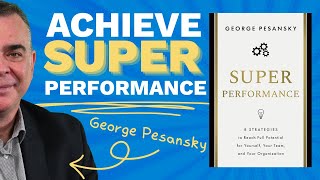
George Pizanski explains how to build repeatable systems so your business runs without you. He covers standardizing best practices, measuring the right metrics, identifying your peak performance moments, and fixing problems that keep coming back. AI is commoditizing knowledge, so execution matters more than ever.
Questions this video answers
November 27, 2025
George Pizanski
Super Performance
Six months (described as a six-month class, similar to a Lean Six Sigma Black Belt program).
An opinion piece called "The Great Flattening" published in Fortune magazine.
Chapters
When we can walk away from our system, when we can walk away from our process and it succeeds without us, then that's the definition of super performance.
You're going to love this episode. We are going to explore the topic of super performance, what it is, how to get there and how to ensure that your team are operating at the top of their game. I'm joined by George Pizanski is the guest and he's a master of continuous improvement, having worked in numerous Fortune 500 companies, trained over 10,000-Six Sigma and Lean professionals around the world in various different companies and positions. He's the author of a new book called Super Performance and it's all about reaching peak performance and replicating best practice. So perhaps without further ado, just like to welcome you to the call, George.
Oh, thank you so much. It's such a pleasure to be here.
Maybe to start, I'd love to know if you see yourself as a systems person, is that something that's in your DNA?
It is absolutely in my DNA.
I'm actually probably somewhat difficult person to have, you know, go out to a dinner, to go to a restaurant with because I can't stop seeing the systems. So I'm trying to figure out how does the kitchen work and what is the system the waitress is having. So I, I practice it, I see it, it definitely is our world.
Has it always been that way for you or is that something that you picked up through your experience and through your career? I'm just curious if, if it's an innate thing or a trained thing or learned.
I, I think there's to, to an extent it's something that I've had in me, but I didn't really appreciate the value of systems and standards, you know, that kind of support those systems until I really started to practice this work and start to work with, you know, really thousands of different people and projects and consistently seeing the same issues that were always related to that system, related to that, you know, kind of core way of approaching the work we do with.
Because you had history in the military, I'm oftentimes I see there are certain industries, military's one, engineering is another one, where you just learn it at such a deep level. Were there any big takeaways that you have when you kind of reflect on your time around how it's shaped, the way you think about process?
You know, there, there's a number of things that I think shaped, but I think maybe one of the most important that I rely on almost on a regular basis is that regardless of the Military, I think they all sort of have the same challenge that you're going to take a young man or woman, you know, maybe 17, 18 years of age, and you're going to make them an expert in a particular system or a particular weapon or a particular way of working in a relatively short period of time. And that challenge is exactly what I think we see today in so many factories, so many operations where needing to onboard employees who have very little experience, very little knowledge, and needing them to be productive immediately. I think the military is really, really good at that. And the way they go about doing it, how they simplify things, how they really make things visual, all just superior lessons.
Early in my career, I always remember that thing Michael Gerber said, it stuck in my head where he had said that every business is a school. And that kind of speaks to that whole idea that you're employees, they're like your students and they're coming in fresh. And your, your process, the lessons and the syllabus with this whole idea of how do we train them up and make them productive and adding value in the shortest possible time.
Absolutely. You know, one of the things we do a lot of is train the trainer type programs and you know, the term tribal knowledge, where you start to have kind of those schools, but they have classrooms and it depends on whose class are you taking in terms of the way that you may approach the work you're doing. Obviously creates a lot of variation and it doesn't support a really healthy system when we all have different ways or different tribes that we've learned from. So that standardization around best practices is really what super performance is all about, is finding the root cause of the best performing success, finding the root cause of your best performing moment, and then really working to standardize and build your systems around that.
In the book you talk about this intersection between vision, strategy and action and that's where super performance lives. I don't know if you can kind of just expand on that a little.
Yeah, yeah. You know, it kind of closely relates to three common questions. You know, Stephen Covey, lots of authors have kind of dug into this psychology that you have the how, you have the what and you have the why. And if, if we think about the vision as why we're going to go there and kind of what the benefit's going to be and kind of what the outcome is that we're really eventually trying to achieve the what is our strategy. And it's going to be the short term goals, those KPIs, those things that are going to help us get to the outcome. And the how is the execution. It's what you have to have utility to be able to deliver that value. If you can't execute, you can't do it consistently, you can't do it, you know, kind of in a repeated fashion, then you're not going to be able to kind of continue to create value. So when I think about vision, strategy and action, I think about the why, the what, and the how. And I think if you could answer those three questions, you can successfully execute, and you can successfully execute for the right reasons on the right targets.
I feel like it's perhaps almost goes without saying, but I'd love your thoughts on what happens when we get those three things aligned in an organization like the, the benefits. I mean, everyone I chat with, I mean, we always agree that systems and processes and getting really clear on the business and what it is that it's doing will only improve the outcomes. But what do you see as when you start to get these three things aligned?
It really is a bit of magic where it's just like all of the lights are shining and all the music is playing. And honestly, I don't think it happens that often or it doesn't happen as often as it should. What you often see is there's some misalignment of these three things, which is why it was so important to really explain this in the book. When we have a team that's really trying to improve a process or execute on a process, a system that we've created, but we're not entirely sure about the outcome or the way to measure the outcome, well, then we don't really have a what. And when a team doesn't understand the importance or the value or the reason, when we have emergencies and problems we might neglect or even avoid or not even kind of consider the particular thing we're doing. So if I don't know the why and if I don't know the what, I could end up with a lot of processes that I work really hard on that are really, really good. But what are they really producing? What is the outcome I'm trying to desire? You're not wanting to kind of sort of optimize for something you don't even want to do. So you have to know that what. You have to know the why. And then you always want to just work on the hows, where you do know the what and the why. I find so many processes, so many projects where we just ask that question, you know, what's going on here is There even a purpose behind some of the tasks or activities we're doing?
Yeah, definitely. In a lot of businesses that I work with. I see. I mean, it's this ambiguity, this lack of clarity and vision for, you know, what is the business doing, whom are we serving, what outcomes are we looking to deliver for them, and what are the core processes that we follow to actually deliver on those.
When you see, I suppose that transformational effect that happens from removing the ambiguity, I don't know if you've got a particular story that comes to mind where you feel like once we gave that clarity, it really unlocked new levels of performance.
We teach a six month class. It kind of would be similar to a lean six Sigma, black belt type of program. And the vast majority of the time and the coaching we spend is just trying to be successful in defining problems, just really gaining that muscle around how to make sure we measure the outcome. Because when you can really describe the problem, you can kind of put a name to it. When you can describe it with a metric, then the likelihood of us creating an outcome is much greater. It's always shocking to me how often we have these generalized metrics. You know, in the book I have the story, you know, you mentioned the stories of remembering when I was a young man playing, you know, baseball here in the United States and the coach explaining to us kids, you know, just a, you know, seven, eight years old, that we needed to score more runs, that that's how the game worked. You know, if you score more points, then we win. So if you kids would get out there and just score more runs, in the coach's mind, the metric was really clear, the outcome was really clear. You kids have to score some more runs and you're going to win. But he was a terrible coach. If the coach had a better metric, which was how many times did I raise my elbow in the air so that when I swung that bat I can connect with that ball and get a home run. If it was measuring the right behavior, if we were really focused on getting that right, clear kind of, you know, clarity on what's going to really change what we do, that is going to be what makes a difference in a business. And, and that's why I think this root cause of success, really figuring out what are those things that help you succeed is so critical because it gives you the clarity of that metric.
I like focusing on that language as well. Like I always with my kids, I'll tell them if they're going to ride to school, I'll say, make sure to Be safe or, you know, look out for cars rather than don't crash. And as kind of like the programming in the brain. And I think, I mean, it works the same in business. Focusing in on the reasons and the habits and the processes that cause success and, and what works, and then really capturing that works infinitely better than trying to look at why something fails and why something doesn't work. I think that's what I liked most about your book. It was there were some really key strategies and habits to achieve super performance. I don't know if there are any others that kind of really stand out for you as some of the biggest leverage points or if it's hard to pick from all eight because obviously the book already distills that. Are there any standouts for you?
Yeah. You know, I think one of the things that resonates when we're actually applying, using these tools with customers, with clients is something I call the golden hour. And the golden hour is really as simple that, you know, if we're thinking of ourselves as an individual or we're thinking about, you know, our team or our, our company or even really large, you know, organizations like we work with. If you can sort of describe that moment where everything was just working, you know, as a kid, you know, playing a sport, there was a time where I did score. Okay, let's start with that. Let's think about what was the root causes of success, what were the contributing factors that helped you win, succeed in those moments. And our human brain, I think, often gives us too much time, too much energy toward finding what's preventing me, what's in my way, what's, you know, in that issue. And often what we have to do is kind of sidestep those things altogether, that what we have is these great, you know, kind of assets that kind of help us. So the golden hour is about really thinking about where that period of excellence exists and then finding those root causes of success and measuring yourself not on achieving, you know, perfection, but being able to go from maybe that 30 minutes to an hour to 45 minutes to, you know, whatever kind of keeps stretching and extending that duration.
It's almost like, actually I'm curious to see what your thoughts are of where process then plays in kind of setting you up for that golden hour and capturing best practice. Like what, what role do you see process playing in achieving this super performance?
It's, it's critical and I think it, you know, for me, a, a process, a system, the difference between the two is when you're able to repeat the process when you're able to consistently produce that outcome by following a kind of consistent ability to kind of use that root cause of success. So processes are critical and the differentiation is, is, can I really, you know, kind of do it more than once? Can I do it multiple times? So thinking about the, the inputs, the activities that you're going to, you know, have to change or manage, thinking about the actual work that you do, thinking about the leading indicators, the things that are giving us feedback that everything is going well and that this is on the right path of where we're going and what we're trying to do. Many organizations don't really give any time or effort to the leading indicators. They kind of focus on the score of the game, like my bad coach. And they, they, they kind of come back and focus on what we didn't do well because we didn't score enough versus the leading indicators that may have helped us actually win.
It's almost like these processes are documented positive habits, habits that we want to repeat and train our team to be able to.
Follow and install these habits so they become second nature and then they start to perform at this top level.
I'd love to get your ideas around you talked about in the book around the improvement factory and how you then start to manufacture improvement of process. Like obviously step one for an organization, we just need to capture what you're currently doing. And in reality for a lot of small businesses anyway, you can get some tremendous wins by just making your core tasks repeatable because oftentimes they're not repeatable or transferable. But then beyond that, the next level is really about improving the process and re engineering. How do you think about that?
Yeah, you know, the improvement factory is something that I think a lot of, you know, people in the process improvement space, a lot of training consultants, really don't like this idea because it kind of comes down to we make these things often way too complicated. We make them a lot harder than they really need to be. The truth of the matter is, is if you think of this like a cup, you know, you, you want to try to put value into the cup, you want to try to fill the cup. And most of the time we really worry about kind of how much we're putting in and we don't think about how much is leaking out. The reality is whatever the level of the cup is, whatever value you're able to keep is both a function of how much you put in and how much you leak out. So if you think of it like a factory and our Job is to keep that cup as full as possible, deliver customer value, profitability, all the things we want to do. Well, it has capacity. There's only so much you can do in a day. It is going to possibly make mistakes that we're going to have to go back and rework and do over again. It's going to, you know, kind of need inputs, it's going to need raw materials, things that we're going to actually be able to put into the cup. And if I really kind of start managing it now, like I manage my business, and I don't make it overly complicated, like, you know, some other company or some system I'm trying to copy. But I just say, look, what are those areas where I can add value, I can eliminate waste and I can improve? Right, we're filling the cup. But also, what are those things that I'm not consistently doing that are causing me to have waste and losses because I'm not having good standards, I'm not very visual. I don't have, you know, kind of a repeatable way of working. Having systems kind of, you know, kind of patches the cup and kind of keeps things from leaking out. Most of the organizations we work with, what we find is doing fewer improvement projects and focusing on making sure we kind of sustain the changes that we create is absolutely the recipe for kind of raising the level and getting a great outcome.
Oh, hey, I know you're tuned in right now, so I'll keep this super quick, but you like awesome YouTube videos, don't you? Well, there's not really that many YouTube channels that create great content about how to systemize your small business. So I want to make sure that you catch every video that I publish. So if you haven't already, firstly give this video the thumbs up and then go ahead and subscribe to my channel. You can even hit the bell notification to make sure that you're the first to know when I publish anything. So go ahead, do it right now. I'll wait a sec, then I will transfer you back to the video.
And whose job is this to work on the process? Like, I know, you know, there's a lot of business owners who. Listen, listen to this. We also have a particular role that we speak to called the systems champion, which is someone in the organization to kind of really help capture this best practice. How do you think about.
What is the job of the leader when it comes to process and what is the job of other team members and who really needs to think about driving this process?
Yeah, you know, I maybe kind Of a story to sort of explain what I see as these key roles, Because I think there's a couple of key roles. You know, we got a dog for my. My young son, and when we got the dog, I was the one who paid for it. I was the one who went and picked it up. I was the one who kind of made the decision that we were going to do this to kind of help him learn responsibility. So in this scenario, I'm what we would call a champion or a sponsor. I have kind of control of the resources. At the end of the day, I'm the one who can make things happen, and I can either say yes or no, and I can kind of move this process. I can move this change forward. So every process improvement, every organization is going to need to know who your champion is. And they are the ones who have the authority to make a decision to change the conditions or circumstances. Lots of people work on projects and they don't have a champion, which means they're just doing a study, which is not ever going to have a decision made. We got to have that person who's going to make the decision. We also need to have somebody who's going to kind of own the animal. It's going to take care of that process, and they're going to maintain it and sustain it. Otherwise, it's going to be a leak and we're just going to lose whatever it is we're changing or improving. So we really need someone to own it, to take care of it, to identify opportunities, and to try to help it grow into what it needs to be. We call that the process owner. Now, sometimes process owners also try that. Improvement, change. They're the ones who might facilitate the discussions about change and improvement. Smaller organizations, not a lot of resources. Process owners can be great, you know, kind of improvement professionals. There's always a little bit of a challenge that when you're the one, you know, kind of asking the questions why and you're also the one who owns it, that can sometimes be a little bit uncomfortable. So you have to, you know, manage that. The ideal scenario is someone owns it. Someone's kind of asking the questions why someone has the authority to make things change. Where things can get really, really ugly is is where we don't have a process owner because that's what makes the cup leak. And in my scenario, when it comes down to it, I take that dog for a walk a lot, and I also clean up a lot of his messes. So as much as I'd like to think I'M the champion. I'm probably the process owner. I'm the one kind of going around fixing the things that have to be taken care of. And that happens so much in organizations, especially smaller organizations where we don't have, you know, kind of the, the size or the magnitude. You, you end up wearing a lot of hats and doing a lot of things. And what you don't realize is I'm not just making these decisions, I'm also cleaning up after these animals. You know, I'm kind of doing a lot of extra work and, and that means that I'm really not in a great position to really think about systems and processes because I'm too busy kind of cleaning up messes.
I'd love your thoughts on.
The business owner is oftentimes not great at process. You know, that classic leader versus manager or visionary versus integrator. And the business owner being that visionary who comes up with the big ideas and is great at quick start, but doesn't have very good follow through and not always great attention to detail. In small, smaller organizations, it can be challenging for them to wear the hat when it comes to process. And then on the flip side also, like historically.
It could be cost prohibitive for smaller teams to allocate a person.
To step into that role. You know, if you're hiring a Six Sigma or Lean consultant as well, it ends up being an external person rather than someone intern internal and really helping to build up that culture.
But how do you think about that and what ideas have you seen that work, particularly in smaller businesses as they're just starting to discover their need for process?
Yeah. You know, this is such a passion of mine and it in some ways was the reason I wrote the book, because we've had this wonderful journey of having such wonderful experiences in such large organizations. And I decided I kind of wanted to give it all away. I wanted to take all of those recipes, all those secrets, and it really was for that smaller business, for somebody who's not really ever going to go out and hire a large consulting or training firm and have those kinds of resources, because again, my belief is we often make this way more complicated than it needs to be. And I also strongly believe hiring in, you know, an external Lean professional or Six Sigma professional unless you're a really large organization, I think is a terrible idea. Because what often happens is they bring in so much baggage around kind of the way of doing that kind of work that not a lot of it is necessarily adding value. But there's a lot of things now that we're doing, there's a lot of, you know, activity that's happening and it's not all getting traction. I do firmly believe if I go back to my cup analogy and you kind of think about being somebody who doesn't have a lot of time, a lot of resources, and not a lot of professional training, if we just simply ask ourselves, what are those things that I'm having to do twice?
Price you pay once, cost you pay forever. So if you just simply ask yourself this week, what were things that I had to redo, that I had to rework, I had to go back and fix or correct because it wasn't done correctly the first time, and then ask yourself, how many times have you tried to fix that? Because if you've tried to fix it, that means you've tried to put something in the cup, and if you keep having to repair it, that means your cup is leaking. Now, the vast majority of the improvement at this moment is not super complicated, and you don't have to spend 10 years at Toyota to figure it out. What we have to do is ask ourselves, what is the root cause? The source of why this keeps leaking out again, and what ends up happening is the people without as much experience often end up looking at superficial causes. In the book, I have an analogy or kind of a story of being a young man. I had a broken down old car and I used to drive around with jumper cables in the passenger seat because the battery would always die and it wouldn't start and I'd have to beg somebody to come over and jump start my car. I think businesses manufacturing floors have lots of cars where the maintenance team comes out and jump starts it. The supervisor comes over and kind of jump starts my spreadsheet, kind of fixes it and gets me back in business and working again. And what we think is, well, the root cause was a dead battery and I fixed it. Well, that's not a root cause, it's a proximate cause. It's something that I keep having to fix over and over again, which is how you know that you don't have a root cause. Now, if I dig deeper and figure out that I've got a loose belt and my alternator's not turning, and if I fix that problem, I can put the jumper cables back in the garage. That's what that business owner really needs to do, is they need to figure out what would be the change that I can make where I'm never going to have to fix this again. When they have that mentality, they have Everything they need.
The. Is there a step before, in your eyes.
Jumping to thinking about that root cause? Because I know a lot of small business, they don't even feel like they've yet identified their way and their process.
And I, I've seen it before with a lot of small business where they just get great wins by getting it out of the heads of those key team members, at least somewhere. Because oftentimes the root cause is we just don't have a process or we haven't even communicated what our standard is or the way that we do something. And sometimes just getting it out can be a tremendous win. And, and going through that process then also uncovers further opportunities.
Yeah, you know, I, I do completely agree that startups, small businesses, you know, exactly as you described, makes, you know, perfect sense and it's something that certainly happens, but in some of the large companies I work with, the same exact thing happens, and in some cases their processes, things that have been in place dozens, you know, almost, maybe a hundred years. And the situation is the same where.
We think we have a system, but in reality we have a lot of different people doing a lot of different things with all good intentions because we all have different opinions, we all have different practices, we all have different training. So in some ways that startup, that smaller business, is already ahead of the game in terms of larger companies that have all of this variation in the way they work. The, the key is exactly what you said. It's just documenting it, right? Don't let the perfect get in the way of the good. Capture the way you did it today. If I only did it one, one way. So now I have a process because I did it one way today. Now the difference between that process and system, in my opinion is can you do it the same way tomorrow and not have a mistake? Would it work every day? And that every day now becomes my best day. And that's where we can start answering the question, no, it didn't work tomorrow. Okay, now the question is, is why? What was the source in the process that we had yesterday that we only did once? What was the source that prevented it from working today? And again, the mentality being, how can I make sure that I never jumpstart this task, this activity ever again? How do I eradicate at the source of where it came from? And if you do that, you're going to always be a little better tomorrow than you were today. We don't have to make these dramatic changes and have, you know, very fancy software designing things. The best processes, the best systems in my opinion, were built exactly the way I described. One task, one best practice, one really good idea at a time.
I love that. And I mean, it speaks to the idea that the value that systems bring to a business compounds over time. And when we compound, we get Einstein's eighth wonder of the world. And it's just a matter of stacking and stacking and stacking. And before you know it, 12, 24 months down the line and your business is unrecognizable because of all of the, the benefits. And it's not just even the individual, they all compound and multiply across each other, which kind of raises the bar completely across the board because as you raise one process, it. It can't help but lift other things. It's like all boats floating on a rising tide.
It does. And you know, if you can sustain it. You mentioned Einstein, you know, one of the quotes often attributed to him, but sometimes, you know, not. But it. The idea that if you are doing the same thing over and over and over again, but expecting a different result, of course, that's the definition of insanity, right. So I have a kind of a quote, a term that I've used is that the enemy of quality is doing different things but expecting the same result. And I think it speaks to systemology. It kind of speaks to this idea that it's a process until I can make sure that I'm getting the same result now it becomes kind of a system. And if I'm following that system and, you know, I'm not doing different things, I'm doing the same thing. I'm getting a great outcome, then, yeah, things are working.
Yeah. It's interesting to watch the field change and thinking about what remains the same and what will change as, as we see AI and this huge automation revolution that's rolling out before our eyes. I'm curious to know what you see changing and what you see changing. Sorry, Remaining the same. When you think about process and its importance in organizations.
I actually was lucky enough to just recently have an opinion piece published in Fortune magazine. And it actually was about this exact question and a little bit controversial because it was called the Great Flattening. And what I am watching happen with, you know, some of my clients and in the marketplace, in my opinion, is, you know, middle management is suffering. It is, you know, kind of becoming the dinosaur that is becoming extinct. And you could say there's a lot of different reasons for that. But I think one of the reasons and the point I was trying to make in my opinion piece is that middle Management is often where we have our knowledge because this is where we have experience. This is where we've got usually years or decades of service. We may not have made the leap to kind of building strategy, but now we're really the kind of the keepers of process. We're kind of keepers of systems. We're the knowledge base, the subject matter experts. You know, that's what middle management really is. And what I know I use AI for and what I'm watching some of my most successful clients use it for, is being the greatest librarian ever, that any information you need, any knowledge you need, in some cases highly proprietary, if you've trained it, or in general like we see it, you know, just available on the Internet, it now becomes an instant recall to whatever the information is that I need, which means I don't really need that manager. I still need a leader, but I don't need that subject matter expert because there's a tool that knows. I don't need somebody else to explain it to me. So I, I think we're going to see knowledge become a commodity. And I think utility skill, the ability to execute, the ability to sort of fix and improve processes, the. The ability to kind of continue to find opportunities where there could be better value creation. I think we're a long way away from AI doing that. But yeah, if, if your position is in the organization is because of what you know, I think that's a dangerous place to be today.
Do you see a world where process has less importance or more importance as a result of what's rolling through?
I think by far more importance.
I have a lot of friends who I would consider kind of very technically proficient in terms of doing that kind of work. And they kind of see the world as code that, you know, you think of things in very logical ways, and there are kind of rules that you can establish with code that are really not something that can be violated by that software, by those decisions. So I do think as AI becomes more, you know, utilized in organizations and factories and places, it's much more likely to follow rules, much more likely to say this is the best practice, or these are the standards, or this is the, the answer. Because we've, you know, digested a lot of very valuable information. I think a lot of variation. A lot of the projects I've worked on over 30 years have been because of variation. And I'm going to say probably at least 80% of them were not because of bad intentions. It was all good intentions, but it was people all thinking they knew the better way to do it and, and you have lots of opinions on the best way to do it. Lots of different practices, lots of different training. And once we find the best way, once we find the right system and we find the right process, we all do it the same way. But getting there is really, really hard sometimes. And I'm hoping that we're going to see just a revolution in productivity because we're going to be able to have those standards and we're going to have that standardization which is going to give us those systems because there's going to be a lot more information for us to make much better decisions much more quickly, versus a lot of opinions. A lot of business runs on opinions and those opinions cost billions of dollars.
I find in the past, like one of the biggest friction points of building up process is actually documenting and doing the process. And I feel like that now has just been made infinitely easier with AI as we just record tasks getting done and ask the AI to turn it into a documented process. So I feel there's really no excuse anymore even for the smallest of the small companies to start to just capture their best way, get it out of their head, have it documented. And I feel like that will then direct the AI. I think where a lot of people get lost with AI is just the seemingly endless possibilities that of what it can do all of these cool different things and they're chasing bright shiny objects. When if you just come back to your process and say how do we do the work that we're already doing, faster, cheaper and better, that's going to yield infinitely better results because you're focusing in on the right thing.
It's such an interesting place to be right now.
Yes.
What are your thoughts on how we build this systems based culture inside an organization? Because I mean that's the other thing. Getting the right people who think like this and are in alignment. How do we find great process people?
Yeah, you know it working with a lot of different companies. Most organizations I think actually pick the exact wrong person if it. If you'd believe that. And the reason I'd say they pick the exact wrong person is almost every organization has one and it's somebody who has a lot of knowledge, a lot of experience and they help all the time. They're, they're the ones who do my jump start on my car right. They're the ones who kind of fix it, correct it, get it going again. And thank goodness we have them because we would have never gotten out of that problem last Friday if we didn't have Those folks. So when we start thinking about, okay, who could be my process, who could be my improvement person, well, the fix it person is the first logical choice. And the truth is they're the worst person to put in that role. And the reason they're the worst person is they have likely spent their career jump starting cars and kind of getting there in the last minute with their cape to save the day, you know, and it's not again, malicious. They're doing something that's an enormous value to the organization. Professional troubleshooter is worth their weight in gold. But a troubleshooter is not a system person, not a process person. Because if they were, they wouldn't be in the troubleshooting business, right? They would go beyond the jumper cable and they'd figure out the bad belt, the bad alternator, and then never have to do this ever again. What we're looking for is somebody who wants to work their way out of the job that, yeah, I don't want to be here fixing things. I want everything to just work. I want it to be quiet. I want to eradicate the sources of those problems. So your most impatient person, in my opinion, tends to be your best. Because we don't want to tolerate that waste, we don't want to tolerate that loss. We don't want to tolerate having to do it twice. So let me figure out a way so I don't have to. You know, there's a beauty in that laziness.
What I love is the way that you described that person in the cape. Because that person in so many small businesses is the owner. And they've literally built the success of their business off their, their own back, like, and the hard work and jumping in and solving the problems and answering the questions and sadly they build up the habits and they got rewarded for doing that and that's why they're successful. But then that becomes the trap. And one of the things that I'm seeing and I'd love your thoughts on, I actually think we're in a very unique time with AI and how it's making it possible for even junior team members like I'm finding. And that systems champion role that we talk about, which I suppose is a little bit like you talked about with your process owner. Oftentimes the junior apprentice that's trained on how to do the technical work, that's brand new to the industry and hungry to learn and curious and eager, and they can be paired up with some of the knowledgeable team members to extract their best practice and organize it and then Leverage AI tools to make that easy like, and do it from within. Gone are the days of needing that Six Sigma external consultant and trying to figure out then growing this from within and to embrace these new technologies because some of these junior people are really comfortable with some of the new tech. I feel like, yes, I'm watching this change. There's a tremendous opportunity for these young systems champions to become potentially the most valuable team members in the organization.
Absolutely. And it, you know, it to me, is a little frustrating. I have, you know, kids that are kind of of school age, and the public education system varies greatly here in the United States, but in large universities, schools are not embracing the use of AI. It's actually, you know, don't use it to write your paper, don't use it to do your math homework, or don't use it to do any of these things. And, you know, what I've told my kids is ignore all that. You know, I don't want you to cheat, but what I do want you to do is to be able to do your very best work. And if your very best work comes with the benefit of, you know, being able to use tools, why wouldn't you do that? You know, my math teacher, you know, back in the 19, early 1980s, told me I'm going to never have, you know, a device I can carry around with me to do my math, you know, and of course I do. Right. You know, I've got all of that. So the same thing is going to be true. The younger folks bringing these skills, bringing these perceptions. And I think it's going to only accelerate as we fully adopt and accept these practices. What I think is going to happen is again, knowledge is going to become more commoditized, and it's going to be who can apply it, who can have what I call utility, that ability to actually take that knowledge, use a skill, to turn it into something that creates value. And I think that's what's going to create a lot of businesses, and it's going to transform a lot of small businesses into big ones when they figure out how. How can I do something at scale? Because I can now access this knowledge, and all I need are those young folks who have great skill and they can perform in ways I never imagined yet.
And all they need is the Super Performance book, which outlines those core strategies. Like it's. It's just about getting these fundamental core habits in place to, you know, be able to create that golden hour, to do it consistently, to work on your highest value, work and use those Tools to help you execute quicker. Like, I feel like it's a great book for definitely leaders in an organization, but really across the board, like, it's. It's a. It's a book for the team to look at how do we raise the standards in our organization? So I'll make sure I pop a link through to the book so people can check it out, but I don't know if there's any.
Thank you.
Sort of final thoughts. I don't know if there's a key message that you're hoping people will take away from the book.
Well, yeah, I appreciate that and thank you for having me on and all the kind words I did, you know, write the book for those teams, for those leaders. And I think the key thing I'd like to have, you know, people, especially your audience, learn is that when we can walk away from our system, when we can walk away from our process and it succeeds without us, then that's the definition of super performance. Because you've, you know, you've empowered that team. You've given them the why, you've given them the what, but they are owning the how. And they're consistently looking for those best practices, consistently looking for those improvements to kind of always make it the best how it can be to deliver on your what and to make sure we're getting things done. So super performance is all about helping you have that independence and success.
Yeah. Love it. Well, George, thank you so much for your time. I'll pop the links in so people can find out more about your work. And no doubt we'll. We'll chat again soon.
Thank you so much for having me.
More from David






Remember me? Subscribe To My Channel For More Free Business Systems Content 📈




