David Jenyns' seven-step framework helps business owners escape daily operations and scale. He replaced himself in his agency, then sold it. The system starts by mapping your critical client flow, documenting how your best people work, then organizing and integrating those processes so your team runs the business without you.
Chapters
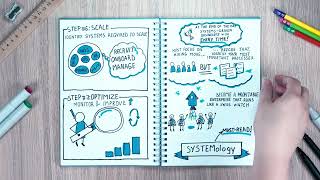
In the book Systemology, author David Jennings delivers his step by step system to tackle one of the biggest problems faced by most business owners. They're trapped in the day to day operations and cannot afford to step away from their business for more than a day or two without everything grinding to a halt. Jennings shares his own story and how his breakthrough came shortly after discovering his wife was pregnant. Feeling trapped in his digital agency, he realized he didn't want to be a workaholic dad and he knew things needed to change. Through grit, determination and a lot of trial and error, David was able to replace himself, hire a CEO, scaled his business to new heights and sold it for top dollar. At that point, Jennings became a system devotee and made it his mission to show other business owners how to do the same. Most business owners agree processes are critical for growing and scaling up a company. Yet for the vast majority, they don't have a plan to systemize. Because early stage companies get overwhelmed by creating systems when they don't have a framework or they get stuck with busy work, systems development often falls by the wayside. The challenge with creating systems is that they can be complicated, time consuming and expensive. But it doesn't have to be that way. David's process gives you the system to systemize your business, and it's so easy, even the busiest business owner can get it done. The process has seven steps. Step number one is to define and answer the question, what system should you create first? Using a tool called the Critical Client Flow, or CCF for short, it's possible to identify the 10 most critical systems in the delivery of your core product or service. Step number two is Assign, and it's where you identify who has the knowledge to complete the critical tasks. Identified as the business owner, you're encouraged to leave yourself out wherever possible. The focus should be on extracting what your best team members are already doing. Step number three is Extract and it's where you record team members completing the tasks with the help of a systems champion who takes those recordings and turns them into usable, shareable documents for the whole team to reference. Step number four is Organize. In this step, Jennings addresses the myth that business systemization requires complex software to execute. He believes the opposite is true. Simplicity is key. He believes you only need two key 1 software to store and organize your systems 2 software to assign tasks and ensure compliance. Step number five is Integrate. In this step you will learn the secret to get your team on board with these new processes is to one show how the changes benefit the team member directly, not just the company and two involve as many team members as possible in the creation of the new systems. Step number six is scale. This is where your systems required for growing and scaling your company are identified. This includes sales, marketing, operations, hr, finance and management systems. Jennings also explains how this new systems thinking approach must be embedded into how you recruit, onboarded and manage all team members. Lastly, step number seven is optimization and it starts by monitoring the output of your current systems through carefully chosen metrics. In this way, the foundation can be laid and systems can be progressively refined over time. At the end of the day, systems driven businesses win every time. Some companies just focus on hiring more staff and to get more output. But before that, you have to think about what your most important processes are. Don't let your team waste precious time by working on the wrong things or making unnecessary mistakes. And that's where processes come in. By identifying critical systems, assigning team members to those systems, extracting them, organizing them, integrating them, identifying your scale systems and optimizing them, business owners can transform their companies from being heavily dependent on them to to becoming a profitable enterprise that runs like a Swiss watch. Systemology Create time, reduce errors and scale your profits with proven business Systems is a classic business book that every aspiring entrepreneur should read.