SYSTEMology Case Study With Simon Kelly
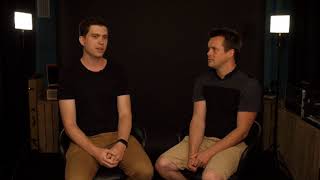
Simon Kelly applied SYSTEMology to his web development agency Renegade Empire to fix inconsistent delivery and reactive client work. His first quick win was fixing invoicing. He mapped the Critical Client Flow, kept systems simple, and built a repository in System Hub so the business could scale without him running everything.
Chapters
Hey, it's Dave here from System Hub and I'm excited to be here with Simon Kelly. Simon.
G' day, Dave.
Thanks for the time.
No worries.
We're going to be talking a little bit about systemizing business. Some of the challenges and how you might overcome some of those and also the application of systemology as well. So Simon runs a web development company called Renegade empire. Is that renegadempire.com or just.
No. AU okay, perfect.
I'll put a link in the show notes so people can check it out. But maybe to start, if you can tell us a little bit about the business yourself, what you do, just so that kind of sets the context for the application of systems in your business.
Yeah, cool. So yeah, the company's called Renegade Empire. So it started off well, it was like the two most epic words I could think of at the time. But it's more I'm really passionate about people who are taking a business idea and building an empire out of it. That was really where that came from and I've been running that since 2009. It started off myself as a freelance developer designer building websites for small business. I got a bit frustrated about two years into that when the websites that I was building, I just didn't see them giving real like business results afterwards. Like we were doing good work, but it still was kind of dictated by the client's requirements and I felt like they didn't really know what it was that they wanted. So I started to learn a lot more about marketing and then we shifted into being more of a marketing agency. So now we build websites, e commerce and have ongoing marketing plans with our clients and segueing into the system side of things. Being able to deliver quality projects consistently has to have a system. And the amount of time I was spending in the delivery part of the process is just like 100 hour weeks. Just not tracking some of those things, just not having enough time to think about what the next thing is. Just jumping straight into it from one task to another, just very haphazardly.
Yeah, it's been a real pleasure to watch over the past maybe 12 months or more. Now it feels like the evolution of your business as you've started to get some of these systems and processes and some of those things that you mentioned there. It's funny, I'll chat with some people and I'll talk about some of the businesses, some of the problems that they've got in their business and then you'll chat with someone else in a completely different industry and the problems are really Similar. Like the. The problems that the small business owner faces, regardless of the industry, are often the same and the way to solve them is often the same as well. Some of those challenges, like you mentioned, jumping haphazardly. Are there some challenges that you were facing prior to implementing business systemisation in your business?
Yeah, the biggest one I felt was delivery, in terms of delivering what it is that we do in a consistent way. I just really felt like there was a better way to do things and so that I could take myself out of that part. So every time I tried to get into sales and marketing for my own business, I really came back into delivery. I was like, it's just not. We're not communicating with clients consistently. We don't know what's next. We're very reactive to our clients requests at certain times and we just didn't feel right. And obviously the indicator there was ridiculous hours all the time. So I just, I was reading a lot of books and consuming a lot of material about growing small business and systems kept coming up a lot. So I was very much gravitated towards, like, I know systems are out there, I know there's something for me, I just couldn't really find anything consuming so much content about it. I was trialing, hiring developers, hiring designers, doing like, partnerships with other web agencies. I was just trying all these different things and still nothing was quite sticking the way that I felt that it should. Every new thing I took on seemed to take more time as opposed to less time.
Yeah.
And you know, we'll get into the aftermath in a sec, but kind of in hindsight it's like, well, that's because every new thing I get into didn't have a system. You.
Yeah, yeah. Some of those challenges, I think, I mean, all business owners, they struggle with time and it's hard to actually introduce the idea of systems and the value that it can actually bring to the business because it's like they affect everything. Like they'll affect how much money you make, how much money you could potentially save, how much extra time you'll get. And because systems are just so integral with the way that the business runs, that's often a challenge for me to explain the benefit that you would get.
Now you.
You had the insight to kind of say, hey, I'm seeing this recurring theme here whenever I'm doing the research about successful businesses. Systems and processes, checklists essential. It's the common element. So was there anything. Yeah, I'm just wondering if you've had discussions with other people where you've Tried to explain systems and processes and how you've tried to get it across that you need to do this.
Yeah, well, with my clients looking into their businesses as well, just thinking, wow, like, mine's not so bad. Like, yours is a mess. Insane. How am I going to be able to market something that's like, you need to organize things so that we can start talking about your business publicly? At that point, I was like, how? I need to be at a. I need to be able to teach this to my clients in order to do our marketing effectively. In order to be able to teach this, I need to practice this myself. So I need to look internally, I need to get something systemized and what. And one of the key things, and we're just talking about this off camera a little bit, one of the key things I found was just getting a very simple system and getting that recurring system off my plate. That was a moment when I went, okay, that's one thing, it's off my plate. That could save me an hour a week. And the first one was just invoicing, just sending an invoice, not receiving, not anything like that. It was just sending an invoice. And the templates we were using at that point were extremely basic and they still kind of are. But just getting something off my plate that was recurring, getting that time back, going, okay, one day, it feels good, what's next? And it does take a bit of investment upfront. But I think once you hit that magical moment and you get that feeling, you get that time back, it's going to be, you know, that hundred hour week is now 99, which still feels very overwhelming. But it's that one hour to not fill with something else to try to cut back. And once you get that, you get that momentum and you keep things organized in a simple way, you can really see how you can build the systems asset to help you get your time back and grow your business.
It's funny, that cumulative effect, because it starts off so small, you might be saving 5, 10, 15 minutes here and there. But once you start to layer that and then you've got multiple systems handling the cloud core, delivery of the product or service, and you're a little bit further down the line, that's when you almost have that epiphany. You have the first sort of insight and epiphany usually to get started, and you go, it might be something that Simon says or something that you're watching another video that you go, I've got to do this. And then once you have that it's not until you get the feeling of the result that you can then go, oh, this is the only way forward. Like, this is just central to the way business is. And that's one of the reasons I love to have these interviews, is to try and get that outside perspective. I know we've got a mutual friend, Troy, and that's how we came to know each other. And you said potentially you might have seen some of my other work online. I'm just wondering when you decided, yep, I'm gonna go through the systemology program or process. Was there anything that kind of tipped you over the edge? Because, I mean, we're all time poor at the best of times. So I'm wondering if there's anything that made you go, yeah, look, I'm going to give this a go.
Yeah. Well, many times I'd struggle to build systems and I've been struggling to build them for a long time and getting my time back. But to be able to go into a course with other people who are doing it in different industries and to be able to get you as a mentor as well at the same time, to actually get those things done, to go through that process and get that done within a confined amount of time instead of, yeah, this could take five years and I'll just do that by myself. Like, that was just. That was the way things were going. So how can we really get into the think tank and really expedite this process so I can get this done as quickly as possible and consume from the right sources and work working with the community, other people in totally different industries. I found that really interesting, the challenges that we were having, like myself as a web agency and then there was someone else who was in a printing company, just thought, like, how is this really good push?
Fire management, accounting.
Yeah, all doing it together. And so similar. Apart from the deliverable, which in some ways was quite similar. The way you need to communicate with your customers and your clients. Like, we could really share and build on each other's systems and be educated in each other's systems to be able to give feedback that was really interesting and very, very unexpected but very, very useful.
And going through the course itself, like, I mean, we've got the seven steps to the systemology that you go through when it came to actually learning the process, because that's the big thing I was looking for and why we ended up creating systemology is because I had a look, I couldn't find the system for systemizing business. I'd read the E Myth I'd Built to sell, work the system. Everybody's saying system, system, systems, and then it's like, yeah, but what's the process for applying that in the business? So. So once you actually got to go through it and see the process that we've developed, I don't know if you can speak to that or if there are any particular insights that you picked up along the way.
Yeah, definitely. One of the key parts of it was to simplify systems and simplify right through. From acquiring customers to onboarding customers to delivering to then coming back in and getting them back through the system. Getting that from start to finish with one of your products or services. Doing that first, that was just a real pivotal moment for me. You don't have to systemize everything at once because you can't. So getting it right through to basically like a business, a revenue generating machine for one of the things that you do, just really focusing on that and letting everything else. The other fires burn, I think we've talked about before. They just, you know, they'll come in. The problems that you have, they're not going to all be fixed at once. But once you can get that first part implemented, you can. That's really your first stepping stone to scaling your business.
Yeah, yeah.
Getting that time back that you need.
Yeah, I think a few people have said that. And even just getting it down, going through the, what we call the CCF process, the critical client flow, getting to see that visually. Some people are kind of like, I've never even thought of my business like that. Actually seeing it visually, like, what is it that we're selling, what is the value that we're delivering and how can we do that as streamlined as possible? One thing I always say is if the business is dependent on the business owner, then the business is broken. So looking at that CCF and then determining, right, can I fulfill that without me having to do every single step of the way? Once someone recognises that, then you at least build on the right foundation that it can be scaled.
Yeah, absolutely.
So that's. Yeah, that's like step one in that process. I'm glad you had that kind of big breakthrough at the start. And then we kind of went through a few, like, other things I try and where I can take as much off the business owner as possible when it comes to the documentation. Were there any other things where you kind of like, hey, I've just not seen it done that way or thought about things that way?
Well, to be honest, part of it I felt, oh, great, I'm on The right track because a lot of the effort that I'd put in leading up to the course, I was. It was very haphazard the way I was doing it. So it took some of the knowledge I already had and things that I'd consumed from the trails that you leave behind on the Internet and some of the speaking gigs that you've done. So that knowledge that I had and through authority content as well, piecing all of that together but organizing it so I could actually get it done instead of trying to do it all at once and doing it myself, that was a key part as well. So thankfully I've got a small team, so. So I was able to leverage them to be able to put things together. And it takes practice. But not doing it all myself, it's so hard. It need a post it note on everything. Just like, remember, don't do it yourself. Remember, don't do it yourself. I think about a new system to be built and I'm thinking about it in different ways now. Instead of simply, will I do this again? I should systemize it. I'm thinking, will I do this again? Is it recurring? What kind of value will this have? Is this part of the ccf? Okay, I'll record it, but I'm not going to do anything else. I'll put that in a bucket for later. But if it's part of what we can actually do to deliver something effectively for our clients and generate more business for our business, then that will form part of the CCF and then that's okay to do the full process, to create the process.
You mentioned about the capturing and I know you're a user of System Hub as well. You've tried a few different platforms and I know we've, we've talked about some of the reasons that System Hub works quite well before in the past. I'm wondering, are there any key reasons why you found System Hub works as a repository for systems and processes?
So being able to keep it nice and simple, that was the key thing. So many other pieces of software and tools, they cater for what you think you need. So like every possible outcome and all these things and they've got all these fancy tools and all these different integrations. I was attracted to that, building systems. I thought I needed something super powerful, but I needed something simple. I needed something that got the job done and that was just clearly not there because I hadn't got the job done with all the different things, the trial accounts, all the different things I've subscribed to and paid for. For many years just wasn't quite there. So I'm really looking at all the mess that I've made over the years trying to do this and I'm simplifying it now and it's helping so much.
It's almost like if you can't explain your business on one a four bit of paper from a high level point of view, then you really don't understand your business at the level it should be. It needs to be simple. And then same with the way that you capture systems and processes because at the best of times there's no the warts and all. Truth here is that systems and processes are hard at the best of times. Getting your team motivated and excited to follow them. We need to do everything that we can to remove complexity, keep things as simple as possible, not over complicate. And then once they kind of implement, that's when you start to get the.
Best results and you can further optimize and improve that process over time. That was another key realization. There's lots that will come up if we keep talking. It's getting that like layer one entire process of the business, the CCF in place, like layer one of getting it down and documented and off your plate and then the ongoing evolution of improving that, automating parts of it. But you don't need that straight away because if you're not doing it, then there's no point trying to automate and improve it. You're just over complicating it. And that's where the time suck is. And that's what it was for me. I need systems, I need processes, I don't have any time, so I'll spend more time trying to automate that process somehow.
I remember seeing some of your early processes because you make beautiful processes, too beautiful. But it meant, yeah, kind of sometimes that gets in the way of the implementation. That's right, yeah. Keeping that simple and then leveling it up. And I think that's one thing that I've enjoyed most working with you over the period of time. Because you're such a great implementer, we would have discussions, we talk about something and then you'd go implement it and then you'd come back and we'd have a look at what you'd done and then, oh, we'll change this. And you had really influenced heavily the way that the systemology program was developed and we moved the optimization, as you know, into stage four because you just need to capture what you're doing now. First do that basically and simply and then you can start to improve and build upon it.
That's right.
So it's. Yeah, I very much enjoyed going through that process. As you kind of get later in the process as well. I know we introduced things like the integration and also scale. And then we started to talk about things like the cdf which we've tried to keep it as simple as possible when it comes to getting the core deliverable down. And then we started to talk about other departments. Were there any other kind of insights thinking about the business of running business that you picked up?
The key for me was with growing a team that was in terms of the ability for the future of my business to grow the way that I needed to. I know that my hiring process needs to be much better than it has been in the past. I really have been out tasking for a very long time and instead of thinking about responsibilities and thinking about someone taking ownership of particular systems. So when it comes to actually delivering what it is that we're doing, we're pretty confident now that we've through the systemology course that we have that process down much better. So myself and my clients thank you for that. But the next step really is how are we going to take that to build the team. So that's completely fairly about 80% off my plate now. But there are other products and services and we're going to need more of a team. And the knowledge that I've got now through a better HR process is really going to help us do that. And we just haven't had anything close to that in the past.
Yeah. And then introducing to them the systemology thinking and principles as a way that, hey, this is the way that we do business. And the other big thing is viewing your organization and business as though it were a school. Like you are a training organization of staff. You have a process for identifying your students and then getting them up to speed as quickly as possible. Because as soon as they're up to speed, that's when they start to become profitable for you guys. And then the bigger that you grow, the more people that you can help. So I know that's another little insight you had mentioned to me. Another time you're like, ah, I get it now.
That was before the course. I remember saying, wow, businesses are just training organizations. Like if we set it up like a course kind of thing to onboard and then deliver, that seems to be the best way to grow a business. And that was before systemology. I think that was before you had come up with systemology. But part of the group that we were a part of. And after that realization, well, there's been many, obviously, but after that it's like, yep, I need to follow this guy.
The tail end, I suppose, because you've gone through the process and it's hard to know when systemology is the right point. I do say, regardless of where you're at and whatever you're doing in business, at one point you will have to cross this bridge. To build a business that works without you, that gives the freedom that you're looking for. It has to be done with systems and processes. It's an absolute must. But it's hard to know when is the right time. And I'm biased. I think now is the right time. Always the sooner you start, the better. But it's hard to know. So I don't know if there's anything that you can say looking back now, when is the right time or anything that might help someone make the right choice.
Yeah, I absolutely agree. The sooner the better. Before starting a business would be great, but you can't go back in time. But now I know that there's some other businesses that I have as well that are in the very early stages. So now I'm kind of taking it a bit slower and using the systems thinking to grow it without me from the very beginning. And it's a beautiful process now, but I'm still in progress of kind of removing myself from my business. So, yeah, start as early as you can, basically. And the time that you're spending now on your business, don't think so hard about that. You don't have time for something like this. One of the first things I mentioned before is getting that quick win, getting that. Well, the first win of taking something that you do on a recurring basis and getting that off your plate, even if that's something super small, something just like invoicing, if you're not confident in it being something money related, it could be something like sending out a monthly newsletter to your clients. If you're doing that all the time, or with the many, many businesses I've talked to who are not doing that all the time, but it's one of those tasks that recurs and it just is late and it never gets done. If you can have someone else take care of that and you just are not taking care of that at all, that first win that you can get, it really helps you to start the momentum and you can realize the power of systems. So even something as small as that, if you are struggling getting things like that done, which I know many business owners are. Then I recommend systemology for you.
Yeah, and just reach out. Happy to have a chat. Find out exactly where you are, think about where you want to go. We can sit down and do the CCF for you and your business as well, so perhaps we'll wrap it there. Thank you so much for your time, Simon. I'll put the link so people can find out more about your business. And no doubt we'll have a part two as global domination of your renegade empire happens.
Sounds good.
All right, see you guys.
More from David






Remember me? Subscribe To My Channel For More Free Business Systems Content 📈




