SYSTEMology® Origin Story
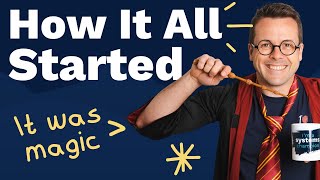
David Jenyns built System Hub to solve a problem in his own SEO agency: how to document and scale business systems. He spent two years developing the platform, moving from startup founder to what he calls a systems entrepreneur, and is launching it publicly after proving it works internally.
Chapters
My name is David Jennings and I run a marketing company called Melbourne SEO and Video and we help small and medium businesses get found online. I've been doing that for quite some time. I think I've really discovered my passion as a marketer a good number of years ago, when initially I teamed up with someone else to help promote some educational stock market educational material. And I kind of fell into the role of the marketer or as the marketer, started to do my research, really put in the hours to learn the craft of marketing. And then it was kind of a little bit of an evolution as we sort of started to see change in that particular industry. And when I recognised that's what I was strong at and almost the way that my mind worked with that stock market background, the systems background has always been really, really strong because that's the way that I see my marketing kind of break things down into what's the process behind it. I want to understand the steps. So that's kind of how it made logical sense for me to kind of shift into the marketing company. That's kind of the space we've been playing in for a while now.
So you mentioned Melbourne SEO in Video, but there's soon to be a third.
Yeah.
Something else is about to come up.
Yeah. So this has been something that I've been working on for a really long time. So even though it hasn't necessarily been broken out and presented and announced, it's really just a core part of the way that we do things, who we are and the way that we do our work, really. So one thing I've found as an entrepreneur, you've got 50 million different ideas and usually the last thing you need is another good idea. It's really important to pare back all of the noise to the core essentials, the big rocks. So I've been going through a process.
In fact, I've got a journal that I usually flip through and draw where the business is at, where which are the moving pieces. And constantly, if I look back through that journal, I see the pictures. They're always drawing the same thing, but there's kind of like minor modifications to the map. And one of the core parts, it's always been centered around this idea of systems coming from that stock market background and thinking about the way to approach something consistently, like to get.
Great results and really make something scalable, you have to do it consistently. So we've been working on this project behind the scenes now for a couple of years.
Basically, we did it to solve our own problems with Systemisation. And as the team started to grow, we needed a way to pass the knowledge that was in my head and pass it on to other team members and make sure that it was consistently followed as I, I grew through this and that's kind of really what's evolved into System Hub, which is the new part of the business that we're about to launch. And it's the culmination of all of this thinking. Like years and years of thinking all squished down into the core bare essentials, the most important building blocks that build the way that we've done business and the way that we kind of broke through to the next level. There are stages in business as you grow and at each stage when you develop, you learn something new. And System Hub is the culmination of all of that, one of those big tipping points for us.
So because the team was growing, it was a matter of time. You just needed something in place.
Yeah, I actually developed this framework of a way to think the way that businesses grow. There's like a four stage period that all businesses go through. Being that entrepreneur with 50 million things on the go. Very early on in my career, actually just after the stock market stuff, and as we were starting the marketing side of the business, I was involved in a rock and roll clothing music store and we grew that as a franchise and we very quickly grew up to a number of stores, started franchising out, had a good solid sized team. I think we got up to about 6 size 25, 30 people selling stuff worldwide and we grew through these stages very quickly. So I think that gave me the visibility to understand what the stages are. And it's almost like now when I grow a business, I think of it in terms of these stages and I've gone back to stage one. As we were growing, these new businesses walked through. But now using this new mental model, this way of thinking, it's a way for me to identify where am I at in the process, what problems do I have or does the business have and what needs to happen for me to move through to that next stage. Stage one, it's all about the startup business and figuring out what is it that you're going to sell. You're usually testing lots of different things, you're working on lots of different components within the business, but you haven't really formulated exactly what you're doing. That startup phase. Then you move into the proven entrepreneur. Now the proven entrepreneur now has decided what their products and services are. They've got consistent client flow, so they're still doing everything. And there's still a lot of micromanaging and they're wearing a lot of hats within the business. But at least now they've built up a little bit of a reputation for what it is that they're doing. They're not opportunity seeking as much at this point in time because they know, well, here's what I'm selling and here's what it looks like. And then you move through from that stage two to stage three. And this is the one that for me personally I've struggled with the most. And when I look around I see most entrepreneurs struggle with this. Like this is the hardest step is to move through into the third stage, which is the systems entrepreneur. Because the systems entrepreneur changes their thinking. All of the skills that you were required to move through stages one and two, they were micromanaging, they were being across everything, they were being so involved in the business. That's what needed to happen to get it to one point. The problem is to then move through to that next stage, you have to let go everything that got you this far. And it's hard because it's been reinforced, like that's what made you the success. But now you've got to let that go. And that's where most entrepreneurs get stuck. And they just get stuck in this holding pattern for years and years and years and never really break through. And they don't quite know what that is. The distinction. And something that I've really recognized, it's this systems component and it's so important and it is the answer, the secret to breakthrough, to that next stage. And then you've actually got the final stage which once you have systemized and automated your business and it runs without you, that's when you turn into what I call the complete entrepreneur. That's when you look at businesses as standalone entities. So basically you could look at a business very quickly, analyse it, see what's wrong with it, and then you'll be able to deploy the solution very quickly. In terms of systems as solutions, you'll go, oh, looking at this business, they've got a problem with finance. Okay, well we need to deploy all of the accounting systems or they might have specific problems. You can even drill in deeper. Maybe there are delinquent accounts chasing up debtors and things like that. What is the system and the solution for that? So when you get to that complete entrepreneur, you're very much out of the day to day operations. The business runs itself. You see businesses as stand alone entities made up of different systems and Then it's about getting the right people in the right places to make sure that those are operated smoothly. So going through that thinking is kind of what got me to the point to go, wow, this is such a big piece. And it's been so important for us that we first decided to solve the problem for ourselves first before we ever considered even opening up System Hub and making it available. The reason we went on this endeavor was to solve our own problem and have it become the heart of our business.
And so you said you've been working on this two years onwards. Was there one point that stuck out at you like, wow, we're onto something here?
Yeah.
Yeah. Been working on it for like the whole systems thing has been with me for years because it came from that stock market background stuff and then what we did with Planet 13. So it's been there, but probably in the last two years is when I, I mean, we've tested a million different platforms to try and centrally house our standard operating procedures and systems and things like that. Like, we've, we've tried everything, but nothing solved it elegantly. That was the biggest problem. Like, they all did little bits, right? And they did some things quite well, but as a general rule, they just, they didn't hit the mark on everything that needed to happen. And it was such an important piece that we thought, we can't not create a solution because trying to do it with Dropbox, trying to do it with Google Apps, which aren't purpose built for designing systems, we're kind of trying to fit that square peg into a round hole. When we recognized that that was going back a couple of years ago now, I had that idea and I thought, right, well.
This is a problem that needs to be solved. It has to be solved.
There was no other choice. I saw this as a way forward for our business to break through. I knew it was a big risk. And in my head we were going through things. There's points in your entrepreneurial journey where you think, is now the right time to take the risk or not? You have a family and kids and a house and a mortgage, and it becomes harder to take those risks at that point in time. And all of this, like, I'm going up, I'm moving into that stage of my life now. And I thought, right, if I'm going to take a big risk, now is the time to take it, because I don't want to do that when there are more things at stake. So that's when we kind of said, or I didn't even say I just knew it was the way forward. You know when you get that gut feeling and you're like, okay, this is the way forward. And I think that's what an entrepreneur does. They imagine something, they go into the future, see what it looks like in the future. Like, I've got it planned out in my head. I already know what the finished picture looks like. And then I've come back to the present moment. And now for the last two years, I've just been taking steps to build that picture that was already built. And sure, there have been tweaks and modifications over the way, and things change slightly. Like I said, the purpose initially was to solve our own problem. But then when I recognized, hey, we're not the only people having this problem, that's when we kind of thought, okay, now we need to do it. So, yeah, hopefully that explains it.
You mentioned that you're taking a risk. Elaborate on what risk it is that you're taking.
Yeah, well, startup business is hard at the best of times because cash flow is king. It's what drives a business. You need to have the cash flow because that enables you to get momentum, that enables you to pay for your marketing, to pay for your staff to grow and support a larger group of people. So it's absolutely critical. And the risk, when you're experimenting in some of these, when you get an idea and you follow it, you have to be particular with the risks that you do take. Because if I'm taking my eye off the ball to focus on another project or even allocating good money from a business that's doing really well, pulling that money out and then putting it into something else that hasn't yet paid its way from for two years. Sure, there's the benefit for the internal team, but the financial drain on the core business, which is operating very well, and to then pull it out and then put it into something else.
That'S a big.
Risk that I needed to properly calculate. But I didn't even really see it as a risk in one sense, because I knew I already know what the end picture looks like and I know what this solution will do. And even if we were the only people that ever implemented this, this would be our competitive advantage for years to come. I saw it as such an important component for any business that I ever run as the complete entrepreneur. Once we get to that stage and having a database, a collection of systems that help solve different problems within businesses, I can then take that using System Hub and deploy it in any business that I've got. So now that becomes quite possibly the most valuable asset I've ever got. So it's kind of like sacrificing short term profits. Like, sure, I could be pulling the money out and buying a nice car or going on a holiday or buying another house with the money that we've invested in System Hub. But I think the long term gain and going, okay, short term sacrifice now and maybe two years isn't short term sacrifice, but I enjoy that process of going through that and then knowing what it is that we're doing it for because I know the long term benefit is there.
I almost get a sick and twisted sense of satisfaction sometimes going through the struggle. Like I quite like that struggle zone of, you know, just getting down and just doing the work and doing what needs to be done. Like I don't need to be driving around in a flashy car or, you know, flying jets or anything silly like that. Like I love that process of going through and, and, and building. So yeah, I wouldn't even call it a struggle. It's just what needs to be done.
Was there ever a time during the development where you may have regretted investing so much?
Look, I don't think I've ever regretted it, not even for a second, because I knew how important it was. There were points where the accounts department was saying to me, we can't keep sinking money into this without having it pay its own way. Like there have been points for that and where I've had to doggedly just go, we need to persist with this. Like, I have a clear vision of what it needs to look like. So there's been points like that and there are points where I'll push the line. Like I said though, I mean, if I can back one thing, I'll back myself and I know I'll do whatever it takes to make it work. So I don't ever really feel like I'm backed into a corner because I can always get out just by out innovating, outworking, doing what needs to be done to kind of move through. So yeah, there have been definitely struggles. As in business, there's always struggles. I don't think there's ever been a point where I've said this was the wrong thing to do because I just feel it so much that this is the right thing to do.
And what's the response been from your family and friends?
Yeah, yeah. Look, it's hard because I know the reason systems are so important is because it frees you up and gives you space and enables the business to work without you. But to get to that point, there's a lot of work. Like there's no real shortcut, there's no magic button you can press. You got to put in hard work to get it done. So what has probably been hardest is mainly finding that work life balance, like.
Just the hours. Some, some weeks I'll put in really good hours and I'm fortunate to have a great partner and she kind of tries to pull me back and get me to do the family stuff and things like that. And I can see the end game plan. So I know what we're working towards and why I'll make that sacrifice now. And we've just had our first child and that's why I thought, well, now's the time. If I'm going to take this risk, now's the time to do it because I don't want to be the dad who works the 70, 80 hour weeks.
Leaves first thing in the morning, doesn't see their son, get up and have breakfast in the morning or walk them to school and then comes back at 8 o', clock, 10 o' clock at night when the kid's gone to bed. And the only time you see them is in pockets over the weekend. But usually on the weekend you're trying to catch up on your emails and do the things that you missed out on doing during the week. So conscious of that and not wanting to be that person.
Yeah, that's why I'm making those sacrifices now because I know, yeah, short term sacrifice for that long term gain.
So your son's a bit of a driving force for this. You want to have time for him.
Yeah, I think that's probably the biggest and.
My wife as well. So it's hard. I can't just say just him, he's a huge one. But it's the family component. For me, business has always been very high in my values. Like when you got health, you've got family, you've got business. And sometimes my wife will question and say is, are you actually putting business higher than these other values? Because for her, family is her biggest value. Like not even a question, like she would do anything, you know, walk across broken glass if it was for a family member. She'll do anything to help support family. It's just in her DNA and in her genes. So it's very strong for her. And then it makes it hard when.
I'm putting these short term sacrifices in now and I know why I'm doing it and I know what the long term vision is and doing it for those values but then I'm getting short term pressure now to say, well, it feels like you're not meeting these values now. So that's a hard line to figure out. Well, have I pushed too far? Particularly with a wife who's very giving, Like, I don't want to ever be, you know, because she's such a giver. I don't want to just take, take, take. So it's always a constant battle to figure out where that fine line is, what's reasonable and what's unreasonable. I know I have to work hard, but I also have a family to be involved in. And, you know, I don't want to miss that, this critical time.
So as far as you're concerned, System Hub is kind of helping you plan for your future.
It's. Yeah.
Things in place so that you can step away and be like, the work's done. Yeah, I'm gonna go over here now and do the family thing.
Yeah. I don't think I'll ever. Because. Because business is such a high, high value for me. I don't think I'll ever just step away from business, because I do. I love it. Like, I love everything about it. I love the game, I love the challenge. I love figuring out which pieces need to go where. I. I love the progression that you go through. I love all of those different components. So I'll never go, okay, my work is done. I'm a hard worker and I love it. That's part of who I am. So I don't think I'll ever get to a point where I will just pull back and then just focus in on the family. But I will get very good balance and I'll draw very tight boxes around. This is work time. This is, you know, I operate in with these hours, you know, and I won't do the late nights, I won't do the weekends. You know, I'll almost be an employee of one of our companies, effectively working the set hours, you know, really over delivering. But almost, yes. Seeing myself as an employee in a company that we've created that I love because everybody's got to work. Like, that's just part of life. If I can create a company that.
Is built on great values that everybody enjoys coming to work on, and we've got a great team and we're all kind of heading in the right direction, it's just good for everybody. So I want to build that environment for me, for the team, for the family, get that balance. And that's. Yeah, that's probably a big driver.
And so we're launching soon.
Just quickly. Can you just talk about the benefit and then we'll finish?
Yeah. The benefit of System Hub like that, it gives you more time.
Yeah.
Which you kind of. You did separately.
Yeah, yeah, yep. So I mean the real, the real thing about what System Hub does is.
It'S a way to allow the entrepreneur to grow through those stages and once they get to that critical stage of crossing between stage two and stage three where most entrepreneurs get stuck, this is the tool that moves them through to that. Now the benefits that come from as you move through the stages, it unlocks a new world almost. Once you've got systems in place, you can rely on team members to be doing work to a certain standard and just the way that you like things and delivering great value to the end client. So once you've got that in place, what does it do? For one, it frees up your thinking and really that's the aim of the game. The aim of the game is to take as much off your plate as you can to, to create enough space as the entrepreneur to have the ideas that affect the big change. So by getting the day to day little things off the plate and not having to think about.
How are wages looked after, someone else looks for that or how is the work delivered. Once you're out of that, then you give the opportunity for your brain like it's a fertile ground that you've planted all of these seeds and you can really focus on the ideas to start to grow. So that space, it unlocks so many things. That's a big one. And then it also gives you your life back because by creating that space, it's a little bit counterintuitive. A lot of entrepreneurs think I've just got to put in more hours, I've got to work 100 hour weeks and that's going to be the solution. And that'll get you so far. But, but to break again through to that next level, it's not hours in the day. Because if that was the case then why wouldn't you look at someone like Richard Branson and say why isn't he working a 300 hour work week? He doesn't do that because he's got other team members that help give him the leverage and the scale of their time and what he comes up with or his component. I don't even know where he's at now in the stage of his business, but he would have been very much involved in, in the idea component and figuring out, okay, well which businesses are we going to Operate in strategically, how do we position. So getting your life back, which frees you up to do that critical thinking, makes you feel better with life as well, because then you're more rounded and creating space and time for your family.
Increases your eq. It makes your emotional intelligence higher so that you can then be more supportive of team members because you can read and understand the situation.
Because that's really what it comes down to. It's a people's game. You want to make sure that you have the right relationships with people and you help support them as much as they help support you. So getting that in place, you need to have high emotional intelligence to read the situation because everybody's different. And by making the space to do the family stuff, that actually then. Because for a lot of people, family is a very high value for them. And previously, like, before I met my wife, I would consider myself, like.
Almost like an emotional preschooler. Like, my intelligence for emotion only grew to a certain level because I'd moved my attention elsewhere and I started to grow my business intelligence. But then it meant my emotional intelligence hadn't grown. So one of the real core values of my wife is because family is so important to her. I saw it as she's now my best teacher because she knows how to do family incredibly well. She's like the grandmaster of family. I'm like the preschooler, so she teaches me to grow through that. So by learning that, then I get to bring that back to the business and then that helps to support the team, which then has the business start to grow.
So there's a few things there.
Wrap it up with the excitement.
I've got one exciting question.
We're running at, like, half an hour.
It's good to have.
Yeah. This could be used for other things as well. Like, I'm happy to.
I'm just conscious.
Yeah, yeah, yeah. Like, we'll. Yeah, yeah. Gotcha. Hey, love your work. Love your work.
So all this culmination is happening next week. There's a launch coming.
Yeah. So.
Excited. Like, you couldn't believe. Like, it's like you've got a. There's a lot to look forward to because it's like having a soft drink bottle that you've been sitting and shaking up for two years and you're just waiting to take the lid off and have, you know, it. Launch and explode. Like, that's the point at which we're at now. It's this so much energy, effort, and not just from me personally. We've sunk a ridiculous amount of cash into this, all of the team has been involved in various different parts and I can feel the excitement in the team starting to rise that how. Wow. We're about to now take this live. So we've got the event, the official launch, which is next week. Yeah, we're not more than a few days away now and I'm just kind of putting the finer details on presentations and starting to pull things into line and thinking about how I can really connect with the audience, help them to understand. I want them to have that breakthrough where they go. I can see systems will have a huge impact. It's one of those things where you drop that rock, the systems rock into a very still river and the ripples will go out for, for miles. And I want to drop that big rock and that's effectively what we're doing on the launch. So we've got great room, great venue, great team, amazing speakers, fantastic content.
All built off the core component of systems. So it's pretty exciting putting in the hard yards and the long hours. And again, it feels, it's kind of funny because the whole point of doing all the systems and stuff like that is to make sure that you don't have to put in those ridiculous hours. But I think something happens by setting a deadline, working towards deadlines. There's nothing like having a room full of people and knowing that you have to deliver to your best. And one of my core values is I also like to be the best example of what I teach. So I don't want to be saying you should be doing the systems, you should be doing this, you should be doing that. Unless we are living, breathing, perfect examples. Hey, look at Melbourne SEO and look at Melbourne Video. They're running themselves without me pretty much. And that was done through systems. So we're taking that and then basically going to show people and teach people how we did it and then how they can do it too, by following in those footsteps. So, yeah, still a few more late hours to go, outlines done for my presentations. Got to do the slide deck, got to get some practice in. But yeah, it's that excitement that's sort of driving us through at this point.
Are you proud of what SystemUp has become?
Yeah, I think what I'm most proud about is.
When you have a germ of an idea.
And you have the foresight to keep watering it and follow it all the way through over a long period of time with little to no, at least financial reward. I mean, there's the benefit inside to what it's done for the team and I can see that.
To see now what it is that we've grown and then just to. It's almost like we've had our head down and we've finally come up to take a breath and we're having a look around and then going, wow, what we've been doing is actually something pretty amazing. And then seeing the team come together and everybody who's got their own area of expertise are bringing in little bits back into this central component to make the visuals look amazing. With the way that we've designed it, with the way that it's coated on the back end, with the website itself and the way that it functions, the video that kind of helps to explain what System Hub is in a minute and does so amazingly, kind of wraps up this huge idea into that small, simple thing that you just watch it and you go, I get it. I know why this is important.
To see all of that come together.
It really makes me quite proud as well. We're very particular with our systems, one of which is the hiring component. So we're always very particular with our team members. So it's great to see them get on board and get excited by the prospect and see what's going to happen.
Last question. What happens if System Hub fails?
I don't think System Hub can fail. And the reason it won't fail is because.
I've set it up so that the real benefit of System Hub has actually already occurred. So the benefit of going to launch, that'll be the icing on the cake. But the process that we went through to get to where we are really, that's the big payoff. The payoff of systemizing our business. The payoff of getting all the team on board, thinking systems mindset. The payoff of going through the development process and understanding the way that that works and looking at business in a different way. So the payoff has already actually occurred. The result of getting the money in the bank hasn't. But I know the investment has already been made in.
One of the biggest rocks in business. This has got to be one of the biggest rocks. Regardless of whether or not System Hub as a platform or not takes off.
The rock has been dropped into the river. The ripples have already been set in our business. So I know it will only succeed from there. And what I've done, I think my area of skill, and another thing that I'm really great at doing is the innovation side of things. When I think and I look at what a lot of other businesses do, they're in the game of copycat. They're looking at what their competitors are doing and thinking, hey, what piece do we take and how do we respin it? I don't play that game. I focus on our own game. I make sure we do what we do better than anyone else. I keep my head down, focused. Occasionally we'll come up for air and have a little bit of a look around, but really, I'm so focused on what we're doing and making sure that we do it really, really well.
I know that.
Once it comes to market, the innovations and the ideas that we've got, like, we're at stage one, like, the ripples that are going to occur from this in five and 10 years time, like, we're still going to be feeling the after effects of dropping that rock in the water. So, yeah, I think, yeah, it's already succeeded. It's. It's already achieved huge success for me. And with the innovations that we've got, yeah, we'll just keep iterating and iterating, and that's what stands us out from the crowd. That's what makes us not possible to catch. Because of that innovation and because we do things our own way and we kind of embrace that.
More from David






Remember me? Subscribe To My Channel For More Free Business Systems Content 📈




