The People Part Process With Annie Hyman Pratt
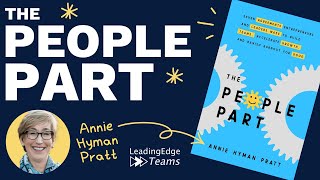
Annie Hyman Pratt walks through her seven-agreement system for managing people in business, from self-leadership to company culture. She covers role clarity, psychological safety, and how to turn implicit habits into explicit agreements that actually stick.
Chapters
And then we can have a discussion about, okay, who would I need to talk to to see if that's possible, to move another project off my plate, for example. So the conscious agreements are all about getting aligned, getting on the same page, making sure that we see things the same way.
Today I'm joined by Annie Heyman Pratt. She is the author of a really great book called the People Part. And I think you all know I love a good system. Her work is effectively a system for managing the people part of business, which I think is an area often misunderstood and overlooked, let alone trying to distill it down into a system. So she's got deep experience from her family business, the Coffee Bean and Tea Leaf, and she was involved in growing that up to 70 stores, and then after the sale of that business, went on to do a range of different consulting gigs in different businesses and industries. So I couldn't be more excited to really dive into her process. So, firstly, though, I'll just welcome you to the call, Annie. And maybe just to start, I'd love to know, do you see yourself as a systems person?
Yeah, thanks for having me. And. And it's kind of funny. I didn't used to think of myself as a systems person, but I do now. I definitely do now. And I think of systems as kind of like a great way to organize whatever, you know, whatever your system is to organize information or what you're doing in a way that you don't have to create it from scratch every time. Right. Like, you don't have to rethink about it. And in that way, I think it's huge.
And that's how I feel about your book also. Like, I know in the book you talk about the idea of these seven agreements, which in itself I see as a system. Now, it might not necessarily be a linear system that you follow in an exact order, but it's a system for managing the people part. And that's a big part of what I'd love to dive into today.
Yeah, happy to do.
So maybe if we could go through each of the agreements, I'd love to try and pull out what you consider is, you know, the essence or the most critical component of that. And maybe we can even talk about some of the tools that would help someone achieve that agreement.
Yeah, for sure. Yeah, absolutely. And as kind of a precursor to that, why don't I start by just sharing how I think of agreements in a business and why I think, you know, why I use the term agreements, why I think they're incredibly important for Business because I see agreements as how people work together to get results. And how would I say, when you're in business, everything's in agreement, whether you realize it or not. So when people start with a company and they accept a role, their role is the first agreement they make. It's like, I agree to work here and do a set of, know, take a set of responsibilities, do a bunch of tasks, and that's my first agreement. Some certain expectations are an agreement. A project plan is an agreement. Then we have explicit agreements. Like when somebody delegates something, we're making an agreement like, you know, I would like to transfer this set of responsibilities to you. Do you agree to take it on as a, as a delegation? And so when I think about how people work together to get results and why I think agreements are so important is because agreements are two way, meaning we need to realize as the person who's got the responsibility, who needs to get a result, we need to understand that we are making and renegotiating agreements all the time. So it's like when I agree to participate in a project and there's a project plan, it's my responsibility, it's going to work best. I should say if I take the responsibility of looking at this project plan and thinking, can I agree to this? Can I actually do this? Because the person that's making the project plan is making that assumption. And if I am looking at it and I really can't do it, then, you know, then what's going to happen? If I don't speak up and say something, then my boss is going to make an assumption that I'm good with it. We are going to, you know, move down the path in the project and probably get to a point where there's a crisis. Because I finally am like, well, actually I, I didn't think I could do it and now I see I really can't do it. And now we have a problem. And so what we want business to run in agreements is, is because we want everybody to be thinking about for themselves, what am I agreeing to? Can I still do that? And every time we're going to make bring on something new change, something we have to rethink about all the other agreements we have, all the things that might need to change as well. And if we can't work through that kind of agreement system, right, then what happens is nobody has any trust at all. Because then it's like, you know, if I, you know, if I say, sure, I'll, I'll do the project, but you can't trust me that I actually will meet those commitments or that I will renegotiate, then we, we, we don't, we don't have a business that can actually work that you, you've got a business instead where the people at the top have to know everything. And that is becoming less and less and less possible. It's just, it's not possible anymore.
What I like about the way that you've articulated that a lot of these agreements really center around this idea of expectation management and setting out. Here's my expectation. You're agreeing that okay, now our expectations are aligned, which then makes it much easier to manage to further down the line.
Yes, it's almost impossible to manage without that.
Yeah, it's. And yeah, when I look through the lens of our systems, processes and policies really oftentimes a lot of staff handbook, you know, policies, things like that and systems are just the documented form of these agreements and expectations. Where you're saying, and here is how I expect this particular task to be complete or here is how I expect you to operate in this situation based on our values.
That's right. That's right. It's like we can't, you know, we unfortunately we can't document everything, nor do we, nor do we need to, but we really need to just know that we are constantly making and remaking agreements. And, and one of the things that I find kind of interesting about agreements and business is, and I say this all the time is agreements are not a promise. They're not a promise because agreements in business are always situational. Okay? So I guess there's some agreements or expectations that aren't exactly like, you know, I, I agree to not steal. Okay, fine, that's, you know, we can call that one good as is. But most other agreements, like, you know, like I'm going to finish this report on time, those are all situational. Meaning if some emergency comes up that I have to turn my attention to, I might have to renegotiate that agreement. And it doesn't make me a bad person. It doesn't make it so that I am breaking a promise because I've got a set of outcomes that I have to accomplish in a business. Like, that's one of the things that I think is so important in business and I think it's the second agreement and that is that we are all clear what we're going for, what a win looks like. Because that's really what I am agreeing to, taking all the actions, doing everything I can to win this game. But I can't promise it. I can't promise it any more than a basketball player can promise to make any particular basketball. Yeah, right. They can do their best to try. They can take all the actions that we, you know, that we decided were going to be a great strategy, etc, and yet things can happen that, you know, that make that outcome not go that way or make us have to change our plans.
So we touched on the second agreement there. So that might be a good segue to jump into the first agreement, which you've got learning self leadership. Can you tell us a little bit about that one? And again, I really. Because there's quite a bit in the book. My key here is to try and find the critical component or either an action or a tool or something that someone can get into place for that. So maybe we can start there.
Absolutely, absolutely. So the first agreement is that, you know, we agree, we all agree, the people in the business agree to show up in self leadership instead of self protection. Okay. So I need to just explain what that is and once I explain what that, what it is, then it's pretty obvious. And self protection is when we as human beings, because we're, we're human. We, we, we aren't robots who have zero emotions. We actually, I think Brene Brown said it well. We actually are feeling beings who think and we have a, a hard wiring. We have a, a part of our brain that is very old. It's very, some people call it the reptilian brain. And its sole purpose is to look for threats. Okay? To look for threats. And, and we can't turn it off. And so when we get triggered. So it could be anything from like, I smell smoke when I'm in a movie theater, okay? That is gonna, my amygdala is gonna sense that and say like smoke should not be in a theater and you need to start running. Okay, when, and that's a kind of an extreme example when we're in business or when we're working together with other people. I might see somebody like roll their eyes as I'm speaking and that's a threat. My, my, my, my automatic way of processing it will right away say that's a threat and will put me into what we call emotional reactivity. So then as I'm speaking now, I'm no longer thinking about what am I trying to communicate to help everybody get an outcome here. But instead I'll be thinking, oh my gosh, does that person think I'm not smart? Are they not going to support me in this project? Are they Saying bad things behind my back. Like now my focus is turned away from the work at hand and into me. Now I'm worried about me. And that means that when I'm. That that is what self protection is. Now I'm thinking about me. And when I'm in that spot, when we, when us as humans are in self protection, we can no longer think straight. We, we literally do not. Our, our blood drains away from this frontal lobe which is where all the complex creative collaborative thinking and acting comes from. And it literally blood drains out of that and goes to our big muscles so we can run away or fight. And, and that's the part of where as human beings working in business, we need to learn how to tame that. We need to learn to recognize when we are in a place of reactivity so that we can get out of that reactivity and back to what we call self leadership, back to a place of where I'm neutral, I'm okay with myself, I'm okay with everybody else who's here. And we now can think about the best way to accomplish what we're working on.
So this first agreement is a little bit more work on yourself and sometimes with those types of things because it's a constant game and you never really get to the end. It's that idea of being the right leader and then doing the right work on yourself to show up to be that best leader. The second agreement is a little bit easier to kind of grab onto something and a deliverable which is defining company goals. Can you tell us a little bit about that one?
Yes, for sure. Yes. So business is about people coming together to achieve goals, to achieve outcomes. And that's like, you know, again, if I think of it like sports or performing arts or something, it's like, that's the point. We come together in business not to just do personal professional growth. That would be cool. That was all it was about. But it's not. It's. We really come to business to achieve something. So I mean if you're working at a, you know, at a car manufacturer, your, your, your whole point is to produce really great cars that people love to drive that are, that are super well respected and that, that business can make enough money that it can keep operating, that it can give, it can have really great employees there. And so the reason we need to understand what those goals are is because that's why we're coming together. If people don't know the goals, it's like asking them to win a basketball game before teaching them the game before before they even know, like, oh, this is how I do it. And so everybody. I'm a firm believer that everybody in the company really needs to know the basics of what, you know, what the point of us is and what success looks like so that everybody in their role can understand where that fits, where their piece fits with the biggest picture. So, for example, if, you know, if one of the goals is that we have this year, I'll just make one up that we have a 15% net profit. Okay, so that's. That seems kind of obvious. Okay, but if you're in the. How would I say, if you're in the marketing department, you might not have a real sense of, well, how does my part contribute to that? And that's the part where we want them to not only understand that we need that 15% profit margin, but what are the other goals too? What is the sales goal? What, what kind of sales do we want? What, you know, what is our ideal customer here that marketing should really go for? How are we being positioned in the market so that we, you know, we, we know what reputation we want. We want people to say to us and, and, and we really need to communicate that throughout the company all the time. And interestingly enough, the number one complaint we get from leaders here, myself and my team at Leading Edge teams, the number one complaint we get from leaders is, I don't really know what I'm doing. I don't really know what I'm going for. And every time we tell that to CEOs or entrepreneurs, they're shocked. They're shocked because they're like, wait a minute. We think we talk about that all the time, but we don't talk about it enough in clear, concrete goals. Really clear and concrete. So that it's not just like, we need to have great customer service. It's like, well, what does great customer service look like? And how would I even know if I achieved it? Is it, you know, is it that we have a great net promoter score? Great. That's a place to start. Is it that we, you know, that we could poll people and we have a reputation for serving them really well? Great, that helps me know. So we want to make the goals concrete and that we, you know, that people throughout the company really do know what they are.
My systems brain can't help to go, oh, what's the process here? And I think the takeaway for defining your company goals is to find the rhythm and the method that works for your organization where you set an annual plan and target for what we're going for, then we'll break that down into a quarterly basis and then have that communicated through to individual team members. So they can then say, and here's how I contribute towards that and have the discussion of setting targets and reviewing how we're going.
Exactly.
The next agreement you've got is this idea of establishing clear roles. Can you tell us a bit about that?
Yes, for sure, for sure. The first complaint we get from people is that they don't know what they're supposed to be doing, what they, what their work should produce. The second complaint we get is I don't know my part. I don't know really what I should be doing here. So that when, you know, when people ask me to participate in a new project or take on a new responsibility, it's like I don't even know if I should. Right. Like that people really need to understand what do I contribute and why? How do my contributions matter? What am I responsible to make sure happens, what's my part and what's not my part? And getting that role clarity, which is not that easy and has to keep being re clarified, does require not only people thinking about, you know, what's the structure of the business, what are the functions, how do we cross function, etc. But it really requires people to think about, not only about themselves, but to collaborate with other people to say, okay, this is my part, but does that mean that's your part? Is, you know, does my part end here? And your part picks up again? And there are times that we have to keep negotiating that because as the business changes, our roles need to change along with it.
Probably a key component of that would be having position descriptions in place that articulate what is it that you're here to do and how do we measure success in that role.
Exactly, exactly. And in fact, I think of it as in a, in a role description. I think of it as having two main parts. The first main part is responsibilities and tasks, kind of like overall responsibilities. But the second part is success criteria. Right. That's the, you know, how do I know if I'm successful and if I need to produce a, you know, I don't know, a 15% net profit on my product, then I need to know that that's a success criteria. Yeah, If I, you know, if I need to grow our division by a certain amount, I need to know that if I need to get a product launched by the end of the year and then that's going to make me successful, then I need to know that. So super important. To articulate. To articulate both.
Yes.
People need to know not only, yeah, I'm responsible for this product line and how it sells, but they need to know, well, what does success look like? Yeah, is this a year where we just want to do as much as we did last year or is this a year we want to grow a lot?
Yeah. And that links perfectly up to that second agreement around defining the company goals. The fourth one you've got is building high trust relationships. Can you tell us a bit about that one?
Yes, for sure. So high trust relationships are, are not relationships where you know everything about everybody else, but they are relationships where you trust each other to have each other's backs. Meaning that I can trust that my co worker, when they are making decisions, when they are changing plans, etc. That they will think about how that impacts me. That they won't just take an action that they, you know, that they know might hamper my ability to do a good job in my role without talking with me, without negotiating it, that I don't have to watch my own back because that takes, oh my gosh, the amount of energy it takes for people to watch their own backs. It's like they can't do, you know, even a tenth of their job when they're obsessed about how, you know, how am I doing, who's, who's kind of after me, who do I need to worry about here. And instead we want those high trust relationships to be, I can focus forward and anytime I make a change, I know I'm going to think about who I impact and include them. So that, and, and trust that everybody else is going to do that too. And that it, it basically it gives back everybody so much time because again, they don't have to think about who might be doing something that's hurting me, which is, you know, kind of goes back to the first agreement of we don't, we can't be in self protection, we can't be having those thoughts all the time of well, I'm kind of worried that this person's going to undercut me and you know, compete against me in our own company. We need to, we, we need to get ourselves to a place where we really trust each other. And part of it is by making those kinds of behaviors, those kinds of agreements explicit that we say that, right? That we, that we, we, we have a standard, kind of an operating standard, we call them success standards, where we know that if you're, you're, you know, you're expected to reach out to me, if you're going to make a decision that is going to impact me in a, in a, in a big way, in a meaningful way.
Yeah. There's probably a couple of different ways that we can tick and help to improve this particular agreement. Obviously, things like getting company values clear and everybody on the same page around, you know, mutual respect and how you engage with each other, then there's probably other components around your meeting cadence and how frequently you're meeting with the team members to build up that trust and to reach a level of understanding. Obviously there's, you know, potentially some regular meetings or whether or not annual planning or quarterly planning, like again, depending on the role, there would probably be different ways to build that. The next one you've got here is this idea of agreement number five, making conscious agreements. How does that one fit into the mix?
Yes. So that one is all about getting clear on what you really have on your plate, what your responsibilities really are, that you have the responsibility to clarify those so that you can be counted on, so that you can renegotiate when you need to. So, for example, if I agree to a project plan, and again, like a project is something that I think of as coming like right from the goals, right. Goals break down into kind of sub goals and those sub goals turn into projects and plans. And so if I'm agreeing to a, to a, a project, okay. And I, and, and in this project, in this project plan, it's really not clear about the timeline. It's like, you know, just, it'll, we're, we're anticipating that we'll get done sometime before the end of the year. Then it's on me. And I know that I have a lot on my plate, as all team members do these days. I don't, I don't, you know, I mean, maybe they're out there, but I have, I don't, I can't remember ever working with a team member who wasn't like over subscribed, right. That didn't have a bit too much on their plates. Okay. And that's okay because we can learn to work with that. That's okay. But what we can't do is if we don't understand the, what things take, if we don't understand what's expected, then we can't go into it and make conscious renegotiations. We can't make real commitments. And so that's why it's like we want the agreements that, that people are thinking about it. That's what we mean by conscious. That I don't just say sure, I'll get it done by the deadline without actually thinking, can I actually get that done by the deadline?
Yes.
And if I can't, to speak up early and say, here's how my workflow looks. I'm not seeing how I could get it done by the deadline. Perhaps if I could, you know, move this other project back, then I could maybe do it and then we can have a discussion about, okay, who would I need to talk to to see if that's possible, to move another project off my plate, for example. So the conscious agreements are all about getting aligned, getting on the same page, making sure that we see things the same way.
I think a big tool that really helps with this is some form of project management software. Something where tasks can be assigned, it's clear who is doing them and what is the due date, and having the person involved in setting that due date. And then if things start missing due dates, to then provide updates, renegotiate and reset timelines as required. But having that open, transparent visibility for the whole team to see, well, whom is working on what and how are they going? I feel like that would be an essential part of this.
It is, for sure. And there's kind of two things about that. The first is that what we really need is for, you know, that it's not okay to miss a deadline. It's okay to say something ahead of time. Like, we need people to anticipate earlier because if we miss a deadline, that's. We can't recover from that. But if we say early, I don't, you know, I'm unsure if I can make it. Let's talk about it now. That's what we're looking for. And we want an environment that is psychologically safe enough. Right, that really, that's. That comes from that fourth agreement, the one before this one that, you know, we want things to be psychologically safe enough that people feel okay to say that, to say, I don't think I'm gonna make it, and that we don't do the thing that, you know, so many of us do for, I think, a really long time of thinking, well, I don't want to get embarrassed. I don't want to embarrass myself and seem like I'm doing a poor job. So I'll just not say anything right now and I'll, I'll. I'll probably get it done and. Yeah, and then we don't get it done, and then we're in a much worse position later. So, you know, so we want people to bring it early. So that's the first thing, the first part that I wanted to add, the second thing that I wanted to add is that what we find is that the very beginning of projects, we use a process called a project charter. And the project charter really lays out what's the expected outcome of this whole thing, what is it that we're really working to achieve. And then the second thing it lays out that's, well, has quite a few pieces in it, but the two main things are the outcomes, and then the second thing are the deliverables. Meaning, like what, you know, what are the, the parts and the pieces that are going to make up this outcome? And those are the things that usually go into the project management system that has the timelines and the tasks.
I feel like that also relates to your next agreement around recognizing and responding to change. Because we're talking about spotting these things early.
Yes, exactly. And, and the, the, the truth is, in business today, it's always changing. That's like, you know, that's the, that's the law. That's the, how would I say it? Like the, the physics of business, the law of business, business physics is that things are always changing. And the biggest reason is because we don't control the external environment. And business actually has to operate in an environment that we don't control. So, for example, we don't control what technology changes are coming down the pike. We don't control when we have a recession. We don't control when customers change their expectations.
Right.
We don't control the amount of competition out there. There's so many things that we don't control, but we have to respond to, you know, we don't control it. And yet here it is. Here's the pandemic that's sort of like the mother of all change I think of as a recent example. Right. You know, here's a pandemic. And guess what? We have to respond. We have to do something different. And so to know that how we work with change, how to, you know, knowing that we, this is just always going to be part of it, is super important. It's super important because otherwise we're, you know, we're going to be eternally frustrated that things can't, you know, that things just won't stay the same. And they won't. And not only does the environment change, but we change.
Yeah, definitely. Looking at all of the agreements so far, a lot of it has to do with shaping that company culture, setting appropriate standards, how do we engage? What do we all consider is Fair and reasonable. The last one is the agreement of creating your company culture. How do you think about that? Because I kind of feel like the.
Yes.
The other agreements, they're all contributing to this.
They are. They're all contributing to it, for sure. And I think of company culture as your habitual agreements, your habits, how you know that people are going to behave in your company. Okay, so lots. Every company has a culture, you know, whether you. Whether you know what it is or not, it's there. And it has kind of explicit rules of the culture and an understood rules of the culture. So, for example, when. When I was working with my family business, one of the understood rules of the culture was no complaining ever. So that was. That was my father. It's like, you know, you cannot bring me a complaint that just won't ever work. You can bring me a suggestion. You can't just shoot down something. You can't just say it won't work. You can't say that you're all overwhelmed. Whatever it is, you got to bring me a, you know, something I can really work with here. Okay, so, so we, you know, if you think about companies that you work in, it's like you, you know, some things, it's like you, you know, you know, kind of in general where you can kind of push, you know, push on the boundaries and where you can't. Okay, so. So we want to understand those and we want to make some things about the. The culture very explicit that they're habitual. So, so, for example, if I use the one about not complaining, what we really want, because for sure, complaints are not good in any culture. Complaints are basically just an admission of feeling powerless. It's like, I don't like how this is going, and I can't change it. So that. That's not good for anybody. So what we want instead is for people in our company to know when things aren't going well. You can absolutely bring it forward, and you want to bring it forward with context and with suggestions, even if you don't know if the suggestions can work. I often have had team members come to me and say, look, this part isn't really working with how we do this, part of a client engagement. It's just not working. And here's what I thought of doing differently. Here's how I think we could do it. Right. It immediately changes the nature of that interaction, and we want people to not even have to think about, well, I'm going to bring a suggestion. It's like we want it to be second nature. And that's what makes a culture, is that you know how to do a bunch of things second nature without even thinking about it. One of those things is that in a culture we want people who are, who don't blame, literally who know how to stay out of blame. Because if we have a culture with a lot of blame, we, we, we have too many people in self protection and now none of us are productive enough.
One of the hardest things is changing this culture. And like, we'll make some suggestions as we've gone through today. And people say, of course I want a no blame culture and I want people to come forward with suggestions. Like I think everybody goes, of course that would be better. Similarly, you know, of course having a systems driven business where people know there is a way of doing things and it is documented and I can follow process actually getting to that. I, I'd be keen for your thoughts on how, what are some things you can start to do to make changes in culture?
Yes, yes. So one of the first things you can do really is to make, you know, not to go crazy and start with everything, but to start with some key things that you make explicit. So for example, one of them is that we, you know, we do everything we can to not miss deadlines or not miss agreements that we, we literally write an agreement out that says, you know, I agree to, to do my very best to bring, you know, bring things up early and that when I can't bring it up early, here's how we could recover from that and that we get people talking about, well, what would make it possible? Are there times where, you know, you're feeling like you can't bring something early? Let's talk about those. And so to start with some basics and literally kind of, you know, write down, document, make an agreement of what it looks like when we're doing this. And then during your meetings, maybe quarterly, you look back at those and it's like, how are we doing? And you know, and if we are not still not meeting the agreement, then we know we need to talk about this more. There's something else going on here that we need to get to the bottom of. And what I find is that when you get a few basics going, it's really interesting how it solves for so many other things. Because once we, once we have a culture where people let, you know, we talk about change early, we don't miss deadlines because we're negotiating early. Once we have that blame goes way down, what are you going to blame for? You know, what we're doing instead of having blame about missing things. Instead, we're going to have a lot of discussions and hard decisions early.
And blame often comes back from, again, not having appropriate expectations and knowing what's expected of me to get the desired outcome. And if it's clear and it's documented. And the way that I see systems, processes and handbooks and getting those policies in place where effectively documenting certain habits that you want to have exist in the business, and it's a documented habit, we follow that, we reference that up until the point at which it becomes, well, this is how we do things here.
Exactly.
So I feel like that systems and processes, and I'm obviously a little bit biased, but I find it's a catalyst for so much of this because you're, you're actually capturing. Well, this is what I consider is important now. I've put it out there. There is no room for confusion. And if something goes against it, next time I can point to that thing in the handbook or the system and said, look, it's outlined here. Next time you need to have the system handy or. Yeah, what.
What happened?
Exactly.
Right. Yeah. And then, you know, and then, then we, then we have something real to talk about. Because otherwise when, you know, people make excuses and they're like, well, I didn't know I was supposed to do it that way. Like, you're like kind of back at square one again instead of getting to talk about, oh my gosh, you know, I can see how you had two things totally conflicting on your plate and you weren't so comfortable bringing it up early. How can we solve that?
Yes.
That's what you're really going for is not that you're never going to have issues that you're gonna, that everybody's gonna do everything right. It's more that you're gonna have, you're gonna have the right things to solve for. It's again, I think of it kind of, you know, not that different than sports. It's if. And I talk about basketball because I think it's an incredibly simple game to, to explain and to, to, to watch. But in basketball, you have all, you have a game, you know, a game strategy. You, you, you, you have your, all your skills down. Nobody in, no professional basketball player has to think about how they pass the ball anymore. Like, they've got that down. Okay? But not every pass actually completes. But since they have a strategy and since they know how to pass the ball when it doesn't complete, they have a sense of like, oh, what's at Stake now. What should I do now? What should we talk about in the timeout? What we don't want to be talking about in the timeout is like, you didn't pass the ball the right way that we can't talk about. Right. It's like, yeah, it's too late.
It's too late. We're playing the game. Yeah.
So we need to be talking about, oh my gosh, they had a guy that was in a position to steal it that we didn't anticipate. How are we going to respond to that?
Yep. I think I love the seven agreements and how it kind of identifies key areas in this people part I know we covered. The first one was learning self leadership. A lot of that is that ongoing continual improvement. We talked about defining the company goals which thinking about your cadence and how often are you doing that and how is that communicated. Establishing clear roles. They would be position descriptions and then also relating what the individual needs to do to help contribute to those company goals. The building high trust relationships. A lot to do with thinking about how often you're meeting with people and how you build trust. Making conscious agreements. And we talked about using project management tool as a way to get clear visibility and transparency for the team. Recognizing and responding to change. And we also finished up with the creating the company culture and kind of touched on a few things there. But really how systems, processes, policies underpin a lot of that because you're, you're making the non. Sometimes things that haven't been verbally said and just bringing it front and center and saying here are my expectations and standards. Yes, I know the book goes into a lot more detail in each one of those. Yeah. In sort of the, the tail end. If people want to find out a little bit more about your work, I'll pop a link so they can get the book from Amazon. And also where's the best place to send people if they want to go a little bit deeper?
Yeah. To our website which is leading edge teams. Teams with a s.com and you can find us there. There is a really great leadership quiz right on the homepage that people. That get people off to a good start I think with how we think about leadership and from, you know, from our point of view. And. Yeah. And the book is, you know, the, the. When I wrote the book, I really wanted people to have what I think are the, the, the basics, the foundation of a great team of having a business where the team operates the business where you don't have just, you know, one executive or one entrepreneur who has to control everything. It's like, you know, that the team is the one who is act are actually producing the outcomes and the, that's, that's when you get the biggest results.
Yeah, I think. And that's what spoke to me with your book as well. Like again, I feel like it's a very under addressed area. So a huge thank you for your shares and time today.
Thank you.
More from David






Remember me? Subscribe To My Channel For More Free Business Systems Content 📈




