The Secret To A $130M Business & Owner Freedom
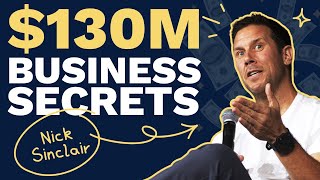
Transcript of a conversation between David Jenyns and Nick Sinclair about scaling a Philippines-based outsourcing company (TOA) to over $130M revenue, systemization, and owner freedom. Key themes: founder’s journey from financial services to TOA, the role of process and documentation before automation/AI, building dedicated process teams, reducing owner reliance, recruiting/talent throughput improvements, and cultural/identity shifts required for founders to exit daily operations.
Chapters
Get it up and running, test it. You've got to have some structure at the start, but then as soon as you're comfortable that it's working, document it and then look at how do we automate it and refine it and utilize AI for it.
Are you curious about how other business owners do it? How they build great businesses where they're not the bottleneck, they build strong systems, they hire the right people and really those people and those systems are the ones that drive the day to day operations. That's what we're going to explore today. I'm chatting with Nick Sinclair. He's the visionary leader behind toa, which is an amazing outsourcing company based in the Philippines who specializes particularly in accounting and bookkeeping space. He's been in the game for over 20 years, scaled his business to more than 130 million in revenue, removed himself from the daily operations and, and he's pretty much an absolute legend because he practices what he preaches. And I met him at one of his annual conferences, which is a TOA conference here on the Gold Coast. There's a good couple of hundred accountants there that were all there to work on their business, not in their business. It was a great audience and I thought I would love to turn the tables and share Nick's story with my audience. So very excited to have him. So I suppose first things first. Welcome to the call, Nick.
Thanks for having me. Super excited.
Maybe just to start, I'd love to know if you see yourself as a systems person, is it something that naturally comes to you or. Yeah, if you don't see yourself as.
One, I'd say yes and no. And by that I mean no in the traditional sense that I was never, you know, everything needed to be documented and follow a structure. But yes, in that I'm a very routine and structured person. So without having things documented, I do follow process and systems. I just never saw myself as, you know, build the system and then roll it out. I was always, let's build the plane as we're flying it.
Yes.
Yeah, that's why I say no. I'm not a systems guy because I haven't built it. First I actually do it and then I refine it and. But I am very structured. So I do see that I am a systems person. Deep down. I just, Yeah, I wonder if that.
Comes from your financial background. I do find there are certain industries like accounting and engineers and people with military backgrounds and things like that. There's certain spaces where people are just naturally wired. Because I'm Imagining in the accounting space, there's a way of doing things. There's a process for just about everything.
Yeah, I probably put it back more towards my upbringing in sport, because sport I used to compete at the state level and national level and, and it was very structured and there was a, there was a routine and there was a process. Every training session, every swim session we did, everything followed a system and a process and it gave you that discipline. So I think it's almost from my background originally in the sport, and then when I got into being a financial planner, we were very compliance driven. So everything had to have the box ticked. So I think that gave me that, that structure. But yeah, I'll probably link it back to sport first because most successful sports people that I know follow a very structured, rigid routine. Like even I'm training for a half ironman. It's how do you do nutrition? And you gotta literally build the process. You know, have this much of this much protein at this time throughout. Like everything is, is very structured, which is to a degree. System.
Yes. Yeah, I, I love that. I'm curious with, because you mentioned you started off then in the financial planning. So was that, that was pre toa. Is that kind of like you did that and then from that TOA was birthed.
Yeah. So I ran a financial planning business and then I ended up buying a, an accounting firm and putting it in because we got sick of waiting for accounting firms to do their work. I thought it wasn't that hard to run one. And then we had mortgage breaking, we had property buyer's agents. And then I built my own back office in the Philippines. And that was sort of. I had friends and industry colleagues then saying, look, we don't want to go and set up in the Philippines. Do you have some spare desks? And I said yes. And I said yes enough times that, you know, we went from nothing to four and a half thousand people 12 years later and growing still at the same pace we were at the start. So, yeah, I ran a financial services business is the way that I say it, and did.
Like there was obviously a point where TOA outgrew the other work. And then you, I'm assuming you kind of just switched gears or. Yeah. How did that kind of work started off as a little incubator project before it kind of became the project.
Yeah. So I set up my own back office. And it was only about six months later a friend of mine, Rob Nixon, who coaches accounting firms, asked me to go on a roadshow with him. He was doing a Tour called Capitalizing the cloud. So this is when cloud accounting was becoming a thing. And I knew that I could learn from the 1300 accountants over three weeks. So I said, yep, I'm happy to come along and put me on stage, talk about what I'm doing. And after the first one in Newcastle in Australia, he said to me, I had five firms come up saying, look, love what you do. We don't want to set up in the Philippines. Do you have some spare Deaths? And after three weeks, I'd sold 90 roles and then.
180 the next year and then it doubled again to like 400. And it was at that point that I was like, I, you know, TOA was my second job. I called it like it was my night shift and blended into the day shift. So I was working like crazy hours and. And it couldn't. I had young kids, it couldn't go on. So I had to make the decision, which one did I want to do? And it was really. My parents lost everything when I was 18, and I had a very real passion for helping people never have to go through that again. And I went, well, if I can impact accounting firms by giving them capacity, they can help people like my parents so that they never went through what they went. So that was really where I went. All right, well, the financial services business, you know, it's not really that scalable above and beyond me, but this business, I could scale it to whatever I wanted it to be and it would be not reliant on me longer term, et cetera. So decided to merge and exit out of the financial services and then went all in on toa.
Feel like you picked your timing just right. I think just about every accounting firm in Australia now has a lot of their back office functions happening offshore and like, it's commonplace now, but it probably wasn't as commonplace back then.
Oh, look, there was, there was no one doing it. There was one other provider that had like 20 staff in the Philippines that served the Australian market when we started. And you know, when I was on that stage for three weeks, I got booed off stage in Adelaide. I got pulled back up on stage in Melbourne twice because people were so anti. What I was doing was taking jobs away and it was sweatshots and it was, you know, all sorts of things. And the amount of people. When I asked who's offshoring at the moment, like in 1300 people, there was probably like three. Yeah. And over the years we've educated the market, we've shown the market it's not about cost savings, it's about access to talent. There's a huge talent shortage in this industry in all countries for the accounting segment. So we've educated, I say that we've been a huge part of educating the market to now, I would say probably 85 to 90% or more of accounting firms have global teams. Yes.
Yeah, I think, I mean we've been a big proponent of building teams out of the Philippines. We, I used to do it in the digital agency space and I mean it just gave small business a margin for error that oftentimes they don't when they're recruiting locally and then that enables them to expand and recruit more Australian based team members that are supported by offshore staff. So I feel like in the accounting space it works incredibly well because you can have the local staff that are dealing with the clients doing the relationship management and then some of the back office staff is handled, you know, by some really talented individuals. So you spotted that trend change. I kind of feel like it's. We're at an interesting point right now. There's another huge trend change that's happening now with AI. I'm really interested in your take on, you know, you were early to market spotting that as it was starting to turn and really sort of drove it. How are you seeing this opportunity as well when it comes to AI as in it, it starts to reshape every role, every industry. Yeah. Do you have any insights there?
Yeah, AI is interesting. I mean our CIO that works with us has said, you know, AI is not new, it's been around for 20 years.
Yes.
We've got data scientists that are part of our team. We do predictive analysis. We can Predict with a 90 plus percent accuracy on when a team member is going to resign. Like we've got a Data team of 10 plus people just crunching data and running AI models, if you want to call it that. So we're pretty entrenched in it and have been for years. Is it going to significantly change the industry 100%? Is it going to. I mean there's a shortfall of hundreds and hundreds of thousands of accountants a year. So the AI is going to take away a lot of that deficit, but it's not going to replace accountants.
Yes.
I think this is the one thing that I think accounting firms as an industry don't always do well is the customer experience and the customer service. Because they're so buried in doing the work, they don't have time to keep clients up to date. They're not proactively Helping clients. So I actually think AI, along with the human connection is going to just power the industry to a new level. It's going to be very different. The roles will look very different. A lot of the process and routine work that is accounting, that is, there is only one way to do things, will be automated. But it means that I believe the industry can be so much more valuable and can completely transform the relationship they have with clients, as opposed to it just being, you know, fill out my tax returns and submit it because I have to. It'll be a lot more beneficial to the client.
Yeah, definitely. The. The future of AI. I love this intersection with process and because, I mean, I think about everything through the lens of process and I mean, you talked about some of those processes going to the machines. As you've grown toa, and you've kind of been a systems person since the early days, since your sport. Did you bring that process thinking into toa? Like, was that something that you consciously did or did it come from team members like you? I mean, you don't build an organization of your size without having great process.
Probably not in the early days, to be honest. Like, we were. I mean, yes and no. Like, a lot of our process was in spreadsheets.
Yeah.
I'm a numbers person, so a lot of our tracking and reporting and that was in there. And then we built process on the back of that.
Yeah.
We now have a process team. We have business analysts that review process. We have, you know, teams that, I mean, we've got a whole team that are just responsible for process and optimization. Did we have that 10 years or 12 years ago when we started? No. Was it even a thought that, you know, four years in, that we would start building those teams? Hell, no. Like, yeah, because I'm very much the sales and marketing and visionary. I'm not the detailed type of person. And process and systems, to me, is the detail.
Yes.
But I brought in really good operators and we built that consistency. And when I look back through our journey, we're far from perfect. You know, there's. There's times we've got things really dialed in like we are now, but there's times where during our growth, we were growing so fast that, you know, the wheels were falling off and we're just trying to keep the clients happy and trying to keep the clients even. And when I look back now, why, it was because we employed. You know, we've got 500 corporate team members that support our clients and our team members. When we had a couple of hundred, we really didn't have everything documented. It was how Mary did it, it was how David did it, was how Nick did it. It was. But we had enough people that have been around long enough that that was okay. Yeah. But then as we continue to grow from like 50 corporate to 100 to 200 to 300 to 400 to now 500, the wheels started falling off everywhere. Because you know, if you left and it was all in your head and it was the way you did and wouldn't be like, where is that document? Where's the system? Where's where is anything? And be like, I don't know. I was on our computer. Yeah, we didn't have it. So I learned really quick with just scaling and fast growth that if we didn't have that, we couldn't be consistent.
Yeah.
And boring and consistent to me means happy clients as opposed to chaos. And we went through the chaos because we didn't have it. Like, I learned the hardest way possible. I've got the scars because we delivered some pretty average service to our clients and because we're growing too quick and nothing was really structured. But when I realized that and I was a slow learner, we brought teams in to do it, we focused on it. And you know, now everything is, you know, everything in our business has a process. Yes.
Yeah, I think that fly by your seat of your pants. I mean, at the start, sometimes business owners crave that because it's exciting. Whether they crave it or it just naturally happens. But really what you want is, is the boring. You want the business just to work and follow process and not have that level of chaos. Was there a bit where you transitions like, I mean, it's really hard for a lot of business owners, especially when they're in it doing the technical work then to kind of step out and you know, do what Michael Gerber talks about, work on it rather than in it and really get out of the day to day operations in some regards. You know, if you're selling, you know, labor or leasing out team members, you're not in doing the books necessarily for the client. That's. So I kind of feel like you're lucky in that regard already. You're just one step removed from doing it, which would make it easier to work on the machine. But yeah, I'd love to hear about. Yeah. How you think about that and, and how you got yourself further and further away from the day to day operations.
Yeah, I think it's a real interesting one. I had a, I went on a 10 day trek with A good mate of mine who's exited and he said to me, he goes, nick, there's, you know, this whole working on versus working in is rubbish. Like most people never work on it, they're always in it. And we had like, over those 10 days, there was no Internet, no phones, you know, we had some great conversations. And I think the thing we got to. Because they're all entrepreneurs and the thing that we got to was at the end of the day, a lot of our identity is tied into the doing. Like when we start the business, it revolves around us. We build a team and then suddenly you've got other people doing it. For me, I love, like, I'm passionate about what I do, I love what I do and I love working hours. Like, I love just I can consume myself into it and I want to be the best.
Yeah.
What that meant is that the business relied on me because I was always in it and I always talked about not wanting to be in the business. And. And for five years I had a CEO that was running the business, but I still work full time in the business. Yeah. I was like, well, what am I doing? Like, he's the one running it, but I was co running it and just taking on other duties. Or I'd be the CMO for a couple of years or he'd get me to do special projects to keep me occupied and. And it was only when he left and I brought another CEO in and the rules were, nick, you need to get out and let me run it. And now I only have a meeting with him once a week and I'm not involved in the day to day and I'm out of it. The biggest challenge I found was I was bored because as an entrepreneur, as someone that loves creating and we almost create chaos a lot of the time because it keeps us involved. But when you've got systems and you've got process and you need to get out of the way and let people do their job. The biggest challenge was me and my leadership and actually going, you know what? I actually do want that. Yes. Because it's like, what do I do with my time, like if I'm not needed? And my identity has always been in this business for so long and I'm not really needed because it does run without me and I'm only doing the things that I actually enjoy doing and beneficial to the business. So for me, it was when I look back now and go, how did I get there? I probably could have got there five or six years earlier.
Yes.
But it was an identity thing for me. And it was an actual thing of going. I actually do want to build myself out of the business, which means that it can't rely on me and it shouldn't rely on me, and I'm not involved in it. And what does that mean for me? Because I'm used to working a good amount of hours because I love it.
Yeah. Did the push from the new CEO that came in, like, how did that come about? Was that them thinking, this is what Nick wants, or you said, this is what you want, or he's like, hang on, we can't have two captains here.
Or. Yeah, yeah, it probably came more. So I had my first advisory board in. In August 23rd. I was 54 kilos heavier than I am today. The CEO, the night before that resigned. We're in Texas, where one of our offices is in America, and he resigned the night before. Said, look, I'm not the guy to take us to the next five years. Like, we've got 100 mil. I can't take us to where we want to go. So we turned up to the advisory board dinner and said, look, you know, a CEO basically said, look, I'm out. And they're like, well, what are we doing the next two days? Because we're basically doing a full review of the business. And they reviewed us like a PE company would if someone was going to come and acquire us, because we wanted to have an outside opinion. So for the next two days, they then pulled it apart. Like, they absolutely told us everything that was wrong with the business. Too reliant on me to this to that. And they basically said, nick, the business is not in a position. There's two things that need to happen. You either need to step in and run it, or you need to get out and just let someone else run it. And at the time, I didn't have my number two. I didn't, because I wasn't the CEO, and it wasn't my executive team. There was someone that I'd. That we'd identified, but I hadn't worked with them, and they were too new in the business. So I said, look, I'll step back in the business. I'll do 18 months as CEO, and then I'll transition out, and then I'll legitimately get out. And I hadn't built the business. I'd built it for growth. I hadn't built it to balance profitability and all those things. So I wasn't really in a position or wanting to get out. But over those next 18 months, I then focused on how do I get this business to the point where it doesn't rely on me and someone else can run it. I put him in his coo. Nine months later, he was running it. I stepped out of CEO. And it was at that time that, you know, my advisory board had suggested it. When. When that happened is Nick, you got to get out and let him run it. And that was always the agreement. He said, I'll run it, Nick, but there's one condition is that you're not running it. I'm running it. So I want your help. I value your opinion. I need your help where needed, but I will ask you for it. And I'm running this, not you.
Yes, yes.
I was like, awesome. But that was that. But that was a challenge because it's great in theory. So then I went and started a coaching business because I was bored and I thought I wanted to, you know, I want. I needed to keep myself occupied. So I went and started a coaching business. I realized that it wasn't scalable and I built exactly what I actually wanted at the time in reflection, which was something that needed me. And then I'm like, that isn't what I want to do in five years. So I shut that down and then just got comfortable with having time to actually think strategically and read a lot more. And, you know, I'm training for a half ironman. You know, I'm training a couple of hours every day and that. That is okay. You're not. The team aren't going to see you as lazy and just off on a yacht and on holidays. The value I offer the business now, like the one or two decisions. And my coach said this to me five years ago. He said, nick, all you need to do is make one or two good decisions a year and that will make the business significant revenue. And I was like, yeah, easy to say, I make a thousand a day, mate. Like, you got no idea. Like, yeah, he had already been there and done it. So he did have an idea. I just didn't want to listen. And now I can. Those one or two decisions that I make significantly alter the course of the business. And it's only because I've had that space of space that I've been able to actually get to that point. But yeah, no one can prepare you for it because it's. No one's coming to your office and asking you to help with the fires because it's not your job. And there shouldn't be the fires if the process and structure is there.
Ah, hey, I Know you're tuned in right now, so I'll keep this super quick. But you like awesome YouTube videos, don't you? Well, there's not really that many YouTube channels that create great content about how to systemize your small business. So I want to make sure that you catch every video that I publish. So if you haven't already, firstly give this video the thumbs up and then go ahead and subscribe to my channel. You can even hit the bell notification to make sure that you're the first to know when I publish anything. So go ahead, do it right now, I'll wait a sec and then I'll transfer you back to the video.
Yeah, yeah, it sounds like, I mean you were in it, still grinding it out. Like were you in there pretty much from day dot up to 100 million. Like, I mean that the amount of change you would have watched the business.
Go through on that journey, even at working 50, 60 hour weeks. Because I love it. I work weekends. Like I didn't know what to do outside of that. Like yes, there's family and yes, I've never missed a kids event and all that sort of stuff. And you know, I've always been the present parent but outside of that I worked like I loved it. Like I'm genuinely passionate about what I do and I just love the value that we add and it has changed significantly. But now I look back now that I'm not in it and I'm, I can be a lot more reflective of what went right and what didn't. When, when we had chaos, it was because we had really good people without structure.
Yes.
You know, systems and process. When we launched our first agent a couple of years ago, that assists our team members with just, you know, I, what's my pay? What's this, what's that? Or what's this policy? It was a disaster. And everyone was blaming the, the AI or the agent. But what was actually wrong is that we had for example, a maternity policy, but it was written in five different documents, five different ways, it contradicted it. So when the agent went to regurgitate what it is, it was telling the wrong answer and a different answer every time. And we're like, everyone was like, oh, AI is crap, it's never going to get there. It wasn't the AI, it was our documentation. And that's what I say to any business owner. Forget the AI. Get your systems, get your process, get your knowledge, get all of that stuff in your head in a document. Then you can train AI without any of that. It's just a nice to have and it'll be a disaster. So, like, I learned the hard way.
Yeah, I love that. And I feel like that, I think, becomes. Before you can even approach AI, you have to get very clear on your process. You got to tell the machines to do something, and process ends up being the programming for the machine. So when you advise clients now, like, it's easy with hindsight to look back and go, oh, we should have done this sooner, or we should have done this or that. Like, if you had your time again, when would you start thinking about process and nailing that down? Because there's still an element at the start of figuring it out and product to market fit and trying to get some traction. Like, at what point do you think process really ends up just transforming a business?
Yeah, it's interesting because I'm launching a new. I've got a project on the side running with our talent team, with our recruitment team. And we're basically doing it exactly that at the moment where we're testing it, but we've started to, within a couple of weeks now, document it. So I think get it up and running, test it. You've got to have some structure at the start, but then as soon as you're comfortable that it's working, document it. And then look at how do we automate it and refine it and utilize AI for it. So I would say I would have done it a lot earlier. Like, a lot earlier in the journey, because a lot of the time, the problems that we have are actually because there is no structure. Like, there was something that happened yesterday within that project, and it was like, how did we not know that? And it's like, well, they've never been told about it, or they weren't in the original project team. They came in, like, in the last few days, so they haven't seen all the conversations that's happened in the last two weeks.
Yes.
Yeah. And I had this exact same example. I'm in a group called One Life Club, and I'm one of their facilitators of their monthly board meetings. And it came up in one of our meetings a couple of weeks ago that I was facilitating. This guy's like, nick, I've got an ea. I know they're not with you guys. And because you guys, you guys are accountants. He goes, but it's a disaster. They're hopeless. I've gone through, like, three of them. I'm like, yeah, cool. I'm like, so show me the documents that you get them to follow and the process and the systems. And if you want them to talk like you show me all of the knowledge articles that you've got, either in a GBT or you've got documented so they can understand it and write exactly like you. Because I don't have any of that. And I'm like, yeah, well you wonder why they're useless. It ain't them like, it ain't them. Like, forget all this fancy AI rubbish, just get that stuff, the basics. And I think, you know, that is the premise for what I say to all business owners now is get it on paper, it will evolve and change. I want. If it's not, you're not as a business evolving and changing, but just get what it is documented in a way now so that the team can at least follow the same thing. So yeah, my advice would be I wish I did it sooner. I probably didn't have the business, I definitely didn't have the business maturity or knowledge, to be honest. It was probably when I started reading your book.
Yes.
That was where I was like, oh wow, there's like another level of this. And then I went to my team and I'm like, we need a process team. We need to actually build out a function. And they're like, what, you want to spend all this money on a team that do that? And I'm like, yep. And at the time we started a digital transformation and the, the IT team were like, yeah, we need that because we're automating stuff that, you know, there is no process or there's 15 people telling us a different way to do it. So we doubled down and went, right, before we can even do the really the technology innovation and the process automation, we actually need to get our process sorted. And nine out of the ten times when we had issues with the tech, when we were building out new tech and implementing it, it was always the process was broken or we're putting a broken process into new shiny tech or there's 15 ways of doing it and then suddenly the one way we put it in there wasn't the right way. Yes, I always say that, you know, start with the process, then look at the automations, then actually look at the tech.
Love it. How did you, whether it was for your team or when you're advising some of your clients, how do you quantify the roi? Because there's an investment in time, money, like resources, energy and sometimes it feels like, you know, the business owner, oh, it's just quicker to do it myself than to write out a process. Now I Think with AI, that's throwing some of that out the window now because it's so much easier. But to justify the cost of a person, like that's another thing. I mean, my new book, Systems Champion, I have identified this role, someone in the organization whose job it is to build systems culture and to get the team on board and to document. But it's like, how do we quantify the ROI on, on that effort? I don't know, you being a numbers guy, how you'd even approach that.
Look, I think there's some things that it doesn't make sense on a numbers point of view. It's a cost in the P and L, but in five years time it's actually a balance sheet item. And what I mean by that is the business doesn't rely on you. You're going to get a higher multiple because it doesn't rely on you. The business can run without you. So it's a cost, it's a hard cost at the start. But the reality is, is that the owner's reliance and the owner's time, that is what shifts over the years. And I think that I just simply look at it. The easiest way that I look at is an owner's, I call it the Owner's Reliance Index, which is how much profit do you make divided by the number of hours that you work in the business?
Yes.
And what should happen as the business relies on you less is your hours go down and the profit goes up.
Yeah.
So that number that you make technically per hour will go up. Yes. So that is where I say, look, you know, yes, it is a cost. And like we've got a, I don't know how many are in that team. There's at least five to seven of them in that team. Like there's a reasonable cost. A good chunk of those are in the Philippines, but they're highly paid. Like they're not that much cheaper than onshore. Probably about a 50% cost saving rather than 70. So you could still say it's a reasonable amount. Yes, but like we invest a good amount of money. Like we're talking hundreds of thousands of dollars in this area. But you know, it's running to the point where the business doesn't rely on any one person. Our business across every area, in every department is a redundancy. Like one person's out, it's next, next person up. Because it's literally here's the playbook, here's the system, here's the tech, here's the automation. So I think that don't look at it as I have to get an roi. Look at it as what is going to be the five year strategy for this and where do we want to get after 1, 2, 3, 4 and 5 years? And the first phase is not being reliant on anyone in your business. So if you have documented systems and process, the business shouldn't rely on a person. And no matter how good someone is, you should be able to go, thank you for your service. Next person please. Yes. You should never be, you know, in a corner because you rely on someone so much. So that for me is the roi. It's a cost, but the ROI comes with the business doesn't rely on anyone individually, then it doesn't rely on you and then it runs without you.
Yeah, I love even the way that your brain thinks, it thinks in a systematic way and the order like I heard it before when it was like document process and that happens before we go to automation, which then is before we go to AI. And then it's, it's like first we need to make sure that we remove that dependency. Like it's almost like it happens naturally for you. And I feel like the business owner can do some of their best work re engineering process and thinking about those new ideas that you were talking about. When they've got the space, but especially at the start, they're often the worst people to be documenting process. Like it sounds like you skipped that whole bit. Like I know a lot of us, we've all read the classics, you know, E Myth and Work the System and Built to Sell and Scaling up and they all talk about systems and for some reason the business owner defaults to think, well, it's got to be me that creates these systems because I know the way that I want it to be. You said something and it was almost just like a throwaway line. But I think there's huge insight in the fact that you just went and said, all right, I need to build a team that's going to do this for me. Not, let's not even throw one person at this, let's throw a few at it. Like, I don't know if that just happened or what kind of gave you that insight.
Well, it's even like this project I'm working on. So our talent division, we recruit anywhere around 180 to 220 roles a month. So high volume. We, you know, 18 months ago we were, it was taking on average 34 days to recruit someone, which industry wide is actually pretty good. It's now around 18 to 20 days. So we are like, when we talk to vendors and that they're like, you guys are world class. The project I'm doing now is going to get it to three to five days.
Yeah.
So the way that I did that is I think strategy and then I bring a team to build the execution. So I basically went, this is how it needs to work. This is the new structure. This is how we need to test it. You know, within two weeks, it's already, it's like so good. But then I've got the lady that runs that, our VP of our talent is basically coming behind me, if you want to call it, and going, cool. Here's the process and systems, here's the structure. Like, she's building the structure behind my vision. And I think that is the key of why you need a team to do this. Because as a leader, I'm certainly useless at detail. Yeah. I know a lot of entrepreneurs and that are. Some people are gifted with that skill of detail, but that's probably why they don't grow as quick, because they want to cross every T and dot every I before they do anything. So I've realized that, you know, for me to be able to run at speed and really implement and be world class is that I need that team that have that skill. And the lady that runs our talent division is phenomenal and she's got an amazing team that are great at documenting it. So I'm like, this is what I want to do. Let's test it. And then we test it and they're like, cool. Here's now all the documentation. Like, I got a 30 page PowerPoint the other day summarizing it all. I'm like, wow, this is awesome. This is just phenomenal. And then I talked about, you know, I want to tweak this and then should come back with, here it is, here's the step. We'll train the team. That's what we as leaders need. And that's why I love your content, I love your books. Because it is a role and it's. I call it a division. Like, it's more than a role when you're growing and scaling your business. And without that, you just scale chaos. And I scale chaos for years. I learned the hard way.
Yeah. Yeah. I think a lot of business owners, they, they miss this, thinking that it needs to be them. And the more that I've done this, and even I learned that with the Michael Gerber stuff, he's not a process guy, as in he doesn't like writing documentation and he Just realized that it was really important. So he started to surround himself with great process people. And yeah, most business owners, I mean, we all agree that process driven businesses are just better businesses for everybody. Yet the business owner goes, oh, but it doesn't work for me. Or I'm not a systems guy. Then they skip it. When really what they should be thinking is I need to then surround myself with people that are process people and that become the yin to my yang. They fill in where I'm not strong. And it's very common for great visionary leaders to not be great systems people. So. And they can still grow and scale, but. But it just comes from getting the right team.
I think you said something there. And this is a lesson I learned is that I'm not a systems guy, so my business doesn't need to be, but that means the business relies on me. And it was, you know, I was surrounded by a lot of entrepreneurs that thought that exact same thing. We were all buried in the business. And it was only when I went and started hanging around with, you know, I got mentoring by Dan Martell and coaching through him and went to a few of his private Masterminds with only 20 people. And I'm like, I'm the only idiot that's working in the business in this room. Yes. And I'm like, how's he doing what he's doing? Like he's going surfing on his boat every morning. I'm like, how's this? Like they're running at another level above me. So what I started to do is study the people that were ahead of me. And they all had a common thing, you know, they all had EAs. None of them were in the detail. They all had great, amazing teams that were great at that side of it, you know, And I was like, I'm the one doing it wrong. Because my business relies on me because I've built the business that way because it fulfilled my needs at the time. But if I want to run a real business, it can't be about Nick. It should be about everyone but Nick.
Yeah.
And that's where I realized how important actual documentation and having all of this stuff in order. Because before that I didn't need it because it was. It was the Nick show.
Yeah. Yeah. I love that I. We always talk about this idea of. Yeah, Are you a business owner or are you an employee of a business you own?
Yeah. Yeah.
It's really easy to get caught in that. That trap. I love. There's so many good takeaways from what we covered Here I almost feel like we'll need a part two, but, but in sort of the tail end. If you're speaking to a business owner that is still stuck in those day to day operations. I don't know if you have any final words of wisdom or inspiration because I mean no business owner gets into business.
Wanting to be changed to it. Like they all get into business for freedom, yet they generally have, that's the least they have of freedom. They're changed to it. So I don't know if there's anything, yeah, you might be able to kind of finish on to kind of help someone take that next step.
I think it's do the work on you. I think a lot of the time that, you know, for me it definitely was, is I, I wanted to feel needed. I didn't realize that until I actually was out of it. But for me I talked about running a business and not being in it and not being chained to it, but I, I didn't actually take the steps to do that. And the first thing was me and my identity and I needed to make that realization and I needed to get around people that had already done it. And you know, I needed, you know, books like yours and you know, software and that to actually enable that to happen. And so I think the first thing that I say to anyone is you need to change your identity. You need to be a, you need to run a business, not be in it. And then you need to put in place the strategy and the steps to get you out of it. And that may be five years and it may mean that you need to work 100 hour weeks to be able to get to that point and that's perfectly fine. Just have a plan that at some point it's not going to rely on you and take the steps to get there. Because otherwise if nothing changes, nothing changes and you will still be there. I can tell you it took me 20 plus years of running fast growing businesses that, you know, had all the awards and looked all great and I looked like I was traveling on holidays and doing all these amazing things and living my life, but I still had this chain around me. It was only in the last couple of years that I actually figured it out, which is it doesn't rely on me now and it can run without me and I'm not needed and I've got all this time now and that's, that's good. It's just a different challenge.
Just appreciate the vulnerability there and kind of, yeah, talking others through it who are in it and then that kind of helps them to go this is normal, this is part of the process and you can start to change. Like I, it's been great. I've mentioned just before we hit record like seeing, seeing some of your LinkedIn posts as they pop off and pop up and watch you drop that weight and just re engineer who you are. Like, yeah, it's quite the inspiration. So if people want to watch what you're up to and keep an eye, where's the best place for us to point them?
Pretty much all socials, Instagram, I probably post the most cause it's, you know, it is my life. I'm posting daily on that sort of stuff. So yeah, reach out on any of the socials. LinkedIn and Instagram are probably the two main ones and yeah, yeah, rock and roll.
Well, thank you so much for your time Nick. Really appreciate it.
Thanks for having.
Me.
More from David






Remember me? Subscribe To My Channel For More Free Business Systems Content 📈




