Top Australian Business Coach Discovers SYSTEMology
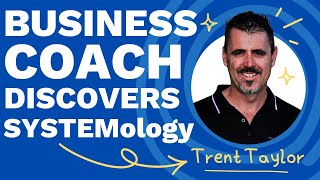
A recorded interview (YouTube) between David Jenyns and Trent Taylor about SYSTEMology and applying systems thinking in small-to-medium businesses. Trent describes his background (coach since ~2004, Teach It Forward since 2008, commercial pilot earlier), how systems enabled him to travel in 2014, and why he adopted SYSTEMology (helped find and place Lisa Hennessey as the first certified Systemologist). They discuss measurable impacts from client engagements: reducing accounting review points from ~6–7 to ~1.8 (saving ~1,200 hours per year for 300 quarterly BAS files), and improving supermarket buying error rates from ~1.2% to ~0.9% (aiming for 0.7% — a 0.5% improvement would save tens of thousands of dollars/week on ~A$1m weekly purchases). The conversation emphasises starting with one core system, measuring baseline and target metrics, and building client confidence via measurable impact (confidence before cash).
Questions this video answers
Around 2008.
In 2014 (he systemized the business for ~12–14 months beforehand).
From about 6–7 review points down to ~1.8 (per BAS file).
~300 BAS files each quarter (300 per quarter) and an estimated saving of ~1,200 hours extrapolated (across four quarters).
From ~1.2% down to ~0.9% (target was ~0.7%); weekly purchases ~A$1,000,000, so a 0.5% improvement would save tens of thousands of dollars per week).
Chapters
So we're talking point five. Yeah, that's not, not much. But when you got to think about that when every week of sales is a million dollars of purchases.
Yeah.
If we keep decreasing areas by 0.5% that equated to tens and tens of thousand dollars a week.
Hello. I'm super excited. I'm going to be chatting with Trent Taylor today from Teach It F Forward. He was actually one of the speakers on our business Systems Summit many years ago. One of our earliest supporters of Systemology. He's super sharp. He's got a depth of experience building businesses, coaching, advising. And really when he saw Systemology and we launched the certification program, he immediately saw the opportunity and helped us find our first ever certified systemologist, Lisa Hennessey. But before I get ahead of myself, I'll let Trent tell us the story. And so firstly, just want to welcome you aboard, Trent. It'd be great to hear a little bit about what you guys do at Teach It Forward. Awesome.
No, thanks for having me. Dave always had a lot of respect for you and everything you've done, you've always done very well. So yeah. Trent Taylor, Teacher Forward is our business where we do a lot of mentoring, coaching and training and obviously systems. We have a specific systems division which has gone very, very well. I also have a farm, I live up on the northeast, so hence unfortunately I've got my farming gear on today, so I'm wearing a few hats. But I'm really pleased to be here. And I think Teacher Forward's only got better or I think it's extended its credibility by associating with Systemology and offering the services help system wise businesses. So we've been going at it since 2008. More teacher for it anyway. And I think with Systemology I think it'll be two or three years. I think with you guys I'm unsure, but absolutely loved it and great to be here and share what I can with you today.
What made you like, because you've got a huge experience with some of your coaching background and stuff, was it, and I know you had read the Systemology book. Was there something that just kind of stood out for you or that that you saw that was the opportunity. Like I'd love to know if there's, yeah. Anything that you can kind of recall as to why you thought, yeah, you know what, this would be a perfect fit for Teach it Forward.
Yeah, well, I mean I could probably answer this in many different ways, but I mean one of my past lives was being a commercial pilot and you know Everyone has different personality types and I'm not one of those people who naturally, you know, follow checklists and systems. That's not my natural default system. But becoming a pilot I had to really adapt into that way and when I did I was really safe and great. But when I got into my high eye and talking to passengers or co pilot, that's where I got into a bit of strife. So that was really the introduction of geez, the power of systems is amazing. And then obviously coaching businesses since 2004 and just seeing trends of better businesses versus others just really indoctrinated that. I left normal life and decided to go and travel with my wife and family around Australia in 2014 indefinitely. And before I could do that I systemized the business flat out for about 12, 14 months so that I could do that with freedom and have the experience with the family while making money and then from there and I sort of got quite enamored by it. And I really started trying to help a lot of accounting firms because that was the area I niched in and helping them system. I was like just teach them what the four different systems are and, and really try to really indoctrinate them into that mentality because it is certainly one that is common with people who want a business that has leverage, it's not dependent on you every day and you can leverage your time and money. And then this good looking rooster from Melbourne, Mr. Jennings introduced me to the book and it was really cool. And I have to say look, and this is certainly not self flattery, I felt we were doing about 80% but like everything in life it's the 1 percenters that makes the difference. And some of the biggest mistakes I was making when helping clients system was you showed me how to do it ten times more effectively and I thought oh, how silly was. I should have just spoke to Dave. So now I just read the book and one of the simplest things that I loved that, that I picked up about it is just dial in on one area first, you know, just one area, one key major system. Take it from the top to the bottom and really get the taste. Like let them get the tastes and the wins and the successes so you can start to influence their, their mentality and their paradigm about the power of systems and then expand. Whereas I was trying to systemize the whole thing all at once and just creating more of a mess. But yeah, yeah, that's sort of where it came about. So it's a bit of an elongated history but there's, you know, just different stage in my life where, you know, I understood it, I was introduced to systems or then I, you know, had to use them to survive in the flying game. And then I had to use it to have some life freedom with my family and my growth. And then, you know, just felt the power and then, yeah, you just polish the stone beautifully. And I've loved it ever since.
I think what I loved most about the way that you approach it because as soon as we launch the certification, you're like, yep, but it wasn't yet for you to jump in and do it. And I, I'd like. You instantly approached systemology and this idea of getting a certified systemologist, but inside your business, you approached it like a business owner straight away, like you didn't hop on the tools. I'd love to kind of like hear a little bit around that thinking. Because you had Lisa Hennessy, who ultimately became our first systemologist, as in certified systemologists go through, and she was a rock star. You knew she was the right person and she actually really crushed it. And then she worked inside teach it forward to help clients. I'd love to kind of like hear a bit more about that thinking because it's quite unique.
Yeah, well, I think, I mean, it's a bit like, I suppose when I was in the, in the aviation game, I'm not naturally inclined to be, you know, a structured systemized person. And so it's not my natural default position. So when I saw this and because I was servicing, like if you think about the disk profile, you know, the dis, you know, the systems, you know, high asses love systems, you know, high Cs love systems. And, and you know, the industry that I was serving was the accounting industry. So I'm great at selling things, I'm great at creating the deals, I'm great at, you know, creating the bigger picture. But when it comes to the everyday, you know, implementation, that's just not my bag. And whereas I had the beautiful Lisa in the team and she did this for us in our business and it was just such a strength of her and a passion of hers. And I thought, hang on, here's a great opportunity to take someone in my team who just in a clinical, commercial sense was like a cost center. She wasn't generating any income, but she wanted to. And I just saw this as the beautiful synergy. And because she loved it, because we had plenty of opportunity for it, I thought, look, let's, let's open up this opportunity for a team member and you know, for us we could create A whole new division. And I really just, you know, it was just about sort of bringing another specific and needed offering to a niche that I was already serving. So I knew that if I went in there I would, I would make Systemology look bad. And I knew if Lisa and they, I knew she'd make it look amazing. So. And she just. Yeah, I mean, yeah, I think she was your first or one of your first graduates and yeah, just took it by storm and you know, just so proud of her. And I think, well, she's now working, she's now working at head office, so. Which I said, yeah, you've got to go for that brightness of future. This is a fast growing, amazing business. And yeah, so now she's with you, which is great.
I think that was again something that I realized because the system ology business that you grew there, it's like one of our top systemologists in the group. And I think what made it quite magic was the fact that you're out there doing the speaking from stage, doing the selling and you could connect with the business owners at that visionary leader level because you're also that guy. So you know how to speak their language. But then you've also, like me, been sold on. It's not the process of documenting systems, but it's the result that the systems deliver and you fell in love with that and that's what you're able to transfer. And then you were able to plug in Lisa before, like behind you to then do the execution on that. And I think just the way that you brought that together, it was just magic to see. And I know some of the clients that you worked with, like you've deployed Systemology in a huge number of clients. I don't know if, yeah. If you've got any insight into some of the impact that you've had on those clients by deploying Systemology in the work that you do.
I mean, yeah, look, I mean there's a, there's a few that come to mind. I mean, I know that there's one particular accounting firm, so they have to process a lot of people's accounts and do their returns across the year. And one of their core businesses is, for example, doing their basses and they have to do them quarterly for a whole bunch of clients. And one of the internal challenges for the accounting firms is when they do a file, they have two reviews, so a technical review. So if, if the team have done anything wrong, it gets picked up, it gets fixed up and then it's another review just to finalise yet ready for sign off. And one of the firms we were dealing with frosted client base are having an average of about 6, 7 what they call review points. Once we systemize it, we brought that down to about, I think it was 1.8 or something like that. Now you go, oh, that's only four, you know, 4.2. When you extrapolate that 4.2 and let's just say it takes 15 minutes for each area to be fixed up. For example, that was almost like an hour saving per bass. And when you got to do that, you know, 300 basses each quarter and then multiply that by four, you're looking at a saving of 1200 hours. Now accountants will convert that to a dollar and they'll say, okay, well there's 1200 hours of opportunity that they regain or that's one person we didn't have to hire or whatever it was. So that was a really good one. We also did a, we're just finishing off like a guy who owns a number of supermarkets. And so obviously that's one of the biggest key numbers of that is how well you buy. And obviously they're buying millions of dollars of stock every single week. And they had multiple stores, multiple managers. And so we said, okay, we decided let's get that buying sorted now. You know, all he wanted to do was, I think it was like the errors or the differences between the stores were something like you know, 1.2, 1.2% difference. And he said look, if we could get that just below zero point, zero point seven. So we're talking point five. Yeah, that's not, not much. But when you got to think about that when every week of sales is a million dollars of purchases. Yeah, if we could decrease the errors by 0.5% that equated to tens and tens of thousands of dollars a week. Yeah. So we, that we haven't got it to 0.7, but I think we've got it to about 0.9 now. So that for example has saved them hundreds of thousands of dollars from last year's errors to this year. So I think this, they're just slightly happy with what we're doing now and they're starting to look at a few other areas. So there's a supermarket, there's an accounting firm and we've done massage businesses. What else have we got? We've got a bike store. Predominantly accounting firms and bookkeeping, but mainly service orientated. But yeah, look, there's a concrete making business about start. There's a, there's A manufacturer of four wheel drive goods who's about to start. So we've obviously done a conveyancing company as well. So yes, quite a few different diversities. But I think that the key point is, and it's something that I had to really hone into Lisa and Jenna, who also helped me do this. But it's not about getting the systems in place, it's about the impact the systems make. And you know, I just focus on, to me, the number one thing for us as systemologists to get clear on is if you can help the client become confident in the power of systems, then you win because they will embrace it and they will take it on. And then if they, once they get that, and the way they get that confidence is to hone into the measurable impact the systems will make. So we always said, okay, well what do you want to systemize? How do you measure it now? And we got a number and we said, what do we need to get that down to? So that's something we did right up where we do the CCF and the drtc.
Yeah.
So that the partners. Yeah, I said, yeah, okay, well they had to get knowledge of the status quo and we had to know where we had to take them as well. So we had, once the girls started getting their head around that, that was, that was good. And then we said, right. Regular reporting, you know, fortnightly, weekly, for monthly, we wanted reporting in of what was the number this week? What was the number that, you know. So then each month as they're using it, even just going through the process because it was, they're in consciousness of doing their systems, the numbers, they're tested, measuring, we're always, they're always just getting better and better. And that just gives the partner confidence, it gives the team confidence, the system leaders thinking they're Michael Jackson or Madonna. It just builds, you know, confidence. And confidence always comes before cash.
Yeah. What I love most about that is it answers the question that we get asked all the time, which is how much am I going to save? Or how much am I going to make by systemizing? And sometimes it's a hard answer for us to, to give. It does depend on the business, but I think narrowing down and going, well, here's where you're at. And if we can improve this by this, then it becomes very clear. We often talk about the true cost of not systemizing. And I love the way that you articulated earlier with the accounting firm that saved the 1200 hours and it was like either that might be a new team member that we've just saved or there's the opportunity cost. Now that you've kind of introduced. That team member now has extra capacity to work on the opportunities and you don't know where the those opportunities can lead you. They're the ones that are also very hard to quantify. But I think it's important that we do quantify to get someone to go, yes, I'm going to do this and I'm going to get moving. But then there's a lot of other benefits that come that are harder to quantify that you only realize after the fact.
Yeah, I mean we live in a binary world. Up, down, cold, hot, you know, wet, dry, et cetera, et cetera. You know, the impact of systems is either going to be time or money. And that time will be time that the partner says it could be frustration time, it reduces, it could be time the team get back to create opportunity costs. So the most important part is to ascertain what's the most important, what's the thing that most valuable to the owner who's going to decide whether to do it or not. Where's their emotional connection, where's their emotional anchor as to why they're making the inquiry to you? So you know, ask those questions to get down to that because you know, once you can demonstrate some improvement in that, again it's, it's, it's not about them thinking we're so good and we're the best system, you know, systemologists. It's more about what I want to leave them with is that they now have really tasted the impact of systems. Yeah, systems, you know, the better, the better organized we are, the more systematic we are, the more time freedom we have. So, you know, one of my very cool instructors overseas when I was doing a bit of a health retreat, always said to me, discipline equals freedom. I didn't quite meant because I always felt discipline, you know, meant that I couldn't do all these other things and I was always caught up. But then I really realized that the systems is that. Yeah, well, if you do the systems and you do it properly, you can leverage it, you can, you know, you get more time and that is where the freedom comes. So yeah, very powerful. I should get off the horse. Shut up, Trent. No, I love the work that you.
Do and I love the insight that you have because you, I mean you already came to us pre baked with systems thinking and now you're looking at the work that we do through a different lens. So appreciate that insight. If business owners want to learn a little bit more about Teach It Forward. Best place for them to go.
I think you just go to the website, mate. Teach it forward dot com. Yeah, jump on there. And if they want to have a chat, I'm happy to help out.
Yeah.
Not actively looking for new clients, but if there's. Generally, I like to have some sort of, like what I call a discovery call. That's where I really just chat to them and understand what business they're at and what they're looking for. And I'd say probably six times out of 10, they don't need me. They just needed some perspective or some different guideposts to look at some perspective change, which I'm happy to do because I've stood on the shoulders of great mentors in the past and, you know, of some of them and I just feel grateful. Any opportunity I can give back, I'm happy to have a chat and. And help people out. So.
Perfect. Thank you.
Jump on the website. That's easy. That's the easiest way. You'll see my phone number there. If you want to call me, give me a belt.
Yeah. Well, Trent's definitely one of the good guys. So, Trent, I appreciate all the great work that you do and looking forward to doing some more work together in the future, so thanks for your time.
Absolutely. Thanks, mate. Thanks, Dave.
More from David






Remember me? Subscribe To My Channel For More Free Business Systems Content 📈




