Ultimate A.I. Guide For Small Business Success
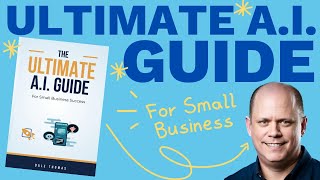
Dale Thomas, founder of Actionable Ops, walks through how small businesses can actually use AI without chaos. Start with documented processes, pilot low-risk projects like knowledge bases and email automation, and keep your sensitive data out of the tools. Regional regulations matter: NY, Colorado, and California have different rules.
Chapters
Because there's a lot of people out there that are still very fearful of AI. So this is one way that you could start getting them involved with how AI really works and showing them that it's not this big scary beast that they really should be fearful of, but start showing them how it can solve some of these different use cases to really start making an impact across the business.
Hello and welcome. Today we're going to be exploring some real world applications of AI in the small business space. Space. I know a lot of business owners, they get that AI is here, it's disruptive, it's going to change the way that we work. But then you just get stuck like a deer in headlights, not too sure what to do or where to get started. There are just a lot of different options. So that's what we're going to explore today with my guest, Dale Thomas. He's the founder of Actionable Ops, also the author of the new book, the Ultimate AI Guide for Small Business Success. So first things first. Welcome to the call, Dale.
Well, thank you very much for having me. I'm really excited to be here.
Yeah, perfect. Well, maybe just to start, I'm curious, do you see yourself as a systems and processes person?
I am totally a systems and processes person. Operations and processes, that's my jam.
Yeah, I'd love to get your take on when we think about AI and where that's headed, where systems and processes fit into the mix there because your brain naturally defaults. I know with your previous work, with some of the Actionable Ops stuff, you think in terms of process and I kind of see that process is almost like the step before AI because you need to tell AI what to do. I'd love your take on that.
Well, I think that's actually right. To start leveraging AI and whether it's automation or using agents, you have to create those systems and processes. You have to begin with the end of mind. Even today I was building out some agents and some classifiers for some data. And it's all about understanding the systems that the data is coming from, systems that the data is going back into and then the process of how it's going to get in there and what your overall goal is. So as a systems guy, I think AI fits right in, right into what we're doing there.
Yeah, the, that first stage and you kind of talked a little bit about it there. Like when you're working with someone, sometimes uncovering the opportunities, how do you kind of go through that thought, thought process, working for a business, looking for the low hanging fruit and opportunities for potentially they're already doing activities and tasks in the business. They may have even documented what it is that they're doing. And now we start to think, okay, well this is low hanging fruit to have AI step in.
Right? Well, so I had a potential client come to me today and the thing I asked them for, I said, you know, give me the, the, the jobs that you want, don't even think about it from like the AI perspective, but give me the jobs that you want done and just list them out as, as tasks. So he provided that and provided that to me today. It was a financial services company. And so my next question is, after I, after I looked over that list of things that he wanted done, it was I think a great list and I'm really excited to start going down this path with them is my questions were all about, you know, what are the priorities? What's the low hanging fruit for you guys? What's going to be like the biggest impact that's going to save you guys the most amount of money? And let's start taking a look at those and then we can start figuring out how to really kind of scope out and do some of the larger things. But let's do the easiest things first. Have the most impact first. Yeah, I've been with them and you'll.
See that from an AI perspective more than a lot of business owners. Also like you'll go, ah, you know what, A custom trained AI bot would work really well in this application. Or we need to think about maybe some automation or creating a workflow if, if you kind of think through the business, maybe even in terms of departments, marketing, sales, operations, finance. And are there any immediately obvious, almost like universally applicable opportunities for applying AI in some of those different departments?
Yeah, I think from like just a general perspective there's, there's a lot of opportunities you can, when I just think of, start using like some of the easiest use cases is creating knowledge bases that the AI chatbots can interact with. So if it's an HR knowledge base that has all of your HR policies in it, or if you're a customer support organization and creating a chatbot that interacts with the knowledge base so you have all those immediate answers right there. And then you can develop knowledge bases around training or training workflows that some of the different roles can use or some of the different departments, whether it's finance or hr, those are like the easiest. First, of course you can use AI within your email applications and roll that out across, across the different functions. There's great tools out there. I personally like using Shortwave as my email client, and it's probably the most amazing email client with a AI integration in it that I could see every organization using as part of their tool set.
Yeah, some of the other departments, because I think chatbots trained specifically for roles, customer service type roles, really any role. And you can take SOPs and train a particular chat agent for every team member to have a support agent to help them get things drafted up and to answers quicker for themselves and also for clients. And then I suppose the next step after that is almost like specific use cases where a particular task is happening and the person is doing the thing. Sometimes that can be crafting a series of prompts that help them do the tasks that they're already doing a little bit quicker. Other times it might be looking for custom solutions that might be already programmed out of the box, like the email client product that you mentioned just there. How do you think about. Yeah, once you kind of tackle some of those first easy ones, and then it sounds like the next step is to chat with the business owner and go, well, what problems have you got? What are you doing? What? And I don't know if you have any advice for the way that the business owner might prioritize what they've got, because they've oftentimes got an infinite number of things that they could be doing or are doing, and it's sometimes hard for them to know, well, what can it do? And where do I start?
Right. You know, first step is listing it down. Get those ideas down on paper. You know, I personally, I'm a, you know, data guy, so I love spreadsheets. And just like this client sent me all their list in a word doc and I put it into a spreadsheet so I can start adding my columns. And I recommend doing that is, yeah, get at least out of your head into a document. Start socializing it with your peers. If you're a leader, some of those are around you, you're on your team and see what everybody would like to see it do, and then do it collectively. Because there's a lot of people out there that are still very fearful of AI. So this is one way that you could start getting them involved with some of how AI really works and showing them that it's not this big scary beast that they really should be fearful of, but start showing them how it can solve some of these different use cases to really start making an impact across the business.
Yeah, and I feel like that way to Engage the team because it'll start with the business owner, but then even asking the team what it is that they're doing and getting very clear on specific tasks and asking the question, well, how will AI help you do this? Faster, cheaper, better? This is better for you because it helps team members then work on higher value tasks. So I think going through that exercise, do you have any other ways or suggestions on getting the team on board or do you mainly kind of work with the business owner? Yeah.
It'S a little both. It's generally the business owner but you know, it's starting with the educational piece and whether you're creating some kind of workshops or training to, to demystify AI. And I think that's really where it's at because again people, you know, most people by now have heard of chat GPT, some of them have played with it, but, and that's really what they think like AI. And it really is. But that piece of gen is really a small, small piece as you may know, you know, to the larger AI ecosystem. So as, so start with the education piece and then show them some of the real world examples where AI has really made a difference and make sure that they're involved with this process. You don't ever want, you know, to exclude the team. I think especially when you're talking about AI and then start doing a gradual implementation of it. I would never just completely roll out a massive AI project, but maybe small, small projects or you know, to your point when you start talking about different types of like customer service prompts or sales prompts and then go on and do bigger and bigger projects, low risk projects, until it's time to start rolling out some of the heavier projects and then making sure that you're, you're providing some of those ongoing, ongoing support to, to your users around AI and the changes. But I want to make sure that, I think it's also important as you have these conversations, part of the conversations need to be around ethical AI, responsible AI and making sure that there's guardrails in place for how you use AI and talking to them about not putting customer data up in tools like ChatGPT and anything that's private or sensitive because you don't want that data to train those models. So you need to make sure you also have policies in place around how you're going to use AI in your workforce and make sure that you set those expectations with your employees so they know how they can use it. Some, some companies are just won't use AI at all because they're fearful. But if you're a company that is pursuing it, you know, learn about some of the challenges with, with AI. As far from a security perspective, where is that data being housed and if there's any regulations around it, it's. If it's in Europe, you know, you have GDPR and the chatbot that I use is based out of Germany and they have a lot more strict requirements. And then if you're here in the states, I don't know, you're based in Australia, right?
Yes. Yeah.
I don't know what the Australian landscape looks around, looks like around regulations. But even the us, some of the different states, New York, Colorado and California are top of mind, are starting to roll out the regulations around AI and you need to, as a business owner will need to be at least aware of those, especially if you fall into a state where there, there are regulations. So you need to understand from a ethical or, and a legal perspective some of the, the ramifications of using AI and you make sure you use them responsibly.
Yeah, I kind of feel like the first step for many business owners is just starting to have this conversation amongst team and get them to test things out and do research. And that's really to get the ball rolling. Once someone does get the ball rolling and then they start to see some of the wins that can be had. What other sort of case studies or stories have you had where you worked with clients, you've identified a particular problem, applied an AI solution, and what sort of outcome or result or saving can be gained by getting AI working in a business?
Sure. You know, if, if you listen to some of the other podcasts, I've done one of the, the, the best use cases that I love talking about and it's a really simple use case and I think that's why I love it because it's, it's simple, it's easy to do, but I think it makes a lot a big, big impact. I've had two organizations come to me that want to do survey analysis. So they want to survey their employees about whatever it is and then taking that data. And a lot of these survey tools, whether it's, I think it's called SurveyMonkey or Zoho Survey, they have some of the analytics behind the surveys and you can see some of the different charts and graphs, but doesn't really, I think, tell you the story. And when you can take that data and then you can have AI actually review it for you, I think it tells a completely different story because you could do sentiment analysis on the free tax forms and really start understanding what your employees are thinking, even if they're not directly saying it. And one employee may use a particular phrase that it doesn't really get on your radar. You don't really think of anything of it. But if you have several employees across the, employees across the board that are saying similar things, but it may be just so minute that you don't pick up on it, sentiment analysis could really help start telling that story about how do employees really feel. It can help guide you as the business owner, whether you're an HR or you know, whoever's managing that survey, how you can guide employees and how you can work different employees with different employees just based off of these survey results. I know it saved a company that I was talking to who was going through union negotiations quite a bit of money because they really understand what, what the pain points really were with their, their employees. So they knew how to talk to the, to the union that they were working with. And I'm, I'm trying to be a little bit, try not to give too much information about that particular client. But, but it, it saved them a lot of money because it, it, it saved them a tremendous amount of time because of how quick the AI is on, on, on peeling away the onion on your behalf. And it's just, I think it's an amazing way to use, to use AI.
Yeah, I love that.
And most people don't think about it.
Oh, hey, I know you're tuned in right now, so I'll keep this super quick. But you like awesome YouTube videos, don't you? Well, there's not really that many YouTube channels that create great content about how to systemize your small business. So I want to make sure that you catch every video that I publish. So if you haven't already, firstly give this video the thumbs up and then go ahead and subscribe to my channel. You can even hit the bell notification to make sure that you're the first to know when I publish anything. So go ahead, do it right now, I'll wait a sec and then I'll transfer you back to the video. Have you got any, maybe even another couple of case studies or use cases like that? I think they're prime for someone to go, oh yes, I can see how that might work for me. Is there anything that might be part of regular operations within a business? Whether it's like I said, sales, marketing, operations, and the one you mentioned there probably could touch on HR and management, but yeah, what other things have you Seen.
It'S so many different things. Recently I was working with a client on helping them build out an agent that will help them write SEO content for the website. And so it'll help you provide it just a few keywords or kind of topics that you want to, you want to write about. It'll go out and do all the research on those keywords, finding the right keywords that have a lot of potential to them and then it'll follow the strict Google guidelines around writing SEO content. It'll write the content, create the images if you want, and then it'll automatically publish it to your WordPress site and you can have it either in a draft mode or you can if you trust it, which I don't ever trust AI enough to just automatically publish on my behalf, but you could have it publish the, the content on your behalf. So I'm seeing a lot more of that type of thing of more automation and more agents versus just going to chat GPT or whatever your chatbot is giving it some, some prompt and then coming back and copy and paste in the different work in customer service. More chatbots are coming online, whether it's, excuse me, voice chat and you know, one of the, I think the greatest use cases and they've since pulled it and I'm not really sure why was the McDonald's and in their drive thrus, at least here in the States, they were rolling out voice AI in their drive thru so you'd go up and instead of ordering from the kiosk and from some angry teenager that didn't really want to be there anyhow, you had a fairly happy AI voice to talk to and I thought it worked incredibly well. I never had an issue. It worked well. I got through, through the drive thru faster and I, I said if this is how you know businesses are going to start implementing AI from like a voice customer interaction perspective, this was an incredible way to do it. But my understanding there was a lot of edge cases where the McDonald's voice AI wasn't doing what it was supposed to be doing, which is why to my understanding, why they pulled it. I'm seeing a lot of customer service companies start leveraging voice AI to answer calls, make calls on their behalf, do appointment scheduling, which is something that I haven't done yet, but I have the tools to do it and I'm looking into it and finally finding the right client to do that with, where I can start scheduling on your behalf or making calls and then scheduling, which to me is an amazing use case. The shortwave Email client that I referred to earlier will, one of the coolest things that it could do is. And I did it even earlier today when at scheduling a doctor's appointment, as I'm walking, I just told the email client, schedule appointment for Thursday at 8am or whatever to go to the doctor. And I did it, put it on my calendar and I was, it's the simple things that I was blown away by it. And that was, that was one of it. Because I had not seen a tool work so well to create, to schedule appointments.
Definitely sorry. Literally hundreds of, if not thousands of use cases. And every team member, every business owner will look at things differently from their particular position through their lens, thinking, well, what am I doing and how can AI save me a little bit of time? And then all of this time just starts stacking up. You save a little bit of time there, a little bit of time there. You rework a workflow, it might start off with a series of prompts and then you might evolve that into workflow automation that stitches a whole bunch of things together for a huge outcome. And you mentioned some of the voice AI, the technology is there and it's only improving. If we kind of zoomed a little bit down the road and thought about the future of where this is going on. I know it's very hard to predict. I know a lot of people thought AI was going to replace or the last thing it was going to replace were all the creative things like graphics and music and all that. And it seemed to go for that first. So I know it's hard to predict, but what are your thoughts on trends that you're seeing or hey, this is what a small business should be thinking about or getting into place now because this is how to prepare themselves for this AI future.
The future is gonna. It's so hard to tell because I mean even six months ago, a year ago, I don't think anybody really realized where we be today with it. So who knows what it's going to look like in six months and not to try to sell the book or go on about the book. That was one of the things, one of the reasons why I didn't make it this really big book. And I called out in the book and I wrote about it that by the time that I knew I would hit the streets with it, that a lot of it would be out of date. And it's already starting to become out of date because the technology is changing so fast. I see that, you know, with, with the text to video generation that's Just going to continue. I have a lot of concerns, but a lot of excitement as well because I think, you know, within a year, maybe two, you will be able to give some kind of text, a video prompt, create your own movie, your own TV show, and you can watch anything you want to watch anyway, with any actors, and it'll be exactly the way you want it. That's really exciting, but also terrifying at the same time because the technology and going back to like voice AI is going to get so good. There's going to be more ethical issues coming on or scams or, or criminals coming online using it, especially around deep fakes. And that's, we need to be mindful of that as we leverage this technology, that deepfakes are just going to get better and better. And there will be a day that I can get a phone call, whether it's my wife or my daughter, and it's going to be their voice, their, their phone number showing up on my phone. It's going to sound like them, maybe even I will think it's them. And it's going to ask you to do something that they would normally not ask you. And that's, it's absolutely terrifying that it could possibly happen because especially with these deep fakes that are out now, it's sometimes hard to tell. As much as we like to think we're, we're super smart. But so that's, you know, I think that's going to be a big future. Part of future of AI is some of the things that we don't, that it shouldn't be used for and people are going to get, just get smarter and better, better about it. And just to take a step back before, while I was thinking about it, we're talking about responsible AI in the workplace, business owners and anybody using AI needs to just be mindful that it's just AI and it should never replace human interaction. But we also need to be monitoring what AI does. I will never publish a piece of literature or anything that it ever gives me without really reviewing at first because of the hallucinations that AI can do. And as more and more AI generated content gets online and I think, you know, there was one time that I think Google was really opposed to AI generated content. And then they came and said, well, it's okay as long as it provides value. But there's so much bias in these models. And as you put biased information out there that's going to train models to become more biased. And then it's just, and somebody was telling me there's an actual phrase for it. But it's just going to keep compounding and at some point we need to kind of, and I'm certainly not smart enough to tackle that, but the really smart people are going to have to figure out how do we start reducing a lot of this bias in the, the AI models that are out there.
Yeah, it's interesting to see the way the different companies are approaching this. I mean at one end of the extreme you've got X releasing Grok and just recently, you know, this untethered, uncontrolled image generation that we're seeing off the back of that. And then you've got at the other end of the spectrum where people are being a lot more thoughtful and slow moving and it's, I mean it is happening. And I think the best thing that business owners can do is think about what it can do and become aware of it. So at least then they can be more tuned to spot things like one spotting opportunities in your business. If you understand what the technology can do then it makes it easier to spot those opportunities. And then also if some of the scams and some of these other things do pop up, you just, you need to be aware.
Yeah. And there's a. So on my website on actionableops.com there is a business advisor and what I had done is, is created a form where business owners can come and share some information about their business, like what type of business they are, you know, where they're kind of at with AI and what they're looking to maybe do. Maybe it's with marketing or HR or some of the different areas that they would like to roll out AI and it'll email them a an AI generated document. Exactly to your point as far as some of the use cases, some of the different tools that might be available to and the whole thing was to get business owners to realize what it possibly could do. Even I still do that. The list of tasks that the client sent sent to me earlier today, I still put it in AI and said, you know, how would we solve these different problems? What's the tools that we would use? Because I don't think you know perfectly or I don't know every tool out there and it had come back with like using image classification on one part of their, one of their ass, which I had never thought of. And I'm like that's exactly how we sort different documents and recognize different documents as using an image classifier. So it was great to see that coming from the tool.
Love it. Well, I'll pop a link through to your website, people can kind of dig in and link across to the book as well. Yeah. Appreciate your insights today. Some warnings and some suggestions on applications as well. So thank you.
Absolutely.
More from David






Remember me? Subscribe To My Channel For More Free Business Systems Content 📈




