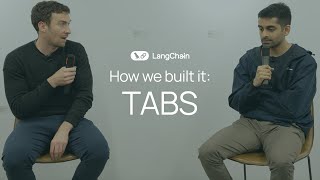
Tabs CEO Ali Hussain's Interview with FOG Ventures CEO Casey Woo
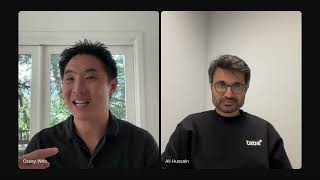
Ali Hussain interviews Casey Woo, CEO of Fog Ventures, about its operator-led investment model backed by 2,000+ senior finance and operations professionals. Fog bets on B2B infrastructure tools operators actually use, validates product-market fit through customer reference checks, and provides post-investment support via direct introductions to its network.
Chapters
Pretty, pretty good in West Coast.
Got it. I think if there's one, every time there's a debate, this is the year where what I hear is this has been one of the warmest Bay Areas ever. And then I mean everything, New York, Boston, Chicago, DC. I mean, it's just, it's been miserable this year.
Thanks to global warming.
Only on one side of the aisle.
Yeah.
Amazing. Well, it's so good to see you. We're obviously You have Ali here, founder, CEO of Tabs. Kasey, I've known you since we started the business. You've been an inspiration both as a former CFO, but also just someone who's always been a great thought partner of what you and your massive community have seen as problems in, in this space for real operators that are looking to solve challenges for their businesses where technology, artificial intelligence can add real value. I guess to just kick off, Kasey, obviously, Obviously, I know, and I'm very familiar with Fog, but for a lot of first-time founders, operators, funds, like what exactly is Fog Ventures? And would love to just kind of hear the overview of the mission from the founder himself.
Yeah. Fog was birthed out of the Operators Guild, which is the preeminent community for the CFOs, COOs, and early founders of tech. I call them the scalers. They're like the horizontal specialists. And what I realized as being a former investor at hedge funds and then being a CFO is that over time, money has become more of a commodity. Tech has become more prolific. If you're a good founder, if you have a good product, you'll get funded, especially the good ones. What has become more imperative is the strategic value, which is talked about a lot. But basically, it's how do you get them more customers, and how do you get them more talent to execute on the big large valuation they just got. And so FOG is a for operators, by operators investing group that specifically is attuned to signal. So we focus on literally the products we use, B2B infrastructure. And because I've always believed the best diligence is asking the customer or prospective customer. We get very, very unique signal, fast, highly accurate. And then of course, from there, how do you help the actual company if you invest? That's exposure, product feedback, amplification of messaging, or I would call evangelism. But in the most pure form. It was already voted on before. It wasn't like, we invested, so you must back them. We loved it already. POG is extremely attuned to, um, buyers and builders.
No, I love it, Casey. And obviously, um, I've been familiar with the Operators Guild for a long time, even well before I founded Tabs. Um, just for many of our users, I don't think they for those not familiar, they don't even appreciate the size of the community. Like, put it in some numbers. Like, how many members roughly are we talking across both FOG and OG, just to give our viewers a sense of the scale, the amount of data you all collect as a firm?
So OG and FOG are separate, but it shares members. Uh, in total, I would think it's in excess of 2,000 individuals, uh, over 20 chapters, physical chapters around the world. That follow the tech density. So, SF, New York, LA, on and on and on. Yeah. And it's made up of a very high concentration of director, VP, C-level, finance, operations, special ops. So, that's chief of staff, biz ops, rev ops, so kind of internal consulting. And then you have early founders. What they all have in common is that they are what I call specialists at being generalists. Generalism is a kind of a weird term, but it's no different than Special Forces for Navy SEALs. They go, they go in, they fix. It's highly curated. But everyone, due to the early stage nature, has to be a little good at everything. And, and that is what allows them to scale across an early stage. So, yeah, so that's— and we have, you know, very notable members. But together we support each other, we solve problems together, we get together, and a lot of it is focused on the bleeding edge because the companies we work at are, in my opinion, the Olympics or F1 of tech. So every little how to improve, every little second you can take off the lap is all what we do. Yeah. And together we kind of navigate whatever's to come.
Casey, I had, first of all, when I had the privilege here at Tabs to go through that process for both our Series A and also our Series B, often I think as founders, we're like, oh, we went and got some amazing term sheets. We have the likes of Lightspeed or General Catalyst leading this round. It's oversubscribed. And then, and then as a founder, we make the decision to come to Fogged. We'll talk a little bit later about how you all help companies. But just give our viewers today some of the inside baseball of like the level of rigor. Like you say, products you actually use. Like I remember the pitches and diligence I went through, though it was completely worth it for the long-term upside, but also just the validation of product market fit. Give us some inside baseball of like what is your evaluation process and why for many of us, and I've talked to so many other founders who've had the privilege to get an investment from you, like sometimes your process is the most rigorous, but then when done, the biggest validator of product-market fit?
So it's a combination of things. One is we are— it's a little unique in that we don't have any pressure to invest ever. So when you don't have a pressure to invest, you have a lot of patience. So that's number one. When you have patience, and you're literally immersed. So we are immersed in discussions, we're immersed in chats about what's going on here, what's going on there. When ChatGPT happened, what happens is when you look at the entire, um, set of conversations and activity, it actually becomes very obvious very quickly where trends start. For example, very quickly in the CFO tech space, the monolith that was the big net suites or that started to break into best of breed. Mm-hmm. We could see that. Okay. So right there it came to me and everyone else that we're moving to best of breed, cuz I'm just seeing that literally you can see more sometimes panning out than you can actually zooming in. Yeah. From there you already know the categories and the pain points and the things that are coming up. In the case of tabs, it was, Used to be revenue collection was kind of simple. Like, what do you mean? It's divide by 12, set the invoices and auto send. Then it became way more complex with usage-based. So then the pain point started where people said, wow, my revenue collection is getting really complicated. Okay, well then there's a category that is being created that is going to be big. From there, everything from watching actual real-time discussions. I'm using X, I'm using Y. Have you ever used tabs? Right there, the automatic intelligence is who's getting out there, who's getting to these people, translation customers, who's interacting with them. So you already have a signal of what's already working you don't even guess. From there, it's very easy to figure out who the category players are. There's like 5 of them. You can literally ChatGPT it. Okay, so that's not hard. Then from there, I start to poll. I can go into the CFO groups. I have a lot of personal connections and say, hey, who's using any of these? From there, we get anywhere from 5 to 10 conversations going. The most powerful conversations are not just who signed up. You start to hear after 3 months, 2 months, I signed up for X and it's not living up to expectations, so I'm thinking about moving to Y. That is one of the most powerful signals of market share move that people don't really see from all the sales pitches and everyone's saying they're great.
Yeah.
So one big thing is who is vaporware-ish? Mm-hmm. From there, quickly, you talk to 10 people. What you learn is consistency. It's very rare that you have, you know, two reference checks that are completely opposite on the same product. For example, in one category it was, I, uh, the demo was amazing, but it never really delivered. It was like magic. And sure enough, we had 3 people say the same thing.
Yep.
Sold us on the magic. No magic. Well, I don't need to interview 40 other people cuz I also felt the same way. 3 people did it. Done. And the other side is, my God, we're scaling so incredibly with them. We had to leave them to scale. Then you get the number 1 player. And then I approach the number one player very simply and I say, hey, I would love to invest because you earned it.
Yeah. Casey, I think, I mean, and I've gone through this process like you all, you have a data and insight that most VCs miss. Like most VCs, especially seed, Series A, Series B, some of the rounds, some of the hottest rounds you all get into. Are going through a deeply competitive process where they have a time pressure on capital. They run diligence through a couple of references that they're either getting through the, the founder or through an outside party making a quick call and paying the customer to talk to them.
What is—
obviously you've been a CFO before, kind of seeing that challenge on the traditional capital side. What like kind of got you to both Found Operators Guild, but more specifically like FOG, like, is there anything else you can kind of guide to what was like the big insight where you felt as a prior, like very experienced CFO and operator, you felt like you could help bring some of that insight to the capital side?
Well, as anyone in our role as a scaler at early stage tech is obsessed with tech. We are so pro-innovation. We geek out on all the new tools, but really backing founders like you. And so what better way, because our passion and interests are there, to invest in what we love? The other thing is, because we build all these companies, we're students of tech companies. Another thing people miss is that when you've done 6 or 7 startups as a COO, CFO, Biz Ops, when you get pitched and you see the numbers of another company, you know what good looks like. When you have no experience, everything looks good. Everyone looks like they're good. But we know who is tier 1 versus tier 2 versus— we know who are the Olympics versus college versus high school. And that's just so natural to us. And then the natural thing is we want to invest in it, literally. So the whole thing is just like this win-win-win. Almost like you think of us almost like a hobby, but also real, you know, changing, making real changes for what we do. So it's, so it's, um, in that sense, it just flows really well. Fog was created because, um, a tier 1 VC called me and said, hey, we have these 3 operator tools that just came to us. We're not sure which one's good. Uh, will you take a look? I go, me? I don't really invest anymore. Yeah, but you have all the customers. And then there it was.
Yeah. And, um, Casey, building kind of on that, I mean, I— and you don't have to sell me, like, I'm of the belief that any founder that is now raising capital, has a fundraise that's about to go through, or is excited to raise capital, must engage Fog as a strategic as a part of the round. I know, first I just want to like clarify for audience, like, obviously you've done a lot in the last year in the office of CFO and gotten into probably the top 2 or 3 rounds in all of 2025. What other categories does Fog invest in, and kind of how, if I'm a founder listening today, um, is Fog for me?
So with AI, with the AI, uh, trend, it's similar to the Industrial Revolution or the internet, um, is that an entire ecosystem is being built out for AI. For example, when cars are being built, you have tire companies that started, you have auto insurance. So I think what's next besides the obvious, like CFO tools and what they wake up with, is there supporting systems around all of these tools? So definitely strategic planning and workflow, something. So basically the world is moving more horizontal. And away from specialists. That just so happens to be our entire world is horizontal, unstructured, apples versus dump trucks putting it together. So strategic planning, scenario planning, um, multi-departmental integration Basically anything business intelligence is essentially what we're really excited about is real-time. And to use the war time, real-time battlefield intelligence.
Yeah.
Know your LTV CAC within 6 seconds of a transaction happening based on other things, right? Not 60 days after the cohort has been processed by the analyst. That entire trend is gonna make horizontal management at early stage superior than what we're doing now. So that's really all the operating tools, processes, systems, any of that world is us.
Amazing. We talked a lot about the just rigor and process both you and the founder go through to get an investment from Fog. One of the things that's been most exciting for me is actually what's happened the day after, meaning check comes in wired, all of the just pure support we get from you and the thousands of operators that are affiliated with FOG and Operators Guild, just for our listeners today, like, what are some of the ways beyond just dollars, which I think some of the best companies, the dollars is the least important thing that you and this entire platform are able to unlock for founders, teams that are able to have the privilege to be a part of this partnership?
By far, it's the buying process. So, when you think about a business, all it is is a series of problems. That's all we're doing. We're just solving a series of problems. So, operators face a new problem every day. When operators discuss, hey, I've got a scaling issue, one of the things that is very natural is how they solve it. So, then that's either people, process, or systems, right? And so, In terms of like software and tools, I would— the word is evangelists. There's 5 things that can work, but the real next question is, why did you pick this one versus that? So that, that kind of true usage, social proof from people who use it, I don't think there's a better selling point. And by the way, this goes back to we already picked the one that we like. This is not forcing, you know, a bad product into something that works. So I— it all comes down to this, like, genuine evangelism that is better than any sales team. And that's the kind of cheat code. We found the best product. Selling it is easy. Yeah, it's, it's how I use it every day. —And social proof selling is the number one most contagious, lowest form of cost also. 100%. So revenue, customer.
I mean, not only do you all support us with capital, it's the social proof. It fills up our top of funnel once obviously you all have vetted the product, it's filled up. But then just the passion I get from FOG members who are on my cap table, some of them have now already become customers. There's just a level of care in the long-term outcome of the business. And so the quality of product feedback— many of them have joined our customer advisory board— the ability to go above and beyond to do case studies, just evangelize. Obviously, we're a very strong New York-based company. You have a bunch of members here all over the world. I've gone and met your members in Toronto, in DC. We always throw events together in San in San Francisco and they're just, it's just been so helpful. I guess last question for you, Casey, if I am a founder today and I am just taking a term sheet for the next hottest vertical AI company, what would you advise I do if I have some allocation left?
Make sure you have that second close. You need value round. Give me a shout out real quick. It doesn't take long for us to, you know, make sense of it all, and we move very quickly. Once again, because we already have the signal, we already know, and would love to be a part of that. But in the end of the day, operators are trying to invest in the tools that make their life easier. So we're more than welcome. Actually, to you, what's the best way to reach you? Oh, LinkedIn, Casey@fog.adventures, hello@fog.adventures, any of that works. But we're excited to hear from everyone.
One of the most responsive VCs I've ever met. Casey, thank you so much for your time. We're incredibly grateful here at Tabs to be a part of the journey, and I hope other founders can reap the benefit that myself and many other great companies have been able to, to be going through this platform.
Thank you, Ollie. Really appreciate the support and congrats on everything you've done. You've well earned. May the best product win.
More from Deepak

How Cortex automated contract ingestion, invoicing, AR, and billing - without adding headcount