Building a Sustainable Life and Practice with Dr. Sarah Blair
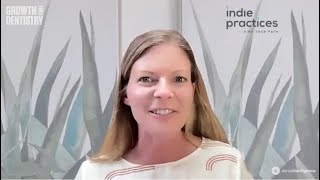
Transcript of a Growth in Dentistry podcast episode (host: Steve Jensen) featuring Dr. Sarah Blair. Dr. Blair describes her non-linear path into dentistry, buying and growing a small practice (tripled revenues within five years), and transitioning into coaching and consulting to help private practices improve operations, leadership, measurement, and team clarity. Key themes: invest in systems and people, use data (KPIs) not feelings, create written roles/SOPs, and combine measurement with leadership to implement change.
Chapters
I think it's a huge mistake for the focus to be too clinical or too technical because in reality, at the end of the day, we're dealing with people and people make decisions and we have to have the customer service mindset and also the psychology mindset and knowledge to understand what makes consumers make the decisions that they make and how can we influence people's understanding and help guide them toward the things that are best for them. Ultimately.
This is Growth in Dentistry, a Dental Intelligence podcast where we ask the question, what does growth in dentistry mean to you? I'm Steve Jensen, a dated dental nerd and your host. Welcome everyone to another episode of the Growth in Dentistry podcast. I am super excited for today's guest, as I always am. But today's unique. Today's a really fun story and I'm a sucker for a good story. Now, before I jump in and introduce our guest, a quick shout out to the marketing team at Dental Intelligence. They have been sponsoring this podcast for years and there's a lot of work that goes in on the back end to produce this week after week for our listeners. So as a way to hook up the audience, they are doing a really cool promo where if you'll take a demo of Dental Intelligence, they'll give you a $50 gift card just for doing the demo. And if it's been a while since you've checked out Dental Intelligence, there's some really cool new things that have come out. They've got scorecards where you can analyze everything that's going on in the business. Basically any number you want to see, you can look at it, whether that's clinical workflows or front operations. In the front of the business, they have some really cool new things on, like the forms and consent side of things. So they're starting to automate our consents that are going out as well as post op instructions. That's the newer thing is, hey, after we finish an appointment, can I automatically send out a message to patients? So that's super cool too. Code based type messaging that's coming out here soon. So it's been a while. Definitely come and check it out. There's some really cool new features that they've been working on. Okay, without any further ado, I want to introduce our guest. Today. I have with me Dr. Sarah Blair. So welcome Sarah.
Great to be here.
I'll probably refer to you as a combination of either Sarah or Dr. Blair. Either one. I'll probably jump back and forth. Now, here's what's super cool. Dr. Blair graduated from Marquette University and followed, I think, a pretty, I don't know if you want to call it traditional. It seems like pretty traditional. Worked as an associate for how many years?
About two and a half.
Okay. And I'll let her, like, tell her story more here in a second, but I want to, like, give you guys a taste of who she is. And then she decided, hey, it's time for me to jump into the ownership bucket of dental practices. And she bought a small practice. Now, just something I want to say. There are a lot of dentists that will buy small practices from retiring docs, and it seems like it could be a great strategy. It's also very risky. I was telling Dr. Blair, I've had a lot of conversations with dentists who have bought these really small practices, and the belief is, hey, the only thing holding this practice back is the fact that the owner doc doesn't want to work more days today, and they've got lots of patients of record. So we're just going to flip this thing around fast. And you'd be surprised at how many people go and buy those and they end up six months down, 12 months down, 18 months down the road, and they're like, I can't hardly pay myself. And it's maybe a little more painful than they thought it was to get the business going. So she bought a practice and was able to triple the revenues within five years and really grow it into a healthy business. Obviously, Dr. Baer has a love of the clinical side, but clearly showed some excellence on the business side and has now transitioned into helping doctors with their own businesses. And so, Dr. Blair, welcome to the podcast. I want you to go ahead and give some color commentary. I just gave kind of the quick overview, but tell us a little bit more about kind of your story and why you got into dentistry and how you transitioned into coaching.
Yeah, so in some ways my path was very traditional, but in some ways it was different. I was a little different than most of my classmates because I was about eight years out of undergrad when I started dental school. I had already had a career of sorts in the service industry. I traveled a lot. I had done a lot of other different things. I actually originally wanted to go to veterinary school, so I pursued that path for a while, switched course, So I ended up starting school later in life than a lot of my classmates, which I really think was an advantage ultimately because I was able to do a year plus of assisting in a dental office in a corporate group. So I actually had some hands on dental experience before I Even started dental school.
Okay, so did you do assisting while you're doing like your like pre dental courses and getting for the dat? Okay, that's, that's great.
Yeah. So my undergraduate degree actually set me up pretty well for applying to dental school. So I didn't really have to do a lot. I had to just in a chemistry lab or something like that. So it's pretty well set up to apply to dental school other than taking the exam and, but I wanted to make sure, I wanted to make 100% sure this was the right pathway. So I got a job as a dental assistant. No training. I didn't have, I didn't go to school to be a dental assistant. So they just threw me right in. I got three weeks of basically on the job training go. So I was an assistant for a little over a year and I got to see things at the front office and behind the scenes, the clinical side of things. It was a great learning experience. But I just wanted to make completely certain that dental school was the right path and that this was a huge investment of time and money and that I was going the right direction. Ultimately I decided, yes, this is the right way to go. Got into dental school and got started that way.
That's so, so, so fascinating. Now tell us, tell us about what ultimately launched you into practice ownership. Because that can be a difficult jump. You know, a lot of students are jumping out of school with a lot of debt and so it might take them a minute to get to a place financially where they can prove to the bank, okay, I'm able to produce, you know, X dollars every single year through reliable income. So if I get thrown into a dental practice that I own now, I can, you know, I can make right by the bank on these loans. So talk us through kind of that transition of going from an associate to being an owner.
Yeah, so for me it was kind of a no brainer. I went into dental school knowing that I wanted to own a practice. It wasn't a matter of if I was going to do it, it was a matter of how. I think a lot of people debate, you know, stay an associate or move on to ownership. I was just 100% I am going to own a dent practice. So it's just a matter of figuring out the path to doing that. And so I think a lot of people like myself start out on a, you know, buy in to a practice kind of route, you know, where you think, oh, I'll just, you know, become an associate and eventually it'll work out and they'll, you know, I'll become an owner at some point. Like, no, it never worked out that way. Heard that story. So I was an associate in two different practices, part time at each. Great practices, great owners for various different reasons. It just wasn't the right fit. And so I ended up moving on from both those associate, you know, buy in, buyout kind of things into just straight up buying out a gentleman who was truly ready to retire. He was ready to go, everything was set up and you know, all the documents were prepared and it was just a matter of finding the right place and stepping into it. So that's how I ended up owning that practice. And back to what you were saying about yes, it's risky. I think it can be better in many situations to buy the most high functioning, successful practice that you can afford or find because it's already proven to be successful. And I think you're right. In a lot of situations people get into that small, tiny practice and they, they're like, what's going on? Why isn't it going? And I think a lot of that is people start out too slow and they're very fearful. They don't want to invest in technology, they don't want to invest in marketing, they don't invest in training for themselves and their teams and in a lot of situations consulting or coaching. And so it's a flat, it's a very slow start for a lot of people and a couple years in they're like, what's on, going, going on? Why is this not working? So I went into it with the mindset of this is an investment. I'm going to, I know I'm going to be putting a lot of my time and energy and money frankly into it at the very beginning. And I already had to budget for brand new website and branding. You know, we're going to immediately hire a coach or a consultant, we're going to, you know, switch the software up, we're going to do all the intraoral cameras. You know, I was ready going into that knowing that it was kind of like a cross between an acquisition and a startup. So I think you have to have that mentality that it's not going to go on its own, it needs a push. And so being ready to put that investment in.
Yeah, I like that that's, that is true that it is not going to go on its own. I think there was maybe, maybe I'm wrong just talking with dentists who've been in for a long time. It makes it sound like there was once a day when, when there was kind of like a. You build it and they'll come. You know, it's like, yeah, no, I just went and bought a practice or, you know, did a de novo or scratch practice in my hometown and people just started coming and it was, you know, this beautiful thing. Yeah, but there are some. Yeah, there are. There are some realities though. You know, like if you look at the Bureau of Labor Statistics data around number of dent dentists, like the supply dentist, and the ADA's research, like that is certainly increasing. But when you look at the number of dental practices, that has actually been relatively flat for the last three, four, five years. And so what's happening? Well, there's this Trend, of course. DSOs want this. DSOs want redundancy with clinicians because they don't want to have a position where they've got one location with one dentist and they lose that clinician. Then all of a sudden that business just halts if they can't get a new clinician in there fast. So they like the idea from a risk perspective of having multiple dentists in a location. It creates redundancy, allows for some, like, overflow and anyway, so. So they like it that way. But even for private practices that are trying to like, you know, figure out how they're going to stay relevant in this market as DSOs try to like, position their way more and more into it, there's certainly still a spot for private practices to be in there. But. Yeah, anyway, the point being it's a different market today than it was 10, 15 years ago. And maybe the way you need to approach the business needs to look different. So I kind of want to talk. You know, I'm assuming you got, did you got into dentistry because you thought it was interesting, like actual dental problems to be solved or maybe not?
No, absolutely. I mean, my. I've come from a science background. Everything I in school, from high school on was very science focused. But I've also always had an interest in arts and, you know, taken a ton of art classes. And I like the combination of those two things. And most of my working life prior to starting dental school was in the service industry. So I really view, you know, the profession as a service. And I think it's a huge mistake for the focus to be too clinical or too technical, because in reality, at the end of the day, we're dealing with people and people make decisions and we have to have the customer service mindset and also the psychology mindset and knowledge to understand what makes consumers make the decisions that they make, and how can we influence people's understanding and help guide them toward the things that are best for them ultimately? But without that mindset, it's not just like. It's not just teeth that walk into your office. It is a person, and we have to deal with the entire person.
Yeah, that's a really good call out. And I love that you come from kind of the service background before jumping into dentistry, because people make. When people are buying things, they make an emotional decision, and then they go justify it afterward with logic. Right? Like, I see the Nike commercial, and I'm like, ooh, those shoes are really cool. And all those people look cool. So I buy the shoes, and then I justify it by. Well, yeah, like, my shoes, we're getting kind of old, so I just needed. I needed some new ones. It's going to improve my training or whatever. You know, there's lots of. Lots of things that people do that way. So let's talk then about kind of this transition now from clinician into, like, helping other practices out. Talk me through that. So you grew your practice that you bought, you know, to triple the revenues that it was when you bought it, which is awesome. And then what made you start helping other dentist? Like, what got you into that? Did you start having people, like, reach out to you from school just in your area where you were like, oh, wow, like, I might be able to help more people need help with this, because dentists are so good at solving and so interested in solving clinical problems. But when it comes to the business, sometimes it can feel like somewhat of a black box, you know?
Yeah, I would say it's a couple of different things. So I was really involved in the mentor program at my dental school. So I mentored several students through their entire dental school career and beyond. And that was really exciting and interesting to me. But I also hired several consultants and coaches myself for the practice. And, you know, of course, along the way, listened to a million podcasts and read a million leadership books and business books, and I valued, really highly valued what, you know, an objective perspective and someone with more industry knowledge can bring to a practice. Because practice owners, we get pretty siloed. We're really focused in this little tiny world where we don't see what else is going on or what other options are out there. And it's so great to have that outside perspective, someone that's seen not just one office, but dozens or hundreds of offices. And that's what really inspired me. So we hired a couple different coaches for the practice and realized that there's some good coaching, there's some not so great coaching out there, and it was extremely expensive. I was investing it a lot in it. And I. My takeaway was I feel like I've learned so much and I have taken away these principles from all of this, you know, podcasts and books and very expensive, you know, coaching myself. I can do this for other people in a different way, make it more relatable and make it more doable and affordable for people. So that was the inspiration. My co founder and I, who comes from an education background, he's super passionate about how adults learn and how we actually grow as people. So we combine forces to help dentists in the areas that we typically don't learn in dental school. So all the things that you need to be a successful business owner, but that we. There just isn't time to convey it to students in dental school. So that was the inspiration behind it.
Let me chime in here. I actually love that. I've been listening to a lot about the company Ikea lately. So Ingvar is the founder. And one of the things I had this quote that's been in my head like the last month that I think relates to what, what you're saying. So he says, like, he says, look, when he was building Ikea, the company, he said, here's, here's the exact quote and then I'll explain what he says. After kind of the anecdote, he said, expensive solutions to any problem are usually the result of mediocrity. So I'll say it again. Expensive solutions to any problem are usually the result of mediocrity. So you're kind of talking about coaching. You spent a lot of money there. And he says, look, think about it like a table. He says, any. Anyone can go and source wildly expensive materials and build a very high quality, super expensive table. He said, that's actually not a hard problem to solve. And he said, what is a very hard problem to solve is to get a really high quality table that's affordable for most people. He said, that is a problem we're solving and a very difficult one to solve. So I like the way that you're approaching, like, how do I get. There are a lot of really expensive solutions to people's problems, especially in dentistry, from a business perspective. And I like the way you're approaching that. Like, how could we get, how can we get this information and help? Because there are so many. We'll talk about this. I think I'll leave this a little towards the End. There are so many good ideas that people have, but maybe struggle with implementation. And that sometimes requires some handholding and coaching. Let's start with this. Let's start with. Okay, so now you've been working with practices solving business problems. I'd love to hear from you. What are some of the common, you know, if you think about it, like a tooth, like, you jump in and you see like cavities where it's like, oh, yep. Like in between the teeth. It's a common place for cavities because people aren't flossing. Like, what are some of the common, you know, places of decay you see in the businesses that a lot of dentists miss because their business hygiene, so to speak, isn't great.
Right? Yeah. I would say it's kind of like in dentistry when somebody doesn't realize that there's a problem until pain is evidence or until the tooth literally falls off that pain point that cues people in that there is a problem. And I think those, you know, the decay or the periodontal disease things that, you know, would translate over to a dental practice that you're talking about would be a lack of clarity. I think, especially with team roles is a really common thing that we see and that might just fly under the radar for decades, honestly. And it could just be, you know, Donna at the front desk has always done it this way and it's always worked and it's been great. And then I think the pain point, you know, the toothache, so to speak, is when Donna leaves and suddenly you realize, like, what has Donna been doing? Oh, my gosh. You know, we don't, we don't have a written job description. We don't have, you know, SOPs for all the things that she's been doing at the front office. And maybe Donna wasn't actually as good as we think Donna was and she was doing all these things wrong. So I think that's one of the common pain points or the, you know, issues that shoots owners into seeing. Wow. I don't really actually know what my team does or should be doing or what I want them doing on a day to day basis, you know, every day, every week and every month. And so, you know, the, the restoration for that or the solution to that, you know, is really just clarity, creating some clarity, having written job descriptions for every single role in your office and making those not just some document that sits in a file, but it has to be something that is really guiding that team member in what they do every day so that they should have Absolute clarity on what your expectation is and what you're going to be holding them accountable for. We just see that there's a lot of, you know, kind of fingers crossed. I hope it's okay up there. I don't even have time to look. Especially with the front office, there's often such a separation between the clinical team and the front office team, and owners just don't know what they don't know. And so it's often when either the team is growing and you need to hire and you're like, what do I even post on. On this? On indeed. Or I don't have a description for this person. I don't have an onboarding checklist. So all those things, it's just a lack of clarity. And so the solution is just get things in writing, communicate it, communicate it again and again and just ensure that there's tons of clarity and then you can hold your team accountable for doing those things.
Yeah, I love that. I think you're right. I think that's a very common problem. There's a lot of, you know, the more and more I go out to, you know, shows and meet with dentists and practice owners and office managers, I realize there's a lot of subjectivity in dental practice roles. Meaning, like, like you said, if you ask someone, hey, like, what's your title and what do you do? There's a ton of variation, practice by practice, which does create, like, a lack of clarity for the team members. There's also a lack of accountability and, or measurement. So, meaning, like, I think a hygienist, broadly would say, oh, yeah, I know I'm expected. Like, they want. The owner wants me to reappoint all my patients. But if they were to be asked, like, what is your hygiene reappointment? They would probably tell you, oh, it's 90%. But then if you went and looked at it, it might not be that. Like, my wife, for example, I show this story all the time. She's a hygienist. And when I first was looking at joining Dental Intelligence as a company, I wanted to know, like, is this even, like, legit? Will this help people really? And they plug it in at the dental practice she was working at, and the CEO of Dental Intelligence asks her, what is your hygiene reappointment? She's like, oh, 90 plus percent. And then he pulls up her previous year and it was 68. And she was like, no way. There's no way it's that low. But sure enough, he starts pulling up, like, just the previous week's. Patient, she was like, oh well, Bob this and Joe that. And you know, she had kind of excuses for every single one. But as soon as she realized, okay, one, I know that's important. But then two, here's how we're going to measure, you know, that piece of my role. All of a sudden, guess what happened to her hygiene reappointment? When she could measure it, it just like shot up because she realized, oh, that's important. We're looking at that now to determine my success. And so there's probably an element there with measurement as well, don't you think?
Oh, a hundred percent. I mean, that is also one of my very favorite dental intelligence KPIs is the appointment rate. It's really hard to keep track of it without dental intellig. Honestly, it's very difficult. So that is huge to be able to just have that stat right at hand. So information, it's just a lack of information. So we onboard clients and we, you know, we're gathering all this information and it's pretty surprising, I guess at this point. Not super surprising, but it is unsettling how frequently dental practice owners don't know the basics, basic numbers. That should be just how many new patients did you have last month? What's your average in new patients over the past trailing 12 months. It's really shocking how frequently the numbers are a total guess or, you know, all over the place or completely wrong.
Or it takes them, you know, an ungodly number of hours to go. Try to pull a bunch of reports from dentist because I've opened dental that they probably never pulled report when, you know, when you ask them those questions or that alone probably speaks like if, if you're sitting there thinking, I don't even know how to like look at some of this stuff. Beyond the classics, I think most people might have a general pulse on obviously their collections of production, like for sure, because your accountant holds you to that. You've got to know what those are. And then, and then new patients probably like a general pulse, but probably not great on the full picture. Like, hey, how many patients are we losing every single month? That's a huge blind spot for people.
Exactly, exactly. And then just to go on from the numbers, I would say financials, the big picture financials is something that owners really, really aren't aware of. And it's so important, you know, we can produce all day long. Maybe we're not collecting all of that, but you know, let's say even collecting 97, you know, 96, 97%. Not awesome, but okay. And then what is our overhead? Honestly, most owners have no idea. And I do. You know, I think there's a disconnect between owners and their bookkeepers and CPAs that really need some work. And I love it when owners are getting awesome reports from their CPA slash bookkeeper that are telling them exactly, you know, right on time. They know exactly what they spent last month and what they spent it on and where their, you know, tight areas are that they could work on. But that's. I'd say maybe 20% of owners that really have a pulse, you know, a finger on the pulse of what's going on there.
Interesting. Now, as you. As you look at businesses, I kind of have, like, some of the main highlights for those that don't know. One of the things that Dr. Blair does and Mark is they'll go and they. When they work with the practice, they'll kind of give you like, a score, like, hey, how are you doing in kind of these key buckets? And those are things like leadership and culture, the efficiency of your systems, financial systems, team structure, what you're clinically doing and offering, as well as, like, networking and promotion, like, more on, like, I think, the practice growth, new patient side of things. And they'll give you kind of like a score on, like, how things are going to set that baseline. Right. So talk. Talk me through, Dr. Blair, as you go through that process with someone. So a dentist, and maybe they're trying to kind of hack that on their own. A dentist is thinking, okay, I want to grow my business. So they're trying to get, like, a baseline for how they're doing. I think it's pretty common to get lots of really good ideas, but then ultimately struggle with implementing something. Or actually, I have my baseline. I've measured something. How do I move it to a better place? Can you talk us through advice you have for dentists who have lots of really great ideas that are trying to actually implement things? Talk us through.
Sure. I would say don't go by feeling. It's really tempting to say, oh, I feel like we're not busy this month, or, you know, I feel like I just end up at the end of the year with no money in the bank account. Those are feelings. Or maybe like, I just feel like my team is falling apart or our team culture is bad. I love numbers. I know you guys love numbers. I think numbers don't lie, and so sometimes it's really hard to get those numbers. And I will say, not every practice management software is really awesome at just telling you what you need to know. And same thing with bookkeepers and CPAs. It's something. Sometimes it's hard to gather all that information, but we have to rely on numbers because numbers don't lie and numbers are going to guide us forward. And so, like you just mentioned on our website, you can take an abbreviated, a little snapshot form of our practice performance assessment. That's that little 20 question quiz that gives you a score. But we have a much more robust, it's called a practice performance assessment. And we have our, you know, five essential categories and we score on every single one of them and give an overall, you know, assessment. So we have a number for every single one of those essentials. And I love that because it guides the path forward. You can see, oh, we're at a 5 in all these areas. They're fine, they're doing really good. But we're at a two and a three. And, you know, our team meetings are totally ineffective. The team leader is just talking the entire time and the team is zoned out, you know, so it's looking at those kind of numbers. It pushes us forward on what we need to work on. And then the, what you mentioned about, you know, having lots of great ideas. You know, we listen to podcasts and read books and like, oh, that's such a good idea. How do I implement it? That's where we come in. Kind of like the behind the scenes accountability partner. So what we really love to do is dial in. What do we need to be working on right now? What's most important? Okay, let's break that down into really tangible steps. What's the next step? What's the first thing we got to do? And then, you know, we're going to meet again in two weeks. So in two weeks I'm going to be saying to you, how did it go with that document or that conversation or that phone call or whatever it was that you had committed to doing? And then we're just pushing forward on those things so that every single phone call, we've moved forward 10 steps, you know, whatever the most important things are. And then it's really amazing how fast things change. You know, it's like five steps toward reducing, you know, the cost of your supplies, suddenly saving ten thousands of, you know, tens of thousands of dollars a year, or, you know, there's so many examples. But it's, it can't just be a vague idea or a feeling. It has to be driven by data and it has to be pushed forward. We can't just think about it or feel about it.
Yeah, I think that's, I think that's a. I mean, I'm a data nerd, so I hear that. I'm like, duh, of course. But, but it is sometimes that can feel a little bit, you know, daunting if, especially if you've never measured something. You know, I've got an econ and finance background and I read nerdy books like how to Measure Everything. You know, like sometimes you get in some very subjective areas of the world that people say, well, you can't really like measure the how good art is. And it's like, maybe, maybe not. Maybe we can measure an artist's, you know, success and impact potentially. You know, maybe that ruins the game for some. But I'm a big fan of measurement and so for me, I think that lands well. But man, I'm sure there are listeners that are thinking, man, I would love some help in that specific area. And everyone's different. Maybe you have someone who's really great at measurement, but then they over index on that and they struggle with the leadership and team elements of things. Because you can certainly take measurement and accountability too far to the point where your team culture isn't great and it feels like micromanagement and you know, like there's no autonomy. So, you know, that's, that's another, you know, balance I'm sure that you have to strike. Yeah, I would love. Oh, go ahead. Did you have a thought?
I was just going to add to what you just said. I totally agree. I think it can't just be about data. Data is the foundation and it should guide our decisions. But we have to layer on top of that leadership and communication skills. Yep. Because you cannot do this alone. You literally cannot. So you have to bring your team with you and you have to have your team on board and that's, you know, team culture, leadership skills, communication skills. And that's one of our favorite things to coach on is, you know, we've got this data point. How do we get our team, our entire team bought into, you know, hygiene, reappointment rates or whatever it is. You know, how are we going to get that collections percentage from 95 to 99? You know, that's a team effort and we have to have buy in and we absolutely cannot do it without strong leadership skills and strong communication skills.
Yeah, I agree. I want to hear from you. I just had like, this is kind of along the same train of thought, but it's kind of like a random thought. I was Thinking about how cool it is that you, as a dentist have, you know, learned how to build a successful business and are trying to give back to the community. It's really fun to think that while there's this kind of movement of DSO consolidation, there's also this movement of, like, dentists and skilled operators that are like, hey, private practices, you can be successful as well. There's a lot to learn. And the thought I've never had until for some reason when you were just talking, you just clicked is you could sell. If you're struggling with the operations side, you could sell to a DSO and let them just, like, take it. But that comes at a really high cost. Like, you're giving up a lot of your business to do that. And I'd never compared, like, that cost to the cost of, like, hey, I want to just join a group of dentists and, you know, work with a consultant like Dr. Blair where, like, that cost, relatively speaking, is, like, far lower to say, hey, I just want to, like, work with this groundswell of other skilled operators and dentists that want to keep delivering, like, really great care as a private practice. And anyway, I just think. I just think it's very cool what you're doing now. Let me finish. I've got kind of two questions to end. One is, like an advice question. Like, if you could go back to your graduating class at Marquette, and you're like, hey, here's what I've learned so far. These would be, like, my top couple of things. Advice as you start your career. What would be. What advice would you go back and give? Kind of a graduating class. And then I always finish the podcast with the same question, which is, what does growth in dentistry mean to you? So we might kind of like, mold those two a little bit. But let's start with, what advice would you go back and give? You know, Marquette University graduates as they're stepping out into dentistry.
Yes. So I would say think of this graduation, graduation day as just the beginning. So you're going to need to invest in yourself much more than you might ever have thought. And so this is really just the jumping off point. This is when your learning really starts. And now it's a little more difficult because it's up to you. And so you have to guide your own education from this point on. And you may decide to stay in a DSO forever, and you just focus on developing your clinical skills forever. Or you may want to branch out into practice ownership, and you need to develop your entrepreneurial skills. But no matter what, you end up Going into, I'd say leadership and communication skills are going to serve you anywhere you go. Whether you're in a corporate environment or you're in a, you know, a small, out of network private practice, you need those skills as the foundation because people, you might be the best clinician on the planet, but if you cannot communicate about it, people aren't going to move forward with the care that you're recommending. So no matter what you go into, that's what I recommend.
Yeah, I like that. And let's finish off with a question that I ask every, every guest, which is what I said, you know, is what does growth in dentistry mean to you? It's the namesake of our, of our podcast. So I'd love to hear what you have to say. Dr. Blair.
Yeah, I would say growth in dentistry to me means just constantly improving. And I think that people can constantly improve in a lot of different models. In dentistry, I think you can constantly improve and iterate the DSO models and the corporate models, and those can be constantly growing and improving. But I think it's really cool that private practice dentistry can constantly grow. And maybe you want to incorporate airway and you want to incorporate sleep medicine. You want to incorporate, you know, maybe you want to specialize. There's so many different things that you can do to continually grow and improve. And, and so I would say that's, I think as long as people continue to be passionate and push for their own development of themselves, I think there will always be growth in dentistry.
Yeah, I love, I love that answer. It echoes a ton with me. I'd say the answer extends even beyond the profession of dentistry. For me, in my life, as a reflection, the moments that feel kind of the most exciting and exhilarating are moments in my life when I can, when I'm clearly making progress on something towards, you know, a goal, an outcome, something that I want to refine and that's a really fun part of life. And of course, there's times in life for those listening that are like, you know, don't want to, like, be totally consumed by, you know, a hustle culture or something. There are for sure times in life where it's good to sit and be appreciative of what we have, of what we've, you know, gained. Enjoy some of your successes. But I'm telling you, you're going to enjoy for a certain amount of time, you're going to be like, okay, what's next? You know, because there's, there's a lot of, there's just thrill in the, in the growth and the pursuit, you know, of, of something new, of something greater. That's really exciting. I think it helps drive us as humans.
So I agree. And I think if you have that motivation driving you forward and you've put in the work and the systems are in place, that actually frees you up to enjoy life more. So putting in work at the beginning so that the office is flowing smoothly. You're going to be able to go on vacation without stress and you're going to be able to sleep at night without obsessing about, you know, is my team going to show up in the morning if all those things have been accounted for already?
Yeah, I like that actually. So then my mental picture is, okay, maybe in the early career I'm figuring out the problems and solving the problems. How can I grow to the point where my business runs really efficiently so that then I'm starting to solve the problem? Okay, how can I go on a one week vacation and never look at my phone? And that might be the cool new problem you're trying to solve, but you can't get there until you have like a really solid business. So the problems might, the problems you're solving might get more fun, you know, the better you get. Well, Dr. Blair, thank you for having. Thank you for joining me on the podcast and for being here. I'm going to throw this in the show notes if you want to get in touch with Dr. Blair. Their website's awesome. It's indie. I n D I E practices with an s.com, indypractices.com I'll throw that in the show notes. Is there any other way that they could reach out to you?
Yeah, any questions or anything I can ever support you in, just reach out anytime. It's sarandipractices.com perfect.
And then, you know, I'll just give an invitation to folks. It's rare to find someone like Dr. Blair who both has that like clinical background along with this excellent business mindset. And not just business, but also like if you go, you probably heard it from her, like just her personality, you know, she's very grounded and, you know, focused on not just numbers but also the leadership and culture element of the business. So it's rare to find someone like that. So I would definitely encourage you to go and interact with her, jump on the website, take that little quiz that she mentioned, that, that 20 question quiz, the scorecard, and then maybe have a further conversation with these guys around how to improve your practice. So once again, this has been another episode of the Growth and Dentistry podcast. Thanks again, Dr. Blair, for joining, and we will talk soon. See you guys.
More from Sean






Growth Through Patient Retention with Michael Dinsio and Paula Quinn of Next Level Consultants




Creating a Profitable Practice using Fee Negotiations with Kelsey Porter of Beacon PPO Solution