Group Dentistry Deep Dive: Dr. Brad Hughes, CEO of Vision Dental Partners
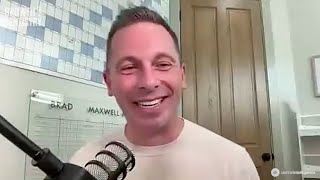
Dr. Brad Hughes built Vision Dental Partners from one practice in 2009 to nine locations by focusing on partner alignment and team development rather than price competition. He tripled revenue at his first location before expanding, and promotes people like Mikel from front desk to director of operations. Vision uses centralized marketing and Dental Intelligence across all practices.
Questions this video answers
2007.
2009, purchased from his father.
2019.
Nine practices.
Plan/goal to add eight more locations in the next two years.
Chapters
You need to be comfortable being a rock star if you want to be a very successful dentist.
This is Growth in Dentistry, a dental intelligence podcast, where we ask the question, what does growth in dentistry mean to you? I'm Steve Jensen, a data dental nerd and your host. Welcome, everyone, to another episode of the Growth in Dentistry podcast. Super excited for today's episode. Today is going to be a practice deep dive and these are my absolute favorite episodes because. Because we get on with actual doctors, doctors who are in the trenches doing what you guys are doing, and I think that they are some of the best. As a reminder, these are a little longer. The normal episodes will go like 20, 25 minutes. This one, we're going to go hopefully 40, 45 minutes and really dive in to what our guest has going on in dentistry. And today is especially exciting. Now, before I introduce our guest, I'll keep you waiting. I have to give a huge shout out to the marketing team at Dental Intelligence for, for sponsoring this podcast. There's a lot of work that goes into these, producing them week after week, bleeping out all of our guests swear words, you know the classic. And so I just want to give them a shout out for all the work that they do. They're really an awesome team and they want me to let you know that for taking a demo of Dental Intelligence, they have a cool promo going on where you can get a $50 gift card just for checking it out. So if it's been a while since you've checked out di, they're releasing new features all of the time. There's some forms automation that they've done. They've got some really cool new metrics they just released around measuring. Like, hey, how good are my confirmation messages doing? What percentage of my patients are actually clicking that confirm button? What percentage aren't to try to help you fix that no show cancellation problem that's going on in space right now. So there's always cool new stuff they're releasing that honestly, even customers probably don't even know about. That's how often they're releasing stuff. So if you haven't checked out di, definitely check it out. You get a $50 gift card just for doing that. Okay, that's it. I've got the busy work behind us now. I want to introduce. I've got first, I've got Nate Baker on with me as a guest host. Nate is over our DSO sales and he is a rock star. He has done. He's worn a lot of hats here at di. He's very Customer oriented. He has been on our expansion team helping our customers understand the full breadth of products that we have and that we offer. And he's done some account management stuff I think as well. So Nate, Nate like knows the product in and out and is very well connected. I'm excited to have him on with me today. And then our guest, Our guest is Dr. Brad Hughes. Now he is an impressive human. I don't know how much he's willing to brag about himself. I don't know him well enough yet. But he, he started his career back in. Brad, remind me. 2000.
Pulling up my long time ago. 2007.
2007. It's a whole other lifetime away.
You're just like, yeah, that's a whole other lifetime.
Yeah. And I'll let him share a little bit more of his story. But really a handful of years ago made the decision that he wanted to start scaling into a dental group a more of a DPO model than a dso.
Right.
Where doctors are more involved. Partnership model. Is that right?
Correct. That's what it's morphed into. Yeah.
And so, and so we'll, we'll dive into that in a second. But one of the coolest things I just want to like let everyone know is that he for 2025 got the emerging dental Group to Watch award by Group Dentistry now. So he's doing things in a way that is catching people's attention. Certainly as a data company we're able to go jump in and look at his performance and it's worth catching attention as well. Like just had a practice do what, one point, almost 1.5 million in the first year I think of opening. So there's a, they're doing, they're doing some pretty, they're doing some pretty cool stuff.
Consider done two. Darn it should have done two.
You just open LinkedIn. Dr. Brad's everywhere which, you know, following you for the last, you know, six, eight months, almost a year and just leading the conversation in the group space. So appreciate having you on, Dr. Brad.
Yeah. So excited to have him. He's a, he's a doctor, he's an entrepreneur, he's a clinician. He's got a big ass calendar behind him if you're not watching. So he's got big goals, I'm, I'm sure. And so welcome, welcome to the show, Dr. Brad.
Yeah, no, I'm excited to be here. First of all, even though I use DI in all nine of our practices, can I still get that $50 gift card? If I just Pretend we don't, because, like, that's like lunch for an entire week.
There's a classic entrepreneur, cheapskate. He's making good money trying to get a $50 gift card.
I mean, if you want to talk about the Baby Brad story and how that came to be, like, I'm happy. Compensate you the $50.
Yeah. Every. Every podcast, I do have to start out with Sarah Ruberg. Like, it's. It is literally. She follows me around like she's a. Like. Like I'm a rainbow and she's a damn leprechaun. You know, it's just everywhere I go, she's. She goes. So it's. Yeah, the Baby Brad.
That.
That's just. That's. Yeah, it's the nickname. I don't know. Sarah Ruber gave it. Gave me to it, and she. She knows brand, and evidently, it's a cat that hangs around her house, and she named it Baby Brad. And, like, it just accidentally came out when she. On a podcast, and it's like, this is. This is awesome. It's hilarious.
Now, Brad, for those listeners that, you know, haven't heard of Vision yet, your dental group, or haven't heard of you or seen you around, can you kind of help us just size up your career? You know, you got. You got started in 2009 or 7. What have you been doing since then? What made you decide to start building a dental group? And how's it going? Kind of. Kind of help us size up your career and your dental group here real quick. Out of the gates.
Yeah, yeah. You know, it's been almost 18 years, which is since I started practice, which is kind of amazing. You know, it's. It's been a lot of fun. I. I've. We've done a lot of good things. Well, we've done a lot of things really terribly, but, you know, we learn every day, and that's. That's kind of the objective, and we keep going. But, yeah, started in 2007. Graduated from Indiana University. Grew up in Indiana. Practice up there exclusively for my first 11 years of. Of my dental career. Acquired my first practice in 2009. Bought that practice from my dad. He basically had, like, one foot out the door, maybe two feet out the door at that point. He worked with me then for about six more months, and, you know, he was like, peace out. I'm headed to South Carolina. I'm like, okay, yeah, bye. And. But, you know, that was an amazing first two and a half or three years of my career getting to do that, and it Wasn't like he was some massive, big mentor, but he was a huge part of just shaping who I am today. He's the reason I became a dentist, just simply because everywhere that guy went when I was young, everybody knew him. And I'm like, I was so obsessed with that, and I'm like, I want to go do whatever the hell he did. And that's why I went into dentistry. Like, I'm not the guy that's like, I love teeth. Like, that's fine. Like, if anybody actually loves teeth, I'd like to. I'd like to meet them. But it really was the relationship side of, of things when I was young. And I saw that. I'm like, I want to go do that. And so we worked together about 2013. I knew I had kind of that entrepreneurial spirit. But about 2013, I said, Look, I want to go acquire more practices, and I think there's value I can bring. I think I'd like to mentor young doctors. I think I'd like to grow a company that gives more opportunity. Everybody's hitting their head on a seat and, you know, on the ceiling in one practice. We can do more than this. And. But I really set out at that point, my now director of operations, Mikel, who was. Was running my front desk at the time, I said, look, I'm going to triple this practice and then we'll go acquire a second. And so it took another six years. You know, we. We continue to build that practice out. We tripled top line revenue, went and acquired a second practice in, in 2019. And so now I'm gonna press on that.
When you say triple the practice, did you add a couple more docs into that location? Did you have to expand ops? None of that?
No, we had capacity. I had capacity. I just didn't know how much capacity I had. You know, I can remember. You know, I don't think I realized how much it was really coming down to me. You know, it was my leadership. I was the limiting factor. I was the one that had too much ego at the time. I needed to go make it about team, team building, relationship building, all of those things that I'm incredibly passionate about. I had to get into that mental space. And then we just took off. And, you know, once we did, it was. It was great. And I take a lot of lessons from early on when I didn't do it right to then flipping that script and doing it better. And then that really kind of helped lead to, you know, into the group space where that's. That's the objective every day is just go create opportunities for team members.
Now, this isn't like a plan question, but I'm going to ask it, and I think it'll lead into some of the other stuff that I plan to talk about. I didn't know that you had kind of this, like, six years of focus on just, like, the one practice, like, really optimizing. How do I take one practice and refine it and make sure that everything is built to last? How did that impact going into that second practice? Like, I'm sure there was lots of refinement that happened over those six years. Trying to triple the revenues of. Of a single location.
There was a lot.
That's like, a very complex problem. Like, I bet if I went and posed that to any dentist and said, hey, you have to triple the revenue of your current practice with the same capacity, you know, like, that's a very tough problem to solve. So I'd be interested to hear you talk about that a little bit.
Well, I mean, there's three ways to go practice, right? Increase new patients, increase the size of the purchase, and increase the frequency of the purchase. Yep. And that's what we did. Those three things were the only things I focused on every single day. Along with changing my mindset from sort of a scarcity mindset more into an abundance mindset into. This is also really about team. How much can I pour into them? We did quarterly trainings. We did. I did everything I possibly could to build that team. And that team really became the core of then going out into two practices and three practices and so on and so forth, because they had the right mindset around it, they understood the amount of work it was going to take. And I don't think I would have felt like it was fair for me to go to any other dentist and say, you know, like, at the end of the day, I'm looking for partners that say, look, I'm 48 years old, 58 years old, 38 years old, whatever. I want to double my practice, but I don't know how to do that. But I feel like I'm pretty good at these things. And I'm like, I know how to do it. And you know why I know how to do it? Because I've done it. And I don't think it's really fair for me to sit there and tell other dentists, yeah, we can do it when I didn't have the blueprint or I hadn't already done it myself. And, you know, I wanted to be able to have that authority to say here's what we did and here's what we're doing. And we can use that same blueprint, tweak things as we go because there's nuance in context every practice. But if you've got the capacity physically and mentally, we can make it happen. And that's what we did. And I think it goes really back full circle. You know something that probably enough people don't ask me is it all. It goes back to the name of the company, Vision Dental Partners. Right. It's. Why did you name your company Vision Dental Partners? Vision is named after the, the Cirrus Vision jet. I'm also a private pilot. I love flying all these things. Cirrus changed the world of Aviation in 2006 when they came out with this concept called the Vision jet, a single engine, seven passenger jet. And everybody said there's no way in hell you're going to make this happen. Never will fly, you'll run out of money before it ever happens. These guys went on a 10 year journey and it's now the second most delivered general aviation airplane in the world. And it took them 10 years to get it perfected, to go through all this stuff, to get FAA certification, to get to production and make it happen. And like the first time I ever flew in when I fell in love, I'm like, I'm naming my company after that because of the journey. The technology that these guys incur, it's, it has changed the landscape of aviation. They literally changed an industry. And I'm like, I love it, I love it. And not because of the thing, but because of the path. And everybody told them for a decade they'll never do it. And I'm like, that's the thing. So I think it's, you know, we want to take in. We've got the name and kind of the heart behind hey, we can do this. But then we've also got, hey, I did it. And I know at a single practice level I can help you doc, do that as well.
Oh, go ahead.
Oh yeah. I, I love the, it's the journey and being able to kind of the underdog story of like everyone says, I can't do this and I'm going to prove you wrong. That resonates with me. Something you shared. Dr. Brad was, I didn't know McCall was your, your front desk at your practice to, to grow into director of operations. I think that might be something for us to spend a little time on is I hear all the time and, and working with DSOs is how do you bring the right people together to that mission or vision? And we could probably spend the whole time discussing it, but I'd love to hear a little bit more about that because front desk and her story and everyone together. You hear that a little bit. But, like, if you don't mind, share a little bit more about that.
Yeah, I. We're gonna go right back to her because it is wildly impressive. But that is the hard part is you get two or three practices and you've taken. You've taken your key people and you've now taken them out of some clinical role, or you've taken them out and now you're like, I replaced them. They were my best people. And now it's like I. Now I'm. I have to pay them as on the management level. Like, my margins aren't there anymore. And it, like, it's. It's a very difficult game, but it's a game that, you know, I. I think with the right people who align, you can win at. And so you talk about Mikel. And so Mikel, I. I had front desk spring of 2013, because I had just shitty systems. Like, I found out that one of my front desk people was stealing a little bit of, you know, like a little cash off the top, right? And I was like, ah, crap, Hughes, you missed that one. So, you know. And so Mikel, who I knew through a mutual contact, she was an orthodontic assistant, but she had to quit being an ortho assistant because she had aortic valve problem and had to have an aortic valve replaced. I think she was like 35, maybe 36 at the time. So she was headed out to New York City to have this open heart surgery. And six weeks after that, she's like, I'm gonna come run your front desk. And I'm like, what do you mean you're gonna come run my front desk? She's like, I don't want to be an ortho assistant. You've got a great business. I believe in you. But, like, you know, I was kind of patching this front desk together. Cause I had to, like, get rid of the, you know, my main front desk. I got rid of both of them because I think they were probably both doing it, but I only caught one. So she's like, I got this. And I'm like, you're six weeks open. Like, you can't even. Like, you can barely walk still half the time. Like, you, You. She came in and on, like, day by day three, my Front desk was transformed. I had. She literally just came in and just took over and has never looked back since. I mean, this is a woman who, you know, I, I recall one night had some, like, inflammation around her heart. She was in the emergency department to, like, 5:30 in the morning. This is like maybe three weeks, four weeks after she started with me. This is like 10 weeks post op, goes up to work the next day, she's like, ready to go. I'm like, you what? Like, maybe you need to, like, go. She's like, no, I'm here. Let's do this. You know, and here we are. Third. What, 13. 13 or 12? 13 years later? Well, yeah, 12. And so, I mean, you're talking somebody who. Six weeks post open heart surgery. There we go. So those are the type of people that you do this with.
When you and Jason had that conversation, I remember looking on LinkedIn about, you know, you just sometimes don't know. Like, you have to let them prove you right or prove you wrong. And having her plug in and those stories are just. It's incredible.
Yeah. I mean, people come at me like, you, like, you know, I'm like, look, I. When I'm in an office with somebody, you give me three days, I guarantee you I can tell I said it. I can tell within 97 accuracy. If they're going to be with me in 12 months, people are like, no, you can't. Like, yes, I can. Look, I, I don't. I don't know if I do the best root canals on Earth. I don't know if I'm the best at this down the other. But I can damn well read people, and I assure you, I know what aligns with my company, and I am very rarely wrong when it comes to that. Now, no, maybe that wasn't the case 15, 16 years ago, but now, I mean, this is your 17. Like, if you can't start trying to, you know, if you can't get to a point where you're. You're kind of figuring that out. Like, you need to. You need to figure out what that's going to take. I'm not saying we get it right every time, because I'm saying once they're in the company, it's a whole nother story about, you know, as Jason's out recruiting and we're doing the thing. But once they're in there and I see how they operate, it's very clear to me. And Mikhail was like, it was very obvious.
Someone has the mindset, you give them the opportunity, and they either Prove you right or prove you wrong.
And, and yes, and she has. Every day. And, and we have a whole, I mean, every week we accrue more people that get attracted to this company that are in the same boat. I. And it's, it is the most fascinating and enjoyable part of what I do is watching that elevation from so many people. It is, it sounds really wildly cliche, but it's like, it's the thing that drives you because you know that they're not gonna slow down. So I have to keep going at 102 miles an hour, because if they're going at 85 miles an hour, I gotta make sure I stay far enough ahead and I keep, just keep going. And yeah, I mean, we've got, we've got an incredible amount of, of talented people. The other part of that you talk about full circle. So Mikel has this open heart surgery. So my wife had a stroke at age 34, ends up needing to have a procedure done. And Mikhail's surgeon connected us with the surgeon, ended up doing the surgery on my wife. Same hospital in New York City, literally, like same cardiology floor. She didn't have open heart surgery, but it still, I mean, just unbelievable how the universe sort of works, right? Like, like minded, aligned people. This is how community works. This is how, whether it's professionally, personally, things come together for a reason. And when it. And when it really works well, it really works well. And when it doesn't, it doesn't. And that's just how I read people and that's just how I know.
Yeah. Now I want to dive into some of the kind of team development, team growth. You were, you had that one location, you decided, I'm going to scale it up. So now you're at, you're at nine locations. You know, Nate just shared with me before that you've got a goal to add eight more locations in the next two years. Yeah. So that's like, that's a pretty big goal. Now, just to the listeners here, have you done the growth? So from 1 to 9, has that been through acquisition, through de novo scratch startups, or a combination of both?
Combo, Combo. Yeah, we've done, we've done two de novos. The rest have been acquisition and then.
Your growth goals in the future. You planning on keeping that combo? Some new offices, some acquisition, probably more acquisition. Okay, and then now talk me through, because I'm going to press on this because then I'm going to hopefully learn some lessons here. Why acquisition and not de novo? I can imagine they both have their Things, you know, some problems that you have to solve. For example, with an existing practice, maybe a question I'll ask you is you had a system, a way of training, a way of doing things that worked and you're like, I want to go and apply that to more practices. If you acquire an existing practice, they already have their way of doing things. So there's change management you have to manage where with the de novo, the scratch, it's like I just get to do it my way from the beginning. So talk us through kind of why the decision to acquire and then maybe a little bit about how you've overcome that change management problem or how you think about that problem. Because so much of scaling, I mean you clearly are thinking about this has to do with creating a bunch of like mini me's. Like a lot of owners who decide they want to scale will hit two or three or four locations and then it kind of the wheels start to fall off where they realize, oh crap, I can't like duplicate myself or I can't stretch myself so thin that I can manage all of these. And they struggle to create those mini mes in those, in those new locations. So talk us through how you thought through growth and kind of why acquisition instead of de novo.
Yeah, you know, they, they certainly both have pros and cons. Right. I mean, but I want partners in this game. Yeah. And, and to me, you know, you mentioned earlier like, hey, let's talk about some things that maybe haven't gone as well. Just tap on this and we can dive into a little bit more. But the one deal that I did that was total shit was because I, I, yeah, I saw the red flags, but I did it anyways. And you've got to have full alignment and I want fully aligned partners. But it doesn't mean that they have to be little mini me's and it doesn't mean that every practice has to do everything exactly like I do. We're going to take what they do well and then we'll just tweak the things that they know that they need the help with and you know, whatever lever we need to pull is what we're going to do. I don't think it's come in and just like, hey, get rid of everything you're doing. We're going to do it this way. It's take their skill set and if we can get them to 80% of what I think is, is a really great version of what I do and 20 to 30 to 40% is what they did really really well. Awesome. That's great. So it's, it's a little bit less about. It's not so much, you know, I can control a de novo. I can hire my own people. I think it's. Let's look for practices that are already doing well and you've got partner doctors that understand, hey, gosh, you know, if I retain 30% equity and I can sell that for a lot more down the road, and I can take a little bit of skin off the game now, but over the next five to 10 years, I can make that 30% worth a lot more. And I'm getting really good distributions over that time. And you're going to increase my production and we're going to get hygiene really moving. You're going to increase my new patients and all these things. That's where magic happens. But they're aligned with the core values. Right? Like when I go out and I'm like, hey, Dr. X, like, our core values are action, Will to win, bring the fire, close the gap. Do. Does that resonate with you? Let's talk about what that means. Like, I'm not about, no offense, there's a little bit of. In the dental space from time to time. I'm about action, not running my mouth. Will to win. I. I'm a competitive dude. Like, there's a reason Bobby Knight was like, my God, growing up. Like, I'm not saying I need to go out and scream at everybody, but that's the way that I grew up was like, we execute. You know, we want to be around winners. We want to be around people who want to win. You know, like, that's the thing. And then bring the fire. Go. Just every day, like, let's, let's bring a little energy and let's do this and then close the gap, which is a little bit more objective, right? Like, where are you at, where you want to go? How do we create that system to get you there? And does that resonate? Yeah, Hughes. I think it does resonate. Okay, well, let's, let's really start diving into the nitty gritty and let's talk now 10 years. Let's think in terms of 5 and 10 year increments. Where can I help you get. And you know, I think, you know, when, when you're more in that partnership model and there's some alignment there, I'm kind of over this. Like, bring in associates and they change jobs every two to three years model, which is where dentistry has moved to. I don't like it. I don't Want to play the game. I think it's a very slippery slope. I think it's really bad for the associates. I think they get a lot of bad advice. They don't understand the how that hurts their brand in the long run. And they never get to the point where they're actually making money, actual money. Right? Like real money, because they have real brand and they're getting paid for who they are, not just what they do. And I don't want to play that game.
So, Dr. Brad, I'm really curious because we look at where we are 2025, we look at research for 2030 and the amount of practices that are going to be owned by DSOs, DPOs, huge swing over the next five years. You talk about the associate mentality of they're coming out of dental school, they're trying to find the right fit, they want to have like clinical mentorship. They want the ability to really come into their identity as a provider and, and figure that out. What kind of advice would you give these associates as they're trying to navigate this really like new era or a new phase of dentistry?
I feel for them, I mean, I, it's gotta be tough. I know it's tough. I hear the conversations and I, you know, I, I don't know that I had heard this term in this fashion until just recently, you know, but I do think there's a lot of corporate catfishing that goes on when they're in the recruitment phase. I think there's a lot of, you know, hey, Jenny, you're a fourth year dental student. Here's what we're going to do for you in your first 120 days to mentor you and help you and blah, blah, blah, blah, blah. And then, oh, by the way, we're going to give you two years of a minimum daily rate, which those things don't align. Right. I think there's just a lot of catfishing that goes on and that's fine, like, cool, whatever, like it is what it is. But I think people like me need to do a better job of getting into the dental schools and having conversations around. You don't like, quit taking what you deem as big money in year one and quit taking two years of minimum daily rate. Take a 90 day to 120 day. And right now on the weekends, you need to get on YouTube and start learning about communication and body language and influence. And you need to go read Cialdini Seven principles of influence. You need to make yourself look like whether you like it or not, you need to go make yourself as look as pretty as possible. Males, female, like, if you're a dude, like get a nice haircut, like do the thing and like look as good as you can. If you're like, do those things. Because on day one, you got to be ready to go from that standpoint. And then when you're in dental school, you need to become selfish. You need to get every last procedure you possibly can. Go get every crown prep you can it, you know, if you can do six root canals instead of four root canals in dental school, do it. If you can do, you've got to get selfish. Quit. Well, I hit my clinical requirement, I'm good. No, go do more. Because nobody wants to come in and have you do a two, two hour crown prep. 30 days in, you know, 30 days into private practice and it happened. I see it all the time. They're there for two hours and I'm like, nobody wants to be here for 120 minutes. I guarantee it. So in dental school, start that, get good at those things. The soft skills are where it's at. And then we will take over and we'll get you going faster from a clinical standpoint. Like our associates come spend usually a month with me in my practice and then I start going to them. But there needs to be a plan and then that plan needs to be executed. But it's tough. They need to, it needs to be less about money in year one and more about money in year five. Yeah, it's gotta be long term mindset. The more you can, you can get into that mindset and the more you can, you know, the more you can understand that the soft skills are what are gonna allow you to, you'll dominate your five as opposed to those that don't get there. And you know, it's not easy. It doesn't mean it's easy. You know, it's probably easier to learn to do a really good crown prep than it is to become incredibly influential where your case acceptance is 85%. You're, you're, you're doing the things, but if you're willing to put in the work, you're, you're not going to need that two year minimum daily rate and you just gotta, you gotta go align. You gotta go find who you align with. I, I just, I believe that to my core. And I know that that's a buzzword alignment and core value, but you gotta go find people you actually would want to go have a beer with or go hang out with or go have pizza with those are the people that you should want to work with.
You talk about alignment and you know some of the buzzwords, core values and those things. And when you're sitting down with these doctors and you're looking at a potential long term partner, how do you gauge that? Like how are you vetting pre acquisition? I know you're saying 17 years in, like I've got that gut feeling now and my intuition to really gauge the person, but I know it's a really hard aspect of acquisition and long term partnerships. What's that like for you?
Just gotta ask the, you gotta ask real questions. What, why, why, why is your practice still only doing a million three? And if it's, well, you know, there's too much competition. I can't recruit hygienists, I can't get new patients. You're like, well, who's at fault for that? You know, it was Joe Biden or Donald Trump. You're like, you're, you're probably not like, yeah, I wish you well. Here's some tips I think you could do, you know, like maybe get rid of the dust bunnies in the corner of your reception room. I don't know. But if they're in there and they're like, I just don't know how to do it. But I want to do a million eight because I can't even. Or two, I can't even like multi million dollar practice. I can't even fathom that. And I'm like, you're my people. And so you know, if there's some level of self awareness around where they're at, great. That's the biggest thing I'm looking for. And then the second piece being, are they, are they accountable to that? Because it's not their team's fault. Look, there's a lot of great practices, but if they're like, I'm doing a million seven, I just can't even imagine doing two five. I think my life would change if I could somehow get this practice to 2:5. It'd be great for my team. I could introduce a little more technology. Are yada, yada, just all the things. And it's like that's, that's where I, that's the conversation I love to have. Here's where I think we could help you. Based on your numbers, you know, you're averaging 14 new patients a month. Let's make it 34 and game changer. But I just think there's a willingness to be self aware. I run into a lot of, you know, when you say and by the way, we've got to know that we're closing on our 10th practice here in a week and a half, so only going to need to be seven in the next. You know, I didn't know the numbers.
Were still the same from before to now. It needs to be 10 or 15 now because you're already, you know, growing at that clip, right?
Yeah, we're. We're. We're moving and shaking, you know, but it's. There's a lot that come across my table where it's like, either one, they don't want to grow. They're like, I'm just comfortable where I'm at. Like, that's cool. But that probably doesn't make sense for me. Like, I'm not that guy, you know, or, you know, maybe I only want to work two more years. Not really. For us, those are. Those are more the macro things. But I think you can generally kind of see it in their eye when you see that little bit of pain, because they're like, my buddy down the street's doing a million nine, and I'm only. I'm stuck on a million 2 5. And I'm like, let's go do 2 7.
Yeah.
So he feels the pain.
Exactly. And it's. And people will think of that like, well, you're a dick, dude. Like, it's not all about money. And I'm like, that's not. That has nothing to do. It's not about money. It's about the value that we're bringing. Think about what we can do for the team at that. Think about what that practice looks like at 2 7. Think about how much of a legend you are in your community now at 27 instead of 1 3. Because you're seeing double the patience you have, double the attention that you now have. People stopping you in the grocery store every Saturday afternoon going, dude, I. I just saw you a month ago. Or, hey, I'm coming into your office in a month. Or, hey, I've been coming in for a year. Love your team. It's just. You just. You've gained attention, and. And that helps everybody. So I think it really just comes down to those two things. Can we find people who have dropped the ego to the point where they're like, let's do it as partners. It doesn't all have to be me. I don't want to own this whole thing. This isn't just about me. This is about my partners and my team and my. This is about my people. And, you know, that's. That's the way I look at it. And I think we're looking for people who share that, that similar value, impact.
And opportunity to serve. I love it.
Now one of the things I want to ask because there are some things that you're, as you build a group, you are kind of owning. So as you're bringing partners on, you've got what I'll have you centralized. So far, I think some of the classics are going to be, you know, maybe some marketing functions, maybe some RCM functions. Have you started to centralize some of those so that you got a team that just specializes in providing those services to these practices?
Marketing, yeah, we've got a marketing team. We've actually built a production company as well. We've got eight video editors, we've got two video coordinators. No, I'm obsessed with brand. That is the thing social, organic, through LinkedIn or through. Well at the practice level it's more through Facebook, Instagram, you know it, it's. So we've kind of centralized that. So that, that's a piece like, that's a big piece. So like when, when, when doctors are like I'm doing Google Ads, I'm doing this. I'm like, dude, you're, you're racing on price here. Let's, let's, let's show the world who you are and let's show Everybody within a 10 mile radius of who you are. Not just, not just what you do.
Can we press on that for a second? Because Nate mentioned something before because today like it's 2025 and today is a day of personal brand. Like people just want to see you. They, it's about building a brand for yourself, you know, like who are you? And people are interested. Like there are more users on TikTok and watching Instagram reels and they're seeing content from people they don't follow. Where in the past it used to be you only watch content of people you select to follow. Today that's not the case. Everyone's getting on for you pages. They're getting suggested content on Facebook, on Instagram. So you're getting in front of people that aren't people who've selected to follow you. So this is the era of personal brand. And Nate mentioned that you have worked with, with Gary Vee, haven't you? Is that, is that right?
So yeah, maybe I was part of his personal brand element entrepreneurial accelerator program which was awesome. I'm now part of their elevate program which is similar to all that. It's brand building. It's it's business building. It's, it's all the things. So we, we do a lot of work with people from Vayner, from VaynerMedia and you know James Arsini who was his was Vayner COO for a while, Andrea Sullivan who runs the vive program, Julia, Dr. Natasha, the whole, the whole crew. And they're awesome. But I'm obsessed with it. It is, it is the number. I mean you hit the nail on the head. It's all for you. It's, it's intent media now, not social media. It's not about how many friends you have. It's who's actually paying attention. It is, I hate to steal the line but the creative is the variable, right? Like good pieces of content now get seen. Shitty pieces of content nobody cares about. You get 26 impressions but you know, good for you. So, so that, that's what kind of the production company focuses on is we want to build brand, we want to build. You know, when I say we want to build rock stars and local legends in the dentist community, that is the objective. I want every. Because when I was 28 years old and I was walking into Subway to get lunch every day and people were like side eyeing me and like whispering as I was walking in like I didn't understand that it was because I was like I was the 28 year old dentist. Not that that makes me anything of but I was like different than everybody else. Like I was walking in and scrubs, they're like, this is a guy that grew up in this community, he's coming in here. Like everybody else was not doing those things but everybody freaking knew who I was. I just didn't understand it. And you know, over time I got to understand like these are good things and we need to scale that. And at the practice level really it's within 10 miles. So everybody, we need to be creating really good content that people want to watch and then you know, organically see what works and then run, run the pieces that work really well kind of within a 10 mile radius as some paid.
Yeah. So I was going to ask because I think a pretty traditional approach to marketing is I'm going to hire like a pay someone who's good at paid ads. They're going to create some specials and incentives and SEO, you know, put push those things out in front of people. So, so how much of your effort is more on this content creation? Like does the content creation drive the new patient volume that you're looking for and kind of talk through how that system works. Maybe a little bit. Because that's very interesting. I think it's very different than a traditional centralized marketing team that you're running.
Yeah, for sure. I mean, I have a, you know, when we talk about centralized marketing, we have Elena. She's our full time Google Ads woman. I mean, she does all of our Google Ads. I mean, we have it on team, you know, but it's. She gets treated, you know, she doesn't really get treated like the black sheep because she's fricking awesome. Like, she's an amazing woman, but I don't want her driving most of what's coming in. Right. Because it's exactly that, you know, you get these, you know, it's. And we're not necessarily running them. It's like, you know, 79 new patient hygiene appointments and all this other. It's like great lightning. Yeah. Free whitening, all this stuff. Click here. Okay, cool. Which is different than building a relationship with somebody over four months of time. And you've seen the content for four months and all of a sudden you're like, dang. Like, I really feel like I actually know this person. Yeah. I know that they like to play golf. I know that they went to Ohio State University. I know they went to Michigan Dental School. I got to hear about some of their dental school experience. I got to hear about, hey, I grew up in this community. This is what my parents did. Like, you literally are building relationships through video content. You feel like you get to know him. I mean, people feel like they know Gary Vee. Yeah. They've never met him. They're like, oh, yeah, my best Gary story. I'm like, when did you meet him? They're like, well, I never have. I'm like, well, that's a great story from a video he did on, you know, LinkedIn. But it's the same thing, people. You can build relationships through video content when done correctly over time. And that's how you drive. So does it drive butts into the seats? Yes, it does. I'm obsessed with that brand creation and creating these legends and like, when I say legends, because that takes time. But we need to make you the rock star. You need to be comfortable being a rock star if you want to be a very successful dentist.
So, Dr. Brad, when you talk about like brain creation and spending the time about intent creation and your brand and all of that, do you have a process of like, time with yourself? When you look ahead a year, two years, five years about this is the path that I want to follow. Because I know everyone's creative juices flow a little bit different, but I'd love to understand that a little bit more and I'm sure the audience would too.
In terms of what, when you say one to two years.
In terms of when, when you look at, you know, when your creativity sparks and you, you give time with yourself to like work through your ideas and, and to, to stress test things with yourself, do you have a process of like time with yourself of how you do that or does it involve other people on your team and you kind of like talk out strategy?
Like what's that like usually me by myself, almost like I hate to make it suit too simple. But I always have a pen and paper somewhere near me literally almost at all times. And it's as things come up, it's, it's, it's write it down. You know, I kind of know where we need to get to five and 10 years. I don't really care that much about next month. The process is the process. We're going to figure it out one way or another. There's going to be stuff that pops up that I wasn't anticipating anyway. So like why figure out next month? Let's, let's worry about five years from now. But from a, from a creativity standpoint, I'm not the most creative in the world. But I mean it is not my strong suit. So when things start coming in, I'll go two weeks and I'm like, I'm like very objective and very like, you know, and then I'll have a two week period where I'm like, everything is just like churning and burning and it's eight, eight o' clock at night and I'm like sitting in my twins bedroom helping them go to bed and I'm like, bam, I got three ideas, write them down. You know, and you know, I'm not the guy that like, hey, I'm gonna go do a cold plunge every morning and that's where I do my best thinking. Or I'm gonna go like ride a horse for three hours every Saturday or meditate for 32 minutes. Like it's not me. That's fine. I love those things for people, for me it's just as they come, bam, let's, let's do it. And I genuinely think that's when I'm at my best, is when it's just organic everything. Whether it's like the long term visions, whether it's really anything, it's, it's not me sitting there for 30 minutes like doing yoga it's just things come to me occasionally and that's when I'm at my best.
Well, it's so interesting too, because you talk about in acquisitions, wanting to, you know, partner with doctors that have that self awareness, and then even for you, it's like, look, I know I don't need to walk on a beach or I don't need to go cold plunge in the morning. Like, that's not my process. So just that connection of self awareness, whether it's you, you know, people you want to partner with, that's huge.
I think it's. I think there's massive keys to happiness there where I'm not, you know, I don't need to go search for everything. Like, I. I'm good, you know, like. But I know everything that goes bad is also my fault, so. And I'm good with that, too. And I know what I do well and I know what I do very shitty. And I'm going to stay in the lane of the things I do very well, and I'm going to bring in people that complement that and support that. And, you know, it's. But at the end of the day, accountability is a big key to being happy.
Now we're coming up on time. These things fly by so fast. I've got two questions for you. The first one, the first one I just want to hear from you. I think it's pretty classic, just like, hey, if you could, you could go back in time and give one location Dr. Hughes, some advice about the future to help, you know, speed things up or do things more, you know, flawlessly or seamlessly, what would that advice be? And then the second question is how I end every podcast, and it's, what does growth in dentistry mean to you? So two questions I'm hitting you with. The first one. What advice would you give to, you know, single location Brad Hughes to help things go a little more seamlessly as you try to scale.
Really? I'd say two things, and I touched on a little bit earlier, one, nobody gives a shit about your doctor title. Just. We can stew on that for like two seconds. Just for every dentist out there, like your mom think thought it was really cool. But outside of that, like, that's not what. That's not the type of influence we're trying to have. We're trying to have true influence. There's a bit of authority that comes with it. But when we're talking influence over team communities and practices, it's not about title, it's about things that we just talked about. Self Awareness and accountability and drop the ego. And I don't mean that. I mean that from a place of, like, pure love. Like, I genuinely had to learn that. And a lot of younger doctors do, too. There's some older ones out there that need to learn it as well, and their practice will be a lot better for it. I mean, I mean it in a very humble way, like, I screwed it up. So just learn from my own mistake and just, and, and be okay with that. You know, what does dentistry look like? Growth. You know, I think we're at a period right now, some people who may or may not agree with this, but that's okay. There's a little bit of swelling that's going on in the dental space. Like, there's so many. Like, you know, you look at what happened in medicine where, you know, the number of providers stayed the same and the number of people that were non providers kind of went like this. Yeah. Sort of exponentially grew. And we're kind of in that place right now in dentistry. Everything's sort of swelling out instead of kind of rising up. And I think we need to be a little bit careful with that because you can only swell so long until there's just not enough to go around, and then problems happen. And I think we're seeing some of that. So to me, I think real growth happens with a little generic, but I believe it. The real growth in dentistry is going to happen with those that just execute. And I think it's going to be around brand. I think when we start talking AI and you say, well, AI is going to revolutionize dentistry, I think it's just going to make things a little bit easier. You know, like we use overjet. I like. It's not that overjet catches a bunch of stuff that I don't. It's that when I show a big red blob to a patient on a screen and they know it's AI, they're like, yep, it's gotta be a cavity. There you go. Okay, cool. Well, you know, so I think it helps with those things, but I think we just need to be careful. Real growth is going to come from those that build Brand. Don't race to the bottom and actually go execute. And those that do that are going to win. And those team members that learn from that and do that as well are going to be the ones that are going to be there at the end. And I think we need to really set that as the expectation, because I think, I think we're moving a little bit away from that. And I think it really needs to come back to execute. And let's not always just compete on price. So it's a little bit of a generic answer, but I think that's where growth happens. Brand, brand, brand, brand.
Yeah, that is very clear from this convo, which I like. I. I don't know that I've met anyone approaching a growth strategy so heavily on brand. I mean, I think Nate's got a note here that you have a goal for this is it, this next year to have your content team put 500 pieces of content out per month. Yeah, I mean, just. Just ripping content out there, so. Well, Brad, thank you for joining us. This has been seriously super insightful. I could have just kept talking for hours and listening to you. So thank you for taking some of your precious time and talking with us. I'm sure it's incredibly value for our listeners. Thank you, Nate, for joining as a co host today. And to the listeners, thank you for joining again. This has been another episode of the Growth in Dentistry podcast. I'm Steve Jensen, your host. Keep growing and we'll talk soon.
More from Sean






Growth Through Patient Retention with Michael Dinsio and Paula Quinn of Next Level Consultants




Creating a Profitable Practice using Fee Negotiations with Kelsey Porter of Beacon PPO Solution