How Practice Valuations Work with Jon Harris of Fortune Management
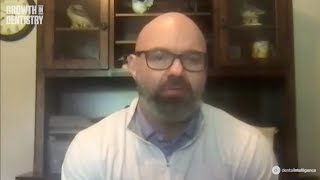
Jon Harris of Fortune Management explains how dental practice valuations work and what drives them. Valuations focus on cash flow, which comes from five areas: clinical philosophy, suite setup, schedule, fees, and cost control. He outlines five ways to bridge valuation gaps in deals and shares benchmarks: aim for 30-35% owner pay, expect 35% variable costs and 25% fixed costs, and target $150-300 per hygiene hour.
Chapters
You can't change the market, but you can change how you respond to the market. The market's going to do what the market's going to do and there's nothing you can do about it.
Yep.
As a leader, as an entrepreneur, as a business owner, the same for me as a business owner, we have to change the way that we do business based on what the market demands of us.
This is Growth in Dentistry, a dental intelligence podcast where we ask the question, what does growth in dentistry mean to you? I'm Steve Jensen, a data dental nerd and your host. Welcome everyone back to another episode of the Growth in Dentistry podcast. Super excited for today's guest. We're going to take, we're going to take a different stab at looking at our businesses, thinking about what they're worth, thinking about the future, some of the trends in dentistry, what are some of the groups doing? How can we stay private practice but take advantage of some of the benefits of, of combining with other offices? If you are an owner, we're going to have a really fun conversation today. Now, before I jump in, a quick shout out to Dental Intelligence for sponsoring this podcast. Week after week, a lot of work goes into producing this and making sure that they bleep out all of my swear words and terrible things that I say. And for the listeners, they have a special offer. They are giving a $50 gift card for anyone who will take a demo of Dental Intelligence. If it's been a while since you've checked it out, they've got cool new things coming out all the time. They will save your team a ton of time and effort. Some of the cool things they released lately are they're automating consents that are going out. So when you complete a specific treatment, it will automatically send out consent forms. It will send out post op instructions that's coming up here soon. They've got forms all automated, so intake. It'll write back medical alerts to make sure that your team's not spending time doing that tedious stuff. So it's been a while since you've checked it out. It's more than just data. Okay. With that out of the way, I want to introduce my guest for the day, John Harris. John Harris is part of Fortune Management. Fortune Management is the largest consulting firm in dentistry. John has been doing this for 15 plus years. He and his partner Reagan have 45 plus years of experience in the dental industry, geographically the largest owner in Fortune Management. So he's got his influence all over the. What areas do you cover, John?
Geographically we're in Tennessee and all of its surrounding states with the exceptions of Missouri and Virginia. We, we can go into those areas. Those areas are what considered white space. So they're not technically owned by anybody. But our proprietary area, the footprint that we own is Tennessee and its surrounding states.
Okay, sweet. And I'll tell you guys, here's what I really appreciate about John. He's got this experience and background helping practices become extraordinary and performing at a really high level. And recently in his career has shifted with the trends of helping dentists go and look at buying additional practices and making acquisitions. And of course John has helped with some of the sell side as well, but primarily on the buy side. And what that means is that he has looked under the hood of probably countless number of practices at this point between coaching and representing on the buy side. And he has incredible insight into what makes a healthy business. And ultimately a healthy business has a healthy valuation. So today we're going to talk first I want to talk about trends. So John, I'm going to shut my mouth here for a second. There's been a lot of things going on over the last several years in the market. There is first the consolidation trend within DSOs. I think one thing to note is that DSOs have in some ways shifted focus to same store growth, making sure that they're profitable on individual practices, which has slowed down some of the acquisitions. With that focus in mind, interest rates have changed so money's not as cheap as it used to be, which could impact acquisitions. And then there's been some more recent market volatility. I'm interested from your perspective, have you seen that changing the game much in terms of actual practice valuations or behaviors or has that been, you know, are we kind of still just, just like going forward, status quo?
Yeah, it's a great question. It's absolutely changed the game. It's made a significant shift in terms of valuations. Valuations are based predominantly on cash flow and anything that affects overhead is going to affect the value of a practice. When you have the rising cost of capital, inflation, the rising cost of wages and the lack of personnel, that creates a need to focus on operational efficiencies, which is what are your larger enterprises are doing. They're also restructuring debt and finding creative ways to structure debt and reallocate resources. They're finding that because the margins and practices are smaller, if I carry those margins across a larger number of practices, then the collective margin gets bigger from a dollar amount. So that's why the multi location approach is so Attractive right now. It makes a lot of sense. You're certainly seeing that from, from a deal structure. You know, you know, when, when the cost of capital was really low, we were seeing really favorable valuations. I mean, we were seeing 30, 40% premiums, still had the rollover equity component. That's just a tool, you know, that we use to, to mitigate risk. And there's, you know, several other tools that we use. But you were saying 30, 40% premiums then. And those premiums are still there, but they've come down substantially. They're probably half of what they were and they're mitigating their risk in other ways. So when you, when you're looking at deal structure, you know, if I've got a client that comes to me and they want to buy practice and the practice is listed at a million, and I do my independent valuation, and my independent valuation comes back at 1.1 and I'm gonna say, okay, great, let's, let's go get 100% bank financing and let's offer the asking price and everybody wins and it's a good deal for all parties. If my independent valuation comes back at 800,000 and there's a $200,000 gap, we've got to close. Well, how do you close that gap? And this is the same way your DSOs are looking at it. You know, if they're offering the practice is worth a million dollars and we're going to pay 1.4, where we're creating risk for ourselves in an, in an effort to entice someone who doesn't necessarily want to sell to, to sell.
Okay.
And so we've created a $400,000 gap that we need to close. Well, how do you close that? There's five ways to close it. And you can do this as a private practice acquire or, or you can do this from a DSO perspective. You can lower the purchase price. Right? So we can lower it from 1 million to 800,000. We can utilize a holdback, which is where I'm going to get, I'm going to give you $800,000 at closing and we're going to hold on to $200,000 for 12 or 24 months. And we're going to pay that base, we're going to pay that out in 6 to 12 month increments based on certain performance standards. So as long as that a performance.
Based thing or is that just you?
Okay, so there's contingencies there. You can do an earn out, which is where I pay you up. So we're going to give you $800,000 at closing, and we're going to pay you 15% of the revenue that's generated on those patients for the next two to three years.
Cool.
Yeah.
And now is that one. Whether you stay as a clinician or not. Like, you could exit as a clinician and still collect that 15%. Or would you stay as a clinician, earn whatever percentage of, you know, collections you're actually producing plus 15?
Well, I would say if you're staying on as a clinician, the risk just went down. Right. If you're leaving, if you're the clinician and you have all the goodwill and you're leaving, the risk went up. So I need to mitigate that risk. Yeah.
On both sides, risk probably goes up. As a clinician you're letting an associate replace, which means me, actual dollars coming out of the business could go down.
Well, there's, there's, there's certain scenarios. There are certain scenarios where that makes a ton of sense. Okay. And I'll speak to that briefly. But so you've got, you can reduce the purchase price, you can do a holdback, you can do an earn out, you can do. Rollover equity is another option, which is a lot of DSOs do. Oh, and then what's the fifth one? My mind just went rollover equity is.
That when do I take any cash off the table or do I just take what my business is worth and then I get basically like whatever we value that at, I now get equity in the larger groups.
Yeah. And we do this on a private practice level. I've got a deal going right now where two practices are merging together. One's doing about 2.5, one doing about 1.5. Surprisingly, the smaller practice is more fee for service than the larger practice. So it. Cash flows pretty close to the same.
Well, interesting.
Even though revenue is very different. And then I did a contribution analysis. We're going to merge the two together, and the smaller practice is going to own 47% and the larger practice is going to own 53%. The larger practice may kick in some cash to buy out a little bit more equity, but, I mean, it's a, it's a good tool.
I'm going to keep this example in my back pocket. I'll let you finish. But I want to get it out there because I want to have this conversation of what actually makes a practice valuable. Because I think listening to that, some people be like, wait a minute, a $2.5 million practice and a $1.5 million, practice or combining sounds to me like it should be like more like a, you know, a 60, 30, you know, 65, 30, you know, whatever split, because the smaller practice just isn't even, you know, is half of the bigger one. But you spoke to something that I think I want to make sure I like nail down there. So people have their wits about them on what's their business actually worth.
So, yeah, so, so what I would say there's a big misconception out there. And unfortunately, valuations and brokerage of dental practice is not regulated. I could literally graduate high school and then go open up shop tomorrow as a dental practice broker and evaluator and start valuing practices. And there's nobody that tells me that, nobody to tell me that I can't do that. So there's, it's kind of the Wild west to some extent. So I think making sure that you've got a reputable company that's doing that work for you is very important. But you can literally have two practices that both collect a million dollars and they're literally across the street from one another. One of them is dropping $500,000 to the bottom line. It's completely fee for service, completely optimized. The other one's dropping $200,000 to the bottom line, heavily PPO driven, mismanaged schedule. Those practices aren't worth the same. And the bank's not going to loan the same on those two practices because they don't cash flow the same. So when you buy a practice, what you're buying is cash flow. How much cash is running through the practice? What's the net impact? What's the total owner benefit? Now, that doesn't mean that there aren't other pieces in the equation that aren't important. Like one debate that I commonly have with brokers is the importance of active patients. Five most important numbers. In a dental practice, there's a big difference between a practice that collect that's collecting a million and has 2500 active patients and a practice that's collecting a million and has a thousand active patients. There is a significant difference between those two practices. So regardless of cash flow, one of them has a lot more synergy. So that's one of the reasons why your larger enterprises are able to pay premiums on practices is because they can capitalize on arbitrage. I'm getting, I'm getting $1700 for a crown. You're getting $1000 for a crown. If I buy your practice, my crown fee just went up $700. That's arbitrage my APV significantly higher than yours. So yeah, I can pay more. I'm giving away some of my return. But if I'm trying to, if I'm playing the DSO game and I'm just, you know, I'm a financial sponsor and I've got a three to five year exit strategy and I'm trying to exploit as many synergies as I can in that three to five year period and then sell for a big payday to a bigger dso then that's the practice that I want to buy, the one that I have synergies. And so a lot of the buyer, buyer clients that come to me, you know, looking to acquire their first practice, that's what, that's what they come to me looking for. And that's, that's quite frankly what I would say. One of the areas that I specialize is in identifying where the synergies are in acquisitions and putting deal structures together to mitigate risk and making sure that there's return on investment post sale.
Yeah. So talk me through as maybe like simple as possible. A few things that I heard, I'm just going to say them back. So as you're looking at businesses, you gave this example of two practices at a million bucks and one could be cash flowing a half a million dollars, one could be cash flowing $200,000. And there's some things that come into play. I think most people would hear that there used to be kind of a traditional sense that 70% of collections, that's what my business is worth. And then I think as DSOs moved in some people would hear like, oh yeah, like I should be able to get, you know, I don't know what are the, what are multiples of EBITDA? 5, 6, you know, multiple on EBITDA. But some people have realized, ah, like maybe my practice isn't worth as much as I thought it was. So do you still use EBITDA or. Because that hides some of the, some of the debt servicing cost, doesn't it?
Yeah, it's even, it's even more common. It doesn't, it doesn't, it's even more common now just because you have so many multi provider practices.
Yeah, that's another trend that's worth noting. I'll just share this that you know, one of the things we're seeing at Dental Intelligence that we've been monitoring is both at DSOs, it makes sense that a DSO, they want multiple providers because it creates redundancy that reduces risk. Like if one clinician leaves you still maintain some consistent performance there with someone that can help bring the next clinician up to speed. But we're also seeing that trend happening in private practices and that helps that business be more stable. So. Yeah, will you talk about that a little bit? Because that is a, I think, I think a really great trend for private practices to consider as well.
Thousand percent. Couldn't agree more. And just to take a previous comment to full circle, fifth way that you can mitigate risk in an acquisition is with a seller note. And so having the seller finance a portion of the purchase price. Okay, so yeah, so what you're talking about is, I mean, essentially just consolidation. Right. Physicians figured this out a long time ago. You know, as heavily insurance driven as they are, they notice their margin shrinking and it's cutting into quality of life and work life balance. And how do I make the same money and not work even more hours? Well, if you look at where cash flow in a dental practice comes from. Right. That's the conversation that we're having. Right. Cash flow is value increasing cost and capital inflation, cost of wages, all of that stuff impacts overhead, which deep, which decreases cash flow. How do I enhance cash flow? Where does cash flow in a dental practice come from? If you want to scale cash flow in a dental practice, you have to scale the restorative side of the practice.
Yeah.
You can, you can create profitability in hygiene and quite frankly, you should. Your hygiene is department is not a loss leader like I've heard a lot of people say. It can be if it's not managed well. But we are hygiene mastery division. That's what they do. They focus specifically on building a business within a business and making your hygiene department profitable. So if your hygiene, if your hygiene department can squeeze 15 to 25 points profitability of every dollar generated, it's in a fantastic place to be on the restorative side. You've got to think for a dental practice for a.
Can I, can I ask a question there like, so listeners can get at least like some, some data point to look at. What would you target as like a production per hour? Production per visit? Kind of roughly for a hygienist to get to that point. So like 250 bucks an hour. 200 bucks an hour.
It varies so much and I'd hesitate, I would say anywhere from 150 to 300.
Okay.
It depends on where the practice is located. How much perio is in the region in.
Yeah.
Fee schedule is. Are they fee for service or insurance driven? Are they Medicaid? Are they doing Assisted hygiene or accelerated hygiene. There's so many variables there. So I don't think that there's a right or a wrong. I think there is a. It's kind of like, you know, I hate to say this, but it is what it is. You can complain about wages being so high and how you don't have any control over the amount of money that you take home, or you can just suck it up and decide to start doing implants or ortho or surgery, or bring in an itinerant specialist to do the procedures that you want to do. You can't change the market, but you can change how you respond to the market. The market's going to do what the market's going to do, and there's nothing you can do about it.
Yep.
As a leader, as an entrepreneur, as a business owner, the same for me. As a business owner, we have to change the way that we do business based on what the market demands of us. So if you want to scale cash flow, there's five places that cash flow comes from in a dental. It comes from your clinical philosophy. How proactive or reactive are you? Okay? Are you waiting and watching on everything or are you proactively doing the dentistry? It comes from your clinical suite. A doctor that does, you know, surgeries and implants and grafting and ortho and, and cosmetics. That doctor is going to cash flow a lot better than one that only does crown and bridge. It comes from your schedule. And this is where the, the focus on organic growth comes from and all of the metrics that we look for dental intel, right? It's, it's, how efficiently is your schedule engineered? Right. Are you pre appointing your patients? Are you reappointing hygiene? It. Are you block scheduling? This is where production per hour and production per visit are going to be important variables to look at. Are you, are you bringing your new patients that come in, are they coming back for their, their subsequent visits? Your profi plus program, your perio program, all of the stuff, hygiene and treatment reactivation, all of the stuff that leads to a productive schedule. That's number three. Number four is your, is your fee schedule and your insurance reimbursements. Like if your fee schedule hasn't been updated in 15 years, if your supplies are at 12% of revenue, that's not Patterson's fault, that's your fault. Because you're an executive, you're a business owner, and you're failing to make a very important executive decision, which is to make sure that your fees are comparable to the market. Okay?
Now is that something that, that you guys help with John, or do you have a recommendation? If someone's sitting here thinking, oh yeah, I need a, I need to look at that.
Yeah, we, we're, we're general dentists. For the most part. We, we, you know, we'll, we'll do, we'll do some implants, we'll do some endo. But the very complex stuff that really demands the attention of a specialist, like having your insurance strategy re engineered and insurance fees renegotiated. We're going to refer that to a third party.
Okay.
Because I mean we could do it, but we're not going to get the same result. And I would rather see you get an increase of 20 to 30% on your insurance reimbursements than the 5 or 10% that I could get you if I called them myself.
Cool.
Right. I'm just, that's just not my space. So it comes from your fees and your, and your fee schedule. And the last place it comes from is cost containment. You got to control your five major variable costs. Like in a GP practice, 35% of your revenue is allocated to variable cost. 25% of your revenue is allocated to fixed cost, which leaves 40% left over. Yep, that's roughly 25 to 30% that would go to the owner in terms of owner benefit. And then another 10 to 15% that would be re reinvested into the practice. Looks a little different when you bring in another provider. But to your earlier point about ebitda, you know, you're too above the line. Expenses that are built into that 60% overhead that I just covered are interest and taxes.
Yeah.
So you would take those two items out and add them back to the 40%. And then you would also take two non cash expenses which come from your balance sheet which are amortization and depreciation. Add those back to the 40%. Now you have SD which is seller discretionary earnings. What's the total financial benefit to the owner once you subtract out of SDE the dentist compensation? And I do recommend that owners pay themselves as an associate of their own business.
Yeah, for sure.
You should have an above the line allocation for you as a dentist, paying yourself 30 to 35% of your collections. That should be your salary. And then what falls at the bottom line you can take distributions off of. Now you don't have to adjust EBITDA as much or at all. And so that should leave you somewhere between 10 to 15% or actually 15 to 20% EBITDA and a 20 to 25% allocation to dentist income.
Now talk me through. You know, listeners are hearing some of this and, you know, probably wanting to go ask questions to their accountant like, hey, will you walk me through where I'm at, you know, and help me understand my own EBITDA for my practice? I would, I'd be interested to hear what are your, you know, you look at so many businesses, you see the great things that are going on. You see the, the dirty underbelly where you're like, ah, this isn't, this isn't great. Do you have, like, three main suggestions that you would give for anyone looking to improve the value of their business? Whether that's like, common places, you see where people struggle, or things that you look at where you're like, this thing helps make businesses really exceptional. What, what are some of your top suggestions you'd give to people that are listening?
I'll tell you the number one piece of advice that I would give anybody, and it's the number one most neglected area of a dental practice that I see all over the country. And it's mismanaged capacity which, which falls under. Which falls under. You know, the third item that I mentioned, which is the schedule.
Schedule. Yeah.
Happens is if somebody's in network with PPOs because they're trying to grow and have health, they think the answer is new patients, new patients, new patients. And sometimes it is, but not always. And so they get to a point where they can't get a new patient into their schedule for three months. They can't. You know, if I call to reschedule my hygiene appointment, I can't get back on your schedule for two months. You can't get a crown on your schedule for, for eight weeks. And so dentists, they, they, you know, weighed the quality care flag. Quality air quality care. Quality care. And I love that. I think that's wonderful. I want to be very good at what I do, too.
Yeah.
But I also recognize that if, even if I'm a 10, if I can only be a 6 consistently because I'm so busy, I'm not really a 10. Yeah, I'm a 6. And so your quality of care is directly limited by access to care. And so standard of care is the perfect balance between those two things. Providing a high quality clinical care and experience to patients and optimizing their ability to get it. And so I see mismanaged capacity to be a huge, huge opportunity. And so what happens is they just. Their patient base grows, grows, grows. They've got five operatories. They really need Eight. And they don't know what to do. And those are the practices that I want to buy because those are the practices that are going to go from 800,000 to 2 million in 12 to 18 months. You got to think like if, and I give you this just to do the math, take the percentage of your revenue that comes from hygiene or take the percentage of your revenue that comes from restorative and divide it by the percentage that comes from hygiene and you're going to get a number and that number is going to be 2, 3, 4, 5. The bigger that number, the bigger the growth potential in your practice. Okay, so if I, let's say I've got a million dollar practice and 30% of it's coming from hygiene. I'm running two columns, that's $150,000 per column. And I'm 70, 70, 30. So I've got roughly two and a half dollars of restorative to come in every $1 hygiene. Well, if I add a column of hygiene because my hygiene department is bottlenecked and I can't get patients into the schedule, I just added $150,000 times two and a half.
Ah, yep.
That's a significant impact that and you got to think your fixed costs are already covered. So you're not adding 25%.
Yep.
The only, the only cost that's going to go with that, you know, $750,000 you just added is 35%. The rest of it's profitable. That's cash flow, that's value.
Yep.
That will significantly increase the value of your practice in a very short period of time. So what I like to do, what I love to do, when people come to me to acquire practices, those are the practices that I want to go find and buy. You know, I want to find the practice that, and sometimes it's because the buyer has low liquidity and we can only get approved for a practice of $500,000 and they want to take home 400,000. So we got to be really creative, which means they've got less flexibility geographically, you know, because we gotta find the practice that fits the model. But I love finding the practice that's, you know, collecting 900,000. They've got bottleneck hygiene, they're in network with PPOs. They've only got five operatories, they really need seven. We can buy that practice for 700, 750. Twelve months later it's collecting 2 million-plus and it's completely fee for service and you still just have five operatories. Like if, if, if you've got five operatories and you need nine. That's when you should be going out of network with PPOs. Yeah. You've got nine operatories and you only have. If you've got nine operatories and you're only using five, you should not be going out of network with PPO.
Yeah.
Fill up your real estate. You're paying for those operatories, whether you're using them or not as well. Fill them up so they're productive and then once they're productive, then optimize capacity.
Yep.
One of the things I would say.
Oh, go ahead.
Thing I would say is so optimized capacity. The other thing that I would say is look for opportunities to expand your clinical suite. If to. To accelerate cash flow in your practice, you have to accelerate restorative. And so that's either going to be done through clinical continuing education, it's going to be done even if that's restorative. And just adopting a more proactive clinical philosophy. It could be expanding your clinical suite and adopting implants, ortho, cosmetics, surgeries. It could be bringing in an itinerant specialist that does the procedures that you don't do or bring in an associate that does the procedures that you don't do. But I would certainly look at, you know, enhancing your clinical philosophy and clinical suite. And then the third thing, and I can't. I'm mentioning this as the third thing, but it's probably the first thing, and I would have to say is build. Build a workplace that people want to be in. Yeah, Bill. Have a level of communication and a quality of atmosphere that people just can't, can't be without. Create an environment where people are looking to. Where you don't have to look for talent because talent is looking for you. Create that kind of environment.
Yeah. One of the things I wanted to highlight that I have been noticing, I meet with quite a few Dental intelligence customers who are in a situation like you mentioned, where they have a very finite number of operatories and more patients than they can. They can fit in there. So they've got very busy schedules. And one of the interesting things that I noticed. So I want to give kind of listeners an idea to think about. On the extreme end, I have some dentists that are deciding, hey, I only have five ops and I've been running too hygiene and too restorative with one kind of overflow. And in one example, a dentist decided to bring in an associate and reduce hygiene column down to one and create one OP that was exclusively focused on consults because he had lots of marketing demand in the area for cosmetic work. And the concept was this. The idea is, hey, I have these, these operatories. In hygiene, his diagnostic rate was about 30 to 35%. So meaning every time he went and did a hygiene exam, he knew that about one out of every three patients he was going to have a clinical opportunity to talk about getting some treatment done. But if he could fill up in concept, if he could take a hygiene op out and have one operatory, that every single appointment that is in the operatory is an opportunity to talk clinically, then he had a 100% diagnostic rate in that operatory which was gonna yield a bunch of, you know, a bunch higher in clinical outcome. So that's like one extreme is I've seen some practices starting to like, they need hygiene still to create consistent patient flow. It helps create new patients word of mouth. Like you can't, I don't think there's, I don't know that it's a great strategy to get rid of it. Um, but that's an extreme example. Not every dentist can behave that way. So let's.
I love the idea. It's, the concept is slowing down to speed up.
Yep. And I share the idea just so people start thinking like, okay, how do I optimize schedule? And that's more extreme. So then in hygiene, what I've been seeing that's really interesting is really skilled business owners and clinicians are looking at their hygiene ops and saying, okay team, right now my status quo is call it 30%. So one out of every three patients I'm diagnosing, we can, if we have more patients we can fit into hygiene, we've got like pent up demand there. A couple months out, whatever it is, even a couple weeks out, I can start training my team to say, hey, when we schedule new patients in those ones are way more likely to have a clinical conversation. So that will increase our diagnostic rate, which ultimately will land with more restorative work for doing things right. But with our existing patients, one of the interesting things I've seen people doing is saying, hey team, I want you to prioritize patients who have unscheduled treatment in the hygiene columns. That means I can guarantee I'm going to have another clinical conversation with that patient as opposed to just scheduling, kind of randomly looking at your recare list of just anyone who's due for hygiene, that's probably going to yield the same outcome from a diagnostic percentage perspective. So I'm starting to see practices prioritize and say, hey, let's make sure that anytime we have cancellations, no shows or gaps in the schedule, let's make sure we fill those spots with guaranteed clinical conversations for the doc. And then that's going to help increase our diagnostic percentage, which ultimately will land with more clinical work, is the concept. So I think it's an interesting way for people to think about optimizing hygiene. Schedule is how can I place patients in hygiene? Specifically in a way that increases the doctor's diagnostic rate in a way that's not unethical. Right. Obviously a doctor. If they expand treatment procedures, that's an ethical way to do it too, where they've got more stuff to talk about patients with. But if you want to keep your clinical kind of standard of care the same, there are very ethical, interesting ways to look at the hygiene columns and improve how often you get to talk about restorative work.
So I think. I think it's just. It's prioritizing patient care, you know, that needs $10,000 worth of dentistry is a higher priority than a patient that needs $500 worth of dentistry. Not because it's more money for the practice. That's a side effect.
Correct.
Because the patient has a larger clinical need.
Yep.
Okay. And so it's just. It's prioritizing clinical need is all it is. Doing what your practice is supposed to do. That's what it's designed to do. That's why it exists, is to take care of the oral healthcare needs of the community that it's in.
Well, John, has been. Time has flown. I can't believe that we're already like over 30 minutes chatting to finish up. I ask every guest the same question. It's the name of the podcast, Growth and Dentistry. So the question is, what does growth in dentistry mean to you? We'll wrap it up.
Yeah. I don't know that my answer to that question has ever changed.
That's okay.
I think the growth that we see and experience on the outside is a reflection of intrinsic growth. It's what's happening inside of us.
Yeah.
So I believe that the growth of a dental practice is the. The side effect of the growth of the people in that practice. And I believe. I believe in investing in the people in the practice, getting the people on the bus that I want to, you know, that I want to share this experience with and I want to be on this journey with. I enjoy being around. I support them, they support me. We're all in it for the same reason. And then just investing in one another, supporting one another. Building one another, holding one another accountable, coaching each other and just helping each person be their best. And I think if we do that consistently, the practice has no choice but to grow. And I think that if, if we, we do that intentionally in private practice, then I think private practice has a very, very bright future.
Yeah, I love that. That's, in fact, that's probably how I should have, we should have led the podcast. Is that ultimately the end of the day, like, what really matters is working with people that you enjoy, solving interesting problems and being successful together. Like, that's the magic spot in a business that's really fun and enjoyable.
Personal growth is a truly extraordinary experience. You can watch your child grow up from 2, 3, 4 years old to 12, 13, 15 years old and you're close enough to it that you don't notice the gradual change. But when the distant and or aunt or uncle comes back into town and they see them after two or three years, it's like, oh my gosh, like they're completely different.
Yeah.
Things true for us, like we don't, it's so close to us, we don't notice the growth, the marginal growth from year to year. But when you look back at where you were five years ago to where you are now, I mean, you should see a significant change in every aspect. The way that you handle difficult conversations, the way that you lead, how decisive you are, your risk tolerance, you know, as a, as an entrepreneur, how if you're not a numbers person and now you're very comfortable with numbers, like, you should see that growth and if you're seeing that growth, you're on the right, you're on the right track.
Yeah, 100% agree. Well, John, thank you for joining. For folks that want to reach out to you and, and connect, maybe have follow up questions, what's the best way to get in touch?
They're welcome to text or call me or email me. My cell phone is 423-579-3775 and then my email is jo n h a r r I s@forture mgmt.com cool.
And I'll throw, I'll make sure that the team throws both of those in the show notes. John, thanks again for coming on. You are a wealth of knowledge. Thank you. Great to talk to you, my friend.
Pleasure. I appreciate you having me.
Okay, we'll see. We'll see you all soon. Thanks for joining us for another episode of the Growth and Dentistry podcast. My name is Steve Jensen, your host. Keep growing.
More from Sean






Growth Through Patient Retention with Michael Dinsio and Paula Quinn of Next Level Consultants




Creating a Profitable Practice using Fee Negotiations with Kelsey Porter of Beacon PPO Solution