Industry Rules and Best Practices with Matt Coggin, CEO of Spear Education
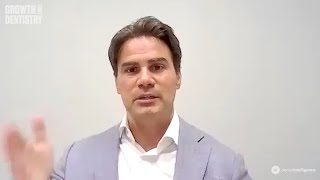
Matt Coggin, CEO of SPEAR Education, says dental practices face three big trends: consolidation, consumerism, and digital change. The problem: operating costs are up 25% while revenue grows only 8%. Practices that succeed focus on people, go-to-market strategy, and product, with SPEAR's programs delivering $500 to $1,000 per day in production gains.
Chapters
I tend to break things down to, do I have good people? Do I have a good go to market engine, and do I have a good product?
This is Growth in Dentistry, a dental intelligence podcast where we ask the question, what does growth in dentistry mean to you? I'm Steve Jensen, a data dental nerd and your host. Welcome back, everyone, to another episode of the Growth and Dentistry podcast. I'm excited about today. I our prep call. In case you didn't know, I do prep calls on these and my prep call with Matt was one of my favorite that I've had in a very long time. He's sharp and this is going to be a fun conversation about trends in the dental market and how we're thinking about solving them. Before I jump in with Matt and really introduce him, a quick shout out to the marketing team at Dental Intelligence for sponsoring this podcast week after week. A lot of work goes into it. And for any listeners that haven't checked out Dental Intelligence for a while, or if you've never have, they'll give you a $50 gift card just for checking it out. Maybe to give you, like, a little insight into, like, what they've been releasing. AI is a huge buzzword in dentistry right now, and a lot of folks might jump into Dental Intelligence and think, holy crap, like, I don't know what to do with all of this data. We have released two things recently. One, a scorecards tool that allows you to grab any metric or number you want to look at. But along with that, in the scorecard, there's a little robot icon that you can click on and it opens a chat interface which where you can ask an AI bot. It's called Di dot. Anything you want about the data. Hey, I'm a hygienist. I have a review coming up with my doctor, my owner. Can you highlight a couple of things that I've done really well this last year, and it will actually go and analyze your performance and give you insights into what you've done. Well, to help prep you for the meeting now, you can use it for all sorts of things, but if you want to check it out, like I said, A $50 gift card just for doing a demo. Okay. With that out of the way, I want to introduce Matt Goggin. Thank you, Matt, for joining us today. You can say hi.
Absolutely. Thanks, Stephen. It's great to see you again.
And for those that don't know Matt, Matt has a rich career in healthcare. He spent the last six years focused on dentistry. So for a little over four years, he was at OR5. Yeah. A little over four years at Dentsply Sirona in executive roles there, most recently senior vice president of over their Clear Aligners program and then just over two years ago made a transition over to SPEAR Education and is both president and CEO at spear. And SPEAR for those that don't know as well is a new partner of Dental Intelligence. We have some really exciting things that we wanna do. We wanna make a splash and make sure that we're helping doctors and clinicians and businesses be as successful as possible in a changing market. So Matt, I just wanna start by saying welcome and then I wanna hear from you. You're just like a wealth of knowledge. What, what kind of trends are you seeing in dentistry that you think we ought to pay attention to?
Yeah, well thanks Stephen for the opportunity and Dental Intelligence. We're really excited at SPEAR to be partnering with a company like Dental Intelligence as we really look to I think take education and training development into the future. But, but more specifically around the trends. I think the thing, the thing that ultimately drove me, or really I, I maybe I'll use the word compelled me to pursue the CEO Spear is really looking at some of the challenges that are going on in dentistry and, and you know, whether it's the pre or the post Covid environment, it's the consumer behavior and you see consumer sentiment and things like that, it was very clear that sort of professional services were going to be really critical. And I think the thing that dentists were struggling with is it's never tough for a really smart person. And by the way, all dentists are right, they have to take DATs, they have to go through dental school and do really well in undergrad to get into dental school and then obviously take their boards. But it's never about getting educated, it was always about implementation. And when you really break it down and like the major trends, and maybe these are always underlying trends, is a dentist is a small business owner, right? The majority of them are small business owners. And even if they're in with a consolidated group of other like minded dentists, they're still running a small business, a brick and mortar location. And the thing that's always been intriguing is the operational requirements in making that practice work. And I think where you start to look at it is it's easy to implement sometimes a new technology or bring in a new technology. Very hard to actually see the real ROI on that because it isn't just about learning it yourself, it's actually how you implement it across a team. Very much like large Companies have to deal with, right? They have folks that predominantly focus just in making sure implementation works well. And when you go into a dental office where it's, let's say a dentist, a hygienist and a few other personnel within that practice or team members, there's nobody that's focusing purely on the development and implementing. Whether it's a new tool, a new procedure, what have you, it all falls on the dentist. And I think what you're starting to really see is you're seeing some of the challenges in that digitalization of that digital transformation and how it takes hold. And it becomes very disconcerting to a dentist or a practice owner or even an associate saying, hey, I want to invest in the future, I want these capabilities. But I'm having a hard time seeing it work the way I'm hearing others talk about it. We all suffer from the peer influence or what we hear through marketing campaigns. But I think when I look at, again, going back to the major trends right now that I see impacting dentistry, you have a lot of consolidation. So you have a lot of folks buying practices and this whole notion of how do you bring an associate through the development pathways to get them fully utilized or fully implemented within your practice is a major challenge that's happening. I think the other thing that's really been challenging is just overall consumerism. And when I speak to dentists, I spent most of my career really on medtech and healthcare and bringing or transforming those businesses into digital businesses, bringing in professional services where you're not just selling an MRI machine, you're actually packaging it with uptime services or some additional value added services to drive long term contracts. So a completely different thing. And when you look at dentists right there, you're seeing a lot of equipment, a lot of tools being brought in and just really struggling with being able to get that dentist on board. So you take a simple situation like an early dentist coming out of dental school, they haven't even spent that much time in the clinic, let alone now they have to learn how to utilize tools. They're being asked to introduce new procedures and then be able to get that conversion of that patient really hard, by the way. And when I start to look at it, I tend to try to bring things down into a couple of key themes. What I see is I see there's a lot of consolidation, as we know, we see a lot of consumerism, and then you see sort of this digital transformation taking place. And I think the dentists are really struggling with trying to figure out well, what does this mean? What does it mean for a new dentist? What does it even mean? And one of the things that's really interesting about Sabir is that a lot of our Spear customers are doctors or dentists that have been in practice for 10 plus years. And believe it or not, they may have the tools and to be equipped with driving, you know, that whatever procedure that they want into the practice because they've been working in the practice or on the practice for many years. But now they're concerned about bringing on an associate because they know that's the next step in their journey. And I had this conversation with somebody just after our Spear summit where she had come up to me and said, it's so interesting to see that you're focusing on those early dentists because that's where my husband and I are struggling because we want to bring on an associate. We've been thinking about this for two years and you know, I'm asking, well, what's the issue? Well, the issue is I don't have enough time to train and develop Associate. And then I said, naturally, well, why don't you hire a more seasoned dentist? And they're like, well, that could be even worse for us because we want a certain type of experience in our practice. And now you're bringing in somebody who has an already predetermined experience. And now how do I go fix that? Again, I don't even have time to train and develop an early learner. How do I have enough time to train and develop somebody who's already built some type of behavioral patterns that I may not want in my practice? So. So I think this creates a real conundrum for the small business owner and how do they address it? Because unlike me, and I always say this to dentists, as a CEO of Spier or CEO of any company versus a CEO of a dental practice. You know, for example, the dentist I know I have to equip myself with really smart business professionals who have to make lots of decisions on how do I do change management. That's really what it is. It's about change, getting leaders to make lots of decisions and delegating down authority. Well, in a dental practice where you have oftentimes single digit in place, who's going to do that? Yeah, and that's where I really think there's an opportunity for Spear and an even partnership with dental intelligence to really help a dentist do this. How do we reduce that friction, that pain? And I think the underlying challenges with some of the things that I laid out Is that when a dentist is in the business, when they're actually in the four walls of the dental practice, they have their hands in their patients mouths. Right. They're in operatories working on things. I will tell you as the CEO of spear, I don't, when I'm in the four walls of, of spear, I am not actively selling or managing the clients. I have people doing it because I'm trying to think through how to grow an organization. A dentist's time to think about growing their organization is when they're home and there's no employees around.
Yeah.
And so when do you actually create change management? How do you manage it? So these are really interesting things that I think ultimately as the dentists are trying to think through, how do I deal with consumerism, how do I deal with the consolidations, how do I deal with implementing new procedures, how do I deal with hiring an associate or how do I deal with being an associate and trying to get to a point where I could get a return on my dental license investment? These are all things that we're trying to solve for that, for that customer at Spear today.
Yeah, I think speaking to the trend as you were talking, just to throw some data out there, if folks want to go research this themselves, a couple publicly available things. One, if you go look at, you know, the Bureau of Labor Statistics website, they actually will outline total number of dental practices and you can go look at the last several years and it actually has remained pretty flat in the US So I mean a slight growth, but relatively flat. So we're not seeing, you know, a wild number of new dental practices be open for everyone that, you know, closes. There's a new one that opens roughly. But then if you go to the ADA's website, the health Policy Institute, they're like Data army is the one that tracks supply of dentists pretty well. Like okay, how many folks are, are retiring and then how many new dentists do we have coming into the market? And you can see that that is growing at a much faster rate than number of clinics. So what Matt, you know, to, to speak to his point to say, hey, we have way more associates now than we ever have before. And I think a lot of dentists are probably considerate because they're seeing it happen. They're hearing from, you know, their, their dentist friends down the street, their dentist friends from school are hiring associates. And Matt, you know, I've heard it because I'm at conferences all the time. But there's probably like for every good story of man, I hired an associate. It's going so well. It kind of feels like a marriage and it's going really positively. The divorce rate in marriage I think is 50% sad. And I don't know if that's true with associates. I don't have stats on the so called divorce rate in associates. But every good story I hear, I probably hear some nightmare stories where it's like, man, I hired this dentists and you know, we all were well meaning but then at the end of the day it didn't work out and it's been kind of a, you know, a rocky road. Do you have any ideas on, you know, I know that's one of the problems you guys solved. Spira is just known for, you know, one creating clinical excellence in that doctor owner. I think they've do that over and over again for years. But I know you guys have helped with this associate track as well. How do you think about introducing an associate into a practice kind of clinically and helping set them up for success?
Yeah, so what we're really trying to do at SPEAR is we are making a pretty significant pivot over the last year and moving more towards that early dentist because Spirit was always known as that good to great place for the general practitioners or interdisciplinary care. That's still our underpinning, which is still awesome and it's still trying. Now it's focusing on that early dentist to say, well, how do we take somebody straight out of their dental school and accelerate them through certain tracks? So we do that through sort of approach of blended learning. Right where we think especially the Earl, the, the modern or I will say the recent, whether it's the millennia or whatever generation you want to talk about is they are used to not having to be in a, in a, in a classroom setting all the time. So how do we create learning experiences for them to really accelerate that? So what we've really devised now is something we call GP Jumpstart, where we want to get them into a really accelerated approach over the course of a week. And then we're building out pathways of learning. So it's not just watching a video, it's actually watching well curated content on. Here are the things you need to be prepared for when you walk into the classroom. Here are the things you're doing in between and here's the things you'll do when you go out of your practice. And then we also layer in other aspects of things like here's the thing you need your hygienist doing. Here's the thing, thing you need a Dental assistant to be able to understand so that you could be able to accelerate your learning or, or the introduction of those procedures. But I think that's really. You talk about, right, A big issue in the market today is really the retention of these associates. Like the interesting thing is when I look at, and I've, I've run, I've run or been part of global businesses, this is really the first time where I've been more US predominantly based US has always been a significant portion of most business I'm working. But where we're, let's call it 95% in the US with aspirations to go outside. But when you look at this, some interesting phenomena is when you look at the global markets and where you specifically look at the US you see the US as a real laggard. And what you see is you see over the last couple years, and this is really post Covid, we'll say roughly top line growth in dental offices. Let's say over the last three years, about 8%. Not awful, probably not what a dentist thought it would be. But when you look at the overall opex of the cost increases, that's up about 25%. So for those that are managing their P L, that number doesn't work out for the person that's overseeing the P L, right. They've lost all their leverage and they're finding, hey, I'm the least paid person in the practice because I'm taking less money every year with that type of a number. Some do exceptionally well. And so now you have to look at me and say, well. And I always ask dentists the same question. Well, you have a lot of things that you're trying to introduce into the practice and you have a lot of frustrations. Clearly the P L will determine you're frustrated because you're making less money than you made last year. You've got labor costs that are up, right? Hygienist costs up, dental assistant costs, cost of rent, etc, you know, the products that you're buying. You probably don't have sophisticated procurement systems. So therefore you're, you're taking price increases. So, so what gives? And I gen tenly think this is where you have to double down and say how well am I training and developing my team, right? So whether you're bringing on an associate or you're bringing on the next hygienist, how much time are you actually dedicating? And most of them would tell me very little. And that's what we want to help you with because that's critical to Any business, you look at a company like Apple and what does Apple do amazingly well. Well, they invent products, right? We know that they're great innovators. And now if you look at their service business, their service businesses are, would be top 20 companies in the S and P, huge businesses that they've been able to build. But if you look at the folks that are leading that business, they will tell you the reason we can grow. Yes, we have great products, but it's because we develop amazing talent to do those things. We have talent that understands our customer and what insights and what's the next thing to build the next service or what, how do we build a commercial infrastructure? And so that stuff is really, really difficult. And where, where I think in the end, where, where we're going to be best serving a doctor and where the doctor is best served in fixing a problem is you have to spend time developing your talent. And it's hard in a small business, right? Like in my business, somebody may come in and as analysts with an idea that, hey, in the next 10 years, I want to get to director or vice president. There's very few people in a small business that says, hey, I'm coming in as a hygienist, and in five years I want to be the director of hygiene of this dental practice. So how do you create pathways, how do you create learning that ultimately complements the different functions in that practice so that you could go grow your business? And that's really where we've been honing our skills and honing our product more so in content, in blended learning, in services, community, to really bring that doctor to not just learning things, but actually implementing things. And so I think that's what's going to be really key, you know. So again, going back to just the associate is where do you start them? We all know where we want to get them to, but how do you move them through a pathway that they can appreciate, they can manage? And I tend to look at what, what is the norm today? And the norm is there's a lot of education being done in workshops at Spear, which we tend to be very partial towards. But everybody, every OEM or manufacturer, everybody. And you say, okay, well, how effective are they? And I think they're pretty good. But are they really, really effective? Probably not. Why? Because I always say, you may take a course on a Friday and leave on a Sunday. When you get to the airport on Sunday and head home, life punches you in the face. You realize now, wow, okay, well, I've been here learning something I've got an emergency that's coming in first thing Monday morning. I've got. I always laugh. My wife called me one time at the airport and said, hey, I think the pool pump is broken. Why do you think that the pool's green? Oh, no. Like so you know, these are the things that you have to deal with. And my point being is you forget 50% of the things you just learned because you got to go back to life. And what we're trying to really do is, hey, how do we help you with that? So that's why we built a blended campaign of workshops with live or virtual or on demand learning for not just you, but your teammates, your hygienist, etc. Your cross functions or your team members in the practice to really ensure that you're implementing the things you're trying to learn. So we tend to be very now focused, whether it be the associate or the doctor that's in that. How do we get ROI going quickly for that doctor? Because something like dental intelligence, we want you to use dental intelligence, but where we layer is we like to helicopter in and really help you. Here are the things that are going wrong. Here are the things. By the way, I think you have a hygiene problem. We need your hygienist going through this curated content and we'll measure the outcomes for you. And in the end it hopefully just gives everyone peace of mind that you have somebody working with you that almost is like an fte, another full time equivalent, but an MBA who's really thinking about your practice, your patients and how to drive the best outcomes. Yeah.
And that's something I want to hone in on that I've always appreciated about Spier. And if folks haven't had this experience, I just want, I want maybe Matt to, to speak to a little bit more is is people will go to conferences. And one thing I'll just say is that the world is full of people with like really cool ideas that could possibly be implemented. Or you might have a lot of really cool ideas clinically where it's like, oh, that would be interesting if I did this procedure more in my practice. Things that Spier has always done a really good job at, from my perspective and is helping clinicians close that gap between good idea or good education and actual implementation. And part of that has to do with what you just mentioned of making sure you have a system so that someone can check in and say, hey, look, we did this course on this procedure and now we're a month later and it looks like you've only tried to present that procedure one time. So we're not going to get to clinical excellence by once and not actually getting any cases completed. And you guys, along with kind of a study group of people can help keep each other accountable. Will you talk us through? Because it's beyond just accountability. I think it's also helpful to have, I know you guys do smaller study groups. So I think it's also helpful to have kind of that group environment where I can check in if I'm presenting a case and I'm like, ooh, I don't know for sure how I should tackle this problem. I know you guys collaborate and set up that as well. Will you talk through kind of that path of getting from good idea to actual implementation?
Yeah, so it's, it's a great question. I tend to think, I tend to think businesses that thrive to. You use a system, you use the word system. And I think that's, that's actually Right, right. You have to have a system. And so for a dentist, in order for them to get a procedure introduced, get the patient to say yes and then ultimately get the patient to pay, there's a system that you've built, right. And hopefully you built it so it scales, meaning the hygienist is probably talking to the patient about this. Here's where the dentist comes in. Here's how the treatment plan coordinator is able to close that. Right. It's a system that you build. And that's where really what we're focusing on, how we go about doing it, is our own system. So our own system is, we tend to look at it as almost like three legs of a stool. You have blended learning, which is again, this live and then on demand approach to make sure you're implementing. Then we like to put you into, or curate you into small group learning. So where we've historically been very good is building these study clubs locally where it says, hey, I want to take a like minded dentist and I want to spend time with them because I think that's important to learning as well, which I fully agree with. So we take the blended learning, we take sort of this, whether it's a live or even a virtual study club setting that puts you in, or even, I'll use the word curate you with like minded people to help you in your learning pathway. And then thirdly, we layer services where we actually have growth partners with complementing the dental intelligence information, really standing on top of the practice, monitoring it. And we're trying to be that partner to you to say hey, to your point, you went and took a course with us to learn how to do clear aligners. But we know what your goals are and we're below the expectation. Here's our diagnostic, here's what we want to go create. We think you have an issue with your financial conversations or we think you have an issue because you're sounding too much like an orthodontist and you're a general practitioner, you're not an orthodontist. We want you to fit this message into an overall restorative approach because we think that creates the most amount of value for the patient and we think it creates the most amount of value for the practice, but that we do that between both goal setting, obviously discussion points with our pgps, but utilizing software like Dental Intelligence to help us understand what's going on in the practice. But we, again, that's the system we're ultimately building. Because what we want to make sure is, and I always say this to the team, I, I don't know if I want to be known as the best educator, what I want to be known as. We are the training and development company that creates the best roi. Because, you know, ROI isn't as good as cash. Cash you could ultimately take to the bank. But I think it's the Nespecs thing is that, hey, I wanted to, I set out to do this because I wanted to do something different. And then someone helped me with that change management process. And in the end, here's the benefits of me. And we see this like when we look at our KPIs when doctors go through sort of our foundational training. You're Talking about a $500, I'll use dollar terms, but about a 500 to $1,000 per day increase in production by just ensuring. Now I could have probably just said, hey, come to the courses. I don't think we would have netted 500 to $1,000 because I think all of these things have to be complimentary because we know you, you're going to come to the course. But truthfully, even the smartest and most intelligent dentists are going to forget 50% of it.
Yeah.
And it's always about how quickly can I get to that first patient. And as we build more future our product, we really want to be that secondary clinical support as well. So you go back on Monday and you're like this patient Steve and I have, I'm a little, still unsure about something. You can dump that information into a chat with us and we could immediately be corresponding to you like, hey, here's what I would recommend on the treatment plan or here's what you may want to think through. Okay, thank you very much. And boom, you move on, because it helps you get to that first patient sooner. And I think that's always the key to change, is decisions have to be made. But something has to happen along the change management process because if all the change happened at year month three, you're never going to change. There's too many things that get in the way. This, team members and this conflicts. And every practice owner or any dentist will tell you, oh, I could tell you all about the conflicts that arise in my practice. We're here to help that. And, and I think that's how we're trying to layer our system to be able to complement the dentist system.
Now I'm going to ask, I'm going to, I'm going to zoom back a little bit back to the practice owner and, and, and make sure that this gets layered on so that it's helpful for everyone. So, number one, as you were listening to Matt, you probably were thinking to yourself, maybe you're a practice owner and you're like, this would be super helpful for me. Maybe rewinding back to the very beginning we talked about, you know, associates need this path towards clinical success. And there are so many dentists out there that don't feel like they're ready to go, like, really create a pathway to success and sphere can help fill that gap. But Matt, I want to ask like a high, a really high level question. I think I don't want to boil down practice ownership or executive leadership to this maybe so simply, but I'm going to. I think most people, if you think about owning a business, really, your job as a business owner is to make three to five really good decisions in a year about how you're going to move that business in a positive direction. If you can execute on three to five really solid decisions for the business, then you're going to move it in a direction it's going to be really exciting. If we fail, if we make the wrong decisions, then we can move that business with a few poor ones in the wrong direction. So from your perspective, you know, you're so involved with the dentist, which I think dentist training is probably one of those, one of those critical decisions we can make. As we're thinking about, you know, right now, we're halfway through a year, so people might be thinking to themselves, like, okay, like, what am I going to do to finish this year strong? Or maybe they're starting to think about next year and goals already. What are some of those, those, you know, key decisions that you see dentists make? You mentioned specifically, you know, on the PNL costs going up at a much higher rate than our growth rate. What are some of those, you know, decisions you see practice owners making that are covering that gap so that they're able to make up for the, the increase in costs with their growth rate? Like, what are they, what are the really good ones doing?
Yeah, well, listen, I'll bubble this down or boil it down to, I think regardless of whether you're a dentist or anybody, I think it's just business in general. Yeah, right. If you want to succeed in business, I'm sure there's a lot of other, there's this, exceptions to this. You've got to have great people around you. You've got to have great people. And, and I think I tend to break things down to do I have good people, do I have a good go to market engine and do I have a good product? And I think that's where like a dentist needs to look at that and say, okay, do I have the right procedural mix for my patients? Do I know how to present to them, market to them, et cetera, and be, ultimately be able to close it? And then do I have the right people who are making those decisions? Because a dentist can't be in every decision decision. If you're, if you're disappointed with your acceptance rate, maybe you're phenomenal at it. But the problem is you need the hygienist and you need your treatment corner or maybe your office manager to do that. And one of the things that's really interesting I brought in an early part of the discussion, this whole consumerism approach. I always ask a dentist, when's the last time someone in your team said, hey, I think I figured out how to increase our patient acceptance rates by 5% next year by doing this. And they're all like, never. I'm like, yeah, you probably go to an event, you talk to somebody, a peer, and you come back and you're like, hey, does anybody ever heard of this tool or has anyone ever. I need you to look into it. And you know what happens? Nobody looks into it. They're busy. And then you forget about it. And then you might see that peer two months later or share an email, and you're like, what happened with this whole thing? That's the challenge in business. And I think what we're all trying to strive for, to answer your question, you've Got to create standard policies. Like any business that's going to grow has to scale. Everything can't be manual, everything can't be grunt work. Eventually you set a procedure or a standard procedures and policies book. And I don't want to get too technical and imply that, hey, you have to have this big, well defined document, but, um, in fact, you probably don't need that. But you have to have some standards that people can live by, and you have to measure the progress of those things. And what I tend to think that dentists struggle with is building a real standard of excellence in the practice. And then how do you. How do you evaluate it? And that's why I actually think the really complementary assets like SPEAR and dental intelligence are like a perfect marriage. Why? Because there's a lot of patient activation, there's a lot of other things, but then there's strong analytics, as you know, with dashboards to see is the stuff. Stuff working. And then SPEAR is, well, if it's not working, here's what we need to go do to go fix it. And by the way, we'll help you do that because we can help monitor that with you as a real partner. And so opposed to having to hire somebody coming into your practice for three months straight, we don't do that. Right. We're looking to really, again, be this ongoing partner, to really continue to evolve your business or your dental practice for whatever point you are, whether you're going to sell to a dso, whether you're a DSO trying to hire an associate or you're struggling with labor because you have lost three assistants this year, which has a. Has an associate impact. How do we fix these things? And I think everyone in the same in dentistry is struggling with this is how do I fix this? And it comes down to, do I have the right people? And then the other thing is, and I'll just add this last point, do you have somebody who's dedicated to making sure you have the right people? Because we've all made bad hiring decisions. I've always heard my whole career where someone will say, you got to hire better people. Well, you know, truthfully, I'd like to think I'm a good interviewer, but I'm not that great. We've all made bad hires, but the question is, what do I do with that bad hire? Are they bad because I haven't developed them, or are they just bad? Well, it's really up to you to figure out how to go solve it. Right. You could certainly make the case that I just have to Continue to keep hiring all new people, but you're never going to grow that way because it's very rare if you're paying somebody. I'll use arbitrary numbers. If you're paying someone $10 an hour, it's very rare when you get rid of them that you hire someone at $9 an hour. Yeah. They usually. Beside the recruiting, you're paying 11. Yeah. Right. And that's like, oh, that's 10% increase on what I was paying before. Yeah. Now you got to figure out how to grow 10% just to offset that. Right. So it's. This is the stuff that it's really hard. At least as I talk to dentists, I can see their frustrations play out. Right. We hear about all this burnout that happens in dentistry. And I'll share just a quick. So I actually went to medical school. I chose not to be a doctor, and instead I chose the world of investment banking to start my career. But the. But I have a good friend, he's an orthopedic surgeon. And I remember my buddy calling me and like, hey, you need to call him. He's down. He was 33 years old. Me, I already had a career. I've got a career. I'm living outside of the US at the time. And so I give him a call. Hey, how are things going? He's like, man, I'm just bumped. Like, I'm frustrated. I'm in a lot of debt, and I've got. I landed an associate at an orthopedic clinic in New York City or practice. And it was a very, you know, interesting moment where the doctor said, hey, man, I'm not gonna give you patience. I've now given you a practice. You go find yourself some patience. And he goes, and I've come to the realization that I've spent all this time educating myself and going into massive amounts of debt to learn how to be a business owner. I now have to learn how to market myself. I have to learn how to manage employees. I have to know how to recruit, develop, fire. I never thought about that. I wanted to just work on someone's knees and hips.
Yeah.
And you realize this is the complexity you're dealing with. You can charge for an expensive service, but if you don't build a business that functions around you really hard to meet the expectations you had probably when you set out to have that career. And. And I. I think in the end, that's where we're really sensitive to that. That's our main insight at Spear is how do we reduce that friction, because I think dentistry, the one thing I've lear. Dentistry is vital to health care. I've looked at enough studies to say it's critically important. But why are the same 60% of patients coming in? Or why is the percentage of patients in the U.S. still the same as it was in 1970? Yeah. Still 60% of the population comes in. The population's increased, but it's still 60%. So, like, you looky, but to me, I look at it, that looks like a TAM marketing issue.
Yeah.
Well, how do you go fix those things? Right. So these are all things that are always on my mind. But I really do think that we at Spear are trying to solve this for a dentist. And it doesn't matter whether you're an associate. It doesn't matter if you're the practice owner. We think we have the opportunity to really get you to the point where you really could feel like you've excelled or hit that growth curve. Even in a market that's difficult, or even when the consumer sentiment is the declining, we have enough evidence to show that, hey, our customers have weathered a lot of this well. Why? Because they've implemented a system that just works. And that system includes the people they have being supported through that change management.
Matt, this has been super insightful for me. It's been so fun to chat. Can't believe it. We're already coming up on time as kind of the last question I ask to every guest. It's the, the namesake of the podcast. It's called the Growth in Dentistry podcast. So I always ask every, every guest, as a final question, what does growth in dentistry mean to you? So I'd love to hear your. Your answer to that.
Yeah, well, I'll, I'll. Maybe I'll try to look at giving you a different answer. Maybe it's a little bit of a dovetail off of what I just said. I really think growth in dentistry is getting more patients to access dentistry. Cool. I definitely think that there's plenty of pipeline or Runway with existing patients that are coming in, but still wonder how on earth in the US we don't have 80% of the patients coming into dentistry. I really. That's where I look at it. Such an attractive marketplace because of those economics. And how do we go pursue it?
Yeah, I love that as a call to action as well. Like, hey, there's. There's so much space to go be curious in. In a place that we feel like, man, there's all this innovation, all these people doing cool stuff. You might feel like there's not an opportunity to, to innovate. But man, you're not wrong about that. There's ripe opportunities, especially with the advent of technology. I've thought about that. AI diagnostic tools making it way more accessible for people to find out, hey, what's going on in my mouth? And then start moving towards clinical combos is going to be really fascinating. Well, thank you, Matt, for joining. It's been awesome.
My pleasure.
Best way for people to get in touch with the team at Spear.
Yeah, look, you could obviously use our general mailbox, but, you know, all of us could be found for me if you ever wanted to send me a note, M cogginbeereducation.com but you could hit our website, speareducation.com we just reskinned it, so we're making it certainly much more friendly for the user. But, but yeah, we'd, we'd love to talk to you, see if we're the right fit for you. And, yeah, and I, I wish I remembered my, our main office number, but, but you could probably find that on the website.
I'm on the website. I'm on the website right now. It's super slick. You can see the numbers there on the bottom, I think. 866-781-0072. I'll throw the, I'll throw your email. I'll throw the link to the website in the show notes for folks that are listening, they have events that they host. There's obviously you can just, you know, request a consultation with them team, kind of chat around what your goals are and, you know, what would be the best, you know, way to approach tackling some of the problems you're facing. But they've got all sorts of great offerings, so make sure you make sure you go check them out. As you can tell, like, Matt's the one that's leading the charge here and you can sense his passion to go and help solve real problems in dentistry and make sure we have measurable outcomes, which gives me a lot of confidence personally. I hope it does to the listeners as well. So thank you, Matt, for joining us and thank you to listeners. This has been another episode of the Growth in Dentistry podcast. I'm Steve Jensen, your host. Thanks for joining and keep growing. We'll talk soon.
More from Sean






Growth Through Patient Retention with Michael Dinsio and Paula Quinn of Next Level Consultants




Creating a Profitable Practice using Fee Negotiations with Kelsey Porter of Beacon PPO Solution