Practice Growth Deep Dive: Dr. Avi Patel
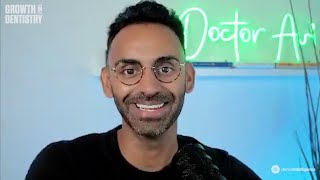
Podcast interview (Growth in Dentistry) with Dr. Avi Patel on implementing clear-aligner treatment in general practice. Dr. Patel recounts his path (NYU, roles in DSOs, burnout, pivot to aligners), explains how aligners improved practice revenue and job satisfaction, gives practical startup steps (choose a brand, plan for a scanner, get baseline education, use team members as early cases), clinical referral boundaries (refer Class III, bilateral posterior crossbites, teenage cases, deep bites >4mm), and operational/marketing advice (start on existing patients, wait ~10–12 months before paid marketing). He reports early metrics: 50 cases in first 6 months, typical price noted ~$4,800 per case, and peak production ~ $100k/month. Final takeaway: growth means staying open-minded and acting on what aligns with your mission.
Questions this video answers
50 cases
$4,800
About $100,000 in overall production per month
A projected 30% compound annual growth rate through 2030
Aim for about three aligner starts per month initially
Chapters
So the fact that my patients were in tune with their mouth, now they wanted whitening, now they wanted some, you know, cosmetic bonding and stuff like that. So it's like. It's kind of like aligners are like the gateway to. To more fun dentistry, but at the very baseline, it's just really good from an oral health perspective.
This is Growth in Dentistry, a Dental Intelligence podcast, where we ask the question, what does growth in dentistry mean to you? I'm Steve Jensen, a data dental nerd and your host. Welcome, everyone, to another episode of the Growth in Dentistry podcast. Super excited for our guest today. This is actually a topic that I haven't hit yet. I've talked a ton with a lot of guests about how to take the practice, make it more profitable, how to think differently about the business. But the way we're going to discuss general dentistry and how I think about my dental practice today is going to be totally different than any conversation I've had before. Now, before I jump in and introduce our guest, I want to give a huge shout out to the marketing team at Dental Intelligence. They sponsor this podcast and help me produce it week after week after week, which is a ton of work. So I'm super grateful for that team. And as always, they have a special offer for listeners of this podcast. If you'll do a demo of Dental Intelligence. They're releasing lots of cool new features. They've got a really cool, like, AI Scorecards assistant. So if you're not data savvy, you can literally just ask this AI bot about your data and it will give you answers like, hey, here's what you're doing well, and here's what you're struggling with and could work on what else is cool and new. They're getting ready to release a new integration with Dentures Ascend. So if you're using Ascend and you haven't loved what you're getting and you want to look for other options, we're going to have an option for you here soon. So, like I said, they'll give you a $50 gift card just for doing a demo of the software, which is super cool of that team. Okay. With that out of the way, I want to introduce my guest for today, Dr. Ari Patel. Now, he is in Austin. He graduated from NYU Dental School, and he is just one of the coolest humans that you'll meet, so you'll get to know him better as he and I chat. But his big focus right now is as a. And you can, like, clarify if you want, like, a more fancy title, but he educates on clear aligners in dentistry. So that's going to be kind of the main focus today, is how do we think about the profitability of our business? But not even just that. How do we think about our lifestyle and the way we're engaging with our community as a dentist and as a professional. And I just love Dr. Patel's take on this topic specifically. So welcome, Dr. Patel, to the podcast.
Thank you so much. Pumped to be here. Yeah. When. When we were chatting before, I. I know we hit. We hit a couple of things where. Where, Where. Where you wanted to just record that session in and of itself, but I'm excited we're doing this. I'm happy to. I'm happy to dive in.
So let's. Let's start just by giving the audience a little bit of just background on yourself. Why'd you get into dentistry? Why nyu? And how'd you end up in Austin? And let's get that far.
Yeah. So for me, growing up, you know, I always, honestly, I wanted to be a basketball player. I was 510 in middle school. I thought, you know, I was destined for the NBA. Favorite player was Kobe Bryant. Got to high school. I went from the tallest to probably one of the shortest or, like, average. I mean, I'm 5 10, so I'm not even, like, that short. But, um, yeah, that's when my parents kind of smiled and laughed. You know, Indian parents. They're like, looks like you're gonna need to go into, you know, medical, dental, or. Or be like, a lawyer or something. And so I'm like, all right. So I went. I went up to New York, and I shadowed my uncle. He's a dentist. And I was. I realized, honestly, like, I was just drawn to the way he was living his life. Like, you know, he was working a couple days a week, vacationing, golfing, has three kids, nice car, helping people, like, all that. So I'm like, this is pretty cool. So I shadowed him, and then one of. The. One of the nights I was there, he. He had a dinner party, so a bunch of his friends were there. I was talking to one of his friends. He was a neurosurgeon, and he was like, look, it's like, looks like you have to make a decision, you know, do you want to do. Want to go to medical school or do you want to go to dental school? So I'm like, you know, I was thinking about it, we were talking, and then I'm like, kind of looking around, and everyone else is like, kind of having A blast. And he's talking to me, this like, 16 year old. I'm like, by the way, like, why aren't you, you know, with everybody else? And he's like, oh. He's like, I'm on call tonight. And I'm like, ah. And it was like a Friday night. And I'm like, yeah, I don't know if I want to, like, be on call when it's like a Friday night. So it sounds like, you know, very small. But that to me kind of was like. I also don't want. I didn't want to go through, like, so much more schooling. This is just like the brutally honest version of. Of why. So it was a very, like, process of el type of thing. But I saw dentistry honestly, as a profession where, like, I call it the three pillars. Like, I could have time, make good money, and feel fulfilled by helping people. So that's what drew me in. And then so applying to dental schools. I grew up in Florida. I wanted to get out of Florida, so I applied to a bunch of northeast schools. Wanted to get into a city. New York was definitely on my radar. NYU heard really good things. Just from what I heard, you know, you just get a lot of good clinical experience, and I feel like that would be important and a good thing to go off of. I didn't really have any thoughts on specializing or anything. I just. I wanted to go somewhere where I could, you know, learn a lot. And. And yeah. And so I got in, came out, and my. My whole thing is I didn't do a gpr. I didn't do a residency because I just wanted real world experience. I was like, look, I'm gonna have to be in the real world one day, so why not just go for it now? I kind of saw a residence. Honestly, again, this is like, maybe silly, but I just saw residency. I'm like, oh, that means I have to, like, work in a hospital. And, like, that's literally why I didn't want to go be a physician. So I. If I have to go to a hospital, there's a way to skip it. I'll skip it. So, yeah, I started off in the. Started off working in Connecticut. I was in a couple different practices and.
What part of Connecticut? Stanford.
Yeah. So I was living in Manhattan and taking the train up to Stanford.
Yeah. Area.
Yeah. Yeah. So I was doing that. And then six months in, like, I got let go from my job, and it was mainly because the practice just wasn't busy enough. I also think that, you know, as a dentist, like, I Don't think my skills on, like, the patient conversion, you know, treatment planning side, I don't really think they were. They were strong enough to. To be successful. So this is where I was getting, like, that real world experience. And. And, yeah, and so I kind of. I mean, I worked in a bunch of practices first couple years out, and I was always, like, looking to grow, looking to learn. And, you know, they tell you when you come out of school, like, you know, find a mentor, lean on them, and that's the best way. But the reality is, is, like, there's not mentors just hanging around. Like, it's all. They're all business owners, they're dentists. They have, you know, they're trying to also run a practice. Like, they're not trying to spend time mentoring. So, yeah, I just wish somebody told me, like, hey, you can look for a mentor, but you may not find one. So you got to kind of like, take it upon yourself to go. To go get the education.
So I got to interject and say one thing just about mentorship, because I have kids come and ask me all the time, like, hey, like, I just want. I need more mentors in my life. Like, I got to, like, I just want to, like, learn from the best. And I think the idea that they are visualizing with a mentor, someone that will, like, sit next to them and spend just hours and hours and hours, like, talking back and forth. And one of the realizations I had this is probably. I don't know, 10 years ago, I started to get into podcasts. I mean, like. Like, most people, I think in their, like, late 20s, 30s, and I had this, like, aha moment when I realized, man, like, we live in the coolest time when you could never meet another person, like someone who's the absolute best in their field, but they could technically be your mentor in the more, like, actual sense of it. Like, the reason why you mentor is you want to like, sit there and just kind of like, listen to the people who are really good at the craft. You're trying to get better at, like, talk and explain it and, like, observe them. And with, like, YouTube and podcasts and, you know, Instagram and TikTok, like, all these, like, video content and audio content options. Like, you can. People have been so cool to share so much information. I just want to, like, I want listeners to hear that. Like, hey, if you're sitting there thinking, like, man, like, my life would dramatically change if I had a mentor, like, the most brilliant business minds can be your mentor if you just sit down and like, okay, I'm going to commit to starting to listen to their podcast hours and hours. Or maybe in, like, this scenario, like, listen to Dr. Patel and we're going to get into the clear aligner stuff. And you're like, man, if I just had a mentor that could, like, really talk me through the clear aligner game, then, like, you can get that without even having to, like, necessarily be, like, side by side with someone. So, sorry, Sorry. Back to your story. You. You wanted mentorship. You were struggling.
I. I want to. I want to just pour into that just for a sec. Yeah. Like, it. We. I. I tell my wife this all the time. I'm like, how cool is it that, like, now that I'm kind of, you know, I've been entered this. I've entered this entrepreneur side, this phase of my career where it's like, there's no playbook on this, but all I need to do is just listen to people who are successful and it's the cool thing. And I'm sure you've noticed this is the more you listen to super successful people, either in your industry or out of the industry, they're all saying a version of the same thing. Right. Consistency, do the boring work, like, all that stuff, and it's, like, cool. Like, if everybody saying this, I should probably just do that. And then, like, over time, you know what I mean, you gain the skills. But, yeah, like, there is no more excuse for not having access. You have. We have the most access to people than ever before. So. Yeah, and I've got a YouTube channel and everything as well. Where. Where that's like, kind of my way of giving back and in the sense of. Of providing that content for people. But. But, yeah, where were we at in.
The story you were up in? You were commuting up to Connecticut and just feeling like you had mentorship and. Yeah, that's where we were at.
Yeah. So, you know, in between different practices, constantly going into each one with, like, a positive outlook and, like, a goal of something that I wanted to learn. So early on, I was like, I noticed, like, dang, I suck at treatment planning and case acceptance. So then I was, like, trying to take these different, you know, courses to learn how to do that and communicate. Then it was like, all right, I want to get really efficient and good at filling. So I did that. And then it was crowns and extractions and you slowly start leveling up. And then I hit a point during the pandemic where I was just burnt out. Like, I was just so burnt out. On the bread and butter where I was like, there's no way I can do this for the rest of my career. Like, this is not. I'm just not enjoyable. I don't feel like I'm making a difference. Like, those three things of like, time, money, and fulfillment. Like, I didn't have any of them. Like, I didn't have time. I was working six days a week, wasn't really making that much money compared to like the student loans and whatnot. And then I didn't feel fulfilled. I was like, this is, I'm just like drilling in people's teeth. And like, it just, it didn't, it didn't seem like it was making a difference. And so we moved down to Texas. I joined a DSO there. And then this dso, it was, they were unique. They were small, but they were like, hey, we are going to let you guys have access to whatever you want. So if you want to grow with implants, aligners, whatever it is, here's the resources. Knock yourself out. And so by then I'm like, cool. I'm not going to let this opportunity slip. There was a webinar. Dr. Christina Blocker was giving it. She teaches about clear aligners. She's with Invisalign. And so I was like, she's like, hey, if you ever need help on a case, let me know. So I leaned on her and I started doing aligners. And I was like, hey, can you just like, help me? Like, what do I need to know? What do I. What, what do I need to refer? And how can I just do this in a very simple way so that way I can help my patients. I started 50 cases in my first six months. I didn't think that was a big deal. But all the reps started to flood into the office and they're just like, what are you doing? And I'm like, oh, I'm just talking to my patients about it. Again, this was a insurance based, blue collar state employee practice. This was not an aesthetic cosmetic practice at all. But I was just approaching the conversation from the oral health sides and that resonated with patients. Now very quickly, I, I am now making more money than I've ever made. I. I'm only working four days a week and I'm actually being a part of.
I was just doing the math, by the way, because if, if fellow dentists, you kind of know what you charge for clear aligners are probably thinking like, okay, like, how many is that a month? So that's a little over eight cases a month. You were Getting started in those first six months. And then what were. I don't know if you remember, like, what were you charging then?
Like, I think we were charging like, 4, 800.
Okay. Yeah, so 4800. And this is like. This is like, top line revenue. 40 grand. But yeah, like, that's like. That's like a good chunk of your.
I was. I was doing like 100k in an overall production a month, and I was barely doing restorative.
Like, divide that by 16 working days. We're talking about, like, 2500 a day in your, like, production goals that you're knocking off just from these clear liner starts. Like, that's pretty. That's pretty sweet.
Yeah, it was. It was. Yeah, it was awesome.
And. And.
And there was no external marketing context.
Like, I know for sure there are associates out there who consistently will have like, 2,500, $3,000 production days, you know, so.
Yeah, but you're doing, like. Like three crowns, right? Like, couple crowns, bunch of fillings. Like, you have to do a lot of, um. So it was totally cool because it changed the way that I practiced in the sense where, like, if I. If I got an aligner start, there was almost no pressure in the sense of, like, I wasn't thinking about what do I need to diagnose, like, the way And. And dentist to dentist, like, you know, any. Any dentist listening. Like, you know, when. When you know, the month is going and it's been slow, like, it's. You're not necessarily pushing procedures on people, but, like, you feel the stress because you're like, dang. Like, we've been. You know, if you've got goals, like, you've been missing goals. And so it was just a really nice way to, like, take that pressure off while still helping the patients. Right. And. And I think that was the coolest thing that aligners did, is they were a very profitable and productive procedure. For me, it brought that spark back, and that's where I just leaned into it. And so it's funny because while I was doing this, the other dentist that I was working with at the group, much older, about 20 years on me, and he was like. Because then at the dso, everyone can see everyone's like, production numbers. And he's just like, dude, he's like, you are crushing it. But, like, you're never on the clinic floor. He's like, what is going on? And I'm like, He's like, you're just always on your computer. And I'm like, oh, yeah. I. I just started, like, A bunch of Invisaligns.
And Dr. Patel's making tick tocks in the back, getting. Yeah, he's.
He was just like, what is going on? And I'm like, yeah man, this is what I'm doing. And then so he's like, huh. I never really, you know, I never really did that. And so I started teaching him. He had success. And then that's when like my, the next passion of mine kind of was born of this education side. And, and I think from there I started to want to do more of it. Proposed to the group that I kind of do it in house for them. They just wanted me to produce, which is totally fine. Everything happens for a reason. And my wife was like, you should just start consulting on the side. And so that's when I started working with doctors one on one practice owners and, and basically teaching them how to implement this from A to Z. And it was this brand agnostic. That is when I started posting on social media and making, making reels. And then that started to, it started to catch momentum. People were interested, not just from, I mean from all over, honestly, the world. Like people from South Africa were like, dming me, wanting help. And I'm like, whoa, this is, this is cool. So then I created a course, had an online course, and then that was the focus. And then kind of doing both practicing and education, splitting my time and then eventually going all in on the education piece because I just saw the opportunity. Like the gap in the industry is so big because this procedure is the, it's the fastest growing procedure in dentistry. It's got a 30% compound annual growth rate projected through 2030. So there's no other procedure that is growing at this rate. And it's all because of the marketing that align and SmileDirectClub has poured into the general population. So everybody listening here has patience in their practice that want this procedure. They just don't know if they qualify for it because you're not talking about it. And, and that's the thing is like dentists think like, oh, I need to. I want to do a new procedure. We got to start marketing for it. And it's like, no, you need to first understand it, know how to do it, and then start talking to the existing patients because you can actually start cases without putting a dime into marketing. So that's kind of the philosophy there. But let me ask this question.
Imagine, I imagine some people who are listening may have. We could kind of take this two directions. Some people may have started to dabble, but haven't really gotten started and some maybe just haven't for whatever reason. Maybe some of the common reasons might be like, oh, I just want to leave the specialty work to the specialist. You might want to address a few of those things. Why clear aligners at a general practice? Is it important, you know, clinically to set kind of some boundaries for yourself on what you try to tackle and what you don't and, and why kind of. Why clear aligners, you know.
Yeah, absolutely. So the, the first piece of like taking away from specialists or leaving it to them. So when you really look and I totally understand that sentiment. I've, I just, I talk to specialists all the time about this and what it is, is, is it's, it's mainly focusing on adult ortho. Right. So today most general dentists are just referring teen or completely wild stuff to the orthodontist. Right. Everybody in between the adults with like the moderate, like, they're not even talking about it. So like, if you think about the opportunity and just the, the patients who we are neglecting. Right. Because as providers, as a general dentist, like, it is our job to identify, to identify, diagnose, treatment plan and then either treat or refer. Yeah, we're not even diagnosing this. So it's all, it's all undiagnosed stuff. And so to your point. Yes. When you're starting, the biggest thing that I see with doctors is this. They don't have any confidence with case selection. And so I do believe strongly that general dentists should not be taking on advanced case is. And then just to kind of, you know, share what, what kind of are some guidelines on like, what you should be referring, you know, you should be referring Class 3 cases. All of them don't even try to touch them. Bilateral posterior cross bites. Like I said, teenagers, deep bites that are greater than 4 millimeters. And I think if you can stay away from those cases, the rest of them you can kind of take on a case by case basis. I've got a bunch of resources that I'm, you know, happy to share where, where I go over all that stuff. But that's kind of the mindset and to your point of like, you know, I'm just going to let the orthodontist kind of deal with it. If, if, if you don't talk about this and notify the patient, they're never going to, like, they're not going to go like, patients don't know, oh, I need to go to the orthodontist to do this. So we got to show them. And then why clear aligners? Honestly, I think clear aligners are a procedure that kind of complete the last piece of the puzzle to be like a comprehensive dentist. And so what I mean by that is like, you know, dentists, they all, everybody, you know, dentists want to get into cosmetics or, or they want to, you know, ensure that their patients are good, right. Long term. So if you just think about it, like, if someone's teeth are not in a healthy position and their forces are, you know, misbalanced, and teeth that are not built to take forces are taking them, like, everything's just going to break. And so, you know, when you've got patients in their 30s or 40s, sure, everything looks decent, but. But I tell dentists, like, think about all the 65 to 70 year old patients that you see whose teeth are, are completely worn down. They've got a bunch of issues, like, and now you have to actually go and do, you know, invasive procedures to correct it. So it's like, don't you think that if they had an option 30 years ago to just align stuff like, that would be beneficial? And most of the time it's. Yeah. So one of it is, like, it's for the patients. Like, that's why aligners. The second is, dude from a practice builder, it's nuts. Like, you, you give these plastic trays to a patient, they go home, and then for the next eight months, they are taking this out at every meal. So there's like this plastic with like, you know, some saliva, like a string of saliva coming out at every meal. So think about from a marketing perspective how amazing that is, because every single human being that they have a meal with, with, whether it's a family member, a coworker, a friend, the next thing that that person's gonna say is like, oh, like, what are you doing? Like, what is that? Like, oh, I'm doing Invisalign. It's like, oh, who are you doing it with? Oh, I'm doing it with doctor. You know, I'm doing. With Dr. Patel. It's like, oh, wow. Like, how is it going? It's going great. You should go do it. What do you know? There's a referral, right? And it's like it, it, it builds in the marketing when they're not even, you know, in the practice. So it's during treatment. And then after, obviously that's like a lifelong referral. But then it actually, what I saw is it opened up these patients to more dentistry. So the fact that my patients were in tune with their mouth. Now they wanted whitening, now they wanted some, you know, cosmetic bonding and stuff like that. So it's like, it's kind of like aligners are like the gateway to. To more fun dentistry. But at the very baseline, it. It's just really good from an oral health perspective.
Yeah, I like that conceptually, like.
It.
Will help organically grow your business in ways that maybe you didn't expect. So, like, and I'm going to put some words in your mouth and then maybe you let you speak more on this kind of like, what, what is. What are the bare minimums to get started is going to be my question. But once you get rolling, that totally makes sense that you're going to get way more organic referrals from your customers commenting about, hey, you got to go see, you know, Dr. Patel to get your clear aligners done, which will just, you know, decrease the amount of money you have to spend in marketing to get the new patients, I'm assuming, kind of out of the gates to get started. You're going to have to lean into some marketing spend to get some of these starts going. I would assume. So kind of talk through, you know, what, what does it take to get going? Or maybe not. Maybe to your point, there's demand within a patient base with adults, and if you just start talking about it, maybe you don't have to spend money. So talk through, like, what, what do you do to even get started? Maybe even just mention, like, what equipment you might need, what relationship might you need with supplier, you know, in order to even get with Clearliners.
Yeah. So first thing is like, decide which, decide which brand you're going to use. Right. There's a bunch out there. Invisalign. Sure. Smile. Clear. Correct. Ortho effects. Candid. There's a bunch. So first thing is, like, do your research, talk to people, watch videos, talk to the reps. Um, figure out which brand you want to use. Then the next thing is you're going to want to pair it with a scanner. You don't necessarily need a scanner to start. However, if you actually want to do this the right way and you really want for this to be a profitable, you know, profitable part of the business, you need a scanner at some point. So first pick a brand, then at least have in your mind, like, all right, at some point I'm going to need a scanner, then I say get some baseline education. Just get the education so you can understand the core principles and what you need to do from there. You don't need to spend Any more money, start talking to patients, start getting this going. And when you're selecting your education, make sure it's actionable. You don't need a library of material. You need just the core stuff to get the ball rolling. Start acting on that. And then what that allows for you to do is it allows for you to get the reps in yourself, but also with your team. Because if you start introducing this procedure, that's like $5,000, it's probably the one of the most expensive things you offer. You're gonna need your team to get better at communicating right at that. And maybe you already have a phenomenal team that can do it, but most don't. And that's okay, because if you're practicing on your existing patients, like the bar, like the threshold for performance is not. It's not that high because you've already got this inherent trust with these patients. So, like, if it's a little clunky in the beginning, it's not a big deal. But that allows you guys to get the reps in. Now you've got this internal system built out. Then I always recommend docs wait about 10 to 12 months before they start investing in marketing. Because as you know, anytime you have you do marketing, anytime you spend for marketing, you are just going to amplify whatever you're currently doing in your business. So if you've got a ridiculously good high converting case acceptance, you know, arm in your business, whether it's for implants or aligners or something, if you go throw marketing dollars at it, you're going to blow that up. The exact opposite is true. If you can't convert cases and you go through a bunch of marketing dollars at it, you're just going to literally light your, your money on fire because you're going to get all these patients in and then you're not going to be able to convert them. And then you're going to look at the marketing company and being like, what the heck? Like, these patients aren't good patients. And they're going to look at you and be like, what are you talking about? Like, you just, you guys don't know how to convert. So that's like a whole nother conversation. But yeah, out there, if anyone's listening.
Thinking like, I actually, like, don't know for sure, for sure what case acceptance is. That's one thing that dental intelligence will do. Like, no cost, like, you didn't have to buy anything. They'll do what's called a snapshot, and they'll just review with you like, hey, here's your exact clinic flow. Like, how often, when I do an exam, how often do I diagnose and what kind of procedures am I diagnosing? And then what's my patient case acceptance? So, like, how often do I get patients to say yes to at least something? Like, I present a whole treatment plan, do they say yes to at least something? And then we also look at of the total dollars I'm presenting. Like, how good, how good am I at converting to completion within the first six or 12 months? So that's something we can totally help out with. If you're sitting there thinking, like, okay, like, I would love to get an idea of if I'm going to throw, you know, if I'm going to. I don't want to burn my money. Like Dr. Patel said, that's something we can totally.
Yeah, we were actually using dental intel at the group that I was at and it was super helpful to be able to see the numbers. Right. It's like, cool. How much am I treatment planning? How much is being converted? Like, where's the opportunity? And then. Yeah, and there's a bunch of cool features. I like the follow up feature too, where it's like, you know, if there's patients who haven't accepted treatment, like, there's a way to contact them. Yeah, there's a bunch of really cool stuff that you guys have.
Yeah, you just made me want to like, dive into like a nitty gritty conversation around how do you, how do you think around case acceptance with, with clear aligners? But I don't want to go there. I don't want to go there yet because I've got a different one that's like right in this same train of thoughts we were talking about, you know, like, marketing and getting the ball rolling if you're getting started with aligners. And as you were talking, you mentioned earlier, like, there's no better marketing than like a patient taking that tray out when they're talking with friends or even, you know, people will notice, like, if you're, if you're, if you're close with someone and you start talking with them, like, you'll notice, oh, wow, like they've got something on their teeth, you know, And I think, I think most people are aware, like, that's, that's, you know, a clear liner that they've got on. And so then it's pretty natural to ask about it. So what, what are your thoughts, Dr. Patel, as you're getting going, you know, you want to get some cases started you could present to just patients. What are your thoughts about you know, offering maybe like, I don't know if it's like one or two team members where you're like, hey, I'm just going to like eat the cost. But knowing that those team members and assistant or hygienist, if they want to do just some like, because it's probably going to be minor with those team members, they're very like teeth conscious anyway. But my wife's a hygienist and she just had clear aligners a couple years ago because she just wanted some refinements. Her teeth got a little bit, you know, off and she just wanted to fix some of her occlusion. So if you have a team member wearing the aligners, I can imagine that that also brings up lots of organic conversations and they can say, oh yeah, I'm doing it right now. You know, Dr. Patel's doing it for me. That makes it feel more natural. What are your thoughts on starting 100?
100, that's a, that's a great way to get started. That's super common with doctors is they will start with a team member or two. And to your point, yeah, it's, it's an organic conversation, right, because you go in, you diagnose now all of a sudden they look and they're like, yeah, like I'm doing it. And then they can. And then, and then when the doctor leaves the room, they can have like this very open and honest conversation. And yeah, we had a couple team members that, that went through it and it, it's definitely, definitely a boost for sure. That's a great, great way to start too.
It seems like a pretty, a pretty like sensible way to start getting exposure and isn't like, as a doctor, you know, I just meet so many doctors that like, they don't want to be pushy, you know, maybe to a fault to some extent, but that's like a pretty non pushy way to get going, you know, like encourages your team members. They'll start having conversations just more naturally to get to you. So what would be a good goal if I'm going to get started with this to like make it worth my time. I've got to buy a scanner. I'm probably going to pay for some courses. Like I'm sure there's free content out there, like I mentioned, but I'm probably going to have to pay if I want to like really make sure I've got like my wits about me for the whole thing. What would be a good goal to make sure that like, the investment in getting started with clear liners is actually worth it. Like, what, what should I kind of try to do?
As a general dentist, you're talking about, like, getting, getting, like, how many start.
Yeah, how many starts should I try to shoot for once I get the ball rolling.
Yeah. So, so my, my thing is like, once, like, let's say you're investing in a course, you want to be able to, to, to get an ROI from that course where you're at minimum making your money back on it. Right. And that's, that's kind of the philosophy where it is. It's like that should pay for itself within tenfold. But like, I would say to start, like starting off with three cases a month is, is very doable, you know, and, and, and that's what, three cases, about 15K. So like, as long as the course is less than that, you're good.
And then can you, can you say, like, if I need to get three starts done, what is like, do you have. I actually don't have a pulse on this. I, I want to go look now. Do you have a pulse on, like, hey, a doctor who's really good at presenting clear liners, how many cases do they need to present to get three starts versus maybe a doctor who's kind of average? Do you have a pulse on that?
Yeah. So it's a, it's a scale. I don't have like an exact number, but just to kind of showcase what that looks like. So if you think about it in the beginning, and you've never done a case and you've got this patient population that you've had for a little bit, you know, you're going to start talking about something that they've never been diagnosed with. So in the beginning, you are, I look at it as like, don't think you're going to convert everybody. What it is, is you're planting seeds. Some of the.
Convert in a couple of appointments.
Yeah, exactly. In six to 12 months. And so all the initial conversation, it's just, you're planting seeds, like, have the farmer mentality where I'm planting these seeds, some. The, you know, the soil is great and like this thing is going to shoot right up and it's going to be awesome. Those are going to be some of those initial starts. But just know and don't get discouraged where. It's not that they're saying no, they're just saying not right now. Right.
A lot of people kind of, they just want to kind of financially plan for it. They're like, okay, that's it. Give me five, six grand. Cool. Well, maybe I'll wait till like next April when I get my tax refund, maybe save up a little bit and then we're going to be rocking and rolling. So that's a, that's a really good point. Just start planning those seeds with all the patients.
Yeah, but like from a goal, I say like shoot for three to start. Like that is very reasonable. And what that does is that will ensure that you're having the volume of conversation now over time. What happens is it's kind of that mentality where it's like the person who talks about it more is just going to have a higher, they're just going to convert more patients.
Like with anything, like you swing, you swing a bat at a, at a baseball enough times, like you're, if you do it way more than the next person, you're gonna hit the ball more often. So that's it.
That's it. And so what it is, is it's like the whole like awareness phase. Like a lot of your patients, you just need to bring awareness to this issue. Then obviously, you know, you give them the information they need and you can showcase with the scanner. If you don't have a scanner, I recommend just use like a patient mirror, have them bite on articulating paper and then just give them the mirror and show them the blue marks on their teeth and just be like, hey, you see those like heavy blue marks on the front teeth? Like that's where your teeth are colliding. They're crashing into each other over time. This is going to wear them down. It's primarily because they're not in a healthy position. So if you'd like to get them in a healthy position, we can do that. That's kind of a very easy way to, to get the conversation going. But, but yeah, a lot of it is, is, is planting those seeds and staying consistent, right. Making sure that at the six month appointment you talk about it again, right. If you, if you treatment planned it and, and it's there whenever you guys are doing your morning huddles, that should pop up like, hey, we d. We treatment plan this on this patient, get in there, talk to them. Hey, you know, we discussed this last time. You know, where's your head at? You know, what are your, you know, are there any issues? Oh, you know what? I actually totally forgot to talk to my spouse. But you know what, let's just do it. I know I need it. I want to get it done like the number of times that happens, it's wild. And so it's like, I know I didn't give you like a direct answer, but in terms of, you know, average and really good, it comes down to the consistency. Like because you, you could have a doctor that is like not the best communicator, but if they are showcasing with a scan, just highlighting the couple issues that the patient has and then providing it as a solution, they're going to convert. Because at that point it's just, it's just a matter of time.
Well, I'll share this. The average dentist in the U.S. if they present $10,000 of treatment, gets about 36% of that treatment completed over the next 12 months. So you know, about a third. So I would assume that average, probably clear liners, probably jumps into that same category. So you know, if you're going to present, if you're going to present 10 cases, you know, a month, generally speaking, that should average out to about three. And then if you get really good, the top performing dentists are doing, you know, more like 60 to 64% of the dollars they're presenting are getting done. So start to do the math where.
It'S like, I would also, so I.
Would also, instead of three starts from presenting to the same number of patients over time, like that's going to have a big, a big impact for sure.
I would also say with those numbers because in my head I was going to say like about 30 to 40% as like a baseline. But those ones that are in the 60 to 70%, it's also probably because they are now including in marketing. Right? So they're driving in patients that are already desiring the treatment versus somebody that's like not even aware. And so that naturally your numbers are going to go up. But you don't need a 70% start, like a 70% acceptance rate right off the bat. Because if you, if you do that, you're, you and your team are going to probably get very overwhelmed. And so yeah, I think that's what it is because like on the marketing side, like you put out an, you run like a meta ad on like, hey, have you ever had braces and you stopped wearing your retainer and your teeth moved? You know, these are the things that can happen. Come on in, we'll give you a free consult and then you know, we'll talk through some options. Like guess what? You're gonna attract a bunch of relapse easy cases and those patients want it. So when I just show em and I say, hey, you could do this. What do you think they're gonna say? Like most of them are going to move forward.
Yeah, yeah, that makes a ton of sense. Now I wanna, I wanna wrap up on this topic. So I think it's pretty obvious that, that financially aligners can be a really exciting thing for a practice. It can, it can give you way more flexibility on schedule, on lifestyle. Like you can, you can get more dollars of dentistry done without having to feel like I'm like cramming my schedule, Chuck, full and jumping from exam to exam and from filling to filling. So I, I get it like experientially that way. But will you talk a little bit to just like the, the mindset shift? I think you, you had mentioned to me that you were pretty burned out after a couple years of dentistry and starting to do the clear aligners really helped you to like enjoy their profession more. So can you talk about that a little bit as we kind of finish up?
Yeah. I think the biggest thing is when you go from being like reactive and drilling, filling and just kind of looking at decay and trying to just solve for that. It, I don't know, like, it really just wore down on me. Like I just like I felt like, you know, I was putting a lot of effort into my work and I was getting, you know, some satisfaction. It's not like there was no satisfaction because I knew that, you know, I was helping them. But honestly, it was just like you start to look around and you're just like, you know, this is a lot of work and effort that I'm putting in. And like I'm not really. Like the patient barely cares. Like they barely care. Like to them it's like, oh, it's just a filling. And I'm like, dude, like my isolation was on point. Like I got everything going. Like you're not going to have any sensitivity. Like it's all those little things that, that we kind of hyper focus on and it's like 180 bucks. So it's like, what the heck. So that just got. That started to kind of get old and then, yeah, with, with the liners and the shift. For me, I think it was the fact that I was able to be part of a transformation. Yeah, I think a lot of dentists got into dentistry for that cosmetically driven. But I think at the end of the day it's that impact. Be able to guide your patient into this thing. And, and where it really hit is when I actually had a patient go through. And then afterwards they were like, hey, I'M actually flossing now more than ever. Like, what? And they're like, yeah, they're like, because I had to take my trays out every time I ate and I, I brushed my, my, my floss used to rip. And so they're like, because my teeth were so close together, my floss would break and so I would just not floss because it was so annoying, but now it's actually easy to floss. And so that was like the light bulb. I'm like, oh my God, this is, this is cool. Like patients are actually flossing and I don't have to like, you know, get, get my hygienist to hound them for it. It was cool. So I think like, yeah, it comes full circle where I think for me, right, like I said, like, what got me in was, was seeing the time, money and fulfillment piece that, that my uncle had rarely with this procedure being the driver where, you know, because I was making more money and then the fulfillment piece of literally just being a part of patients journeys and, and being able to do a really cool procedure. I think, think. I think you kind of package all that up and, and yeah, that, that's what really hit home for me. And it just, it got me excited and so now I'm just, I'm trying to help other dentists experience that.
Yeah, I wanted you to hit that. That's so cool, man. I think I wanted you to hit that because there are so many dentists that get, you know, five years in, 10 years in, 15 years into their career and then they kind of have that like that moment where they're like, crap, dude, am I really going to do this for another 20 or for another 30 years, like, or can I do this? And so I just think it's cool hearing you talk through just the community it creates like just knowing your, like, you're right. No one. There's not a patient that finishes getting a feeling and goes into work or goes home and they're like, dude, you gotta go see Dr. Patel. He just crushed this feeling. Like that doesn't happen. But you help a patient with a clear liner case and all of a sudden they've got this new sense of confidence about their smile. Yeah. And they tell people and it creates a sense of community in a way that I can just imagine. It adds a new layer of fulfillment into a career that's really exciting. So I want to make sure folks hear that. Well, I know we're up on time, so Dr. Patel, I end with the same question with every guest and that is, what does growth in dentistry mean to you? The podcast is called the Growth and Dentistry podcast. So I just like to hear every guest's answer to that. What does growth in dentistry mean to you?
That's a great, great question. So growth in dentistry means to me having an open mind to new things and taking action on, on everything that is aligned with your mission.
Simple. That was so good.
There we go. Glad you like that.
I love it.
I always get nervous whenever whatever podcast like, oh, we asked this question. I'm like, oh, man, what, what is this question?
I thought on the spot. Perfect. And then for, for listeners that might want to get in touch with you, I'll just comment too. I'll throw this website in his website in the, in the show notes. So clear aligner advisor co. Right. So not co. So clear liner advisor co. I'll throw that in the show notes. So if you guys just want to click on it, you're driving. Don't have time to like write that down. I'll throw that down there. How else can they get in, in touch with you? You mentioned you've got a YouTube channel, obviously as well.
Yeah, YouTube, Instagram. And I just hopped on LinkedIn a couple months ago, which I was anti LinkedIn for a while. I just never used it as a dentist. But it's, it's been great. It's, it's been awesome. That's how I got connected with Ashley. But yeah, Instagram handle is Dr. Avi. And YouTube channel also is Dr. Avi. I, I, I, I monitor all my stuff. Like there's, there's not. People see like, they'll see like my followers and they'll be like, they'll be so shocked that I actually respond. I'm like, dude, I'm a normal person. I'm also addicted to Instagram. Like, sorry, I'm on here. So, yeah, just shoot me a message there. All of our resources, you know, free, free things. If you want to get started with trainings, those are on the website. And then for those of you that are ready to kind of go to the next level, you know, we've got in person and online stuff to help. But, but yeah, thanks for, thanks for having me, man. This was awesome.
Yeah, thanks for joining. I think this would be really fun for folks to start wrapping their mind around, you know, how do I really get clear aligners going in my practice? And anyway, thank you so much. So fun to hear kind of conceptually how it works, how it can impact a career. And you're a cool person. So great. Great to chat.
Thanks, man. I appreciate it. This is awesome.
Okay. And to listeners, thank you again for joining us. This has been another episode of the Growth in Dentistry podcast. My name's Steve Jensen, a fellow data nerd. Keep growing and we'll talk soon.
More from Sean






Growth Through Patient Retention with Michael Dinsio and Paula Quinn of Next Level Consultants




Creating a Profitable Practice using Fee Negotiations with Kelsey Porter of Beacon PPO Solution