How to raise $1M after accelerator | Как привлечь 1 млн долларов в стартап после акселератора
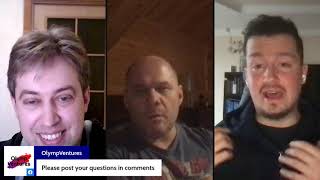
Bogdan Hutkowski, founder of PropertyMate, talks with VC expert Kirill Paranov about raising $1M after accelerator, entering the US real estate tech market, and scaling a startup from a post-Soviet country. They cover accelerator experiences, fundraising strategies, and what founders need to break into the American market.
Hello guys. I'm very pleased to, to see you here in our stream at Alan Ventures. Please welcome Bogdan Hutkowski. Bogdan is our, let's say, very famous startup founder. Well, as far as I remember, I Met Baghdad First 2 years ago in Lviv and Baghdad there was treated like a local superstar. Actually I remember this feeling and I would like Bogdan to explain us his achievements and his walkthrough to this, let's say, to the current state. And also I would like to welcome Kirill Paranov. He is the co founder of Olympia and he's, let's say he's in a venture capital business for more than 15 years and he's got several, he's got three, three teams in accelerators now. So now let's talk guys about the now. Now we speak English because here in our audience it seems that it's the most convenient way of communication anyway because we have mixed audience from different countries, from Russia, Ukraine, United States and whatever. So let's talk English anyway. If you want to be back up with a venture capital, it's very natural that you understand English really good. So it's very pity for our, let's say for our podcast for our broadcast listeners if you don't understand English. Guys, it's a perfect opportunity for you to, to get the idea. So first of all you can join, you can listen to our broadcast here at our Facebook page of Olympia. Also you can see it in our SaaS founders closed business group. And also you can follow this link on Kirill's page. So first of all, Bogdan, you're very welcome. And could you tell us a little bit more about your project, the property management system? Yeah.
Yeah. Thank you for the introduction. Thank you for having me, Kirill. It's really nice to meet you. Yeah. So I will try to be as helpful as possible and like share all of the insights that we've learned so far. So long story short, my name is Bohdan, I'm Ukrainian. I was born and raised in Lviv and talking about PropertyMate, like the company that I'm involved with at the moment. So it was like a little bit more complicated than just starting up with idea and then doing something and finding any kind of success with that. Because like when we were starting up, we had totally different idea. So when we were just starting with PropertyMate, it was more like CRM for real estate agents who were interested in working with like new constructions or new developments in New York City. Right now it's more like Marketplace with where home buyers can access all information about new constructions and where real estate developers can easily find clients and sell new homes faster. Right. So that's just like long story short. So it's not like property management system, it's probably closer to a marketplace or like lead referral platform that basically helps home builders to sell new homes faster and helps home buyers to, to access all information about new constructions, compare different homes and listings and then we help them to go through that transaction process as fast as possible. Just like eliminating all of the barriers that can handle them from buying home.
Okay, nice. But if we speak about real estate, especially in the United States, it's a highly competitive market. So what's let's say the secret sauce? Because huge amount of real estate agencies with decades of history, how do you find your unique place there?
Yeah. So what's pretty cool about real estate in the US that the process of buying a house haven't really changed for the last 30 years. Right. And while there's been like a lot of different technology advanced in resales market, new construction market was mostly untouched by technology. Right. So probably everyone knows now about Zillow, About Trulia, about realtor.com about like many different platforms that people are using to find resales properties, but with new constructions that's totally different. Right. So home builders, they're working the same way how they work like 30 years ago, they still use Excel spreadsheets to work with their inventory. They still buying billboards and try marketing and radio to find their clients. And it's really complicated and nothing really changed. But what's been a life changing moment for us that before that we were mostly targeting off market properties with real estate agents and we were trying to attract agents who were providing, providing us with the inventory. And we were using this to basically create some sort of network effect. But after pandemic, what actually happened that majority of home builders, they almost eliminated their marketing budget. They decided that like you know, that market is into a certain position and they were not sure if buyers will buy real estate or not. And they decided that like we will just decrease our marketing spending and we'll figure out what will happen next. And basically our business model from the very beginning was based on commission sharing that we were always positioning ourselves as a platform or as a solution that is actually helping you to sell real estate and you pay us only when you close on the deal. And that was what we were offering to these home builders. We told them like you just need to provide us with your inventory and then we will market this inventory to agents. And we'll see what's happened next. If we will make a transaction, you will pay us a commission. And we like use that momentum to actually grow more than 40 times at the beginning of pandemic. Because on the start of the pandemic, in the March, beginning of March, we had like roughly 10 new construction communities in our platform. By the end of May, we had almost 400. And the more we were talking to real estate developers, the more they mentioned that they want to connect with home buyers directly. Right? And that's like another problem. So if we'll look in a real estate market of the United States in a nutshell, you'll see that right now is like, is booming, right? So homebuilder confidence is higher than in 2007. Like prices are growing faster than in 2015. 5. Right. So that's like market is crazy right now. And there are like, couple of reasons for this. So first is that there's all time lowest interest rates. So right now to take a mortgage for a new house is like easier or cheaper than to rent. Another thing that today we have the lowest inventory level at any times because people are afraid to move because of COVID And still there are many people who want to buy new homes, but there are not enough people, people who are selling them. And third reason is that like because of pandemic and work from home like lifestyle that many people have, they started moving from large megapolises like LA, San Francisco, NY, to other cities that mostly have better climate and that have like a better taxation policy, let's say to Texas, where we operate right now. And because of all that stuff that happened, like real estate markets started growing so fast. But you can find information about resales, but there are not many resale listings in the market right now. So the biggest source of market growth and new inventory in the market are new constructions. But new constructions don't know how to market in today's age, right? So they were buying billboards, they were, you know, buying advertising on the radio. But when people are sitting at home, they're not listening to radio. They're not, you know, checking different billboards. They don't know about this new construction. So what do we created? Basically that's like the platform that has very unique supply like new construction real estate that is not presented anywhere else. And like comparing with say Zillow, that has around 750 new construction listings on their platform in the area where we operate in Austin, we have more than 6,000 listings. So that's like almost 10 times higher amount of inventory. So that's like, if we can call it like a secret sauce. That's definitely is.
So it seems like Bogdan for you going to the States was a very good strategy, right? So can you tell like the younger guys, is it better for them to. What's the goal to market strategy that you use? Do you start with like cold calling LinkedIn or you reach out to them or use some agents? How did you go about this? Did you find doctors and the other guys followed this like very interesting stuff.
Yeah, yeah, that's really, really good question. So first part of the question, like if, like if you should be in the United States, I think that you should be where your customers are and where your market is, right? It's very important to understand your market. And for us, you know, just looking back when we were trying to build this from Ukraine, we had too little knowledge about the industry and being on the market, talking with the people who are involved in transaction and are involved in the industry itself, it was like extremely helpful for us talking about our go to market strategy. So we used several channels, we did cold calling, we did outbound marketing, cold mailing everyone. We tried almost everything. So at the end of the day what worked out best for us. So we as a two sided marketplace, basically we even have like three audiences. We have real estate developers, we have agents and we have buyers. In terms of builders, we still do cold calling, right? So we just have relations, we have like phone numbers and like emails of every builder in the area and we just call them, we asking them for the inventory, we try to set up relationships with them and we try to present it to them as like risk free deal. Right? Because they're paying us nothing at the moment. We just need to get their inventory, we need to sign some sort of commission sharing agreement with them and that's all like it's risk free deal, we're giving them free leads. That's working up easily with agents that the same stuff mostly like majority of our growth that we have with we had with agents were through email campaigns. So basically in the United States you have access to like each agent is like basically sharing information about himself to get clients, right? So it's not a problem to get information about agents and then market to them. So we were using different outbound campaigns, cold mailing them, sending them information to like what should they do and why should they register in our platform, etc. In terms of buyers, we still very dependent on performance marketing. So probably majority of our budget is going to Google Ads. We also probably 80% of our traffic is coming from search ads. We just figured out the way how we can acquire leads from let's say from Google and Bing and then just transform this marketing qualified leads to sales qualified leads and then convert them into transactions. So so far it's working well for us. So that's what we're doing.
Okay, can you tell me a few words that you are now the residents of techstars Austin, right?
Yeah, so we've been, we actually like alumni of Techstars Austin. So we graduated in March 2020. It was like 11 days before the total lockdown that we had in Austin. So you can imagine that we were in the middle of fundraising. Right. So we just gradated from Dexter's Austin. We were having like 60 meetings a week with different investors, angels and VCs. And then lockdown is happening and at that moment no one knows what's going to happen to real estate next because travel went down like hospitality went down. Real estate went down also pretty quick because majority of people were thinking about real estate as a mix of residential and commercial. And in terms of what we seen about wework about other companies that have been in commercial space, they went down really heavily and no one really knew was going to happen to our company. And we also like, we were very concerned about our future at that moment. Right. But actually after that we've seen that market went up pretty quickly and it worked out great for us. But answering your question, we've been in techstars Austin. That was like an amazing experience. Right. Like, so it was four months that can be like was probably more valuable than any other program or any other like educational stuff that we can imagine. So it was a great experience and we are super grateful for techstars team for other cohort members that we met there. So it was an awesome experience.
In your team. What's the percentage and how much on average like and what valuation did you raise? It was not the same.
Yeah, so yeah, so it's like unfortunately it's not a public information. So we've raised I like concerning about Techstars. It's public info, right? So you're raising basically 120k for 6% and there's the mix of like equity deal and convertible note but that's roughly the same for everyone. But with techstars it's not like it's not more about money. So like right now we understand it's probably, it's easier to raise money anywhere else with better relation at like Bigger check or with better relation and it's like in general not a big deal but in terms of network and assistance that you're getting there, it's really priceless and like techstars as a brand is really helping you to raise in the future. They're helping you to connect you with other investors with funds and network is probably the biggest value. So I think that it's totally worth it. In terms of our second round, so we raised like 1 billion. So it was pretty standard as like let's say us typical US round for the sixth stage. So I'm just, I don't really want to disclose the valuation and all of the terms but it was like pretty standard deal.
So most of the guys they raise on valuations around 6, 7, 8 you would say roughly.
Maybe. Yeah, it was, it was in that range. Yeah, yeah.
Can you tell a few words maybe about the day to day activities in accelerator? Because a lot of people ask us okay guys, should we go to accelerator before or and then to continue with the VC funds or should we go to VC funds directly? If we are international company outside of the U.S. what do you think about that? What approach could be better and could give more value for the company?
Yeah, I think it really depends on the stage of the company and experience of the founders. Let's say you have mature experience and you worked in several really cool companies before and you know like what you want to do next and how you want to do this. Like of course it would be smarter if you will go to like and raise directly because it will help to get you basically like better options in terms of money and everything. Especially if you have experience how you plan to build it and what do you plan to do next? If you are not sure and you feel that you have like the lack of network lack of experience and for you that might be like it's at the end of day that's like story about the time, right? So just like if you want to build the same network you will get from Techstars or Y Combinator or like even from 500 startups, it would take you years to get that level of network and connections that will help you to accelerate your growth and execute really efficiently. And I think in that case that really makes sense because you basically they help you to just avoid majority of the mistakes you will make at the beginning. They will help you to accelerate your traction to the stage where you're basically able to raise the meaningful financing round and they will prepare you for everything that will happen next. Otherwise it's also possible. Right, but from what I've seen, like many companies that are applying and then companies that got in. So companies that got in, they've got the better performance over the term. But it all depends. Just recently I've heard the story that one guy who I know, he'd been like previously executive in Zillow, and just recently he raised like $40 million seed round, right? Like without the product, without the company, without anything. And probably he didn't need to go to techstars or YC because like, you know, he nailed it pretty well. But majority of founders are not able to do that. So accelerators are actually helping you to just, you know, like it's a small step in the middle that you can use to just like step up the ladder. And that's really helpful.
Okay, Mitra, what else from.
Yeah, I don't want to interrupt you because I did it two times, so for me it was not convenient to interrupt you the third time. Okay, so what do you think? So, okay, you've been an accelerator, you raised some money and you are, let's say, quite familiar with the growing, quite large and growing market like real estate in Austin. So what are your plans for the future? So do you plan to attract more VC money to, let's say to back up your marketing activities? And what are your plans? So how do you plan to, to work more to grow your business further?
Yeah, sure. So long term, our plans are to become the largest sales channel for new construction real estate in the United States. Like to achieve this, we plan to take certain market share on like 50 markets in the US Austin was technically our first market. Right now we're launching in Dallas and Houston and we plan to launch there. We are launching in Dallas by the end of March and we'll launch in Houston by the end of May. After that we have chain of other markets and in total we plan to launch like from six to eight new markets by the end of 2021. After that, like just to explain a little bit more. So we want to become an end to end platform for new construction real estate transaction. Right. So right now we mostly focused on a new construction search, but there are also many other options. So right now we're making money mostly in transaction commission, but there's also mortgage, there's title insurance, there's new construction insurance. There are many other services that in total create super large market in terms of that is not operating very efficiently right now. So our goal is just like to become the largest sales channel for new Construction. For that, we need to have at least 4% market share on 50 top markets in the US and on our way there, we will add new services for builders, for clients to make sure that we can increase our average commission and in general have a better and more scalable business model that will help us to achieve our goals.
Okay, okay, okay, I get it. So why have you decided to go to the startup field? Actually because, you know, there are a lot of opportunities to grow, maybe in the corporate sector or to go, maybe to go to work for Google, for Apple, for top brands. Why have you decided to go for your own startup way?
Yeah, so it's actually, it's really boring story in terms of how that turned out with me because when I started with startups, sorry for this tautology, but when it actually happened, I was never able to find any other job. So I founded my first company at the age of 16. I didn't have an education back then and I actually didn't have many options how to find appropriate job. And when I did it with my first company, Princess, we also raised a small seed round and after that we failed. But I realized that I don't really want to do anything else. Right. Because that's some kind of like addiction. When you can actually make decisions on what you want to build and you see how that actually influenced people and what impact it has in businesses, it's really hard to go down to something like less impactful in terms of your actions and your business. So I just, you know, stayed with it. And after that I founded another company which became like pretty good business, also in real estate tech. But it was more like a business than a startup because it didn't have like super, super fast growth. But after that I realized that I want to build something really big and scalable and really impactful. So yeah, that's how we started basically property made and we're still working on that. But yeah, in my case it was more about limitation of choice than like having too much choice. Right. So I was not really able to do many other things. So I really liked tech industry. Before that I've been writing for some blog about like startup and tech news and you know, I had this bias that is actually way easier than that it turned out being. And I started doing that. But then I realized that I actually like it and I'm pretty happy with what I'm doing, so I didn't really want to do anything else.
That's nice. Okay, so now you are maybe on the third year, right? Please correct Me, what's the age of your company now? So it's the third year of your business, right?
Yeah, yeah, right. We're almost. We're almost three years old. Almost three years old.
Okay. What could you advise yourself from your experience now to yourself when you, when you are just starting, when you see the open ocean of opportunities, what would be, let's say, the three main advices that you'll give to yourself before this experience?
Yeah, so I think like the biggest point is to be intelligently honest with yourself because like, probably the biggest mistakes that we were doing were because we were lying to ourselves about the market, about the traction, about different stuff. That was really important. But we were trying just like to create some sort of illusion to just convince ourselves that we are doing right thing while we were doing totally wrong thing. So be intelligently honest with yourself is probably the first thing. But I'm not sure that I would realize what is that, like three years ago. So anyway, another thing is probably like do everything with lower costs and just like, you know, launch everything as quickly as possible. Because when we were just like starting working with that, we engaged with the team, we were building a lot of software, we were building and then trying to sell. While in the reality you first need try to sell, you need to sell and then build. And basically everything that we've done that worked out pretty well was actually sell and then build. And I wish I did it that way back then. And probably third thing is to hire people like I would really want to work with forever because probably the biggest mistakes, if, let's say in terms of business, what we were having were mostly about wrong people on different roles. So sometimes we had like too much people and sometimes we had just like. But in majority of cases we had not right people for these roles. And I think that that's probably three biggest learnings that I have, like, be intelligently honest, sell, then build and hire the right people.
It's very useful. But I'm curious if you come across any guys from like former Soviet Union, like Russian guys, Belarusian, Ukrainian. Are there any like strong points that you see that our guys are mostly strong in or you would say more or less? It's around basically everything. And also the second thing, what is like really hot now in the States? What do you think where sort of is going? What's going on?
Yeah, yeah, sure. So I think that from CAS markets, probably the biggest thing that we have a lot of really cool engineers. So they're way more skilled and talented than many other people. And also What I really like about people from post Soviet countries that when they're in the US like probably they're tougher and they, you know, they did way more to be in the place where they are now than many other people who were from whom it was like birthright. So that's a very important thing because for someone from like let's say Ukraine and Russia to settle down in like Bay Area or in New York, it's like way longer journey, very tough journey when you need just like to change everything about yourself, about your mindset, about your skills, to be at a place where you are then for many people who just like relocated there from like Illinois or Alabama or for somewhere else. So like that that's probably very important thing. And I think that that mindset that you're actually just like moving toward your goal and trying to do anything, just like to achieve something better is very important for entrepreneurs because that's basically, that's ambition. At some point you had ambition to do one thing like just to relocate somewhere or just like to become an engineer having way lower like theoretical basis or ability to learn than people from developed countries. And now you have some other goals. And I think that like ambitions that many local engineers have is way they sometimes they're way cooler than something that I've seen from just like people who were born in the US Talking about stuff that is hot. Like, like obviously all like finance, fintech stuff right now is super hot. Like I mean everyone is talking about Robinhood, everyone is talking about SoFi, everyone is talking about blockchain again, right? So this is super hot stuff. And other things that I've seen where market is moving that before that majority of companies, they were basically trying to build entire web experience. While right now more and more companies are becoming unicorns when they're digitalizing or democratizing some of the traditional services like let's say insurance or real estate transaction, right? Like many stuff, many other industries like this. And I think that there's really big opportunity right now will be in the future that if you look on the fastest growing companies in the US right now in terms of ablation, let's say, and their fundraising activities, so there will be a really big opportunity about making similar companies on other markets. Because in some time all of these companies that right now are targeting only the US market, they are talking that they will launch another market soon. But I believe that many of the local founders, they can see what's working really well in the US and they can try to rebuild that story locally. And it might turn out to be like really great company that potentially can be acquired in the future by this global brand. So yeah, just like I think that a lot of fintech stuff that's right now is trying to disrupt the way how people work with investments, how they work with personal finances. Really cool. And also of course like all of the real estate stuff that is happening is basically trying to bring real estate transaction more like e commerce experience. Based on what has been comparing to what it's been before. I think that in general that might become really great industry. But I think that's also what's really important is just like looking at the stuff that is not so hot right now. Because I remember when I was starting with real estate like around seven years ago, everyone was telling me that space is dead like that after 2008 nothing will happen in real estate, it's too regulated. It's like not interesting. Nothing interesting is going to happen with real estate in the next 10 or 20 years. But right now we're looking at the market that is actually way stronger than it's been in 2008. And basically all the technology advances that been happening to a real estate market created a lot of unicorns like Compass, Opendoor, Zillow became like 10 times more expensive comparing to what it's been like in March. Right. It's been like with 5 or 6 billion relations right now it's like over 50. So market is growing very fast. And I think that if someone is able to find the same market right now which is more in like in the silent mode, but where many smart people are trying to pick up and bring something there, I think that it might be really, really big opportunity because it's way better to start when the market is not that hot and then become an incumbent that actually will be one of the leading and biggest companies in the market then go in when everyone is there. Right. Like with blockchain right now.
Okay, great. So many people say that you need a huge amount of resources to become a unicorn, especially in United States or whatever in other markets. What do you think about that? What is actually needed to become a unicorn or really unique let's say and well known company?
Well, so the obvious answer is that you need to raise money at one billion dollar relation, right? Yeah. Actually like I think what's really important for that is to build something on a really big market with a really great team and find yourself in a like relevant competition when many other of your competitors are actually raising something and like be able to like to grow within that competition. Because if you like look at the industry like it's almost in every, every unicorn more or less has really strong competitor who raised almost the same amount of money. So I think that competition in some way is really critical. So it's really hard to imagine that someone built that from scratch, right? So there might be must be a better who raised almost the same amount of money. So I think that competition in some way is really critical. So it's really hard to imagine that someone built that from scratch, right. So there must be a big opportunity. And I think that in our case from founders who I talked to who built like a billion dollar companies, at least in terms of valuation. So like actually I haven't really met anyone who was super happy about like raising 150, like let's say $150 million of funding. Because then you have like another very, very big responsibility that you need to execute in your growth. You need to like increase your relation, you need to build something bigger. And also it's like really big responsibility. So I think that the main goal must be to grow. And then when you see that there is certain opportunity and you need resources to achieve that opportunity and you have like the clear plan how you can achieve that with help of that resources in the next like let's say 12, 18 or 24 months, that really makes sense. So that should be like more organically than raising just to raise. I think so. But in general, like I'm super. I'm wrong person to answer that question because like we're really far from that. Like I hope that maybe in a couple of years when we'll chat again, I'll have better answer for this question.
Okay, nice. And what would be your. Let's say the main advice is for the people who are, let's say just startup founders who have maybe some. They're just a beginners, they have low expertise, they have some expertise, some usually they have really good technical expertise, but low business expertise. So what I would say the main advices you could give them just to show the right way what are the main things they should focus on.
So probably the biggest advice would be stop building and start selling. If they're technical people and I understand that it's natural way to make something and start building that. But actually what's really more important when you're building a startup is start selling. So try to build something super simple, something that is actually can, let's not say that deliver the value, but maybe like measure the value that you can deliver. To some people that might be something like even code free and just try to bring it to as many people as possible and then find people who are the most excited about it and just talk to them and learn how you can solve their problem. So I think that the most important thing is just like stop building and start selling. That's really good advice for just like my advice for those who are starting with their companies right now. Another thing. Yeah. Find someone who has a better expertise in fields that are critical for your company but where you, where you feel that you are not so good. Like, like try to hire or find the smartest people you know, like only smartest people. Like just if you know that there's this guy and he's working for as a, like let's say junior engineer at some outsourcing company and you just like know him and you're considering him joining you. So don't settle for this. Find the smartest people and go to the smartest people and try to sell them on your vision. And your vision will be always bigger than what you have, but that's something that will make other smart people join forces with you. So I think that's also very important.
So sometimes Mitro and I will come across the guys who actually made a choice to grow and build in their markets which are less competitive than us, like Russia. Yeah. Which are less popular and like really grow the base from here. Do you think this is a good way for most of the guys? You would say do some guys should stick to Ukraine, Belarusia or Russia? Or you think it's they should venture into big market and try themselves there or it's different for everyone. What do you think?
Yeah, so I think it depends on like their motivation, why they're doing this and depends on the market say. Right. So in our case we've done like other real estate related things on a Ukrainian or European market before and one of our key learnings was that there's almost no market for that. Right. So you need to educate the market, you need to explain them why they should use this and there's like many issues around that. Also one of the things you should look at. So if you're building a startup, you should look at the landscape. Right. Like how many other startups are appearing in this market? Are they raising funds? How fast are they growing, what problems they're solving? And one of the problem like from what I've learned in Ukraine about software, that in Ukraine like people typically have many more important reasons how they will spend hundred dollars than like for something that your company made. And that's like the market size is very important. Many people when they're thinking about the market, they're thinking about population, right? So let's say in the US there's 300 million or like 350 million people. In Ukraine, let's say there's 40 million people. So we can assume that Ukraine is only like nine or ten times smaller than the U.S. but that's not true because like our market is actually like smaller than the market of like large US town, right? So like some, some of the cities are actually twice bigger in terms of twice bigger markets than Ukraine in total. And that's really important to understand. And also what's really important then when you're building something in Ukraine it would be, or Russia, right? It would be hard to scale this to other markets because you're solving specific problems on this market. You work with specific mentality. And then if you will decide to scale it to let's say not even the US but Poland or Germany or United Kingdom, you will need to rebuild everything from stretch with us. What's pretty logical, this is the biggest market in the world, right. And you can launch it at one city or like one area and then scale it to another. And it would be way easier than let's say do the same with like comparable, similar European markets in terms of size. So I think that what really makes sense is to find the market where the problem where you're, that you're solving is actually like the biggest. Right. And start from there. If you see that there's like competition is too big and you see that the same problem is actually also popular in the place where you're based, that's fine. But it's once again it depends on what you're building and, and why you're doing this. Like from what I've seen like many startups that are targeted on the local market in Ukraine they're more like just you know, small size or mid sized entrepreneurship. So they're not growing very fast. They're just like doing normal business, like software business because they can keep up with unit economy in terms of their R and D costs and everything else. And that's great. But I assume that it would be way harder for them to build large companies and if they will ever want to raise funding or do something with that.
Okay, that's nice. So you mentioned very, very important thing because you know, the motivation, because on the initial base the motivation of the founder is everything that the project has. So what's your motivation in this special property made project? What moves you to the next level? What gives you energy to grow faster and to keep on going with the project?
Yeah, so this. Good question. So actually I was asking it myself like just recently so I asking this question myself like really, really often and I came up to decision that it's like actually like a lot of different things. Right. So except of motivations, it's also discipline at the beginning. You have just like a lot of ambition and exciting that you can do something that might become big. You dream about fame, about money, about everything, but it's not what happening actually. Then you started working with that and you understand that there's no money, there's no fame and you're like effectively broke. Right. And after that like some responsibility steps in there. Responsibility for people that you're hired, responsibility for people who believed in you, responsibility for your clients. And I think that that's the mix of that stuff. So right now it's like the mix of ambitions, responsibility and excitement about the problem that we're solving. But that's always the mix. At the beginning it's really important to find something you are very excited about because otherwise it would be really hard to bring that to the moment when you will be motivated by any sort of responsibility. But yeah, I think that it's always like the mix of that stuff. Sometimes I have some problems I don't really want to solve, just deal with something bad or not pleasant, etc. But you're doing this and then like basically that responsibility is the motivation. So that's right. So like that's the mix of things.
It's really enlightening what you're saying. You can clearly see that you're liking what you're doing. So this is like really good to have you with us.
Yeah. Yeah. Thank you.
Okay, that's nice. And what about your family? So you told them, okay, now I'm going bootstrap, now I'm going startups. What were the, let's say, first reactions on that? Did they have they supported you on that or it was like on the contrary. So you go to the opposite direction that they offered you.
Yeah. So in my case I was like, when I launched my first company, I was in pretty early age and actually I dropped out of the university back then. Like I was in the second year in the university and like my technically my only close family at the moment was my grandma and she has the dream of me like becoming an educated person. Right. And I realized that I just don't want this. And in my case, that's probably like, I never really had problems with explaining something to my family, but probably that's only because of my, my age and my station that moment. But I'm, you know, like right now, I'm dealing with that more often than before. Because right now when we are hiring people and we are hiring like mature people with families and kids and a lot of responsibilities, and when you're trying to explain them what you're doing and what you're building, and then you ask them about their concerns, and that's very often when they have this concern, like going work for a startup. Because what will happen if you will not exist in a year or two, or what will happen if that will won't work out? Right? So many questions. And I've just realized it's like, you know, that's one of the risks that you need to handle it. Right now we have the strategy. So that's what we are explaining to our employees that don't think about it as a very risky opportunity because it's like our main responsibility to make sure that with everything that we'll be doing that we will have enough funds and enough resources to execute on our revision. So that's our responsibility. But what's really more important in terms of that for other people is I think, to understand not what will happen if you will join this company or if you will do a startup, but what will happen if you won't. Right? So what will happen if you will not do what you want? Right? And then in a couple of years, you will see that someone else did it and they've done like really great company and they achieved some sort of success with that. Will you be happy with that? What will happen if you will not do what you want to? And for me, that was always like the starter because I, you know, I wanted to do something, I just started that and did it. But for many people, especially when in cases, when they feel that they're not ready for this, it's not okay right now. They have too many responsibilities and that's like really stupid to risk with everything and do something that's fine. Probably you just like need to wait. You will get more matured and then you can do something and it will work out way better. So in my case, that wasn't an issue. But for many people who are also considering side choice, I think that it really depends on the situation. But think on what will happen if you won't do it right now, if you're fine with that it is okay. That's cool. If not, get it done.
Yeah, that's great.
That sounds great, Magda.
Okay. Usually a lot of people see the streams recorded because the previous one, about 600 people saw it before, saw it after the stream. So it's okay because sometimes it's more, more or less convenient to join us at the same time. But anyway, I was very pleased to talk to Bogdan. Yes. Hi Juliana. If you want some, if you want to, to do some comments, you feel free to, to ask questions here in comments. We'll see it also like with Ukrainian community, like a young, young superstar of the startup community. It was 100 people company with a billion dollars turnover. And I will be very pleased to share your existing experience with other people. To see that every person that is capable to do what they want to that every person who is really clear on what they get, they can get it because they put efforts, they have an intention and they can do it. And you're the really absolute example of that. That's why I really like.
Thank you. Thank you for this. Yeah, I won't take this for granted. We will really do our best to do everything that we are committed for and I really hope that in a couple of years we'll be able to reconnect and hopefully we'll have something new to share with you and with your community.
Okay, thank you very much. Was very inspiring. Good luck with your project.
All right. Yeah, appreciate it. Thank you so much.
Thank you for taking it. Thank you.
Also, I'd like to share some information with the guys that listen to us, the guys and girls that in Alim Ventures, we are the venture studio and the fund and we help founders of startups that want to grow in the United States to prepare better for the accelerators to enter there and to show traction, to show traction in the western market with our experience and with, with the funds that we invest and with experience in marketing in different areas. So if you are interested, you can join and you can, if you want to sign up and to get pre acceleration with us, please complete the form and we'll be happy to help you to, to save years on joining international markets. Yeah. Anyway, thank you. Thank you, Bogdan. It was really pleased to meet you. Thank you, Kirill. And I think that maybe people who will see our, see the stream recorded will, will share some ideas and we will, they will. They will ask you some questions. So now we're pleased to, to, to see you here. So thank you guys.
Right, awesome. Thank you.
More from Dmytro










Лайфхак "Какие ошибки в лидгене убивают ваши шансы на сделку по IT разработке"