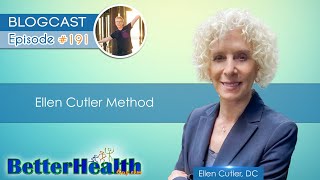
Episode #191: Ellen Cutler Method with Dr. Ellen Cutler, DC
Dr. Ellen Cutler describes how digestive enzymes healed her own illness and led to her method: muscle testing and an electrodermal device to identify sensitivities, then homeopathics, binders like chlorella, and systemic enzymes to detoxify and desensitize the body to foods, mold, microbes, and EMFs.
Chapters
Welcome to Better Health Guy Blogcasts Empowering your better health. And now, here's Scott, your Better Health Guy. The content of this show is for informational purposes only and is not intended to diagnose, treat or cure any illness or medical condition. Nothing in today's discussion is meant to serve as medical advice or as information to facilitate self treatment. As always, please discuss any potential health related decisions with your own personal medical authority.
Hello everyone and welcome to episode 191 of the Better Health Guy Blogcast series. Today's guest is Dr. Ellen Cutler and the topic of the show is the Ellen Cutler method. Dr. Ellen Cutler is a best selling author and an internationally recognized teacher, public speaker and media spokesperson. Her books include Discover the Healing Power of Enzymes, coming soon in a revised expanded edition. She has a chiropractic degree and specializes in the use of desensitization of food and other sensitivities, gentle detoxification and enzyme and nutritional therapies for chronic conditions that have perplexed the conventional medical establishment. This is all addressed in her revolutionary healing technique, the Ellen Cutler Method, available at the website drellancutler.com and now my interview with Dr. Ellen Cutler. Way back in the day in 2005, I found an acupuncturist who was using a system of energetic desensitization. She incorporated many of the concepts that we'll be talking about today and that was so key in my own health journey and recovery. That was how I first learned of Dr. Cutler's work in 2005 and I'm very excited today to have her on the show to talk more about the Ellen Cutler Method. Thank you so much for being here, Dr. Cutler.
It's great to, to be with you and I've, I know I've heard, heard about you and so it's great to connect today. I'm, I'm happy to be here.
Thank you. What drove you to do the work you do today? Did you have a personal health journey that led to your passion and ultimately the creation of your Ellen Cutler Method?
Yes, and I write about this. It's in all my books. So I always had digestive problems, Scott. So even when I was younger I remember being bloated and having issues and I could never really talk to my parents about it. It was just not something we talked about because it wasn't a life threatening kind of thing. But it got worse. And one of the things that happened in my household is every dinner table. My parents fought. I have a twin brother and I know he had digestive problems as well. But my father would walk out and my mother would cry and I probably wasn't every night, but I remember how many times that occurred. So, so I believe that was probably some of the issues that caused some of the trouble that I had with my GI problems. But anyway, as it got worse then I went to chiropractic school. I wanted to go to medical school, but my parents could only pay for one child and the boy of course was the one who got the medical. So I had to support myself to go to chiropractic school. I was also more lean and leaned more into that because it was more natural medicine. I wasn't really into the chiropractic as much as nutrition and natural health care. So I had to work and I went to school. And during that time, those four years, everything got much, much worse. And I actually went and got evaluated and I was diagnosed with either colitis or ulcerative colitis. And ulcerative colitis is autoimmune. But if anyone doesn't know, it's an inflammation of the colon, which is exactly what was feeling. And the only answer, the only remedies was doing steroids and maybe having surgery later on, you know, and I was, you know, percentage getting cancer, all that, all that was given to me. And here I'm in a natural health care profession. So I, after I, I've been dedicated to healing, dedicated to study for my life. It feels like this is my, this is my gift in my life. So after that I did a postgraduate three year course in orthopedics. One of the doctors there who I became very close to, became my mentor, knew my, what I was going through because it got really bad. I, I basically only eat one food a day. I lived on grapes and that was it. I couldn't eat anything else and I was fatigued and here I had to work at night. I, I went to school, I would work at night, then I had to study. So I really didn't get much sleep. But I managed to try to exercise and I couldn't eat much at all. So he said, did you ever hear of a digestive enzyme? And at that time we're talking many, you know, 40 something years ago. Nobody wasn't on the radar at all. Nobody knew what a digestive enzyme. He said, you are carbohydrate intolerant, which you basically don't process carbohydrates. And I've always been a vegetarian, now I'm a total vegan. But I always, I ate a lot of carbs and it fermented and I got bloated and had all my issues. So I started a full spectrum digestive enzyme that did have all the enzymes for digesting carbs and sugars and literally within two weeks never had a problem again. It was a miracle. That's why my book is Micro Miracles Discover the Healing Power of Enzymes. I had to write that book and it just came out an updated version, by the way. So in practice I decided to give all my patients, I didn't care if they came in with a headache or an ankle sprain or low back pain. I gave them a full spectrum digestive enzymes. And I saw miracles in my life and I saw miracles in them. Not only did they, but as you probably know, most people do have digestive issues and don't know it. They live with it their whole life and they don't know if you have to go to work and your gut doesn't feel good. It is hard to work really. I mean, you know, you can have other pains, but the gut is central, it's in the center. It's, you know, you can't take your attention off of it. So I saw miracles. My hair, skin, nails, the fatigue, hormonal imbalance, my immune system was stronger and it was, changed my life and I've been passionate about that.
I.
But there were still some people that didn't still had symptoms after that. Like there were still some food sensitivities. That's how I then looked for ways of clearing sensitivities or allergies. But allergies, you know, are more, the more severe type of reactions. Sensitivities can cause all kinds of different symptoms. People aren't aware of it. You know, from headaches to GI problems to bowel problems and eczema and fatigue, all kinds of the various different problems. So that's how my ECM was developed and it was first bioset, which you heard about and then now it's in a really more advanced, really. I have put so much work into it and it's energetic system, but it really gets to the core of what's going on. We can talk more about it, but that's how it all developed. And I just never kept giving up. I just wanted to find what else, what else. And you can. As you know, food sensitivities are the number one thing to look at for people. What's at the end of your fork is most important.
So the key components of your Ellen Cutler method are detoxification, drainage enzymes, as we just alluded to, desensitization we're going to dig into each of those areas in more detail. So first, talk to us about how you use this method to explore the underlying root causes of each person's condition. And are there some common themes that you've observed over the years in terms of the things that keep us chronically ill and hold us back from a return to optimal health?
Yes, great question. So what I liked what you said and the reason that this method works so successfully and why I'm dedicated to it, it gets to the root of what's going on. So, as you probably know in your work and what I do is you don't treat the disease. I work treat the person, and everybody is different. So if somebody comes in and says they have asthma, I don't treat asthma. What are your symptoms? What is the underlying cause? And yours could be very different from other people's asthma too. But there are certain themes, and I'll get to that too. First thing I did is the first way of testing I used was muscle testing. And I learned that in chiropractic school. And I still use it and I teach it to people. There's not a day that goes by that I'll use it maybe a hundred times because I don't have a machine with me. So I love. The problem with muscle testing is that the arm can get fatigued. And there are different ways you can do it. There are many different ways you can do muscle testing. I've heard all kinds of things over the years from other doctors, how they use it. And you know, I thought there's got to be a computerized system that works. So I went all over looking for computerized system. And I've evolved, I've used, I've had many evolutions of machines. And the, the one that I use now is called avatar. And this Dr. Bob Eanes, who's the one who developed this machine, who's a genius, he came to me like years and years ago. He said, Dr. Ellen, try this machine. And I didn't use it initially because I felt like he wasn't a doctor in. So I thought, how can he really understand what I need to do? How can I put what's in my head into this machine that's attached to a computer? The reason I like the computer is that you have all kinds of libraries, I call them libraries that you can't think about in your head. You just don't have that ability to, to remember all those things. So I went all over. I went to Europe, I went to a Dental seminars to find machines. And again, I went through a few of them, and now I use this avatar. So this avatar, it's a meridian testing machine that was developed in Germany, A Vol test, it was on journey many, many years ago that tests meridians. And I use one meridian that I test. And then I have a computerized screen, a computer, a program that he made for me. And he was able to get what's in my head and put on the computer, which was not easy to do. And I said, this is what I want. And the library has expanded over time, and it has every item you can imagine on there. Any food, any environmental, any bacteria, any virus. So I found that there are three aspects that are most important, how the body's detoxifying, because I really do believe that we're in a toxic world and you can't even see these toxins. But many people don't detoxify properly. Well, you know, we're looking at the lungs, the colon, the skin, the lymph and the kidneys. How do they work? And if they're not working, you're going to have issues with detoxification, with toxicity. So I look at that first, and then I use certain homeopathics or other things and I test to what works to help this person detoxify. And then the second thing I look at, of course, as we talked about, is how they digest food, what foods they're not digesting. What is the best enzyme, digestive enzyme for them, because some people maybe need more protein digestion, some people need more fat. Most people, it's carbs, digestion. I would say 80% of the people that I've seen over the years. And then the third part, which is really what you talked about and referring to and what people know me as, besides the enzymes, is I created this desensitization. So, and I have protocols for all kinds of different symptoms and protocols that I regularly use on all of them, on all people. And I look and I test the meridian. I see exactly what they're sensitive to. When you're sensitive, there's a certain change in the reaction with the meridian on the computer. So. And some can show inflammation, some can show sensitivity, some show really bad allergies, too. That takes a long time because I teach this, you know, that might. That could take 20 years to learn how to do as well, you know, to the degree that I get the expertise. So there are certain things that, like, for example, I've written a book on headaches and asthma, like certain sensitivities that Most asthmatics have is mold is a big one. Foods, other environmentals too, and emotions.
I love this. I think when I first learned about this desensitization work, at the time the practitioner was using the interactive query system, or IQs, which I think was one of the devices you might have used early on. And then one of my more recent mentors over the last several years, Dr. Simon Yu in St. Louis, he uses a number of devices, but Avatar is one that I had learned a little bit about through my interactions with him. I want to talk a little bit about detox and drainage as kind of our next piece of our conversation. For me, I think it's so foundational. I think it's the part that a lot of people maybe are missing in their chronic illness. I think drainage is something that many people don't really even talk much about. I was very fortunate to have mentors early on that had a major focus on drainage. German homotoxicology. And again, I think it is something that we really need to look at. So how do you differentiate detoxification from drainage? Do you use binders in your patients? Things like charcoal or chlorella or bentonite, Those types of things. And then let's touch a little bit on drainage. You mentioned some of the homeopathy that you use. So are those tools like Apex Energetics or Pecana or DES Bio or those types of things? Talk to us a little more about detox and then drainage.
Yes, great. You speak my language. I love it. So when someone comes in, I'll just. Just to give you a little understanding of what I do, I look at if the body is not detoxifying and where, which vital organs those detoxification is not happening, where they're more toxic load. And then I look at drainage, which is, you know, so toxins, you know, getting rid of toxins from the vital organs are great, but you got to get out of your body. So that's where the drainage are really important. And some people just need drainage. Some people, most people need both. And some people it's emotional toxicity too. We can't forget that. And I definitely use some of the Apex flower remedies. They're remedies which Dr. Roy Martina developed them, was a really good friend of mine, so I know them very well. And so. So based on that, I see which remedies will work. That's my treat. That's how it works. With my testing, I can see what they're. Where they're. Where it's bothering them and what will help them. That's really important too. And look at their medications too. That could be part of some of the toxicity. And I don't tell them to go off of it, but sometimes you have to clear the sensitivity to those medications more, more often than not. And some vitamins too. A lot of people come in with all kinds of supplements. Many of them, most of the time they're sensitive to which is, you know, causing some toxicity as well. So I use whatever works for them. And so I first look at Apex. I've been using Apex for years and I look at their specific ones for detoxification of the organs, kidney and lymph and colon, et cetera. And then I look at the drainages and I look at theirs too. I love their drainages. Liver drainage or lymph drainage or, or gentle drainage or kidney drainage. Those are all I've used for years and years. And definitely, definitely use binders. I love them. I use chlorella. I take it all the time myself. I like charcoal. I test what works. I love pectisol. You've probably heard of Dr. Elias Citrus Pectin. Yes, I love it. I have seen excellent results with detox, as a binder, as an anti inflammatory too as well and results very quickly too. So sometimes people don't do well with it. So I'll look what works for them. And I've used everyone, you say bentonite and charcoal again. But I do like the pectisol. That's been my favorite one too for sure. And then look at what they're eating, of course. And then sometimes people need a good detoxification regimen for two to three weeks. And I have one on my website that I'm just launching to that helps with detoxification, it helps with weight because really people are not going to lose the weight they need if their body's not detoxifying properly because toxins are stored in fat. So you got to help the body detoxify. And you know, I'm always careful saying I don't say you're toxic because people will say, does that mean I'm a toxic person? And I say, I said so. I'm always careful to say your body's just not detoxifying probably because everybody has to because of the environment that we live in. And then I see what, what is causing the toxins, Is it mold, is it dust, is it pollens, is it chemicals, is it carcinogen, is it pesticides? I look at all that and then I help clear it. So that will help the body get desensitized and when I desensitize, people need to know that I look at all aspects of the desensitization process, where in the body, how much it is, what else it's related to. It's related to something you're eating. Is it related to an emotional trauma? Is it related to, you know, the house? I mean, we could talk hours about just mold and what I've seen too. It's such a big one for, for, you know, the immune system, for, for, you know, for asthma, for headaches and a weakened immune system for sure. So I hope that helps does that.
That's fantastic. And I totally agree that mold is a big piece of the puzzle. I moved to Denver, Colorado about a year ago, brand new house and have had multiple water intrusions. And so fortunately I had had mold illness before. Know quite a bit about it, but it's certainly something that I agree with you. It's a big part of the toxic burden that many of us experience. I want to talk a little bit about how the nervous system impacts our ability to detoxify. If we're constantly in a sympathetic Dominan, does that impact our ability to detoxify and drain? And do we need to do something to calm the nervous system to tonify the parasympathetic nervous system in order to optimize our detox? What are your thoughts on tools that could be helpful to put the body, to put the nervous system in the right place for optimal detoxification and drainage?
Yes, absolutely. Definitely. The autonomic nervous system, whether you're sympathetic, flight or fight and the parasympathetic and more often than not, people are in that flight or fight, especially these days. And that's one of the combinations. I see. So one of the things I do is desensitize. Look at what where that sympathetic aspect is, where in the body it's coming out. Is it cardiovascular? Is it the GI that makes a difference? Because getting more specific when you clear and desensitized really helps them clear it more efficiently and quickly and more permanently. But sometimes I'll find something called polyvagal, which you probably know about. Yeah, yeah. And I do recommend helping with parasympathetics. So some of the things is massage and touching. Affectionate people are not affectionate enough. They don't get touched. You know, I was just at a car. I have to take my chiropractic educational credits every year and have to sit for 12 hours in a class, you know, and the. And it's a little bit boring, but the first thing he said, which I really. It really started off the day pretty good. He said, you know that chiropractors are the only profession that touch people, you know, and people need to be touched. That's one of the most important to help with parasympathetic, I believe, is that other things I'll use is anything that will increase gaba, like taurine is a precursor of gaba, or taking GABA for some people. Some people do better with the precursors than they do. I love glycine. That's been one of the new things I've used for that and Ashwagandha, some of those that I help with increasing your parasympathetic, for sure. But more often than not, people do need that for sure.
Some people have suggested that the body cannot adequately detoxify in the presence of high levels of electromagnetic fields. These are becoming more and more pervasive in our environment. Have you found it helpful to reduce or mitigate EMF exposures when someone's working on detoxification?
Yes, thank you for bringing that up. You know, I've been. I've gone back and forth with it, but I know recently and again I rely on my testing, you know, so sometimes it's been coming up more. I don't know why. Maybe you know why. Maybe more 5G. But I just notice it comes up a lot. And then when I clear it and help people. So for example, I'll give you a great example. One of one of my patients, who's been a patient for years and years, who's a very famous author, he was getting these chronic headaches all the time. And I do a lot via zoom. He lives in Canada, so he doesn't come here that often, you know, and we would clear. We come up with things. And then I got electricity, emfs all of a sudden, and mold. So I. So what I do when someone. When I find mold, by the way, he lives in Canada. It was a little hard for him to do this, but I have them in a little jar, put a little water in each room and leave it out uncovered, of course, for like 48 hours. And then bring it in and I will look at the samples and I test people to see. It's not so much that there's mold in the house, because some people, it might be a little bit and have a horrible reaction because they don't detoxify mold, which you probably know well know about some people. It's not a problem. So it's not so much that it's in the House, because everybody has some mold. It's how your body can detoxify it. So I found that, and we worked on that. I gave him some things to do, and then he had someone come in and look at all the electricity. And it was overwhelming. How much? Because since. Since the pandemic, he's been working. He's a psychiatrist. Been working at home rather than going to the office. And because he does so much zoom now, so he figured, I'll just stay at home. And, you know, and changing all that clearing, all that taking out. His headaches were gone. It was so, you know, and electricity. So it's electricity, emf, all of that. Yes.
And obviously with mold and with emfs, we have to reduce the exposures. But do you find that desensitizing people to EMFs and to mold in their environment also is a component of the potential solution?
Yes, absolutely. I mean, that's what I do the most, is I detensitize everything. If someone. Someone says, I. I have a presentation. I. I just heard, I have a big presentation, 800 people. Can you please clear me of the fear and the anxiety? So, yes, that's my first thing I do, is clear people. And, you know, and it's interesting, Scott, once your body gets accustomed to clearing, it's like it does it so quickly. You know, my kids grew up with me doing that, so they get it, they understand, you know, and I can do it long distance, which is pretty extraordinary. And I did it way before the pandemic. I started in 2016 doing indirect clearings and, and, and desensitizations, too, by the way.
Love that. So if people are listening and interested in this topic, they can reach out to your office and do that work. What are. What are some of your favorite adjunct detoxification tools? Do you like dry brushing or coffee enemas or saunas or foot baths and then kind of extending on that. How important is water as a part of a detoxification program and having hydration at a cellular level?
Just my last newsletter before this one was all about dehydration, so people can look at my. So I'm glad you brought that. Yes, definitely. All of the above. I like all of them. Saunas and, you know, and skip brushing. I do cold showers. Good, too. I do also. And. But drinking enough water. And then there are certain. And you mentioned earlier, I use all those different remedies. Picana. And I've used all of them, too. And I test and I see what. And a lot of my patients are very bright. They already Know some of these things too. And they say, well, test me on so and so. Test me on so and so too. Yes, but drinking water, what I do is I drink. I have a sip every 30 minutes because I'm at work with a mask was always hard. So I turn my head and just, you know, do that. But yes, the right water and drinking and getting a good filtered water, find some that are good, makes the taste is so different because people say, I just don't like water. You know what? They're not drinking good water. When you get good water, you'll. Your body will love it and you'll want to drink.
I know some people probably won't agree with this, but my water, I distill it, then I remineralize it and then I structure it. And that, that works well for me. And I think unfortunately there aren't very many filtration methods these days that get out enough of the toxins that are in our water. So if anyone is drinking tap water, please, please do something, please.
Yes, I don't care where you live. They. It is said that about 80% of our water is polluted, is toxic all over. It doesn't matter where you live. You know, they'll say, I love when they say, well, they, my county said that my water is fine, I can drink it. What does that mean? Maybe, you know, there's a lot of other things in the water that is not seen that filters, good filters can, can get out for sure.
You alluded to weight and weight loss earlier and I just want to kind of touch on this because I think it's something we don't think about and maybe you'll disagree, but my thought process is part of the reason that there's such an epidemic of obesity these days is the environmental toxicity that our bodies then are protecting us from that by storing it in our fat. And then kind of the opposite perspective that if you're overweight and you're doing something to aggressively lose weight, ideally you want to be on a detoxification and drainage program because you're very quickly releasing a lot of those toxicants that the body stored away that are then out in circulation and potentially creating other problems. Would you agree with that?
Yeah, absolutely, definitely. And one of my libraries that I have on my machine is all about weight. So again, everybody is different. You know, there are some things that might be involved with somebody's weight, but there are things that I have seen that I'd love to just share. Toxicity is huge. Like that's why I have A detox enzyme weight loss management program. So toxicity. Because you said toxins are stored in fat. So that's important. What I. The other thing is, is that people eat too much. So if you look at. I just finished reading this book, I forgot the exact name. It's about centenarians and they. And of course, obesity, I believe is. Is the underlying cause of cancer of COVID people. Covid and people dying from COVID Right. We don't hear that much about it, but you and I read about it too, and we've seen it. And diabetes, hypertension, cardiovascular problems. I mean, there's nothing that. There's not one condition that doesn't have obesity as one of the core causes of it. So if you look at what people ate 1976, is there how much in restaurants? And you look at what the restaurants serve now, it's over. It's three times more. So people eat too much. I believe in intermittent fasting in some way. There's lots of different ways to do it. I think that people can go longer without food at any particular time. They don't need to eat food. And another thing I've seen is digesting people and chew their food. Well, digesting your food helps with feeling satiated. It does. And then there are other things. All these dopamine, you know, these dopamine receptors, I think are sometimes blocked and compromised. So people are not getting. Feeling satisfied with what they eat. And then they start eating processed foods that gives them a little dopamine thing and then they eat more of that processed food. So, for example, like this Ozempic thing, you know, they don't really know what it does. But what I've read, supposedly that it does help with reducing the dopamine receptors. It helps so. So you're not craving as much food. That's what really people lose weight, is they don't crave the food too. So they're directly. So you can see it works that that's another factor. I think it's important again, so I test all of those and when I work on all of them and then find their. And even on my machine, I can test which is the best diet. Should you be a vegan? Should you be, you know, more paleo or more ketogenic or whatever, you know, and see what you know. Of course, I'm more in favor of a vegan because I'm a vegan. And I do think there's. It's. It's probably one of the healthiest diets for sure. And then there are other Things emotional trauma can come up. Emotions can come up. People eat because they're emotional too. And then there's hormonal imbalances as well, thyroid. And that's something that. That I see also. So that's. That's kind of gives you a little brief, you know, of what I've seen over the years.
Yeah, no, I love that. I want to step now into a little bit more around the enzymes that we talked about earlier. I think you've been called the empress of enzymes, which is. I kind of. I like that.
That's pretty cool. I don't remember who came up with that, but I didn't. But someone did.
It kind of reminds me, one of my friends, Anne Louise Gittleman, she's the first lady of nutrition. And you're the empress of enzymes and.
Like, know her very well.
I'm hanging with some cool people. So we talked about digestive enzymes, but I'm also curious, in that enzyme conversation, is there a place for proteolytic enzymes or enzymes that are helping with hypercoagulation, with inflammation, with breaking things down in the body as well? What are your thoughts on proteolytic enzymes?
Yes. Well, in my book Micro Miracles, I talk a lot about digestive enzymes, which I believe are the most important. And I talk about enzymes that work systemically, which are the proteolytic enzymes. So I'm a really passionate about that, especially protease. And it's so happy you mentioned it, because protease is, if taken with meals, it digests protein. If taken away from meals, it does some other very important. Has other properties. It's fibrinolytic, like you talked. So it's good for people that tend to have more difficulty with clot, a little bit more, too, which can, of course, be a precursor to stroke and hypertension, et cetera, too. And so that will break down clots and break down fibrin. That's what it does. If it's taken in between, it can eat up foreign protein. So it's good for bacterial infections and viral infections, other protein that the body doesn't recognize. And it also can help with killing tumor cells, too. So. So that's important because it will work if you take it in between meals. So I highly recommend everybody take it. The only caveat is some people, when they take protease, if they have any history of GERD or heartburn, sometimes it can bring that up and can be a little bit. They can notice more of the gerd. There are ways to get around that. But sometimes There are very, there are some that can never take a protease because of that reason. And we have an enzyme, and I have enzymes on my website too that I recommend. There's an enzyme that doesn't have protease in it has, and it has other protein digestion enzymes because sometimes people have a little bit of an issue with it. But other ones, I like nanokinase too, because that's also fibrinolytic. And there are other, and there are different ones too. They work really well too. Yes, the proteolytic enzymes are very important. Now what I do is I put together, it's not longer my company, but I put together a lot of enzyme, systemic enzyme formulas. So for example, one for skin, they all have protease in it because it helps catalyze some of the use of the herbs and optimizes the ability to absorb it. So I have ones for skin, there's ones for kidney. I have an amazing one I've used for years for helping with people who have chronic kidney infections. UTIs, too. It's amazing. It's, it's like a miracle too. And then there's fat, low thyroid, and then there's lymph. There's one for immune support. There's one for vitamin C enzyme, we call it nose and throat, that helps with, you know, preventing colds and flus, et cetera. So I have a whole line of them too that I've used that again, they're the proteolytic enzyme with the herbs or foods that helps the body utilize it better.
So I think one of the pearls that you just threw out that's important for people to understand is what we're taking 50, 100 different pills a day to try to get better. And using these digestive enzymes can actually optimize our supplements as well so that they are more efficient in doing what we hope they're doing. Did I understand you correctly exactly right?
Yeah, that's exactly, that's perfect. And again, I don't really like to give a lot of supplements because I, I, I like people trying to, trying to clear things rather than just using supplements as you know as well. But some things I find that might be very necessary, like things like vitamin D is good and some probiotics are good for people too. But most people get a digestive enzyme. That's it. And you know, the one thing that people should know about digestive enzymes, they're food enzymes. They're not replacing your own digestive enzymes that your pancreas and small intestine stomach secrete they're food. It's normally in food too. But because we don't chew our food well enough and because some of the co factors that should be in the soil are just not there anymore because our soil's been over agriculturized, especially in this country, that the plants don't have the enzyme reserve that they should have. So between not chewing well, which I do, I highly advocate that I chew really well. My salad at night can take me an hour and a half to just eat my salad. And so I recommend that's a good one for losing weight though is chew. Because you're going to get sick of chewing all that food. You will eat less for sure.
I mean it's interesting, so many people these days have SIBO or sifo and I just came across an article yesterday that said probably one of the best ways to minimize SIBO is to make sure that you're chewing. And it seems so simple, but it can really make a big difference. You did not ask to come on this podcast and promote anything. But I know people are going to ask those enzymes that you mentioned, are those available through your website? Is that a specific company? How do we learn more about that?
Yes, I have. I created a couple of enzymes they call Dr. Ellen's way that you can purchase on the website. One is for, I call it's GI Calm. People have GERD or that that kind of reflux and then digest supreme. The other enzymes are only get through a practitioner. So I teach ECM and in fact I have a class this weekend. We do it via Zoom. And so you can. Anybody who's on the podcast can call our office and get those enzymes through me just by talk but just participating in this podcast. But usually you have to go through a practitioner to get these other enzymes for sure. So it's not something that people can purchase as a consumer, which I think is good because I encourage people to work with people that do ECM or doctors that carry this, that know how to recommend it and prescribe it.
You've said that it's not what we eat but what we assimilate or absorb that makes us healthy. Is that true? Even if someone is eating the standard American diet or the SAD diet, do we want to assimilate more of that? Should everyone be on a digestive enzyme or only those people that are actually eating high quality nutrient dense food?
That's a great question. I don't think I've ever had that question. That's a great one. So I believe everyone should Be on a good full spectrum digestive enzyme. And interesting enough, some people when they start digesting food, they eat less of the sad, the standard American diet and become more interested in eating whole plant food diet or mostly a whole plant food diet or a diet that will support your health and well being rather than destroy your health and well being for sure. You know, again, it's what's at the end of your fork that is so important. We talk about, well, you said it easy also early on we talk about diseases and Covid and cancer, whatever, you know. And I truly believe that staying healthy is not, is darn simple, you know, and what you eat is so important. There's so many things we can't control in our environment, but we can control what we, what we put in our mouth every day for sure.
When someone is reactive to numerous foods, they're down to grapes or they're down to, as one of my clients years ago they were down to just alligator. When someone is reactive to various foods, how much can taking a digestive enzyme minimize those reactions? And in more ultra sensitive people that are down to just a very limited number of foods. Have you seen digestive enzymes allow them to tolerate a more diverse diet, to expand the items that they are able to eat?
Yes, in fact I say that, I would say sometimes 80% of food sensitivities can be cleared by taking a digestive enzyme. That's what happened to me. And there were some foods that I did need to desensitize to and there's some foods I wouldn't eat anyway. You know, I had found over the years that carbs for me were inflammatory. You know, maybe I, I hurt my back. I was a runner and it hurt my back. And I realized that when I didn't eat carbs, my back didn't hurt. But when I ate carbs, my back, I remember saying sitting there was like years and years ago and thinking I, I can't eat rice or I can't eat breads because it, it, it's inflammatory for me. So I, I, I probably haven't had a bread in 45, 40, 40 something years. So I don't, because I know it's inflammatory too. And of course I had all this issue with colitis too. But yes, most people will benefit greatly by taking a full spectrum digestive enzyme and see that they can tolerate food much better. That's what I've seen. And it gets better over time.
Too many of these enzyme products that are available are created using aspergillus as part of the Manufacturing process. So this is highly debated and I've heard people argue both sides. But do you find that some people can be reactive to the enzymes because maybe they had a history of mold illness and thus they react to supplements where Aspergillus was used in the manufacturing process? Or is there really nothing left in the final product that they should be reactive to from an Aspergillus perspective?
Another great question. So the enzymes, the fungal enzymes, they're grown on Aspergillus. There is absolutely no Aspergillus in the enzyme product. But our mind plays tricks on us two. So I've had maybe in the years I've been in practice, maybe Scott, maybe 40 something years, I've seen two people where they could not take it because they had a situation with Aspergillus and mold. And I think what happens is that one of the things I clear is thoughts, habit patterns, habit thoughts. You can think that these enzymes are mold and, and you're going to have a reaction. It's very true. I help try to clear that. But some people would refuse to even take the enzyme. So it's really excellent question because there is no mold in there. So if anybody's had trouble with mold, there's nothing that they should be afraid of if they take it. But again there are thought patterns and you know, one of the things I wanted to also say relative to ECM is that when I work on people and I test, let's say they come in and they have a headache and I find all the different causes of headache and many times it's not just one thing. That's why just one medicine is not going to really help every single person, right? But just telling them, just them, seeing what it is, they feel better, their migraine goes away, their headache goes away. So thoughts are very, you know, like. And what you see the IQs machine. I remember the person that developed it, Roy Curtin, who was, who always said that what my work is information. The information in all the different ways, whether it's clearing because I use a little meridian tapping method to clear it, whether it's even telling people or doing that all works because it's all informational for them.
My observation has been as well that I think they are generally well tolerated even with the affluence aspergillus component of the manufacturing process. And when they're not, I've wondered if either it could be that there is some energetic component of those things having been in, in Aspergillus as part of the manufacturing process or if it's also just a limbic system component where we're already kind of expecting that we're going to have a reaction and thus we do.
I agree with both because. And I work energetically too. So energetically, yes, there could still be a reaction. For example, a person who had Covid their tests are normal, they're fine, they're not positive, they're negative. I energetically still find they're sensitive to it and that's why they're fatigued. They still have headaches, they have brain fog, they have vertigo, they're having all that. And they so understand that. I tell them that doesn't mean they have it acutely or you know, even chronically energetically. When that energetic reaction is cleared, they feel better. So yes, absolutely, that's it. But that can be cleared with the ECM method and hopefully then they can be be able to take it and it won't bother them. But like I said, I've had two people in my practice where they couldn't take it. But that's not many people over the years too.
I love that you call it the ECM method because that's an acronym for one of my other favorite topics which is the extracellular matrix which is key in drainage that we talked about earlier as well.
Right?
Exactly.
That's right. I remember that too. Actually, Bob came up with ESAM because we were thinking of another name and he said just call it ecm.
When do you suggest people take their digestive enzyme relative to their meal?
I Recommend Taking it 10 minutes before you eat or right before you eat. Now new studies say you can even take it after you eat and it still works because I used to think that taking it in the, during the meal after, because it is a. It ends on that pre digest your food in some way. So you can even take it after and it works. And you know, also if you can take it with every meal, even one meal a day or two meal a day are fine. It'll still, you'll still notice the difference in your digestion too. So I won't eat anything unless I have an enzyme. So I don't leave home without my enzymes. But you know, changed my life. I would never, you know, to this day I remember what I felt like and I remember and I know how well how I feel now.
So you are a pioneer in this desensitization arena. I think the other pioneer is Debbie Namborapod with NAET and then your system with bioset and now the Ellen Cutler method. I mean I think the two of you really are probably the creators of all of this work and all of the other systems that have kind of come since. So I want to talk a little bit about what does it mean to become sensitized to something? Are we generally thinking more of the energetic body, the nervous system being sensitive to something? Is it truly immunological? And then can we think of the process of desensitization as essentially a reprogramming of the software that runs the body so that it behaves differently in the presence of that sensitized substance?
Yes. There are so many reasons why people become sensitive to something. For me, I believe it was emotional because when we ate dinner, I. We. There were fights. I was emotional. That's why I don't go to business meetings that have. I don't eat when I go there. I don't want to. I don't want to. I want to eat when I eat. I want to eat. I don't want to be talking about business. And even if it's positive stuff, it's too emotionally charged for me. I'm an emotional person. You know, I do believe emotions. You know, it's like when I do my work, let's say. Let's say you were. Just give a good example. You were sensitive to corn, okay, which is a highly sensitive food. And I look at what is underlying that corn sensitivity. You know, maybe I find the nervous system, I find emotions, poor digestion, toxicity, it's genetic. I clear all of that. Do you come back next time? It's better, but it's still there a little bit. What else is there? You know, is it a thought, is it a trauma relative to something that happened, you know, when you were younger that you eating corn? Or is it something. Something in the brain even, you know, or. Or nervous system? There. There's so many reasons for it. And then I clear you again too, and then you come back and it's cleared and it should stay. Scott, it should say it's clear. Cleared forever. Why not? I will never forget I had somebody that came to see me. He was a physicist, and I'll never forget this. And he said, I felt like something snapped and I became sensitive to all these foods and someone told me to come see you. They felt like maybe I can find where that, why and when and where that happened, and you can help me snap out of it. And you know what I found? I found parasite. So I cleared that particular thing. I cleared the parasite. Didn't do one. One treatment. And he never had food sensitivities again.
Wow.
So you, you know, so it could be anything. That's why it's so different for people. You know, you could have had a strep infection and maybe that was combined with a food or foods and you became sensitive to a bunch of foods. So there's so many different reasons, but clearing it should clear forever. The reasons that could come back is emotional trauma, physical trauma or bad flu or Covid having Covid a lot of people I had to redo some of foods that they had been okay with for years. I mean I have people that call me 20 years and they'll come in and I still see them cleared of those foods. They came in the beginning. That's pretty incredible.
So you mentioned the parasite piece. Is it reasonable to imagine that mold exposure in your home could be something that triggers sensitivity or high levels of EMFs, for example, or maybe even getting a little too excited about your supplement program and taking too much of maybe an antimicrobial that then triggers a strong herxheimer or detoxification reaction. Could, could any or of those things also then lead to potential sensitivity?
Yes, and I've seen all of the above. I've seen all of them. Mold is a big one too. You know, when, when I find mold and I, and, and I, I, what I do first is first of all if it needs remediation, they, I have them their house inspected and see if it, if there is mold that needs remediation. If it does, I highly recommend it. And then I keep clearing them, but I also have them do a mycotoxin test because mycotoxins are toxins in the body from mold. Like mold's not in the body. It's a micro, it's a toxins from the mold you've been exposed to. That is what is, is probably the, the culprit in how people are feeling. So doing that. And there's a urine, there are urine tests in different companies that do it. But I do, that's one of the tests. I, I look at labs, I do it and I, I, you know, and I recommend them too. And because, because I can help my clearing. But that's an important one that I do look at because you know, mold, I've seen it. I had a patient come to see me just to, he was a very well known attorney and this is what happened. He, he was asked to go to Portland because the attorney that was covering this case got sick and he took his place and he had to go to Portland and spend some time in Portland for a little while in A motel. And I lived in Portland, so I know it rains all the time there. So he, after he leaves Portland within two weeks, he could not use his body from here to here. He was paralyzed. He just got married to his second wife. They were on their honeymoon. They were going to go on their honeymoon. I mean, it was like. And she had to feed him, Scott. So he went all as you can. He was a very well known. Went all over. Someone told him to come see me. And you know, what I found was mold. And he said, I knew it. He said something didn't smell right. I felt something in there, you know. And so it's. Mold is a huge factor that's toxic and very, very, very difficult to. Because you don't see it sometimes. That's why what I do and what you do is so tremendous because we can see this, I can find it. There's not many other places that can find this, other techniques. Just that alone makes it revolutionary, really.
So you mentioned that maybe if somebody had food sensitivities and those were clear, that that should last indefinitely. But what if they then are exposed to another one of these triggers of sensitization, like another significant mold exposure or an emotional trauma? Can those sensitivities then come back because they've now had another trigger that's kind of reset it back to the more sensitive state?
Absolutely. And that's really what can cause it. And the other thing that can cause it too is if you don't digest your food too, because undigested food gets into the bloodstream and then over time, the body sees it an allergen, it reacts to it. So you have sense reactions. So. Yes. So any big toxicity like that mold can definitely cause. It shouldn't be as bad as it was if it was truly cleared. Because there's some techniques out there they clear, but they don't truly clear these things the completely because their testing isn't good. And muscle testing is not that accurate. What you do is probably because that's been your specialty, you do muscle testing. But, but I find when you watch people do muscle testing something, you know, I'm like, it's like, you know, they're testing people and say, no, that's, you know, there's so many other factors that you have to take into consideration when you're doing those muscle tests.
I mean, even, even if your muscle testing is good, you still cannot do the number of things that might be required when you're talking about going through libraries of things like there's no, I mean, at Least from my perspective. There aren't many muscle testers that could test 800 things in a single session. Like you can do with an electrodermal screening device. Right.
And if you watched me, Scott, or people out there listening, if you watch, it would blow your mind. What I find and what I have on here, I mean, it's like. And I can share my screen so people can see what their. What I'm testing, but it's. And what comes up, I never know what's going to come up. And what comes up is, you know, you're the detective. Yes. I mean, I've. I've come up with diabetes insipidus that people didn't have. And then they go, how'd you know that? You know, I mean, it's not that I'm totally accurate, 100% time, but I'm pretty good. I've been doing it. It's my life. It's a. This is an extension of me.
Right? You are, you are the pioneer. What happens when we become sensitized to something? Does that then mean that when we're encountering that substance, that food or supplement or whatever, that we can then have increased inflammation because the body is reactive or sensitized, and then maybe even poor assimilation, Maybe we're taking something really good for us, but because the body kind of sees it as a toxin, it isn't quite as welcoming. Maybe as one way that it did it, it almost treats it more like it's a toxin. And then maybe differentiate for us. Is allergy a different thing? Meaning if you have peanut allergy and that's really an immunological response, is desensitization the right tool? Or is sensitivity really a little different from more extreme allergy?
Yes. So again, one thing that I do initially is where in your body is this sensitivity occurring? You know, is it the nervous system? Are you brain fog? Is you, you have foggy, you know, brain fog because of these foods. Is it causing headaches? Is it affecting the joints? Is it causing arthritic pain? You know, because everybody over 50 has some arthritis. But why do some people have pain? It's because I think some food sensitivities too will affect that. And you and I talk about this in my book too. And when I teach is that when you don't digest a food, undigested food can get into the bloodstream and create an immune complex. The immune system sees it, attaches to it. And we call these circulating immune complexes. Those immune complex can travel to different parts of the body. And what can land like in synovial fluid, causing joint arthritic pain or inflammation, or it can cause kidney issues, or it can cause GI problems. So sensitivities can be different for different people, depending on genetics, depending on toxicity, depending on whatever else your. Your body's involved with too. And then when you clear these sensitivities, you're clearing on all those different levels. That's why it's so important to look at each aspect of that when they. When they. When they do the clearing too. So food allergy, really true food allergies is what's called an ige, which is the antibody that can cause an anaphylactic reaction too. There's an antigen antibody reaction that can cause anaphylaxis, which could be your breathing. Things swell up, you can't swallow, you know, and it's. And it's fa. It could be fatal and people have died from it. That's not common, although we hear about it, because it can be fatal. More common is food sensitivities. I do not. ECM does not work with those, although I have had success with it. But I. What? So I tell people, they come in, they say, can you clear me? I said, no. Can you try to make it less severe? I said, no. She said, well, can we just clear it? Could it be in the clearing? I said, sure, that's fine, but I'm not telling you can eat it. But then people come back and say, well, now I can eat peanuts or I can eat this and that, you know, so it has cleared and maybe it wasn't severe. I still don't know why. I don't understand.
And it may be also that you are then combining it with the digestive enzymes and other things. So at least in my mind, again, correct me if I'm wrong, but if we're thinking about foods and then doing a desensitization, it doesn't mean we're going to immediately go back to eating large quantities of that food on a regular basis. But maybe the goal is more to minimize inflammatory responses and increase the assimilation of nutrients. When you do then have. Have those things, is that exactly.
That's exactly perfect. Definitely.
In the Lyme disease community, we have this alpha GAL syndrome that is emerging in fairly large numbers of people from a tick bite, where then they cannot eat red meat or foods that contain alpha galactose, which is a sugar. Wondering if you've worked in this desensitization process with any patients with alpha Gal, and if so, are you looking more at the foods or looking more at that specific sugar molecule.
Well, just to. I work with other doctors with patients with Lyme and I like working with other doctors. It's important for them to be under the guidance of. And one of the doctors that I worked a lot with was Dr. Graham Shaw who passed away this year. And we had many mutual patients together and a few other people that we both know really well. Lyme is. And I've found Lyme in my testing and then have people tested and sometimes they'll come up with it and more often than not, and sometimes they don't. But it's interesting. I still find it maybe because their friend has it and they're thinking it and I find it on there. Again, what you think can be seen and can cause problems as well in your body. So yes, I have seen that. And then what I do is I look. What I do is I look at the Lyme spirochetes and see what I find and then look where it's bothering the person. What foods are related to it too, or what else comes up in relationship to it. I clear it. And I do feel my clearings with people in combination. What else they're doing with other doctors have. We've had great success with it too.
Even in people that specifically had that red meat allergy from their tick borne infection.
Yes.
Oh, good. Very cool.
I haven't seen that many, but yes, I have. Yeah.
Can we be reactive to just the frequency of a substance rather than the substance itself? And this was years ago. This is probably 2003, 7 or 8. I was shadowing a naturopath doing a system of muscle testing that originated with Dr. Klinghardt called autonomic response testing. And she put one vial that was not the substance, but just the frequency of a substance in that person's field. And I remember the lady's face started turning red and she said she was having trouble breathing and she said, what is that? What is that? And you know, the naturopath looked and she said, oh, it's corn. And the person was very allergic, had anaphylactic reactions to corn. But in this case it wasn't quite as extreme. But I was really kind of surprised that just the frequency of the corn led to that same reaction. So I guess the question is, when we're sensitive to things, can it sometimes be just the energetics of the thing rather than a completely biochemical type response?
Yes, definitely. And I think a lot of times what I find is the energetics to that as well. You know, the energetics to people. You know, I Mean, the fact that. Why is it you, you know, people will say, I went into a room and I, I had these reactions, you know, and it's probably energetically a reaction to a person as well. It could be energetically a reaction to, you know, just. And it's just. Even if it's not, sometimes they'll write on it. You know, just looking at it written on that or just seeing something written on the page, people have a reaction to it. That's part of the work that I do for sure. So I have seen that definitely. But that can be cleared for sure too, you know.
Do you desensitize people to their spouses or significant others?
Oh, every day.
I love it. This is so cool.
Well, it's funny because I just. This patient I saw today who we've been working with. Oh my goodness, Scott, Mold. I had found mold. She was having all these. And I found mold. And she's been a, a client of mine for many, many years. And, and she lives in Gilroy. She owns this big body shop in Gilroy. You know, in fact, I had sent her to Dr. Shaw to get some mold testing too, and some other things. And, and he said, just tell Dr. Ellen to clear this on you because it's overwhelming how much. And we found mold in all these different places. It was just, you know, incredible. And we found. I was jumping up in debt today because today is the first day everything was cleared in the house. She spent. She spent $500,000 remediating her house. That's how much it is. But she loved this place. She didn't want to move, you know, so I, she said, but, you know, I go away and I have no symptoms at all. My eyes are fine, whatever. I come back to the house. She says, I think I'm allergic to the house. And sure enough, I said, well, I'm going to work on that today. And I found ex husband. I found, you know, her son, who she's had some issues with. It was so interesting what I found, you know, and she said, it's all right on, you know. So yes, I do it all the time because even if you're divorced, it doesn't mean energetically. There's not some cords or some things that are still involved with these people that you're still reacting to. And then of course, if you have kids with them, spouses that you've divorced, you know, you have relationships with them forever. Right?
So I'm sure even, even you as a practitioner, I suspect that you also have to be aware of that. And kind of clearing those cords, as you referred to them from your patients. Right. That their. Their hope is. Is kind of hanging on you. They're in a difficult situation. There's a lot of fear, a lot of anxiety around it. And so I suspect you have to be quite good at clearing yourself as well, using this process.
Yeah, I think for me, yes, I clear myself every day. I clear my children every day. I clear my husband every day. And there's certain people I clear every day that ask me to. And I just love them so much. I love this work, and I truly. They're just an extended family. I love these people because, you know, what I feel for them so much and going through what I went through, I have so much empathy for them. Even if it's a little thing. Even if it's a thing. You know, I have one person that is so allergic to cannabis, and I don't know if she draws it to it, but she's always smelling it. And, you know, and it's like, sometimes I think, really. But, you know, I. I feel for her because she really suffers it. She really.
And a lot of it has mold as well.
When you're getting into that. That realm we have is a whole other thing. Yes. And pesticides, too. Yeah.
If someone's coming to you to start doing desensitization, like, is there kind of an average number of sessions they would expect if you were doing a session on, let's say, foods, is there, you know, can you do one food, 10 foods, 100 foods? How does that work in terms of the scope of what a session can clear for someone?
Yeah, that's a good question. Again, everybody is different, but I do multiple foods at one time, and it usually works really well because I've developed the technique to such a degree that that's possible, and it depends on what they come in for. The. The problem is, is that people feel so good, they get a little addicted to that. So because, you know, within one week, there's so many things that can happen. And so they like to see me once a week. Some people see me once a month, you know, as maintenance or just to see what's coming up. And, yeah, my practice is I haven't taken new patients. I do if they plead with me, but I haven't taken New Age in a long time. That's why I'm trying to teach. So these people, because they just. They. It's preventative. So, like. Like, I have things like vulnerable to virus, vulnerable to stroke, vulnerable to cardiovascular. I test that on These people every day, they love that I test that because let's say I find vulnerable virus. They take vitamin D, they take extra vitamin C or whatever they need to do and they don't get sick.
There is a therapy that I personally found very helpful called low dose immunotherapy or LDI from Dr. Ty Vincent in Hawaii. It essentially creates more tolerance or integration within our microbiome in a sense desensitizing us to specific microbes like Borrelia or Bartonella or Babesia or maybe a virus. And so it's a method of immune modulation. And I'm wondering, and you already alluded to this, so we know the answer to. But I think it's important to put out there. Can we use energetic desensitization in a similar manner to desensitize one to their chronic infections? And might being sensitive to an infection create more of the inflammation and symptom picture than the microbe itself? Could we use desensitization to kind of create a more regulated, appropriate immune response to, to those components of our microbiome?
Yes, and that's exactly what I do all the time. And I will use, I will use little vials too and I use crystals also to people wear. And I use. And I also use drops too. You can use drops? Some people like to use drops just like some of these other techniques for the immunotherapy. But yes, exactly. I can clear the sensitivity to those microbes. That's what I do a lot. And I will look. Let's say I find back. Let's say I test you, Scott, and I found. Let's say I still find some mold and fungus. So I will keep clearing you and seeing exactly where like all these different aspects of that sensitivity, what it is, clear you for it and keep clearing until I get completely fine. And you'll know it too because you'll feel it. So you're completely fine too. That and I work with people that use those also. What's also nice about ECM is really nothing conflicts with it. The only thing that does. There's one thing is that I will not take anyone who smokes because I will help them clear it. You know, because you can clear the desire for smoking. But if they're not intentionally interested in smoking because you're. That's so toxic because I can't work with someone that's so intoxicated with something that's. That's harming their body.
Yeah, well they're not really that invested in their own healing process potentially.
So that's one thing I've always said, the other thing too, that's hard to work with is people on prednisone. High doses, low dose is okay because prednisone masks everything. It, you know, it's like plastic. It's like you're not really seeing the person because it's covering up a lot. And that's what it does.
Yeah.
Increasing prednisone, you decrease your antibodies, you decrease your immune reaction. So I'm not getting to see the immune reaction that people have. And one of the things you asked too, I think it's important. I'm not sure what I'm doing really. Is it only. Is it only energetic? Is it physical, too? Is it really working on the immune system? I would love someday to really do some research with somebody that was interested in learning because I see results and I see results on labs and I see results on Lyme. They'll get Lyme test, we'll be fine. So I'm not sure how much I do feel that I change genetics. I can change. ECM can help with genetics. I felt that for years and years and years. But now I've never really had it studied. So I can't really say that's, you know, this is just my hypothesis, but.
I think we've also touched on this a good bit. But so many of the people, maybe everyone that's going to listen to this, has some mold and mycotoxin issues. I would suggest that anyone with chronic Lyme disease, which is a lot of our audience, that mold and mycotoxins are almost always a component, whether it's from their home or their workplace or their school. So we know now that desensitization could be helpful in dealing with mold, dealing with mycotoxins. But if they then leave your office and they go back to their unremediated home and they're still exposed at high levels to those same things, will that clearing have a significant benefit? Or do they need to combine that with remediation like you alluded to with your other patient? What have you found helpful in working with those people with mold and mycotoxins from a desensitization perspective?
It's a great, great question. So this is what I do. First, I try to clear them. They bring in their samples. I try to clear the mold. If over a period of time it's not. I'm not getting the results that I should be getting, then I will definitely say something needs to be done. But I do also recommend that they have somebody inspect their house too, you know, and, and if, and somebody who's really knows what they're doing that really is good at this, you know, because there are people that are not qualified really, but somebody who's really. And I have people, I recommend somebody who's really qualified and they're saying yes, you do have it, why not remediate it, do something to help it, you know. So for example, I had a, I have a patient who has cry. She's had chronic asthma. There's a whole story in herself. I mean, they, they wanted to remove part of her lung because she had an exposure to aspergillus, by the way. And she, she said, and she was referred to me after going to different people and started to do other natural therapies, but nothing really worked. Chronic cough, whatever. So, so, you know, so that, so she's done great. I mean she hasn't had. Needed to have her lung removed, part of her lung removed. She's done fabulously and still is still a client, a client of mine. So the. Maybe last year I, she started coughing. I. And I found mold and I went, oh, Lorene, what are we going to do? So I said get someone, because she's afraid. Immediately I said, get someone in there. And they did it. And they said, oh, there's a little bit here. Nothing. I said, it is under, it is in your couch, in the underneath somewhere there. I found it. Exactly. I said, you have them come back and look. And sure enough, they found all this mold. So for her, she needs it. So if you, if finding mold, wouldn't you want to remediate it? I would, yeah. You know, because it's, you have children, it's, it's very, very, very compromising to the. Your system and your immune system.
I'm guessing that at this point you have worked with a number of people with long Covid symptoms that persist after having Covid. With so many people now dealing with long Covid with spike protein related issues, do you find a role for desensitization? Can people be desensitized to the spike protein, to the virus itself? And does that clinically seem to move the needle for those people that are struggling with long Covid?
Yes. In fact, my book, the new version, I have a new chapter on the COVID pandemics and enzymes. So enzymes, proteolic enzymes are fine. Yes, I work a lot. So what I said before too is let's say you come in with. You've had Covid come with all these symptoms and I find that you're still energetically reacting to that virus or the messenger RNA or the vaccine or, you know, and I have certain cytokines. I've done a lot of research, Scott, into it, and on my program I have many of the cytokines that are involved with long Covid. And by the way, there's long cold too. People will have rhinoviruses. You know, they'll say, how can I have a rhino virus? I haven't seen anyone. I said, you know, what could be from the past? There's, you know, you're still reacting to these viruses, any of the viruses, varicella, herpes viruses, that kind of thing. I work a lot with that. So, yes, and everybody is different. And there's motions related to it. Nervous system could be related to it. Other viruses like Epstein Barr could be related to it too. Lyme could be. So I see what comes up and until I feel they've cleared it. And then I make use of certain supplements I find, like quercetin has been good for sometimes for people. Pectisol, good. Binders too good. So there are certain supplements that I do recommend too, and the enzyme as well. And protease is very important. So I've had really good results with COVID And sometimes it upsets me because you read about there's not one thing, something that will work for everyone because everybody is different. This work is tailored to the individual. It's not like one thing is everybody is different with it, you know, so that's what distinguishes some kind of this technique from other things that are out there.
I'm probably just kind of restating the question to see if there's any other thoughts that come to mind. But with, with all of the changes in the world from the pandemic, more and more people dealing with chronic illness, long Covid, reactivation of Lyme, reactivation of Bartonella, reactivation of ebv, we know all of those are playing a role, maybe even mycoplasma, in pandemic related illnesses as well. So what are the patterns that you've observed in your patients over the past couple of years that maybe are different from what you had seen before and then some of the key tools that you're finding most helpful in supporting your patients in our current times?
Yes, well, one of the, you know, one of the things I've seen is that people really want to take care of themselves. They, they have, they, they're more interested in learning how they can take care of themselves and their family. That's why now I teach ECM to whoever wants to learn it because I used to just teach to health practitioner, not anybody can take it. And I. And they do amazing. They have great results. You can't really hurt them. They do amazing results and I'm always there to help them with it. The other thing I've seen is people have mast cell. That's something we have in term mast cell activation. I have seen more of that and more exacerbation of mast cell, which is a histamine reaction in people, more than I ever had. I don't know why that's occurred. I've seen people more with vascular problems since then too, as well. And that could be a result of COVID or the vaccine too, because we've read about certain issues as a result of both of that too. And emotional stuff. Depression, loneliness is a big one because there's a lot of people that still don't go out. You know, I have elderly people that still won't go out and they're home all alone all the time. And that's tough. You know, I kept working throughout the whole thing. I was here, the office people would come see me or Zoom. You know, I feel fortunate because I had a way to keep relating to people, you know, but it's. That's. That's been something that I've seen and I work with with ECM as well.
So extending then on the emotions. So we know that emotions can be a trigger for someone becoming sensitized and that you can also desensitize people to those emotions. So we can use this desensitization process to work with the emotions to help clear them. Are there other tools that you also use? You mentioned some of the flower essences as well. But are there any other things in the mental, emotional realm which seems to be such a major component of chronic illness, like do you work with EMDR or what other adjunct tools do you find helpful for your patients in this realm? If that's even necessary.
Yes, I always. I've recommended EMDR especially for trauma. People have had trauma. I have somebody that I recommend and I like tapping eft, Emotional freedom technique. I highly recommend that. And some people do that while they're even getting cleared. When I'm on ZOOM with them, they'll do some tapping too. Yeah, exactly right. And you know, all of that and I exercise, I think is really important. I'm such a proponent of exercise, and I find that it's hard to feel depressed. You know, there's. People are really depressed and there is a disease, but people that, you know, have depression, that's not, you know, severe. Exercise important. Looking at your diet is important. Remembering, you know, what you put in your mouth, you feel, you know, it's what you've, you know, what, what your body's expressing is, what your body's, you know, ingesting is important too. And so those are things that I recommend as well. But I love the tapping, and I do love emdr for sure.
I want to give people, as we start wrapping up, a sense for what a desensitization session is like. So if they come into your office, you're using your avatar to get a sense for what they're sensitive to. And then walk us through what happens from the time they come into your office and start that testing to the time that they leave. What is the process itself? You mentioned there's a acupressure portion of the session. Is that to kind of give the body the signal of safety that these items are not dangerous to them? What does this process look like?
Yes. So again, I do it via zoom, indirect, as well as people coming in. So if, let's say they come in and they have different symptoms. They're, you know, have headache or they're nauseous. And I look at the symptoms and I see what is going on. And then I evaluate and I go through a stress evaluation and I see what are the underlying factors that are causing these symptoms. And that will take a half hour to an hour to an hour and a half. It depends on what is going on and what I'm finding too, because I might go through all these different emotions and find that. And then when I find everything, I energetically create a signature of what I found. And I used either crystal or a vial. They can do. Some people use their rings or their necklaces, whatever, because they wear it all the time. And if they're here, there's an acupressure technique that I do. I go down their spine. They breathe in, they breathe out, they pant. All kinds of different aspects of how a person feels. I want to really cover all of it, left brain, right brain. So I do that. And once that's done, that takes about a minute or two minutes. And then I retest them. If they're clear on everything I'm trying to desensitize, they're fine. Then they leave and they treat themselves at home. I teach them how to do that themselves. Otherwise, I'll redo it again. And then when I treat somebody indirectly, I send them their vials, and then they do the clearing at home too, as well. I have A way of clearing too that I can support them also. So that that's what covers it too. And so again, it could be a few things. It could be a few foods, it could be 30 things. It depends on what I find for that particular person. I like to cover all of it at one session. So I don't like to take people. I always give an hour. I don't do anything less than an hour. Some people do two hours and some people will do an hour and a half. But an hour takes me to really evaluate all because I need to talk to him and hear what's going on. So that's the session too. And then I look at toxicity that day always. And I look at how their digestion is too. Always look at that each time as well.
I'm guessing though you mentioned that you try to do it in a single session. If somebody is reactive to foods and has chronic infections and has mold and mycotoxins and all of those things, I'm guessing that for some people that there would be a series of sessions that they would work with you on. Right. Is that correct or can you do all?
Absolutely. Yeah. No. So like someone comes in, I will do a whole of that. Well, it takes two hours. Do a whole evaluation. I'll look at everything foods I go through every single food because people don't realize some foods they think, oh I'm fine. They're just sensitive to some people, sensitive to every food. So yeah, I'll look at all that and then I have a priority and then I see what's the best thing for the next one that I do. But I have a basic ones I do first which includes vitamins and minerals because you can be sensitive to that. The mitochondria that the Krebs cycle, citric acid cycle, glycolysis. I look at all that because mitochondria is key. So yes. And then I have priorities of what I do next.
Why do you think the concept of desensitization has not caught on more and been more embraced by the medical community?
That's a great question. I think that nobody know. I don't think they know about it. And I think that we. They need. There needs to be some research. I would love summary my hope my for years I thought why don't we do one on asthma. It's very straightforward. Either you have asthma or you don't. And see how it works. Yeah. You know, so I forever that's one of my goals is for that to occur. And you know, because I'm Getting older, I'd like, want to leave this to people because I don't want my work to just fade away, you know, because it's, it works so well and it just should be part of the standard medical techniques that are out there for sure.
So for people listening then if they're more of a patient and they're interested in this kind of work, I know you are not taking new patients, but is there a way for them to find practitioners that are trained in the Ellen Cutler method and then talk to us for practitioners that are listening, how can they become part of your practitioner training for the Ellen Cutler method?
Yes. So until I get really advanced practitioners that you can call and we have some that we can recommend if you are a patient. And again, I'm open to anybody learning. So if you're a patient want to study, that's great too. And eventually we'll have a list of practitioners referral list on the website. But if you're interested in learning, I talk all about it and I do it via zoom and somebody teach, I have somebody else that teaches how to use the machine, how to negotiate, how to work with the avatar and then I teach the rest of the, the, the technique. I'm also training other trainers so hopefully I'll get more training out there too. And I have a whole thing about it on the website. Dr. Ellen cutler.com and then you can call our office. Cynthia, who's my assistant will help you find someone, help you steer you in the right direction if you want to learn it as well too. And so like I have one this weekend that's coming up that you know, I will be doing and then I'll be doing another one fairly soon too. They're fun to do. I love it.
What if a practitioner already uses a different electrodermal screening device? Is it pretty easy to take the concept of from your practitioner training and then work in the context of different tools or do you really recommend that they then switch to the avatar for this purpose?
I am totally open to people learning my work and using another machine. Absolutely too. They might be a little bit, you know, because they'll see me share my screen and how I do it. But if they're open to seeing that and learning the protocols and the, you know, because I have specific libraries of everything from anti aging to weight, all kinds of things. They'll learn what to look for, what to test. So I'm completely open to that for sure.
Beautiful.
Yeah.
My last question is the same for every guest and that is what are some of the key things that you do on a daily basis in support of your own health.
So I'm a raw vegan. I mean, not like I recommend everybody a raw vegan. I do like being a vegan, and I take my digestive enzyme with every meal, and I exercise every day. I have a peloton I use since the pandemic. I used to go to a gym, but I bought a peloton. I love it because they have all. Everything on there. So I do that. I exercise every day. I do intermittent fasting, and most days, in fact, all the days, I really am strict with my diet. I'm a little neurotic, and I sometimes I think I'm from another planet because I'm never cheap. So, you know, I don't eat any processed foods. I don't eat any. I hardly eat any carbs, and I really don't eat any fat. No fat, no salt, no sugar. And I love, love spending time with my grandchildren.
That's wonderful.
That's. That's. That's the best thing that ever happened to me is having my children have children.
From one neurotic person to another. I had so much fun in this conversation. One of the ones that I've just absolutely enjoyed.
This has been my best interview I've ever had.
Oh, thank you, Scott.
You're great. Great. It was great.
It's. It's a little bit of the bartonella residue creating some ocd, I think. But I do. I do love doing this and. And looking for the pearls that I know people have. Have. This really was my first opportunity to connect with you in person. But you have touched my life. The acupuncturist that I worked with starting in 2005 had really learned a lot from you previously. I've worked with other practitioners in the desensitization realm as well that have really learned from your work. And so whether or not you know it, a lot of my lyme and mold recovery journey has really been incredibly blessed by your work. And so it is an honor for me to have you on the show. I just absolutely had such an incredible time today.
Oh, God, this was great. And I bet I better get back to work.
Thank you so much, Dr. Culler.
Talk to you again. Bye.
Thank you. Bye. Bye. To learn more about Today's guest, visit drelancutler.com that's D R Ellen Cutler. Drellencutler.com thanks so much for listening to today's episode. If you're enjoying the show, please leave a positive rating or review as doing so will help the show reach a broader audience. To follow me on Facebook, Instagram, Twitter, or TikTok, you can find me there as Better Health Guy. If you'd like to support the show, please visit betterhealthguy.com donate. To be added to my newsletter, visit betterhealthguy.com this and other episodes can be found on YouTube, Apple Podcasts, Spotify, Google Podcasts, and Amazon Music.
Thanks for listening to this Better Health Guy blogcast with Scott, your Better Health Guy. To check out additional shows and learn more about Scott's personal journey to better health, please visit betterhealthguy.com.
More from Dr
The Healing Power of Enzymes with Dr. Ellen Cutler - The Less Stressed Life Podcast
ECM Method for Well Being with Dr Ellen Cutler – Episode 277 Behavioral Health Podcast
The Ellen Cutler Method ECM for Well being with Dr Ellen Cutler - Moments with Marianne Podcast