The Healing Power of Enzymes with Dr. Ellen Cutler - The Less Stressed Life Podcast
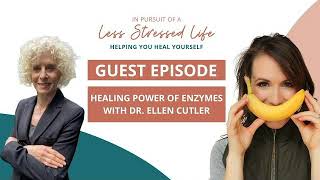
This is a podcast interview (Less Stressed Life) with Dr. Ellen Cutler about the roles and therapeutic uses of enzymes. Dr. Cutler shares her personal recovery after longstanding digestive problems that improved dramatically with full‑spectrum digestive enzymes, explains three broad enzyme categories (digestive, metabolic, food enzymes), and discusses practical guidance on raw vs cooked foods, chewing, enzyme timing, and dosing. The conversation also covers systemic (non‑digestive) enzyme uses — protease, nattokinase, serrapeptidase — for inflammation, clotting and ‘cellular cleanup,’ animal health anecdotes, and the author’s resources (book Micro Miracles and her website).
Chapters
Stress is the inflammation that robs us of life, energy and happiness. Our typical solutions for gut health and hormone balance have let a lot of us down. We're over medicated and underserved at the Less Stressed Life. We're a community of health savvy women exploring solutions outside of our traditional western medicine toolbox and training to raise the bar and change our stories each week. Our hope is that you leave our sessions inspired to learn, grow and share these stories to raise the bar in your life and home. All right, today on the Less Stress Life, I have Dr. Ellen Cutler, who's a best selling author and international speaker. Her books include Micro Miracles, Discovering the Healing Power of Enzymes, which is now revised and expanded. She has a chiropractic degree and specializes in the use of desensitization of food and other sensitivities, dental detoxification and enzyme and nutritional therapies for chronic conditions. So she and I have a commonality in our passion to help people tolerate food better. So I always say I like I am pro birthday cake and joy in life. And so I don't know about Dr. Cutler, but digestion, if I always joke to people that you can write on my tombstone that no one was digesting. So we're gonna have a little chat about digestion today. Welcome, Dr. Cutler.
Thank you. Great introduction.
Yeah. So I wanna hear about your story. I know enzymes played a huge role into why you're so passionate about them. And then we'll go into a little bit of a one on enzymes. And then we'll get into some different unconventional uses of enzymes that maybe you haven't thought about before. But will you tell us a little bit about your story about enzymes, please?
Yes. Enzymes saved my life. And so I've probably been using digestive enzymes more than anybody else on this planet at this time because that's many years ago. Anyway, so I always, from as a little girl, always had digestive problems. I was always bloated and foods caused me distress and cramping, et cetera. And I could never wear any pants with buttons. I was jealous of my girlfriends. I could wear all these pants and I was always bloated and nobody really understood. I couldn't really talk to my parents about it. And it wasn't a life and death situation. Of course, even before my period, it would just get worse. It would exacerbate too. So I knew hormones played a part as well. Anyway, so I went through life like that. And then I, when I started my professional training and it got worse because I had to support myself, I would go to school all day and at night I would work in an emergency room to pay for my schooling. And then I have to study, so I don't remember sleeping at all. And I would try to get up and run every morning and I just got so exhausted and my symptoms really got worse. I only could eat one food. I just lived on grapes and that's all that I could tolerate, probably even couldn't tolerate that. But that's the only thing I could put in my mouth that I felt like I could. So I was living on one food and my body was deteriorating, it was a mess. And then I graduated, started a practice and then I did a postgraduate three year course in orthopedics. I'm crazy, but it meant to happen because during that time one of my mentors said, who I really respected, said, knew what I was going through, I shared with him and he said, you are carbohydrate intolerant. And I've always been a vegetarian, most of my life. Now I'm a vegan. I've been a vegan for years and years, but. And guess so I was eating all these carbs. That's basically what I ate. And you said, your foods are fermenting, you're not digesting. Try a digestive enzyme, a full spectrum digestive enzyme. And at that time it wasn't on the radar. Nobody heard about a digestive enzyme at all. So he suggested one. I took it with every meal, took one or two with every meal, within two weeks, never had a problem again. I was, by the way, during chiropractic school I did get diagnosed with colitis, ulcerative colitis. And it ran in my family because I knew my father had issues. My grandmother, I remember, and I have a twin brother, I know he has issues like that as well. Anyway, I mean it was like, and not only that, I, my hormones were better, I had more energy, my skin in here, it was a miracle for me. So I've decided to give every patient in my chiropractic practice a digestive enzyme. Whether they came in with a headache, neck problems, low back ankle, they got a digestive enzyme. And that's the miracles I saw. And that's why I said I have to write this book about my. All the different studies, testimonies to how important, what digestive enzymes, how important they are in a person's dietary regime and their health and nutritional supplementation.
Your situation sounds like it was very dire, of course. And I always think that so often medical school isn't very conducive to health. To your point, sometimes they are really burning the candle at both ends and challenging all systems, especially the adrenals. And your. No system can work without nutrients, which essentially you have to digest to. You have to be able to consume, digest, absorb to have any nutrients, to do any processes. And I have to question in so many chiropractors I know have such a nutritional piece of their education. And I wonder if when you were going through school, if you feel like you weren't really getting some of that because it was a mentor who, who later taught you about enzymes. And so what was the nutrition background in your schooling where enzymes were new at that time? What timeframe are we talking?
I graduated. It was 1978. There was no nutrition courses at all. I didn't learn about nutrition. I learned about nutrition before I even went to chiropractic school. And I also went to medical school after that and that there was nothing. I remember I was doing one of my rotations in general surgery and they were asking about me because I was like, here, I'm a chiropractor, I'm going to medical school. They were just. They were in interrogating me.
Yeah. And I mentioned like, why is this girl doing this?
Yeah, yeah. But then I mentioned something about vitamin E that helped with cardiovascular stuff, which is written. It's been data about how important is an antioxidant. They looked at me and they said, you can't say that. And even the medical school said, you're not allowed to say those things. So I didn't get any. So all my nutritional. I did extra courses and I did postgraduate work myself. Really, there was nothing about nutrition in there, which is surprising. Maybe nowadays chiropractic school does offer more classes because I know our educational classes afterwards. There is nutrition in it.
Yeah. So I feel that chiropractics, most chiropractors I know have a decent. They have some kind of education around nutrition for sure. Whereas for sure MDs those going to other medical school. There is maybe one class typically. I've had that conversation with several people for sure. So let's get into enzymes a little bit more. So enzymes should naturally be produced by your body. Let's walk through enzymes, the different types of enzymes and what they work on. And then let's get a little more interesting.
So there are three different kinds of enzymes. And just to make it brief so people understand, there's our own digestive enzymes that are small intestine, our pancreas secrete and our stomach too. And those our body producers, you can't replace those enzymes. So taking an enzyme doesn't replace those, but you can become deficient in them. And by the way, as you get older you do become deficient in enzymes. So even why elderly people, when you give them an enzyme, they went wow, that's amazing how it's helped me because there's a lot of digestive symptoms that they go through.
Yeah.
Then there's the metabolic enzymes, which are the enzymes that are so important in a body's anti inflammatory helps with inflammation, helps the immune system and helps the respiratory system, helps the repair system of the body, helps the brain. There's no system in the body that doesn't utilize some form of enzymes. Every, even the thyroid, all the endocrine parts of the body as well, those are important. Then there are food enzymes, which is what I'm talking about. So those are enzymes you get in whole plant food, but unfortunately the soil has been so over agriculturized factors that make those enzymes in the plants are just not there. So the enzymes we're getting in our plants is not as potent as they should be there for even eating a whole plant food diet. Those food enzymes that help your body digest are just not present. So when you're not digesting your food, you can deplete some of your own digestive enzymes. And guess what? Your metabolic enzymes are supposed to help you with the immune system or repair are used to digest food. And then you wonder why, how come I'm getting sick so often? Or how come I feel achy after I work out? Or why am I now diagnosed with fibromyalgia or more severe cancer or heart disease, et cetera. So taking a digestive enzyme can help with all of that. And chewing your food well also because most of us don't chew our food because the enzyme cellulase that breaks down fiber, just not in foods. So the cellulose, the thing that helps it is chewing. So chewing your food helps as well as taking a good full spectrum digestive enzyme.
What happens when people are to enzymes? When people cook their plant foods for example.
Yes. So when you cook your food over 118 degrees, those enzymes are destroyed. They're denatured. Not all of them, but they are. So that's why having some raw food is important in your good digestive surplus for sure. So that's why I eat, I'm a raw vegan. Of course that's not something that I advocate for everyone. Although it's a great detox if you want to Do a detox for 10 days. Do some raw vegan. But you got to chew your food well and taking the enzyme does support it, but kill cooking the food. Yes.
Let's talk about raw plant foods a little bit more and people who notice that they're specifically bloated when they eat raw vegetables. Let's talk about what's going on. They might say, oh, I can eat cooked things, but I can't eat raw things. And. Or on the same note, I'd like to talk about when people eat a food, let's just pretend it's broccoli and a cruciferous vegetable. And they will say, I get gas every time I eat broccoli and they just don't eat it that often. And I have thoughts and things I might say about this, but I'd love to hear what your explanation is to this person.
Some people do better with cooking it a little bit, just steaming the food, which doesn't denature the enzymes at all. But bloating, eating smaller meals, chewing well, taking a digest enzyme will help with the bloating. Sometimes what you go through is a detoxification. Also the body's detoxifying, getting rid of these like an autophagy, getting rid of old senescent cells or detoxing other toxins that are in the body. Some of the symptoms you can experience is some digestive. I have found that many people have one area they experience symptoms. Some people will get respiratory problems, some people will get all the digestive stuff. Some people get headaches. These are sometimes signs of detoxification. Going slowly, chewing. Taking a digestive enzyme usually makes a big difference. Some people say, I just can't do it, but that's not true. It's such a healthier way to eat is eating whole plant foods. There's nothing in the literature that says it's not the best diet. At least 70% of your diet should be plant whole plant food. So that's what I say because I've been in practice for a long time, so I've heard them, heard it all. And lo and behold, maybe weeks later or years later they'll say, you know what? You are right, I'm now totally vegetarian or and I eat, I prefer it. I feel so much better. I eating the animal food didn't really do the best for my body as far as health and longevity. So that's what I feel. I don't know if that helps you answer the question, but yeah, I think.
You have people from both sides of the fence that claim the Same things. And I don't really have a, honestly, a dog in the fight. I just like to enjoy food. I like people to digest food. And one of the things I feel is that when you don't use something, you lose it to some respect. I also think, and I talk about this all the time, and I'm sure you do as well, that stress suppresses all, pretty much all digestive capacity. And so that's part of the challenge. And I think if you don't eat something very often, you may not be producing enzymes in the capacity that you should because usually you'll find that if you continue to consume that thing small amounts over time, your tolerance, your digestive capacity for that tends to improve. Is my opinion. Well, usually in conjunction with other supportive mechanisms.
That's great. Bring up stress. The I had so many food sensitivities and digestive enzymes, by the way, will actually help. With 80 to 90% of people with food sensitivities, it makes a big difference. I grew up in my family, every dinner table. I have a twin brother, we ate. My parents would fight, my father would walk out of the house, my mother would sit there and cry. It's like it was maybe not every night, but it was a lot of nights of the week. So wonder why I had all these food sensitivities as I grew up. So I created this method called Ellen Cutler Method ECM that evaluates sensitivities, reactivities to all kinds of different things. Foods are really important. And many times I clear these food sensitivities related to emotions or trauma or stress, work stress, et cetera. And there's so much stress that it's hard to avoid. And there's lots of other things of course to do. But that's why I recommend taking a digestive enzyme because that eliminates one of the stress, digestive stress. It helps. And even if you don't take it every meal, of course I don't leave home without it because it changed my life. But even I say people, people take it once a day is going to make a big difference.
I would love to talk about. I love enzymes for different purposes. I also love digestive bitters. I feel that digestive bitters stimulate enzyme production, whereas on testing, so people always say, do I need to take something forever? And I think you take enzymes forever. And I think that's a fine approach. And I think enzymes will very immediately give someone relief. And I would say when I was putting people on enzymes all the time and when you take them off, they are not making their own enzymes necessarily very well. So like my perspective is that I like to help people like them to help their body stimulate their own enzyme production. Can we talk a little bit about your feelings on enzymes long term, do you think people should ever take a break from enzymes? And then also when you say so I'm asking a lot of questions here. I'll let you fill it wherever you want. I'd love you use the word full spectrum enzyme. So let's define that.
Also, I feel it's just the opposite. You don't get addicted to enzymes. And enzymes doesn't mean that your body can produce less your own digestive enzymes. Like I said in the beginning, we can't replace those digestive enzymes that we make. They become depleted over time. So when you take a digestive enzyme, it helps those enzymes not get depleted so it works in reverse. So, so it's you're taking it maybe forever, but it also helps your body's produce its own digestive enzyme supply, maintaining it and maintaining those metabolic enzymes. So that's why I encourage a digestive enzyme. I think that if you're going to throw out everything, that's the only one supplement that people take. That's what I've seen and that's, I've advocated my practice too and a full spectrum digestion. What I'm talking about is an enzyme that just all the sugars, you have sucrase, you have maltase, you have lactase in there, disaccharides, which is important if you eat dairy products too. And then you have protease in there or peptidase. Protease is an enzyme that digests protein which we talked about could be taken away from meals as a proteolytic enzyme. And then you have lipase, which digests fats. Very important. There are some people and in my practice I can diagnose and evaluate if you're fat intolerant, if you're a carbohydrate or protein. There are certain symptoms, there's certain things that go along with those different. And then of course there's fiber, like I mentioned, because we don't produce our own cellulase, that's the only enzyme we don't produce. So it has cellulose that helps you digest fiber. So again, if you feel like you have trouble with fiber, taking cellulase, taking that digestive enzyme will help support the breakdown of the fiber which is so important to take every day in your diet for sure. There's so many benefits of it in supporting your Whole system, especially your large intestine for sure. So that's a full spectrum digestive enzyme. There are some people, Krista, who can take protease and it's not dangerous. But if you have any history of GERD or heartburn or gastritis, sometimes the protease over time can intensify that reaction. You can get maybe more heartburn, whatever. And sometimes you have to take a break from it or there's another enzyme and I have some enzyme on my website by the way you can look at that doesn't have protease but has peptidase. That is a good enzyme, that is full spectrum but it doesn't have the protease in it. For people who tend to have those issues for sure. And there's a lot more people that have those issues than there ever have been. And taking the other recommendation pump proton pump inhibitors, any of those can be dangerous for many reasons, especially over long time. Short periods for anything isn't bad. Over long periods of course can be dangerous.
So a couple things we've you've been talking about metabolic enzymes. Can we name some of the metabolic enzymes? I don't think we take ever usually by mouth, but go ahead and name some of those as well.
Those enzymes, they're not specifically like our immune system has certain metabolic enzymes that help it function more efficiently. And then you have those when you have an inflammation, you have those enzymes to convert things to other metabol metabolites that help the body repair itself too. So specifically it'll come to me. But protease is a metabolic enzyme too that our body utilizes to help with repair. It helps with anxiety, but it's great anti inflammatory too. Very important. It also can help eat up cancer cells. So it's an enzyme that the body produces as well as you taking it that can help support your immune system and your repair system. And again it's an anti anxiety enzyme as well.
So this is a good segue to going to talk about enzymes outside of food. Before we do, let me ask one more question that I feel that people would want to ask. When you talk about eating a diet fully of plant foods because there's all kinds of people talking about all types of things. And so one thing that comes up a lot is phytic acid as a anti nutrient or a, a, a challenge to digestion. There are other similar compounds that some people loudly talk about online also. What would you say about phytic acid and other antinutrients? Probably one of the most underrated nutrients I use in practice Is potassium low? Potassium can be a huge factor in energy, relapsing, gut issues, thyroid function, and even regulating blood pressure. Now your blood test for potassium will look normal most of the time. Otherwise you'd feel faint and maybe like you're going to pass out. But your tissue levels of potassium will decline with an increase of the stress hormone cortisol. Big picture. I find it's just really hard for humans to get enough food based potassium in their diet unless they live in a tropical place. And I'm usually recommending my clients get at least 4,000 milligrams of food based potassium per day. That's why I really commonly recommend Jigsaw's pickleball cocktail to help my clients. It's one of the only electrolyte products on the market with a hefty dose of potassium at 800 milligrams per scoop, when most electrolyte products only have about 200 milligrams, making it really hard to reach. Those high doses of food based potassium I recommend per day. Plus it's automatically the best choice if my client is dealing with swelling, which can be related to imbalances of sodium and potassium in the tissue. I am a potassium evangelist and Jigsaw's pickleball cocktail is one of my most used tools of the trade. You can get a discount on any of Jigsaw's amazing products, including pickleball@jigsaw health.com with the code less stressed 10, that's three S's less stressed 10 that people.
Talk about the danger of phytic acid. And then there's a whole other side that talk about how it's helpful because it helps the plants deal with their own protection from pesticides, bacteria, et cetera. So it, it's useful. So I think they're there on both sides. It's not something that I think is a danger. And again, when you take an enzyme, a lot of what is destroyed in the bloodstream to a proteolytic enzyme, there's many things that are destroyed in the bloodstream that help support the different organs and glands of the body. So I don't really feel it's an issue. It's not something that I definitely don't look at or talk about as well.
Yeah, you brought up some comments there where I think so often I like to use analogies about how similar our body is to nature. And so I always think nature is not, usually does not make mistakes typically.
And so I look, that's where I'm with you.
I think that there is Just a lot we could learn from how nature behaves and think that we're just a part of the entire ecosystem. So. All right, let's go.
It's interesting. Krista, too. Just one thing. You look at the people in the blue zones. Everybody's heard about the blue zones. People that these centenarians that live. And it's not so much that they. We want to maybe live to a ripe old age. We want to live to a ripe old age feeling healthy. You don't want to feel sick. And so there's been a lot written. I've read so much about it and just read a book about centenarians, too. And what they eat is root vegetables, mostly vegetables, and some, not all, but some, like Loma Linda, because they're vegetarians. Some put a little protein, maybe animal protein or a little dairy or whatever, but the bulk of their food is vegetables, which is interesting, too. So it's. Again, it's not that I. I'm not like that. I'm not one of these people who said you have to eat that. Even if I. I would say just maybe 70% of your diet should be whole plant food, I know that will make a difference. And you can work your way, take baby steps to reach that. So where you feel like it works for you and you learn how to cook, you learn how to make those meals, too. Anyway, I just wanted to throw that in.
No matter what you eat, make sure you digest it. That would be a bottom line.
Right? Right.
Okay. Let's talk about interesting uses of enzymes that we don't always think of to this point. We've talked about enzymes that we're most familiar with, digestive enzymes for food and taking those outside as a supplement. Let's talk about. You alluded to this a little bit earlier about enzymes used for masses like cancer masses, et cetera. So let's talk about other uses of enzymes that people don't always think about.
Yeah, so my first one, there are a few out there. There's protease, which of course is one that I've written about. Then you have other things like nattokinase, serrapeptidase as well, that are used now much more by other healthcare practitioners that I have seen too, which I've used over the years, too. So the thing about protease, I love protease. And if you can take it, I recommend everyone take one or two a day. And again, it has to be taken away from meals because if you take it with meals, it digests your protein and there's protein in vegetables too. So it's not just animal protein as well. People forget about that too as well. So if you take it away. So what I do is I take it as soon as I get up in the morning and then I go and do my workout, et cetera. And then I don't usually eat breakfast, but I might have, I have some tea and then I'll take the rest of my other enzymes. I call them systemic based enzymes because there are lots of other enzymes that I helped put together many years ago and now the company that I use, I don't work with them anymore. But a lot of the enzymes we put together are still there. They're things for the immune system, things for after you work out. And other systemic enzymes that are good for kidneys if. If you tend to have chronic kidney urinary infections, et cetera. But I always recommend protease, it's a proteolytic enzyme. So what it does, and I've written a lot about that in my book, like you said, it can eat up tumor cells because there's eat up some of these zombie cells which are senescent cells that our body still reacts to that can store in fat. So if you have trouble losing weight sometimes it's because you have a lot of toxins stored in those fat and you gotta get rid of it. Produce can help with that. It's great for anxiety again so if it's taken can help with sleep if. So I take it like before I go to sleep too as well. Helps with anti. It's a big anti inflammatory and it's very good for parents and for kids. It's very safe. If your child suffers from chronic ear infections it can help prevent that and help with helping it even if you're doing some other remedies for that as well. It won't interfere with any drug. So it's very safe in that way. Again, the only people that might have trouble is people who have a history of gastritis or gerd. And then there's the nattokinase that helps with blood thinning. So some people that need a blood thinner it's good. A lot of people, a lot of doctors have recommended it post Covid or even post vaccine to help with any if you tend to have more blood clotting. So it's good and. And then there's serrapeptidase which is another enzyme that I've used too. It's also a great anti inflammatory. So I use those in often in my practice too. But protease is one that I've recommended for years and years and years.
These typically, these enzymes need to be taken away from food so they digest things that are not food. For example, if you're trying to digest a zombie cell, I find that if your body's distracted with digestion, that's what it's gonna be doing. Right. That's the priority at that moment. But if it's taking it away from food, it can go to work on other areas of the body. Our body has these natural cleanup processes that can become sluggish and I think just overall stagnant, which is, I think, part of the increase of disease overall because we're not having good cellular detoxification, cleanup and clearance of cellular litter debris and digestion and elimination of that. So usually would you say, I know this is the case for sure with the protease enzymes, but would you say this is also the case with serrapeptidase and nattokinase also?
Yeah, those I recommend away from meals, too. Like you said, if your digestion is sluggish, it's gonna probably do the digestion cleanup, which is good. It needs to do that. But if you're taking a digestive enzyme before you eat, and now it's actually been studied that you can even take that digestive enzyme after you eat can work just as well. I used to recommend it always before you eat, but now even during or after. Works just as well, too.
Yeah.
So the protease. Yes. You would take, I usually say, an hour before and maybe two hours after a meal, or at least an hour after a meal. It depends on your metabolism, et cetera, too, so. Right, it works.
Let's get a little bit more applicable for people if they're interested in kind of understanding these other uses of enzymes. Let's talk about some maybe sources. I wonder if there's. And maybe you don't know this, but I would. I think for sure there are medications now that are enzymes, but you can get these all over the counter. And my understanding is usually that the dosing is quite high. And I find that's the case with natural products dosing, sometimes higher. If the stakes are higher, the dosing is usually higher and more frequent, just as a general rule of thumb. But usually when I'm looking at protocols related to proteolytic enzymes for particular things, maybe trying to digest a fibroid or something, the doses are quite high, quite high. Could we talk a little bit about dosing appropriately?
Yes. You can't take too many enzymes. It's not like a medication. So you can't overdose on enzymes, really. And not myself, but other doctors that have worked with even cancer patients have actually recommended up to 20 to 40 protease a day to help with cancer. Yeah. And I don't work with cancer, so it's not something that I would do. But other doctors that I have studied with me that have used that in their practice with some good success, which is interesting too. But if you're like, for example, if you're dealing with an ear infection, whether you're a child or an adult, taking one every hour is what I would recommend too. And if you can't take it away from food, that's okay. It's still going to work. So it's still going to do some of the digesting. So you might not get the full potency of it if it's away from meals, but it's still going to work for you too. So I would say take every hour. Or if you're dealing with you feel like you're getting a cold or some kind of virus, you can start taking the protease in combination with high vitamin D and some other enzyme supplements that I'd recommend too. I have one that's called nose and throat, for example, that has a little garlic in it, and vitamin C. And all the supplements I deal with all food or herbal extracts in a combination with enzyme because protease will also help catalyze because that's what enzymes do. The other utilization of the herbs or the vitamins too. So when you take it in a combination supplement, it's very potent. So if you're taking like say rose hips as vitamin C and you're taking it with protease, it can actually enhance how well that rose hips can do as a vitamin C supplement. So that's been my practice for years and years. I looked, I don't lie. I'm. I don't feel our body was supposed to take so many different supplements. Literally, if you read as much as I do and you take everything, you, all you'll do all day is take supplements. And besides the fact that probably some of them you're sensitive to and some of them you don't, and some of them might even be toxic. It's a lot of money. And I rather see people eat food and take a, like you said, digest that food and maybe take the other couple of things like vitamin D as well, or like things that if, let's say you have trouble with methylation, maybe taking a good B vitamin supplement will support that. Because you know you need that and you don't need to do these things forever either. Sometimes it's good to take a break with it. Except for digestive enzymes. Unless you take a break from eating, then you don't need them.
Yeah. I am a proponent of always taking a break from supplements to see how people feel off of them. And I think there's a lot of directions people can go here. So you were talking about how you cannot overdose on enzymes and how sometimes when the stakes are very high, a very high dose is often recommended. Let's talk about maybe some possible side effects of high dose enzymes. I would think potentially loose stool. But also when you're taking some of these proteolytic enzymes, the die off reaction, you can feel achy all over and fatigued as these things are breaking down, as you have cellular debris breaking down. This is my opinion and what I've seen. Do you have anything to add to that?
Yeah, I haven't seen that much with enzymes. With other detoxification products I have. But absolutely. Even if people do go on like I have a detox enzyme weight management program on my website that I've just launched the last couple of months. I've used in my practice for years and years that you can do many different ways. It's you're fasting with some specific powders and your digestive enzymes, but doing any kind of detox, whether you're minimizing the amount of food or you're just doing raw food or you're doing some detox, you're going to often, even if you really eat so well, you're going to get some detoxification symptoms and headache. Any bowel irregularity, whether it's constipation or diarrhea, either one can happen too. Achiness for sure can be one of them. And moodiness or irritability, all of it too. There's also emotional detox too. We forget about that. There's detox of the body, there's detox of the mind, there's detox of emotions too. So a lot of times people experience that as well. And this goes for animals too. Animals go through the same thing. By the way, I give my dog, I've always given him a digestive enzyme with each meal, a half with first meal in a day and a half. All my animals have always taken digestive enzymes, by the way.
I actually want to talk about that for a second. My, the other RD in my practice and I don't have a dog. She has a dog, but apparently Dogs are very plagued. Most. Most. Many pets are very plagued by cancer, but many are plagued by significant allergies and skin issues. And again, back to how we are so similar to nature. So you are on a raw vegan diet. There are a lot of. I've heard a lot of proponents talk about how dogs should be on a raw food animal diet. I'd love to know what kind of diet you keep your dogs on and your thoughts about enzymes and allergy. Cause I was gonna talk to you about allergies and. And enzymes. And so let's just start with animals. Cause I think we are not taking cues from these health things that are going on with animals nearly enough as we should. So can you talk a little bit about what kind of diet if. If at all you have your dogs on? And then let's talk about the enzymes. And did your dogs ever have. Or did your dog ever have any health issues that were alleviated with enzymes?
My whole. My dog's been a real story, but my specialty has been in desensitization of allergies, or I call them sensitivities, because real allergies is not what I deal with, but sensitivity. So everybody has sensitivities. Whether you're sensitive to the environment, you're sensitive to foods. Everybody has sensitivities. Foods you can be sensitive to a virus you had 20 years ago and you're still reacting to it to. You can be sensitive to your person you live with or your kid or whatever, or your dog. So my dog. Interesting. So I have an evaluation process, which is ECM. I diagnosed my dog when he was 2 with Addison's, which is complete adrenal dysfunction. And the vets looked at me like I was no way. Eight years later, they diagnosed him with Addison's. So of course I kept. I treated him for Addison's, and I did my desensitization with him, and I still do to this day. He's 13 now, and he has to be on prednisone because of that. Because of his Addison. I am not really a proponent of raw food. Some people swear by it. The reason I'm not is there's so much bacteria. I eat raw, but I don't eat meat. Raw meat. Animals don't do raw food. They do raw meat is what they're advocating. There's so much bacteria, even if you get organic bacteria in meat and chicken, et cetera, and fish and parasites, but mostly bacteria that your person that's feeding that dog is very susceptible to it. So I seen that happen. There's new bacteria. There's a new E. Coli that they're finding in raw meats that's given to dogs that people can get. That can be fatal, too. So I'm not. I know a lot of people will argue with me. This is just my feeling over the years, too. So what I have seen works is I also diagnose my dog that has liver cancer. He has really high liver enzymes. And I'm not gonna do any intervention with him. He's 13 years old. I'll just keep treating him and giving him the best care. My husband and I, too. So he takes a digestive enzyme. He's been doing that for his whole life. 2. I give him a probiotic sometimes, and I give him a liver enzyme. And it's funny because he desires. His favorite thing is liver treats. And I. And we both look at each other, let's give him a liver enzyme. And he's hanging in there. And every once in a while, I have some symptoms. But I treat him every day with my Ellen Cutler method because I do things indirectly with people, and I work on him every day. There's a lot more I help. I'm not a vet, so I don't treat dogs, but I do help with my patients in helping their animals, too. And I could talk to you for days and days about some of the things I've seen with animals. We love these animals so much. They're part of your family and they can't talk to you. So it's so hard.
I think there's a lot that we could probably be learning from the health epidemics that. Where you witness with pets. That's probably. We absolutely do not put time today for it. So you were talking about desensitization, and I'd love to know if you're using other things, like neat, like muscle testing things, et cetera, in your practice. As part of that, out of curiosity.
I created my own practice. At first it was called Bioset at first. But unfortunately, it was very traumatic. I lost that company. And it was. I went through a lot because it was my baby. And then with the help of another doctor who had a new machine and developed a program. I used a computerized program with a machine like a vol machine, and that's called Avatar. And we put together an amazing program. And that's what I've been using for the last 15 years. And I teach practitioners and anyone now who wants to learn ecm. So it has to do with detoxification, utilizing enzymes and then evaluating sensitivities. What you reacted to reactivities too. And I. So let's say somebody comes in with fibromyalgia, which each person is tailored to you. So each person is different. Each person with fibromyalgia has different reactivities, different digestive disturbances, different detoxification problems. They're all different. So I go through evaluating the reactivities. Is it emotional? What foods, what environmental, what pathogens possibly too. Is it a neurotransmitter? And then I go through a desensitization technique that they do at home and I do here when they come to see me, that alleviates or eliminates that sensitivity. And that's what I do on my animal too. And people long distance, I work with too as well.
Got it. Okay. So today we've talked a little bit about the different types of enzymes, digestive enzymes, what counts as a full spectrum enzyme. We talked about uses of enzymes outside of digestion, how to take those, how the dosing has to be quite high. We talked a little bit about serrapeptidase nano kinase protease, which is a whole nother topic. I have to do another deep dive, another time. And then we just lightly grazed over animal nutrition for fun. Is there anything else you think that we should that you think that we missed? I'm sure there was a lot more we could talk about today, but is there anything you want to leave people with? And then where can people find you online?
Yes. My recommendations for health is support your detoxification process. Take some time, maybe once or twice, do a detox. You can learn about that on my website. Support your nutrition again. It's not only what you eat, it's what you digest and absorb. Look at a full spectrum digestive enzyme. I have that on my website too. Learn about it. You can look at my new book that just came out, Micro Miracles. Discover the healing power of enzymes. You can relate to many people, relate to some of these people that I've worked with too. And the third is learn about the clearing and the desensitization. Because it's incredible how many reactivities you have that you wonder why you're still feeling a certain way or why you get sick all the time, or why you have no energy when you get up in the morning, or why you feel depressed. A lot of it is things you're sensitive to. You can learn about that as well. So that's my important thing. Other things I think is important is exercise every day. Something. It doesn't have to be high intensity, but do something that helps support getting rid of those zombie cells. And it also helps your circulation and it is anti aging or longevity producing rather than saying anti. It's longevity producing too. And my other thing is I do it every day. Just write down six things either that morning or the night before what you're grateful for. It's so important because it really sets your day and your week, especially as we're going into a new year. Practice it something that will it's life changing too and learn about meditation as well. And my website is Dr. Ellen cutler.com and again I have my new detox program that is a great way to start either in January or this spring cleaning too. And there are different you can modify in different ways and I recommend that on the program.
Thank you so much for coming on today.
Dr. Cutler thank you so much. This was great.
Sharing and reviewing this podcast is the best way to help us succeed with our mission to help integrate the best of east and west and empower you to raise the bar on your health story. Just go to ReviewThisPodcast.com less stressed life that that's ReviewThisPodcast.com Less Stressed Life and you'll be taken directly to a page where you can insert your review and hit post.
More from Dr
ECM Method for Well Being with Dr Ellen Cutler – Episode 277 Behavioral Health Podcast
The Ellen Cutler Method ECM for Well being with Dr Ellen Cutler - Moments with Marianne Podcast