HOW TO LIVE A FANTASTIC LIFE – DR ELLEN CUTLER & DR GILLIAN MANDICH
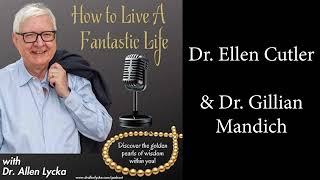
Transcript of a radio/podcast episode of 'How to Live a Fantastic Life' hosted by Dr. Alan Lyka featuring interviews with Dr. Ellen Cutler (on digestive enzymes, food/environmental sensitivities and her ECM method) and Dr. Gillian Mandich (on the science of happiness, research findings and practical habits). The episode mixes interviews, listener-promotional ads, and practical tips for wellbeing (diet, meditation, exercise, gratitude).
Chapters
Doctor Alan Lyka here and I'd like to welcome you to how to Live a Fantastic Life show where we will be discussing the important aspects of your life. We hope to inspire you to live the best life you can. Get out of your comfort zone and explore the awesome world around you. Break through your barriers, take inspired action. Use the difficulties in your life to achieve the best version of you.
The Secrets to Living a Fantastic Life is an amazing read. If this book doesn't pick you up to sing above the crowd, I will be amazed. What great things do you imagine for yourself? Do you know what's holding you back? Dr. Alan Lyka, a prominent physician has taken what he's learned from being handed a diagnosis of his pending death and turned that insight out from from inside his heart and mind out to you. You may have heard the idea. It's not what happens to me, it's what I do with it. Dr. Laika explodes this idea, this way of thinking and being into 13 golden pearls for you to take one by one practice and string together like a necklace you will wear to guide you through life's challenges. Like metal that is tempered by extreme elements. So are we. Dr. Laika will show you how to turn terrible things into into real and practical new ways to lead your life. Believe it and believe in yourself. The Secrets to Living a Fantastic Life is an amazing book. Amazing. Get your copy today at Amazon.
Ladies and gentlemen, we have a very special guest today. She calls herself Dr. Ellen. Her full name is Dr. Ellen Cutler. And the reason I mention that is because she's a best selling author and an internationally recognized teacher, a public speaker and a media spokesperson. She has a chiropractic degree and specializes in the use of desensitization of food and other sensitivities, gentle detoxification, and she uses enzymes and nutritional therapies for chronic conditions that have perplexed the conventional medical establishment. In fact, she's invented a new healing technique called ECM which also refers to the Ellen Cutler method. Welcome Dr. Allen.
It's great to be here. Dr. Laika, happy to be with you.
Fantastic. So tell me, how did you become so involved in these things? It sounds like a very personal mission, not like the usual missions I get when I get people on this show.
That's a great question. Thank you for asking me that. And honestly, I feel like this has been my life's work. This is why I'm here on Earth, really. Because what I do, I do 247 and it initially helped started me in with my journey I was diagnosed when I was in postgraduate work in chiropractic with colitis. And of course, the conventional methods of helping me were medication, steroids, and possibly surgery. Later on in my life, I said here I always felt aligned to natural medicine, even when I was younger. So I sought out out what could help me. And one of my mentors in my graduate program recommended a digestive enzyme. And at that time, which is probably like 50 years ago, that wasn't on the radar. No one knew what a digestive enzyme is. So he recommended I take an enzyme that helped me digest carbohydrates because he felt like I was intolerant of to sugars and starches. So what I did is I began taking this enzyme and within two weeks, I have never had a problem again. So in my chiropractic practice, I didn't care what anyone came in with, whether they came in with a headache or they came in with fatigue, or they came with a knee issue. I gave them a digestive enzyme and I saw miracles. That's why the name of my book is the Micro Miracles, because I really do feel it's the number one supplement beyond anything that people should take. Because I always say my motto, Dr. Laika, it's not just what you eat, it's what you digest with that. Then I became involved in looking at sensitivities because I felt like reactivities were far and beyond just allergies. And. And that's how I got into develop my ECM method many decades ago.
Yeah, well, that's interesting. You know, you were well ahead of what people are saying now with the gut body connection. You know, we realize that the gut biome is very important, and when it gets disturbed, there are many things that happen, including allergies, including all sorts of things. In fact, I've had another guest on the show who has used things like fecal implants to change things like even eczema and autism in people. So these are things that are very integral to people and we're starting to just understand how all these things are in play now that we're just starting this whole new branch of medicine. And it's going to be exciting. But as I say, it's the new frontier and we still don't know everything about it.
It's absolutely true and it's interesting. I was just doing an interview earlier this week and I was mentioning that when a patient comes in to see me, they go through a list of the laundry list of symptoms and they never mention gut. And then I say, to them, well, what about your gut? Well, I've been constipated my whole life, or I'm bloated all the time and it just never feels have cramps, but they never mention it because they've had it their whole life. I say to them, yes, that's such an integral part of your overall health that, believe it or not, looking at the gut can be extremely helpful to helping with these other areas, other symptoms that you're talking about. That's where a digestive enzyme can be a key beginning, and sometimes it's all they need. But what I have found also, Dr. Laika, is that when you eat a food that you don't digest, you can become reactive or sensitive to it or an allergic. And those sensitivities to foods can cause all kinds of different problems. In fact, it's very common in children. As far as you were talking about eczema, it's a big one for headaches, for fatigue, for even some autoimmune issues, for chronic pain, for female problems, food sensitivities can be key as well as other sensitivities, which I get into with my work. But digesting your food is so important. I know myself, Dr. Laika, if you go in, if you start your day and your gut doesn't feel good, it's hard to really have a good time day. Isn't that true?
Oh, for sure. You know, when I was working before as a dermatologist, a good friend of mine who's now passed away, his name's Haynes Eli put me on a treatment for psoriasis. Now, psoriasis is a very chronic skin disease with patches of scaling, itchy skin on the elbows, knees, and it can affect almost the whole body. Now, what we found was using simple things like bile salts and curcumin, worked in 80 to 90% of people to get their psoriasis under control. So that showed me how important these things were, these enzymes, so to speak, in getting the body under good control.
Yes. And I have found with psoriasis, as other autoimmune conditions, that there are many different sensitivities. And for something like psoriasis, like Candida can be one, and then foods that exacerbate Candida, and it's not so much that Candida, everybody has yeast Candida, but if you are reacting to, if you're sensitive to it, it can cause different problems. And one of them is psoriasis. So I've had extremely good results helping people with psoriasis and using things like curcumin as well as a digestive enzyme too.
And Doug, what do we always say, son? Liberty Mutual customizes your car insurance.
They only pay for what you need. That's my boy.
And you get out there and you.
Make us proud, huh?
Bye, Uncle Emu. Stay off the freeways.
Only pay for what you need.
Liberty. Liberty. Liberty. Liberty.
Do you want lovely, beautiful skin that makes others look at you with envy?
Yes.
Well, I have a secret to tell you. I'm Dr. Alan Lyka and in my former career I was a leading cosmetic dermatologist and I stumbled across an amazing set of creams. They are called Cloud creams. Made by Canadian dermatologist Gordon Telford. These creams make your skin care as easy. 1, 2, 3. Because they are based on vitamins A, B, E and D. Use them daily and your skin will take on a new youthful appearance. My patient's skin was lighter, brighter and tighter. Gordon and I are so convinced you will love them. Gordon is prepared to offer you a double your money back, no questions asked guarantee. Get yours today. Go to cloudvitamincream.com and get started. Tell them Dr. Lyca says said chew.
So it's so important in your overall well being and it's a great place to start. Sometimes we look for all these other supplements just chewing your food. Well, taking a digestive enzyme can make a big difference in your Overall health. Interesting Dr. Lag. I can look at somebody and I know if they're on a digestive enzyme or not, because when you take an enzyme, you optimize your nutrition from your food. So you see it in their skin, their hair, their energy, and they're smiling because their gut's healthy and it's a big deal.
That is a big deal. Now you have created your own unique method which you've called the ECM method. Would you like to tell us a little bit about that?
Yes. I developed this technique probably about four decades ago and I've been using it and work with people all over the world and teach. And I'm starting to teach now to everyone, anyone that wants to learn with me, because I've seen people can actually do some of it at home too. So it's a method I designed that is an energetic system that looks at the underlying factors with a specific problem. Let's say somebody comes in to see me who has asthma or some respiratory issues and they want to know how come the medication is not really helping me altogether. What else can I do? I have a protocol, a system to evaluate what are the underlying causes of asthma. I look at how the body detoxifying, which is very important. And there's a lot more written about that as well these days. And then I look at sensitivities, foods especially, what foods are underlying, what foods they are sensitive to. And then I look at other factors like environment, for example, asthma. It's usually mold is a big one, or other allergens like dust, whatever, and also pathogens. You could have a virus that you may be, or bacteria you had when you were a kid. There's still something in your body that's still reacting to it, or even an antibiotic or something like that. I look at all these underlying factors and emotions which are very important for asthma. With all that information, I go through a process of desensitization, a clearing that I do and they do at home. That's an acupuncture pressure type clearing that retrains the mind. You learn something different. You learn in some ways through the body mind connection to not be sensitive to those. And within sometimes immediately or maybe a week. So sometimes it takes a little longer. For some people, asthma is much better. And sometimes they can even go off their medications, which is phenomenal. And I wrote a book about asthma a long time ago because I've had such amazing results with it. So I, so anybody comes in, I go through this protocol. It's a very in depth, comprehensive, energetic evaluation and a clearing or desensitization. I have libraries of items that I test for anti aging, for example, for people who have, who've suffered with Lyme over years, what are some factors that can help them in their healing process? So I work at this and advance it all the time. And it's, it's amazing.
You know, Lyme's disease. I, I don't know. Everybody knows what that is. So let's, let's just define that for everybody. That is the bite of a tick that causes people to have a, in some people, a chronic reaction. And that reaction is inflammatory in nature. So that is thought to be started by an infection that goes on in the body, that stays in the body, but it also has other things that make it worse at certain times and better at certain times.
Exactly. There's an acronym snack. So it starts on the skin. It can affect the nervous system, cause arthritis, Lyme arthralgia, and then it can also cause cardiovascular problems too. And I've seen it, and I work with many doctors here in the Bay Area or in the country that we support each other in helping with clearing certain things. Like sometimes there are Certain antibiotics, they go on and they have a sensitivity to it. The ECM technique can help reduce or clear altogether the sensitivity to that and actually help in healing those infections, those infections caused by chronic Lyme or another virus too as well. So I love what I do, because what is different about the ECM work is very individual. It's tailored to the individual. Not everybody with Lyme or asthma or eczema have the same sensitivities. It's very individual. There's not one drug that can really help everyone because it is different. We express it differently. Each individual, yes.
I think that's what's so important, is that people realize that all these things are interdependence, that it is a unique fingerprint. Everybody has. And I mention that specifically because no two people have the same fingerprints and it's the same thing with something like this, although there are similarities, there's nothing that is specific to anyone. So this is where the art and science comes in in helping a person with this. Because again, although there are general principles, there is no blueprint, so to speak, that makes everybody better.
I love that fingerprint. I'm gonna remember that one. That is great. That's a good one. That's absolutely true. That's so the way I work, for sure.
Well, that's good. And I think it's important to bring out these things for people so that people understand these. That's why I tried to bring out different things and different people's stories, Dr. Allen, because all this stuff is, is, is an amazing front. And I say it's a frontier because it takes a creative person like you to put some of these pieces together. At the same time, the medical establishment is very unique in that, first of all, it largely chastises anybody that has new ideas. And then after a while they start saying maybe there's some merit to it. And finally it becomes self evident. And we know that, for example, in treating stomach ulcers, you know, stomach ulcers were thought to be an aberration of acid and a whole bunch of other things. And then finally it came down to the fact that it was a bacterial infection that was causing it. And the person that discovered that was largely chastised by the medical community. After several years, they decided, oh, that's self evident, that bacteria are the cause for stomach ulcers. So this is why I say this in such a way, because that's exactly what I'm sure is happening to your ideas too.
Sylvia o' Connor is the Moving on expert. Her brand new book Living the Abundant Nine Principles to Move from Poverty to Prosperity talks about how Sylvia moved on from several life circumstances, leaving her southern home after graduating from high school to seek a better life up north in Detroit, Michigan. To purchase the book, go to sylvia-o'connor.com.
Take a step toward bringing our country and community together. Start a meaningful conversation@lovehasnolabels.com One small step. A message from StoryCorps Love has no labels in the Ad Council.
I've been through that my whole life being a chiropractor. In fact, I went and got a medical degree. I actually went and got a medical and never got licensed as a medical only because I thought it would help me as being a chiropractor. I've been through my, I guess you can understand being a woman and being a chiropractor and having a very creative system. But I have endured and now many of those people that chastise me come to see me and recommend people to me. So you know, it's come in a full circle. But the results show, the results speak for themselves too. And what I do can hurt anyone. And I don't take people off medications. I didn't put them on it. I don't take them off. I work with their physicians or their health care practitioners they see in helping them. Really what I want is for people to be well and you know, as I do, I teach my patients. I feel like I'm an educator. You know, besides the digestive enzymes and clearing these sensitivities, I advocate a good diet. I'm a vegan. I advocate at least mostly a whole based, organic, whole plant food diet. And I'm big advocate of exercise and even some meditation, mindfulness. It makes such a difference in your overall health and longevity.
Now this show is called the how to Live a Fantastic Life show. How have you learned to live a fantastic life?
Dr. Ellen I love that. First of all, every day I wake up, I wake up at 4:40 and I meditate and then I sit and feel grateful. I think that's so important and appreciative of what I have and in my life and my family and my patients who are basically my family too. So that's key. And like I said, eating a good diet, I'm, I do it, I'm, I'm a little bit stricter maybe than some other people because I've been through hell. When I was younger with colitis, I remember what it felt like. I never want to feel that way again. So I always take my digestive enzyme and There are other things that I take regularly too. And then I exercise every day, some form of exercise a day. Again, I think smiling is very important and good posture. Because if you're like this, how can you feel happy? If you're like this, it's much easier to smile and be positive. And I think smiling is really important. And laughing. I'm with my grandchildren. They laugh most of the day. How come we don't do that? So those, those are some things I do to live. Fantastica. And the last thing is serving people. I think being of service is. Is, I think is so important in. In your life and your happiness.
Yeah, I. I like the saying of Zig Ziglar a lot. He says, your attitude, not your aptitude, it will determine your altitude. Now that is such a powerful expression. Your attitude, not your aptitude, will determine your altitude.
Love it.
Think about that. How can you get to a higher level? Certainly all of us have certain abilities. That's our aptitude. But no matter what abilities we have, unless we harness them with attitude, we're never going to develop those abilities to the fullest. So I think that is so important for us to really make a difference. Aptitude plus attitude equals altitude. A very simple equation for every, everybody to take their every day and make that day special. So I think if everybody would spend just a couple of minutes at the beginning of a day sitting still and saying, oh, my goodness, this is all the wonderful things this day has for me in store. Instead of saying, darn alarm clock, I hate that it's gone off. I'm going to stop it and get another 10 minutes sleep. And then I'm going to grumble, grumble, grumble, get onto my job. And then I'm going to grumble, grumble, grumble, getting through my job all day long. Can you picture that sort of thing? Instead of asking, how can I contribute? How can I make this process better for everybody? How can I make this day marvelous for everybody? Everybody. That is really the better way to perceive things and the better way to look at everything. You know, I think everybody should look at things as if it's. If this is the last day you have on earth, what would you do? How would you look at it?
What would you do to make it fantastic?
Because that's really all we're given is really one day, day at a time.
Exactly.
And we've got to make that day so special, if we don't make it special, we will never really be everything we can't be.
Exactly. And I. Every day I write my intentions for that day, you know, this day. So I do that regularly and it does make such a difference. And I know you've made my day just hearing what you just said. That's beautiful.
Well, thank you so much. So how can people find out more about you and what you have to offer?
So My website is drellancutler.com and my new book, my updated book Micro Miracles is now just about to be published this week or the beginning of next week. So I look forward to people reading. It's all about enzymes and two new chapters, one extended chapter on longevity and anti aging and digestive enzymes post pandemic use too. So I think it's really going to be extremely interesting for everyone. And you can subscribe to my YouTube video, Dr. Ellen Cutler. And one more thing, every Monday I do a Miracle Monday on Facebook and my Facebook page is Micro Miracles.
Well, thank you so much Dr. Ellen Cutler. It was really a pleasure to have you on my show. And ladies and gentlemen, check out my website, drellenlika.com that's doctor-r a l l e n Leica l y c k a dot com and be sure to sign up for for My Golden Pearls because they will make your day if you let them. Bye for now and have a fantastic day.
You've been listening to how to Live a Fantastic Life with your host, Dr. Alan Steven Laika. If you love the show, be sure to share with your family and friends. We are heard daily on this network. Dr. Laika wants you to live in your best life. Visit coachingwithdrlaika.com and book your free 15 minute discovery call today. Remember to pick up your copy of the Secrets of Living a Fantastic life today@Amazon.com until next time, have a fantastic life.
You're listening to AM FM247, the best in talk and music all day and every day.
Dr. Alan Lyka here and I'd like to welcome you to how to Live a Fantastic Life show where we will be discussing the important aspects of your life. We hope to inspire you to live the best life you can. Get out of your comfort zone and explore the awesome world around you. Break through your barriers. Take inspired action. Use the digital difficulties in your life to achieve the best version of you.
The Secrets to Living a Fantastic Life is an amazing read. If this book doesn't pick you up to sing above the crowd, I will be amazed. What great things do you imagine for yourself? Do you know what's holding you back? Dr. Alan Lyka, a prominent physician has taken what he's learned from being handed a diagnosis of his pending death and turned that into insight out from inside his heart and mind out to you. You may have heard the idea. It's not what happens to me, it's what I do with it. Dr. Laika explodes this idea, this way of thinking and being into 13 golden pearls for you to take one by one practice and string together like a necklace you will wear to guide you through life's challenges. Like metal that is tempered by extreme elements, so are Dr. Laika will show you how to turn terrible things into real and practical new ways to lead your life. Believe it and believe in yourself. The Secrets to Living a Fantastic Life is an amazing book. Amazing. Get your copy today at Amazon.
Ladies and gentlemen, today we have a very special guest. Her name is Dr. Gillian Mandich and she's a friend, fellow Canadian. Now, her mission in life is to help people live their happiest life. She's a published researcher, a two time TEDx speaker, and the founder of the International Happiness Institute of Health Science Research. And you can find her on all sorts of media out there because she's been on the morning show, breakfast television, Marilyn Dennis, the social, et cetera, et cetera, et cetera. Her credentials are longer than my arm. Welcome, Gillian.
Hello. I am so happy to be joining you today. Thanks for having me.
Well, I am happy to have you as well.
I know one or two things about happiness because I've taken certificate programs from both Harvard and Yale at that point.
That's amazing. It's, it's so exciting that those even exist now.
Right, exactly. And it's also fascinating that both those courses became the number one course or the most attended course in those institutes history.
Yeah, you know, it's really speaking to this need. We, you know, we all want to be happy. And so then the question becomes, okay, well, how do we do that? And so now to be able to apply the rigor of research to a topic that is, you know, universal to all of us is such an exciting time to, to be in this space.
Well, let's go back a minute. What do you mean by happiness? Everybody has their own definition.
Yeah, you're right. You know, if I walked into a room and I pulled 100 people and I said, what is your definition of happiness? I probably would receive 100 different answers.
There may be 120 different answers or 200 answers.
Yeah, very true. And yet when I say happy, we all have a general idea of what it is. So part of it is that happiness is A very personal experience. And so part of it comes down to how we experience happiness, which is all well and good until you become a happiness researcher. Because at the beginning of any research study you have to define the terms that you are studying. So for myself, when I do research, I use a definition of happiness that actually comes from Dr. Sonia Lumiersky and it's one that's commonly cited in the academic literature, which is that happiness is the experience of joy, contentment and positive well being combined with a sense that one's life is good, meaningful and worthwhile. The reason I like this definition is because it casts a wide net. Right. So you know, it talks about sort of the, in the moment happiness, joy, contentment, peace, but then also sort of this bigger legacy, purpose piece. Right. The experience of one's life being good, meaningful and worthwhile. So that's the one that I often use. There are lots of them out there because happiness is a very subjective personal experience. It's like love, right? Something like that. It's hard to sometimes encapsulate those feelings into words. So we do the best that we can.
And the number of scientific publications on happiness have literally exploded over the years.
Yeah, you know, it was not until about the mid-90s that we started. So we were doing a graph, there's very little work being done. We were focused on, you know, disease, what's wrong and how do we fix it. And then with the positive psychology beginning as a field, what we see is that in the past 20 or so years there has just been an explosion of work in this field. I think because we're understanding that our quality of life matters. And you know, it's not just about when something goes wrong, how do we fix it. It's about how given whatever situation I have in my life right now, what can I do to enhance my life to make it happier. And so I feel like it's a very exciting field because is new. There is so much to learn and we are learning so much. And especially with happiness, what we used to, used to think is that we were sort of had a set point of our happiness. So kind of like a thermometer in a room where, you know, we have our certain level of happiness and the good thing happens and it goes up, then we kind of go back down and then maybe something challenging happens or happiness goes down, then it kind of goes back. And what we know from recent research is that yes, there is a piece of our happiness that's genetic. So there is an element of that, but that's not where the conversation ends. And what we know now is just like if you want to go into the gym and exercise to get stronger, it's almost like part of our happiness is a muscle. And so when we do things, we can take whatever set point we have and we can actually increase our happiness and sustain it at higher levels. And so I think that that's really exciting and that's where my work focuses on is like, how do we actually increase our happiness in a meaningful way to enhance our quality of life and our.
Julian, I'm going to get you to stop there for a minute because we have to pause for a commercial message. And ladies and gentlemen, come right back because at the end of this message, you're going to hear why happier people are better. In other words, they have certain things about them that make them live better lives. Do you want lovely, beautiful skin that makes others look at you with envy?
Yes.
Well, I have a secret to tell you. I'm Dr. Alan Lyka, and in my former career I was a leading cosmetic dermatologist and I stumbled across an amazing set of creams. They are called cloud creams. Made by Canadian dermatologist Gordon Telford. These creams make your skin care as easy. 1, 2, 3. Because they are based on vitamins A, B and D. Use them daily and your skin will take on a new youthful appearance. My patient's skin was lighter, brighter and tighter. Gordon and I are so convinced you will love them. Gordon is prepared to offer you a double your money back, no questions asked guarantee. Get yours today. Go to cloudvitamincream.com and get started. Tell them Dr. Laika sent you.
Sylvia O' Connor is the moving on expert. Her brand new book, Living the Abundant Life, nine Principles to Move From Poverty to Prosperity, talks about how Sylvia moved on from several life circumstances. Circumstances. Leaving her southern home after graduating from high school to seek a better life up north in Detroit, Michigan. To purchase the book, go to sylvia-o'connor.com.
Well, welcome back, ladies and gentlemen. I have a very special fellow Canadian with me today, Jillian Mandic, and she's talking today about happiness. Now, what are the features that make happy people different than everybody else?
Yeah, you know, this is a great question. And so when we look at sort of the benefits of happiness, let's start there. So when we compare happier people to less happy people from a physical health perspective, what we see is that happier people have lower rates of cardiovascular disease, they have stronger immune systems, they heal faster from injury, they tend to sleep better, both in terms of duration and also sleep quality, and they tend to make better nutritional choices. So from our physical health, we see that there's a ton of benefits, but it even extends beyond there. So if we look at how we show up in our life at work, we see that happier people are more productive, they're more creative, they get better job evaluations from their supervisors, they're better liked by customers and clients. Then even in our personal lives, they have longer and more fulfilling marriages and friendships. They're more altruistic, so they're more likely to volunteer their time or their money to help out in their community. So really, what is so exciting about happiness, I think, is that when we focus on this one thing, not only does it feel good to be happy, but the benefits really do extrapolate into so many other facets of our life that it really is sort of like, you know, this, like, special sauce that you can sprinkle all over your life. And it just really does enhance the human experience.
Yeah, I've heard you explain that unhappy people are like a black and white TV out of focus, whereas if you're having happiness, you're like a totally new colored TV with all the digital features in it, bringing life into focus.
Yeah, I love to think of it like that. Because, you know, so many of us go on autopilot, right? We go through our day, we go through the motions. And yet that's sort of like looking at life through, like you said, through a black and white tv, where it's just. It is what it is. But why do that when we can actually watch TV in like 4K high definition? It's going in the 3D world, right, where we can actually experience more, where things are brighter, where things are sharper, where we're actually able to enhance our life. And so instead of just going on our life through autopilot, we can actually be intentional about some of the behaviors and thoughts and actions that we have. And by doing that, we can actually really enhance our life and really start thriving and flourishing in our life, as opposed to just going through the motions of life.
Now, you also have stated in some of your talks about how happiness differs at different times in your life, at least in the populations that you've seen. Like, people are happier at certain times in their life. When is that?
Yeah, you know, and there's a lot of work being done in this area, and it's a little bit controversial. You'll see some that talk about how we have this inverse use or happiness sort of pick peaks midlife. And I Think more than that. We all have ebbs and flows in our life. We all have times that we go through that are more challenging. Maybe we're going through a divorce or a job loss, and our happiness may go.
Go down.
And yet other areas of our life we may see, you know, when we get a new job or when we graduate from school or when we get a big promotion. So we have those highs and lows. And I think there's a lot of individuality in that. But I think that the key thing to recognize is that happiness is not a destination, right? It's not something that we arrive at one day. It's a practice, it's a habit, and it's skill. And so no matter where we are throughout the lifespan, no matter how happy or unhappy we're feeling right now, I think the big key that is very clear from research is that each and every one of us has the capacity to increase our happiness, to sort of build that skill, to grow that muscle, no matter where we are in any stage of our life, and especially, I think, during difficult and challenging times, that while it may seem like a time that we may not want to focus on happiness, oftentimes that can be a very opportune time to be able to start to shift things. You know, we obviously feel all the feelings that we go through, right. The other piece is that we can't be happy all the time. You know, people sometimes think that because I study happiness that I'm happy all the time, but it's impossible. And we see this in research sometimes referred to as, like, the dark side of happiness, right? Where people that actually set their goal is to be happy all the time are less happy because they've set an impossible goal. And so I think that really focusing on, for ourselves, answering the question, first of all, what makes me happy? Like, answering that for ourselves, and then thinking about, okay, well, how can I create more opportunities in my life to do more things, to prioritize and to make the time and put in the effort for happiness. Because, you know, sometimes you see these quote cards on Instagram or Facebook that say, choose happiness. And the reality is, it isn't that easy. It's not like we just wake up in the morning and we decide what we're going to have for breakfast, and we choose happiness. It actually requires work and effort.
Okay, Jillian, I'm going to get you to hold that thought. And ladies and gentlemen, Jillian is talking.
To us about happiness.
And Jillian Mandrits is a expert on this. And when we come back from this Commercial message. We're going to talk about the myths of happiness. You need to be there to hear them. They order pineapple. You gotta smell the butt to know if it's right.
You know, that noise is white precious.
Cream always in the bag.
Cause cream rules everything around.
All right, Chefs, we gotta go get the beans. Think they asked for big bro. You know what I mean, Chef? They definitely said piddle beans.
Actually, they want fava beans.
They're so good at this. We get groceries doordash.
Ladies and gentlemen, we're talking about a Canadian expert on happiness, Jillian Mandich, and she's going to tell us about the myths of happiness today.
Yeah, you know, I think a lot of times, you know, when we were growing up, I don't know about you, but in school, I was never taught how to be happy. Did you learn how to be happy in school?
No, but I was a pretty happy kid, and I had a lot going for me, so I didn't really pay much attention. You know, I didn't have to be taught to be happy. I was just happy.
Oh, well, you are very lucky, because for a lot of us, you know, we were never taught how to be happy. And then it gets messy and convoluted because we have TV and media and marketing and social media sort of projecting what they feel that happiness is. And yet happiness is not these. You know, what we see from research is that, say, for example, we want a new house or a new car or something like that. We think that that's going to make us happy. One what we see is that if we got that thing, it doesn't bring us as much happiness as we anticipated that it would. And it doesn't last for as long as we think that it does. And so one of the myths around happiness is that, you know, it's. It's something that we get it, and then we're good. Right? We always say, I will be happy when I fill in the blank. And yet it's a practice, so really recognizing that it's something that we have to work at and cultivate our entire life, it's sort of like physical activity or good nutrition, Right? We have to choose to move our body most days and eat healthy food most of the time if we want to be happy. And with happiness, it's sort of the same thing where we actually have to practice it. And I think another big myth about happiness is that, you know, this is actually one that was personally for me, when I first started researching happiness, I thought, okay, I don't like Feeling sad. I don't like feeling anxiety. I don't like feeling depressed. And so I want to research happiness so that I can figure out how to get rid of all those challenging emotions and just be happy all the time. And what I quickly learned is that that idea is a myth. And we actually, when we think about healthy psychological functioning, we're humans that have a full spectrum and a full range of emotions. And so really giving ourselves permission to. To feel, to be human. Yes. We can cultivate more happiness. And happy doesn't mean that we don't have challenging or difficult times that we go through as well.
Exactly. I think it's very important to realize that this thing called happiness is. Is something that people have to develop.
And it's like a muscle that's inside your body that you develop over time.
Exactly. I kind of think about it like this. Like, when we go into the gym, we want to get strong. We lift weights to grow our muscles. And it's sort of like when we do things throughout our day to make us happy, happier, then our happiness muscle gets stronger. And then what happens is we get stronger and stronger. And then when a challenging or a difficult thing happens, whether it be a pandemic or a job loss or a divorce or whatever it is, our muscle is stronger. So we're able to cope with those difficult things in a more resilient way. So it's not about eliminating them, but when our muscle is stronger, we are better equipped. We are stronger to be able to handle whatever it is that life decides that it wants to throw at us.
Exactly.
Now, here's a difficult question. What is the opposite of happiness?
Ooh.
So I asked this question a lot. I do a lot of public speaking and work with organizations, and I ask that exact question often. And what's interesting is that I get a wide range of things. Sadness, I get anger, frustration. But the opposite of happiness is actually apathy. It's. It's not caring at all. I think the most common response that I get is sadness. But when we actually look at the emotions, if we think about each emotion on a continuum. So on one side, we have really happy, and on one side, we have not happy at all. That's where apathy is a separate construct. We have sadness. We have not sad at all and very sad, we can actually be happy and sad at the same time. That's called the bittersweet emotion. But really the opposite of happiness is having no feelings. It's just being ambivalent. It's apathy. Great question.
Thank you.
Very much.
Now, Jillian, it is such an honor.
To have you here because I know you can teach people how to be happy. How can people become happier in their lives?
Yeah.
You know, one of the things I have to say, like, the number one question that I get asked when I tell somebody that I have a happiness researcher, is they ask me, okay, Jillian, like, what's the magic pill? Right? What's the word? One thing I need to do or buy or get or say in order to be happy. And the truth is, there is no magic pill. There's no one thing that's going to miraculously come and make you happy. It really is a practice, and it requires effort and it requires work. It requires us to answer that question for ourselves. So, yes, I can look to the research and the data and say, these are some activities that are highly correlated with happiness things. Things like gratitude, social connection, getting proper nutrition and sleep. Those things all contribute to our happiness. But each and every one of us is unique, and so is our own sort of recipe or formula for happiness. And part of the work is really taking the time to ask ourselves that question. And I can't tell you how many times I've had conversations with research participants, and when I ask them, I say, are you as happy as you possibly could be? I've never had someone say yes. Never said someone, you know what? I'm good. Right? We all want to be happier no matter where we are. And yet when I ask the second follow up question and I ask, okay, well, what makes you happy? What often happens is one of two things. Either before they start their exhale, they're answering, me, my mom, my dog, my cat, my sister, my brother. Where it's almost like a reflexive answer, or I hear, like a really long pause. And they really have to think about the answer. And so think about that. If I ask someone what makes them happy, and their answer is either a reflex, so they haven't actually taken the time to answer, or they really have to think about it, then it's pretty apparent that we need some time to think about those answers. And the only person that can do that for ourselves is us. And so really taking that time for ourselves to answer that question, what makes me happy? What are those things throughout my day that I feel like, give me a boost, they make me smile, that make me feel, you know, more alive, more connected. And that's a great place for each and every one of us to start in terms of.
So I'm going to put you on the spot, Jillian. Sure. How do you become.
How did you become a happier person?
So, you know, I wish I would have measured my happiness when I first started researching happiness. Because I have to say, like you, I have a fairly happy, positive, optimistic person. Not to say that I'm happy all the time, but I do feel like when I read things in research, for example, practicing gratitude, I try those things personally in my life as well. And so for myself, a couple of the big ones have been really, is focusing on my relationship, social connection. What we see data coming out of the Harvard Study of Adult Development, which is a really robust longitudinal study. So they've been following participants since 1938. And what we see is that social connections are so important for us. And I think that this is an important one because often when we get busy and our to do lists get full, something that drops off of our list is taking the time to call a friend or taking the time to actually go for a walk with, with someone, a colleague or a friend, and really connect with each other. And then for me, another really big one is during the pandemic, I got a puppy. And there's a lot of good research in terms of how pets can help us with our happiness. And so I have a little French bulldog. He's actually sleeping beside me. So as a side note, if you hear snoring at all during this conversation, I'm not putting myself to sleep. It's my French bulldog. He's snoring. But he is someone that brings me a lot of joy. He keeps me structured with purpose.
Right.
I have to take him out. And that's been a really big happiness enhancer for me.
You know.
How about you?
You know, I just went through that Harvard challenge on becoming happier. And what I chose for my rewirement challenge was to do more exercise. Because a lot of my day I'm sitting at my computer talking to wonderful people like you, and I don't necessarily get enough exercise. And I found that that increased my happiness.
Yeah. And exercise is a really good one because we kind of see a couple different reasons why it can enhance their happiness. One, when we see that, you know, and there's research that shows sometimes that exercise can be as effective as antidepressants for some people in terms of their mood. And the other really good thing is a lot of the skills that are highly correlated with happiness is a slow build over time. We're starting to learn a new habit. But sometimes it's 2 o' clock in the afternoon and we're feeling a little low or pretty. We're feeling a little grumpy, we want to instantly switch our mood. And exercise is one of the most effective instant mood boosters. And it doesn't need to be a lot. What we see is that even 10 minutes of movement can greatly increase someone's odds of being happier.
Yeah.
And another thing that I think so important right now is to turn off the news. You know, we had two years of the pandemic when the world was going to end, and now we're going to a recession where the same news is going on as we're talking. Two major banks in the United States were put under the government's control, and Credit Suisse has been having some problems. So the Saudis have pulled their money out of Credit Suisse. So there is some stuff happening on a global basis right now that will keep you awake at. At nights if you listen to it before you go to bed.
Yeah. And actually some work from Sean Acher and Michelle Gillen. They found that watching three minutes, so just three minutes of news that we perceive to be negative, people that do that have a 27% greater likelihood of reporting their day as unhappy six to eight hours later. So I think another piece of this conversation that's important, important is recognizing that it's not a matter of turn on the news, turn off the news, go about your day, knowing that the residue of that stays with us and can impact our mood even six to eight hours later. We think about how many difficult things are going on in our life that we can't control. News in particular, media, social media is something that we can. And so really being mindful. I'm not saying that we all need to live in a bubble and never check in. We need to be informed, but we really need to be intentional and deliberate about consuming it. And when we're consuming it, Right. We do not need to go on and check the news first thing in the morning or right before bed. Right. And just really understanding that the impact that that can play in terms of our mood is very significant.
Now, in 2008, we had a banking crisis, and the bankers that did the best, that were less stressed were the most happy and resilient had what in common? Jillian?
Yeah. So back in 2008, I love that you brought this up. I love this study. This is work from Sean Achre. And what they did was they went in and they studied bankers during the financial crisis, which is a very stressful time. Yet like you said, there was this subgroup that were fairly resilient even during this difficult and challenging time. And when the researchers looked at, well, what's different about this group, it wasn't their education level, it wasn't how long they've been with the organization, it wasn't years of experience. The only thing that was different was that these resilient bankers didn't see a problem as a threat. They saw it as a challenge to overcome. So the lens that they viewed the situation through was different. Instead of feeling like it's a threat, like something's coming at me, when we feel like we're being threatened, what do we want to do? Right? We want to run, we want to hide, want to protect ourselves. But if we see something as a challenge, then we think, okay, what's the solution? How do I problem solve? How do I figure this out? And just looking at the same situation like that had a really big impact. And now those same researchers, they also did a follow up study looking at were these people just born that way? Were they just naturally born to see things as a challenge? And what they found is that this is something that can be learned. And just by watching a video, an instructional video that talked about how to see something as a challenge as opposed to a threat, they saw a decrease in stress levels of the employees. They saw an increase in their happiness and an increase in their work engagement. And so this is something that we can learn. We can control how we're seeing things. And when we can see things as a challenge, it can have a very significant impact on our behaviors and on how we feel, especially during stressful times.
Exactly.
Well, Jillian, we're at the end of our time together already. It's flown by.
Can you tell.
That is it is for sure. Can you tell people how they could get in touch with you if they'd like to?
Yeah, absolutely. My website is my name, which is Jillian Mandich and I'm Jillian with a G. So it's G I L L I A N M A N D I C H and that's a good hub. All my social links are there, all of my things are there.
And ladies and gentlemen, go to my.
Website, Dr. Ellen Laika. D R A L L E N lyka L Y C K A.
Because there you will be given a golden pearl each and every week. Bye for now.
You've been listening to how to Live a Fantastic Life with your host, Dr. Alan Steven Laika. If you love the show, be sure to share with your family and friends. We are heard daily on this network. Dr. Laika wants you to live your best life. Visit coachingwithdrlaika.com and book your free 15 minute discovery call today. Remember to pick up your copy of the Secrets of Living a Fantastic life today@Amazon.com until next time, have a fantastic life.
More from Dr
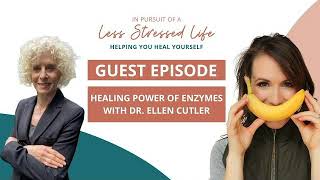
The Healing Power of Enzymes with Dr. Ellen Cutler - The Less Stressed Life Podcast
ECM Method for Well Being with Dr Ellen Cutler – Episode 277 Behavioral Health Podcast
The Ellen Cutler Method ECM for Well being with Dr Ellen Cutler - Moments with Marianne Podcast