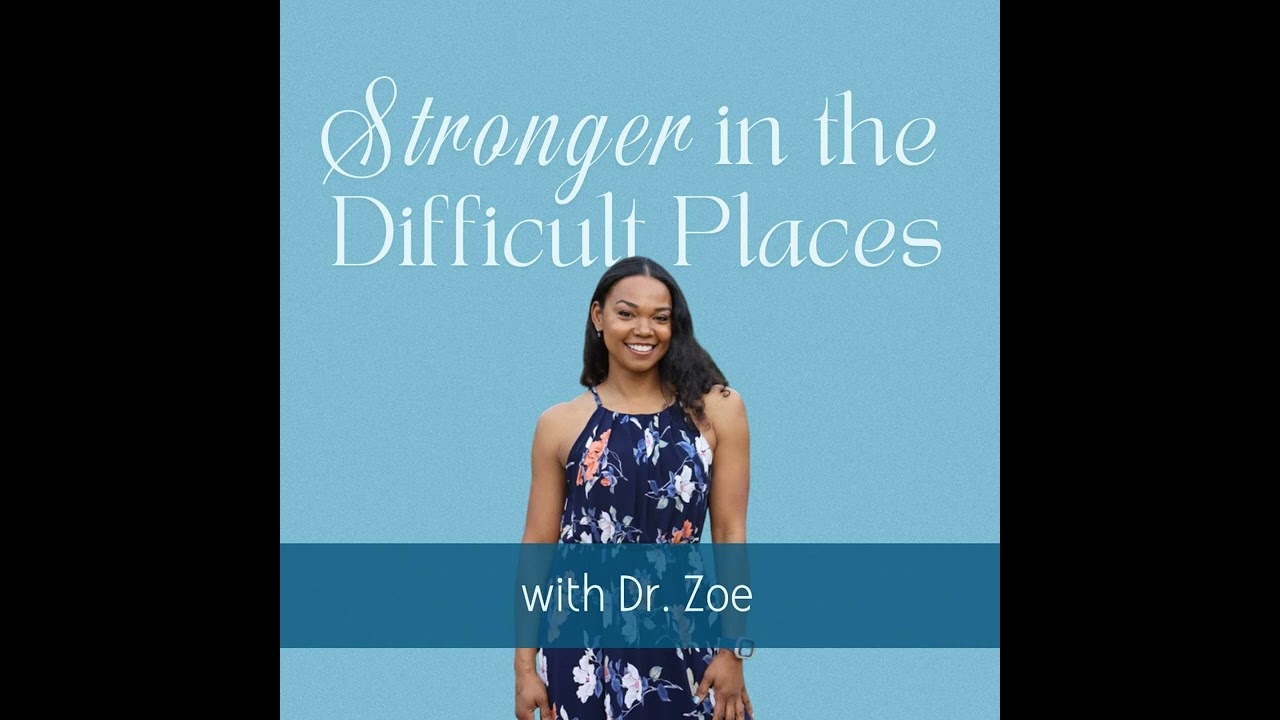
In this solo podcast episode, Dr. Zoe Shaw frames relational healing as a process of fixing the listener rather than fixing others. She opens with her signature taglines, shares a personal win (book launch announcement) and a humorous fail (a flooded pool caused by a miscommunication with her daughter), then delves into the core therapeutic content. She defines enmeshment as a loss of self where emotional boundaries blur, offering family and friendship examples that illustrate how loyalty can masquerade as love. She then defines codependence as compulsive over‑functioning and control, describing how it stems from childhood environments of chaos or neglect and providing concrete scenarios of financial rescue and caretaking. Dr. Shaw contrasts the two: enmeshment is about identity entanglement, while codependence is about behavior over‑functioning, yet both share a lack of boundaries rooted in fear. She introduces healthy interdependence as the antidote, outlining its key traits—emotional responsibility, mutual support, the freedom to say no without guilt, separation of another’s pain from one’s self‑worth, and respect for individuality. Throughout, she emphasizes that autonomy and connection can coexist, encouraging listeners to practice interdependence for a freer, more expansive love. The episode ends with an empowering reminder that the most important relationship is with oneself, a call to share the episode, subscribe, and a promotion for her upcoming book “Stronger in the Difficult Places: Healing Your Relationship with Yourself by Untangling Complex Shame.”
Chapters
This is not a podcast about being broken, although you may have been. This is a podcast about strength for women who find themselves in difficult relationships, including that sometimes difficult one with yourself. We'll look at your relationship through a lens of psychology, faith, and a little dash of my own kind of feminism. We're not fixing them. We're fixing you. And that changes everything. Welcome to Stronger in the Difficult Places. Save yourself, heal your relationships. Listen in. Welcome to Stronger in the Difficult Places. I'm your host, Dr. Zoe, and today's topic is, is it enmeshment? Is it codependency? And what does healthy connection even look like? But before we get started, you know the taglines: the most important relationship you have is the one with yourself, and We're not fixing them, we're fixing you, and that changes everything. So we're gonna talk about relational boundaries, the kind you can't see, but you absolutely feel. We're gonna dive into those really murky waters of enmeshment and codependency. And just as importantly, we're gonna talk about what healthy interdependence looks like, because a lot of us were not shown that when we were being raised. So if you've ever wondered, am I being supportive enough? Or am I losing myself again in this relationship? This one is for you. But first up, my win and my fail. So my win, I've been meeting with my publicity team and we are finally able to make the official announcement about my book. I know I've been talking about it forever, years really. Um, and if you happen to go on my website, you can see the COVID but we are making it official. My book is launching. It's coming out September 30th. You can buy it now any place in the world that books are sold. I'll be putting the link in this bio as well. And I am creating a launch team. And so I'm looking for anybody who's interested in being on my launch team. Do you know what a launch team is? Email me, zoe@drzoeshaw.com. I will put that in the show notes as well. I'm forming a launch team. We are going to have a lot of fun activities, perks, and prizes for being a part of my launch team. And all you have to do basically is spread the word. And we're going to have a lot of fun over these next couple of months getting ready for my book to launch. My book, of course, is called Stronger in the Difficult Places. The same title as my podcast. The subtitle is Healing Your Relationship with Yourself by Untangling Complex Shame. I'm so excited. I will be talking all about complex shame, sharing my personal story. And my goal, of course, is to transform lives. So you can be a part of that by joining my launch team. And you can be a part of that by buying the book for yourself or someone else who you know Maybe dealing with some codependency, complex shame, any kind of life regret. It's really just a book to help everybody become their healthiest self. Okay. So that's my super duper win. I'm getting ready to go in a couple of days to go on a writing retreat, not go on a writing retreat. I'm leading a writing retreat in North Carolina. I'm so excited. I know some of you guys will be there. I look forward to spending time with you. connecting with you and helping you get deeper into your writing. My fail. I'm not convinced this is my fail. Maybe you can decide whose fail this is. So I, I had to refill my pool. So we had to drain it and refill it. Pool guy came and did all of that. And I'm in a rush to fill the pool up. So I put the hose in the pool in addition to the, whatever the component in the pool that fills itself up and turned it on. And I was, I left it on all day. In an effort to fill the pool up faster, but it was time for me to go to bed and I go to bed pretty early. My daughter goes to bed later. And so I was talking to Siggy about needing to cut the hose off and she's like, I'll do it, Mom. I'll do it before I go to bed. So Siggy and I said our prayers. She went to bed, or I went to bed. And she came into my room a few hours later and told me, okay, I cut the, the pool off. And I show— I told her, I didn't show her. I told her. Oh, okay. You turn the hose, just turn the faucet off, pull the hose out of the pool, and that's it. And so she did that, theoretically. And when I woke up in the morning, I can't say the backyard was flooded because we have put in some very high-powered drains from the last time the backyard got flooded. So basically, you know, I wasted a lot of water down the driveway or down the— The street all night long because Siggy did not turn the water off. She actually turned it the opposite way and pulled the hose out of the pool. And so she didn't pay attention clearly and flooded everything. So the question is, who's, who, whose fail is that? I suppose it's mine because I'm the parent, right? I somehow did not relay to her how to cut off the faucet, although she's lived here her whole life. She knows how to turn a faucet off. But she accidentally turned it the wrong way. I did tell her to check to make sure it was off and pull the hose out. She thought she checked. She thought there was no water coming out. Not sure how that happened, considering there was water spraying out of it everywhere. But it's definitely somebody's fail, and I will take the hit because I'm the mom. So I should have made sure that she knew, and I probably just should have cut it off before I went to bed to make sure it was done. Um, lesson learned. That's my fail of the week. Okay, onto the topic. First, what is enmeshment? Enmeshment is super sneaky because on the surface it can just look like closeness. It often gets praised in families, like, we're just super tight. She's my whole world. We're a close-knit family. We don't keep secrets. But underneath that closeness, which can be really beautiful on one level, Is a loss of a sense of self. And in an enmeshed relationship, boundaries are blurry or they're nonexistent. Your emotions become so fused with the other person's that you can't always tell where you end and where they begin. You might feel over-responsible for somebody else's happiness, for your parents' happiness, for your siblings' happiness, for somebody's happiness in your relationship or family, or you feel guilty anytime You try to do something for yourself. And maybe it shows up in how hard it is to make a decision without somebody else's input, or how much anxiety you feel when someone you love is upset, like it's your job to fix it. So let me be clear: enmeshment is not love. It can feel like love because that's what you've been taught, but it's fusion that's masquerading as loyalty. So let me give you an example. A daughter wants to go away to college, but her mom says, oh, I don't know what I'd do without you. It's gonna be so hard to live knowing you're so far away. And so she stays. And I've seen this in my practice. I've seen this in my friendships where parents guilt a child into not pursuing dreams. I think that transition period can happen after, you know, during high school when a child is Just getting ready to leap into their own self and something happens in the family or something someone in the family says stops that. And the child decides, eh, I'll just stay here, or, oh, I'll just get a job for a while, and does not take that step of independence. So in that scenario, a child would trade her autonomy for her mother's emotional comfort. And then everyone pretends it was her idea, right? Like, oh, she decided she wanted to stay, or, oh yeah, she thinks it's a little too much for her to go away right now. That's enmeshment. Okay, so then what is codependence? Codependence, it grows out of the same soil as enmeshment, but it looks a little different because it's less about a blurred identity and it's more about Compulsive over-functioning. Codependence is actually about control, and I've talked about this before. When you are codependent, you are attempting to control the emotions, the behavior of the people around you to keep everybody happy and safe. So it's when you chronically prioritize someone else's needs over your own. It's when your worth is wrapped up in being needed. It's when you ignore your own exhaustion to carry someone else's emotional load. Again and again. So someone with a codependent mindset thinks, I'll be okay if they're okay. Or often hear things from spouses like, we got upset, or they were upset, so I'm upset, or I have to help them. Who else will? I have to do this. They have no one else, right? Or if I don't fix it, everything will fall apart. It's all up to me. Does that sound familiar? Codependency often starts in childhood, from childhood experiences, from growing up in chaos, addiction, neglect, or other codependent environments, right? Or families or emotionally unstable environments. You learned somewhere along the way that love meant taking care of somebody, often at your own expense, and often taking care of them in an emotional way as well. So example, a woman keeps bailing her partner out for financial disasters, not because she has the means to do it, not because it's helping him to grow, but because the thought of him failing feels like a personal failure. Mothers do this with their adult children. That's codependence. I see children doing it with their parents. I see siblings doing it with each other because that codependence was taught And the family like, oh, that's your responsibility to take care of your brother because you know, right? And if you don't, you're going to upset the system. So what's the difference? So here's the simplest way that I can put it when we talk about the difference between enmeshment and codependence. Enmeshment is about identity entanglement. You don't know where you end and they begin. Codependence, you know, there's a separateness, you know, you're different from the other person. You wanna try to control. So codependence is about behavior over-functioning. You manage others at the expense of yourself. And both share a common thread. It's a lack of boundaries that's rooted in fear. So enmeshment says, if you're not okay, I'm not okay, and I don't know who I am without you. Codependence says, if you're not okay, it's my job to fix you, Or I don't have value. They often go hand in hand. So if you were raised in an enmeshed household, the chances are you also developed codependent habits, right? But you can also become codependent without enmeshment, especially if you grew up trying to earn love through service, silence, or sacrifice. So then what does healthy interdependence look like? Plenty of my clients ask me this regularly. So what does it look like to not be codependent, to not be enmeshed? So here's the good news. There's a better way, and it's called interdependence. Interdependence is the space where connection and autonomy coexist. It's where you love deeply, you support fiercely, but you stay rooted in yourself. And for someone who's codependent or enmeshed, this can be really scary. They're like, wait, wait, wait, autonomy? Okay. And then I get the connection part, but it's where autonomy and connection coexists. Because for someone who's, who's enmeshed or codependent, autonomy feels like rejection. It feels like isolation. It feels wrong. But what are the key traits of interdependence? Emotional responsibility. That means you have responsibility for your own emotions, not theirs. The second is mutual support. You're not rescuing or enabling anyone. You're supporting them. You're helping them in some way, shape, or form do the thing that they need to do on their own, if that makes sense. In an interdependent, healthy relationship, you have the freedom to say no Without guilt or manipulation. You have the ability to separate someone else's pain from your own identity or self-worth because in an enmeshed and codependent relationship, you can't separate that pain. If they're in pain, you must be in pain or there's a problem, right? If they're in pain, we're in pain. And it's hard when you've been enmeshed and you've, you've been in a codependent relationship because for you not to be in pain, When someone you're in relationship is in pain with makes you feel like you're rejecting them. It makes you feel like you are not caring. You're not being, you're not empathizing. But the reality is, and I've said this, I don't remember where recently, but if your partner is in quicksand, it's not the best idea to get in there with them. Right? Now you can help your partner much better if you stay outside of the quicksand and you help them. And that's kind of what we have to do emotionally as well. Because codependents and people who are enmeshed, they just jump right into quicksand with you emotionally, because it feels like that's me caring and it's not. That's you sabotaging yourself and sabotaging the relationship. So in a healthy interdependent relationship, you have the ability to separate someone else's pain from your identity or self-worth. And we kind of talked about that last week with parenting, parenting adults, parenting Adult children. The last is that you each have respect for each other's individuality. You're an individual. I'm an individual. I respect our differences. And this can be hard because in codependent relationship, differences mean conflict and conflict means separation. And all of these things get intertwined. And so individuality is actually not celebrated. So in an interdependent relationship, Your love actually doesn't disappear when you say no. Your partner's love for you doesn't disappear when you say no. Your boundaries don't feel like betrayals, and your partner doesn't expect you to be their emotional oxygen mask. Have you ever felt like an emotional oxygen mask? Interdependent healthy love is a kind of love that breathes. It expands. It allows you to grow. You allow your partner to grow. Without clinging, without controlling or collapsing. So I want to leave you with this, because I know that for someone, like I said, who's in a codependent or enmeshed relationship, all of this feels very scary. It doesn't feel like love. It feels like separation. But what you will find over time as you practice interdependence is a freedom inside of a wonderful relationship. And those two— Together, they're the best and they're healthy. So I wanna leave you with this. You are allowed to be whole, even if someone you still love is broken. You are allowed to grow, even if it makes someone uncomfortable. You are allowed to choose you without it being selfish. Because the truth is we can't love others well when we're abandoning ourselves in the process. It's not disloyal to set a boundary. It's not cruel to say no. It's not wrong to want a relationship where you don't have to shrink to be loved. So if this stirred something in you, good. That means there's something worth exploring. You're not crazy. You're just finally waking up. When we learn better, we do better. So remember, we're not fixing them. We're fixing you. And that changes everything. Thank you so much for being here today. If this episode resonated, please share it with a friend who might need to hear it. And if you haven't already, don't forget, subscribe, leave a review. It helps more women find their way to the freedom that they deserve. Until next time, the most important relationship you have is the one with yourself. Stay strong, my friend.