Navigating Everyday Grief
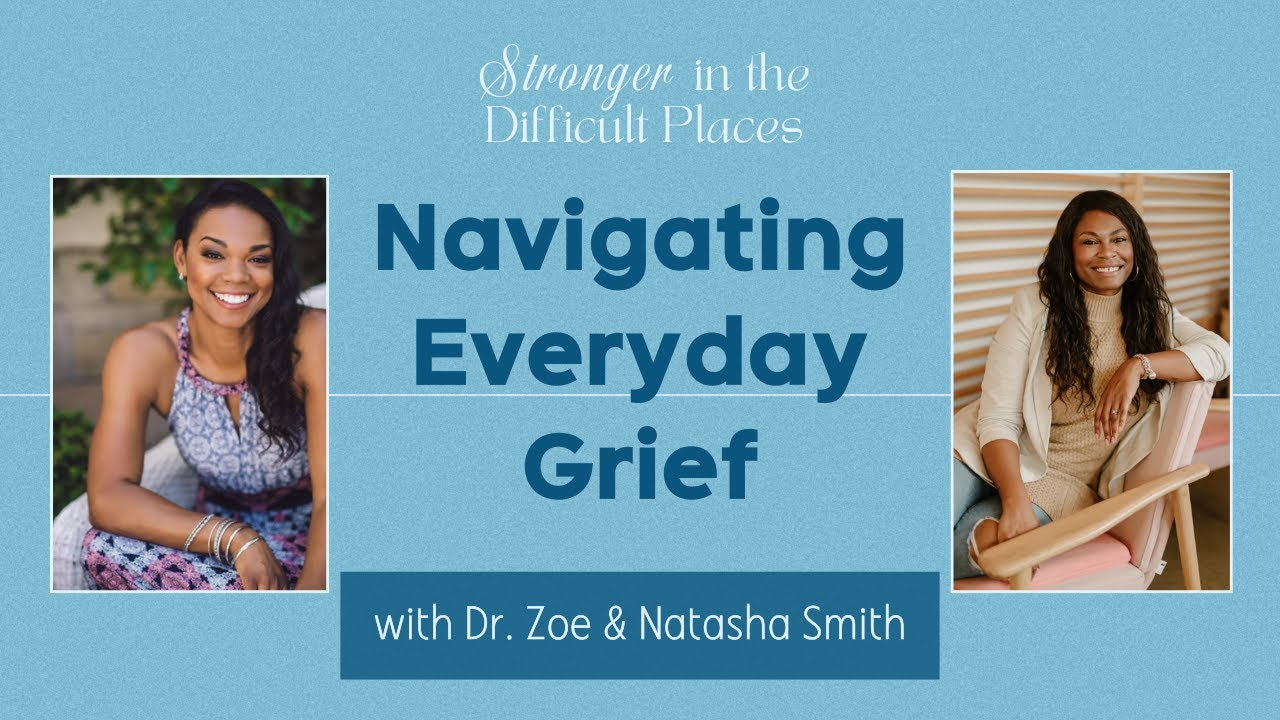
In this hour‑long podcast, Dr. Zoe Shaw interviews author and grief advocate Natasha. Both hosts open by describing how adult life is a continuous series of griefs—from the loss of children’s infancy to empty‑nest feelings—highlighting their own teenage experiences of placing a child for adoption. Natasha recounts a 30‑year accumulation of losses (family deaths, murder of a nephew, miscarriage, career change, unfulfilled dreams) that were largely unacknowledged until the pandemic forced her to confront them. She turned to writing—first lifestyle blogging, then grief‑focused blogging—which led to two books: Can You Just Sit With Me? Heal Healthy Grieving for the Losses of Life and the newly released Black Woman Grief: A Guide to Hope and Wholeness. The conversation delves into the unique barriers Black women face when grieving, such as stigma, gaslighting, cultural messages that discourage vulnerability, and the politicization of their pain. Practical, healthy‑grieving strategies are discussed: making intentional space, journaling, self‑evaluation, seeking safe community or therapy, and taking incremental risks to share. Dr. Shaw and Natasha emphasize the importance of granting oneself permission to feel, recognizing grief as worthy work, and building supportive environments. The episode closes with a brief promotion of Natasha’s books.
Chapters
Natasha, I am so thrilled to have you on the podcast today. As I was telling you before, I got, you know, your title from the publicist, and they send me titles all the time. But when I saw your most recent book called Black Woman Grief, I— my eyes were just like, ooh, I want to talk to this woman. So I'm so thankful that you were willing to come on the podcast today.
Yes, thank you so very much. I'm so honored to be sitting chatting with you today.
Thank you. So, oh my goodness, you know, something that I realized when I really started to understand grief and shame, and for me, how those two coexist, was that part of being an adult is grieving. And I think the longer we live as an adult, we just, we continue to grieve, you know, whether it's even just grieving the loss of our children's infancy as they grow, or for me, empty nest, I cried for a year preparing for it. And then after my, my, you know, My son specifically, or my sons went to college. I'm not completely empty nest. I have a 12-year-old at home, but I have 5 children altogether, and most of them have flown. And just the little things that happen in life and the big things that happen in life, we grieve, and it's a part of life. Can you, can you just talk to me a little bit about your journey with grief and how you got to the place of writing and talking about it?
Yes, thank you so much for sharing that. Just— that's— I'm such a big proponent on like all loss matters and every loss deserves its space and grace to grieve. So I love that you just started with, um, a lot of losses that is not necessarily death related, right?
Yes.
Um, so my journey, you know, I, I'd like to start my story off by saying I sat with grief for over 30 years. And what I mean by that, my losses started in my, in my teen years. Um, and so, and then from there it just progressed. I had just a It was a succession of losses after loss. And in that time frame, I didn't know what to do with it because people around with me didn't know what to do with it. Um, even, you know, you think about now, we don't really talk about grief. Sure enough, 30 years ago, we didn't talk about grief either.
Wow.
And so some of my losses included, um, half the death of half of my immediate family, um, 2 of my older sisters, my dad, Um, the murder of my nephew, um, um, losses, babies lost to miscarriage and stillbirth. And then kind of, as you mentioned, some of those living losses where it's like loss of career because I was an engineer and then I went to homeschool. Um, and so those sort of things. And then loss, loss of dreams, right? Yeah. You know, we, when we're younger, we have dreams and those things don't come to fruition and just things change and life change. And so just a succession of losses. And, um, we don't really categorize like small and big losses, but, you know, it's in the bucket, right? And so, um, and so I really was not, because I said I was stuffing it. I was really trying to not deal with it. But of course, we know when we don't deal with our grief and our things and our issues, it leaks out everywhere. But we don't, I didn't know what was going on. But 2020 happened. Wow. 2020 happened and we were all kind of sitting with ourselves and our thoughts and our stuff. And, um, every time I turned on the news or heard anything dealing with what was going on in our culture, it reminded me of how I felt on the inside, that it was dark, that it was— I was just grieving.
Yeah.
And, and so I had to get the grief out. And that's— I'm such a big proponent of getting it out. And so I started writing. I'd already been a blogger, um, because I had kind of transitioned from corporate and was doing blogging even before I left corporate, but it was like lifestyle blogging. It had nothing to do with grief. But 2020, I started writing about the grief and just saw how it was resonating with other people because most often we're all kind of grieving over something or someone. Right. But of course, 2020 was that, that time frame where we were all grieving something, whether it was loss of time or loss of whatever, you know. Um, and so that's when I really started to write out my grief and started this journey of possibly publishing a book on grief. So.
That's amazing. I love it. Thank you for sharing your journey. And I feel like our stories align in so many ways. I'm also a homeschooler. And it's interesting because I also— and even in the beginning of this episode, I talked about some of my smaller griefs, not necessarily small to me, but kind of those smaller griefs. Yet my big grief started in teenagehood as well, when I placed my daughter for adoption and lost that, you know, dream of being a mother or the experience of being able to mother her. And that had a huge ripple effect on my entire life, but all of my relationships moving forward. And I did the same thing. I just soldiered on, just kept going. And of course, you know, I've had those same losses that lots of us have in terms of the death of my father and, and those types of losses. And so, it's interesting because when I started writing, I kind of started writing on the lighter side as well. I started writing about motherhood and just, you know, kind of mommy blogging. And it's like I had to write myself into talking about the deeper things that were there.
Mm-hmm.
But writing was kind of my vehicle as well to start to dive into shame and to start to dive into grief and the bigger things. So, I love that you had a journey very similar to mine, but both of us had to work on overcoming those things.
Oh my goodness. So for one, I'm like grasping my hands and trying to not allow my eye to leak because your story you shared about placing your daughter for adoption— so my story is placing my son for adoption the summer of my high school, um,
goodness,
senior year.
So yeah, yeah,
it's— I have that story in my first book.
Wow, I have to read your first book. I was not aware of that. Wow. Have you reunited with him?
I have not. I have not. Um, always on the brain, right? Always on my mind. Like, um, yeah. So yeah, that's, that's something that I grieve daily.
Absolutely. Yeah.
Yeah.
So wow. I'm just, I'm, I'm overwhelmed that we have a similar story.
Right. Yeah. Same. Like literally same.
Oh my goodness. Mine was my sophomore year. Sophomore year. Yeah, the spring of my sophomore year. So you mentioned so honestly and truthfully that it's something that you grieve daily, and as do I, because we continually have losses every day, right, regarding what would have been, what could have been.
Yeah.
And so I love the idea of being able to incorporate grief in our joy. If that makes sense. To be able to, instead of trying to get over grief, right, figure out how to, how to fold it into our life. And so let's talk. Let's just talk about how do we grieve in a healthy way? What are the things that women out there who may be resonating with our story in some way, shape, or form can do if they feel stuck in it?
Yeah, I love this so much. Um, I think the biggest thing is to acknowledge the grief, like to make space for it. And I know, you know, we hear that a lot, but it's like, what does that look like? And it's literally setting aside time to process, setting aside time to grieve, to think about that loss, to assign emotion to that loss, and not only assign it, but to feel it.
Mm-hmm.
And so I think that's one of the biggest things when it comes to grieving in a healthy way, because again, the flip side of that was How— what I've mentioned for myself, just stuffing it, trying to ignore it, right? Push it to the side. And that it never works. It doesn't work.
It doesn't. And, you know, in the moment it does. In the moment it's easier.
In the moment, that's true.
Yes, it's always easier in the moment to push it aside. Um, it's just that it comes back and it bites us.
Yeah.
So, yeah. So how can we process it regularly? What does that look like?
Um, writing it out. And, um, as I mentioned, kind of asking ourselves some, some hard questions or some questions that— uncomfortable questions like, how does, how does this make me feel? Like, how, how am I feeling? And, and really, um, because as I mentioned, like, it kind of informs like our decision-making, how we treat others in our relationships, how we parent our kids and how we, um, Mm-hmm. relate to our spouses or whatever. And so, um, doing like a self-evaluation even of that, like, you know, because I know sometimes I'm like, I'm short with my kids, I'm mad at my husband, and then— but I'm grieving, right? You know, it's like, no, I'm sorry, you know, was it— I'm trying to take it out on you. I have to like be more self-aware and take those like self-assessments and evaluations of, you know, what's really That's
so good, is stopping and taking the space and time to evaluate what, what's going on with me, what am I feeling.
Mm-hmm.
So, you know, when I talk about complex shame, one of the, the tenets of complex shame is that people who are marginalized in society do not get the same level of empathy necessarily for their shame when they try to be vulnerable, right? In some, in some ways they get gaslighted. And so all it does is push the shame deeper. In your book, Black Woman Grief— I keep wanting to say Black woman grieve as if we're just saying, do it, grieve, right?
Oh, I love that. I love that.
What are the things that you're specifically— I haven't gotten a chance to read it because I haven't gotten it yet from your publisher, but I'm so excited to read it. When we talk about women in marginalized societies or marginalized places, What are the issues that they tend to experience with grief that may be a little different?
I love, absolutely love, like the first thing that you said before this question was that we often don't feel afforded the space to say anything because when we say it, like people don't believe us. Or is what I've been— what's been coming to my mind a whole lot is like it tries People try to politicize it. So people try to politicize it. Like, you're just saying that because you want us to feel bad or you want us to lean— Yeah. But it's like, no, believe that I'm hurting and I am in pain and I am grieving. But I'm grieving a particular loss that you may not have experienced or understand. But then for this second book, Black Woman Grief, I'm starting to see how it's kind of the sequel to my first book. My first book is Can You Just Sit With Me? That's the title of it. And it's really this invitation and then the heart's cry for Black women, of grievers to say, can you just listen to what I have to say about this pain, this loss that I have incurred and experienced without advice, without an opinion, like you said, without gaslighting, with just so I can be heard. A fern, you know?
Yeah.
So,
wow, I love that. Can you just sit with me? You know, I just got off of a call with a client, and, you know, I work with a lot of women who are struggling in difficult, uh, relationships, and there's always that struggle of self-advocacy, right? Of how do I ask for what I need? I mean, this has been 3, 3 clients this week, I think. Why is that so hard for women, especially for Black women, especially asking for what you need? Because I think there's that internal cry of, can you just sit with me? But are we saying it externally?
No. And it makes me chuckle because probably sitting with my therapist, I'm the same way.
Of course, we all are.
Of course. But the crazy thing is, I think it goes back. Part of the thing with, with my— with the Black Woman Grief book is, um, giving us language and showing us kind of why we do what we do. Like, where is this stemming from? Kind of what you're asking, like, why do we do that? Um, a lot for me personally, it was seeing my mom do it, you know.
Yes.
And so it's like, um, see, you know, seeing and seeing what whoever raised you or the woman, Black woman figure in your life, what did they do? And mimicking that because that's all you saw. And then culture. around us saying, okay, no, you can't do that. You know, we— you don't have time for that. Or having, you know, we have this, um, sense that we can't, and we can't afford to sit, rest, take time to understand what's happening to us or process things that are going on with us. So, um, yeah, I think those are huge, like familial and as well as culture, like influences. Yeah.
We carry those messages. Yeah, messages say you can't do that. And as I'm thinking back to messages I learned, it's, you know, you keep your business at home, right? You don't share that kind of stuff. We don't talk about that.
Yes.
And then also the, you know, you've got to be productive and there isn't time for that. Yeah.
Yes, I'm glad you said that. That's one of the things I have actually in my book that I remember, and it's from my mom. And it's like, you know, don't just stand— don't just stand there and do nothing.
Yeah, right.
Don't stand there and do nothing. You need to be doing something. And it's like, yeah, that stuck with me.
Yeah, yeah. And, you know, even as we talk about this, I'd like to give just some love and shoutouts to our mothers because,
yeah,
they taught us what they learned, right? And they are also, you know, they are— I hate to use the word victims, but They were of what they were taught, and they can only teach us what, what they learned. My next book is called Get Over Your Mother. And so I'm very much in this, you know, my, my book number 2 doesn't come out till September, but the book that I'm writing right now is called that. And it's, you know, very much about just understanding the influence of your mother and not in a, in a blaming way, just in a, in a way that we can understand and set ourselves free.
Oh, that's so powerful. I can't wait.
I'm writing it now, so we'll see how it goes. That's the plan. That's the plan. So what would be, um, just the best word of encouragement you could give to a woman out there who feels very stuck in her grief? And she's hearing us talk about it, and both of us have come to a place where we can talk about our grief and our shame, and we can write about our grief and our shame and project it onto the world. And I, I hope For you, it feels freeing. I know it does for me. But not everybody's there. Not everybody's there. There are a lot of people who are still very much imprisoned by it.
I would tell them that— I know the saying is said so much now, but it is okay to not be okay. It's okay to give yourself permission to feel and to heal. You know, I feel like we have to get to a place where we really feel that deeply, and so that we can free ourselves up to get the resources and the help that we need.
Mm-hmm.
Um, and, and community, because that was one thing that was— I feel like was holding me back from some of the healing that I have received in community was that I was, um, almost against it, like, because I— people weren't safe.
Oh, okay.
So finding safe community, safe people, um, I think are like some of the biggest, biggest steps to take when you feel stuck, you know. And again, you know, if that is a therapist, you know, um, Seeking a therapist, a counselor out, or a safe person, pastor, whoever, you know, um, will be a great place to start. But we still have to give ourselves permission to, to grieve, to feel and heal, because we can, we can get all the resources, but if we don't allow ourselves to do the things—
Yes.
And to feel the hard things— because I was like, even when I was processing, I was like, this sucks. Like, this feels so— oh, you know, oh. But it's hard work. Like, soul work is hard work. But oh my gosh, the healing on the other side of it, like, you can't, can't trade it for anything.
Yeah, it is worthy work, and it is so worth it. Yeah, yeah. So what I hear you say is you have permission.
Yeah,
you have permission. Now, you said something. You said it's not— it wasn't safe. So Was it not safe, or were you telling yourself it wasn't safe? And how did you find the safe people? I know that's a loaded question, but—
Yeah, I love it though. I love it so much because probably a little bit of both, right? Because I had experienced people not being safe, you know, telling people something. Or really, you know, one thing I, I had, I had overheard some, um, a couple people talking in church about someone else that was grieving. And, and it was just like, oh, you know, she shouldn't, you know, the, the scripture says to grieve, you know, um, like we still have hope. And it was like, oh my gosh, you know, they're talking about somebody and I'm always a griever anyway. So I'm like, if they say that about them, then they're saying about me.
Um, they were judging their grief.
Yes, they were judging their grief. And I was like, oh my gosh. And so, you know, those things, um, Though, you know, we say we, we should not think about what others think, it affects us. You know, it really, it affects us. And so, um, those type of things and just stigmas in the church as far as like grievers, you know, maybe, um, saying they have weak faith or what, all those things, um, tend to still influence the way that we kind of interact. So Thinking about past things and past interactions with people, then I'm going to come to the conclusion that people aren't safe. You know what I mean? Whether it's a new group or whatever. So that's what I was doing. So I was telling myself that people aren't safe. I'm not going to— I'm just going to keep it to myself because people aren't safe. So I had to— when 2020 came, literally, I'm telling you, the grief had to go somewhere. It had to get out. Yeah. And so I did start, like I said, I started sharing little pieces online or whatever. But then when the church opened up, our church, um, um, small groups and all those sorts of things were opened up. And we, we had a particular group that was called Freedom. And it was a group that— a group, it wasn't even a grief group, but it was a group that were so vulnerable in sharing stories. And so I was able to start to really tell my story that people, they didn't even— they had no clue, you know. Mm-hmm. But I felt safe because other people were sharing their stories. But one thing I had to say, I had to take Yeah. Right? So I had to put— I had to take another risk. Like, we always have to take risks to even to find the safe places and spaces.
Yeah.
Yeah.
That's a great— that's a great word of encouragement. You have permission to grieve. And also, it's OK and necessary to take the risk. You do the best you can because the reality is that everyone has probably had the experience of having an unsafe place that they tried and it didn't work and they were injured even more. And so it's easy to come up with that story of it's not safe as opposed to I need to find the safe spaces. Right.
Yeah. That's so good.
And, you know, one of the ways that we find those safe spaces is that we start to share little by little. We don't share it all at once. We share a little and we see what the reaction is and we see if there's reciprocity. And then we find, we can find out if this is a trustworthy space before we share more. Um, that's one of the ways to take care of yourself in the sharing.
I love that. Yeah.
Yeah. Natasha, this was just such a wonderful interview. And, um, I want to highlight your first book and your second book. Um, can you just say the titles of both of the books? And then, um, I'll make sure to put those in the show notes as well.
Yes, thank you so much. I so enjoyed this so very much. Just wanted to say that. Um, so my first book, Can You Just Sit With Me? Heal Healthy Grieving for the Losses of Life. And the second book is Black Woman Grief: A Guide to Hope and Wholeness. And you can find them wherever books are sold.
And, and the second one just came out, so you have a brand new book baby. Congratulations. I'm so excited to read it. And I thank you so much for coming on the podcast today.
Thank you so much. It really has been a joy to chat with you.
More from Dr.



The Epidemic of Not Enoughness: How It Shapes Your Relationships—and How to Break Free


You Can’t Change This (And Neither Can They): The Truth About Temperament in Relationships

What Do I Do When Overwhelming Shame Is Keeping Me From Seeking The Help I Truly Need?


