Dr. Andrew Simon Interviews with Dr. Gina Peterson, PT on Neck Pain, Ergonomics, & breathing

Dr. Gina Peterson, a physical therapist, and Dr. Andrew Simon, a naturopathic physician, discuss why neck pain happens and how to fix it. They focus on diaphragmatic breathing, desk ergonomics for remote work, and why the cervical spine's high mobility makes it vulnerable to muscle strain and disc issues.
Chapters
It's a Northwest News Radio Weekend. IRG's Health Talk continues.
Welcome back. Our next segment features a couple of doctors. Dr. Gina Peterson, an IRG physical therapist, and doctor of physical therapy, Dr. Andrew Simon, a naturopath. We're talking about cervical pain, and let's kind of, I guess, break it down for our listeners exactly what the cervical area encompasses. Shannon, is that the entire spine, the back?
That's a great question. No, Tom, the cervical area of your spine is the neck area, the cervical area. When we talk about the spine, we break it down into three or four regions. We have the cervical, thoracic, lumbar, and then sacrum. Your cervical region is your neck area. And the neck is built for a lot of mobility. You can turn your neck, you can flex, extend a lot of mobility in that area. And that mobility sometimes lends itself to maybe some problems, such as muscle strains, partial dysfunction. I mean, you can get facet impingement, you can get a disc bulge. It's very complex area. And those nerves in the, in the neck go down into your arms. So understanding what's going on in your cervical region sometimes help you understand, understand what's going on in your arm. And these two folks are going to talk about collaboration.
All right, Dr. Gina Peterson, Dr. Andrew Simon and Shannon O'. Kelly.
Gina and Dr. Andrew Simon, welcome to Health Talk. How are you doing?
Good.
Shannon, how are you doing?
Great. It's very sunny out today.
Very nice, nice day. It's always nice to have a nice day. It's even nicer when I can get providers on and we can talk about collaboration. Dr. Gina Peterson is a physical therapist and Dr. Andrew Simon is a naturopathic physician. And you guys work closely together and collaborate to benefit. Ultimately, what you're trying to do is benefit the patient. Let's talk about maybe, Gina, start just real quick. Maybe tell our listeners your area of focus, your practice, your background, your interest, and then, Andrew, I'm gonna let you kind of take an opportunity and tell our listeners about your background. Gina, let's start with you.
Okay, so my name is Gina Peterson. I've been a physical therapist for about five years. Prior to that, I was a certified exercise physiologist through the American College of Sports Medicine for about seven years before I was a pt. I have a lot of experience working with individuals of all ability levels. But in my physical therapy practice, I'm actually a fellow of the American Academy of Orthopedic Manual Physical Therapists, and I'm an instructor for orthopedic residency program in the PT realm and then also the Swedish family practice physicians do their musculoskeletal rotation with us then my areas of interest are really pretty focused to the neck, cervical spine, upper thoracic spine, interactions of the nervous system with the cervical spine and with the upper thoracic spine in particular. That's an area that I've written about professionally. I have a presentation on T4 syndrome, which is dysfunction of the nervous system that is also associated with a movement dysfunction at the upper thoracic spine. And then I'm also really interested in neural entrapment, so nerve pain related to nerve compression in the arms.
We're excited to have you. Gina also works at our Seattle Centers for Structural Medicine. Does a great job with clinical care and patient care. Dr. Andrew Simon, naturopathic physician, tell us about your background.
I'm actually pretty close to the center for Structural Medicine in Ballard and I've been a naturopathic physician for about eight years and I run a clinical practice here in Ballard called Rebel Med Northwest. I also teach part time as adjunct professor over at Bastyr University in the Bastyr center for Natural Health. And in my time, my undergrad was in exercise science and kind of biomechanics and movement related concerns. So I take that and apply it into a primary care level practice with my patients through that time as a physician, I've also become certified as a biofeedback provider and I use biofeedback in multiple different ways to help work both with the ergonomics of the body pain, musculoskeletal medicine, and a lot of mental health concerns that sometimes get in the way with my patients regarding their ability to recover, their ability to get better. And so it's been really great working with Gina. With me, coming from a primary care lens, able to do some hands on work. I do spinal manipulation, you know, stretching, basic education patterns. But when I find my patients really need that extra special support, I send them over to center for Structural Medicine.
That is awesome. You know what I'm finding in today's healthcare world, it is so important that we're all collaborating. All providers, disciplines are collaborating because ultimately what we all want is what's best for the patient. I love the fact that you guys are working together and it sounds very exciting. Let's talk about the cervical spine. Gina and Andrew, you both mentioned, it's very complic. Personally, as a physical therapist myself, I always enjoyed the cervical spine because it just seems like there's so much mobility. It's so important you know, you can get things from nerve problems, entrapment, compressions, degeneration. Then on top of this, you get all this cervicogenic headaches, myo fasciitis, partial dysfunction, and the world that we live in with so many people working out in front of our body, ergonomically, it's challenged. So let's talk about that. Just are you guys excited about cervical spine? Let's get amped up here.
Oh, yeah.
I'm ready, man. I'm ready.
More with Dr. Peters, Dr. Simon and Shannon O' Kelly next on Northwest News Radio.
It's a Northwest News Radio weekend. Here's Tom hutler and Shannon O'. Kelly. This is IRG's health talk.
We continue our conversation on cervical pain with doctors Simon and Peterson, along with Shannon O'. Kelly.
Dr. Simon, Gina, thank you so much for joining us on Health Talk. You did a great job by talking about kind of what you do, what your focus is, your background, your training. Let's talk about a scenario. I'm a patient and I have cervical pain. Let's work it up. Let's find out what's going on. I'm gonna show up to probably, I'm gonna go to see Dr. Simon.
Yeah. When I meet these patients, you know, I look at a whole person approach. When I take that first step, you know, I look at the initial injury or chronic injuries side of what's going on and I try to determine what are the interfering factors that are getting in the way. And you know, my biggest thing where I work with my patients is in that whole body approach to their calming their nervous system, teaching them about their body, their anatomy, helping them understand their injury in the first place, and particularly with the neck, how pivotal that is to areas of their body, their arms. Everybody's working from home these days and they may have to change that up a little bit. So I work on all those other layers there to help with the emotional tension, work with their employer to make sure that they're getting the right time off of work so that way they can get the care they really need.
They're going to assess the problem, do a bunch of education, which I love. But more importantly, you're going to recognize maybe a need to send to someone like Gina, who is a physical therapist who's going to do a bunch of exercise and intervention. So Gina, let's talk about how you guys collaborate.
Yeah. So one thing that's really important to both of us is respiratory mechanics. So when folks are stressed out, they breathe with their necks, they use the neck muscles to elevate the ribcage. Instead of using the diaphragm to get a good full expansion of the whole thorax, you can imagine you're breathing with your little tiny neck muscles that are roughly the width of a finger and is much less efficient than breathing with your full complement of respiratory muscles, including your diaphragm, which is much bigger than your neck muscles. That's something that both Dr. Simon and I work on, is normalizing respiration patterns. For me, as the movement person, I want to make sure that those neck muscles are not overworking so that I can train them to do the postural function they want to do. At the same time, one of the things that we got to think about is the evolutionary biology perspective. When I'm scanning the environment for threats, when I'm looking for predators, my neck muscles are tight. They have increased tone at rest, increased contraction at rest. That also alters the sensory information, the stretch information that they pass to my brain. And that information might not match with the information my eyes are passing or my inner ear is passing, which can lead to all kinds of dizziness, bounce, dysfunction, all this stuff that's really distressing to patients. It really starts with respiration. It progresses to sensory system integration, then finally the global movement patterns using the eyes, the neck, and the whole body, with specially applied resistance to move the body through space with input from all of those systems.
You're a real team. I mean, and you got two different disciplines here. You have a naturopathic physician and a physical therapist. And your focus is kind of the whole body approach. But the communication that you guys are sharing is phenomenal.
Well, the easiest thing in my office, digital is we just try to put as much content into our referrals. So that holistic intake that we take, we try to get as much information as possible, more is better. And that's where that communication our patients really like to have.
Right.
That's the beauty of it. If we can communicate and collaborate again, ultimately the patient succeeds and the outcome is way better. Can I ask you, can we have you guys come back on down the road so we can continue to dialogue? I enjoyed it so much. I want to have both of you on again.
Oh, for sure.
Yeah, absolutely. I'd love to.
Sounds good. Thank you so much.
Thank you.
Great. Thanks, Shannon.
Very interesting learning about cervical pain. Shannon, as you mentioned, the neck area there. And for those of us who've gone through something like that, it's definitely painful. And if not treated, it can be really painful.
Yeah, you know, it's it's interesting, Tom. I've probably known four or five people in the last two weeks that have come to me and said, I've got this neck pain with a lot of people working from home, maybe in not such a good ergonomic fashion, you know, because their desk at home maybe is not set up properly. And at irg, we take care of that. We take care of your neck, your whole body.
We could be back with our next guest right after this time out on Northwest News Radio.
More from Andrew
Ask a Rebel Med NW Doctor Series: How does having a COMT genetic snp affect histamine intolerance?

Dr Simon King 5 Interview - Are you ok? Stress & Pandemic related weight gain.
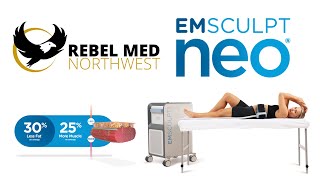
Emsculpt Neo at Rebel Med NW - A non-invasive body sculpting treatment Ballard - Seattle, WA