IRG Health Talk Presents: Andrew Simon
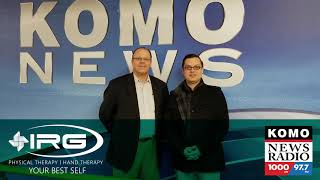
Dr. Andrew Simon runs Rebel Med Northwest, a naturopathic clinic in Ballard that combines acupuncture, biofeedback, and conventional medicine. He treats anxiety and depression by addressing the nervous system through breathing exercises, nutrition, and sleep rather than relying solely on medication. His clinic collaborates with Swedish Hospital and UW Ballard.
Chapters
It's a Northwest Lifestyle Weekend on KOMO News. Here's Tom Hutler and Shannon O' Kelly with more IRG health talk.
All right, our next guest is Dr. Andrew Simon, owner of Rebel Med Northwest in Ballard. We're talking about anxiety and depression.
Dr. Andrew Simon, thank you for joining us. Naturopathic physician practicing in Ballard. We were talking off air. You've got a lot going on. You've got an interesting practice. You, you've got real passion for what you do. Tell our listeners about what your practice looks like and what a day in the life of Dr. Andrew Simon in the naturopathic world looks like.
Well, sure. One of the things that I really enjoy about being a naturopathic physician, especially at my office in Ballard, Rebel Med Northwest, I've got a couple other physicians that work with me, my wife, acupuncturists, other naturopathic physicians. So we run a really integrated type of clinic. So what's great about that is if someone comes in and they have a question or concern that I can't handle, I've got some other people on staff that can support me in what I do. I'm kind of a jack of all trades type of individual as a naturopath in the state of Washington, we're primary care physicians. So in one day I might see someone for just a simple cold evaluation, sinus infection, hypertension, to something more intense in terms of counseling and doing mental health support. I'm trained to do spinal manipulation, similar to a chiropractor or a lot of the techniques that a physical therapist might use.
Right, right. Exact.
Yeah.
You know, I love the fact I picked up on a word you used. I mean, obviously I appreciate the word integrated, you know, being that I'm integrated rehabilitation group. And, you know, 32 years ago or so, when I started my practice, integration was kind of a low level topic. And today integration is important in medicine. I mean, you talked about it. You can provide, you know, intervention from, you know, medicinal side. You do it from a mindfulness side, counseling. You got acupuncturist. So you multi discipline, you have got a team approach, which ultimately is better outcomes for the patient.
Oh, for sure, sure. Yeah. And we see it every day. We get responses that, you know, sometimes it just takes a little bit of time and patience, you know, and sometimes our medical system doesn't always allow that. So we do try to provide that, you know, everybody's in different healing journeys where they, you know, have been through the ringer or, you know, in the traditional medical system for a While, and oftentimes, you know, a lot of people come in, and I still have to advocate for some of those things, you know.
Right.
I tell them, you know, your hypertension or your depression or whatever's going on needs some more support than even a natural or even an integrative approach at times. But that's the fun part about integration. I work with Swedish Hospital, other mds colleagues that I have over at UW Ballard, and, you know, I get referrals all the time from some of those cases when they get struggles and.
Right.
So it's great to work in those type of integrated scenarios.
Well, and it's nice in today's world. And I think the medical community, what I see, and I know I could be wrong, but what I see, see is I think providers are looking for other options outside of just the medication.
Yeah.
I mean, I think our society's got to the point where we became or too reliant on medication. No disrespect for any pharmacy or any medication out there, but I think there's other. There's. We need other options or other approaches.
Well, I think one of the things that's really helpful for my patients is I'm pretty well versed in a lot of the research associated with a lot of the traditional therapies, medication therapies or other. And so when I talk through those things, oftentimes they're surprised because, like, wait, I'm coming to see a naturopath. Why is he talking about medications and the physiology, the mode of action on those things? Well, I do it because I need to be able to talk about the nutrition or how to get away from those things when appropriate. So there's a tapering strategy, there's a plan in place, and many people just have a lack of plan. They get put on something and they, you know, providers change, they move, they switch, you know, and so they just need that continuity that sometimes it gets lost.
And I think that society as a whole is gaining a lot more understanding and a lot more interest in maybe other options.
Dr. Oh, for sure.
And, you know, as a naturopath, I mean, really, if you think about it, if you go back in, you know, thousands and thousands of years ago, mankind, there was no synthetic drugs. They were using tree bark or whatever they could find to calm their stomach down or whatever it was. So, I mean, natural medicine has been around for a long time.
Well, and I would say that's where a lot of the types of assessment, you know, when we're listening to our patients really come into play. So even though we might use some of the traditional tools or some more of the alternative tools, a lot of it has to do with listening. I mean, our acupuncturists at our office, you know, tongue and pulse diagnosis and even the face and facial expressions. So, you know, if I can read someone's that they're in pain in a certain way, or if I'm doing a certain procedure, I talk through breathing while I'm doing an adjustment or I do a mix of those things.
We continue our conversation with Dr. Andrew Simon after this time out on Como.
It's a Northwest lifestyle weekend on Como News. This is IRG's health talk back to Tom Hudler and Shannon O'.
Kelly. More of a conversation with Dr. Andrew Simon now with Shannon O'. Kelly.
Dr. Simon, again, thank you for joining us. Hey, we're talking about naturopathic medicine and your practice, but I'm interested to find out you have a approach to anxiety and depression, and we've talked about that several times on this program because it's quite prevalent in our society. And tell me your approach from a naturopathic physician side to anxiety and depression.
Well, the first step is listening, holding a space of safety and support for my patients. And when we take an integrative approach, a lot of times many people are on medications and then they either might judge themselves or they worry about how those medications are serving them or not serving them. So, you know, I hold a space to understand every fact I can from what their health has been. We talk a lot about, you know, where does this all originate for a lot of people, you know, is it from adverse childhood events, traumas, events? You know, we get chronically stimulated by stress and things we hear about in the news. So I look at it from a nervous system perspective. So when we talk about anxiety and depression, I really want to know what the nervous system is doing. So I'm also trained as a biofeedback therapist. And with that, I even use sensors to help people understand more about their body. So maybe it's their sweat response a little bit in their fingertips or their heart rate's racing just a little bit and their breathing changes. So we use some of those things so people learn more about their body. And when we employ skills like mindfulness or breathing practices, we learn how to gain a little bit more control over the nervous system. And with that control, then it's like, oh, I can do this. You get a sense of improvement and things where you can respond to situations that you may not have had Skills before.
It's ironic that probably the most powerful computer in the world is our brain.
Yeah.
And the most fascinating machine in the world is our human body and the way they interact. And we've always focused on, you know, in physical therapy, starting to see this a lot, too, is, you know, you get focused on the musculoskeletal side. That's really where you get your primary focus is. But really it starts with mindfulness, and it starts with engaging in counseling and teaching and coaching your patients.
Well, that's one of the best things that I coach my patients on that are going through physical therapy. Sometimes they come in and they're, like, having some struggles in the process maintaining their exercises, their pain that they're in. And so I oftentimes talk to them about it and say, okay, let's get you out of pain. Let's do a few things. Let's get you back to physical therapy. Because ultimately, I need you to be able to exercise and move your body. It supports the mental health. So my core principles, with my background in exercise science and physiology, is move the body whatever way possible, and if we can do that, get good circulation, more blood flow to the brain. So when I talk about an integrated approach to anxiety and depression, it's about restoring those foundations of health. Good food, nutrition, moving the body, being able to sleep, minimize the stressful things in your life, even from, you know, lights and computer screens, anything like that. And then just make sure that there's good, solid nutrition. And then lately, the big dive is into genetics and understanding how your physiology is affected by not just genetics, but your environmental influence on your genetics. So that's where, again, you know, finding a nice space, someone to talk to, have good eye contact, all those things really help support the individual.
Wow. I mean, obviously you have a lot of passion. Thank you so much for your time. Great information. Let's have you back again.
Okay, great.
That's been Dr. Andrew Simon, owner of Rebel Med Northwest in Ballard. Been talking about anxiety and depression and biofeedback and all kinds of new technologies and ways to treat this.
It's all so important. I mean, it's so cool that in today's world there is options for people out there and options such as a naturopath that's dealing with anxiety, depression, you know, which. Which are serious and real things.
Want to get you his website, by the way. Rebelmednw.com Back with our final segment after this time out on Como.
More from Andrew
Ask a Rebel Med NW Doctor Series: How does having a COMT genetic snp affect histamine intolerance?
Dr Simon King 5 Interview - Are you ok? Stress & Pandemic related weight gain.
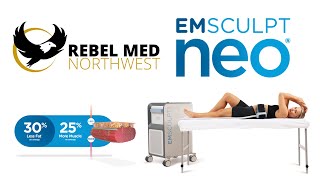
Emsculpt Neo at Rebel Med NW - A non-invasive body sculpting treatment Ballard - Seattle, WA

Dr. Andrew Simon Interviews with Dr. Gina Peterson, PT on Neck Pain, Ergonomics, & breathing