Self Care During the COVID-19 Pandemic
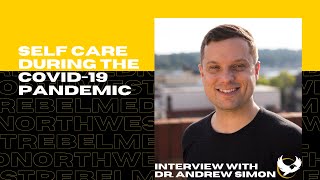
Dr. Andrew Simon discusses protecting your health during COVID-19. He explains that the novel coronavirus can cause lasting respiratory and cardiovascular damage, and recommends working with a primary-care doctor to identify your personal risk factors. For daily support, he suggests breathing exercises, yoga, and maintaining routines around sleep, nutrition, and exercise.
Chapters
Hey, guys. We're here with Dr. Andrew Simon, and we're gonna weigh in on the coronavirus. Thanks for coming, Andrew.
Yeah, no problem.
So I wanted to kind of first give everybody some good information on what is the coronavirus, how is it different than regular viruses, and how does it affect the immune system in the body differently?
Well, I think one of the simplest thing, without getting into the nuance of the kind of virus it is, is that it's what's referred to as a novel coronaviruses. So we've seen coronaviruses before. We interact with them pretty frequently. You can recall some of the past history recently with SARS and other examples of different types of viruses that eventually could move into more extreme pandemics. The interesting scenario here is that again, what's referred to as a novel coronavirus is something that we've not seen before our bodies interacted with. So there's really no base immunity, no base recognition of it. So the important part of that is then really anybody is susceptible to it, and we don't really have any really clear forms of treatments, vaccines, antivirals. A lot of that work is being investigated right now. And so with me as a physician, I'm daily looking at the latest research to determine how best I can intervene from a primary care physician level once that data kind of filters down to the primary care level. So, you know, one of the values of, in this stay at home order and kind of helping mitigate the spread of the virus is that time takes place for the people that, you know, not me. I'm not a viral researcher, I'm not an epidemiologist, I'm a primary care physician. So, you know, I'm waiting for that data to come through so I can then, you know, support my patients in their return to work, their return to daily life, their return to daily activities as best as possible. Now, the challenge with this virus is that it may not happen right away. You know, they're roughly estimating that, you know, we will need to make some major significant changes towards, you know, social distancing, physical distancing, for upwards of almost two years. And the important part of that is, so that way we continue to, you know, not overload our hospital system, but yet kind of minimize risk and casualties to those that are more in the vulnerable populations, typically people that have compromised immune systems, maybe one, two or three different comorbidities, the ones you see in the news commonly, diabetes, cardiovascular issues, underlying respiratory issues. One of the challenging aspects of that too, is that even when someone maybe clears the coronavirus, maybe they contracted it and had a pretty gnarly upper respiratory or lower respiratory infection as a result of it. Many of these people are going to have lingering respiratory issues for quite some time afterwards, even if they survive the process. The challenging there is, we don't even know even the downstream consequences of what could happen next in terms of it's very possible that you could get it again, especially with this particular virus. They've already started tracking its evolution, so to speak. It's changing its shape, it's changing how it responds to the human body and then it passes on to somebody else. There's really great graphics out there that demonstrate that change. That's one of the hardest reasons right now that there's not really clear evidence yet that the antibody testing is going to really help us the way we need it. We think it might, yeah. And once we get that antibody testing for sure, then we can help, you know, kind of track the spread easier, know when people have it or haven't had it and take more appropriate measures on the self care side of, on an individual basis.
Yeah, that's really interesting actually have an individual who I was training who contracted the COVID and she's got through it about three weeks ago and she's still having respiratory problems, just slowly trying to get back into slightly exerting herself. So it's pretty amazing the impact it has on the cardiovascular system.
Well, yeah, I mean that's, that kind of speaks to then those underlying risks where I fit in with a lot of people as a primary care physician, you know, what we do over here at Rebel Med Northwest with my team of physicians, acupuncturists, Chinese medicine experts is, you know, we are always focused on the individual, the, the holistic part of their health. And you know, that's what's the whole point of having a primary care physician is about, is they know who you are, they know that you're susceptible to asthma, that your allergies are going to get ramped up, that you, they're tracking your hypertension, your blood sugar, your regular labs. And so the idea is your primary care physician will help guide you in, you know, finding where your risk factors are on a personal, individual basis. That doesn't mean that, you know, you will have a good outcome necessarily if you contract the coronavirus, but, you know, at least you have the best odds going forward. And you know, with that comes the mental health component. So that's one area where a lot of our practices here are really geared towards informing people, making sure that they feel well educated about what it is and isn't really kind of wading through a lot of the fad or misinformation that's out there. Unfortunately, you know, that is a challenge in this day and age with social media and everybody's racing to try to find the most correct information. And unfortunately, you know, many people might be wrong in that process. We can't necessarily fault them because they're trying, but it's important to not, you know, create noise in the process of the individuals that are really trying to find the accurate data, data out there. So what we've settled upon here at Rebel Med is, you know, making sure our patients underlying other issues are really taken care of utmost. So if they already had underlying trauma, underlying anxiety, depression, mental health challenges, a lot of times we have got patients that, you know, have cleared and, you know, have really come up with new ways of managing like their eating disorders or their coping mechanisms, their anxieties and traumas using either mind body medicine or their acupuncture practices. And unfortunately, you know, when you're isolated and you can't socialize with other people, a lot of these same issues could be re triggered and re brought up again. So we find it most important right now to help support our patients on the mental health side of things. So we, you know, we do telemedicine visits to help kind of reach out to everybody and say, hey, we're here to listen, we're here to help you. We're here to answer questions, you know, when people are not able to go to the doctor or they have a fear of going to the hospital because they don't want to go to the er. You know, I think the value of an office like ours is we can help kind of mitigate some of those early signs of pain, right? Like, oh, I was out exercising because now I hold more time in the world, but now I've got low back pain and I want to keep exercising. Now I'm just stuck at home with low back pain. And so these are those challenges that we hope to kind of address. And we work with several other businesses in the area. A lot of physical therapists in the Ballard Fremont area refer people over to like IRG and Emerald City physical therapy and Pilates businesses, things like that, that really help get people moving. And both on the mental health, blood sugar, cardiovascular system, all these things, we're talking about benefit.
That's interesting. Let's go into what is mind body medicine. I know it's probably a little bit different than going to like your regular md, your regular traditional doctor. So how's like kind of define what mind body medicine is for people?
Well, I mean, it can be a lot of different practices. So you know, one of the most important things is when you're, you're starting a mind body medicine practice, whatever it is, it's about being in tune with your body and being aware of what your body's doing. And so that's really the first step in really any mind body practice. So I might remind people that many activities from sewing and knitting and exercising can be very mindful activities, you know, when you're being present to the activity. So, you know, even working with you as a trainer, you know, I think that's kind of one of those key present things to pay attention to is there's certain things you need to be aware of your body and how you're holding your body when you're lifting or you're trying to support your health. And same goes with breathing practices or yoga practices. I teach a lot of different things through the use of biofeedback, which is really an objective and data driven way to observe what your body's doing when it's stressed, anxious, or when it's relaxed. So I help promote that concept of awareness for somebody. So that awareness could be that, oh, when I'm thinking about something stressful like work or the coronavirus, my hands get sweaty or my temperature drops in my fingertips, or maybe my breathing gets more rapid and more in the chest rather than down into the diaphragm. So I use those sensors to help promote that further awareness for people. And they see it on the computer screen and that's the data driven part. And then they can apply a skill that I might teach them. Mindfulness, breathing, sensitive self hypnosis, progressive muscle relaxation.
Yeah, that's, that's super awesome. I actually had an experience with you. I did a biofeedback session. When I came in, I was having almost like heart chest pains and mentally I felt fine, but in some way I must have been stressed out. And I practice yoga and I do meditation and mindfulness practices. But doing the biofeedback, which I was kind of like, I don't know if this is really going to be anything, actually made it go away. Actually being able to connect the body's response with my breath all sudden dissolved that pain that was originating in my mind and be able to kind of calm my nervous system. So it was super effective and I was really surprised. It was great.
Well, and that's the great thing about it is, it's sustainable. You actually did it right. The biofeedback was there to. The biofeedback wasn't doing anything to your body, but you were able to see how your heart rate was behaving based off of how you were breathing just at rest. And if you made a few subtle tweaks to your posture, how you're using your breath, you subsequently could have a direct effect on your heart rate, which then you observe the difference in the moment both visually and what you feel in your body. And it's the same as exercising, right? When a trainer tells you to say, okay, you know, try to shift your pelvis a little bit, widen your stance a little bit, you know, you're less likely to feel discomfort or you're able to get a stronger lift or, you know, benefits out of that.
Yeah, exactly. So tell me a little bit more again how you guys are shifting your practice as they're starting to lessen the restrictions on people, social distancing and starting to return to work. How are you guys gearing up for that?
Well, you know, as a medical practice, we practice normal, you know, preventative hygiene anyway. So, you know, before and after visits, we wipe down all the rooms and the tables and surfaces with, you know, effective antiviral agents that are effective against, you know, prior pandemics like the H1N1, the SARS and HIV, Hep B, Hep C, all these different, you know, viral agents out there. So that's a part of normal medical practice anyway, that we wash our hands. Of course, you know, it's always great when you go to a doctor's office and they wash your hands, you know, and so. But in addition to that, we've made sure that, you know, I walk through the entire office to make sure that we have optimal opportunities for our clients that enter our facility, that they then have opportunity to practice those good hygiene public health practices. So we've installed four foaming hand disinfectant stations. I put in three UV light HEPA filters that help circulate the air. And then the UV light helps kill mold, viruses, bacteria we've used, create warning signs at the front door. We have pre screening questionnaires before we have patients. And then ultimately we've shifted really at this current time, most of our patients to telemedicine when we can just to help minimize the risk and help support the stay at home orders as mandated by the governor. What that's done is we've collectively as a business dropped down to about 10 to 20% of what we were doing before. But it's also allowed those individuals that do need to come in to have that peace of mind that, you know, there's low volume of people here. You know, my front desk is working remotely. Patients go from their car straight up the stairs, wash their hands upon entry, wear a mask and then you know, go straight to their exam room. And so the benefit of that is then you know, there's low potential for risk. And you know, we totally appreciate the safety precautions and we're here to support that as well. So you know, we've modified a few things to help support that. And down the road I'm waiting for my what's called an electrostatic disinfectant sprayer which creates nanoparticles of this disinfectant, which allows us to get much more surface area for cleaning between rooms. You know, should we have a, you know, someone even that comes in for allergies, you know, we'll probably wipe the room down and spray the room down and let it sit for a little bit just to maximize again that that potential.
Yeah, I remember you showed me a video of how that thing works and it's pretty incredible how it will wrap around objects almost like a 360 degree radius. So it's, it's pretty cool. Yeah. Look forward to you getting that. So a lot of people are sitting home probably worried and curious. What are the things they can do to help their health or health, their mental health, physical or mental, in combating this, preparing themselves for it or recovering from it?
Well, one of the most important things is, you know, organizing your health information. So you know, if you haven't established care with a primary care physician, you know, you can do that now through telemedicine even you don't actually have to go to a physical doctor's office. They've many insurance companies and the CMS has relaxed the rules to help people initiate care with a provider remotely. So the benefit there is you can at least start the conversation with someone that can make sure that they can look at your health information and give you your best individual assessment. Aside from that, the normal daily self care activities are really utmost importance right now. I think this is reminding people like we talked about a little bit ago about that introspection or the ability to check in with yourself and see what you really need or be present with your body. And, and when that's given that opportunity, you realize, hey, I do need to go outside and exercise or I do need to maybe back off of the amount of sugar or other types of preservatives or processed foods that I maybe am consuming because those create an inflammatory risk and reactive oxygen species risk in your body that subsequently when you become ill, if you become ill, usually your symptoms could be more aggravated because of that underlying component, the component that might make more mucus if you have certain types of foods, which is then harder to clear. My number one advice is build that routine in place. This is a better time than ever to build a routine. So getting good proper sleep, good exercise, good nutrition and going through that process is the foundations of health that we took, so to speak, in naturopathic medicine.
Yeah, that's great, that's super important. So what are some of the things we should focus on as we re enter society for health and well being. So people are limited at home with these self care practices, for example, like mental health care practices.
Sure. So that's where you know, I think I'm definitely seeing a challenge with a lot of my patients right now. You know, the isolation component to be able to share even their normal stressors and anxieties. So I mean one of the biggest things that I think is helping people is, you know, whatever level of communication you can get. I think if it means you hop on zoom and you talk to somebody, you know, you know, even if you get really close to the camera, you know, at least you can see their facial expressions. And you know, from a neurobiologic level that's one of the most important things to help your mental health is when you're interacting with somebody and you can see that eye contact, you can see the expression they make. It feeds back to your own nervous system to help calm and relax your own nervous system. That's key. So when you are able to have that face to face communication interaction, go for it. It's doing more than you realize when it comes to helping calm your mental health. The other is really trying to practice exercises that help you with some of these concepts of like maybe thought stopping. You know, if you find yourself ruminating over and over and over again about finances, your job, you know, it's not that you're ignoring that those are present issues in your life, but they're taking up a lot of space in your mind in that moment which you know, feeds to this concept of, you know, paralysis or being frozen in your body, then you're, you have a lack of motivation to do other things like exercise. So exercise can be one of those great things because it gets you up and moving, it gets your circulation going, circulation benefits to the mind, you know, and the mental health. So other than, you know, learning some of these self care practices, mindfulness practices, reaching out to people and really being mindful about the over consumption of certain substances, marijuana, alcohol, other drugs, because it's very easy to slide into those, because you feel, well, you feel calmer in those scenarios. But you know, coming out of it, they can sometimes create more damage than benefit. It's not uncommon that I have people, you know, send themselves into anxiety because of some of those substances because there is a withdrawal effect that takes place.
That totally makes sense. What are you personally doing for your own mental and physical.
Well, one of the most important things I get to do right now is spend time with my family. So, you know, I have a five year old, a two year old and my wife who is an acupuncturist here at this office. So that's allowed us to. Despite the challenges of being isolated in a home with a five year old and a two year old and how they destroy the house, it's been pretty entertaining to spend that time with them at the same time, you know, trying to be there to support them. Because my son who, who was in preschool and his preschool got closed down, this is his first kind of like dive into having a social life and a world with friends. He's hopefully starting kindergarten in the fall. And you know, for him, seeing that anxiety that gets generated from not being able to be able to see his friends and play outside as much, that's a big challenge. So I made a point to go outside with him and we started teaching him how to hit the ball with baseball. So. And he's great. Like he only did one, one season of T ball, you know, and he was totally half assing it out there, you know, just kind of walking from base to base.
Cool.
And now he's got the concept now that I can actually pitch the ball to him and he'll swing and he'll hit and he'll hit it, you know, and it's just like, that's totally fun.
That's cool. Silver linings that you may have not got.
Exactly.
Because of all this.
Yeah, exactly.
Yeah. So kind of just kind of going into the future, what is your own prediction of the positives that will come from our society experiencing this, especially in the kind of physical, mind, body, medicine world?
Well, I think one of the most important things that I've seen is maybe not everybody's figured this out yet, but at least in the Ballard community and in Seattle, I think in these local neighborhoods, I think people are really Banding together to support each other. And I think when you see that, you see it in the small stuff where people are being more patient with situations, right. They're not getting as irritated or irritable if someone's running behind or slow. Right. They're having to wait in line to go to Trader Joe's or they're having to, you know, they're outside of their norm a little bit. And I think you see a lot more people saying thank you and being patient and being mindful of that. When you walk down the street, someone says hello to you. Right. It's an important concept because we're being asked to stay six feet away from each other, you know, and we've got masks on, so we can't necessarily see each other's face very well. But I think saying hello to people is really key. And so this is, I think, allowing people to, like we've talked about, when they've given themselves the space to be reflective and what's. What's their priorities, what's their needs? And I think, you know, while you might see a major contraction in the economies, I think you're going to hopefully see a resurgence of small business and supporting those type of things. And I think in doing so, we'll hopefully create a stronger economy out of it so more people feel equitable share of the economy.
Yeah, I think a lot of old systems are dissolving and. Yeah. The strengthening of community and personal relationships and then supporting each other. Yeah, it's. It's. I'm excited to see kind of where the future is down the road. It's very exciting. Is there any advice for everyone listening at home that you would like to also share a little bit more on?
Well, you know, aside from the foundations of health, you know, I think definitely supporting small businesses is kind of key right now with whatever way you can, you know. So, you know, it's the restaurants, it's the other people out there that maybe if your business itself or your individual circumstance or perspective is doing okay, it doesn't mean that someone else is doing okay. I think, you know, from what I've seen with my patient base, you know, out in the communities out there of, you know, socioeconomic class, structure issues, racial disparities, you know, I think those are those areas where we gotta band together again and support those communities.
That's really great. Anything else you'd like to share?
I don't think so.
Perfect. How do individuals get best in contact with you?
Well, so that's pretty easy. You know, we have our website rebelmedw.com pretty much everything we have, Instagram is rebelmednw. Those are the easiest places to reach out to us. You know, our website allows people to schedule online right away, doing telemedicine. We've got various chat interfaces with that very receptive office. You know, one of the things I take pride in our office and my staff is that we work as a team together. So, you know, when you're coming to Rebel Med, the value of seeing an integrated specialist that's like a naturopath like myself or Dr. Jessica Shul. We do a little bit of everything, including, you know, classic western medicine labs, diagnosis, referrals to other facilities. But you also get the Chinese medicine specialties as well. Two of our Chinese medicine practitioners have their doctorates, various rotations and things like Harborview and Virginia Mason and the community centers in the area. My wife traveled through China and Nepal and so they're understanding a lot of these applications of how the body is affected by something like a virus and the immune system and these underlying health conditions we talked about. So, you know, the value of reaching out to one of those providers gives you really the best of all worlds, so to speak, here. And so, you know, that's the experience that people get when they come to Rural Med. And we try to display that on our website and our social media posting and, you know, really also supporting the rest of the Ballard and, you know, Seattle community.
Yeah, that's great. I've been seeing Dr. Andrew Simon for a while and he's one of the best doctors I've ever been to. He takes sometimes an hour with me just to discuss a very simple topic and a lot of times persuades me out of getting stuff done, which I think that is a great doctor. Someone who's always trying to empower you with your own health and trying to give you tools to create that health and well being instead of just prescribing something or pushing you onto some kind of different kind of modality of just to make money or something. So thank you so much for being here. I super appreciate it and super appreciate you being my doctor. Yeah, this was really great. Thank you.
Well, thanks, Brent. It's been a pleasure getting to know you and again, support your business and we'll do this together. Okay?
Yeah, let's do it.
More from Andrew
Ask a Rebel Med NW Doctor Series: How does having a COMT genetic snp affect histamine intolerance?
Dr Simon King 5 Interview - Are you ok? Stress & Pandemic related weight gain.
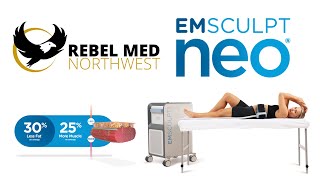
Emsculpt Neo at Rebel Med NW - A non-invasive body sculpting treatment Ballard - Seattle, WA
Dr. Andrew Simon Interviews with Dr. Gina Peterson, PT on Neck Pain, Ergonomics, & breathing