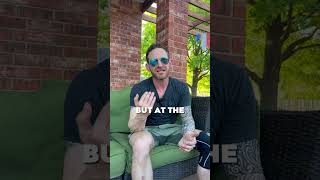
A YouTube video monologue by Dr. Joshua John‑Ram Schacter arguing that conventional American medicine (especially orthopedics) treats isolated body parts rather than the whole person. The speaker advocates a patient-centered, wellness-focused approach that combines necessary procedures (e.g., surgery, injections) with lifestyle change and holistic care so patients can regain meaningful activities and overall well‑being.
Chapters
So oftentimes, when a physician sees a patient, that patient is defined by the experience of that physician. What I mean is that when you come to see someone with joint pain, they're focused on the joint. And a lot of times that's a drawback to American medicine, that we don't see the whole. That we can't see the continuous piece of the patient.
We just see our little tiny sliver.
And in orthopedics especially, that is such a severe hindrance to real patient advocacy and real patient care and really getting patients better. Because it's not at the end of the day about whether your knee feels better. It's about whether you, as a human being, as an organism, can do the things that bring fulfillment to your life and make you feel better. So when Larry is able to kneel down and garden, or when Ms. Mona is able to pick up her grandchildren, that's not just the treatment of their knee or shoulder pain. That is the treatment of that organism. And we know better ways to treat joint pain.
Than just injecting a steroid or just doing a surgery. There are so many unsuccessful orthopedic surgeries that.
Occur, not necessarily because it's the patient's fault. Although us doctors, we do love to blame the patient, not because it's the physician's fault, but because it's the system's failure of that patient. And I mean that. That patient comes to the point in their care where they have an intervention, but that intervention is focused solely on one part and not on the patient as a whole. And we try in a very superficial way in a hospital setting to have a team approach. But at the end of the day, you're there for your knee replacement. The family practice doctor sees you for your high blood pressure. Your OB GYN doctor sees you for your Pap smear. Your psychiatrist sees you for your depression.
And I've seen enough success.
With treating patients as a whole organism to really believe fundamentally that when we take a patient with joint pain and they commit to a healthier lifestyle and they commit to. To being whole and well, their success transcends just that joint. It becomes all encompassing. It becomes a life project, and it really fosters more growth in our patients. And at the end of the day, I think that's what we're about. We really want to help our patients grow. We want to grow ourselves. We want to be better. We want to grow and help people around us, and we want to help them to be better. So that's our mission, is taking patients with joint pain to the peak of wellness. And how do we do that? We address the joint. We do surgery if it's necessary. But at the end of the day, it's not just the surgery or the injection or the fact that your biology can affect all of these amazing changes in your body, but the fact that you, as a patient, overcame this limitation, overcame this challenge, and really transitioned into a better part of your life so that you could create the life that you want out of this painful challenge that we started with. And that's why we want to pursue wellness at Pinnacle.