Why I Stepped Away from 15,000+ Surgeries—and What I Do Instead
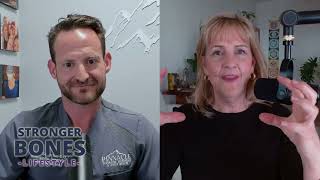
Dr. Joshua John-Ram Schacter performed 15,000 surgeries over 20 years before shifting to integrative orthopedics. His wife's BRCA1 diagnosis and the cascade of surgeries that followed led him to question conventional bone health management, bisphosphonates, and steroid injections. He now uses regenerative biologics, metabolic optimization, and hormonal therapy to help patients avoid premature joint replacements.
Chapters
Next guest is Dr. Josh Schachter. He is an orthopedic surgeon and he's redefining joint care with a commitment to providing actual solutions for his patients. He spent over a decade as the chief of orthopedic surgery and did about 15,000 orthopedic surgeries. He excelled at this, but he saw firsthand the need for non invasive innovative solutions that address the root causes of pain and dysfunction rather than masking symptoms. He has a program called Pinnacle Method and in this method, he is moving away from the traditional approach of orthopedics to the integrative functional approach so that his patients will no longer need surgery. He has non surgical solutions using regenerative medicine and he empowers his patients to take control of their health and regain their quality of life. I think you'll really enjoy this episode with Dr. Schachter. Today I will be speaking on Stronger bones lifestyle to Dr. Josh Schachter. He is an orthopedic surgeon. You could listen to the intro on all the other amazing aspects of what he does and who he is. Today. We are going to be, I want to say, kind of blowing up the notion around osteoporosis the way that we've been diagnosing, managing and treating it. So welcome, Josh. Cannot wait to have this discussion.
It's awesome to be here. I've been looking forward to this for, for a couple months actually. Really appreciate you.
Yeah, thanks. All right, let's start. I want to hear. Let's hear, who are you? What do you do? Tell us your story.
Well, I, Joshua John Romshachter, my parents were hippies. I grew up on a hippie commune actually outside of Ridgeway, Colorado, if anybody knows where that is. That's the middle name. I'm a board certified orthopedic surgeon. I'm actually in a small town in Texas, so I'm in Wichita Falls, Texas. If you've ever seen the John Cusack movie the Ice Stor, that's our claim to fame. We're also a really interesting community. It's about 108,000 farming and ranching, but also oil and gas. We have. I was hired by the hospital here in 2008 and out of residency and I'm a general orthopedic surgeon, but I sort of subspecialized in adult reconstructive surgery and then also a lot of sports medicine. So ACL reconstructions and, you know, shoulder scopes where we do rotator cuff repairs, those sorts of things. So. And I was a very high volume orthopedic surgeon. I've done about 15,000 surgery surgeries in my career of about right around, you know, 20 years if you count my residency. And then I've been in this community for almost 17 years. I worked for the hospital for a number of years. I was the chairman of the orthopedic department for 10 years. I ran a advanced orthopedic center of excellence. We managed to be certified as an advanced. We were the smallest hospital in Texas to be certified as advanced center of excellence. And really quite an accomplishment that I was very proud of and was really able to develop some great programs around optimizing perioperative surgical care for my patients.
And we were kind of trucking along and doing well. And then my wife, when she was about 33, her father was diagnosed with kidney cancer. And it was a relatively rare form of kidney cancer. And I was sitting in the doctor's lounge talking to a friend of mine who is a obgyn doctor and talking about my father in law. And he's like, oh, that's a rare sounding kind of cancer. Have you ever heard of brca? So this is the BRCA gene or the breast cancer gene. And at that time, not many people had heard of it. It was a genetic test that was not paid for by insurance. I mean, what is. But. And then he said, well, you should really get your wife tested for that. And I didn't really think much of it at the time. And I came home and I said, honey, you know what, we should test you for this. Just to be careful. You don't have it, of course, but we'll test you for it because your dad has this rare form of cancer. And she was diagnosed with BRCA gene 1, which is the most severe form of BRCA, which is a very. It creates very deadly cancers of the breast and of the ovary. And so at the age of 33, my wife, who by the way, I've been married, I've been married 29 years this year I made the love of my life. I met her when I was 15 years old and we got married when I was 20 and she was 18. And we've been through everything together. So this really important person to me was diagnosed with this disease that basically wrote her future.
And it was a very impactful. And I was, I was a busy orthopedic surgeon. I wasn't home very much. I was working 90 hours a week. I was doing 25 or 30 surgeries a week. And just really what we call hammering it, doing my Best to, you know, make a lot of money and do a lot of surgeries and take care of as many people as I could. And obviously, as a busy doctor, letting my family, you know, suffer the effects of that, which I, you know, look back on and some regret. But this was sort of. When she was diagnosed, everything changed. Everything in my life changed. Every. Every the way that I looked at medicine changed. Everything changed. And the recommendation at the time and is still, you know, the main recommendation for b BRCA positive women, Angelina jolie's one, is to have a mastectomy and a prophylactic mastectomy, a mastectomy to prevent bre cancer and also to have the ovaries and the uterus removed. And so my wife, at the age of 33, in her 33rd year, she had 11 surgeries, including a mastectomy with reconstruction, breast expanders, and just shortly after that, her father passed away. So to. To sit at the bedside with my wife over and over and over and over, and to watch the process of her mourning her womanhood and becoming very, very changed physically was a painful process. And at the end of her sort of operative period, she'd sort of stabilized, and everything was good. By the way, Rob whitfield is a great personal friend. My wife ended up developing breast implant illness, which she then had for 10 years. And that's another part of the story that we can get to. But at the end of that sort of initial process where my wife had gone through all these psychological changes, and my wife had been a venus swimwear model, and she'd done a lot of modeling in her 20s. And so she's a beautiful woman. You know, Amber. She was then forced to age prematurely and was really at a loss, was very depressed, was really hurting. And we started talking about, well, what can we do? She started having severe hot flashes. She started having. She went into menopause, and she had to deal with these consequences of menopause for months. And she was just basically begging her doctors, what can I do to feel better?
There's no option for me. And her oncologist absolutely forbade her from doing any sort of hormone replacement therapy. Her obstetrician was a little bit. Or her GYN doctor was a little bit more open. He said, okay, well, no problem. We'll give you some hormones. So he basically grabbed a sample bag of hormones and handed it to her and said, here, take one of these a week, see how you feel, and in six weeks, we'll get back together. Tell me which one you liked best, and we'll write you a prescription for that one. And I thought, that's not very scientific. That doesn't sound like anything we want to be involved in. And so we actually started. We got involved against our oncologist's recommendations. We searched out a functional medicine BHRT provider and started working with him with, with hormone replacement therapy for her. About three years later, I started working with him as well. And it's really been a life changing experience. It's. I truly believe that it's prolonged her life very significantly. It's helped her to be a full human being where she really didn't feel like that before. And so that really changed. And that combined with the experiences that I had sort of watch, watching her being taken care of by this traditional system really changed the way I started to think about medicine. And so if we fast forward a little bit.
Well, wait before we fast forward, because I want to stay there, because I think this is really, really important. So I did not know all that about your story, which is amazing, which now helps me understand why you do what you do. And that's what's really important. But you just used the word traditional medicine and the disillusionment that came to you for that. And that is my big mission and what I really want to speak a lot to about here. And then we're going to move on to the future. What you do now, because I think that's really important that you have that backstory because then you have all that knowledge to do what you're doing. But when you and I were talking off camera, we were Talking about the 15,000 surgeries, I think you were said. So I want to still stay in that traditional model because what we need to do is we actually need to shed light on how wrong it is, how disserving and disempowering it is for women. And, and you, you mentioned that your experience with what Amber went through. So can we just speak a little bit more about that experience for you? You were a traditional orthopedic surgeon. Can you just give us some view of, I'd love to know hip fractures, pelvic fractures. You said you did adult reconstruction.
So many. Yeah.
And then also you were mentioning the medication's role potentially in some of this. So let's talk about the traditional model that you lived in when the bone health world, what you saw so we could learn about that.
So as a traditional orthopedic surgeon, and you know, everybody does it a little bit differently, there's some orthopedic surgeons who are more Knowledgeable about bone health. And certainly there's some pioneers out there. You know, we talked about a couple of them. Doug Lucas is one. Vander Vander Wright. You know, really pioneering folks in the bone health. You've had several orthopedic surgeons on your show. I come from a background of high volume orthopedics. Now I think it's really important for people to recognize and it's become a bigger problem.
As time has gone on. When I started in 2008, when you got employed by a hospital, in my case, I was a great partner to the hospital. I worked to help them extend their reach and I worked to do more surgeries. And we wanted to start to take care of more and more people. And so we developed programs to help people get into the clinic and be able to have more access to surgical care. What that has become in the last, probably, and I would say especially badly since COVID but we've really started to ramp up on the. We gotta get people to surgery where surgery is the only option. And we're gonna speak about bone health too. But I just wanna get on this little soapbox and say what I saw in my career from when I started to, when I finished with my employment was a drastic increase in the pressure for a surgeon to do more and more and more surgeries. And a lot of surgeons really love surgery. And for the longest time I certainly loved surgery. I think that surgery, and don't get me wrong, there's a lot of. You've had a hip replacement yourself. There's a lot of surgeries, particularly in orthopedics, that I think are super valuable. Joint replacement can be a life changing option for people. I think it should be the last option, but it can certainly be a life changing one. But what we've done in this country, particularly because 80 plus percent of orthopedic surgeons now are employed by a system, they're driven by the need to push volume. So we break patients down into a pro, into something that's called a relative value unit. And so every patient is worth a certain amount of these value units. And that's how a surgeon's reimbursed. Right? It's not per surgery, it's per unit. When we break these patients down into a unit, it dehumanizes them, makes them into just a surgery to us. And even in people who are super passionate about taking really good care of people, the goal is still to do as much surgery as possible. And so we end up, I think, making a lot of shortcuts in the traditional system, we sign people up for surgeries that we know that Almost up to 35% as of 2019, up to 35% of joint replacements at that time were being done what would be called prematurely. That's a, that's in one of our major journals and it's probably more now. And so that's a really concerning trend. And I like, and that's something that I talk to my patients about, is that we really, hey, there's a lot of opportunity for us to fix your joint without doing these big surgeries. Now to speak to bone health. In my career, I have seen so many women who have been under treatment for osteoporosis for many years who fracture, who have, you know, it doesn't seem to me looking grossly at the bone. And I get to look at a lot of bones, right, just with the bare eye and I see, well, you've been on Fosamax for 10 years and your bone is like Swiss cheese. I saw over and over and over women being put through a system, given a DEXA scan, told they have a high fracture risk and then put on a medication that one they tolerate very poorly because a lot of these medicines are, are pretty gnarly. And that don't work. You know, for what I from, from an orthopedic surgeon's perspective. Well, you still broke your hip when you fell. You've been on fall, you're an 87 year old woman's been on Fox Max forever and you still, every time you fall, you break something, you break your pelvis, you break your hip. So it's really to me to put somebody on a medicine or to do a surgery that's going to place them at increased risk when there's very limited effect of the medicine. It's a terrible travesty. And we are really seeing that in traditional medicine now. Now, not every single osteoporosis medicine is so horrible, but a lot of them I think are really wrongheaded. And the way that we treat osteoporosis in this country has been very wrongheaded. We know. You know, I just heard JJ Virgin and Vonda both talk about the importance of weight bearing exercise as we age. You know, that is not something that I recommended in 2015.
Because I was in the traditional mode. Oh, hey, you don't want to do weight bearing exercise. It's going to cause your joints to degenerate more. Well, I have learned through my process, you know, through my, you know, coming into this space and being much more interested in Taking good care of my patients, how important these things are, critically important. And so when we substitute exercise, weight bearing, exercise for, you know, you know, with some drug that, that basically kills your bones activity. That's what, you know, bisphosphonates, they don't do anything to build your bone up. They just make your bones stop remodeling. It makes it much more brittle. You know, it inhibits your osteoclasts, which, which help your bone remodel. And it's, it's. They're terrible drugs. We see a lot of problems from these drugs. You know, in particular, you see things like really weird femur fractures, like at the top of the thigh bone, you have these proximal third femur fractures. That's a signature of bisphosphonate treatment. You see jaw osteonecrosis. We see a lot of other things. And so I always sort of had this question, and then when I have a patient who breaks their bone, you have to stop all those medicines because the bone won't heal. And it doesn't make any sense to me to think, well, you're taking a medicine that prevents the bone that I'm trying to take care of from healing. How is that actually preventing osteoporosis in any meaningful way? And what we're finding now, you know, when I listen to you talk about it, when I listen to your experts talk about it, well, that's because they don't help. They don't. They make them. They make the problem worse. Yeah.
And, you know, the other thing is. So that's the bisphosphonates, which is the most prescribed, but even the anabolic, the drugs that they came up with to say, okay, well, wait, so we're not going to stop the cleanup or the breakdown. We're going to focus on the buildup. But the problem is, it's not physiologically correct. So we're artificially building up bone. And the minute you stop those buildup bones, you need to bring in this terrible drug that we're talking about, the bisphosphonates. And then you're in this vicious cycle. And what I hear from women who are on these, you've got all the digestive issues, you've got headaches that happen. There's all these side effects, and it's just. It's wrong.
No, it's totally. It's totally wrong. And it's an industry. It's a bit. Fosamax is one of the most successful drugs in history. Right. And something I tell my patients is no drug by itself is going to heal your joint pain. Right. No drug by itself is going to heal. Is going to heal your osteoporosis either. It's a combination approach. It's a holistic approach. It's an integrative approach. And that's why we call what we do integrative orthopedics, is because we want to use these other measures beyond traditional measures to. To solve these problems.
Right, so where we move then. So we have the traditional. The way that we've done it since the 1990s, actually. The company that came up with Fosamax partnered with a company that had this machine to look at bone density and the criteria that was osteoporosis. And then they had a new diagnosis in 1992 called osteopenia. I know you know these terms, but now they could tell, say, 50% of the women over age 50 have these either medical term osteopenia or. Or disease osteoporosis. It was one of the first blockbuster drugs ever. And like you said, still to this day. So that's what we were doing. And really, the woman was taken out of the equation. There was no here. This is what you need to eat. This is how you need to move. This is how you need to think. You need to optimize sleep. There was none of those recommendations. And so the traditional approach is wrong. We need to change it. And I think really, where that shift comes, and I wonder if you would agree with me on this. When we could start to look at bone, bones and osteoporosis as a metabolic and inflammatory disease or condition, when we start to look at that, then we look at if this is the why, you know, traditional medicine looks at the what you have osteoporosis, here's the band aid or the pill. But when you start to look at the integrative approach, which is more the why, the root cause analysis, and if you look at osteoporosis as an inflammatory metabolic condition, that's where all this other wisdom starts to come into the picture.
Oh, absolutely. And I, you know, we. There are so many overlooked ways to treat this problem that one, they don't have the risks. They have massive benefits. I think the problem is we are so trained in traditional medicine that we need to make a diagnosis and then we need to give a pill. Right. I remember very distinctly in medical school having a cardiologist come and talk to us in a talk that was sponsored by the company that made statins and tell us that statins should be in the water. Right.
And all of the lunches and no matter, there was always a significant influence and they get you very young in your career and so they convince you that you need to make a diagnosis and that you need to give a pill. And the system is set up to now. They don't have time to do anything else. Right. So in a traditional medical office, you go in and you talk to your doctor, I mean your orthopedic surgeon. If you see your orthopedic surgeon for more than 10 minutes, you lucky, you know, and it might just be their advanced practice provider, you know, their PA or their nurse practitioner. It would, in my practice, you would have been lucky because I saw 50 patients a day and my nurse practitioner saw 30 patients a day. So together we're really, we're really cooking. There's not time to sit down and really dig into root cause like we do in functional medicine, like we do at integrative orthopedics. And we've all been so adversely influenced by the industry, right, the pharmaceutical companies. And there's certainly life saving drugs out there, but they are there to make money. I think that's really important for people to recognize and I think it's important for your viewers and your listeners to recognize that when you go to a traditional office, you are, they're looking for the shortest way to get you out the door with sort of a stopgap measure. These don't reach to the root cause, these don't help change the course of your disease over a long period of time. And they don't help you live better. And a goal, you know, a goal of bone health and a goal of musculoskeletal health. Treating joint pain should be how do we help our patients live longer, better lives? Not. I'm going to get you in here, I'm going to do a knee replacement surgery on you, then I'll see you maybe, you know, then I'm going to release you and you're going to go about your business. I want to educate my patients and I want to give them options to live longer, better lives like you do and like other people in this space.
And that's what they want, that's what the ladies want. So, okay, so that was the traditional. So moving now into the words integrative. I use the word lifestyle because there's so many pieces. You know, I did my hundred podcast episode and my producer said, what do you want the topic to be? I said, I'm going to do the hundred causes of bone loss. He's like, oh, my gosh. And there are, there are. So if there's a hundred causes, the one pill isn't going to fix it.
No.
So what is, what is then the approach? What if we're moving away from the traditional. What is it? Where do we need to look? And what. Because your program, that's what you're doing. So what, what are, where are the areas we need to look that are going to give us, I don't want to say the most bang for our buck, that are going to give us the most bone for habits?
Right. So in our method, we combine. So I focus, obviously, I'm an orthopedic surgeon, so I focus. You know, our entry for people is, is joint pain. And you would be surprised at how, how motivating joint pain can be for lifestyle change. So it's. All the orthopedic surgeons out there listening to, to this, hey, it is an amazing way to motivate your patients to, to change. Our goal is to take joint pain and heal it using the body's own ability to do just that. Right. So we use advanced orthobiologics treatments like prp, bone marrow aspirate concentrate, which it's not. We shouldn't call it stem cells. It's. They're one word for those types of cells, mesenchymal stem cells. So we actually, bone is a powerful healer as well. The cells that we can get from the marrow, we can use other types of, of progenitor cells that can become other things. Stem cells is sort of the layman's term for these. And then we augment those using both physical and then also metabolic means. So it's really important when we're doing any sort of regenerative medicine or a procedure or we're trying to heal our bones or our joints, that we optimize the metabolism. So we focus on nutritional optimization, we focus on gut health, we focus on the hormone axis. Right. Hormonal optimization is critical for bone and joint health. And then we want to really reduce environmental toxins. So we want to educate, we want to give our patients opportunities to, to use, you know, we use nutraceuticals, we use peptide medication, we use peptides, we. And we use these direct interventions, and then we really want to supercharge those. And what we found is that when we use prp, when we use bone marrow aspirate, when we use, you know, lipo aspirate or fat cells as stem cells, if we can optimize the metabolism, if we can reduce metabolic inflammation, if we could deal with these things, if we can start to develop a community and work on mindfulness and really teach our patients how to live better.
Shocker. But our treatments work that much better, 100% better. So if you just go in and you get a PRP injection, it's a pretty powerful treatment. It's pretty magical. It's much better than a steroid injection which damages your joints. But when we combine that with something as simple as an anti inflammatory diet, it becomes about 50% more powerful. When we combine that with gut optimization and we decolonize your bad bacteria, we take out H. Pylori, we decolonize you from, you know, a lot of people have candida or other types of, you know, leaky gut, there's all kinds of problems with the gut, then it becomes even more effective. And then when you add a hormonal optimization, all of the joints get better. You know, it's like, it's pretty magic sauce. And that's what we've been working on.
Yeah. So I'm interviewing an orthopedic surgeon and the questions I'm going to ask you right now are about bhrt, which typically you probably wouldn't even think that. So for those listening, if you don't know what bhrt, Bioidentical hormone replacement, which means the hormones being used are natural. And so I would love for you to speak to that piece because I think you said that that's one of the first things, and especially given your history with your w life and all your knowledge there with cancer potential, cancer and all of that. So if you could speak to that, because I, I do think that that is the number one preferred method or prescription in the functional medicine space when it comes to bone health.
I think it's the number one because it's so powerful. Hormone replacement therapy. In my experience, watching my wife's journey, watching her go from hot flashes to no hot flashes in two days, watching her joint pain, I mean, she was CR with joint pain at 33. Every joint hurt. And she starts progesterone, estrogen mix with a little testosterone. And all of us, I mean, everything changed. And being able to watch that person revive, it's like watching a phoenix rise from the ashes. It's like this amazing, beautiful person I've spent my whole life with. I hadn't even recognized her for six months and then, oh, here she is. It really spoke to the power of what these naturally occurring substances in our bodies do and how important their optimization is. I think it's really important for us to recognize that in men particularly, testosterone levels have fallen very significantly, drastically over the last 80 years. Something about modern society is really impeding our ability to secrete testosterone. And women are going into menopause, we're having perimenopausal symptoms and late 20 year olds, we have people come into the office and they're, you know, it's really, it's a, it's a head scratcher. You're like, well, why is this happening?
BHRT is a very powerful way to optimize and, and give women that.
I don't want to say sense of normalcy, but, but to give them their life and their youthful vigor and their feeling of youth back. And it also really, really helps with, with joints. You know, estrogen really supports cartilage health. You know, estrogen itself supports cartilage health and synovial fluid. And, and there are actually receptors for estrogen in the lining of a joint. And so if we have very low levels of estrogen, then it allows our joints to degenerate quite rapidly. And so women are three to four times more likely to develop osteoarthritis in, in middle age and be and beyond than men. And it's a more painful type of arthritis. Dr. Vonda Wright, who, like, you know, I'm a huge fan, so I'm gonna keep talking about her, but she just came up, she just published a paper on the musculoskeletal syndrome of menopause. Right. So it's been identified that lacking in these hormones, lacking in these critical sex hormones really does have a huge impact on how we feel and how we age. Right. There was just a, you know, there was a study that was done in 23 that showed that low levels of testosterone actually allowed arthritis to accelerate in both men and women. And women were the most affected by low levels of testosterone. So it makes a huge difference in the woman. There was just a great study that was done in 2025, January of 2025, just totally modern. Low levels of testosterone very closely linked with advancing arthritis in the United States. So amazing, you know, amazing. We're getting more and more research that's showing us that the musculoskeletal system is very closely associated with the hormone axis. Yeah.
And you know, the thing about osteoarthritis, if you're in pain, you're not going to move. If you don't move, you're not going to develop lean skeletal muscle. Lean skeletal muscle is what stimulates the bones. The bones are judgmental present moment. So every day, all day, what do they need to. They'll do what they need to do for you. So it's so important that we move. It's a use it or lose it proposition. And if you're in pain, you're not going to move. Yes. So when it comes to bhrt, here's the thing. Most women are not really diagnosed with osteoporosis until they're 65 or maybe 60, because that's when they're getting their DEXA scans. Some are a little bit younger, but most women I work with, they are 50 plus, but they're much more 60 plus. So 10 years postmenopause, 15 years postmenopause. And then of course, we had the Women's health initiative of 2003 that ruined everything. Right. That was a terrible study that was using synthetic hormones and giving oral estrogen, which is not the way to take estrogen. And so we really took hormones away from women. Really scared us for 20 years. So what do we do for the population? Like, if you have women that are 60 plus that come in, that are 10 or 15 years or even 20 years post menopause, what are the recommendations there when it comes to hormones?
Well, there's been some real movement here. There was some, you know, some recent movement. The recommendations are that hormone replacement therapy can be safe in women up to 65 and older. And I have a lot of, you know, my colleagues and mentors in the integrative space that will do hormone replacement therapies. It needs to be monitored, it needs to be appropriate. But we'll do hormone replacement therapies even in older women to help with these musculoskeletal.
You know, issues. We also know that, you know, urinary incontinence has been tied to dementia. Right. So we develop chronic urinary tract infections. Estrogen cream can really help with, with a lot of these types of problems. So I think applications of hormone replacement therapy even in our older patients is safe and effective and really should be more considered than it is now. I have had women come to my practice and they're like, oh, my doctor said I don't need hormone replacement therapy. He said that he. And hey, it's not just the guys I hear it from, you know, from female doctors, too. And unfortunately, I love you guys, you, you ob GYN docs, but some of you guys are the worst about this. Really shut down women pretty badly. And she was told that, oh, you don't need those hormones. You just want to feel better. Well, yeah, of course, the whole point of Life is to feel good and to be able to live an active life. So, yes, even, Even after age 65, hormone replacement therapy can be an option. Do we need to be as aggressive? No, but we can certainly make a huge difference. And, and there's even, you know, there's been explorations into testosterone, hormone replacement therapy in women who are older because it helps with bone quality, because it helps with muscle quality. There are receptors in the bone for hormones. Right. There's receptors for estrogen and testosterone. Both of them can be very beneficial to bone health.
Yeah. And that is really the messaging. But, you know, it's so hard. I just had a conversation with someone yesterday about this. She's going to a traditional doctor that she's on. Her cholesterol is 151 and she's on cholesterol meds. I know. Because cholesterol, that was another thing that we kind of. So we basically have done things wrong traditionally for a long time. Cholesterol is a precursor to hormones. So we're talking about how great hormones are. We need cholesterol because it's what creates our hormones, it builds them. So, and she goes to this doctor, this doctor, this doctor, it's this medication, this medication. They want to put her on bone meds. She had horrible experiences. She was doing an injectable, I think prolia, and it was crazy. But she goes to a person who just isn't educated in the new, new approach and the way to manage this. There's not that many doctors like you that are doing what you're doing. And so it's really hard. You're in Texas, you're in your town. But women, this needs to be out there. More doctors need to hear this, and especially when it comes from another physician and there's science and research to back it up. Because it's really sad for me to get on a conversation with a woman that is so confused, doesn't know what to do. And the endocrinologist, the gynecologist, they're all going to give her the same recommendations. The orthopedic surgeons with the next cortisone injection that gets her to go maybe three more months. And I try to tell her, wait, look how you're standing. You have your shoulder joint so forward in that capsule. You're pulling on your rotator cuff. You are compressing that joint, pinching on nerves. You're not free flowing in your body. And so that's a temporary band aid solution. Three month fix. Three months fix. Yeah. So this, this is what we want to hear this is the new, the new method, the new approach.
And steroid injections, you know, anybody who watches anything that I put, you know, out. Steroid injections are the devil. We have no, we've been doing steroid injections since 1949 and we've known since 1951 that they substantially damage the tissues that we inject them into. They form crystals, they have a very profound anti inflammatory response. And I'm not talking about, you know, if you need steroids to treat your autoimmune disorder or I even, I have questions about that because we should be looking at your gut and not necessarily doing steroids, but whatever. Steroid injections for musculoskeletal medicine are horrible. It is a terrible treatment. It does help and it really, I feel like steroid injections at this point, they give you a very short term. Most steroid injections have been shown to last about three weeks. I mean that's the, we tell people three to five months, but it's really about three weeks. And there are very viable alternatives to steroid injection injections that are much safer and much healthier for the joint. How about we start to work on the root cause? How about we start to work with the body's ability to heal itself rather than give a medication into a joint that damages it in the long term, steroid injections, if you give more than two.
In a calendar year, have been shown to progress your arthritis for up to 20%. And if you're one of these more vulnerable patients, for instance, if you're one of these women with let's call it inflammatory bone disease. I love it, named it that, let's name it, let's name it what we.
Call inflammatory bone disease.
Yeah, well, it's, it's your name, you told me so we'll, we'll share, we'll share it. But if, if we have these people with, with these that are very vulnerable and we inject their joints with this very toxic substance, it's, it is not a great situation. It causes their arthritis to rapidly progress. It, it also increases their risk of infection. I have a 65 year old woman that I'm helping right now who I had seen her about six, eight months ago and she had knee pain, you know, wonderful woman, but she's about 80 pounds overweight. And we talked about health, we talked about the integrative approach and we talked about how, you know, steroid injections are not a good idea for her knee. We should do, you know, regenerative therapies. We talked about prp. And in this case, we actually talked about bone maraspirate because that's more powerful for the more arthritic joint. And she elected not to do it because insurance doesn't cover these powerful treatments, which is a travesty. Insurance will cover you having all kinds of stuff that doesn't work like Fosamax, which is going to increase the cost of the system dramatically, or a steroid injection, which is going to put you at risk, but it won't cover something that is so healing. And so, but so she actually came back into the office. Now, in the interim, she had really taken to heart the health part, which fills my heart. This makes me so, so happy when, you know, even though she didn't elect to do this with us, she still went home and made a huge change. I really affected her life. She lost 60 pounds, she was working out daily. She was doing all these things and she was actually, she told me her story. She was on the rower and her knee, her right knee started bothering her and she thought to herself, I don't want to slow down. I'm on a great trajectory here. Call her primary care doctor. Hey, my knee's hurting a little bit. What should I do? Come in and get a steroid injection.
So in small town Texas, we go get a steroid injection and about three days later she started to have some very severe swelling and pain, very severe pain. Calls her doctor. Ah, we can get you in a couple of weeks. Well, you know, time goes on. About three days later, she goes to the emergency room. They go and they drain it. Unfortunately, they didn't really take the time to look at the fluid. So she continues to have her problems. She comes to my office and it's been two weeks since she's had her steroid injection. Her knee is absolutely full of infection. And so that's a surgical emergency. So we take her to the operating room. We have to wash her out. We can't avoid a surgery at that point. Right. We did something that is so damaging and increases our risk of infection in all kinds of ways. And we end up with an infection and it is directly because of a steroid injection. And so now she's, you know, bedridden, she's struggling to walk. We're having. And so all of those gains that she made by investing in her own health, all the time she spent has been reversed by this treatment. That honestly is probably as much for the doctor as it is for the patient. I give you a steroid injection, you feel better immediately. That's Very rewarding. I'm a doctor. I want you to feel better, right? I want you to feel good. So if I can give you this treatment that works so quickly, gosh, I feel awesome. Look, you walk out of the my office, you're feeling good, you're smiling, but I'm putting you at risk. And I think that a lot of that traditional medicine is a, you know, it is the shortest, it is the shortest route. It's one size fits none. We don't tailor this care to the individual person. We should work with biology, not against it. And we do that so often in the traditional system.
One size fits none. I love that. That is so right on. Okay, you mentioned earlier about the gut. Can you talk about the gut, the role the gut plays? I mean, especially when it comes to bone health and joint. Because joints are bones, right? That's where the bones meet. And when we're talking about healthy aging and happy, active aging, it's all about bones and joints. Because if those are not functional, then it's very hard for us to be confident, to live a big life. So can you speak about the gut connection?
And this is really fascinating to me, and I'm learning so much about this and this, you know, it's so fun because, and you know, there's so much data coming, there's so much wonderful research coming out that that is just flying in the face of what we learned in medical school, what we learned before. And the gut, I think, has been an eye opening experience for me, you know, in the, you know, learning more about tradition, about integrative care and functional medicine. The gut is about 70% of our immune system. The gut and its bacterial load and balance is very closely related to our mood. Depression has been leaked with leaky gut and bacterial overgrowth. And, you know, dysbiosis is what we call it. And I've had this conversation with some GI friends and they just totally don't believe in leaky gut. It's just fake. It's blah, blah, blah. Well, I'm sorry if you don't believe in leaky gut. Leaky gut believes in you. And it is a huge problem, particularly in a country like the United States, where our food industry is actively working to kill us all the time. They have placed massive amounts of sugars, what is it, 16 pounds that we, you know, the average American will eat in a year? It's nuts. Massive amounts. And these highly processed foods really damage the lining of your gut. They're toxic. We oftentimes have very severe bacterial overgrowth and what happens is the lining, in my basic understanding of these cells is the lining of the gut. These cells should be tight together. And what happens is the lining of the gut becomes damaged and it allows toxins from our very poor diet to enter our blood which are pro inflammatory and stimulate all sorts of inflammatory processes. Now it's really critical for people to understand that your bones and joints are growing and changing all the time. They're very responsive to your, to what's in your blood supply, what's in the blood, right. And so if we're taking in so many toxins into the gut that's then leaking into your bloodstream, then that's getting into your bones, it's causing an inflammatory response in your bones, it's causing an inflammatory response in your joints and it's making joint pain worse. It's really interesting that we'll put patients on an anti inflammatory diet. We'll cut out processed food immediately from a patient. We actually have them on an anti inflammatory diet for about two weeks before we do our first procedure. Typically. And I'm pretty, I really like to be very, you know, I really like to push that. Hey, let's, let's clean up as much as we can of your system before we do these interventions. We find that oftentimes people who had a pretty bad diet will improve their joint systems, their joint symptoms by 30 to 50% within that two weeks. Then people call and be like, are you sure I need this? My joint feels great. And I'm like, well.
You do need it, it. But it also really shows you just how toxic our food situation is in the United States. And it is really hard to find good food here. You know, everything is processed, everything has sugar in it. So I think that's a real shame. And the more we learn about the gut, the more we learn that inflammatory processes are tied to the gut, that mental processes are tied to the gut. Dementia, you know, and gut health have been associated. And then we have, we have things like autoimmune disease which are, are probably very closely associated with gut health. One of the most dramatic things that I see change in people as we improve their gut and their gut health is type 2 diabetes. And we see people go from hemoglobin A1Cs, which is the number that sort of averages your, your, your control of your blood sugar over the past, you know, month or six weeks. We see them go from a very bad A1C, which, you know, the normal range diabetes is at 6. I have a guy who's at 10, you know, within three months of a gut protocol and treating him, his, his diabetes is normalized. We didn't change anything else. So it's really important for people to recognize the importance that, that it's critical. Our health is really predicated on what we put in our mouths. And the design of the, of the, the, of our situation here in the United States is that it's, it's designed not to be good for us. You know, it's designed to be more addictive than it is effective.
Right. It's in a laboratory where scientists are trying to put in addictive qualities into the food. It's big food, big pharma, big insurance that really have ruined things. So a couple of things, what you said, leaky gut leads to leaky bones.
Absolutely.
And that. And then you also said leaky gut leads to leaky brain.
Yes.
Yeah. And one thing I thought was interesting, you said it's amazing the healing we see when we put someone on an anti inflammatory. And I would then expect as a doctor, pill, medication, treatment, but no, you said an anti inflammatory diet.
Yes, food pill inflammation is super important. We need it like you need acute inflammation so badly. Acute inflammation is how we grow muscle. Right. Acute inflammation is how we heal. Acute inflammation is what I work with every day when I do regenerative therapies. It's when it becomes a chronic inflammatory response. It's when we have chronic stressors on the system. It's when we, the building blocks of what we're made of are so compromised by our diet that it becomes a real problem. Inflammation by itself is not the enemy. It's chronic inflammation. Right. And low levels of inflammation are something that we can measure in people and we see it all the time, you know, and it is as simple as changing what you put in your mouth. Mark Hyman, I think is so brilliant and he's been talking about this for so long and people are finally starting to listen and I love to see it. You know, it's just, it's really wonderful to see more and more people talking about how important our diet is. Right. And an anti inflammatory diet is pretty straightforward stuff. What is it?
Tell us.
Well, it's a whole food diet. You cut out these processed foods and you eat fruits and vegetables and you make sure that you have as much protein as you need. Right.
So what are some of the bigger things to remove from your diet with anti inflammatory?
Well, you want to, you want to remove rancid oils, you want to remove anything that's, you know, in a, a, if you have a If it's chips, you shouldn't eat that. You also want to look. And if the second ingredient is high fructose corn syrup or the first is, and it has six or however many grams of sugars in it, that's not good for you. We, you. And it's, it's very, that, that's probably the simplest thing. Highly processed foods are very dangerous because they are designed. I have a, a friend who's at, is a chemical engineer and works in a food plant. And I don't want to get sued. So I'm not going to say what food plant it is. But in the United States, our foods, the threshold for toxic ingredients in our foods like arsenic and mercury and a lot of other crazy, you know, things that I as an orthopedic surgeon can't even pronounce are in our foods. And our levels are like eight times what's allowed or even more what's allowed. In Europe.
If anybody has gluten sensitivity and they go try and eat pasta in Italy.
I would strongly encourage you go have the bread, eat the pasta, you'll be fine. It is amazing how different these simple staple foods are in other countries that don't allow the sorts of abuses that we in the United States allow every day. And so cutting out anti inflammatory diet, we try and take out gluten, we try and take out depending on what they're more sensitive to by history. And we also do GI mapping and we look at food sensitivity testing but we be, you know, cut out those things that they're sensitive. Pro inflammatory foods can be like tomatoes and peanuts and that sort of thing. But really if you change somebody from a processed food diet to a whole food diet, it's going to make a huge difference.
Yeah, it does. It really does. And what's really great about what you're saying, so I, I take, I do the anti inflammatory diet as well and I take everybody off of it's. I call them bone dissolving foods foods and bone dissolving foods are anything that triggers inflammation. So gluten, dairy, sugar and then alcohol because that's going to really mess with your glutathione, which is your detox. It's going to get involved with the liver, but it really is the processing here, like you said. So women, there's a real struggle for women to give up these foods. Although then they don't have joint pain when they didn't even know they had joint pain or. That's what I love. I love when I meet someone in a session like A month or two later and they are removing foods from their diet. And then they'll say, oh, I no longer have gut issues. And I look through their, their papers, I'm like, but you never said you had gut issues. Because they didn't know they had gut issues or they didn't know they had joint pain until they didn't have it anymore.
Right. Imagine if you could get out of bed in the morning without that pain. And it was as simple as, you don't need to eat that, you know, processed thing that, you know, the ice cream, we gotta cut it out. You know, there's. And let's not go crazy. You know, I'm not an all or nothing type of person. I think that, that abusing yourself with a diet is probably not the greatest way to do it from a psychological perspective, because remember, cortisol is important too. We don't want to overstress ourselves by the diet. I think there's ways to diet that are unhealthy, but there are big movers in, in our foods that, that make a huge difference. And, and I think gluten is a big one. And I think dairy can be a big one, depending on what type of dairy you're having. I'm a whole milk guy. I like, I actually, I get it locally here. I'm not. It's not even pasteurized and it's, you know, it's wonderful, but it's grow like the cows are right down the street from me. So. But, but these foods that we, you know, think we need so badly, we don't. Right. And then a big one for me is alcohol. When I stopped drinking a year or so ago, it made a huge difference in how I felt. And I felt like I was already pretty optimized.
Yeah.
Because it affects the liver, you know, And I try to look for research on alcohol and I don't know that there's a lot of research for when it comes to bone health. They do say three or more drinks and they were looking at alcoholics. And of course, anything in excess is going to affect everybody's system. But you're more likely to fall if you are a little tipsy. But yeah, the thing about alcohol is, and I learned this, I did an interview with a compounding pharmacist and he said one alcoholic beverage wipes out your entire glutathione production.
And.
You need these things to run your cells. That's the fuel of the cell. And we tell people, you know, we do NAD and we do a lot of iv, therapies and so we do NAD infusions on people who want to optimize. You really need that fuel for yourself. One drink and you might as well have, you know, you might as well have thrown that money down the drain because it's gone. It's a real. It's really toxic to your cells and the way that they function. Even small amounts of alcohol. And I used to be one that was, you know, big into the red wine, but we have supplements now that can, you know, nutraceuticals that can. That can give us the same benefits without the alcohol. And so I recommend those to my patients now.
So in your program that you do, we've spoken of some of the different pillars of it. Right. You talked about the bhrt, and the diet plays a role, the gut plays a role. Anything else you'd like to say about. You were talking about healthy joints, healthy aging, having how people can live. Like, I was trying to think, like, it's all about healthy aging and pain free. And I think one of the things you said to me is that you're trying to get people to not need surgery, Right? Isn't that kind of one of your goals?
Exactly. So that's. And that's a big change for me because I, you know, used to be really motivated to do a lot of surgery. I think one of the most important things for us to do is to start supporting our joints metabolically and physiologically at a younger age. That critical age of 35 to 45, you know, that's a really critical age for your younger listeners. Really start to think about your health and how you want your health trajectory to be in those years, because the more you can build in those years, the more sustainable it is as we age. It's never, ever too late to start. Right. It's never too late to start thinking about your health and longevity. Your joints are very tied to your longevity because they're tied very closely to your mobility. And so what we want to do with joint health in particular is we want to support the metabolic system. So we want to, you know, we want to reduce inflammation and leaky gut. Right. We want to give you the building blocks to repair your joints if they're damaged. We want to, you know, hopefully prevent you from downstream problems like needing a joint replacement. And that can start relatively young. And there's, you know, another.
Sort of wrinkle in this whole picture is. And then we're going to get. This is a little off topic, but we're doing surgery on younger and younger people. Like, right, I did thousands of surgeries on kids in their teens. You know, what's the consequence of that? Those people really do need regenerative therapies probably in their 20s and 30s to prevent them from needing to have a joint replacement in their 40s and 50s. We're also looking at, we're looking at a very, we used to be, we wouldn't do joint replacements on people who are younger than about 60 or 65. And now the average age is in the 50s. And you younger, there are people in their, you know, late 30s, early 40s that are getting joint replacements. Well, that's a metabolic load. That's also a joint that doesn't feel natural. It doesn't interact with your system in the same way as your native joint. So preventing those surgeries and preventing, you know, having major surgery over and over is not good for you. It damages a lot of the different systems and it's very hard to recover from that from a metabolic perspective. And I, I truly think if we looked at that critically, we would find that people who had many, many surger period of time probably have a much shortened lifespan, especially if we don't take any care to optimize their metabolism. So cellular health is going to be something that's really important for healthy aging, right? Supporting your cell's ability to recover and preventing that cellular senescence. You know, you can use things like glutathione, making sure that you're supporting your cells with, with nad and there's supplements for nad and also you can do infusions. The diet is the most important thing, but the most important critical thing.
Is exercise. The biggest mover, if you did, nothing else would be did you get enough exercise and did you maintain your skeletal lean muscle mass? That is the most closely that I am aware of. The most closely associated metric with healthy aging is how does our musculoskeletal system support us through our aging process. And.
It's not like what we used to say, hey, avoid weight bearing exercise, avoid lifting heavy weights. Older woman, you don't want to do that because it's going to cause your joints to degenerate. That's not true at all. What we're finding now is that maintaining mobility like you do for your patients is critical. But also weight bearing exercise is critical not just for bone health, but also for joint health. Maintaining skeletal muscle mass is a critical metrics for what we measure. When we look at also grip strength is very important. And then.
Making sure that if you have a degenerative joint, if you have, are starting to have joint pain, that we dig into it, that we don't mask it, right. That we don't treat you with an anti inflammatory medication that you're going to take for years. That's exactly what big pharma wants. They want you to take Celebrex for the rest of your life. Life. They want you to take these medicines for the rest of your life. And if we're doing treatments like steroid injections which are damaging to your joint, it's accelerating you down that path. And we're going to end up with surgery, we're going to end up in that situation where you're going to be compromised. And if we're doing surgery on you when you're in your 50s, these joint replacements do not last forever, right. I'm sure that you're aware that your hip is, you know, you, you can support that hip, you can make sure that it's as healthy as possible. But it is now man made, right? And those, those materials will wear over time. And our longevity and joint replacement, we, we, we say it's improved. We have a lot of different ways, sophisticated ways to put joint replacements in, but at the end of the day it's a piece that's going to wear and wear out. And so if you're having a joint replacement when you're 50, you're probably going to need a joint revision when you're 70. Well, sure, you're super healthy when you're 50, right? It's, it's more optimal. But then as you're 70, as you're aging into your later ages, it becomes much more dangerous to do this and it impacts the last decade of your life. Mark Hyman talks about the golden decade and I think that's out there. People think about this. My passion is for, I want people to live the last 10 years of their life. I want it to be when they're 130 and I want them to be vital, active people until they can die wherever they choose. And the fact of the matter is that 80% of Americans spend the last 10 years of their lives in and out of hospitals. The last two years of their lives on an average, three doctors visits a week, you know, and they die in a hospital.
And just that, that to me is a tragedy. I think it's a real shame that we, we call ourselves this, you know, this developed country and yet we are, we've allowed our industries to damage our health so badly.
Yes, we have. That's why it needs to change for me.
Absolutely.
Bone Health, which you're in the bone health world and everything that you've spoken about, well, it's not all lifestyle based, but so much of it is lifestyle based. It's regenerative medicine, it's functional medicine. And yeah, it's.
It.
There's more that we have control over than we realized. And that for me, I guess is my big thing is that disempowerment piece that we've let them control everything and we gave our power away and didn't have any. But we actually have way more power in making sure is the golden decade. You're saying that's the last decade of life. We have more control over what that's going to look like for ourselves.
Absolutely. And we're learning more and more about it. We're learning more and more about how to push that decade out and make that decade more impactful, more enjoyable and more filled with life. Yeah.
All right. Anything else that you'd like to share? You've shared so much and it's been amazing.
Well, I just would like to encourage as many of your listeners as possible to really double down on their health, to really think about.
They'Re, you know, if you have joint pain and you're considering, you know, and you're considering surgical intervention and some surgeries are you're not going to be able to avoid it. Sometimes you have to do it. If you're, if you're considering surgery or if you're considering some of these more traditional methods like steroid injections, you know, I would urge you do some research into regenerative therapies, PRP and stem cell. Also remember that that just. And you can search anti inflammatory diet. ChatGPTP is an amazing resource and we'll tell you all about this. You can go on and you can change your own life with these, you know, with these resources. And if you need help and you're in Texas, you know, come and see us. We have people that fly in from all around the world now to come to little old Wichita Falls. It's really been fun, but we're happy to see if you can tolerate coming to Wichita Falls for a couple of days. We'll get you going in the right direction. I think that using resources like you provide and information that you give, that's so essential, you know, and the people that you talk to in the community that you're involved in.
I think it's really amazing and somebody coming from the.
Traditional world of medicine. It's been so eye opening and so joyful for me to really learn, hey, I can actually be a good doctor. I can actually be a physician and help people heal. And that people have the power to heal themselves in a lot of ways with some very not necessarily easy, but very simple modifications. And it doesn't become that big a sacrifice when you feel a lot better.
Yeah.
Those are doctor's orders.
That's right. That's a prescription. I'll write it down.
Yeah. Well, that is what we want. That's the kind of prescription we want because we're involved in that prescription and we haven't been traditionally involved and we want to be involved.
Absolutely.
Well, thank you so much for speaking with us today.
It's my pleasure. Anytime.
And I'll have information in the show notes on where they can find you when they are in Texas to come and find you.
Absolutely. Happy to see anybody.
Yeah. Thank you.
Thank you.
Thanks for joining me on Stronger Bones Lifestyle. Are you ready to take charge of your future? For show notes, resources and information on my programs, Please visit Debbie Robinson.com if today's episode empowered you, be sure to subscribe, leave a review, and share it with someone who needs it. Together, we're building stronger bones and stronger lives. Take care and I'll see you in the next episode.
More from Dr.







She Traveled from Colorado for a Different Approach to Knee Pain | Lois’ Story



