ADHD Is a Whole-Body Problem: What to Look at Beyond the Brain
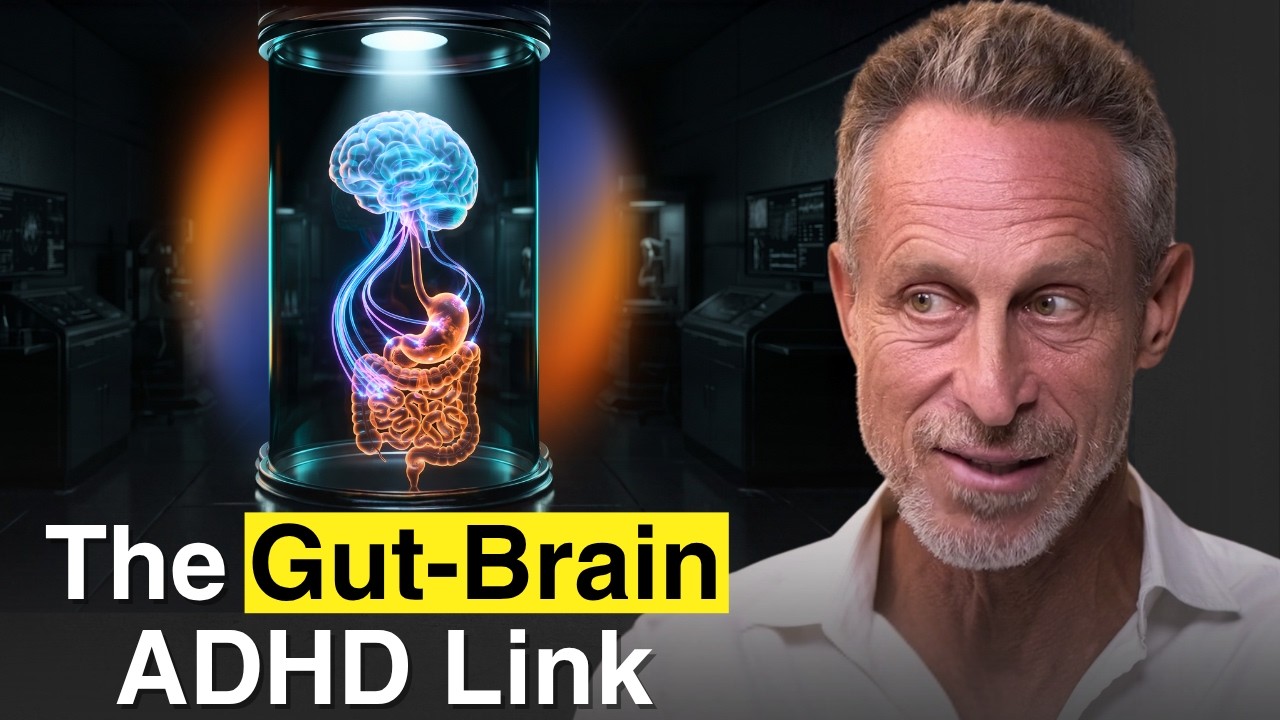
AI Mark and Emma explore ADHD as a systemic problem rooted in gut health, not just brain chemistry. Gut dysbiosis and intestinal permeability drive inflammation that manifests as attention deficits and behavioral issues. A case study shows how antibiotics, probiotics, dietary changes, and nutrient repletion resolved severe ADHD in a 9-year-old.
Chapters
When I think of someone with ADHD, it's not a brain problem, it's a system problem. These are not brain disorders, they're systemic disorders that affect the brain. So basically, when you have depression or ADHD or autism or any of these behavioral or psychiatric conditions, it's a brain on fire. And so a lot of times the reason for the brain on fire is the gut. It's quite simple. It's your body is connected to your brain. Everything that's happening south of the border of your neck is affecting what's going on in your head. Hey everybody, welcome back to Office Hours. Today we're doing things a little differently. I'm here with Emma, one of the producers of the Dr. Hyman Show, and we're digging into a topic that I think is going to surprise a lot of people. Emma, what are we going to talk about today?
Last week you had a conversation with Jenna Free on an incredible episode about the impact our nervous systems have on ADHD management. One thing we wanted to dive a little deeper on is the functional medicine lens of ADHD and how other symptoms of our body may heighten symptoms. So Mark, my first question to you is, what other systems in our body may impact ADHD symptoms?
Well, everything affects everything. That's how the body works. The body's a network, it's a system, everything's connected to everything. So when I think of someone with ADHD, it's not a brain problem, it's a system problem. There was an incredible scientist, Martha Herbert, who was a mentor of mine from Harvard, who was a neurologist, a pediatric neurologist, who talked about autism or even the whole spectrum of, you know, ADHD, learning disabilities, dyslexia, All the way to Asperger's and autism and the whole, the whole phenomena of neurodevelopmental disorders, which is really affecting 1 in 6 kids now, which is a staggering amount of kids, and it's getting worse. And what she said was that these are not brain disorders. They're systemic disorders that affect the brain. And so everything is going to affect how that brain functions, what that child eats, or the person with ADHD, because grownups have it too. Their exercise, level of stress, sleep, their nutrient status, the balance of hormones, their gut microbiome, toxic load, food sensitivities, gluten, a whole spectrum of things will affect the brain. And so trying to treat the brain by just giving Ritalin or a stimulant and not really dealing with the root causes is a problem. And I think what we're now understanding is the gut plays a huge role in overall health and particularly in Neurologic diseases, psychiatric diseases, and really the whole spectrum of anything that drives inflammation. And by the way, Emma, everything that's going on in the brain in someone with ADHD or autism, it's inflammation. When they've taken children who've had died, who had autism, and they did autopsies on their brain, they found that they had inflamed brains. Literally, they had elevated levels of activation of what we call microglial cells, which is the brain's immune system. On MRIs, Martha Herbert documented this, their brains are larger, meaning they're swollen, literally swollen. So I think we have to look at what is driving the inflammation, and the gut is a huge, huge factor in that. This episode was brought to you by Function. Get access to over 160 lab tests annually at functionhealth.com/mark.
So I want to know specifically, what does the gut actually have to do with our ability to focus?
Well, your microbiome is information. You've got 3 pounds of bacteria in there. You've got probably 40 trillion bacterial cells. You've got probably 100 to 150 times as much DNA as your own DNA. It's making proteins, metabolites, probably a third. And this has been estimated up to a third of everything in your bloodstream, of the metabolites in your bloodstream come from the microbiome. And so if your bugs are making bad molecules that are inflammatory or dysregulate your neurotransmitters or brain inflammation, it's going to have an effect on you. And if there's a leaky gut for various reasons, because of dysbiosis, people have, you know, born by C-sections, lots of antibiotics or lack of breastfeeding and breastfeeding is so important to develop the gut microbiome because 25% of the calories in breast milk is not absorbed by the baby. It's meant to feed the microbiome. You know, we see that, we see lots of antibiotic use. And so there's this whole setup that these kids get of dysregulated gut microbiomes that generates inflammation and that generates Leaky gut, food sensitivities, and systemic inflammation that's causing their brains to malfunction.
Interesting. So there is this large connection between your gut and your brain kind of speaking with one another. So can we go back and start at the beginning? How exactly is my gut talking to my brain?
Through many, many, many pathways. There's something called the second brain in the gut, which is the enteric nervous system. The enteric nervous system is essentially the nervous system that is in your digestive system. And it's independent, but it's communicating constantly up and down to your brain. And so, any kind of inflammatory signals from the gut get transmitted up to the brain through this enteric nervous system. And vice versa, stress will definitely communicate down through that system into the gut and can cause digestive issues. We all know that, you know, we get, you know, stress causes diarrhea, or we get— you know, different kinds of stress-related gut symptoms, gut feelings, that it's a bidirectional pathway. I think, you know, we have to understand that unless we really address that whole ecosystem through both nervous system regulation and optimizing the microbiome, we're not going to be able to really help people with all hosts of conditions, especially ADHD.
Are you able to explain a bit more in detail kind of how the gut-brain axis works? Like, what's the vagus nerve? And like, where is my immune system connected in all of this?
I mean, I think, you know, it's interesting how it all connects, right? You've got the vagus nerve, which is basically the main nerve running from your brain down, innervating all of your GI tract. You've got 60% of your immune system in your gut. You've got all these microbial metabolites being absorbed and, you know, signaling different things in your body. And so, you basically are in this constant dance between your gut and your brain and everything that's happening in there. And so, when your diet's crappy, when you don't have healthy microbiome, when you're not making healthy healthy short-chain fatty acids, when you're eating foods that are very irritating to the gut or not eating enough fiber, which most people don't eat, you're going to end up with leaky gut or damage to the gut barrier integrity with inflammation throughout the body, with dysregulated signaling to the brain. And so basically, this conversation that's happening between the brain and the gut get really dysregulated. And I'll just give you a quick story of a case that I had, which was a young girl. She was 9 years old and she had severe behavioral issues. Kind of ADHD, but like even worse. She was just very disruptive, always aggressive, getting kicked out of class all day. On the bus home, she'd have to stop the bus 10 times just to deal with her. At home, she would, you know, tear up pictures of her sister and just be very kind of almost sociopathic, I would say. And we did a workup and she didn't have any digestive symptoms, but she, she had severe overgrowth of bad bugs in her gut. And she had severe growth of fungus or yeast overgrowth in her gut. And we were able to document this through validated tests. We didn't guess, we actually measured it. And so, rather than give her some ADD drug or give her some, you know, behavioral therapy or, you know, counseling or cognitive behavioral therapy or any kind of treatment that was meant to change her behavior, what I did was I gave her an antibiotic. And I gave her an antifungal to clear out those bad bugs. And then I rebuilt her gut microbiome with probiotics, things like zinc, extra fibers, prebiotic fibers, and omega-3 fats and linoleic, gamma-linolenic acid, which is really helpful for gut healing, and a whole bunch of other things. But the point is she went from being this violent, aggressive girl to being this perfectly normal kid. And her ADD was gone. And so that taught me— that was years ago— it taught me that there's this massive connection between the gut and the brain and behavior and mood and cognition and attention and so many things. So it's quite amazing when you start to dig in and see what's happening in people who have these problems. And the truth is that most psychiatrists never look at your gut. They will look at your poop. They won't look at your breath test. They won't look at, in fact, anything related to what's going on in your gut. And so they're just thinking about what's happening in the brain as if it was Divorced from the rest of your body, which it's not.
And I want to get deeper into more about kind of what your protocol would be, your approach to individuals that for sure have ADHD. But I want to kind of circle back to that story. You talked— mentioned testing there. Are you able to shed some more light on what the tests were that you ran? Or maybe parents that have children, what maybe should they keep in mind and potentially get themselves or their child tested for?
There's a, there's a lot of testing that's done in the functional medicine space that's not considered, you know, validated by traditional medicine. And that's, you know, unfortunate that traditional medicine hasn't taken it seriously. But I can tell you after being in this space for now 30 years, I started practicing functional medicine in 1996, which is a long time ago. I literally just had my office party and all the staff was there. And we'd had, there's a whole bunch of us that have been together for 30 years, 20 years, 25 years. And, you know, I was talking to my nurse who literally has been with me since 1996. And I said, you know, without you being willing to go and figure out all these weird lab tests, we never would've moved the field forward. So I look at stool testing and I will look at everything that's going on in the gut, digestive enzymes, fat absorption, levels of inflammation markers, short-chain fatty acids, which are really important to tell you a lot of what's happening in the brain. I look at the microbiome itself. I look at what's growing, whether there's healthy bacteria. I look at whether there's parasites or worms or yeast or other things. And then I understand what's happening to that whole ecosystem. And it's not really looking for a pathology. Like, yes, you might find a parasite and that can be considered a pathology. But most of the time, you're looking at the whole ecosystem. And if this thing's out of balance or imbalances, you call it dysbiosis as opposed to symbiosis, which is working together. You've got this dysregulated microbiome. We also look at urinary markers of metabolites because everything in your gut gets absorbed. And so, if the bacteria or fungus are making metabolites, we track those like the arabinose or other markers, and we can see if they're abnormal, and we can treat those. We can also do breath testing to see what's going on with the different gas production, whether it's hydrogen, methane, or sulfide, which all can have severe effects on the level of inflammation in the gut and cognitive symptoms across the spectrum of, you know, People, not just with ADHD. So we look at a lot of different things, and we also look at, you know, nutritional status because that plays a big role in health, particularly in ADHD kids. They have a lot of nutritional deficiencies, like most people in America, but they're really particularly susceptible to things that are challenging.
Nutritional deficiencies is something I think I have in my questions to dive deeper into with you as well. I want to go back specifically to gut microbiome in individuals with ADHD. So what's the difference about the microbiome in people that have ADHD?
Well, it tends to be more inflammatory. It tends to be lower in certain species. And it seems to be having, you know, a more inflammatory kind of profile. And it may not be producing most of the short-chain fatty acids that you need. It might affect dopamine function. You know, the microbiome, like Bifidobacterium, is important in regulating dopamine, and that can be problematic in these kids. And they also, you know, may have differentiated sort of things related to gluten where they'll get increased zonulin levels, which are a marker of gluten damage to the gut, which leads to leaky gut. And they can get, you know, In ADHD, they've seen zonulin levels being associated with social functioning, with, you know, you know, basically behavior and OCD and ADD. And there's also fungal, fungal issues. A lot of Candida can be a big factor. And I've seen many, many kids with significant fungal overgrowth in the gut because of antibiotics, because of poor diet, because of sugar, all these reasons that these kids develop fungal overgrowth. And that also may be an issue. They're actually doing fecal matter transplants, or what we call FMTs, or basically poop transplants in people with autism, with ADHD. And it's pretty amazing. So I think kids who've had a lot of antibiotics, you know, have a higher risk of getting ADHD. So we know the gut plays a huge, huge role in the overall regulation of the brain, mood, cognitive function.
I know we briefly touched on it at the beginning, but I'd love to dive deeper into how specifically the microbiome affects How it affects our attention?
Well, I think anything that causes brain inflammation will affect cognitive function. And so I think it all hasn't been fully mapped out, but I do think that, you know, with decades of clinical experience from functional medicine world and from this sort of emerging research that's on the microbiome, we really see there's a massive behavior-diet-microbiome loop that's modifiable, that can be changed. We know that antibiotics play a huge role. And triggering issues with kids. We know there's, you know, significant patterns in the microbiome that can be associated with cognitive issues around ADHD or autism. So we're just— this whole field is really emerging fast. But I can tell you, without even knowing all the details, because really we're able to study so much more at so much greater depth than we ever have before, given our current diagnostic tools and stool testing and genetic testing, what's going on in the gut. I can tell you as a doctor, seeing real patients in my practice for 30 years, using an approach that really resets the gut, even if we don't know exactly what's happening in there, has a massive impact across the board on brain function, on mood, on attention, on memory, on everything. And so I think the story is still being unwound, but, but the reality is that there's more and more emerging data on the role of diet, On the role of dysbiosis and gut issues with these kids and with adults. And so, I think there's a real sort of amazing doorway to treat these people by checking out what's going on. You know, people don't actually have to have gut symptoms. They might just have behavioral symptoms or cognitive symptoms, and they don't actually know that it's going from their gut. I know I'm not the only one that has ever walked into a room and forgotten why I was there, or stared at my computer screen knowing I needed to focus but can't. Here's what I want you to know. Brain fog isn't a character flaw. It's not a lack of discipline. It's not something you should simply accept. Most of the time, brain fog is linked to your biology, blood sugar issues, thyroid dysfunction, low iron, even low vitamin D. But you don't know there are things to correct unless you measure them. And that's why when someone comes to me struggling with focus, energy, or mental clarity, I start by looking on the inside. That's exactly why we built Function. Function gives you access to 160+ lab tests annually that measure signals in your blood, including nutrients, liver health, inflammation, and hormones. You can also complete your health baseline with an annual MRI that helps you see organs, tissues, and other changes. Check your health at functionhealth.com/mark. And if you're one of the first 1,000 people this week, use the code MARK2026 for a $50 credit over your $365 a year membership.
I know there you also mentioned inflammation. What about neurotransmitters and the role that that kind of plays on our attention and the connection to the gut? Can you go more into that as well?
Sure. I mean, you have a lot of neurotransmitters in your gut, and basically not all of it is going to your brain, but it regulates the nervous system in the gut.
Can I pause you?
Yeah.
Can we back up even further? Can you just describe simply what are neurotransmitters as well?
So, neurotransmitters are essentially communication molecules that help your nervous system have a conversation and regulate everything in your body.
Right.
So, they control thoughts, feelings, moods, behaviors, motor function, pretty much everything. And, it can be everything from, you know, GABA, which is a neurotransmitter, to serotonin, to dopamine, to norepinephrine, to epinephrine. They have— these are multifunctional molecules that are really important that regulate mood, cognition, behavior. So acetylcholine is one, which is very common. It's an excitatory neurotransmitter. Nitric oxide is another. Glutamate is another that regulates things. Histamine, melatonin, all these. There's a lot of different ones, but they're very, very powerful. And these— they're made— a lot of these are made in the gut. So they have very different effects on different things, but these are all regulating your nervous system. And there's, you know, really important strategies to optimize the gut health as a way of optimizing the neurotransmitters.
Got you. Okay. The other thing I feel like we should talk about here is the gut barrier. So are you able to explain what intestinal permeability is?
So generally your gut is, is a, is an organ that absorbs and filters the food you're eating and lets the nutrients in and keeps the foreign proteins out. It also, you know, there's a bacterial microbiome in there that's helping you digest your food, making vitamins, regulating inflammation, reducing your risk of cancer, or conversely making things worse. And also you've got also bacterial toxins in there your body has to protect itself from. So there's a A barrier lining the gut. Now, your gut's basically one cell thick. And it's like, think of it like you're basically one cell away from a sewer. And the gut has these little cells called intestinal epithelial cells that are joined like Legos with these things called tight junctions. So think of them like these interlocking Legos that join the cells together very tightly. They're called tight junctions. When there's dysbiosis, when there's certain foods like gluten people react to, and in everybody gluten will cause some degree of this. And I think American wheat is worse than European wheat for various reasons that we can talk about. But basically these tight junctions tend to loosen and you get these spaces between the cells. So instead of food going through the cells, they're supposed to go through the cells, nutrients are supposed to go through the cells, they go between the cells. And what also happens is different foreign particles leak in. They go basically food proteins or bacterial toxins leak in. And right underneath the lining of your cells is your immune system. 60% of your immune system is there because that's where you're interfacing with the world in the outside world most of the time. And so when you start to get all this foreign, literally crap being exposed to your immune system, it goes, what's this? It's not me. And it starts to create this inflammatory cycle and it can drive so many diseases. That's why the microbiome has been linked to everything from ADHD to autism, to Alzheimer's, to Parkinson's, to depression, and then obviously to cancer, to heart disease, to obesity, to, you know, autoimmunity, to allergy, asthma, eczema, you name it. And it's because when you get a leaky gut, which is so common because of low fiber, because of our ultra-processed diet, because of the overuse of antibiotics and acid blockers and the use of C-sections and lack of breastfeeding, all of these cumulative reasons, the role of toxins and so many other things, we end up with these leaky guts to some degree or another. And those create, to some degree or another, a systemic inflammatory response. And that inflammatory response is affecting the brain.
Mm-hmm.
And it's creating an inflamed brain. So basically, when you have depression or ADHD or autism or any of these behavioral or psychiatric conditions, it's a brain on fire. And so a lot of times the reason for the brain on fire is the gut. And so restoring gut health is so important. That means removing the irritating foods. And there's a whole system in functional medicine called the 5R program, which is remove the bad stuff, you know, replace things that are missing, reinoculate probiotics, repair the gut lining, and restore the whole nervous system in the gut. So there's a whole way to do that. But it's a system, and functional medicine is really good at helping people practically apply it. And what's beautiful about it is that even though we don't have all the science yet on how everything affects everything and how these microbiome changes affect cognitive function specifically, we know some, but not in great detail, we can still get these people better by focusing on repairing the gut ecosystem.
I know you've also done a really in-depth episode on Office Hours kind of going into this kind of gut microbiome, how to heal the gut. So we can also link that in the show notes as well too. I want to go deeper into diet. We've kind of tiptoed around it and I want to go deeper into it. So this is probably a silly question, but could the modern diet be making ADHD symptoms worse? And if so, can you kind of just explain to me in more detail about how that is? You're laughing as I ask that question.
Yeah, I mean, look, our modern diet, our ultra-processed diet, is pretty much the cause of most chronic diseases we see across the spectrum to some degree or another. There's other causes. There can be toxins, there can be infections, there can be mold. There's other reasons, but the diet is such a big factor. It influences ADHD in multiple ways. One, by regulating the microbiome. You basically are not just feeding yourself, you're feeding your microbiome. And so if you're feeding it processed food and no fiber and sugar, you're going to have growing bad bugs in there that cause inflammation and leaky gut and cause these behavioral symptoms. When you, um, you know, look at the opposite, if you use fermented foods, probiotic foods, prebiotic foods, phytochemically rich foods, when you cut out the starch and sugar, cut out the ultra-processed food, it changes the microbiome and it changes the behavior. It changes the brain function. So, um, it really, it's really an essential part of repairing any kid. And I, I had a kid who was 12 years old, but hopefully would show his, um, Show his before and after handwriting picture, which people can see if they're watching on YouTube. Or you can basically see his mother brought his homework to me before I did anything. And then he was— we did a full workup and this kid was really a mess. This kid had been kicked out of kindergarten. He was so disruptive. He was on ADD medication for years and years. He was socially disruptive. He had all these other health issues that seemed peripheral. Like he had asthma, he had headaches, he had stomachaches, he had insomnia. I mean, a whole bunch of stuff that was completely ignored by the psychiatrist. And he was treated by a psychiatrist, by an allergist, by a lung doctor. I think he had, I don't know if he had irritable bowel, he might've seen a GI doctor. And he was on all these drugs. He was on 7 different drugs at like 12 years old. You know, and I'm like, wait a minute here. There's something connecting all this together. And so when we unwound his story, he ate only processed food. He never ate a vegetable in his life. He, you know, had all these symptoms that were kind of inflammatory issues. So I basically looked at his gut microbiome. I looked at food sensitivities. I looked at his toxic load. I looked at his nutrient status. And what I saw was a kid who was massively nutritionally deficient. I mean, it was low zinc, low magnesium. Magnesium, low B6, and folate, and all these things that were so important that he never— I mean, folate, the word comes from foliage. So you have to eat greens. This kid was not eating greens. And so this kid had such a dysregulated microbiome, and he also had a leaky gut. He also had a lot of food sensitivities. He had elevated gluten antibodies. So basically, he was reacting to gluten, plus he was reactive to dairy. And so, we got him off all that ultra-processed food. We got him on whole foods. We got him off the gluten and dairy and sugar and processed foods. I restored his microbiome by resetting it because we found he had a lot of yeast overgrowth. So, I gave him an antifungal because we found fungal overgrowth in his testing. He had lead and I get rid of his lead through chelation. I optimize his nutrient status with magnesium, zinc. I mean, he had lots— low, very low magnesium, zinc. B6, folate. I gave him probiotics. I gave him fish oil, omega-3s. He was super low in omega-3s. A lot of these kids are. And so basically in 2 months, the mother brought him back after changing his diet, fixing his gut, giving him OptiMin, optimizing his nutrient status, getting rid of the bad bugs in his gut. He was completely better. He had no symptoms from any of the things that we talked about. And more importantly, like, his brain was working and he didn't have ADHD, he didn't have trouble focusing, he didn't have behavioral issues. And the handwriting, you can see before and after, was the thing that made me write The UltraMind Solution.
Mm-hmm.
When I saw his handwriting change from before I treated him to after I treated him, within 2 months, it went from illegible at 12 years old to perfect penmanship at 12 years old. And I'm thinking, wow, how did this happen? Like, how, how did this actually happen in the brain? His brain went from chaotic and disorganized and just synchronous to coherent and synchronized and orderly in how it was functioning. And, and it was reflected in his handwriting. And a lot of these kids have what we call dysgraphia, which is basically bad handwriting. The medical word for bad handwriting. But, but it taught me a lot about how diet and the gut health and nutrient status play a role in these kids with severe ADHD.
Okay. So you mentioned some nutrient deficiencies and I'd love to kind of go further into that. Can you double down on what specifically you often see, what nutrient deficiencies you see, when, um, the impact that the adequate nutrition can be and when supplementation might also be a beneficial thing to explore?
Look, if kids are eating ultra-processed food, they're nutritionally deficient. At Function Health, we're seeing that over 70% of the average person who's doing Function Health lab testing, which is generally a health-forward population, 70% have a deficiency, not an insufficiency, a true deficiency based on the reference range from Quest of one or more nutrients. That's shocking. It should be shocking to people. It's not to me because I've been doing this for a long time, but to see actually the hard data at scale on hundreds and hundreds of thousands of people, I'm like, Wow. Damn, like we are all walking around with these undiagnosed nutritional deficiencies that are affecting the quality of our health.
So sorry, you said they're also health-focused as well too. So like these people are mindful of the foundations. So do you think that speaks to like the quality of our food as well too?
For sure. But you know, people, yeah, it can be gut health, lots of things. But I had a, I had recently a couple of patients who were not health-focused. They never heard of Dr. Hyman. And, and they, they had obese. They were, you know, 300 pounds, 330 pounds the guy, the woman was 250, I think. And obviously, they ate a lot of food, but they were very malnourished. Very low omega-3s, very low vitamin D, like extremely low, very low folate, very low magnesium, very low zinc. And so, we saw very low iron, the woman had very low iron. A lot of these things are— people are walking around and they have no idea. So, So, I think for me, I think it's important to test nutrient status, which is why Function Health, as I designed the panel, which I designed, was to really look at a whole suite of different health issues, but really also do a deep dive on nutrients. So, nowhere else you're going to get vitamin D, omega-3s, or omega, you know, your methylmalonic acid, homocysteine, which measure B6, folate, B12, looking at red cell magnesium, looking at Zinc, obviously vitamin D. So a lot of things we can see what's going on at the common nutrient levels. Iron, we're looking at everybody in iron. So we're seeing a lot of these nutritional deficiencies. And so, you know, they affect cognitive function. Magnesium is required for neurotransmitter regulation and particularly for relaxation, nervous system relaxation. And, you know, this kid I was mentioning to you with ADHD is irritable. He was hyper. He had insomnia. He had headaches. He had cramps. He had stomach issues, constipation. These are all magnesium deficiency symptoms. So it doesn't take a rocket scientists, if you know what the symptoms are, to diagnose magnesium deficiency, even, you know, without a lab test. The lab tests are a little squirrely too. But I think we really, we really have to not just focus on the brain when we think of people with these attention disorders. We have to focus on the body as well. And this is why when I wrote the book UltraMind Solution, the subtitle was Fix Your Broken Brain by Healing Your Body First. So, you know, people can do all the therapy they want, but like, if you, for example, if you're trying to manage pain and you're standing on a giant nail, you know, you can take a lot of narcotics. The treatment is taking out the nail, right? And then if you have pain, you can deal with it. But like, I think a lot of what at times happens in medicine is we're using all these psychiatric tools to treat a problem that's not psychiatric. Now, sometimes it is, sometimes it's a combination, but sometimes it's just biological changes. And there's a whole field of biological psychiatry. Now, there's departments of nutritional metabolic psychiatry at Harvard, Stanford. They're treating very severe illnesses like schizophrenia and bipolar disease with dietary interventions that are very aggressive around ketogenic diets. But I've seen, you know, how these things work. And it's quite impressive when you actually are in the weeds with people. And you work with people, you see the changes happen pretty quickly.
I'm kind of taking a bit of left field here, but you saying that kind of made me think, how much of the ADHD experience is biological and the rest kind of due to lifestyle and diet? Like, how much do you see that kind of overlap?
Look, I think there's a spectrum of humans, right? With different traits and behaviors and proclivities and skills. And like, we don't have to pathologize all of it. But I think if people's lives are really affected, if, you know, if you rule out everything else, like, there may sometimes still be some behavioral or attention issues that may be more kind of hardwired or more permanent. But I never start there. I always assume that there's stuff to fix.
Mm-hmm.
The way functional medicine works is it's pretty simple. It's doing a very deep survey from history, lab testing on what's out of whack. And then it just corrects everything. So rather than like going, oh, well, it's just vitamin D, just give vitamin D, but don't change his diet. No, you have to change the diet. You have to get the vitamin D. You have to exercise. You have to treat the gut microbiome. If there's toxins, you have to deal with that. If there's infections, you have to deal with that. And so it's sort of the opposite of traditional medicine, which is just do one thing. Take this one drug for this one disease with this one outcome. It's not how the body works. If you're trying to grow a plant in your garden, you can't just provide water but no soil or sunlight, or you can't just provide sunlight but no soil or water, right? You need to provide all the foundational ingredients for health. And this is basically what we do in functional medicine. It's basically a detective job. And each person is different.
Yeah.
You know, sometimes it's quite Quite simple. Sometimes it's much more complicated and can take a long, long time to unwind some of these things.
Okay. So say I came to you today and I was like, hey, Mark, I just got diagnosed with ADHD. What would you say to me? Where would you tell me to begin? What kind of plan would you lay out before me?
As a young woman or as a kid?
Let's say as a young woman, because as we mentioned with Jenna, there's a lot of women around my age that are often getting diagnosed, right?
Yeah. I mean, it's an adult thing too. I would take a very detailed history. So, when you come to see us at the UltraWellness Center, we'd have a 32-page questionnaire, which is annoying, but it tells me everything about you. I want to know every little symptom. I want to know if your eyes twitch. I want to know if you have dreams or don't have dreams. For example, if you don't have dreams, it could be a B6 deficiency, right? So, there's little clues in everything. Or, if your butt's itchy, it could be yeast overgrowth. There's all these little things we know. I want to know mold exposures, whether you've had a tick bite, how much sushi you ate, whether you got dental fillings, how you were born, what environment you grew up been, what their traumas were. I mean, I want to know everything. And so first, I unpack all that. And then I go, okay, based on that, what do I want to look at? The clues. I mean, if you said, well, gee, I had a bunch of tick bites, or gee, I live in a moldy house, or yeah, I eat tuna every day, I'm going to go down and find out what's going on. I'm going to do heavy metal testing and check for mold and check for ticks. I'm also going to look at nutritional status. I'm going to look at your microbiome. I'm going to look at your immune health. I'm going to look at food sensitivities and allergens. And I'm going to look at your metabolic health and insulin resistance and All the things that really matter to help give me a good comprehensive picture of what's happening with you in this moment, and based on those findings, you know I will have a map. I will know okay for you, Emma, there's these you know five things that are the priorities. You know you're you're low in magnesium. You've got bacterial overgrowth in your gut. You've got a lot of mercury because you love tuna every day, and you know you you you also have. Have low vitamin D and low zinc, and so I'm going to go. Okay, I'm going to I'm going to fix all these things, and I'm going to do it systematically by first starting with diet and lifestyle, and then adding in some nutrients, then correcting the gut issues, and then getting rid of things that might be irritants like toxins or mold or allergens or infections. And it's it's just a systematic process, and sometimes it's you know it's you know I sometimes it's unusual. Like I had a kid with a severe OCD. And, it was developed after he got a strep infection. And, there's actually something called PANDAS, which is pediatric autoimmune neuro something, something, something. I forget the exact nomenclature, but essentially, it's a neuropsychiatric condition that's triggered by an immune response to the strep after you've had it and treated it. And, there's antibodies you can measure, you can check for this, but it's this ongoing inflammatory thing. So, I actually treated this kid with ozone. Which sounds really crazy, but it's you can't just throw more antibiotics at it. It doesn't really work that well, and it was incredible. The kid completely resolved. So I think you know we have to sometimes think out of the box when we're looking at things. But you really have to treat everybody individually. That doesn't mean like everybody with OCD has that problem. I mean, that that was his particular thing. And this is the other problem with medicine is we label people based on symptoms, not on causes. So you could have ten people with ADHD; they could have ten different causes. 10 people with autism, 10 different causes. 10 people with OCD, 10 different causes. So you have to be a detective and find out what is the cause for this particular person.
And then your protocol for each of them would be completely unique.
So your protocol for me would be different. Yes. And then it would be very personalized. So basically functional medicine is highly personalized medicine. And it's basically a simple algorithm, which is take out the bad stuff, put in the good stuff. There's too much of something that's causing your body to react badly. And there's not maybe not enough of something your body needs to function properly, like light or water or sleep or the vitamin D or whatever it is. So basically, my job is to be a detective and find out what you have too much of that I need to get rid of and what you don't have enough of that you need to get. And it's a very simple, like E equals MC squared framework. But you know, behind it is like the whole you know human human. Complex biology. It's quite astoundingly complex. So, you know, I just finished writing a book, which is going to come out next year, which is essentially about the whole map of the human body and how it actually works, which is a very different frame than Vesalius, who was the vivisection and basically discovered that there were all these organs and basically medicine got organized according to organs, not according to how the body functions. And so, like we're talking about the microbiome, you know, you've got the gut, but nobody's thinking that it's affecting the brain, but it's totally connected, right? So that's like, can't just look at the gut, or you look at the brain, the brain is where, you know, your mental health is, or your thoughts are, but it's not, it's systemic. So I think it's just really, it's a real paradigm shift.
Before we close out here, I want to hit you with some rapid-fire questions. So essentially just Quick, short answers, kind of first thing that comes to mind. How does that sound to you?
Sure.
The first one here is, can caffeine help with ADHD or does it make it worse?
Um, it depends on the person. I mean, sometimes it helps focus, but it also can, if people are, tend to be more irritated or stressed out, it can activate that. And it depends on your caffeine metabolism because basically, uh, some people have fast metabolism of caffeine. Other people have slow metabolism. And so it's really about finding out what really is going on with you. I don't have a hard rule about it.
Why do people with ADHD seem to crave sugar and carbs?
Well, you know, when you crave sugar and carbs, it usually means there's something going on. It's either one of two things. One is you're primed for it through eating a lot of starch and sugar, which does also cause a lot of brain dysfunction. So, you're kind of— sugar, eating sugar makes you crave more sugar. And it does so through the way it affects your insulin production, which you make more insulin, then you become insulin resistant, then you start changing your neurotransmitters and your immune cells, and you start to create this hyperphagia, which means you're just hungry all the time. And people know this. If you have, like, you know, pancakes for breakfast, you're really starving by 11 o'clock. But if you have, like, a protein shake or bunch of eggs and bacon for breakfast, you're fine till lunch. It's because it creates these huge swings in blood sugar. So when your sugar's crashing, you're going to crave more sugar. And that's the instability of blood sugar that causes that. The second thing is the gut. And the microbiome affects your appetite. I mean, we know GLP-1 drugs are affecting essentially peptides in the gut that regulate appetite and so forth, but it goes much further than that. And in fact, the microbiome When you have overgrowth of bad bugs, they're hungry. So fungal overgrowth will tend to cause more sugar and carb cravings, and we see that a lot. So they might have fungal overgrowth and not be aware of it, and then when you treat it with an antifungal, it goes away. And I've seen people do that and also even lose a lot of weight.
So then you, you talked about breakfast there. If I was to skip breakfast, will that make ADHD symptoms worse?
Yeah, potentially. I think, you know, you really, you really want to stabilize your blood sugar and your brain function. And when you, when you eat protein, fat, and fiber in the morning, it basically stabilizes your blood sugar, stabilizes your immune system. And, you know, when kids are eating cereal and sugar for breakfast, which is basically what, what Americans do, they eat dessert for breakfast, sugar-sweetened cereals, pancakes, French toast, muffins, bagels, Pop-Tarts. I mean, you name it and every, everything, yogurt. I mean, there's more, sugar per ounce of most sugar-sweetened yogurts, quote, fruit-flavored yogurts, than there is in a can of Coke. So I think, I think people need to understand that they can't eat sugar for breakfast. They can't eat dessert for breakfast. Um, and if they eat protein and they eat fiber and they eat fat, it basically stabilizes the brain, the mood, cognitive function, everything else.
What about food dyes? Can they make ADHD symptoms worse?
Food dyes? Yes. There's, there is some evidence that removing additives and colors will affect behavior. And there's some published data on this in The Lancet and others where they basically took kids and, you know, who had HD, and they gave them either naturally, like, colored red liquid to drink, or they gave them, like, artificial dyes. And the kids with artificial stuff just had way worse behavioral outcomes. So we know these things do affect these kids.
Can menopause make ADHD symptoms worse?
I mean, when we go through menopause, their hormones are changing, their metabolism is changing, their adrenals are Yeah. Their thyroid's changing. And so, yes, brain function can change a lot. And women get brain fog, lack of focus, attention, but it may not be, quote, ADHD. It just may be perimenopause that's worsening any cognitive symptoms. So, the goal is really, really find out what's going on and optimize a woman's health through all basic foundational things which affect their quality of their hormonal function and affect their The way they go through perimenopause and menopause. So if you're eating healthy, if you're exercising, if you're getting enough sleep, if you're dealing with stress, if you're optimizing your nutrients, if you're optimizing your microbiome, often you can kind of sail through it. Hormones can be a useful adjunct, and I think hormones can be really helpful, but a lot of times the dysregulation of hormones that's causing cognitive function is related to this, the reason why they're having it. It's not just worsening ADD.
What do you think is worse for ADHD, a bad diet or bad sleep?
Bad diet.
Okay.
I mean, listen, if you don't sleep, you can't focus, but that's not ADHD. That's just fatigue, right? But a bad diet will very much dysregulate your brain. And we see this over and over in clinical trials and observational data that the neuropsychiatric problems are very much related to the food we're eating. There was a study that I talked about in Food Fix where they took kids who were in a juvenile detention center eating all these bad processed foods, and they swapped out healthy foods. And in this juvenile detention center, the violent crime went down by 97%. The use of restraints went down by 75%. Suicide in these teenage boys went down by 100%, meaning there were no suicides, which is the 3rd leading cause of death in that age group. And that's just from changing their diet. And they had them, you know, locked up so they could control what they ate.
Amazing.
Yeah, it was quite amazing to see. So I think, you know, diet plays a huge role. And we know a lot of this from prison studies too. When you give prisoners healthy food, they calm right down, reduce violent crime by 56%. They add a multivitamin, they reduce violent crime by 80% in the prisons. It's pretty impressive. So I think bad diet, I would say, is the answer to that question.
Those are all the rapid fires I have for you today and kind of all the main questions I had for you about ADHD. So I know we've covered a lot. We've talked about the microbiome, we've talked about inflammation, we just talked about sleep, we've talked about lots about food, blood sugar. What's kind of like the one idea you want everyone to take away from our conversation today?
It's quite simple. It's your body is connected to your brain. So everything that's happening south of the border of your neck is affecting what's going on in your head. And if you're suffering from whether it's a psychiatric problem or an attention problem, or you're on the spectrum of autism, fixing the physiological problems that are often associated with these problems will often help dramatically, if not sometimes completely get rid of these problems. I've seen real miracles. Like, they're not miracles, they're just applying the science, but You know, different people respond differently. I've had, you know, some kids with autism completely get better. I've had other people who improve. I've had others that had weird forms of autism where I couldn't find anything wrong, but they're still— their brains weren't working. So probably a genetic thing that was some kind of, you know, inherited issue. So I think it's important to really understand that there is a lot that you can do if you start finding out what's going on under the hood. And the best place to start is functional health, is just to It's $365. You get a really deep dive. You can see a lot of what's going on hormonally, metabolically, nutritionally, toxin levels, inflammation. I mean, a lot of things. So, I think it's really a powerful first step. But then, there's more. There's always more. So, you can always work with a good functional medicine doctor, come to the UltraWellness Center. But, we really don't want people to suffer unnecessarily. And, I think this is, for me, the driving force of my career and my life, which is knowing what I know and seeing what I've seen over 30 years, people getting better using the principles of functional medicine. That so many people are suffering needlessly. And, you know, I can't get rid of all suffering in the world, but like, if, if there's problems we have solutions to, and we do with functional medicine, then people should not have to suffer. And that's really, that's really, I think, what I want people to understand, that if you're struggling, it's worth digging. If you love that last video, you're gonna love the next one. Check it out here.
More from AI




This Is Why 99% of Skin Conditions Don't Heal — And What Dermatologists Won't Tell You






Why you need to start strength training today #strengthtraining #healthyaging #fitness
