Ask Mark
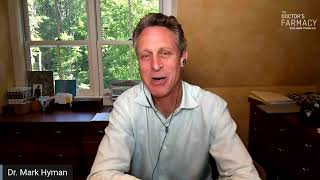
Dr. Mark answers community questions on health topics including cooking oils, nutrition, sleep, gluten, and exercise. He discusses food policy, vegetarian diets, and practical advice for systemic health challenges.
Hey, everybody, it's Dr. Mark. How y'all doing? I'm so excited. This is a new live Q&A show I'm doing for my community. We're calling it Ask Mark. And it's where I take questions from my text community and invite those folks to join me live and ask their questions. So we have about 10 to 12 people that will join us today to ask their question. And if you want to ask a question in the future, all you have to do is text me at 413-555-5555. 225-8995 with the hashtag AskMark. That's 413-225-8995 with the hashtag AskMark. And my team is going to pick the right question for me to answer and pick your question hopefully soon and we'll get into it together. Lastly, I just can't give you medical advice. It's illegal. I go to jail. You don't want me in jail. It's not a good thing. But I can give you big picture advice on how I would approach a person with a similar condition or a health challenge. Let's jump in with our first guest.
Hi, Mark.
Hi there, Elizabeth. How's it going?
I'm well. How are you doing?
I'm good.
So my first question first, thank you for being on the show, letting me be on the show. I'm a big fan of yours.
Thanks.
My question, and I watch a lot of your cooking, your recipes and how you cook.
They're pretty funky. They're pretty funky.
They're like great. What are your favorite oils to cook with and how do you choose?
Okay, well I'm very particular about oils because most oils that are on the market today are industrial oils that are made through a particular process that uses heat, solvents, and various chemical agents to extract the oil. And it's made from a lot of oils that are GMO oils like canola oil or corn oil, soybean oil. Soybean oil is probably the most common oil. It's about 10% of our calories and mostly in the form of processed food. So if you're not eating processed food, you're probably not getting a lot of soybean oil unless you're putting it on your food. So I'm very careful to avoid industrial oils because they are easily oxidized. They basically become rancid and they can be damaged easily. And then oxidized fat, it's like rancid fat. in your blood is really bad for you. It causes all sorts of problems with your cholesterol and heart disease and so forth. So I really am very careful about not having a lot of these refined oils. Now there's a lot of literature that says Omega-6 oils and polyunsaturated fats from these oils are actually good for you. But I think that it's problematic because when you look at the diet, they're really found in whole food diet forms like nuts and seeds and whole grains and so forth. That's okay. But when you extract them and you increase the amount by a thousand fold in our diet, it's pretty harmful for us. So I'm not really a big fan of those oils and there's a lot of controversy about it, but I'm in the better safe than sorry category. If it's not something your great-great grandmother had in your kitchen, then you probably don't want to eat it, right? And she probably didn't have industrial soybean oil. And by the way, it's got glyphosate in it and all of the other issues. So when I'm picking oils, I'm very careful to pick oils for the right for the right use. So for non high temperature cooking, so if you're making a tomato sauce or if you're just putting oil on your food, extra virgin olive oil is number one. And I probably go through, I don't know, a liter a week at least. And in this one study that's called the PREDIMED study in Spain, they looked at 7,000 people and they gave control group, you know, just told them to eat the regular Mediterranean sort of low fat diet. and then the other group they gave either a liter of olive oil a week that they had to consume or basically a handful, a big handful of nuts every day. And when they gave them the olive oil, handful of nuts, their heart disease went down as much as taking a statin drug.
Wow.
About 30%. So, and olive oil, extra virgin olive oil is a really traditional food. It's been around for thousands of years. It has all kinds of polyphenols in it. and phenolics that are extremely potent compounds that benefit your health. For example, oleuropein is a very potent antiviral. So you can actually use it to help strengthen your immune system and act as an antiviral. So I'm really a big fan of extra virgin olive oil. You want to be careful because a lot of crappy olive oil on the market and a lot of the Italian olive oils are actually run through the mafia. And so they're often adulterated or have other oils mixed in. So you want to make sure you get a really good olive oil, organic, and then you can put it in the back of your tongue. If it's got a little bit of a burny feeling, then you know it's a good olive oil. It should create a little spicy thing in the back of your throat. So that's my main oil. And then for cooking, high temperature cooking, my main oil is avocado oil. And that's sort of like a monounsaturated fat, sort of like olive oil. But what it has also is a very high smoke point. So it's not, going to cause oxidation. So you want to avoid oils that smoke. So if you use olive oil and you cook in a pan, it'll oxidize very quickly because it'll break down and it'll become dangerous. And then I use sometimes for special cooking, I might use coconut oil or I might use ghee. I like ghee, which is also high temperature smoke point. So I like ghee quite a lot. And then there are other oils I'll use, like for flavoring, I'll use organic, you know, toasted sesame oil. I make Chinese cooking. or you can have oils you put on yourself like walnut oil or macadamia oil. Those are fine. But it's when you start to heat these up and I'd also look for cold press or expeller press oils. I look for organic and obviously non-GMO. So that's generally my spiel on oils.
Awesome. Thank you so much.
What do you use?
I usually use extra virgin olive oil primarily, but I do heat it up. I use that in its purest state and then also in a frying pan as well. Yeah.
Well, you know, the frying pan thing interesting because I once had my metabolome measured, my entire metabolome, which is all the metabolites in your blood and all the different byproducts of everything you're eating. And I found that I had really high levels of oxidized olive oil in my blood. And I was like, oh, that's not good. So I stopped, yeah, I'm not cooking at that high heat. And I would never put it in a frying pan. If you like, put it like, for example, you put it in like tomato sauce and you're cooking the sauce and it's like fine, it's not going to get crazy. oxidized. But if you're actually just like stir frying with it, it's not a good idea.
I'll stop doing that then.
I'll switch over to avocado oil.
Okay, great.
That's awesome. Thank you. Great. Well, next guest, we have next guest ready, hopefully. And that was interesting. You know, oils and fats are confusing. I wrote a whole book on it called Eat Fat, Get Thin. And if you want to learn more about that, you can read that book. I've also written a book, hi There, Shelley. I've also written a book called Food, what the Heck Should I Eat? which in the UK is called Food: WTF Should I Eat? which I think is a better title. Anyway, and I go through all the science of oils and fats and what we should know and what to pick. And even in Food by the Fact, I talk about how you can find olive oils that are not adulterated so you know what you're getting. So, if you want to learn more, you can certainly go there. Hi Shelley, what's your question?
Well, I'm also a huge fan, so this is such an honor. And I read those two books that you just talked about, and I remember when you posted about a year ago, you had the President of Black Lives Matter on your podcast. Yes. Talking about the racial disparities and food marketing. And then I saw your post the other day, and I was like, Now, out of any time ever, something should be done about this. And hopefully with everything being so heightened, we can help move some of these initiatives forward. And I remember reading about in your book that we spend like Snack Smilts spends about $8 billion or $7 billion a year, I think, just on soda.
That's right.
So how can we, what can we do at the local level? Who do we write to? What petition do we sign? What can be done? Great question.
So I don't know if you saw my book, Food Fix.
Did you have a look at that?
That's the one I haven't gotten yet. Okay, well that has all the answers. That has all the answers. So I wrote a book because these issues became more and more evident to me. And about three years ago, it was on the anniversary, the 50th anniversary of Martin Luther King Jr. 's speech about Vietnam at the Riverside Church in Harlem. And it was a year later to the day that he was shot and killed. And, and in that, in, and, and the anniversary of his death, I gave a speech about food oppression. And, and you can go on my website and find, I think it's released as a podcast, too. It's just 10 minutes. And I go through the challenges that we're facing as a society, particularly when it comes to health disparities, racial disparities and, and all the things that are sort of embedded in our structural systems that drive disease and disability and dysfunction and mental health issues. They're all connected. And I realize a lot of this has to do with our structural policies, the ways in which our government has created regulations that drive a food system that makes us sick and fat, basically, and that causes all this collateral damage of environmental destruction, climate change, social injustice. And so I think, you know, in the book, I go through a lot of the things that you can do as an individual. In fact, If you don't want to buy the book, you can go on the foodfixbook.com and download the Food Fix Action Guide. And it's like 20 pages of things that you can do, including 20 steps for citizens, what policies you should do, how you get involved in political action. So for example, there's foodpolicyaction.org, where you can go and find your congressmen and senators. You can look at their actually voting record on food and health and ag issues. And you can see, are they voting for stuff that's not great or what are they doing? Some are very progressive, some are very much not. And citizens make a difference. This is one thing they did where they created a social media campaign against two congressmen who were really bad actors around the food space, and they got them out of Congress. They literally created a massive campaign that got them voted out. So whether it's working at that level, whether it's you know, working with those in your community who are struggling. And I think that there's a real opportunity for going into these communities and being on the ground with them, depending on what you have an appetite for. For example, in Cleveland, we built community-based programs with African American community where we ran groups and there were groups about lifestyle, change in diet and food. And it was just amazing how hungry they were for this kind of information, how hungry they were to learn more about how they can take control of their own health and how little they were being paid attention to. So I think, you know, there's a lot of places you can plug in depending on your preference, whether it's you wanna be a community organizer, whether you wanna just sign a petition, whether you wanna donate money to a group that's making changes. And there's a lot of great groups out there just doing really good things in this space. I mean, I was just, for example, on the phone with a friend who is starting something in Chicago where they have a Chicago Food Policy Action Group, and they're really looking at aggregating all the resources to help brown and black farmers in the urban area to actually be supported and networked into ways to actually rebuild their communities. So, you know, Karen Washington is in the Bronx, for example, and she's built community gardens that have, you know, been really effective in helping educate her local community and change the health. And Ron Finley is in South, South Central LA, or is it South, where is it? Yeah, I think it's South Central LA. Yeah, and that's just a horrible broken down area. And instead of creating, you know, having a food desert, he's creating food forests with having people plant their front yards full of giant vegetable gardens and building community gardens. And so there's lots of places to plug in and a lot of that's in my book, but I think it's great that you wanna do it. And I think it's sort of highlighting this issue because, you know, we think about, Right now, 30% of certain populations like in Louisiana and Chicago are African American, but it counts for 70% of the deaths. And we really do have these structural issues around racism. When you think about, for example, in the Vietnam War, African Americans were 11% of the population, but made up about 30 plus percent of the military there on the front line. If you look at prisons, it's about six percent of the male population is African-American in America, it counts for 40% of the prison population. I mean, you know, so we're seeing all these things happening structurally in our system, and I believe a lot of them are connected to food because when you take a population and you don't provide them with adequate quality food that's affordable, it drives disease, it drives disability, it drives mental health issues. You know, I just, I just, was reading a number of studies that I actually included in my book about violence and behavior. And they found that if you take people who are in prisons, who are violent criminals, by giving them a healthy diet and a multivitamin, you can reduce violent crime by 80%. The same thing happened when juvenile detention centers, they got rid of the junk and they got healthy food. And it probably wasn't even that healthy. It was probably just not junk. It wouldn't be something that somebody might want to eat. just the profound effects of those things. So when you look at these transgenerational effects of the effects on their cognitive performance, their academic performance, their ability to get a job, to succeed, it just becomes this legacy of destruction that has got many, many causes. But I do believe that a really important one is food. Because if you start looking developmentally at these kids, if they're cognitively impaired and nutritionally deficient when they're little, they're gonna have trouble in school, they're gonna have behavioral issues, they're gonna have problems learning, going to college. And there was one guy I met once who started a charter school in Washington DC, one of the poorest areas, a very underserved area, mostly African-American immigrant area. And these kids were, the graduation rates were dismal, they were almost non-existent, nobody was going to college. Within a very short time, he provided three meals a day for these kids, got them a good curriculum, and these kids were all going to college and they were, instead of going to jail, they were going to college. And then all the white families want to send their kids to school because their scores were so high, and a lot of it to do with the food they're eating. So I think it's great that you want to be part of this. I think it's really an important area. And, you know, how, where do you live?
Virginia Beach.
Okay, so if there's places in your community where there's need, it's certainly possible to plug in. And I think people are really looking for ways to sort of make remedies here and I think this is the food space is a huge one.
I agree. Thank you.
Thanks Shelly. That was a great question. I think we're ready for our next guest now.
Hi Mark.
Hi Sarah.
So I just was into nutrition between the end of last year and all this year and I am aspiring to be a nutritionist once I finish school. I just became vegetarian. I think four months ago. And I was wondering if you could explain to me maybe like the pros and cons or any impact that it could have on me.
Sure, sure. So being a vegetarian means you eat animal products, but mostly dairy or eggs. So then you're getting a lot of nutrients that are not in plants that are often missing in a pure vegan diet. Now it's possible to be a healthy vegan, and there are many people out there. but I think it's very important to understand that your, your diet should be right for you and your biology and not be driven by ideology. And I think this is really important people understand because you can do something you think is a right diet for you from a health point of view or an environmental or climate point of view. But if you feel bad on it, if you become nutritionally deficient, it's not good for you. So I think, I think a friend of mine just became a vegetarian. I think he became vegan. He's like, you know, I just want to, what advice you have to me? Because I started doing this, but I don't have as much energy. I feel like I'm losing muscle. I'm tired. What do I do? And I think, you know, as a vegetarian, you can eat eggs, you can have whey protein, you can have yogurt, you can have cheese. And so if you're not dairy intolerant, this can actually be a helpful way of eating. And I, I was a vegetarian for over 10 years and a vegan for part of that. but it didn't actually, you know, it didn't actually work for me long term in terms of my, my Vitality energy. But if you're a vegetarian, you're getting the right amino acids from dairy. For example, a lot of the amino acids you need to build protein in muscle, you actually are relatively low in plant proteins. You can eat a lot of plant proteins and get that, but you have to, like, three, four cups of beans, you know, so it's harder. Tofu and tempeh are great sources of protein because they have low starch. carbs, but they, they're good absorbable forms of protein. So I love those forms and they should be non-GMO I think in terms of the things that if you're vegan, that typically are deficient is B12 and, and also vitamin D, iron, iodine. Sometimes iron you have to be careful of because spirit menstruating female, you are losing blood. And the best absorbable forms of iron are heme iron, which is in, in meat. and you're not getting that. So that may be something to check to see if your iron levels are okay and take extra iron, checking your vitamin D levels.
Yeah. So you think multivitamins would be a good alternative to getting the nutrients that I need?
Yeah, I think a good multivitamin vitamin D. And if you're not eating fish, you're not getting omega-3 fats in the form you need them. There are omega-3 fats in plant foods, but they're not typically well converted. there's an enzyme called Delta 60 saturates, Delta 5 de saturates that converts the ALA that's in flax and hemp and chia seeds and walnuts into DHA and EPA, which are the main fats you need. But the body often can't do that very well. And yeah, there's a lot of things that mess it up. So fish oil, vitamin D and multivitamin usually will cover most of it. I think, I think the, the other question I have for you, Sarah, is, is what is your motivation? Is it health? Is it animal rights? Is it Is it environmental, climate? Like what are the reasons?
Well, I wasn't very into health back before I started high school. And once I was in health class, I sort of realized like health is a big factor to the way you live. Of course, the food that you eat is of course like determines how you live. And I was very passionate to learn more about different foods that can help you in the long run. So it's more on health rather than anything else.
Yeah, I mean, I always talk about having a plant rich diet as opposed to plant based. And, I believe that most of our diets should be coming from a variety of plant foods. And, the thing is that if you're a vegetarian, you can be eating chips and soda and be a vegetarian, right?
Right, right.
I mean, Coca-Cola is vegetarian. So, I think people get in trouble by eating a lot of starch, a lot of sugar, a lot of foods that aren't whole foods. So if you're a whole foods vegan, whole foods vegetarian, that's okay. And if most of your diet is plants, that's fine. And if you're getting a little extra protein from the dairy and the eggs, that's great. So I think we should be okay. But you want to make sure that you do feel good. If you notice any changes in your health, you pay attention to it.
Yeah. Thank you.
Sure. and I think we have somebody else coming up now. Erin, hi Erin, how are you?
Good, how are you? Nice to meet you.
Nice to meet you too. You got a nice painting behind you.
Oh, yes. A cow.
A cow, all right.
So I'm about to start my first year of medical school and I'm planning on going into family medicine and functional medicine. So my question is, how do you think medical students can work towards becoming physicians that understand larger systems, so like our food system, and systemic racism when those aren't always at the forefront of medical education.
It's a great article. I mean, a great comment. I was just thinking about an article called the Moral Determinants of Health that I read the other day by Don Berwick, who was formerly running Medicare, but he's a brilliant systems thinker. And he talks about the bigger issues around healthcare that we can't solve unless we address the bigger social structural issues around food systems, around racism, around health, around economic inequalities. So I think it's really important to take a big picture. And I can't tell you, Aaron, how excited I am to hear that you are interested in thinking this way as a doctor, because most medicine is pretty reductionist. And it's about the microscopic level of function in the body. But we live in a context. We live in a context of an ecosystem we live in, we live in a context of the social systems we live in, and we can't divorce our health from that. And it's really something that's mostly ignored within traditional healthcare, unfortunately, because the real drivers of health are not what happens in the doctor's office, right? So when you look at maybe it's 80% of health is determined outside of healthcare, right? social structures, loneliness, it's access to food, water, it's your basically your exposure to toxins, food systems, lifestyle, exercise, sleep, all those are the real drivers of health that have nothing to do with what happens in a doctor's office. So you can't help but looking at it. And I think for you, what I would say is if you're really interested in this, is start to learn about these things on your own because you're not going to get it in medical school and the Institute for Functional Medicine has great training programs. They have, you know, introductory lectures that are on their website that are free, but there's also a five-day training course you can do online. And, and honestly, it's something that I would think of, of taking almost before you go into medical school. And, and here's why. My daughter's actually applying, too, so I'm gonna give her the same advice, but the, the, the, the, the if you have a framework to understand something, then all the data you're getting makes sense. So if you, for example, if you learn the structure of a language, then when you get new words, you know where they go and how they fit in, right? If you're just learning all the sort of the minutiae of medicine without having a context and a framework for systems biology, network medicine, you're not, it's going to be hard to understand why it's important or what's important or how to make sense of it all. So if you have that as a foundation, like, this is actually how the body's organized and how things really work. And when I'm learning in medical school, it's just filling in the blanks and I can put it in the right bucket, you're gonna have a much better time. Otherwise, you're gonna be, like, frustrated, I think. And I think in terms of food systems and structural racism issues, I mean, these are things that you can certainly learn more about, and there's a lot of resources. I mean, if you look at my book, food fix, not that I'm trying to sell my book, but I spent a lot of time trying to connect the dots between the food system and our health, the economy, our climate environment, social justice issues, education, national security, mental health, and putting all that together. And it's just fascinating to me. I wrote a book about 12 years ago called the UltraMind Solution about how the body affects the brain, talked about mental health, food and metabolic issues around the brain. And it was just way out there. Like I was talking about the microbiome in the brain before anybody even said those two words in a sentence. And the reason was, was I was just seeing this in my practice. I was just seeing the evidence of, oh, when I treat this person's gut, their mental health issues go away. I'm like, how did that happen?
Right?
And so when I wrote this book, you know, I was kind of out there and now I'm seeing, you know, at Stanford, there's Metabolic Psychiatry Department at Harvard. There's a nutritional psychiatry department and I'm like, wow, this is really becoming more evident. So connecting all those dots really is important. And it sounds like you already are.
Predisposed to think that way, which is pretty awesome. And I live in Cleveland right now and I'm going to Ohio State for med school. Oh, you like at the Cleveland Clinic or anywhere around here. Do you have any opportunities that are like tailored towards students?
Absolutely, absolutely. Right now it's a little wiggy because of COVID-19, but normally we had rotations for medical students, rotations for intern residents at the Center for Functional Medicine in Cleveland Clinic. So you can go Google it and Cleveland Clinic Center for Functional Medicine and you'll find it and you can learn more about it. Good luck, good luck, Aaron.
Thanks.
All right, I think Belina is next. Belina, how do you say your name?
Oh, hi. Hi.
Hi. I'm honored to talk to you. Nice to talk to you too. Well, you can take a deep breath. It's fine. Take a deep breath. Okay.
I just did yoga too, so.
Oh, God, good.
Okay, well, amidst this pandemic, this economic decline and this moral unrest. What are some tips that you can offer? I know you have a lot of them on cultivating restful sleep, because I know everybody has a lot of anxiety around what's happening right now.
Yeah, that's a great question. So we actually create a sleep course, which is a whole curriculum on how to actually hack your sleep. So that's a great place to start and get a lot of support to do that. The other piece is just fall back on habits that we know work, right? So I've written a lot about this, but there are very specific techniques that you can employ on a regular daily basis to really optimize your sleep. First is develop a regular sleep-wake cycle. So wake and sleep at the same time every day. Two, don't eat three hours before bed. Three, make sure your room is a sanctuary. Take everything out except you know, your pillows and your sheets and maybe a book, like no electronics, no TV, make sure it's blackout shades, use eye shades, use earplugs, really important to make sure your temperature is right in the room. 68, there's a great thing I use called chili pad, because my wife likes it warm, I like it cold. And so I have this thing on the bed that makes it cold, it's called the chili pad. Yeah, it's really awesome. And then, you know, you can do a hot bath, my favorite way to get really good night sleep is take a hot bath at night with Epsom salt and lavender. Lavender lowers cortisol, the stress hormone. You can take some essential oil lavender drops, couple of cups of Epsom salt, stick in the bathtub, soak in there for 15 minutes. That really helps. Do a little yoga, meditation, breathing, stretching before bed. That also helps read a book. And then there's sort of supplements. You can take magnesium, melatonin, there's a bunch of herbs that are out there that are great. People are using CBD. for sleep. There's a lot of things that can be done. So if you put all those things together, it usually works for most people.
Oh, so because I always go on to my essential oils because I am an aromatherapist. But yeah, it's good that you said that, especially with the Epsom salts. Yeah. Also. But it's just that this anxiety is always it's just in the atmosphere. And then sometimes it is, you know.
Getting in nature is great. Meditating is great. I mean, I try to limit my consumption of the toxic news cycle because it's always just depressing. So, I mean, I try to know what's going on, but I try not to let it just permeate every aspect of what we're doing.
Yeah, it's good to just close that out for a while.
Yeah, I mean, I don't even turn the TV on. I just have, I sometimes look at the news on my phone, but I don't really spend that much time because, you know, it's just, you know, you've got to take care of your own personal health, but also be there for your family and friends and if you're sucked into this cycle of negative news, it's gonna keep you up at night.
Sure, self-care is a discipline, that's for sure.
Well, thank you so much.
Thank you.
Hey, Jason. Jason, hi, Jason. How's it going?
Good, good.
We're just here watching your podcast and.
I think we got a good question for you.
Okay, where are you? We're in South Florida. Oh, nice. All right. Yeah, hunkering down during COVID So our.
Question to you is if you were.
President of the United States and could pass one executive order pertaining to food policy, what would it entail? I thought about that question and I think I came up with an answer which if it was implemented would make a massive difference. It would be this simple idea that in every single aspect of the government that touches food, that nutritional quality has to be primary. So whether it's food stamps or what we feed our soldiers or school lunches or dietary guidelines or all the purchasing we do for all the institutions or how what food we grow, right? We're growing food that is mostly commodities that turn into corn, syrup and flour and soybean oil from corn, wheat and soy, we can't grow that because it's not helpful, right? It hasn't had nutritional quality to it. So if nutritional quality has to be the guiding principle for every single policy, then everything would get fixed. Climate change would be over, people would lose weight, kids would be smart, we would have really low healthcare costs, everything would be great. So that's a great question because I'm gonna actually use that because I've been talking to the Biden campaign and I've known lots of people in Washington, so I think that this has actually made me think about it because I was like, what is the one thing that's going to make difference across the whole sector? And I think that's it. But you can tell me if you think another one is good. I'm open to listening. Well, that's the thing, right? I mean, you think of, you talk.
About all the time in your book.
And on your podcast, SNAP, it has nutrition in the name, but it's really not about nutrition.
Yeah, you got to put the end.
Back in the SNAP. It's unconscionable that we spend probably 75 billion a year on junk food for the poor. I mean, yes, they should have access to food and yes, food insecurity is a real issue, but you deal with hunger, but you don't deal with the consequences of eating food that drives disease and obesity and the costs associated with it. So, it's really, yeah, the problem. Well, thank you for having us on and thank you. Of course. Question. Thank you. All right, thanks so much. All right, we got Matt coming up. Hey, Matt. What's up? You got a tie on? Look at you. Yeah, I'm sitting here at work taking a quick coffee break. All right, good. All right. Big fan, first time caller. I'm in Fishers, Indiana. And my question is about gluten. Why is gluten so bad for folks that don't have celiac disease? and why should we avoid it? And then the second portion is, can it cause heartburn or GERD in people that aren't celiac? Because I feel like I may be one of those cases. Very, very good question. I love that question. Okay, let's just talk about gluten. What is this thing with gluten? Gluten here, gluten free this, gluten free that. It's like. It's like a fad. Who cares? Like, is it really true? Is it just a bunch of baloney, right? well, here's the deal. The wheat we're eating isn't the wheat that we used to eat. Here's what happened. We developed a different form of wheat called dwarf wheat. It was developed by Norman Borlaug. He won the Nobel Prize for it. And it's extremely hardy. It is drought resistant and it's weather resistant. It's also pest resistant and also grows a super starchy. kernel. But there are downstream consequences to this. And then on top of that, we started growing it in ways using industrial agriculture where we spray it with glyphosate or Roundup at the right at the end of harvest, just before harvest to desiccate and dry it out to make it easier to harvest. So like Asian orange, just like takes all the plants off and just leaves all the leaves off and just leaves the stock. So the dwarf reed has super high levels of something called amylopectin A. which is a super starch, which is why bread has a higher glycemic index than sugar. Meaning if you eat two slices of bread, it's worse for your blood sugar than having two tablespoons of sugar, right? Think about that. Even whole wheat bread is the same, unless it's whole kernel bread. So the Germans make bread. Basically my rule is, you know, for bread is that you can eat it if you can stand on it and it doesn't squish. Okay? So if it doesn't squish, like in Germany you go, to somebody's house and they have those meat slicers like they have in the deli, except they're not for cutting meat. They're for cutting bread because you can't cut it with a knife, it's so dense. So that's okay. But this modern wheat is super high levels of the starch. Second, it has been bred together to get these traits that it has. And when you breed plants, it's not like humans where you get 46 pairs of chromosomes, 23 from your mom, 23 from your dad. you add them together. So it's like 46 and 46. So it's like 92. So that means you have more genes. More genes mean more proteins. And the more proteins in wheat are often gliadin proteins. It's just what's gluten, what is gluten. But they're, they're much more inflammatory than typical wheat. Then, for example, Kamut or sparrow or, you know, einkorn wheat, more heirloom grains of wheat. and so you've got all these problems and then on top of that you spray it with glyphosate and so the gluten proteins in there are causing more inflammation and there has been a real increase of about 400% in celiac disease, true celiac disease in the last 50 years. It's not an artifact and they basically had stored blood from military recruits from like 50 years ago with 10,000 samples and they compared it to a 10,000 sample person today and it was a 400% increase in celiac. So then, then, and then they, on top of that, if that wasn't bad enough, they preserve the wheat with something called calcium propionate. Calcium propionate is a preservative that keeps the flour fresh, but it also has been linked to autism and ADD and behavioral issues, and it's a neurotoxin. And when they inject this into animals brains, they literally become autistic like that. So it may explain a lot of the behavior people have around wheat and it's also very addictive. So wheat tends to have these things that get converted in the body to gluten, they call them glutamorphins, which are morphine like compounds that make it very hard to stop eating. Right? So you're not going to binge in a bag of avocados, but you're going to probably binge on a sheet cake. Right?
So.
That'S a problem. and I'm not done yet. I know it's terrible, but I'm not done yet. And then the other thing that happens is that aside from the starch, aside from the, the, the extra gluten proteins, the calcium propionate, the glyphosate, which destroys your microbiome, by the way, and linked to cancer, it also, and the gluten more, gluteomorphins, which make it addictive. It also, the gluten causes damage to your gut. Now, what it does is scientists, Alessio Fasano from Harvard discovered this protein called zonulin, which is what causes the cells in the gut to come apart and become leaky. So you have basically one cell between you and a sewer in your gut. And it's the size of a tennis court. If you lay it all out, the surface area would be the size of a tennis court. And when that, that these cells are stuck together like Legos. And when these Legos come apart, food and bacteria and toxins leak in. You might have heard the term leaky gut. well, gluten tends to cause leaky gut, even in healthy people. So most people can tolerate a little bit of it. But, but if you look at the data, it probably about 20% of the population has real gluten sensitivity. And it's called non-celiac gluten sensitivity, about 1% of celiac. And then many, many more may have other reactions to wheat based on all these things I talked about. And, and there's also a third form of gluten sensitivity, which is really called the innate immune response, which is the ancient immune response. So, you know, like your, your antibody system that fights gluten is like a smart bomb, right? Whereas the older immune system just makes a lot of noise and tries to kill things in by creating like a, like a, like a carpet bombing as opposed to a smart bomb. And that also can be a factor. And you can't measure that easily on tests. So the best test to figure out gluten's a problem for you or not. Just don't eat any of it for three weeks and then try it and see what happens. Yeah, I have narrowed it down to gluten and dairy and my doctor told me that the dairy likely wouldn't be causing heartburn, but I've had- well, they can. So yes, in terms of your heartburn question, yes. Yes, dairy and gluten definitely can cause heartburn. And, you know, I've created something called the 10-day reset, which would be great for you to try. and you can download the guide free at getpharmacy.com, explains how to do it. You can also get the additional shakes and things that go with it. But the key part of this is it eliminates all these inflammatory foods. It gets rid of all the starchy, sugary foods. It increases all the plant-rich foods and fiber. So it's good for your gut. It's detoxifying. It's anti-inflammatory. And it's a great thing to try if you think you're having issues with food.
Awesome.
Thank you. Okay, we have another person coming up. It's Brian. Hey, Doc. Hey Brian, what's going on? Good to see you. Good to see you too. Yeah, thanks for having me. Of course, what's your question?
It has to do with exercise.
Oh yes. And high intensity exercise in a mildly fasted state, you know, you hear people talking about enhancing autophagy, and maybe if you're fasting a little bit more full three-day, would it even help to increase stem cell production? Some of those benefits seem to go together. Okay. For those of you who don't know what Brian's talking about, autophagy is a process that your body does to clean things up. auto, it means auto means self and fadgy means to eat. So it's like little Pac-Man that are eating up all the debris in your cells, all the products, recycle them. So it's like taking the waste, it's like recycling and making into new proteins and new things. And it's really important in terms of aging. And it's really an important finding of the last few decades, looking at how autophagy plays a central role in keeping us young and healthy. When you do things that increase autophagy, you will live longer. and what are those things? Well, we talk about intermittent fasting, which maybe is not eating a day a week or longer periods of fasting, or time restricted eating, which is a eight, 10 or 12 hour window in which you eat. And we should all be doing some form of that, which is called breakfast, right? If you eat dinner at six at night and you don't eat till eight the next morning, that's a 14 hour fast. So it's not that hard. And that makes a big difference. We need to take a break instead of just eating all the time. the, the other ways of doing it, for example, ketogenic diets also do that. And also calorie restricted diets. So that's not fun. And they all do the same thing. They increase autophagy, they decrease inflammation, they increase antioxidant systems, they build muscle, they build bone density, they increase cognitive function, they help with longevity in, in multiple ways, and they aim and increase stem cell production. So what these techniques have in common is something called, and I'm getting to your question, I promise. what these techniques have in common is something called hormesis. Hormesis is a very big medical word, but essentially it means a positive stress, right? So when you exercise, that's a positive stress. If you're lifting weights, you're damaging some of the cell fibers in their muscle fibers, and they're coming back stronger. When you are, hey, Brian, could you stop wiggling around so much? You make a lot of noise. Sure.
My dog is.
Oh, your dog is causing problems. Okay. Okay. By the way, okay. All right. So basically, when you do anything that's a little bit of a stressful experience, it pushes your body to bounce back even stronger. And so when you do autophagy through time-restricted eating or some of these calorie-restricted diets, it actually is a stress that makes you come back stronger. Exercise is the same thing. And actually, it's why exercise maybe has so many of its health benefits is through in ducing autophagy. So, yes, Brian, exercise induces autophagy and it's another way to accelerate the process of repair and healing in the body that's so essential to health and to healthy aging. So you recommend that people. Yes. The short answer is yes. So, some high intensity exercise in a fasted state.
Yeah.
Do you do that?
You said, I know you're.
I do. I do. I don't like to eat and exercise. I just never felt good when I did it. Right. So, I tend to exercise when I haven't eaten for a long period of time. No pre-workout supplementation of some of the things that are out there. No, sometimes if I'm going for a three-hour bike ride or something, I will take some MCT oil. Sure. But that can really help. But that keeps you in a ketotic state so it doesn't break the cycle. I haven't taken MCT oil for about, I think 25 years. Wow. When it first came on the market, I was oh, that's great.
Yeah. Yeah.
All right. Fantastic. Well, you look very healthy and fit, so keep up the good work. Well, thanks, Doc.
Thank you so much.
You too. All right. We have another guest coming, and that is Karen. Hi, Karen. How's it going? Great.
I love this format that you're doing. I think it's really great to have your fans be able to speak with you and do it live.
Sure. It's fun. Fun for me. I just talk into a whole black hole. This is fun. I get to talk to people, especially during covid-19. I don't get to see too many people.
I know. We're doing virtual exercises, everything, you know, online. It's really great. So I have a. This is a big question. So, you know, with. I think the numbers are like 30 million people have diabetes in the US. and one in three are pre-diabetic. My question is, if you're borderline, what are the best ways to prevent you from getting diabetes?
Great, great question. Well, first of all, I don't think there's any such thing as borderline, except maybe in personality disorders. This is a continuum. People have to understand that your ideal blood sugar is 70 to 80. If it's 85, it's not as good as being 80. If it's 90, it's not as good as being 85. And it goes all the way up with increasing risk. So these arbitrary levels of blood sugar, oh, it used to be 140 was diabetes, then it's 126, and now pre-diabetes is 100. But what if you're 99 or 98? It's a continuum. And anywhere along that, you are at risk of disease. It's not like you have to get diabetes to be at risk of a stroke or a heart attack or cancer. or dementia. Prediabetes causes prediabetes. It causes heart attacks. It causes cancer and stroke. So you have to optimize your blood sugar and insulin if you want to be healthy. It's the most important thing you can do. That's why I've written so many books about it because it's such a pandemic. You sort of mentioned the issue here, but we have a pandemic of overfat. Here's a scary statistic. 12% of Americans are metabolically healthy. that means 88% are not, including the 75% who are overweight and 20 to 40% of thin people, because even though they may not be overweight, they're over fat. In other words, they have lost muscle and they are fat on the inside, thin on the outside. And that again is just as bad as being overweight in terms of its metabolic consequences. So it's really important to make sure you understand how to address this. Now, the simplest way to do this is to really limit your starch and sugar intake. So flour products and sugar products make up a huge portion of our diet, probably over 60% of our calories. That needs to go. I mean, sugar is fine. Think of it as a recreational drug. Have a piece of chocolate, no problem. But not every day having a half a pound of sugar, which is what about Americans tend to have. Every single day, it's about 152 pounds a year. And flour is the same thing. So even if it's whole wheat flour or whatever, it's not good. So as a treat once in a while, if you're not celiac, fine. Even all the sort of gluten-free flours, gluten-free cake and cookies, it's still cake and cookies. So it's really important people that really, if they're worried they're pre-diabetic or diabetic, to really dramatically cut that down. and then increase the amount of fats. So lots of avocados, nuts and seeds, olive oil, that really, really helps cut the hunger and balance your blood sugar. Good amounts of protein, not excess amounts, but you know, moderate amounts of protein. And then lots and lots of veggies, lots and lots of veggies, non-starchy veggies. So not potatoes, a little sweet potato is fine occasionally, but really increasing the amount of veggies and fiber in your diet. Fiber also really helps. So it's not that hard. I've written about it. many, many, many of my books, food, what they actually eat, the blood sugar solution, you fact get thin, coming out with a new book called the Pegan diet, which sort of breaks down some of these principles a little more. And I think it's really a simple thing to fix. Dr. Sarah Halberg is a friend of mine, and they've actually done studies using Virta Health with hundreds of diabetic patients who are really poorly controlled. I mean, blood sugar, three, 400, they revert and on insulin, they reverse diabetes in 60 of them. not just pre-diabetes, just completely gone off medications, normal blood sugar, and 90% get off insulin, 100% get off the main diabetes medication. Their weight loss average is about 40 pounds. It's pretty impressive studies. So the diet plays a huge role and it's something we easily, easily can fix if people wanna take control of it. And the 10-day reset diet, which is something that I've created with my patients for the last 30 years, super effective. It does so many things about they got microbiome and inflammation, but also it's really designed to dramatically cut in insulin levels and blood sugar because as long as your insulin levels are high, you can't lose weight. So cutting your insulin is so key. And the way you do that is cutting out the starch and sugar, processed.
Food, and increasing fats and veggies. How much exercise? Now you mentioned everything about the diet and food. I get that. And it's great advice. But how much exercise? exercise would you say a person should do along with that?
Well, you know, I've had people who's 100 pounds without, you know, taking five steps because diet is number one, two and three in importance in regulating your biology. You cannot exercise your way out of a bad diet. Eat one cookie, you have to walk four miles. You drink 120 ounce soda, you have to run four miles. You know, you just, you can't, you can't outrun a bad diet. However, With that said, exercise is critically important because it makes you insulin sensitive. It helps reduce inflammation, increase your antioxidant systems. It's, it's really one of the secrets of healthy aging is exercise. So it's not going to fix the problem if your diet sucks, but it's going to accelerate your results if you are eating the right way.
I just have to ask you this. If you're a pasta lover, and you want to cut that. Which ones of the made out of grains or, I mean, lentil or chickpea? Which ones do you recommend?
I mean, there are some good ones that are made out of, like, chickpeas and lentils, and those are quite good. I, I actually like the Shirataki noodles, which are actually made from cognac root, which is a Japanese root. It's super fibrous. It's got zero carbs.
It's all plastic bag.
Yeah, that one.
Yeah. that's the one.
Yeah, they're good.
And you heat it up.
Oh, okay. Yeah. I mean, it's not like, you know, having Italian pasta, but. Right, right, right. But, you know, sometimes there are, there are these alternative pastas that are actually quite good that are made from, from other beans or sometimes things like quinoa. They're actually pretty good.
Yeah. Barilla makes a pretty good red lentil one.
Yeah. Barilla. That's a great company.
Yeah. At least they got out of the regular pasta business.
Yeah, well, yeah. Well, Karen, thank you so much for that question. It's gonna help so many people. I really, really have the honor to speak with you.
Great.
It was so fun talking to everybody and it was just so fun doing this. I'm really excited to have this live Q&A with so many people. And if you love the show, if you wanna ask me a question in the future, you can text me 413-225-8995. and use the hashtag AskMark. And my team might pick your question for one of our future calls. So I really love chatting with you all and talking about all these issues that could go on forever as you probably noticed. If you missed the live stream, don't worry, we're going to be airing this on the Doctor's Pharmacy podcast soon. Thanks so much for joining us and we'll see you next time on the Doctor's Pharmacy.
More from AI




This Is Why 99% of Skin Conditions Don't Heal — And What Dermatologists Won't Tell You






Why you need to start strength training today #strengthtraining #healthyaging #fitness
