Ask Mark Q&A
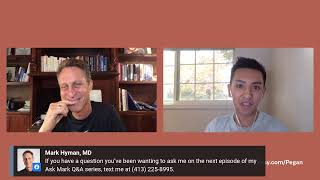
This is a YouTube video titled "Ask Mark Q&A" created on September 10, 2020. The content likely involves a question and answer session with a participant named Mark, but no transcript or dialogue is provided to confirm the presence of multiple speakers or the involvement of 'Ask AI Mark'.
Hey everybody, it's Dr. Mark Hyman. How you guys doing? I'm doing this brand new live Q&A show for my entire community. I'm really excited about it because people have so many questions and I just love answering the questions. People are so confused out there about what to eat, about lifestyle issues, about all sorts of things and we're gonna dive right into it today. If you want to ask a question, you can do it but this episode is called Ask Mark. And it's basically where I take questions from my text community and I invite those people to join me live and ask their question. We've got a bunch of live guests coming up. If you want to get your question in the future, all you have to do is text me at 413-225-8995 and use the hashtag AskMark. And my team might pick your question for the future. So I want to remind you that I can't give medical advice, but I can give big picture advice about how I would think about your health challenges. and before we jump in, I want to give a little shout out to a new project that I've been working on, and it's called the Pegan Shake. No surprise, because, you know, I love all things Pegan because I created that term to kind of blow up the diet Wars and get back to Common Sense and good science. Now, people always ask me, what's my favorite protein powder? And what's my favorite Shake mix? Well, I always have a hard time because most of them are full of sugar and flavorings and sugar alcohols and. carbs and all kinds of junk that I don't really like. And I like simple, I like real food, and I like real ingredients. And I've created my own, and it's a very powerful shake that is full of protein, fat, and fiber designed to balance your blood sugar, boost your metabolism, supercharge your mitochondria, feed your microbiome, reduce inflammation, and lots, lots more. So if you want to learn more about it, go to getpharmacy.com/pegan. That's G-E-T-F-A-R-M-A-C-Y dot com slash Pegan. and here's the exciting news. I'm giving everyone who asks a question today on this show a free Pegan Shake. All right, so let's jump in to our first guest. And our first guest is Izzy, and Izzy has a question. So Izzy, how are you? What's going on? And tell me where you are. Sure. Yeah. Hi, I'm Izzy, and I'm from the Bay Area in California. Oh, and I'm a huge fan of the Dark Horse Pharmacy. Thanks so much for having me on. My question for you is that my mom just got diagnosed with celiac disease and I was curious what your advice is for transitioning to a gluten-free diet. Great question. So, it's interesting that you said your mom got diagnosed with celiac disease. Now, celiac disease is genetic and your mom's, I'm sure, maybe in her 40s or 50s, Right. And, and so how does something that's genetic start when you're 50? Um, and I just want to sort of give a little background on this question because it's a really important question. Uh, and it's really two parts, like how do you get celiac disease? What is it? And what do you do when you get it? And how do you change your diet so you're fully healthy again? And how do you, how do you do that? That's essentially what you're asking. And, you know, 30 or 35% of the population has the gene for celiac disease, but only 1% or so get celiac. There's a whole whole new category that's been established and recognized by traditional medicine called non-celiac gluten sensitivity. So there are some level of antibodies, but it doesn't rise to the level of full-blown celiac, which is defined as certain blood tests that are above a certain level, and also, more importantly, an abnormal biopsy in your intestine where the lining is flattened and you're not absorbing things and you're not digesting things and you have all these digestive issues. But the truth is that many, many people who have celiac disease or gluten issues don't have an abnormal biopsy unless you really look on certain types of imaging. And they also may not even have digestive symptoms. So they might be showing up with an autoimmune disease or schizophrenia or depression or joint pain or headaches or migraines. I mean, they may not be actually a real classic presentation like we thought of when I trained in medical school, which was really diagnosed in little children who had distended bellies, who were malabsorbing their food, who were bloated and had skin issues and all sorts of malnutrition issues because they couldn't digest their food. That's just one extreme and it's actually not how most celiac disease shows up and often shows up later. So, the question is, why does it show up? Well, I think a couple of reasons. One is we have done so much damage to our diet and our gut through our gut-busting way of eating and our gut-busting medications and our gut-busting lifestyle. So what do I mean by that? Well, the increases in processed food and sugar and starch, the lack of fiber and all the additives in food have dramatically changed our gut health and our microbiome and has led to the growth of bad bugs that create inflammation and greatly leaky gut that then makes you more likely to get trouble with gluten if you have a susceptibility. The second thing is all these gut-busting drugs, antibiotics, steroids, hormones, Advil, acid blockers, among the worst. These are things that people take for heartburn, but it actually causes downstream problems in the gut. So you've got all these gut-busting drugs, then you have our lifestyle, chronic stress, lack of sleep, too much sugar, caffeine, alcohol, environmental toxins, all these things make us more likely to have gut issues and leaky gut, which is what essentially happens. so that's how he got here. And, and, you know, for you, you probably might have the gene for this. You probably have one copy of a gene or you might have gotten it, and you, you probably don't have any symptoms right now, but you could if you started to go down this path of not taking care of your gut and your microbiome. So it's really important whether you have it or you don't, that you really take care of your gut. And I really focus on that a lot in functional medicine. It's really the center of our, our healing. So with your mom, you know, what I see often with CEC patients, and I, did she just present with symptoms or what, what was the digestive issues or autoimmune? what happened? Yeah, she was having some digestive symptoms, like pretty excessive, like gas and bloating, and she wasn't really sure what the cause was. Yeah. So that's not an uncommon set of symptoms. People have irritable bowel or they have inflammatory bowel or they have, you know, other things that show up, but it's not always gut. So people don't have to have gut symptoms to have celiac. Just remember that. But what happens is, you know, your mom has, has caused damage to her gut. If she got full-blown celiac disease, she's really caused a lot of damage and having a malabsorption. What I find is that doctors will say, okay, go on a gluten free diet. But then they don't address how to heal the gut because what's happened is the whole gut lining has separated and all these bacterial toxins and food particles leak in. You often get additional food sensitivities, often dairy or other foods. Grains can often be an issue. It's very hard to digest for people, beans, for people who have a lot of gut issues and problems with that. And I find that what people need is a whole gut repair and rebuilding program. So on the dietary strategies, you know, I would really be careful with the gluten free food. I mean, an apple is gluten free, right? But gluten free bread, gluten free cake, gluten free cookies, gluten free ice cream, gluten free potato chips, it's all junk, right? Just 'cause it's, you know, gluten free doesn't mean it's healthy, right? It's still cake and cookies, even if it's gluten free. So I think people often will go, well, I mean, eat all this gluten free pasta and gluten free this and gluten free that, and it's probably bad news. egg is gluten free and avocado is gluten free. Almonds are gluten free. Chicken is gluten free. I stick with actual real food. I mean, you can have alternatives sometimes. You can have gluten free pizza crust if you want to make that sometimes. That's fine, but it shouldn't be like the staple of your diet is gluten free junk food. That's really important. And you just stick to whole real unprocessed foods. In the repair phase, I often put people on what I call the 10 day reset, which people can learn about by going to getpharmacy.com that's G-E-T-F-A-R-M-A-C-Y.com and essentially it's a in addition and in an elimination diet. I think it's also not only about what you exclude, but what you include in your diet. And for her, I'd really recommend trying this because it helps to remove all the potential triggers, gluten, dairy, often other grains and beans can be difficult in the early phase of gut healing and give yourself three months to really repair your gut. And then there's also other things that you can do like probiotics and extra fiber, and prebiotic foods, those things that just help her gut stay healthy. So that's really important because you can't just sort of go on this gluten-free junk food and think you're going to be okay or even go on a regular diet because it's often not enough. So you got to repair and the gut needs also zinc and glutamine and certain fatty acids like omega-3. So we need to take the right supplements. We need to take the right probiotics and prebiotics. We need to make sure the diet is right and give the gut time to heal and she will feel so much better afterwards. Great, that's so helpful. Thank you so much. Was that helpful? Okay, great. All right. Thank you. And the next question is, I think, coming from maybe Lisa or... Oh, Christine. Okay, great. Hi, Christine. How are you? I'm well, and you? Great to see you. Yeah, I'm very good. I just went for a beautiful walk. Unfortunately, I'm in Northern California right now, and it's like nuclear winter just hit. When we're recording this podcast, the entire sky is orange and you have to have your lights on in the daytime. It's like the nuclear apocalypse from the wildfires. No, it's terrible. It's terrible. I was on a Zoom and we had people from all over the country and one person is showing us outside their window 11 inches of snow. The other person is showing the fires and insane, but Zoom is an interesting Anyway, I wanted to thank you for having me. I wanted to ask you your thoughts on the best methods to address mold exposure and how to detox from, say, when you've been tested positive for the penicillin or the, I think it's called oxo-ochra toxins. Yes, yeah. Great question. So unfortunately, I'm an expert in mold. And I say unfortunately because I almost died from mold exposure about three years ago and I struggled it for a long time and finally sort of got myself better. I've been treating patients for years with it, but I was dumb enough to not figure out that my house had mold in it because it didn't really smell, so I didn't know. And I finally figured it out. And it's a really big problem, 50%. buildings are water damaged in some way, and which means they are at risk for mold. And some is bad, some is very bad. And, and there's a lot of genetic susceptibility variation in who responds badly to mold. So you can have two people walk into a moldy or musty house or room. One person immediately feels sick, and then the person's like, I don't know what you're talking about. I feel fine. So you're gonna have people, two people living in the same house, and one person's sick, and the other person's fine. And, like, they think you're crazy, and it's, it's unfortunate. And mold symptoms are, are really bizarre and often weird. You can fatigue and brain fog and muscle pain, joint eggs and autoimmune issues. And you get this chronic inflammatory state. You hear about the cytokine storm with COVID similar to that, but not as aggressive, but similar to that, often called chronic inflammatory response syndrome. And so it's really important if you suspect you have any weird or vague symptoms, and if you are living in a house that you suspect might have water damage, air conditioning, that you really have it properly evaluated. Because until you know what you're dealing with, you can't really fix it. So that means having a mold expert come in and do an assessment where they can do air samples and other cultures and various things to actually measure the amount of mold, what molds, and where they are in your home. And this has been so, so helpful to people who've actually found there's a problem. So I really, first you have to make sure you know what you're dealing with. Second is you have to get rid of it because if you are sick, from mold and you're still living in the house, you're not going to get better no matter what you do, right? So you have to identify the problem. You have to find the mold. You have to have a remediation expert come in and you have to clean it up. And sometimes insurance will pay, sometimes they won't. It's a very difficult, expensive process. I went through it in my own house. Had to literally gut everything, clear it out and start over. So that's the first thing. The second thing is identify if you have a problem with mold. and there are a number of tests that we use, they're all imperfect. They look at, there you go, the mycotoxin testing, right? Mycotoxin testing, urine mycotoxin. So we can look at one, your body's response to potential inflammatory triggers, and there's all sorts of blood tests we use like C4A, TGF beta 1, MSH, and so on, MMP9. These are just medical tests that we do. to identify the level of inflammation related to some insult. It could be many things, but it's often mold. Second is you can look at mold antibodies in your blood, both IgE and IgG, and see if you've been exposed and how your immune system's reacting. And third, and often the most helpful, is urine mycotoxin testing, which is looking at these low molecular weight toxins that are produced by the molds that we inhale, absorb, and that get in our bodies and just recirculate all day long. and you can't really excrete them very well. And these, these, not the mold itself, but the mycotoxins actually may be a problem long after you even removed yourself from a mold exposed environment. So it's really important to remove yourself from the environment. But second is to identify your levels of toxins and which toxins you have. And then you can design a strategy to remove those toxins from your body. And you often need what we call binders, because what happens is they get excreted through your liver, they get down into your poop and your bile, but then you just reabsorb them and they go round and round and round. So by taking things that bind it up like a sponge in the gut, then it actually helps you poop it out so you don't recirculate and get sick. And so you mentioned ochratoxin, that's one of the common toxins comes from Aspergillus and others. I had very, very high levels of this myself. And so we use various binders like clay and chlorella and charcoal. We often will use things like chloestyramine, which is a drug or WelChol and other drug, which are cholesterol drugs that bind up bile, which is how you excrete your toxins and helps you poop it out. There are other treatments we'll often use intravenously that I've used in the past and on my patients at the Ultra Wellness Center, glutathione, phosphatidylcholine, even things like intravenous ozone can be extremely helpful in helping your body detoxify, reduce the inflammation, and that really, really helped me get better. So I think there's a lot Various options out there, depending on what's going on, level of sickness. But you need to design a strategy to support your detox systems to reduce the inflammation, to make sure you're, you're really strategically getting rid of the, the toxins from your body over time. And it can take time, but it, it, you can get better and I'm better and I'm better than ever. So I, I think as long as you understand how to work with someone who's an expert, how to identify these issues and people, people can get better from mold. There's a lot of great mold Summits online. There's a mold documentaries, and it's called moldy by Dave Asbury. I think I was in it. There's a lot of things that you can do to learn more about this problem. But it is a big problem. It's widespread, it's underdiagnosed, and often if you're feeling like crap and you don't know why and you can't figure it out, it's something that's usually high on the list to check for. Thank you. Yeah, the documentary is what led me to you. So, thank you. Good, okay. All right. Thank you. Thank you so much, Christine. Great to talk to you. I think the next question might be from Alain? Yes, Mark. Hi. Hi. How do you say your name? Yes, so it's actually Alain, I'm actually Alain, the French first name, but it's Alain. Oh, great, great. Well, good. Well, hopefully we're aligned. What's your question, Alain? Well, I'm a conventional medicine provider here in central Florida. I'm a neurologist by trade for 20 years. And the problem having here locally is finding a good functional medicine provider to complement conventional medicine patients in my practice. So I've been finding that poor socio-economic status in my practice population precludes the evaluation by a functional medicine provider. So I'm trying to figure out how I may help my poor disabled patients who cannot afford a lot of the testing and supplements desired by functional medicine. It's a big problem trying to help these folks to help themselves. That's a great question. So, you know, we know that 80% of health is not determined in the clinic, it's determined where people live, work, eat, play, pray. Right. It's, it's, it's in all the social determinants of health that we call. And, and unfortunately, these things are not often solved easily in the doctor's office. But I really, really, really do think that, that functional medicine can play a significant role in addressing Health disparities, addressing the chronic disease burden in these underserved populations and, and do it not in the traditional way we do it with you know, high intensity testing or supplementation, those are really secondary. And I think so much, so much of the functional medicine paradigm is really based on what we call the foundation of the matrix, right? So the matrix is essentially the map of how your body works. And there's genetics and predisposing factors. There's the fundamental modifiable lifestyle factors, which are the central things that drive most of health. And then, of course, there's all the the biological systems like your detox system and your hormones and your gut and so forth. The truth is a lot of the systems can be managed through these modifiable lifestyle factors, which is diet, exercise, sleep, stress reduction, relationships, connection, community. These are all things that people can do that don't cost a lot of money that are not difficult. The problem is they don't know what to do, they don't know how to do it, and they don't have any support to do it. so what we've created a Cleveland Clinic, and it really grew out of my work at Saddleback Church, where we worked with an entire church to help them get healthy. And 15, 000 people signed up for a program called the Daniel plan, which is a faith-based wellness program designed to empower people in small groups to help each other get well. And it was using the functional medicine Intel inside to drive the biology change and the small group model to drive the behavior change, which allowed people to support each other. It's sort of like a support group like AA. or any of those other things that people like. And so we've modeled that in a way that was modeled after the community support health workers that Paul Farmer used in Haiti to help TB and AIDS deal with infectious disease. But for chronic disease, it works equally as well. And so created a program at Cleveland Clinic called Functioning for Life, which is a shared medical appointment. It's billable through insurance if they have fee for service. If they're in a capitated or basically a, a value-based model, which means that you're just paid for keeping people well, it is very effective. And it can be done at low cost, at scale, it can be done virtually. And it's really a beautiful way to get people together. And we've done this in our underserved communities in Cleveland. We've done this in underserved churches, in underserved community centers with minority populations, and have been extremely effective by helping them understand you know, how to take care of each other and themselves through these fundamental lifestyle factors. And it's extremely effective and it works even better than one-on-one visits. And it's essential model, I think, that's going to be needed to change health care in America and can be done at scale. And the beautiful thing is that is it's available to anybody pretty easily. If people like you, for example, want to do this, there's ways to get access and to be able to use some of these approaches. So I think this is a really fundamental idea is kind of decentralizing and democratizing healthcare. I mean, for example, in the churches, you know, we have something called the Daniel Plan, which is a functional medicine based lifestyle program that's basically online, pretty, it's almost free. It's like very cheap for the kit. And you can use it in your church and you can put as many groups through it as you want. And you don't even need a doctor or provider. So a lot of these things don't even need high level providers. But these shared medical appointments are really a wonderful way to train people in these changes and can have tremendous impact and save a lot of money, be more cost effective and more effective. Thank you. Of course. And then of course, supplements, a lot of the testing can be done through regular labs and insurance, a lot of nutrient testing, hormone testing, even gut testing. So there's a lot of things, heavy metals. There's a lot of things you can look at just through conventional labs that will be covered. And second, a lot of a very good history and assessment can tell you really where to go and what's going on with the patient. And then in terms of supplementation, there are a lot of supplements that are prescription. You can get fish oil, our prescription, vitamin D by prescription, B vitamins by prescription. So there's a lot of things that you can actually do for these patients that will be covered by their insurance. So I encourage you to sort of explore that and sort of build a repertoire of tests and supplements that you can use that are covered by their insurance. Great. Thank you so much, Mark. Hopefully that was helpful. It was. Thank you. All right, next question. We have Gianna. How are you? I am doing well. How are you? Good. Where are you? It looks so nice. I have the beautiful downtown skyline right behind me on the rooftop of my apartment. Where? Pittsburgh. Oh, Pittsburgh. Nice. Great. Great. It's beautiful. Well, there's no clear sky here in California today. sunny California skies are just gray. Well, yeah, we don't get this too often, so I'm taking advantage. Enjoy. So what's your question, Jana? Yes. So my question is related to digestion. I wanted to know your best holistic remedies for bloating and indigestion. And I have been tested for food sensitivities and nothing came back positive. I am not allergic to any specific foods like gluten, dairy. I've experimented with it all. So I was just wondering what kind of suggestions you have. I've tried gluten free, dairy free, food combining, and I haven't quite figured out vegetarian vegan. I haven't quite figured out what was the issue and how to. Yeah, so, yeah, so. We have a saying in functional medicine, if you're standing on a tack, it takes a lot of aspirin to make it feel better, which means find the cause. If you're standing on two tacks, taking one of them out won't make you 50% better. For example, if you take out gluten, but gluten's not the issue or it's only half the issue, you won't feel better. You have to figure out what's really going on. There's a lot of work we've done in functional medicine on the gut. It's really the central foundation of how we help people through all sorts of issues, including obviously gut issues. and in fact, we've done a number of podcasts on the doctor's pharmacy with some of our clinical team from the Ultra Wellness Center talking about these gut issues, everything from irritable bowel to SIBO, reflux and so forth. So if you have bloating after you eat, I call it a food baby where you know you're eating, you kind of eat something and just get really distended and uncomfortable afterwards. Or you have gas or you have loose stools or you have undigested food in your stool or weird smelling stools or regular bowels or or constipated, it's all a sign that something is rotten in Denmark. There's something awry down there that is causing a lot of challenges to the microbiome. And so what you're describing often is a problem we call small intestinal bacterial overgrowth. And what does that mean? Well, you have about 12 feet of large intestine where most of your bacteria are and your poop is. And then there's your small intestine, which is about 22 feet. and it's a tube that goes basically from your stomach all the way to your large intestine. And what happens is this bacteria can migrate up into from the large intestine, the small intestine, and they should grow there and they're not supposed to be there. So when you eat something, particularly starchy foods, if you're eating beans and grains, for example, if you're a vegan or you're trying to eat raw food, whatever, your body can't handle it because there's bacteria in there. that then eat that stuff for lunch, basically. And that causes fermentation, just like fermentation if you brew beer or if you, for example, leave your apple cider in the fridge too long and ferments and then the container blows up. You've all seen that, right? That's really what's going on in your stomach. So, you get this fermentation process and there's even a syndrome that's called auto-brewery syndrome. when it gets really bad, you literally can get drunk from the byproducts of the fermentation in your gut of the starch. You literally create a little brewery in there and that can cause all these symptoms, not just digestive symptoms. So it's really important to identify what the issues are. So with gut issues, I often really recommend to what I do called the weeding, seeding, and feeding program. And I've written a lot about this. you can Google various blogs I've written about irritable bowel syndrome and how to figure it out. But the, the idea is you weed out the bad bugs. So it might be taking herbs, for example. It might be taking herbs that kill off the bad bugs. Or maybe you, maybe you've been on the pill, or maybe you have antibiotics you've taken, or maybe you lost sugar or drink a lot and you get yeast issues. You need to address the yeast, but there can be CIFO and CBO. CIFO is small intestinal fungal overgrowth and small intestine bacterial growth, they often go together. So I've been put people on a comprehensive plan to get rid of all these bugs through either herbs that can kill them off or even sometimes medication. And there's a number of medication we use. One of them is called rifaximin or Xifaxan along with an antifungal such as nystatin or Diflucan that literally kind of weaves out all these bugs that shouldn't be there. And then you have to find out why you're, you're having this problem. It might be because you don't take enough magnesium or because you're stressed or because whatever is going on, you can need to fix the underlying issue for the bacterial overgrowth. But you clear out the bad bugs and then you seed them with good bugs. So you put in probiotics. But if you take probiotics too early, you'll get worse, right? And then prebiotics to help feed the good guys. Now the pre and probiotics you can have as foods. For example, prebiotic foods are asparagus and artichokes and seaweed and Jerusalem artichokes and jicama. There's all kinds of foods you can eat that have plantains that have these wonderful starches that the bacteria love and feed them. And you take probiotic foods like sauerkraut and kimchi and miso and tempeh and natto and all these wonderful traditional foods that are fermented, but you can also take probiotics, even prebiotic fibers. And then you need to feed the gut, which is to give the gut lining and the things that it needs to heal. So, the incredible amount of the like healing the gut needs to be supported through things like zinc and glutamine and fish oil and vitamin A and curcumin and all kinds of things that the gut likes to heal. So it's really the weeding, seeding and feeding program. But first you have to find out what's going on. You maybe have a parasite. You might have, for example, a common one called Blastocystis that is really not terrible but causes a lot of irritable bowel and bloating and discomfort. So you might need a special stool test to see a functional medicine doctor. But the first thing you can do is, for example, I've called the, I've got something online, you can go look at it. It's called the food, a food irritable bowel solution or just Google Dr. Hyman irritable bowel solution. I talk about what the herbs and supplements you can take, the dietary things you can do, and really how to reset it. And that works nine times out of 10 without even having to see the doctor. And if you don't get better, you need to go to go see somebody. Okay. Thank you. Yeah. okay. Thank you so much. Hey. Hi. I'm not in as pretty as a place as Gianna, but I'm thrilled to be here, so thank you so much. Of course. Thanks, Autumn. How are you? Good. How are you? Good. What's your question? Okay, so I just wanted to know the difference in how our bodies process the different forms of sugar. So I was just really thinking about more natural sugars from fruit and. like honey compared to more artificial sugars and carbs? Okay, great. All right, great question. So this is, you know, this is an area I know a fair bit about, written like, I don't know, half a dozen books on the subject. You know, sugars is, I would say, you know, most sugar should be thought of as the same thing, right? It's, it's, it's, there are differences, but, you know, sugar is sugar, sugar for the most part. with some, some differences that I'm going to go through with you. And, and that if you're thinking about consuming sweets or sugar, understand that this is a drug, that you should use it as you use any drug in the right way. Like, if you drink alcohol, have a glass of wine. Don't have two bottles of wine. Right. If you have tequila, have a shot, maybe two, not a bottle of tequila. In this country, we are, we are consuming massive amounts of sugar and starch, right? 152 pounds of sugar per person per year, 133 pounds of flour, which is actually worse for your metabolism than table sugar, right? When you think about it. So, I'm gonna have a bagel. You might as well have a bowl of sugar. It's the same thing in your body when you eat it. There's no, this whole idea of complex carbs and simple carbs is an outdated idea that is completely irrelevant right now. Simple carbs, a sugar, complex carbs is bread. But actually the bread is worse than the sugar. It really is about the glycemic load of the food. So with that said, you know, think of all sugar as a recreational drug. Use it in moderation, use it sparingly, use it intentionally, but don't have it in everything from your cereal to your salad dressing to your pizza sauce. You know, it's just, it's in everything. Now with that said, let's sort of break it down. You've got sugar, table sugar, maple syrup, honey, you've got all kinds of other sweeteners, coconut sugar, you've got sort of natural sweeteners that are non-caloric like monk fruit, stevia, you've got the sugar alcohols, all the erythritol, maltitol, sorbitol, all these sugar alcohols, and you've got all the artificial sweeteners, things like aspartame and sucralose, Splenda, Nutrasweet, and all these things. So, you've got all these different sweeteners. And the reason is we're all addicted to sugar. We all love sugar. We're programmed to love sugar. I love sugar. Everybody loves sugar. But it's, it's, it's, it's designed to hijack your brain chemistry. And the amount we're having is just so much compared to what we used to have. So let's just break it down a little bit. So I think in terms of, you know, when you're having sugar, you should just have, like, sugar, right? You want table sugar. Fine. You want have brown sugar, whatever. you know, coconut sugar probably is a little better, less low glycemic load. That's probably the best, mostly what I use if I want to see some honey, maple syrup again, recreationally in small doses. I would stick with those and stay away from the rest with one exception or maybe two. So monk fruit sweeteners are actually pretty good and they're low, no calorie, and they don't really seem to cause a big issue with metabolism or cravings, but I think, you know, moderation is the key. Stevia, if it's whole food Stevia plant, not an extract that's really made by Coke or Pepsi called Truvia or PureVia, these are chemical projects that are extracting components that may be them the beneficial components of Stevia and removing them. So you really don't want that. So don't get fooled by all these Stevia spin-offs. Sugar alcohols, just I would avoid completely. They cause a lot of digestive issues. So, you know, our previous, Jenna, you know, guest had a conversation about your well bowel, and I didn't mention to her, but sugar alcohols can cause a lot of problems. So she may be chewing on gum all day that's got sorbitol. It's causing her to a bowel. Could be that simple. Right. Then let's sort of get to your question about these other artificial sweeteners like aspartame or interesting. These are terrible. And we know that, that they are correlated with increased obesity, diabetes, and they also damage your microbiome. They're a thousand times sweeter than regular sugar. They hijack your brain chemistry. They keep you coming back for more. They're just bad. If you have that on your tongue and you eat a blueberry, it'll taste like cardboard. If you don't have any sweeteners for a week, eat a blueberry. It tastes like candy. So it's really, really hijacking your, your taste buds. Lastly, let's talk about fructose. High fructose corn syrup I haven't mentioned yet. And I've written a blog called the five ways high fructose corn syrup will kill you. I'm gonna read that, but it's It's, you know, high fructose corn syrup essentially is a, a prod, a product made from corn in the lab where they, separate the glucose from the fructose cuz sugar is sucrose, which is glucose and, fructose together. And fructose is a fruit sweetener. Now fructose, when you're eating it in a fruit is fine cuz you've got fiber and vitamin minerals and so forth. if you're eating a ton of fruit, it might not be, but if you're diabetic, it might not be. But for most people, it's fine. If you take the juice out of the fruit, that's just like having, you know, candy and maybe worse for you even than having sugar, regular sugar, because free fructose is really bad for you. Free fructose causes fatty liver, damages your gut. It causes leaky gut, which makes you more inflamed everywhere and destroys your intestinal lining, which is not good. It increases the risk of diabetes, the risk of obesity, the risk of getting a fatty liver. And it's really clearly associated with that. Now, fructose within fruit doesn't necessarily do that, but if it's free fructose in high fructose corn syrup, because normally glucose and fructose are bound together in regular table sugar, they're stuck together with a bond. But in, in like high fructose corn syrup, they're separate and there's more fructose than there is glucose. Mm-. And there may be it says 55 or 75 up to 75% fructose. And that's why we're seeing this pandemic of diabetes and obesity and fatty liver affects 90 million people. So I would just never have anything with high fructose corn syrup. One, because it's not good for you. Two, because it, it for sure the product is poor quality product. It's the lowest cheapest form of sugar and it's a sign of an industrial science project. So if you see high fructose corn syrup, put it back. If you see hydrogenated fats, put it back. I mean, that's two things you do in your life that you never do that again. You will dramatically change your life because all the crap has that stuff in it. So. So the fructose is a real problem. And I think people have to be really careful with this high fructose corn syrup and with free fructose. And people like, I'm gonna have agave, which is great, but it's just free fructose. So you really have to be careful with all these kind of Alternatives that people are pushing because they all have. potential downsides and just think of them more less the same. So, what I would say bottom line, if you want to sugar, have a little maple syrup, little honey, a little bit of maybe coconut sugar, and then of course monk fruit sweetener is great and whole plant Stevia. Okay, awesome. Thank you so much for all of that. Sure. Okay, thanks Autumn. Great to talk to you. You too. Bye. And we have Elizabeth. Hi Elizabeth, how are you? I'm good. How are you doing? Good. I'm from Chicago. And my question to you is on caffeine. So how good or bad is caffeine for you? And is there a limit that you should stay within? I know caffeine berries if you go to Starbucks or Dunkin' Donuts or other types of restaurants. So what is really a good limit or a bad limit? Caffeine's a drug. right. It's a drug like every other drug. And, you know, they're all, they're all, you know, Andy Wild wrote a book called from chocolate to morphine about psychoactive substances. And, you know, chocolate is a drug. And so we have to be really aware, you know, if you're drinking 16 cups of coffee a day, it's probably not good for you. You know, I, I, I worked with this guy who was a famous, very famous head of a very big you know, newspaper that was, you know, like 90 million homes or something like that. And he just was always tired and exhausted. And he was drinking like 12 cups of coffee and having 12 Diet Cokes a day and was falling asleep at his desk. And, like, his body was just really overwhelmed and exhausted. But caffeine is. Is different for different people. Now, some people have the gene that makes you metabolize it very quickly. and some have the gene that makes you metabolize it very slowly. So there are those people who can have a cup of coffee in the morning and they're anxious and sweaty and they're palpitating all day long. And there's other people who can have a triple espresso and go right to sleep. And so there's a genetic variation how we tolerate caffeine. So I think for most people, you know, having a cup or two of coffee in the morning is fine. Having coffee later in the day will interrupt your sleep. If you do have sleep problems, it's best to avoid caffeine. entirely. If you look at, you know, what kinds of coffee should you be drinking? You know, there are ones that are better and worse than others. You know, there's mold in coffee sometimes, so getting fresh roasted or small batch coffee is very good. Having, you know, organic coffee is important. Having coffee that without additives, contaminant, contaminants, pesticides, important. You know, coffee is the largest source of antioxidants in the American diet. which is not a good thing. It just means that it, you know, there are a lot of good things in coffee, but. But actually, our American diet is so bad that we all drink coffee as the main source of our antioxidants. So I think. I think you have to just know your own body and your own system and. And be tolerated or not. But if you have any chronic issues around anxiety, insomnia, palpitations, it may be worth our sleep issues, really. I would. I probably take a holiday and see how you do and then, you know, try some. But I think for most people, a cup or two of coffee in the morning is fine. Okay. Thanks. Yeah. About two years ago, I gave up caffeine from coffee. So now I drink primarily decaf coffee, but occasionally I'll have a regular coffee. And it's. It hits me pretty hard. Yeah. For what it is. I was just curious. Yeah. It depends on how it's prepared and what you're doing. So we can have a lower strength coffees or. lighter roast coffee. So. Hi. Hi, Lisa. How are you? Awesome. I am so thankful to be able to speak with you today. I live in Cleveland. Oh, great. Dr. Mark Hyman runs functional medicine. Just sharing. Sure. Everybody knows a Cleveland Clinic. Yeah. Cleveland Clinic. Thank you. Yep. Of course. So speaking of the American diet and the standard American diet, my question is when you're not eating properly and when I say that, I mean like the standard American diet, coffee for breakfast, how do you jumpstart your body to get ready for pregnancy? You just brought up something really important, Lisa, which is getting ready for pregnancy. and you should think of it like getting your garden ready to plant a seed. If your soil is depleted, if there are no nutrients in it, if there's no organic matter, the plant's not going to be very healthy. And I think we have to understand that the gestation period is not just about growing a baby. It's how do you grow a healthy baby? And we know from study after study that what happens in the womb plays a huge role in a child's long-term health, risks of disease, and all sorts of issues. So, one, while you're pregnant, it's important to eat and be healthy. Two, beforehand, you want to make sure you top yourself up. So, I help people focus on healthy eating at all stages of life, but it's not different, right? It's not like there's one diet that's great for Alzheimer's, another diet that's great for pregnancy, another diet that's great for heart disease, another diet that's great for cancer. There's a way of eating that helps restore your body's health and creates a healthy garden for anything to happen, for you to be healthy, for disease not to be able to grow. I mean, when you look at really complex regenerative and biodynamic farms, there are very few pests, there's very few weeds, there's very few problems because the environment is so healthy that these weeds and pests can't take hold. And so this really what we want to do as you're getting ready for pregnancy, you want to create a really healthy environment. so what I highly recommend for people is to eat a whole foods diet, get rid of all the crap, get rid of the sugar, control your blood sugar. Really important before you get pregnant, because imbalances in your blood sugar affect the baby and affect them long term in terms of the risk of diabetes and obesity. So get yourself together before you don't have to gain a ton of weight. You shouldn't eat whatever you want. You shouldn't pig out on ice cream. I mean, you really need to get yourself prepared by eating a whole foods plant rich diet with lots of omega-3 fats, lots of fiber, get your gut healthy. making sure your nutrient levels are topped up. Really important. Blood test with a doctor for nutrient levels, what are you looking for? Well, I think most important is vitamin D. Vitamin D is really important. So getting your vitamin D levels between, you know, 45 and 65 probably, or 70, your, your homocysteine, which is an important test to look at folate status, which is really important for babies. So making sure you're getting the B vitamins, getting also the right levels of omega-3 fats critical for brain development. There's a test called Omega Check that you can do through a regular lab. These are really, really important. You can look a little deeper if you want at your zinc status, just a plasma zinc level. These are some of the fundamental things, magnesium levels, red cell magnesium. These are tests that you can order through a regular conventional lab. But I would say it's just important to take a good basic multi, even a good prenatal. but not one of those industrial pharmaceutical ones. But yeah, there are a lot of companies out there that I use. I use peer encapsulations, I use Thorn, I use Metagenics, I use Designs for Health, Zymogen. These are all companies that, that have created very clean products without contaminants or additives. They're usually used through professionals. I don't have any direct relations with any of them, but I, I do recommend them in my practice. And I think that it's really, really important for you to get a high quality product. So good prenatal. a good vitamin D, a good fish oil, that usually covers the bases, maybe a little extra magnesium. And basically you're, you're nutrifying the soil before you get pregnant so that when you, and especially because you don't even know you're pregnant for the first bit. And that first bit matters, right? That first developmental phase of the first 12 weeks or six weeks even, when you don't even know you're pregnant, are really important. So it's really important not to just start getting healthy once you figure out you're pregnant, but figure out how to get healthy before you're pregnant. It's game time, right? Game time. You're creating a healthy human, so you want to do that thoughtfully and carefully. Thank you so much. We appreciate it. Of course. We have one more question. Hi. Hi, how are you? I'm good. Thank you for being here, Dr. Hyman. Of course. What's your question? Yeah, so I am a registered nurse. I love your Instagram, everything about health. I was wondering, how do you start getting friends and family eating healthy into functional medicine? Because I'm very much wellness, but how do you get other people on board to kind of like shift their lifestyles without getting those like odd stares or, you know, getting judged? I would say show not tell. Show not tell. So, you know, I love to cook for people. I invite people over my house. I make them the most amazing delicious gourmet meals that they don't even realize are healthy because they're just so yummy. And I do it easily, simply. And I think it's important to understand that, you know, if you are an example for people, if you show how you can be healthy and what you're doing and share it with them, not beat them over the head with it, but inspire them and say, hey, how did you get to that? Or what did you do? You should try this if you want. Give them little, little crumbs that they can follow. But, you know, I just, I went to, you know, as part of this movie fed up, I've told the story before, but I went to this small town in South Carolina, easily South Carolina, one of the worst food deserts in America. I worked with a family of five on food stamps and disability who are very severely overweight. The father was 42 already had kidney failure from diabetes on dialysis. There was very, very overweight. The son was 16, was almost diabetic, very overweight. And they struggled on food stamps and disability. And, you know, they were living in, in an environment where they really never eat a vegetable. I mean, there was nothing alive in their refrigerator, period. It was all boxed can package, frozen, full of junk chemicals, added sugar, processed ingredients. And they didn't really know any different. And so I said, well, let me not give you a lecture on what to eat or give you a you know, instructions. But let's go get some real food and let's make a meal together. So we got in their kitchen, we pulled out, you know, there was no knives or cutting boards even. And I just said, let's make some dinner. So we made, you know, turkey chili from scratch, a simple salad, all on vinegar, some, you know, simple carrots, cucumbers, tomatoes, not expensive. We made some roasted sweet potatoes. And what was amazing is that is that they loved the food. It was so delicious. It was so yummy. And they were like, wow, this is really good. I was skeptical. I didn't think I was gonna like this. Oh, there's vegetables in here. Really? Like, you know, even the little kid who'd never eaten an onion or had a vegetable was like, is there a food vegetables in this? Like, and I, like, there's an onion, but it's like a candy onion. It's sweet. It's like, you know, he has a chili, and. And it was just a very inspiring thing for them, and they were able to take that on just from that one meal. and then they, they decided to, I gave them a cookbook. I gave them a guide on how to eat well for less. And I share with them, and they were able to lose 200 pounds as a family in the first year. The son gained back going back to work at Bojangles, but then finally figured it out and lost 138 pounds and had asked me for a letter of recommendation for medical school. He got into medical school, and his family, nobody in his family ever gone to college unless medical school, so. I think it's a very inspiring story about what can happen if you show, not tell. That's very inspiring and I'll have to start cooking for my friends and family. That's a great idea. Yeah, just make it fun. Well, thank you so much and thank you everyone for joining our show. That's our show for today. If you want to ask me a question in the future, you can text me at 413-225-8- with the hashtag Ask Mark and my team might pick your question for one of our future calls. And if you want to learn more about the Pegan Shake, visit getpharmacy.com/Pegan. That's G-E-T-F-A-R-M-A-C-Y.com/Pegan. And it includes the right combination of protein, fat, and fiber to help you supercharge your day and create well-being and health for all of you. I think you're really going to love it. and I'd love you to try it. So thanks for joining us and we'll see you next time on the Doctor's Pharmacy. And if you share your question with us, we might pick you to ask a question live. So we'll see you next time.
More from AI




This Is Why 99% of Skin Conditions Don't Heal — And What Dermatologists Won't Tell You






Why you need to start strength training today #strengthtraining #healthyaging #fitness
