Big Pharma's Trillion Dollar Deception on Mental Health | Joanna Moncrief
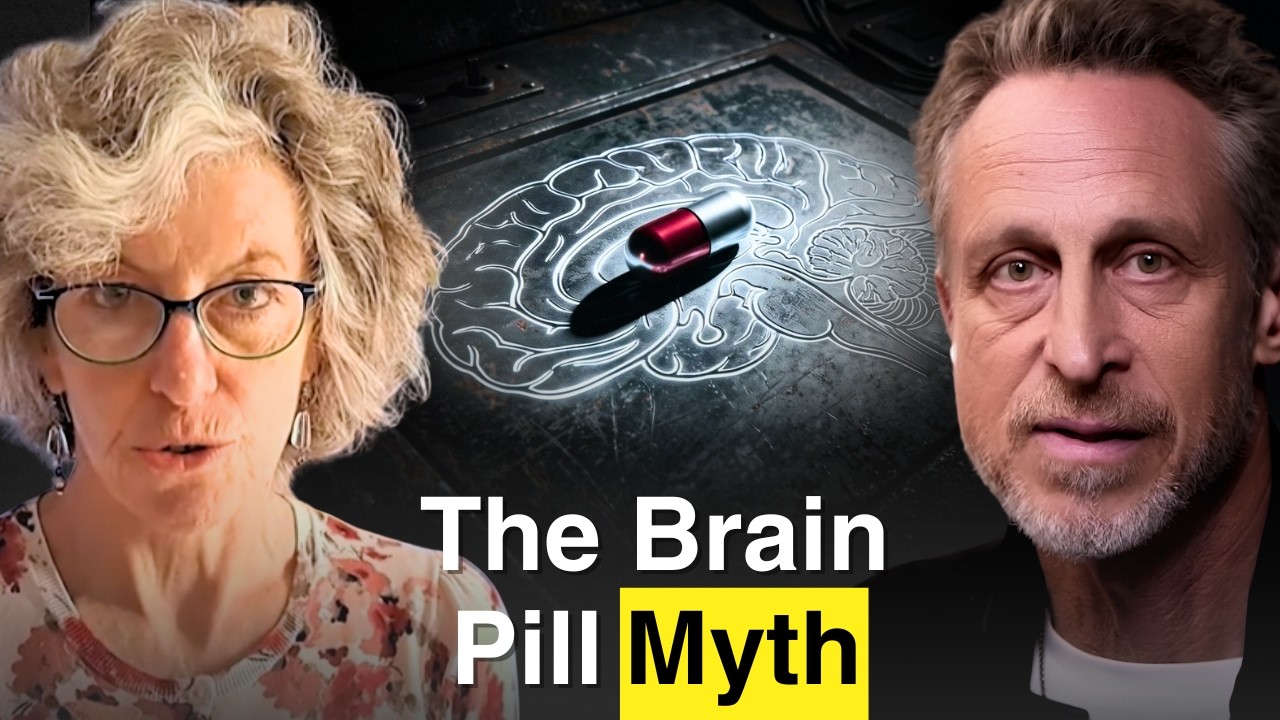
Psychiatrist Joanna Moncrieff challenges the chemical imbalance theory behind antidepressants. Her 2022 review found no consistent link between serotonin levels and depression, and she argues drug-placebo differences in trials are inflated by poor blinding. She advocates moving toward individualized care through nutrition, exercise, and stress management instead of one-size-fits-all prescribing.
Chapters
What I object to most about telling people that they've got a chemical imbalance is that that is a really depressing message. That's telling people there's something wrong with your brain, there's nothing you can do about it, you've got to rely on, you know, someone giving you a drug. Just correcting that mistake and informing people that there isn't something wrong with her brains and that they do have the capacity to improve, to recover, to change. Is, is actually a positive and a hopeful message.
Before we begin, I'd like to note that today's conversation explores one perspective of an area of medicine that continues to be actively debated. And while we discuss emerging evidence and critiques of current psychiatric practice, treatment decisions, especially involving antidepressants or other prescription medications, should always be made in consultation with your healthcare provider. The views expressed by my guest are her own and reflect her interpretation of the available evidence. My goal in hosting conversations like this is to explore different perspectives, to examine the to encourage thoughtful discussion, not to provide individualized medical advice. So if you're currently taking medication, please don't stop or change your treatment based on this conversation alone. Instead, use this episode as a starting point for an informed conversation with your healthcare team. My hope is that these discussions encourage curiosity, critical thinking, and shared decision-making between patients and their clinicians. Well, Joanna, it's great to have you on the podcast. Thanks for joining us today.
Thanks for inviting me, Mark. Really excited to talk to you.
I'm excited to talk to you because I think our intellectual history history is very similar. We were just chatting before the podcast and a lot of the seminal books in psychiatry we both read and they were really around challenging the orthodoxy and our way of thinking about mental illness and how we approach it. And I think hopefully this conversation will sort of help us understand some of the challenges we're facing around our framing of mental illness, our understanding of sort of some of the myths out there that are propagated that I think undermine people's public health and mental health. The title of your book is really, really provocative, Chemically Imbalanced: The Making The Making and Unmaking of the Serotonin Myth, which is going to probably strike people like, wait a minute, I thought depression was about a serotonin deficiency and Prozac was about actually helping fix that. And my joke is that depression is not a Prozac deficiency, right? And so I think your, your central argument is really this whole chemical imbalance theory is, it doesn't actually hold up when you look at it objectively, scientifically, and you're a research scientist and you look at these issues objectively. You look at them dispassionately and you're not sort of ideologically driven. You're just driven by the science. And I think I find that very refreshing. And also, this is a big problem because when we look at the antidepressants as a class of drugs and depression is probably the most prevalent mental illness, it's $20 billion a year globally that's spent on this. And your thesis is essentially that they don't really work. And in a few cases, in some cases they can be helpful, but that maybe it's mostly driven by placebo. I kind of want to dive into this conversation with you because we really are at a crisis. I think we're seeing more and more mental illness. We're seeing less effective approaches to it. And, you know, we keep trying to apply, you know, like we say, if all you have is a hammer, everything looks like a nail. And we're, you know, we think someone's depressed, everybody needs an SSRI or antidepressant. But you actually have sort of looked at this broken paradigm very carefully and sort of have unmasked this myth of quote, chemical imbalance as a root cause of mental illness and the serotonin myth. And you did a 2022 review, landmark review that looked at all the data and you found that there was no consistent evidence that depression is caused by low serotonin. Like we now can study this. There's ways of objectively scientifically measuring this. So it, you know, If there's no evidence that this is true, how did this idea get established in our psyche?
I did the research because I was aware that the majority of people thought that the link between serotonin and depression was an established fact. And yet I knew that probably the majority of psychiatrists and doctors knew that actually it was a theory. And that there was maybe a bit of evidence for it, but probably a bit of contradictory evidence too. And in fact, there'd been people saying that the theory of that depression is caused by low serotonin wasn't really supported by evidence for quite a few years. There was a paper published in 2005 suggesting that, but there was nowhere that you could really point to, to say, oh, you know, there's an overview of the evidence and it shows that really it doesn't stack up. So that's why we, you know, that's why we did that review of the research on serotonin and depression that you mentioned that was published in 2022. So where does this idea come from? Its origins are in the 1960s. It was first proposed by psychiatrists and people doing research on drugs that they were proposing might be antidepressants back then, um, that depression might be caused by a lack of noradrenaline or serotonin. Serotonin and noradrenaline are both chemicals that are found in the brain and transmit nervous impulses between nerve cells. They're what we call neurotransmitters. So it was proposed back then there might be an abnormality of one of those chemicals. That might be involved in depression. But it wasn't sort of widely popularized. It was, you know, it was a theory that was circulating within psychiatry and within, you know, academic research circles. There was a lot of research done to look into it in the 1970s sponsored by the US National Institute for Mental Health. And that didn't report any findings, and I would assume therefore didn't find evidence of any abnormalities. So it, so it was sort of, you know, going into decline. The idea was going into decline in the 1980s. And then the pharmaceutical industry recruited the idea to market their new range of drugs, the SSRI antidepressants, which they brought out at the end of the 1980s. Prozac was the first one that you mentioned earlier, and then there were a range of as others that were brought in in the 1990s. And the industry wanted to persuade people that these drugs were different from the old benzodiazepines. They weren't just numbing you or tranquilizing you. They were doing something really important. They were targeting that you had an abnormality in your brain and they were going to target that and put it right.
And that benzodiazepine is like a Valium, and that was a big drug in the '60s that was used to, for almost every housewife in America as a way of just keeping them calm and subdued and sedated. But that's that big class of drugs. So that was the first psychiatric drug really.
Yeah, yeah. And they were enormously popular, very widely prescribed, but they'd got a very bad reputation by the mid-1980s because it became clear that they were highly dependence-inducing substances. So the pharmaceutical industry wanted to put clear water between the benzodiazepines and their new drugs. And so they came up with this idea to persuade people they've got this chemical imbalance and they need to take the drug. To rectify this. They need to take it in a medical sense to put something right in their biology, in their brain biology. So that's where it came from. And, you know, they just put so much money into marketing these drugs. That message was said again and again and again in advertisements, on online sites. It was supported by medical institutions who also told people that depression was caused by a chemical imbalance. And there was never really any good strong evidence to support it. And yet it caught on because it was just so widely disseminated.
It's true.
And I think when you're a busy doctor and these drug reps come in and I remember this when I was in practice early on, they'd come in and they'd have their scientific papers and they'd have all their slides and their graphics and their impressive data. And you don't always have time to read all the literature as a doctor. You're sort going, okay, this makes sense. My patients are suffering. This sounds like a good idea. But it turned out there was just very little evidence that it actually worked. And when you look at the studies, they kind of are rigged. I would say rigged in many ways, the way they design them, the way they do them, you know, the way they try to, you know, control the outcomes and write them up. And, you know, when I started looking into this, when I wrote my book, The Ultra Mind Solution, in the mid-2000s, I was shocked to find that there was very little evidence that these actually worked and that they didn't really work much more than placebo for mild to moderate depression. And yet they were being prescribed like water.
I think one of the reasons that idea about the chemical imbalance and the drugs correcting it caught on is because it's so simple. You know, it, it, it, it's, yeah, it seems to make sense and you can show it with these nice diagrams. And so I think it was sort of really compelling both for doctors and for patients or potential patients. But you are right, the, the actual trials that were set up to demonstrate that antidepressants were effective really show that they have little benefit. They are minimally different from a placebo. You know, and that's, that's just taking them as they are set up. But then as you say, they're actually rigged in various ways. They recruit people who often want some sort of drug treatment, so they're hoping to get it. They're not completely double-blind. That means that the people, the people getting the real drug and the people getting the placebo tablet are not meant to know what they're getting. Of course, that's the whole point of these studies. But actually, people can often tell because taking, you know, antidepressants are active drugs. They're not just dummy tablets. And they make people feel different, have side effects. They give you a dry mouth. They might make you feel a bit sick. And they might make you feel, you know, mentally a little bit different or a lot different depending on the drug. They're, you know, they have very varied effects, different antidepressants. And so they're not properly blinded. And the people who get the real drug get some side effects. Think, wow, I've got the real thing, that's great. So they probably get, uh, you know, an additional placebo effect, what we might call an amplified placebo effect. Uh, and that, in my view, easily accounts for the very small difference that you are seeing between the drugs and the, uh, placebo substances. So yeah, not really, really don't have many benefits, but, but, but I think it's important to say that's not— that doesn't mean they are placebos. They are active drugs. They do have side effects. They do have effects. I mean, they do affect people's emotions. Most antidepressants seem to produce this sort of emotional numbing state, state of emotional numbness, which in theory might be helpful if someone's intensely sad or intensely stressed. On the other hand, lots of people don't like that feeling of numbness. And it doesn't seem likely that that's really going to be helpful to people in the long run to sort out their problems. If they can't feel anything, you know, they can't feel happiness or joy anymore either. But the trials suggest that it's not really that useful anyway. Because there's so little difference between the antidepressants and the placebo.
Have you ever climbed into bed exhausted, but your body just won't switch off? Your mind keeps racing, your muscles feel tight, and you can't fully relax. Well, a lot of times that can come down to one foundational nutrient, magnesium. It plays a critical role in sleep, recovery, stress regulation, and muscle function. Yet many people simply are not getting enough. And that's why I've recommended Magnesium Breakthrough from Bioptimizers for years. And now they've introduced Magnesium Breakthrough Advanced 10 with 10 bioavailable forms of magnesium and even more elemental magnesium to support sleep, muscle recovery, and metabolic health. It's become part of my evening routine, especially during periods of travel, training, and higher stress. Go to bioptimizers.com/hyman and use the code HYMAN to save 15% off your order. Let me tell you a secret about doctors.
We're skeptical of most supplements, and we should be. Many of them aren't backed by strong science. And a surprising number of supplements don't actually contain the ingredients they claim to have. So it means something when I tell you that I take it every day and recommend it to my patients. From the moment I looked at the research, it was different.
Over 150 peer-reviewed studies, 60+ patents, an excellent SEPCO Trust score of 9.8, more than a decade of development, and the product itself is simple. One active ingredient, C15, just that strengthens your cells to support healthy aging. Don't take my word for it. Look at the science. It's all published at discoverc15.com. And that's what convinced me to take it every day. And that's what'll convince you too, I think. Head to fatty15.com/hyman today and use the code HYMAN for 15% off your 90-day subscription starter kit.
Well, it seems even worse than that because here you're promising somebody a drug to correct something that this, a myth that doesn't really work and comes with a whole host of problems, which is, you know, anhedonia. You basically get these feelings of numbness and emotional numbing and also sexual dysfunction and low libido. And how does that affect relationships and how does that cause even more depression? It's sort of like a vicious cycle.
Yeah. It's just unbelievable, isn't it, that we're giving people things for depression that actually are going to numb your sex drive, interfere with your sexual functioning. They're going to make your life worse, in other words.
And then they're, and then they're really hard to get off of. They're not like you can just stop it like an antibiotic or any other, many other drugs. You have to taper off of them. It's complicated. There's often a rebound effect. You get serotonin syndrome. I mean, it's, it's actually quite significant. It can be very serious. So can you talk about how in that, in that way, they're not completely benign and that they, you know, we need to think about how do we help people, um, understand that?
To start off with, I think presenting these drugs as drugs that have specific effects on underlying mechanisms like a chemical imbalance is, is really dishonest and, and, and prevents people from fully understanding what they're doing when they take an antidepressant. And that is they are taking a foreign chemical substance that alters the normal state of your brain chemistry and activity. And in ways that we don't fully understand and whose consequences we haven't fully worked out either. So they're doing something risky. When you mess with the state of your brain, you're doing something risky. And I think if we, you know, if we said that to people straight up, at least that would be more honest. You know, if we said what you're taking is a drug that's going to, you know, modify your normal biology in a way that we don't properly understand, I think people would then understand better that what they're doing is something risky. And as you say, some of the risks are things like sexual dysfunction, dependence problems, particularly for people who've taken antidepressants for, you know, years on end. They may, might well have difficulty coming off them. And sometimes they can, especially it seems if people come off too quickly, can get into a really bad state and have really bad problems. So it's very important to come off slowly, if anyone's thinking about doing that. The most important thing really is that we should stop prescribing so many antidepressants in the first place, particularly to young women to avoid these problems.
Well, that sort of begs the question of like, you know, what is the right framing for mental illness and what are the root causes? And if it's true that, you know, this, we've gone through this period of massive pharmaceutical marketing to create a market. Literally, they made a market for these drugs. They convinced everybody they need them, that they convinced doctors to prescribe them, and then people got on them and had a hard time getting off of them. And, you know, we're kind of in this pickle now where mental illness is on the rise, and yet what are we going to do? Like, what are we going to do? And how do we address the root causes of these problems? This crisis we're in.
As you were suggesting, I think one of the origins of this problem is that we've developed a wrong-headed way of thinking about mental health problems. And it really sort of got going with this idea of the chemical imbalance. It was very interesting. When I was doing the research for the book, I went and looked at the archives of one of these depression awareness campaigns that was run by the Royal College of Psychiatrists in the UK in the early 1990s. And they did some market research before they started their campaign. Their campaign was to go and convince people that depression was a medical condition, go and see your GP, get treatment. Of course, it was partly funded by Eli Lilly, who were the makers of Prozac. But the market research they did was really interesting. They went out and they asked people, this is in about 1991 probably, what do you think causes depression? And people didn't say, you know, I think it's a chemical imbalance or a brain problem or a genetic problem even. They said unemployment, divorce, child abuse. And they said that they didn't think that taking a drug to deal with emotional problems was a good idea. Because it would just numb the problem and there was a potential that people might get dependent. So people, people had a different idea back then. Their idea back then was that depression is part of the range of our emotional reactions to the world. And I think we need to go back to that understanding that we, that got buried by this campaign to medicalize depression and to medicalize other mental health struggles and difficulties.
I think that's an important point. I think, you know, humans are these incredibly emotive beings and we have a whole range of emotions throughout our lifetime and they're often situation dependent. You know, someone dies, you break up with a partner, you know, something tragic happens, there's an illness. You know, I just had a very close friend who just died. I mean, I understand, you know, when you start to feel these emotions and we just wanna like placate them or subdue them or suppress them instead of actually feeling the full range of what it is to be a human being. And I think that's an important point. And often, you know, those are temporary situations, but they're also, I think, they're also, you know, we live in a very stressful world right now geopolitically. Those things are real and they're destabilizing. I think, you know, there's divisiveness never before. There's increasing, you know, inequities and economics. There's, you know, challenges with chronic stress from social media and everything else. So we've got so many things that are making us mentally challenged. But I also think that there's another part of this, which is that, you know, that there's just, you know, there's a rise in sort of biological factors that I think are actually a more accurate description of what's causing mental illness than than a serotonin deficiency. And this is more sort of the work that I've sort of focused on around functional medicine. And then there's been clinical trials, for example, called the SMILES trial where, you know, we looked at people who were eating processed food, getting them on real food, randomized controlled trials showed that just eating a healthier diet actually helped with depression. And I've seen this over and over in my practice. When you, when you treat nutritional deficiencies, whether it's B12 or folate or, vitamin D or omega-3 fats. All of these have been linked to, you know, low mood or depression. So there's a lot of biological reasons. But I, I think you, you, you, you are, when you say biological cause of depression, you're, you're really focusing more the, this sort of chemical imbalance framework and not these other aspects, which I think are pretty well understood. Is that, is that right?
Yes. Predominantly on these theories that depression is caused by specific by deficiencies of specific brain chemicals. But I worry that any sort of specific biological mechanism might be used in the same way. It might be used as a sort of way of suggesting that depression is, you know, is a physical and bodily thing and forgetting about the elements that we bring to our feelings and emotions that are about us as people. Rather than us as bodies. But I completely agree with you that, um, one has to be physically healthy to, to have a sense of well-being. That it's very, you know, that if you are badly nourished or inactive, uh, you are much more likely to be, you know, to be depressed or anxious or stressed. I mean, we know that there's, you know, there's lots of literature on that, and we know that doing exercise is really good for your mental wellbeing and also very good for depression.
Yeah, exactly. Exercise is great for depression. Meditation is great for depression. Lowering stress levels is great for depression. Sleeping is great for depression. All these common sense things that we kind of forget. And I think it got exciting to think, oh God, I don't need to spend 40 years, 5 days a week doing psychoanalysis for treating my mental health. I can take this pill once a day and then be done with it. But it's kind of been an unfortunate trajectory because it hasn't allowed us to get to the real root causes. And you also talk about the social factors, right? The poverty, the housing instability, loneliness, childhood trauma. I mean, I think we've kind of distracted ourselves from some of this contextual stuff and are trying to sort of almost blame the individual rather than understand the social and political environmental causes. So I'd love you to sort of speak about that because I think this is a really important framing.
Well, yes, and you were talking earlier about what's going on in the world and how frightening that is and how stressful that is. And, you know, we can add to that the sort of social and economic chaos that we've seen over the last, you know, 15 years or so since the crash, since the economic crash of 2008. And I would add to that that I think there's a, you know, that a lot of people have this feeling that there's nothing they can do about these events. That there's no way to change them. And I think that's partly a consequence again of changing social conditions, of the loss of community, people, families and communities being much more fractured and dispersed than they were, trade unions not being very powerful anymore, organized religion having much less role in society and in people's lives. So I think on top of all the stresses that we're dealing with, there are people just can't see a way to change the world, change, not only to change the world, but just to change their world, to change their environment. And so I suppose there's a degree of learned helplessness that people are experiencing that feeds into mental health problems. And I completely agree with you that The problem with this medical model that we've got and with encouraging, you know, encouraging the idea that you can treat depression with a pill is that it discourages people themselves from trying to work out what they might be able to change about their own lives, how they might be able to improve their own lives, how they might be able to, you know, take an active role in their recovery. And discourages governments from asking why so many people are depressed and unhappy and introducing social policies that might improve people's living conditions.
It's really interesting. I think those are all so essential things. I mean, we have to deal with the social determinants of health, but there's also the commercial determinants of health. I don't know if you've ever heard that term, but it was sort of developed by the WHO as a way of understanding the way in which corporations are determining our health through their actions, whether it's the ultra-processed food industry, tobacco, alcohol, pharmaceutical industry, all driving for profit and undermining public health. And I think the, these, these promote this, these ongoing social, political, and environmental causes. So it's, it's just this really kind of almost a disease creating context we live in in the world today. And it's, it's, it's the individual is often at the effect of all this stuff. And unless you have some understanding of how to have agency and how all these things affect you, the average person has no clue that if they're eating ultra-processed food, it's going to give them depression. Like, you know, or they may know it's not the healthiest for them. They may know it makes them gain a little weight, but they don't understand the full impact of these behaviors or things. And I think empowering people with agency, and you talk a lot about this, how do we have more agency and how do you help people have more understanding of what they can actually do themselves in some ways to protect themselves from the onslaught from the medical industrial complex and from the pharmaceutical industrial complex and the commercial interests that are driving towards people being unhealthy and increasing commercial benefit, but really undermining public health. So how do you help people think about that on an individual level? You're a psychiatrist. I mean, this is kind of how you have to think about these things.
So we have a food industry that, as you say, is thrusting ultra-processed food at people, making people unhealthy. And then we have pharmaceutical industry that's coming up with drugs that, you know, anti-obesity drugs to—
It's a great business model.
Yeah, exactly. As well as antidepressants to deal with the fact that, you know, when you're unhealthy and overweight, you're much more likely to be unhappy as well. So we've got all these, you know, different, different huge commercial sectors working in synergy with each other almost.
Maybe it's gonna be a new drug, Ozempic combined with Prozac.
Yeah, exactly. Yeah, yeah, yeah. Yeah, don't even put that out there. I'm sure someone's laughing.
I know, but this is how pharmaceutical industry thinks. They're trying to manufacture illnesses and they've done this. I've seen this happen throughout my career and we graduated medical school around the same time and it's like, it's sort of medicalization of problems is what you're talking about. And this medicalization undermines our ability to really look at one of the bigger context issues that we just talked about. One of the things I see emerging, I love your perspective on this because it does kind of nagging me in the back of my head because I don't quite understand it. And there's this sort of psychedelic revolution going on in psychiatry and there's a lot of work being done in the UK and a lot of the US and a lot of clinical trials. And the orders of magnitude of improvement is so far greater than placebo and then antidepressants and other psychiatric medications for PTSD, for anxiety, for depression, psilocybin, MDMA, even now ibogaine is being talked about more, which is a root medicine from Gabon in West Africa that has profound neurochemical effects. And I've actually even taken it myself and I can tell you it is profoundly neurochemically altering, not just in the moment, but it seems to have lasting effects around trauma and brain repair and brain trophic factors that get released. And I wonder how you think about that because in some ways, it is a biological framework for understanding how to treat disease. And the interesting thing about these compounds is that it's not like an antidepressant where you have to take one a day for the rest of your life. It's a couple of treatments or not that many that seem to have really profound, long-lasting effects. So I'd love your perspective on that. I don't know if it's an area you think about, It just kind of, as you're talking about the biology of this, I'm thinking, oh wait, maybe we should talk about this.
No, no, absolutely. I do think about it because they're also very popular in, or becoming popular in the UK, this whole area of psychedelic medicine. So this is how I think about it. I think that we need to think about all the drugs we use, whether we use them recreationally or whether they're prescribed, if they're drugs that cross the blood-brain barrier, They're drugs that alter our mental states in one way or another. And that's how I think we should think about all drugs rather than as things that target underlying pathological mechanisms, because no drug that we use for mental health, whether that's antidepressants or antipsychotics or Valium or mood stabilizers or anything else, has been shown to actually do that, to work in that way. So psychedelics are psychoactive substances. They are psychoactive substances that give people a very unusual experience. And some people find that experience to be enlightening and to give them insights into their lives and into their pasts that might help them going forward. And the original, the original introduction of psychedelics into psychiatry, original, that they were sort of reintroduced maybe a decade or so ago in the context of what was called psychedelic-assisted psychotherapy. And the idea was that you'd have one or two psychedelic experiences and then you would process in a sort of clinical setting, and then you would process what your experience, what you might have learned from that with a therapist. And the idea was that for some people, there would be insights that would help them to get over what they were suffering from and to move forward in their lives. The problem is that model isn't great for people who want to sell psychedelics or psychedelic experiences because it's just once or twice that you are going to take the things. And, you know, if you are setting up a psychedelic clinic, like with the ketamine clinics that have got going in the States, you wanted people to keep coming back.
You wanted an annuity, but that's not how we should be practicing medicine. It's like, it's like we give an antibiotic for an infection. We know it's only for a week and that's great. It's not like you have to take antibiotics for the rest of your life. So I think, you know, I think most doctors probably do care about doing the right thing. It's just that the system is set up not for that.
And so what has happened with ketamine, which was set up with the same sort of model, same idea in mind, is that the psychotherapy has gradually dropped away. And people are in, you know, people are encouraged to, and certainly have got into the habit of going back repeatedly for their shots of ketamine. And so it becomes a long-term treatment and we have no idea about the safety or, well, actually we, we do have some idea about the lack of safety of long-term ketamine use because we've got data from recreational drug users on how it damages your bladder and things. We don't have We don't have terribly good data on long-term repeated use of other psychedelics because, because they're, they're not so often used in that way. So that's my concern about, about psychedelics. I think the idea that some people get insights from using them is fine, but I worry that we will end up with the same old model of people just going onto chronic long-term treatment. Because that's what makes organizations money without knowing very much about the possible negative consequences of doing that.
Yeah.
Although I don't, you can go to work on Prozac. You can't go to work if you take a big dose of mushrooms or MDMA.
But of course this microdosing idea has come in, hasn't it?
What do you think about the microdosings? I mean, I think you look at the literature on the toxicity of these drugs, like not MDMA particularly, but like psilocybin or LSD, there seems to be very low toxicity and very high safety threshold for these drugs. So microdosing as a therapeutic option is something that's interesting. And I've been talking to some scientists about it and it seems that there's some increasing, you know, both anecdotal and clinical literature on this.
There's a film, there's a Swedish film that's come out recently, which is about, I'll try and remember the name of it before I finish, um, which is about a group of teachers who decide to, go to work having had a glass of wine or a small amount of beer or something like that, having had some alcohol. And they, they, their theory is that, you know, if they just have a small amount and maybe have to top it up a bit during the day, they'll be at that lovely sweet spot where they're, you know, confident and outgoing, but not too drunk. And the film is about how that goes horribly wrong, really.
Microdosing alcohol, I don't think is a good strategy because we know that's a lethal poison.
But I, but the point is that, you know, I think these ideas are fine, but actually when you're dealing with, you know, psychoactive substances, it's maybe not so easy to, you know, to control it in that way or to get the sweet spot exactly. And we don't, as I've said, we, you know, we just don't have any good research on, on the long-term effects of regular daily use of psychedelics, which hasn't been how they've been used traditionally.
This episode is brought to you by Ro Nutrition's Liposomal DIM. And here's the thing most women are never told. A lot of symptoms people write off as, quote, just hormones or mood swings, a stubborn weight around the hips, the skin issues, the PMS that derails your whole week. Well, they're often an estrogen metabolism problem, not an estrogen level problem.
Your body produces estrogen.
It also has to process it. And DIM is a compound found in cruciferous vegetables like broccoli, cauliflower. It supports your body's pathway that helps your body clear estrogen efficiently. Now, when that pathway runs well, the hormonal noise tends to quiet down. The catch is you'd have to eat pounds of broccoli a day to get therapeutic dose. Rose Liposomal DIM is designed to actually absorb so your body can use it. If you've been told your hormones are quote normal, but something still feels off, estrogen metabolism is worth looking at. So go to ronutrition.com and use the code HYMAN for 20% off site-wide. That's H-Y-M-A-N at r-h-o-nutrition.com. One of the biggest mistakes people make with protein is thinking it has to be complicated. The truth is consistency matters more than perfection. Having simple ways to add protein throughout the day can make a huge difference. That's one reason I keep Paleo Valley's grass-fed vanilla bone broth protein on hand.
Yep.
I add it to smoothies, but what I really like is how versatile it is. You can mix it in a coffee or use it in baking when you want an easy protein boost that actually tastes good. And with Paleo Valley sweet and savory options, it's easy to work bone broth protein into all kinds of everyday foods and drinks. It's made from 100% grass-fed and grass-finished beef bones and provides collagen-rich protein that fits easily into a whole food lifestyle. Now, when healthy habits are simple, you're much more likely to stick to them. And this is one that's been easy for me. Keep protein simple. Go to paleovalley.com/hyman to save 15% off your first order today..
It, it's true. I agree. I mean, I, but it, but it sort of, it lets me sort of wonder about the, the, the brain effects, uh, these compounds and, and how they, they are altering brain function. They're altering brain structure. They, they increase neuroplasticity, neurogenesis, um, and also neurochemistry in ways that seem to have like lasting effects. And I, I don't, um, I don't know how to comport that with the sort of of what you're talking about, which is sort of this sort of failure of this chemical theory of mental illness. Maybe we're just thinking about it wrong. I don't know how to think about it. I love your sort of advice on that.
Well, I worry about all these ideas that they're enhancing neuroplasticity. I don't think there's actually that much evidence that they are, but if they are, if there is research showing that, it's not necessarily a good thing because often you are seeing neuroplasticity, neurogeneration when you are getting damage. There was, you know, there was a suggestion that antipsychotics and antidepressants improve neuroplasticity, but we know, and the evidence that was offered was that they're, you know, altering some growth, some nerve growth factors. But actually we know those are altered in the same way by having a stroke. Or having a brain injury. So it doesn't necessarily show that the drugs are doing, you know, something that's good. It may be that they're harming the brain and what we're seeing is the brain's reparative mechanism.
No, that's interesting. That's one. It's so complicated, isn't it? I mean, I wanna pivot a little bit cuz you, you do talk about this sort of drug-centered model versus a disease-centered model. I'd love you to sort of unpack that. I, I don't quite think most people are familiar with that. I'd love you to sort of explain your, your view on this.
The conventional way of thinking about drugs like antidepressants is this idea that they are working by targeting some underlying biological mechanism that leads to the symptoms of depression. That's often been said to be, you know, a deficiency of serotonin, but it could be some other abnormality. So people have, you know, recently proposed abnormalities in inflammation and that they may be related somehow to how antidepressants are having their effect. But it's that basic idea. And what I'm saying is that antidepressants, like alcohol, like cannabis, like psychedelics, are mind-altering substances. They change the normal state of our brain chemistry and our brain activity, and they therefore change our underlying thoughts and thought processes, feelings, sensations, et cetera, in more or less subtle ways. I'm not saying antidepressants are exactly the same as alcohol. Of course they're not. They're different sorts of chemicals. They have different sorts of effects. And some antidepressants have quite noticeable effects, make people feel quite different, quite groggy, lethargic, for example. And some of them have much more subtle effects. And one of the effects they have is this emotional numbing effect. But so that's, that's what I've called a drug-centered model of drug action, that is understanding these drugs as drugs, as foreign chemical substances that induce mental alterations that are then superimposed onto people's underlying feelings in the same way that the effects of alcohol are. So, you know, we know that if you might be feeling down, you go out and you have, you know, a few drinks, temporarily you might then feel better because of the effects of alcohol. That's not because it's, you know, rectified a chemical imbalance. It's certainly not because it's rectified an alcohol deficiency. It's because the characteristic alterations induced by alcohol is temporarily superimposed onto your underlying feelings.
And then, and how does that sort of connect to the drug-centered versus disease-centered framing of mental health?
So what I'm saying is that drugs like antidepressants have been misleadingly portrayed as having these disease-centered or disease-targeting effects, whereas actually the way we should understand them is having drug-centered effects as being drugs that produce alterations to our normal or undrugged states.
Which is it, which makes a lot, it makes a lot of sense. So given all that, um, You know, sort of what would, what's a more honest look at mental health today in terms of an evidence-based model of what mental health care and mental health approach to mental illness could be?
The first thing to say about an honest approach is that we really don't have evidence to conclude that any sort of mental health condition, but particularly things like depression or anxiety, are biological diseases in the sense that Parkinson's disease is a biological disease. We haven't detected any underlying disease processes that might explain, you know, account for the symptoms. And there are other ways, as we've discussed, of understanding the distress, the sadness, the unhappiness, the despondency that people go through at different times in their lives. So I think that's the first thing to say, and then also that we have been misled about the nature of the drugs that we're, that are prescribed for mental health problems into seeing them as these specific targeted sophisticated substances, whereas actually what they're doing, like alcohol, like other recreational drugs, is inducing an altered artificial mental state that may temporarily suppress underlying feelings, but it is not resolving it. Anything.
Like a band-aid.
Yeah. Just to emphasize, this is not, I'm not trying to, because I think this fits in with some of your views as well, I'm not trying to suggest that the brain is irrelevant. We are biological creatures, we're embodied creatures, and the reason that we have the range of sophisticated and refined emotions that we do is because we have our large, such large brains, such large and complex brains. It's our large brains that enable us to interact with the environment in a super sensitive way and flexible way.
That kind of begs the question of what now? And how, if these drugs are not the answer, what is? And how do we support people with depression without necessarily defaulting to antidepressant medication?
I think we need a really radical change in how we approach mental health problems. This medical model encourages us to see, you know, us in the health professions, to see ourselves as treating diseases. But what we should be seeing ourselves as doing is helping people with their individual problems. I think if you see, if you get away from that disease model, then you can understand that, you know, everyone who is depressed is depressed for different reasons. There are different causes for everyone. There are as many causes of depression as there are people with depression. And we need to help people with their individual situations to identify why they are feeling as they feel now and what can be done to change that. And that's, you know, and that's, it's not complicated to do that, but we're so entrenched in this medical framework that sort of forces us down the route of thinking that we are treating some thing that is somehow the same, some condition that's somehow the same in everyone who has it, that we are failing to treat people as individuals often and to really identify what their problems are. I mean, I think this happens, you know, this is happening out there in the community as well because people I find, and I'm sure you find the same, you know, will often come to me saying, oh, you know, I think I've got depression, I think I've got ADHD, I think I've got this, I think I've got that, I think I've got, yeah, you know, a diagnosis that they might have sort of spent quite a lot of time looking up. And it can be quite difficult then to get underneath this label that people have decided they have to find out what the actual problems are, what are the difficulties that they're having with their day-to-day life. Just wanted to add something more to that because people often say to me, well, you know, that's all very well for, you know, for a lot of people, but what about people who have really severe depression or have depression when there doesn't seem to be any obvious cause, any obvious reason for them to be depressed? So just like to address that because I think that's important.
That was going to be my next question.
It's important to say that the, that there is no evidence that severe depression is caused by any specific biological mechanism either. But of course, we're all different and some people will react to possibly quite trivial problems in their lives in a much more severe or intense way than other people will. Yeah. Yeah. And so there are some people obviously who get into a really bad state, who, you know, take to bed. Sometimes they refuse to eat or drink. Some people, you know, get sort of depressive delusions. And in that situation, we need to make sure that we take care of people. The evidence that antidepressants are any use in that situation is no better than than in any other situation. They're not— they haven't been shown to have, you know, clinically relevant substantial effects in people with really severe depression any more than they have for people with milder episodes of depression. But it certainly is important that we help and take care of people in that situation because they can— well, often they can't take care of themselves. And, you know, sometimes people can try and commit suicide. So it is important to keep people safe and to remember that almost everyone will come out of it eventually. Most people will recover from depression eventually, naturally in their own time. Hopefully helped by being cared for, and as soon as they're able to do it, being helped to identify things that might improve their situation. Because even people with this very severe depressive reactions are often reacting to circumstances. So it's quite typical, people who get into this severe state, it's quite typical that they're older people who have just been affected by a bereavement, loss of their spouse or other loved ones, or retirement is another thing that can trigger these sort of episodes.
People listening are going, well, gosh, if these things don't work and, you know, there's $20 billion of these drugs prescribed a year globally, millions and millions of people are taking them and they're listening. What do they do and how do you responsibly deprescribe them and how do you support them as they're getting off of them and how do you direct them to resources that can actually help address those underlying causes?
First of all, it's, it's important that people take their time to think about it and think about how the drugs are affecting them, the pros and cons of those effects. And then if they decide that, and read up about the side effects that they might be experiencing, because sometimes people are getting side effects and they're not aware that it's, you know, they're not aware that it's the drug that's making them feel sleepy or groggy or maybe interfering with their sleep. And then if people decide that they do want to come off the drug, I would suggest that people go and see their doctors. Hopefully the doctor will be sympathetic and will draw up a plan with you to come off it slowly and sensibly. If your doctor tells you to come off in, you know, 2 to 4 weeks, don't take their advice, particularly if you've been taking these drugs for years at a time, because you may end up in a really bad state. There is information for people out there now about how to come off antidepressants safely. A colleague of mine wrote something called the Maudsley Deprescribing Guidelines, that give, that gives really detailed evidence on how to reduce doses gradually, if you're experiencing, you know, difficult, significant withdrawal effects. So, yes, so, so the main evidence is, don't do anything in a hurry, make a plan, try and get support from your doctor or from some health professional, and come off slowly, particularly if you've been taking the drugs for a long time.
One of the questions I get all the time is, what's the healthiest way to boost your energy? Here's the truth. Many people depend on coffee to get through the day, but for a lot of people, it can become part of the problem. Coffee can contribute to jitters, energy crashes, cravings, disrupted sleep, and increased stress on an already overworked system. And that's why I've been enjoying Sun Goddess Matcha from Peak for years. At a time when demand for high-quality matcha has created shortages around the world, Peak continues to source some of the purest ceremonial-grade matcha available. It delivers a calm, sustained energy thanks to its natural combination of caffeine and L-theanine, helping support focus and productivity without that rollercoaster that so many people experience with coffee. And what I also love about matcha is it's packed with powerful antioxidants that supports healthy aging, metabolic health, and radiant skin. And for an even more powerful longevity ritual, I add Peak's Carrera Marine Collagen. Carrera combines premium marine collagen, biotin, and pearl powder to support skin elasticity, Hydration, hair, nails, and the whole body vitality. Together, they create a simple morning ritual that helps you feel energized today while investing in your long-term health. To experience Sun Goddess Matcha and prayer for yourself, visit peaklife.com/hyman to exclusively receive 15% off for life. That's P-I-Q-U-E life.com/hyman.
As we head into the busiest stretch of the year, longer days, travel, more on your plate, your immune system is working overtime. And that's why now is the time to make sure you're giving it the support it needs. I rely on HTB Immune Energy Chews from Big Bold Health. Each serving delivers 1,000 milligrams of sprouted Himalayan tartary buckwheat, a powerful seed packed with over 100 immune-active polyphenols like quercetin and rutin. Now, these compounds are studied for supporting healthy immune balance and longevity, but it doesn't stop there. Each chew also includes vitamin C, vitamin D, magnesium, and zinc, all nutrients your immune system depends on, especially when you're pushing hard. And because they're chews, They're not pills, they're convenient and delicious. Perfect for your bag, your desk, or wherever the day takes you. If you want a simple way to support resilience, energy, and focus this summer, try HTB Immune Energy Chews. Go to bigboldhealth.com/drhyman, that's D-R-H-Y-M-A-N, and use the code HYMAN15 to save 15% off your first order. And then what do they do on the other side of that? Because people are thinking, well, great, I'm going to get off this drug, but I'm going to be depressed. You know, what do I do?
So yeah, that's a really good question too. And also during the process of withdrawal, people might feel, one of the withdrawal symptoms is to feel sort of really intense emotions, tearfulness, anxiety, all those things can happen during withdrawal. And often people will assume that they're having a relapse because of those emotional symptoms. But those symptoms can be part of the withdrawal process.. And to the extent that they are part of the withdrawal process, they will gradually fade as, as the body gets used to having, not having the drug in the system anymore. So that's the first thing. Then the second thing, if people are still depressed, is the same as, is the same advice as, as I would give to people who are depressed for the first time and thinking about possibly going to see their doctors. The most important thing is to try identify why you feel as you feel. What is it in your life? What is this emotion signaling to you? What is it in your life that is getting you down and that you might be able to change to improve how you feel? That's the first thing. The second thing is, as we've been saying earlier, take exercise, eat well, optimize your physical health because that will make you feel better mentally and emotionally.
I think that's important is that, you know, we, we have to lean in on the things we know have been scientifically proven to work. Eating a whole real food diet, regular exercise, especially cardiovascular exercise, getting adequate sleep and circadian rhythm regulation, managing stress and, and just learning how to regulate your nervous system. And then, and then there are other things that are easily addressed, you know, whether they're nutritional deficiencies, which are extremely common, whether it's omega-3s or vitamin D or folate or B12, things we know from the scientific literature do actually impact you. And then there's, you know, the whole other layer of things that can cause depression that we know can drive inflammation in the brain, whether it's the microbiome changes that we now are understanding, whether it's environmental toxins. So there's actually a pathway, and it's what I spend a lot of my life thinking about. And I think, you know, it sort of speaks to sort of really reframing the narrative of mental health from this sort of idea of some chemical imbalance, which was sort of the framework of your book, to really a more sort of holistic view of understanding of health, both from the sociological, political, environmental aspects and some of the other biological factors around lifestyle that we're just ignoring. And I think that's a really important moment. I think in psychiatry, it feels like a really historical moment where we're basically understanding, one, the degree of which trauma affects us from our childhood. And two, I think this psychedelic revolution is also opening up a different perspective of how do these things work. And I think we're sort of entering a new era of psychiatry and mental health. And hopefully it's not just like, okay, well, Prozac didn't work, let's just stop it. And then you're all kind of left holding the bag. I think that's a depressing thought literally in itself. So I think it's kind of a hopeful moment. Do you feel hopeful about the future of psychiatry?
Possibly. I'm not sure. The backlash I've had to both the book and the FDA panel on pregnancy is a bit depressing. But I'm always hopeful at an individual level because I see people who sometimes have been depressed for years who do nevertheless manage to recover the agency to overcome what they're feeling and to make changes and to feel better. I see that all the time. And I think, you know, this is what I object to. What I object to most about telling people that they've got a chemical imbalance is that that is a really depressing message. That's telling people there's something wrong with your brain, there's nothing you can do about it, you've got to rely on, you know, someone giving you a drug. And so I think just, just, um, you know, correcting that mistake and informing people that there isn't something wrong with their brains and that they do have the capacity to improve, to recover, to change, is, is actually a positive and a hopeful message.
Amazing. Well, everybody definitely should, should take that to heart and should check out your new book, Chemically Imbalanced: The Making and Unmaking of the Serotonin Myth. It was definitely a, a wrong left turn that we took in the '90s, and I think, thank you for helping us correct it and rethink our approach. I really appreciate your being on the podcast. Is there any final words or thoughts you'd like to share with our audience?
I, I suppose inform yourself because because, you know, especially with the backlash I got to the book, I realized that there are elements of the medical profession that don't want people to think for themselves, that want people just to go on, you know, believing expert pronouncements about things which are not always accurate. I know that's a scary message, but I think we need to, we need to be informed as patients, as consumers nowadays. We need to inform ourselves and not just take things on trust. We have been essentially lied to about the nature of depression for 2.5 decades now. So yeah, people need to do their own research and not just take things on trust as we may be used to.
I think we're in that moment in medicine where people are wanting to have more agency, are less sort of idolizing the sort of medical profession as a know-it-all profession and sort of the emperor has no clothes a little bit here. And I think it's important, not that medicine doesn't have a lot of value and that, and we've both been trained in traditional healthcare and medicine and it does have a lot of really good things about it. And doctors are generally very compassionate, kind, good people who want to do well for their patients. It's just that we, even our own profession has been hijacked in ways by commercial interests that leave us not knowing what's true sometimes.
I think people need to realize there are areas of debate and discussion within medicine and, you know, things aren't necessarily as clear-cut as the media and scientists themselves sometimes portray them.
Absolutely true. And thank you for having the courage to take on something that's quite controversial and challenging the orthodoxy and moving science forward. I really appreciate your work and it kind of validates what I was even seeing almost 20 years that were early signs in the literature that, you know, even in the 2000s, it was like, wait a minute, this isn't quite what it was promised to be. So thank you for doing the hard work and making people like me look smarter.
Thank you. Thank you, Mark. It's been a real pleasure.
If you loved that last video, you're going to love the next one. Check it out here.
More from AI




This Is Why 99% of Skin Conditions Don't Heal — And What Dermatologists Won't Tell You






Why you need to start strength training today #strengthtraining #healthyaging #fitness
