Biohacking 101 with Dave Asprey
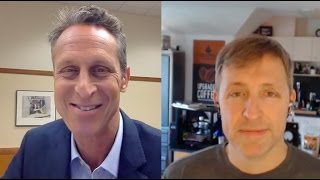
Dave Asprey, founder of Bulletproof, talks with Dr. Mark Hyman about biohacking through diet and lifestyle. They cover why saturated fats aren't the enemy, how MCT and coconut oils affect your brain and metabolism, and where hidden toxins in food come from.
Hey everybody, this is Dr. Mark Hyman. Welcome to the Fat Summit where we separate fat from fiction. And I've got my good friend and brilliant biohacker here, Dave Asprey, who I've known for many years and has inspired me with his work. He's the founder of Bulletproof and author of the New York Times bestseller, the Bulletproof Diet, which I I actually read and is a great book. He's a Silicon Valley investor, a technology entrepreneur. He spent decades and get this, he spent over $300,000 biohacking his own biology to figure out what works to get healthy and lose weight and feel good. And he's not only about actually just getting rid of disease, he's actually about optimizing human performance, which is actually pretty cool. He's the creator of the widely popular Bulletproof which you might have heard about, read about in the New York Times. He's the hope, the number one health podcast, Bulletproof Radio, which I've been on and you can go watch that if you want. He's the author of this New York Times bestselling book, the Bulletproof Diet, and he just has an amazing resource on techniques, keys, strategies of how to take control of your biochemistry, your body, your mind. So they all work together and they help you perform at super high levels without burning out, without getting sick or allowing stress to cloud your mind or your decisions. So welcome, Dave, to the Fat Summit.
Mark, it's an honor to be on.
And it's a pleasure to see you again. Good to see you, too. So we're going to get into it today. We're going to get into all these topics. You are out there on the edge. You are riding this wave of fat all the way into the culture, which is transforming how we think. And it's sort of on the heels of a lot of research that's been questioning our avoidance of fat and our fear of fat. And fat is a four-letter word, which came out of the sort of food pyramid and the dietary guidelines in the early 80s, which shunned fat and promoted carbs and sugar, which we ate 6 to 11 servings of rice, bread, pasta and cereal every day, recommended by the government. Thank you very much. So now we've kind of shifted away from that, but you've gone even more extreme. It's not only avocados and almonds and olive oil, but you're talking about God forbid, butter. And not only butter, but have butter every day in your coffee and have coconut fat, which is MCT oil, which is saturated fat. In fact, that's 90% saturated fat and butter is only 50%. So these are ideas that are really out there on the edge. And to tell you the truth, even for me, I've been so indoctrinated that saturated fat's bad and that butter's bad, but I cringe a little bit when I put butter on something because I kind of Even though I intellectually think it's okay, there's a part of me that's like, is this really okay? So tell me about your journey. How did you get to be a biohacker? Why is it important to be a biohacker? And what is hacking anyway?
All right. Well, let's start off with what hacking is, and then we'll talk about biohacking. We'll get into the journey. So hacking is what I used to do for a career. I was a Silicon Valley engineering guy. the last job that I had before I surprisingly became a full-time blogger and called me a fat evangelist is I was a vice president of one of the largest internet security companies. And the whole thing that you do in technology, in hacking, isn't about your stealing stuff or anything like that. It's actually about taking control of a system that you're not supposed to have control of. And biohacking is the art of changing the environment around you and the environment inside you so that you have control of your biology. You're not supposed to have control of your biology and thinking about your biology doesn't make it change very much. But when you decide to tell the world around you to talk to your body, your body listens to the world around you more than it listens to you. So let's go that way because, hey.
That'S how you hack it.
Right.
So you kind of figure out how to have your body listen to signals from the outside that you can change. You can change from environment, you can change your diet, you can change your thoughts. I mean, you can even change your brain. I heard about something you did with a friend of ours, which was like 40 years of Zen where you get 40 years of meditation in like one week. I'm like, I want to sign up for that. It sounds like too good to be true. But, there's all these strategies for sort of getting pathways into optimizing our biology. That's what functional medicine is. It's really the science of creating health. It's the science of actually understanding at a deep level how the body functions as a dynamic system and optimizing those systems to not only get rid of disease but actually to perform at a much higher level, which is really what we all would love, right? To feel good, to be energetic, to be focused, to feel all of our feelings, to have our body work properly, to not have pain, to sleep well, to feel good. I mean, that's what we all want and we don't think that's accessible. We're saying, hey guys, it is accessible.
So that whole long list you just mentioned, I didn't have any of that.
Yeah, yeah, what's your story, man? You were a big guy, right?
Yeah, I used to weigh 300 pounds. If you look, I'm reasonably strong and lean and stuff. That was in my mid-20s. I was obese as a teenager and I just kept putting on weight. Like all fat people, I actually knew that I was fat. It wasn't a surprise. And it wasn't like I was just in denial. And there might have been some emotional eating in there, but there was also a lot of willpower. And I said, all right, I've had three knee surgeries and I'm 23 years old. And I don't like it that I'm this fat. I have stretch marks. The most important thing in my life is to get rid of this stuff. So I went to the gym. And I went to the gym an hour and a half a day, half cardio, half heavy weights, six days a week. I cut fat out of my diet. I cut my calories down to around 1800 calories a day. And you know what I got? I got strong and still fat. I can max out all the machines at Nautilus. I can bench press all my friends. And all my friends ate French fries and cheeseburgers and I ate the salad with the chicken breast and no dressing. And one day I just looked around and said, you, know what? It's not that I'm weak. It's not that I didn't even deny myself even more. It's just that this doesn't work. Like, I give up. It's not okay. But because I'm a hacker, hackers don't give up. We just find another way. And I started looking around and I started trying every diet out. I've been a raw vegan for quite a while, actually, which worked great for the first three months and then wrecked your health for the time after that. And, in fact, there's a lot of recovering vegans on the Bulletproof protocols because of that.
Okay, that's a very good point. bring up about vegan and what you're doing and the conflicts and challenges.
Yeah. So the whole idea there was that, all right, if what I've been told works doesn't work, what am I going to do? Well, you look at research. And my first book had 1,300 references in it. And it was how the environment changes gene expression and what you can do that makes you strong and makes you weak. That was actually about pregnancy. What do you do to have healthier kids? My second book, the Bulletproof Diet, was about biological testosterone replacement because when I was maybe 28, 29, I had, let's see, less testosterone than my dad and more estrogen than my mom.
That's not a good thing.
No, I'm not functioning well.
That's what I say when men and women sugar, the men grow breasts, lose their hair on their bodies, and have no sex drive, and their testosterone goes down. The women actually get more testosterone. They get beards and lose hair on their heads. They kind of look about the same.
It's totally true. In fact, I still have my man boobs from when I was obese. They're smaller, but they're still there because the tissue grew. I suppose if I was really vain, I'd go for surgery or something. I'm pretty happy that I have a six-pack and stretch marks that are also still there from when I was obese. But the idea that you can be 100 pounds less fat than you were before, for most people it seems unachievable.
Because you lost 100 pounds. You lost 100 pounds. Yeah.
Full 100 pounds, which is like, it's almost unimaginable. For about five years after I lost it, I would be in a hallway I would turn sideways because I would think there wasn't room for the person to walk past me because I was used to having such a big bulk around me. And now I'm actually in my mind, I know how big my body is, but it changed my energy levels so much. And I was still, however, even after I lost a lot of the weight, I was taking smart drugs.
And you did it by eating a lot of fat.
Is that what you're saying? Yeah, I absolutely did it by eating a lot of fat. But I hadn't been eating quite as much fat as I eat now. I found that when I raised the fat, I felt better. But like you, I was running an anti-aging nonprofit research group. I talked to experts on fat. I read all these studies. I looked at the effects of grass-fed butter versus regular butter versus canola oil or something, which is just bad news. I said, you know, all the science tells me I should be able to eat a lot more butter. And when I do, it's like someone takes the gloves off. Like I feel more vibrant. Like I have more of that core energy. So I decided that I was going to do an experiment and I was going to increase my calories dramatically. I was going to eat mostly fat and some vegetables and a moderate amount of grass-fed meat and basically the bulletproof diet principles. But when I started this, I was, All right, I'm really concerned. I've been told butter kills you. It's just a lie. So what I did is I tracked my parameters, my markers of inflammation. Inflammation kills you. Fat doesn't kill you, although hydrogenated fat will cause inflammation that will kill you. Canola oil— well, there's a whole group.
Of people who think that saturated fat actually causes inflammation. I want you to talk about that.
A whole group of people where saturated fat does cause inflammation. You're talking about hypercholesterolemia?
You know, if you look at the literature, that's one of the concerns about fat, is it increases arachidonic acid, inflammation, increases all the inflammatory eicosanoids, which are.
The inflammatory cytokines or messenger molecules, so that there's concern about that. There is concern about inflammation that comes from any kind of fat. The problem is that when you look at saturated fat, one of the things that I think is largely missed is in what condition is the fat when you eat it? Even the idea of saturated fat is a little bit of a misnomer because there's many kinds of saturated fat and they all do different things in the body. So one of the things that isn't well known in this common sort of reader's digest version of nutrition is fat is good or fat is bad. But the same could be said for protein or sugar. In fact, let's talk about protein for a minute and we'll generalize it to fat. If Mark, I said, hey, you need to have 30 grams of protein. You'd say, all right, that's fine. And if I gave you a bowl of scrambled eggs, you'd probably say, great. And if I gave you a bowl of spider venom, you'd say, I'm not eating that, but it's all protein, right? So different proteins do different things, like radical thought, right? The same is true of fat, like palm oil contains palmitic acid, which escorts toxins from the gut into the body, into the brain, gives you brain fog. So, too much palmitic acid or bad bacteria or the combination of those could be bad, but another kind of fat that's fully saturated, like, say, the stuff that I use in brain octane oil, which is a subset of MCTs, it's technically saturated. However, it doesn't even go into the liver. It's used as energy. So, the idea that fat does something, so old fashioned.
Fat is not fat, right?
Yeah, it's the same with air.
Yeah, and if you were to breathe.
If you're breathing air, okay, that's good, but air is a gas. So you say, is gas good for you or is gas bad for you? Well, if you breathe the wrong kind of gas, it kills you. If you breathe the right kind of gas, then you survive. So fat doesn't mean anything until we talk about did you damage the fat by heating it? Did you damage it with chemicals and solvents? And is it contaminated with something else?
And once you sort of those out.
Then you get into the real science of fat. And this is just ignored in mainstream media.
Right, right. What happens to it? How do you do it? Exactly. And, but you mentioned palmitic acid, which is interesting because a lot of palmitic acid is produced in the body from.
Eating carbs and sugar. It's the only saturated fat we can produce on board, right? Right.
And, that's what's associated with heart disease is the saturated fats that come from eating carbs in your blood, which is kind of confusing. You think if you eat saturated fat, it raises the saturated fat in your blood, but it really doesn't.
It's actually sugar and carbs that raise the saturated fat. Yes, you're totally right, Mark. That's something where people just don't think about this because we're not told this in school or anything. The idea that you ate carbs, the carbs went into the gut, the bacteria in the gut made fat out of the carbs, which is true. They make short-chain fatty acids, some of which are good, and your body can make palmitic acid, the long chain fat that probably isn't good for you, even though there's an argument that says if it's made on board that we don't generally evolve to make things that kill us. So, I tend to think if my body makes palmitic acid without the little gut bacteria involved, I probably needed it, but I didn't want it soaking around.
In my gut by eating it. Yeah, that's interesting.
So, would you say not eating palm oil? You know, I'm not a fan of eating palm oil for that reason. You can get much better fat ratio is out of coconut oil and palm isn't very good for the environment. It's possible to get sustainable palm. I use some as a backup source of triglycerides when I make brain octane oil. I'll use palm but there's no palmitic acid in there and I always get.
It from coconut whenever there's coconut available. Yeah, and it is an environmental issue because most of the palm oil in the world comes from rainforests in Southeast Asia where they destroy the rainforests grow palm trees and eliminate the habitats for orangutans. It's really a bad scene.
It is.
Let's talk about coconut. Everybody's really talking about coconut these days. It's used for everything. There's articles in magazines of all the many uses of coconut oil. It's for your skin, for your hair, for your body, for your coffee, for sex, for everything. The question question is, why did this big craze of coconut oil now and what does it do for us? And should we worried about it all? Because it's 90% saturated fat and does it cause inflammation?
Let's go back to my experiment when I said I'm going to eat many tablespoons of coconut oil and grass-fed butter every single day. I was like you, a little concerned, am I going to die? I don't want to have a heart attack.
Right.
I got my blood markers and I started on my diet. And what I found was that my energy level shot through the roof, my hormones got better, my inflammation went down. And I know this because of the anti-aging work I've done, and you know this too, and listeners will learn this. It's that inflammation is what matters. If you have higher levels of cholesterol but no inflammation in your body, cholesterol makes you put on muscle faster and it's protective in cases where you're poisoned. Cholesterol doesn't do bad things without inflammation. Damaged cholesterol does things, but I didn't fry anything when I was on a high fat diet. I didn't carbonize my meat.
It's not fried chicken that you're talking about.
Exactly. I was on a technical high fat diet, but it was the precise kinds of fat that I wanted diet, which is just a different animal. If you go out there and do what most high fat diets are when they're not conscious, you can eat McNuggets. That's a high fat diet. But man, you're gonna just explode with inflammation if you do that. And my goal was to do everything possible that turned down inflammation while giving myself a really rich source of fuel, which is fat. Yeah.
So tell us about the coconut oil then and what's the deal with that.
So coconut oil is a great source of fat and it's primarily something that's a little bit mislabeled. It's primarily lauric acid. And lauric acid has some antimicrobial benefits, and it's technically known as a medium chain triglyceride. The only problem is that lauric acid is biologically a long chain fat. Long chain fats go into the liver, just even like palmitic acid or any of the other bigger fats, they go into the liver and they're basically taken apart. They go in and they're digested. They require bile. and they can be stored as fat or they can be used as energy, but they can be stored as fat. When you get some other types of fat that are present in very tiny amounts in coconut oil, these are the true biological medium chain triglycerides. So the idea that MCT is not really MCT, there's companies selling kind of fake MCT as MCT. So the weak MCT is 1.6 times stronger than coconut oil. The one that I use in Bulletproof Coffee is 18 times stronger than coconut oil. So what that is-- I say stronger.
What do you mean?
I mean that it takes 16 to 18 pounds of coconut oil to make one pound of this oil because it's only 6% of the fat found in coconut oil. So the real magic of coconut oil isn't the common fats in coconut oil. They're not harmful. They're a good energy source. And I recommend a tablespoon of coconut oil every day to get the full spectrum of stuff in there. But if you were to eat 18 tablespoons of coconut oil, you would throw up.
Yeah.
So the magic that's in there is around 8%, 6 to 8%, depending on what kind of coconut, is a very, very, it's the shortest of the medium chain fats. So it's just one type of fat. And it's not, it is in the grouping of MCTs, but it's not all of the MCTs. And it's called C8 MCT, or I call it brain octane. And the study hasn't been published yet, but A study that's coming out soon is where we've measured ketosis. Ketosis is the state of burning fat instead of carbs for people listening. And it turns out this stuff is way more ketogenic than coconut oil. In fact, fasting is more ketogenic than coconut oil, which is not well known. So coconut oil makes you feel good because you get 6% of this amazing fat. But if you can take that out of the coconut oil and concentrate it and eat that, you're like, wow, I feel a different kind of energy. And that energy comes Because coconut oil contains these very rare types of MCTs, and when you get enough of them in the body, you feel like your brain turned on.
What happens? How does that work?
What's the mechanism? The way that works is that you have two different kinds of cells in the brain. You have neurons and glial cells. And actually there's a lot more than those two kinds, but those are two major kinds. And, the glial cells are your immune system in your brain. Exactly. And the glial cells prefer ketones. And sometimes I swap this. so I don't want to get it backwards. But basically one of the two types prefers glucose, which is blood sugar. The other type prefers ketones. So even if there's both kinds of fuel present, some cells want fat more than sugar, some cells want sugar more than fat, and there's always some blood sugar present. You just don't have a lot of it.
So in a normal state-- we were always taught that in medical school that.
The brain only runs on glucose. And that it was-- it was, it's just a mistake because the brain can run on glucose, but when you set it free, it doesn't do that. And most religions in the world have fasting as part of their practice. And for people who have ever tried fasting or gone on a very low carb diet, after about three or four days, your body switches to fat burning mode, to ketosis, and you get the state of clarity. You don't care about food and you're so focused and energized. That's because your brain is running on ketones. The period when you're switching from sugar to ketones, you feel they call it carb flu or low carb flu and you feel not so good. Well, if you can use this cheat from coconut oil by using just the smallest of the MCTs, you raise your ketones as if you were in a state of fasting. Even with eating, you can raise your ketones. Even if you're eating donuts, you can raise your ketones. You shouldn't be eating donuts, by the.
Way, but you can.
So then all of a sudden, your brain has sugar and ketones at the same time, which is not biologically possible unless you're cheating, you're hacking it. and when you have two forms of fuel in the body, like, wait a minute, like, okay, I've got this. I feel really good. And you don't want to have high sugar, but if you have moderate sugar, you have, you know, three spoons of rice, you had enough sugar that the brain's kind of singing, I've got enough glucose and I've got this fat, and all of a sudden, both kinds of cells can run at their full capacity. And that's what was going on with Bulletproof Coffee. So I'm like, okay, I'm triggering this.
Because I'm using this.
Extract of coconut oil, but it doesn't work if you use just scoops of.
Coconut oil in your coffee.
Can you eat with your Bulletproof coffee? Can you have like a couple of eggs or? Oh yeah, in fact I recommend it, especially for people who are obese or leptin resistant or for women, have some protein. And the typical protein is they'll add the upgraded collagen into the coffee because it doesn't change the flavor and collagen's free of the inflammatory amino acids that are present when you eat a high meat diet. That's also bad for you, which is an argument for the vegan crowd. too much meat is bad, the wrong kind of meat is bad. And Mark, what I think you and I both know is that food isn't that easy, especially when you have these supply chains and packaged stuff and you have two steaks and they kind of look the same, but one has antibiotics and the wrong kinds of fat in it, and it was from an unhealthy animal. And the other one, it looks the same, it's grass-fed and costs twice as much, but it has the right kinds of fat. It's hard to know, there's a lot of details there, but those details really.
Matter, especially when it comes to the type of fat you eat. Yeah, that's so true. It really is the quality of the food you eat that matters. That's what you're pointing out. Even within categories that seem the same, like saturated fat, they're very different kinds. Animal protein, they're very different kinds. Within carbs, they're very different kinds. We've talked about all that in your book, which is quite great.
There's something else, too, that isn't commonly talked about. It's that when we have toxins that come from food production. So these are sometimes human-made toxins and sometimes they're nature-made toxins. But some of these look like cholesterol, especially some of the nature-made ones. Ergosterol is actually one of them. These are made on grains during the storage of the grain when mold grows on the grain. And these are called mold toxins or mycotoxins. And you can also get them from the environment around you. This was the subject of Moldy, the documentary that I made, like looking at what happens when you breathe. Oh, yeah, of course you were in. And you actually you were one of the top guests and I don't know why I'm not knocking those thoughts.
I'm just like, I gotta see it.
Your interview was great. It came out really well. And so the whole idea that, okay, these toxins are coming in in a water damaged building or maybe you're eating some, those toxins change inflammation in the body, they change cholesterol levels and many of them are recycled through fat. and the way our bodies recycle fat is through the bile system. And when you eat fat or to some extent protein, your body secretes bile. It's part of the digestive process from the gallbladder to help you digest the fat. It breaks the fat into tiny little pieces and lets the body use it for energy or store it. The problem is making bile is biologically expensive. It takes a lot of energy for our body to make new bile. So especially those of us who are optimized to live through famines, if our ancestors have done that for many generations, then we recycle this. Roughly 25 to 28% of people reabsorb it a lot. Yeah, you reabsorb it. That way you don't have to make new stuff. Okay, so in a famine, that's good. The problem is if you have these fat-soluble toxins that look a lot like cholesterol and you're reabsorbing those, you can get more and more inflammation from this.
Yes.
Right. But if you eat a lot of the right kinds of fat, it increases bile flow and you basically poop out more of that bile and the toxins along with it. That's interesting.
Because then as a doctor, what I do is I actually treat people with mold toxicity quite a bit and I use a bile acid binder. Cholestyramine, right? Yeah, that binds the bile and gets rid of it for a short period of time and it often helps people.
Dramatically get rid of the mold toxin symptoms. I use a mix of cholestyramine and activated charcoal. that I started manufacturing, they target different sizes of molecules. But it changed my life because I had in a black mold infested building, I didn't know it. And my brain turned off, I got horrible muscle pain. And within two days of using the binding agent you just talked about, I was like, oh wow, my back doesn't hurt for the first time in years. I'm free. This is a big sign of, okay, we do recirculate toxins via fat. and when you go on a high fat diet, it allows you to basically flush the fat out of the body. Something that most people don't know, but you would obviously know given your medical training, is the cell membranes in our cells.
Are made of fat.
Yeah, it's not saran wrap.
It's all fat. You have 100 trillion cells and every single one of them has a fat membrane around it.
Yeah, it's like little droplets of fat. It takes 700 days to replace half of your cell membranes with fresh fat. So if you have fat soluble toxins percolating throughout your body, if you go on a high fat diet and you start binding toxins, it takes almost two years for you to get half your cell membranes made right, which means you need to eat enough of the right kinds of fats and not eat a lot of toxins along with them. And suddenly then you're kind of, I like the analogy of a, just a glass of water. You put one drop of food coloring in. Okay, how much water do I have to add to that before it stops being blue? A lot. Well, the toxins that we get from mother nature, from pesticides, the synthetic estrogens, even the heavy metals, our body stores that in our fat. And when we eat fat, we can let that go and we excrete that stuff in our fat. But if you're on a low-fat diet, what are you going to do?
You're going to hold on to all the fat and all the toxins forever. So, this is true. I mean, everything is connected. I want to come back to MZ2 out because I think as I've been looking at the research on it, you talk about the brain research, which is pretty compelling. I actually had a patient recently who had dementia. She's been treated by me for a number of years. It's done really well. She's had heavy metals. We've gotten heavy metals out. She's had thyroid issues. She's had gut issues. We've tweaked her up. She's had methylation problems, B12. We got her doing really well. Then she started sliding a bit. I said, why don't we just try a ketogenic diet. So I put her on a 70% fat diet with brain octane oil, and she woke up. It was like Rip Van Winkle, and she just became alert, focused, her memory improved, and it was pretty stunning to see that. So I think it clearly is beneficial for the brain, but it has other effects. We know, for example, for your metabolism and for diabetes and for insulin resistance. and for weight issues, the research I've seen looks pretty compelling around there.
You know, as a manufacturer of the stuff, there are gag orders in place that prevent me from talking about some of the things it does to diseases, things you're less to talk about because you're an MD. And I can tell you, my grandmother's 94, and she's a PhD nuclear engineer by training. She met my grandfather on the Manhattan Project. Wow. She's in retirement home, but when she has Bulletproof Coffee and specifically this Brain Octane, if you just pour it on her food, she watches calculus videos on YouTube for fun. She's that sharp. And when she doesn't have Brain Octane Oil, she stares at the wall. It's the difference between a good day versus, you're sort of there, but just not really just kind of treading water. And I see this over and over in people starting even when you're 30. People in their 20s, I get a rush of energy. But we actually start that mild decline, 30, 40, 50. You don't notice it till you're 50, but you've started losing your edge. I lost my edge because I lived in a moldy house and I was obese and I had inflammation and chronic fatigue syndrome and fibromyalgia and toxic mold of lime.
I was a disaster in every way.
I had all that, too, but I wasn't obese.
I was just chronic fatigue. Oh, you had all that, too? Okay. I didn't even know that, Mark. Wow. No, I had chronic fatigue. Heavy metals, mold toxicity, everything, Lyme disease. I had one everything.
Wow, so I buy back myself.
That's how I figured out functional medicine.
There you go. That's why you know so much, because you're one of the more knowledgeable guys I've ever met. Where did you train? You trained the same way I did, which is like- and a one. Yeah, you're feeling really bad and you have to find the pathways and find what works. Okay, now I get it. So we both share this and we both ended up at the high fat, fat matters perspective. I'm going to go a little off topic because I just realized you probably haven't seen this. At the Bulletproof Conference last week, we launched the Fat Moblile. And the Fat Moblile is a giant, we turned a Prius, we cut it in half and all, we turned it into a giant-- it's got water now.
Which is MCTL in water, which by the way is delicious and good.
Oh, thank you. It's actually not MCT Mark, because MCT includes four kinds of fat. This is only the two that work. Yeah, there's a real problem in industry where the coconut oil people saying coconut oil is all MCT, but it doesn't work because one of the MCTs is misbranded. So it's just two of them. But it's fat water. But the Fat MobIle is a giant stick of butter bigger than a car. And you can drive it around. And so we've been driving it around and it has a big coffee cup on top that spins around like a carnival ride. You can sit in it while it drives.
Is it made out of real butter?
It's not made of real butter, but it's wrapped like a stick of butter. It says 100% grass-fed butter on the side. It's meant to just make people go, Wait a minute. Who in the heck would celebrate butter? Why would you have a giant rolling stick of butter? It's that question mark. Why? So that people can then look at the change in our diet, change in our culture. They might hear that we just had a, in 40 years, We just had a record year for butter consumption this last year in 2020. It's not all me, but I believe I helped. And that changes other things too, Mark. It changes the amount of grassland, which is really good for the environment. We need grassland instead of corn and soy.
There's more grass-fed butter, is what you're saying.
Yes. And so it's breaking records and all. And I don't sell the stuff. I just use the stuff and teach people when you get enough fat, It matters. And if you go back to when you and I were in high school, remember the economics textbooks? Supply and demand, you always measure guns and butter. Why was it not guns and kale? There's a reason for that.
Yeah, that's fascinating. Yeah, no, it's great. I know both of us were in Tibet and that's where you kind of got the idea where you had yak butter tea, which was a butter in tea. It's actually not yak because yak is male, you don't want yak butter. It's a female yak, which is called a dree, and they actually put salt and butter and tea, and that's how they kind of function these high altitudes. And they also have butter sculptures. Like if you go to the Tibetan monasteries, everything's made out of butter, butter flowers, butter art. It's unbelievable. It's all about the impermanence of life, which is interesting connection to butter. So, I think, you know, the butter grass-fed piece I want to kind of get into now because, you know, one of the challenges with fat in the environment is that fat is a reservoir for toxins, right? Yes. So, whether it's humans or animals. So, I worry, given the contamination of the environment, about the level of toxins, obviously, in conventionally raised animal products and in regular butter. But, I also wonder about in grass-fed butter because even though they're grass-fed, they're eating wild grass, but the environment so contaminated that even wild grass or fresh grass, even if it's not been sprayed and is organic, still has a lot of stuff on it. How do you kind of sort that out?
Well, it's a bit touchy because there isn't standardized testing for these minute levels of toxins in butter. So the algorithm that I've been following, sort of a set of rules, is you want to eat cows that didn't eat from sprayed soil and things like that. But you might actually want to eat cows from grass that's been fertilized. If the soil isn't very good, even if it's a chemical fertilizer, it may actually make the grass healthier, which is gonna make the cows healthier. But the ideal cow is roaming around picking the very freshest grass. And that is possible to get if you live near a farmer's market and you're fortunate. But for most of us, the safest thing you could do to get fat, which is a requirement for optimal human performance. If you want to perform at your best, you want your hormones to be formed, you want your testosterone, your estrogen, progesterone, you're going to need to eat.
High quality, undamaged fat. Dr. Justin:How's that?
Dr. Justin:Because hormones, your sex hormones, are made out of cholesterol. Dr. Justin:Yeah. And so, they're not made out of broccoli. It's good as broccoli is for you.
We're not based on broccoli.
We're based on fat in every single cell. In fact, our bodies are about 1% carbohydrate.
It's wild that traditional peoples would eat the organ meats first because they were fatty. They'd break the bone marrow if they had a kill. They'd break the bone marrow, suck out all the fat in the bone marrow. That was where they went after things.
The hump on the buffalo's back was pure fat. That was after the liver, the most valuable part, and the chief gets that. We knew this and we just forgot how to eat. but the buffalo didn't have a lot of pollution. They were just eating grass. And so what I want to do now is say if you're going to eat grass-fed cows, if you can even know where the grass came from, it's a pretty good idea to not eat grass that's growing right next to the freeway or right under an airport zone. But even if you do eat butter from cows that ate that grass, you're still getting a lot less toxins than cows that ate corn and soy that's been sprayed with all sorts of crap. It's a question of minimizing harm. You can also do things when you eat toxins to bind the toxins even as you go, which is something that I also do.
The truth is grass-fed butter is different. When you look at it, it's more yellow. Why? Because they're eating the pigments from the plants. They're eating carotenoids. They're eating vitamin A precursors, and it's yellow. It has more antioxidants in it. coconut actually has a different kind of fat even called CLA, which is actually beneficial for you. It's helped to boost metabolism, prevent diabetes, prevent insulin resistance. So it's really what you're saying, that food isn't just calories, it's information. That's what we say in functional medicine. And the information in your food matters, whether it's grass-fed butter, a regular butter, whether it's a feedlot cow or a grass-fed cow matters. And even within coconut oil, the type of coconut coconut oil you have.
Oh, yeah.
And also what's in the coconut oil. So it's really, you're kind of taking it down a whole other level.
I don't want it to be that complex. And I worked to put the roadmap on the blog, that's one page, but it's kind of a complex infographic because that way people can make a decision without having to know everything. But let's talk about types of coconut oil because this is just unknown and it's a real problem. One of the cheapest and most common types coconut oil is called copra oil. And they take coconuts and they crack them open and they set them on the beach and they let them just sit there and they mold. They actually turn a blackish gray color.
It's not good.
No, it's not. And then when you buy copra oil, it's actually gray and it is full of these mold toxins, these mycotoxins that are cancer causing that inhibit mitochondrial respiration. This is the way your cells make energy in the body. Now, this can be labeled as coconut oil. And there are, in fact, there's a major grocery store that makes a chocolate truffle out of copra oil. And every time I eat those, I get an anxiety response and I get symptoms of mold toxicity. I'm sensitive. I've lived in moldy houses before. My immune system knows what it looks like. But after a few years ago, they stopped labeling copra and they started labeling it coconut oil, which is legal. So the source of your coconut oil matters. And if you ferment coconut oil the traditional way, versus spin it at high speed, the high speed coconut oil is actually fresher and less damaged than the stuff that has sometimes histamine or other things in it because there can be bad stuff that grows in coconut oil if you're letting it sort of in the jungle in a vat sort of ferment and bubble and then you get the oil off the top, but what else grew in there? The answer is it depends on where you grew it. And little things like that, really? Could this bucket of coconut oil make you feel bad and this bucket of coconut oil make you feel good? Actually, yeah, it can. It matters.
It's amazing. One of the things I also want to talk about is ketosis for a minute. Oh, my favorite. Because people throw that word around and it means different things to a doctor. You've got ketones in urine when you don't eat overnight and you fast, you see it in urine. Or, if you're a diabetic and you can't control your blood sugar, if you're type 1 diabetic, you get ketoacidosis, which is very dangerous. what you're talking about is a different state of producing these molecules, which are alternative fuel sources, right? Ketones are an alternative fuel source. And you seem to say that they work better for our body. They help our metabolism. They help our brains work better. And so the question is, you know, how does that work and how do we get them? Because you're saying that coconut oil is or the MCT oil is a real way to do it, but can you do it while you're eating or do you have to fast? Because a lot of times we think of ketosis as fasting. So it's confusing.
So can you help us through that? Sure. Ketosis is the state where your body burns fat instead of sugar for energy. And the gold standard for measuring this is actually measured in your blood. And when your blood levels are above 0.8, you're considered in nutritional ketosis. And you go up to two or even three, which means your body's just like burning fat as its fuel source. And when you burn fat, we talked about how it improves your brain function. Other cells in your body though can really perform well on ketones, it's something we're designed to do, but probably not do all the time. And when you do this, you will burn more of your own fat. Going into ketosis makes your body, oh, there's fat. I'm burning fat right now. I might as well burn the fat around your waist. This is biologically really good. And most of the time, people are at zero or 0.1 ketones, almost no ketones, because when you eat carbohydrates, your body doesn't make ketones. If you go on a low protein, high fat diet, in other words, you eat a lot of butter and guacamole and moderate amount of protein, after a couple days, you can go into this fat burning mode and on a blood test, you'll be at point A. It turns out there's a Goldilocks zone that I've been pioneering with this technique called Bulletproof Intermittent Fasting. Bulletproof coffee with brain octane is the secret to doing it. What you do there is you go to bed, you have dinner, don't eat dessert or can really if you want to, but it's better not to, sleep all night, wake up, and then have a couple of bulletproof coffee made with brain octane. Because brain octane spikes ketones way more than coconut oil or way more than MCT oil, what you end up with is on a blood stick for the average person, if they're using enough brain octane, they'll get to a level of 0.5 or higher. So, you're not in nutritional ketosis, which is 0.8, but you're not out of ketosis, which is 0 or 0.1. So, you're in the middle. And when you get there, two magic things happen that are really unknown about ketosis. The first one is that if your levels are above 0.38, which is still not that much— Not that high. That resets a hormone called ghrelin, which is the hormone that makes you hungry. So, all of a sudden, you don't care about food as much. But it also makes your ghrelin levels match your current body weight. Because if you weigh 300 pounds and you go on a low fat diet and you lose some weight or you just go on a normal diet, cut calories or exercise more, do whatever you did that might have worked and you get down to say 250 pounds, your body still has the hunger and ghrelin levels of a 300 pounder and you will eventually weigh 200. Yeah, you'll put that weight back on and then more. But a level of 0.38 ketones, just a few resets your ghrelin levels to match your current body weight. There's studies about this.
So all of a sudden...
So, are you taking them or all the time? Just when you take them. So, when you're done taking them though, your levels reset and the level stays reset. Oh, it's just for the workout. Yeah, this is how to tell your body, hey, pay attention. This is my new body weight. And, by the way, don't worry about food today. You're full. When you get your levels to 0.5, which is still less than full ketosis, that resets your levels of CCK, which is a hormone that's responsible for feeling full.
So, it's called cholecystokinin, right?
Right. And now, if you do a tablespoon of coconut oil, it doesn't work. You do 16 tablespoons of coconut oil, it'll work, but then you throw up.
And that's a problem.
That's why I use brain octane oil. How about a tablespoon or two? How much? In the study that isn't released yet, we used two tablespoons, and that was a couple times a day. But they were looking at more than just these levels. so for the average person, depending on their size and all, it could be a lot less even. For me, I'm 200 to 220 depending on how much muscle I'm carrying and reasonably active. If I have sushi with rice for dinner, which is going to take you out of ketosis all the way, if I have two tablespoons of Brain Octane within a half hour of drinking my Bulletproof Coffee, I will test at 0.5 or higher reliably on a blood test.
Amazing.
You weigh less than I do. You might only need a tablespoon and a half. And my grandmother, if I tested her, she might only need a teaspoon or two. So different bodies respond differently. But the idea is you can stop caring about food because you just suppressed.
Your hunger seeking hormones.
Do you do it in the morning? Oh, no. I put it on every meal.
I carry a little bottle around.
You don't want to be in ketosis all day? Well, I don't want to be in full nutritional ketosis. I just want enough ketones present. if my blood sugar does any kind of fluctuating, that I can then have this backup fuel source of fat. So the things that would have been stressful, your biology gets stressed when your blood sugar crashes. But if your blood sugar crashes and there's some other fuel there, you don't feel the anxiety. You don't feel like you're going to die when you're hungry. Like, you know, I could eat, but it's so liberating to feel like I could eat versus I'm going to kill.
Someone if I don't eat right now.
I'm hangry.
I'm hypoglycemic.
I used to be like that.
Hangry. I like that. Hangry. That's good. Yeah, it's true. Not only does it affect your hunger, but tell us how it affects your metabolism. What happens is you actually start to increase your metabolism and you build muscle and you burn fat. How does that all work?
Well, it can change the expression of brown fat in the body. You actually have more of the brown fat. Brown fat is this energy producing fat that burns a lot of calories.
It keeps you warm when you're freezing.
Yeah. It's the stuff that if you take cold showers in the morning that you'll grow more of. And these swimmers and Olympic athletes and these people with amazing abilities usually have more brown fat because it's so important in energy metabolism. But we don't really normally have that much of it. So by going into ketosis, you actually burn more of the white fat and you can increase the brown fat. And your cells make energy through something called the Krebs cycle. This is, if people have heard of a mitochondria thing, this is the power plant in your cell. And what it does is it burns a little molecule of ATP and then it recycles it. And to make ATP with sugar takes 26 steps. To make ATP with fat, at least with the brain octane kinds of fat, it takes three steps. So what you're doing is you're sort of saying, oh, there was two two kinds of fuel, like a Toyota Prius. It could take electricity or gas. Well, if you can let yourselves have either choice like that, metabolically it lowers stress on the body, which is a major thing. When stress goes down, cortisol goes down, adrenaline goes down, your adrenals get to heal, and you have more capacity to handle other stress in your life just because you have stable energy, which is a major metabolism brain interconnection that isn't.
Talked about so much, but it's so important. Yeah, it's so key. So it's pretty interesting you start looking at this data. Let's just talk for a minute about the whole protein issue because you sort of brought it up a couple times in passing, which is when you think of, for example, the paleo group, you think about it as the meat eaters and with vegetables. What you're saying is that large amounts of animal protein may not be good for us. Tell us about that.
It's kind of a a surprise because we have this way of thinking if something's good, more of it must be better. And animal protein is really something that can help your body maintain muscle mass and it's got nutrients in it that you're not going to get from vegetables. It's got amino acids and other vitamins and I consider it necessary for people to perform at their very highest levels. It's possible to survive on lots of things that aren't going to make you live a long time and make you feel your best. So, if you were to say, I want to live on protein, which is what we did in the 90s, like protein's good, more protein's better, your body can burn protein to stay alive, but it comes at great metabolic costs. You have to break down all this protein to turn it into sugar. Wait, does protein turn into sugar? Yes, it does.
It does, right? People don't realize that. They actually have something called gluconeogenesis, which means you make sugar out of protein. after a certain amount. When you use enough protein for your body needs, it starts to produce sugar out of it.
Yeah, and the act of producing sugar creates all sorts of toxins like ammonia. So it increases the load on the liver and on the kidneys, and you don't get a lot of benefits from doing that. So the bulletproof diet recommendation is look, focus on getting the right kinds of undamaged fats, lots of those, a moderate amount of very high quality protein from grass-fed healthy animals. What is a moderate amount? It depends on your activity level, the.
Amount of muscle mass you have and all that. But if you have a meal, do.
You have like four ounces? You have eight ounces? It really is body weight dependent. In the book, I talk about a half a gram of protein per kilo of body weight, which is of animal protein or protein in general. Of protein in general. And animal protein is the most bioavailable. So if you're having eggs, you're having grass-fed steak, lamb, fish are the primary things I recommend. Even pork from healthy animals can be a good source of protein, but it's harder to get clean pork because pigs are as bad at getting rid of toxins as humans are. So you got to be careful. If you're going to do bacon, cook it gently so you don't damage the fat, and it better be from the farmer's market pig, not the industrial mass market pig. And avocados, sorry, that's not a protein source, that's a fat source.
I'm going into fentanyl.
That's okay, there's protein out there. Yeah, but not enough to matter. But the idea that vegetable protein or plant-based protein or animal-based protein is better or worse, I'll tell you, my favorite plant-based protein is ricin, the nerve gas, which was used in a subway terrorist attack. It's a vegetable protein, plant protein. So it doesn't matter if it's from plants, it doesn't matter if it's from animals because you have snake venom, which is also an animal-based protein. So both kinds of protein will kill you and you should just run away from food. Or you could say it doesn't matter these artificial marketing categories of animal plant-based, what's in that protein for me? And something like a whey protein from grass-fed, low temperature processed milk can be a really good source of protein if you have some. If you have six scoops a day, it's going to be inflammatory.
Right. So the idea here is, I joke and I call, I say you should think of your animal protein is kind of meat.
I love your sense of humor. It's exactly right. You put it on top, but it's not the primary source of the meal. A proper plate is full of vegetables. And then you put a little bit of meat in there and you cover it all in fat. And then you're like, oh my God, I feel so good. I'm done for the next four hours.
Exactly. Exactly how I eat. So you brought up the whole thing at the beginning of vegan You went vegan, you're a raw vegan, you lost weight, and after three months, your health goes downhill. Can you kind of explain that? Because you see these amazing stories in Forks Over Knives of people losing 100 pounds, 150 pounds, reversing all their diseases, story after story. It just makes you wonder, do different people do better on different diets? How does that work?
There's something that I call the vegan trap. This is that when you go on a vegan diet, One of the first things that happens is you lose saturated fats. And all of a sudden, you're eating a lot more omega-6 oils from seeds because that's the only source you can get them. And as you raise the amount of omega-6 fats versus omega-3s and saturated fats, it increases mitochondrial function, which is something that you wouldn't expect. But it does that only for a short period. It's a short-term adaptation. And after about three months, it stops doing that and then you're stuck with the inflammation from all these natural plant-based oils that are not like the oils.
That are supposed to be in yourself. You put olive oil or coconut or avocado, right?
Then it's okay? Well, if that's all you're eating, it's not okay. It's still not balanced. You're not getting any conjugated linoleic acid. You're not getting even some things like stearic acid. You just don't get very much of the other saturated fats. and things like phospholipids that are found in egg yolks are missing. So some of the things that make healthy membranes aren't there. And so the typical progression on a raw vegan diet specifically is that after three months, like, okay, I still feel kind of good. I've lost a bunch of weight. And by the way, is a raw vegan diet better than a standard American industrial meat diet? Hands down, it's better because you got rid of the toxins at least. Right. But once you're rid of the toxins, if you you start inducing micronutrient deficiencies by eating this raw stuff that your body can only process so much of. Over time, a very common thing that did happen to me is I actually shattered one of my teeth. And I was getting this incredible cold pain in the teeth. And they were very sensitive. And my hair started to get dry and brittle. And then you start getting even a little bit of an inflammation around the middle that maybe wasn't there before. But it takes six, eight months for this to happen. So a lot of times people are like, I feel so much better than I did before. This has to be the right path. I'm going to double down and be even more vegan than I was before. And it takes a lot of courage and guts. And there's countless friends like Kevin Gianni, Alex Jamieson, who are known people in the raw vegan world to say, this isn't working anymore. It did work. Now it's not. Yeah. And so I've interviewed a bunch of people like this who've written books about it, and I'm one of them where I was all in. I have blenders and giant salad bowls, and I'm a raw vegan chef. I'm really good at that. But you can still make your salad that way, but just throw some smoked.
Salmon on top for God's sake, make you feel better. Right, exactly. That's true. So I want to ask one more question, then I'm going to share people where they can find your work. So this is a question about TMAO and gut bacteria. And I know there's a lot of controversy about this, which is this bacteria that seems to form when you—and these protein, those molecule forms called TMAO, when you eat meat, and it seems to be causing heart disease. And this was work done at Cleveland Clinic where I work. And it's controversial, and there's a lot of back and forth about it. I just wondered, what your take on that was.
I wrote an article on Bold Groove Exec about TMAO and meat. And the studies, it's funny, they love to pick on red meat, but in like, wait a minute, leucine, including soy leucine, and egg leucine also does the same thing. And what the studies seem to tell me was if you have disordered gut bacteria, you're going to have heart disease. And if you have normal gut bacteria, and you eat these foods, you won't have heart disease. So why are we blaming red meat when there are vegetarian sources of lecithin that do the same thing as red meat? Why is this a meat versus vegetable thing? It's a gut bacteria thing and we're finding out so many things are. So I would love to see maybe some more research. Mark, you're in a position at Cleveland Clinic to maybe influence this, but get them to do American Gut Project or uBiome, look at the gut bacteria in these people and cross-section that with our disease. and there you go. Maybe you should be binding the toxins in the gut bacteria so that they can't do that.
Dr. Pompa:Well, that's key. That's what functional medicine helps us do, is create a healthy inner garden. I think that's the key message. Dave, you're awesome. Thank you. I want people to go check out Dave's website, bulletproof.com, check out his book, the Bulletproof Diet. He's got a whole amazing array of biohacking products on his website, upgradedself.com, I send my patients all the time. I use it myself. And you're just a great addition to the medical world, even though you're not a doctor. You figured out actually how things work and it's unbelievable. So thank you so much for joining us and we'll talk again soon.
Mark, thanks for your work on the summit. Fat is back and I'm so glad about that.
All right, take care, buddy.
More from AI




This Is Why 99% of Skin Conditions Don't Heal — And What Dermatologists Won't Tell You






Why you need to start strength training today #strengthtraining #healthyaging #fitness
