Changing Our Beliefs Changes Our Life: Discover How
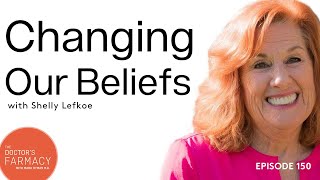
Dr. Mark Hyman talks with Shelly Lefkoe, co-founder of the Lefkoe Institute, about how limiting beliefs form in childhood and shape your behavior and health. They cover practical methods to identify and change these beliefs to improve your life.
So when you come into this world, you give meaning. Something happens, you give meaning. And then something happens a third time, and now that meaning becomes a belief. It becomes something you believe.
Welcome to the Doctor's Pharmacy. I'm Dr. Mark Hyman, and that's Pharmacy with an F, F-A-R-M-A-C-Y, a place for conversations that matter. And if your beliefs and your mind gets in your way of living the life you want, then you better listen up to this podcast because it's with none other than my good friend and belief wizard, Shelly Lefkoe. Shelly is the co-founder and vice president of the Lefkoe Institute. It's a San Francisco Bay Area firm whose mission is to significantly improve the quality of life on the planet by helping people recreate their lives and live as the unlimited possibilities they are, which is awesome. She's helped thousands of Clients, including me, which I'm gonna talk to you about, some of the stuff that she's helped me with, help them rid themselves of a variety of problems, including phobias, relationships that never seem to work, violence, procrastination, unwillingness to confront people, health and wellness issues, sexual dysfunction, and lots more. Her Clients have been able to eliminate emotional patterns like fear, hostility, shyness, anxiety, depression, worry, about people, about what people think about them and the negative sense they have of themselves. Her programs have reached over 150,000 people worldwide. And she's been featured on the Today Show, Lisa and many other media outlets. She's got an incredible vision, which is to transform the way people parent. She believes if we raise a conscious generation of kids, violence will end, people will treat each other with respect and dignity, and life on this planet will be better for everyone. I'll sign up for that. Welcome, Shelly.
Thanks, Mark. Thanks for having me.
Okay, so people say, what does Shelly do? And they ask me when I tell them about you, and I say, she's sort of a belief worker. She works on your beliefs in ways that frees you from the limitations that your beliefs create in your life about getting the things you want, whether it's love or work or happiness or anything really. and we all have them. And we all have beliefs that are unconscious that we just think are real, who we identify with, that really interrupt our lives. And we often are unconscious of those beliefs. And I've had a bunch of them that were ruling my life that Shelley really helped me overcome and has really let me be more free and happy and less encumbered by things that really weren't working in my life, but I had these beliefs that kept me stuck in them. I'm just so thrilled with your work. It's sort of the anti-therapy work. It's not actually therapy where you sit on the couch for 30 years and tell your life story. And the psychiatrist, psychologist gives you encouragement and helps you to look at your patterns and takes forever to change. This is really about sort of like a chiropractic adjustment for your mind that breaks the patterns that are stuck that allow you to kind of be quickly free from them. And I It's amazing how quickly it works. It's not like you have to go for therapy forever and ever and ever. So Shelly, what are limiting beliefs? Where do they come from? Why do we have them?
Great. I love that. Thanks, Mark. Thanks for all of that. So I love the first question. What is a limiting belief? So a belief is a statement about reality that we believe is the truth. So we say, with a capital T. With a capital T. It's like being pregnant. You either is or you ain't. It is the truth. You believe it. It's not like, yeah, I think so, or maybe. It is a statement about reality that you believe is the truth. We come in, and a limiting belief, any belief by definition is limiting. Because if something is the truth, then something else is not. So any belief is limiting. Number one, number two, we come into this world and we don't know anything. We don't know if we're good enough or not good enough. We don't know if money is scarce and hard to get or it flows to us with abundance. We don't know if life is hard or easy. We don't know if people are kind or people will hurt you. Like I just worked with somebody in my last session. She had to believe people will hurt me. So she didn't have a lot of friends and she doesn't have a lot of support in her life. So we come into this world, we don't know anything. We're little balls of consciousness. And what consciousness does is it creates distinctions. So we arrive here, we look at mom and dad generally or dad and dad or mom and mom or whatever your circumstances are when you get here. for a single parent household, and you watch. And I always start my interviews because it makes total sense to people. If you've ever had a kid or if you ever were a child, which of course we all were, we, if I ask people, when you come home at the end of the day, if you have a child, what does your child do? They run to me. I have a client in Uganda who said that. They run to me. and what do they want? They want three things. They want affection, attention, and acknowledgement. And I love the alliteration. Affection, attention, and acknowledgement. So, if I ask, what is the one word question that every child asks all day long? The answer is, why? Why can't you play with me, Mommy? Why can't you spend time with me? Why are you looking at your iPhone when I'm talking to you? Oh, I see. I'm not important. Why are you criticizing me all the time? Well, I guess I'm not good enough. Why don't you give me hugs and kisses? Well, I guess I'm not lovable. Why are you struggling? Why are you always crying about paying the bills? Well, I guess money is scarce and hard to get. So that's how our beliefs get formed.
Incredible. And then we get stuck in these beliefs and we walk around thinking we're not good enough, we're not lovable, and we're not worthwhile and people shouldn't spend time with us. And we begin to actually incorporate this and extrapolate them. I know one of the beliefs that I worked on was that it's not safe to tell the truth. And then it would be dangerous if I actually was honest about what I felt because then I would get an angry reaction from somebody, which was terrifying to me. And I knew this pattern and I was aware of it, but it was very difficult for me to overcome it. And it really came out of an experience I had as a little boy, which I'll just share for a minute, which was I was seven years old. maybe seven, eight. My mother had just remarried to a man from Canada and he was a very angry man and was kind of a rageaholic. And he was also a very neat freak and kind of germaphobe. And my mother asked me to take the soup that was left over in the pot and go throw it down the toilet because there were no garbage disposals in the sink in those days because I was born in the 60s or so, a long time ago. And I had to go throw the soup in the toilet. flush the toilet. I came out of the bathroom and he looked at me and he stood there and he had this really loud, deep, bellowing, scary voice. And he said, Did you wash your hands? And I'm like, no, I didn't wash my hands because I didn't go to the bathroom. And he went into a rage. He picked me up, he threw me across the room, smashed me into the wall, screamed at me, terrified me. I was this tiny little kid. And it taught me that if I said what the truth was, that I would get in trouble, that people would be mad at me, that I would be physically harmed. And so you really helped me kind of work through that belief. And I just wonder, you know, for people suffering from all sorts of different issues in their life like this that plague them, why it's so difficult for us to overcome these. Because as an adult, I can look at it, I've talked about it in therapy, I mentioned it. I mean, I understand what happened, but I couldn't erase this underlying fear that I had that came up every time I had to tell the truth. And it wasn't really even like, I'm like, it's not like I was personally lying, but I just didn't feel safe to say, oh, I want this or I need that or I'm going to change, you know, I kept a canceled dinner because I've got this thing to do or I would disappoint somebody. And it just spiraled into every aspect of my life and just bled into everything in a way that really limited my happiness and my inability and limited my ability even to care for myself because I was always trying to manage people's feelings so I wouldn't get in trouble. or I wouldn't get hurt, or I wouldn't get yelled at, or I wouldn't get rejected, or whatever it was. And you took me through a process. So, you know, I want to go through this because, you know, we can get abstract about the beliefs and we're going to get into more of the science of beliefs and where this comes from. But you took me through a process that helped me to unwind it and see why it wasn't actually true with a capital T. So can you kind of talk me through a little bit about what actually you did with me and why I don't have it anymore?
Yeah, I will. And I really appreciate your honesty. It's so inspiring. I just did Seth Green's podcast and I said this on it. He was blown away and I want to say it again. What you do interests people, maybe, but who you are inspires them. and who you are, Mark, so inspires me. And I just, I can't even go on without saying that your willingness, not just your wanting to help people, but your willingness to be so incredibly honest for the sake of helping people is who you are and it is an inspiration. So I want to make a distinction. So a belief, I explained what a belief is. Now I want to talk about what a pattern is. So nobody cares about eliminating beliefs. We care about eliminating patterns, things that we do that don't work. So a pattern is observable. You can see somebody procrastinating. You could see somebody not speaking up for themselves. You can see somebody getting sick all the time. You can see somebody not taking care of themselves, not exercising, not eating well. Those are patterns. patterns. And that's what we want to change. So your pattern was you weren't telling the truth, you weren't honest because you were so afraid. And that belief that if I tell the truth, I'll get hurt stayed with you even though we have evidence that our beliefs are true. I worked with five Harvard PhDs who had the belief I'm stupid. They knew they weren't stupid. And I'm gonna explain why our beliefs stay with us through 30 years of therapy. And that doesn't mean good therapy isn't good and it doesn't teach you how to cope with life and be more effective in life. It can. What we do is very different. When you cope with things, you're building a building called Mark or Shelly or whoever's listening, on shaky foundation, on shaky ground. And the beliefs are the foundation underneath every single pattern that you have. And here's why they stay with us, even though we know better. Even though, I'll give you a great example. I had the belief mistakes and failures are bad. I knew they weren't. I read every book. I knew every business quote that there was. Richard Branson says, if you're not failing, you're going to be mediocre. Didn't matter.
That's great.
I couldn't do things.
That must be why I am such a success, because I fail all the time.
That's right. And that is, you know, and I knew that. But the belief was still there, even though I knew better. And here's why. We think that we see our beliefs in the world. So when I said to you, Mark, and again, this is a process, there's lots of steps in it, but when I said to you, Mark, doesn't it seem like you saw, if I tell the truth, I'll get into trouble? And you said, I did see that. And I said, well, let's go back and look. So first of all, anything you could see, you can see this, anything you could see has a color, shape, and location. You never saw, and, sorry, I'm going to use a double negative, you cannot not believe something you think you saw. It's impossible to not believe something you think you saw. So if I said to you, I'm a blonde, you'd say, no, you're not. I'd say, no, no, I'm a blonde. You'd say, Shelly, you're not a blonde.
You're a redhead.
You're a redhead, right?
You're a redhead.
Because you think you see that I'm a redhead. But if I pulled my hair off and said, no, it's a wig, and suddenly you said, oh, she is blonde. Another example, if you have a belief, I can trust my spouse. You're married 30 years. They would never cheat on me ever, ever, ever. And you walk into the bedroom one day and they're having sex with your best friend. What happens to that belief? My spouse would never cheat on me.
It goes away.
Gone. So when you go back and you look at these beliefs and you get to the source of them, which in Mark's case was, his stepfather being violent with him. What you see is I told the truth and my stepfather threw me into the wall. That is seeable. But where was if I tell the truth, I will get into trouble in the future with anybody when I'm adult, that is made up. So this is not, it's not powerful unless you're actually doing this. This is, you know, teaching. Now, I want to make a powerful process. Yeah, I want to make one more distinction. The way most people try to change behavior is with information and motivation. I'm gonna read up on incest or whatever happened to you. I'm gonna read up, I'm gonna learn everything about it, and I'm gonna figure out how to different. I'm going to get motivated. If you want to stop smoking, you'll read a book about how to stop smoking. And then you get motivated. We're all motivated to live. And yet, we don't wear seat belts. We don't eat. Perfect example. Mark tells you, if you eat this, this, this and this, you will lower your inflammation. He gives you all this great information. that there's not a time in the day that I don't want to call Mark and go, what's the best, it was yesterday, fish oil supplement? Or I call him, what vitamin K should I be taking? Because he's like the wealth of knowledge. But how many of us actually take our supplements? How many of us exercise? How many of us eat crap and and sugar and things we shouldn't eat, even though we've read all his books, we know better. because we have beliefs that keep us from doing, being and having all that we want to be, do and have, particularly in the area of health. And I'm going to give you some really good examples of beliefs that keep us from being healthy. But I want to complete this point about seeing. So if you saw, if you think you saw, I'm not good enough. Shelly, if you were there, you would have seen that I'm not good enough. And I go back and we look and we do, we look at alternative interpretations and we loosen up the beliefs and then we get to this place where you get. I never saw that I wasn't good enough. All I saw was my father criticize me every day. Yeah. and the only place that I'm not good enough lived was in your mind. You made that up. Well, that's true.
And I think that, you know, what's interesting about your work, Shelley, and I've experienced this, is that there's layers of beliefs. So you might get rid of one, but then there's maybe other ones that are sort of ancillary. So it's almost like a set of different beliefs that can inform behavior or form your actions. So why do people have these negative beliefs? It's because we see these things and we create these meanings about them that then we think are universally applied to.
Our lives, but it actually isn't so true. Yeah, you know, I look at people who don't exercise and it's so interesting because I have a very strong belief that if I'm going to be on this planet, I want to have fun and I want to be able to do adventures and I want to go to Hawaii and my daughter says, let's go for a hike and I don't say how high, how fast, how long, how... I just say yes. I believe that That exercise will keep me young. I hate exercising at home. I hate it. I go to the gym six days a week. But since COVID if you can, I don't think you could see it, but my weights, my mat, my elastic band, I have like a gym in my living room. So that belief motivates me to get some video on an exercise. However, I grew up with a lot of beliefs about body image. My mother used to say things like, oh, if I looked like that pointing to a skinny woman, what would fail my life? Meaning, if I was thin, everything would be perfect. I would have the best life in the world. And I grew up with that belief. So I've been, you know, like in a cord with my weight, you know? Because she also used to say things like, if I was upset or crying, oh, have a cookie, Mamala. It's okay. Have a cookie. So I had the belief that eating was the way to deal with my emotions.
It's not, you mean? Okay, all right. Well, it's true. We shouldn't be managing our feelings with food. But, you know, I often say, not what are you eating, but what's eating you? And I think then you can figure.
Out why you're eating. Hi everyone. Hope you're enjoying the episode. Before we continue, we have a quick message from Dr. Mark Hyman about his new company, Farmacy, and their first product, the 10-day reset.
Hey, it's Dr. Hyman. Do you have FLC?
What's FLC?
It's when you feel like crap. It's a problem that so many people suffer from and often have no idea that it's not normal or that you can fix it. I mean, you know the feeling. It's when you're super sluggish, your digestion's off, you can't think clearly, or you have brain fog, or you just feel run down. Can you relate? I know most people can. But the real question is, what the heck do we do about it? Well, I hate to break the news, but there's no magic bullet. FLC isn't caused by one single thing, so there's not one single solution. However, there is a systems-based approach, a way to tackle the multiple root factors that contribute to FLC. And I call that system the 10 day reset. The 10 day reset combines food, key lifestyle habits and targeted supplements to address FLC straight on. It's a protocol that I've used with thousands of my community members to help them get their health back on track. It's not a magic bullet, it's not a quick fix. It's a system that works. If you want to learn more and get your health back on track, click on the button below or visit getpharmacy.com that's getpharmacy with an F, F-A-R-M-A-C-Y, .com.
Now back to this week's episode.
How do we begin to stop these limiting beliefs? How do we unlearn them?
Yeah, well, that's my least favorite question in a podcast because obviously I can't take everybody through their own beliefs and it is a one-on-one process. But I can tell you this. When you look at an unwanted behavior pattern, So if you're not taking care of yourself, you can ask yourself logically, what might somebody believe that doesn't take care of themselves? And one of the most common beliefs is, I'm not important. Why? Because as children, very few of us get the attention that we need. Children crave attention. That's why I tell parents, put your iPhone down or tell your child what you have to say to me is very important and I can't listen right now. But as soon as I'm finished, you'll have my undivided attention. That's very different. And you could do the same thing with your spouse. So I'm not important is a very common belief. Now, how do you get rid of it? I could walk you through the steps of the process. But ultimately, as Mark said, there are a few beliefs that underlie, depending, there could be one, there could be a hundred, with eating disorders. I've worked with people who have an eating disorder like anorexia or bulimia. That's lots of beliefs. You might have a fear of public speaking, which is 11 beliefs. You know? Right. So it's different. But how you would ultimately get rid of a belief is you find out what belief you have by saying it out loud. And if everybody just takes a deep breath and the most common belief everybody has is, so say out loud, I'm not good enough.
I'm not good enough.
So if you have any emotion in saying that, I don't want to say it or it doesn't feel good to say it or I don't like saying it, then that's a belief that you have. And now say, I'm a monkey.
I'm a monkey.
So when you say, I'm a monkey, that's flat. It either feels funny, silly, or flat. I'm not good enough. I'm not important. People can't be trusted. Those are all just words, just like I'm a monkey. The reason that it doesn't feel good is you have that belief. So that's the first way you know you have a belief. There's a belief, I'm not worth loving. If somebody has that belief and they say it out loud, they will almost automatically cry. That's the only belief that almost always has that impact on people. So that's how you discover that you have a belief. Then you look at, you go back and you look at what is the source? Where would that have come from? And mostly our beliefs get formed in the first six to eight years of life and mostly from our parents. Now, business beliefs, relationship beliefs might come later. But the self-esteem beliefs come from our parents mostly and and being bullied is also a very big topic for people a lot of people were bullied and.
Have lots of beliefs I was I was yeah, really well tell me tell me about that because I'm curious about what beliefs I have about being bullied Because I remember yeah, I mean I'm curious how you'd work with that because I remember you know, I was kind of a nerdy little kid. Used to read a lot of books. Now nerds rule the world, which is fine. Yeah, Morty was too.
Yeah.
But it was really living in my own world and wasn't that, you know, just able to fit in. And it was really ruthless for me growing up and adolescence was horrible. And then I remember I I changed my belief on my own, which I don't know how I did it exactly, but I know that I was out west and I was camping with a bunch of people who really didn't know that well, but they were making fun of me about something. And it was just very hurtful. And I remember having the thought that, okay, well, I have a choice. Either I can be a victim of these attacks and feel devastated and like I'm not good enough and I'm not worthy, I'm not okay and there's something wrong with me, or I can reframe it. I created a reframe, which was either it's their stuff, whatever their emotional stuff is, it requires them to do that. It's not really me. Or the flip side was maybe there's a nugget of an observation or a truth in what they're saying, even though they're mean and a jerk, that might be worth me looking at. to grow from. So it was either it's their stuff or it's going to help me grow. So then I began to welcome criticism. It was kind of a weird flip and I think I didn't, I don't know if I was consciously doing it, but I really had that experience. So is that kind of thing you're talking about where I just changed the meaning attached to what these guys were doing?
Yeah, I'm not, I'm kind of not getting into meaning, but you keep bringing it up so we may, Why can't.
We get into meaning? That's the whole thing.
Okay, I'll tell, because I'm going to tell you the difference between meaning, what meaning and belief is. And I will actually give you some, I will give everyone a way to get rid of negative emotions because it's very powerful. Okay, stay tuned.
We're listening to Shelley Lefkoe, so make sure you listen carefully because she's going to tell us how to get rid of those nasty things.
But let me stay with this with bullying. So what you did is the whole so there's two things. This is so good. So one is the way that you interpreted the events determined what beliefs you form and how you deal with the events. So that's the whole thing. It's how you interpret events, determines how you feel, the meaning you will give them. Number one. Number two, sometimes we do that on top of beliefs. So beliefs are like beach balls. I'm not good enough. What makes me good enough is achieving things. Somebody I know once had that belief. What makes me good enough is being famous or being successful or achieving things. So as long as I'm doing that, my beach ball called I'm not good enough stays underwater. I don't believe I'm not good enough, I'm good enough, really? But you have to keep doing it and doing it and doing it and more podcasts and more famous and more stars and more acknowledgement and more media and more books and it's never enough because this is pushing up. So if you create a belief on top of a belief, It doesn't necessarily get rid of it, but your life will be better. Somebody who believes I'm a loser and I'm a loser and that's it, is not going to have as good a life as Mark who might believe, well, I'm a loser, or I'm not good enough, but what makes me good enough is being successful. And as long as I'm successful, I'm good enough. But it doesn't change. That's what workaholism is. That's why workaholics are driven. They have to keep doing it because the beach ball is still there. So bullying. You said the beliefs that people have from being bullied, I don't fit in, I don't belong. So wherever they go, they don't walk in and talk to people and say, hi, I'm Shelly, it's so great to meet you. They either don't go or they're very held back and shut down because I don't fit in, I don't belong. Those are the two big bullying beliefs. There's something wrong with me. Of course, I'm not good enough. I'm powerless because you can't do anything about it. So those people are mean, people can't be trusted. People will hurt you.
And then you change that by getting angry.
That you never saw. So in order to see people, you have to see seven and a half billion people. In order to say people are, you saw a few kids in school or at a campground being mean to you. And one interpretation is, there's something wrong with you. Another interpretation is, give me one.
There's something wrong with them.
There's something wrong with them. You know, their father's probably a mean to them and they have to... Well.
That'S exactly what happened. I basically sort of reframed it and created a different interpretation of their behavior so that I wasn't becoming victimized by it.
Yeah, and so when you get, I never saw, I don't fit in. All I saw was a bunch of kids being mean to me. You know, I always call middle school the hellhole of humanity.
Oh, terrible. I would not-- I think quarantine is good for junior high. Like, I think just keep kids away from each other for a few years. Brilliant.
I put my kids in an alternative school, so they didn't have to deal with it.
Well, you know, it's interesting, Shelly, as I think a lot about your work, when I first heard about it and started doing it, I realized it was very straightforward. It's very easy, it's very accessible. But it actually is based on ancient wisdom that I think is very Buddhist, whether it was intentional or not, which is essentially the idea that our suffering, comes from our attachment to things being a certain way or our perceptions of things. And what you're talking about is that we have perceptions which are interpretations of things, and then we create meaning out of that. And that's where the suffering comes from. So it's really breaking that cycle that actually lets you be free. And it happens quickly. And we're just talking about a couple of these beliefs, but there's a lot of other beliefs that people have that they don't even know they have that block them from getting to their goals and dreams and keeps us stuck and being victims and stops us from being free. So how do we eliminate those blocks?
Well, I want to go back to something you said. My husband, Morty, my late husband, somebody said to him one day before he had studied Buddhism, not studied but read about it and learned about it. They said you reinvented Buddhism when they did the process. So his TEDx talk is about that. And it's about meaning. So when you come into this world and something happens, you give meaning to an event. So let's assume somebody cuts you off on the highway. Right? And you go, oh, what a jerk. That's meaning. The meaning you're giving it is he's a jerk. So when you come into this world, you give meaning. Something happens, you give meaning. And then something happens a third time, and now that meaning becomes a belief. It becomes something you believe. You with me so far?
Yeah.
This is a little complex. Now the belief that you have, that you have formed determines the meaning that you give events today. All of your feelings come from the meaning you give events, not the events.
Yeah, this is a big concept, Shelley, you should break down because you often say to me, There's no inherent meaning in anything and what causes happiness or suffering is the meaning you give to things.
Right, exactly. So if somebody will, everybody imagine this, somebody walks past you and they don't say, so you think, no, somebody walks past you and they don't say hello. What, and you know them. What might you automatically think?
They're mad at me, they whatever.
They don't like me, they're mad at me, they're rude, they're...
I got my mask on, they don't recognize me. Exactly.
Yes, let's date this podcast. Yes, exactly. So whatever you just came up with, Whatever you just said is meaning. Where does that meaning, where did that meaning come from?
Comes from your own mind. You made it up.
All meaning comes from your mind. Now watch. If meaning is in your mind, in your head, do events have inherent meaning?
No.
No, now another way of saying that is we don't know anything for sure because something happens. For instance, my husband was diagnosed with colon cancer and he looked at the doctor and he said, okay, we get in the car and he goes, Well, chemo or no chemo? Yeah, no chemo. All right, what am I going to do? Let's start researching alternative treatments. And my life became about 1,000 different do this, do this, do this, we're going to try this, we're going to try this. Here's the thing. He never gave his diagnosis meaning. In other words, the fact that he had colon cancer didn't mean he was gonna die. It didn't mean he was not gonna be able to enjoy his life. We don't know anything for sure because something happens. That's what no meaning means. It isn't that it's no big deal. It isn't that who cares anyway. We can care about something tremendously, and it still has no inherent meaning.
It's the story we tell ourselves about everything, right, that matters.
But people always say that it's the story. I don't know what it is.
So.
When people say, it's the story, no. The story that we give, the meaning that we give, will determine how you feel. So if somebody says, you have mold toxicity, and you go, oh, God, I'm going to be crippled, I'm going to be paralyzed, I'm going to die, oh my God, you're going to feel frightened and scared and horrified. But if you give it the meaning, oh, somebody told me Mark Hyman saves people's lives who has mold, I got to make an appointment with Mark. you're going to feel hopeful. So the meaning that you give the events is always what's causing your emotions. Now, given that beliefs determine the meanings, you should probably eliminate your beliefs and you'll be free, as Mark said. However, I love to give people a takeaway. I cannot eliminate all of your beliefs in this podcast, but I can give you a tool to play with. I promise you, I promise you, if you work it, it will change your life. I'm going to give you two techniques. We have a course, we teach this, we have five or five or six techniques, but I'm going to give you two really good ones. First one, anytime you have, and when I say, because I get flack for this sometimes, a negative emotion. What I mean by that is anytime you have an emotion that you don't want. So I'm one of those people, I don't want to be sad. People say, oh, but it's, no, I'm not interested. I don't want to be sad. I don't want to be scared. I don't want to be disappointed. I don't want any of those emotions that don't feel good. I'm not interested. I'm here to have fun. So anytime you have An emotion that you don't want. Anger, fear, disappointment, anxiety, whatever. This is what you do. What just happened? Somebody cut me off on the highway. Start easy. What meaning did I give it? He's a jerk. What else could it mean? Come up with one other meaning. So what else could it mean that.
He'S trying to get his pregnant wife to the hospital because she's having a baby and he's in a hurry.
Perfect. Now, if you give it the meaning that fact that he cut you off, it is the event that he's a jerk, you're gonna get angry. If you give it the meaning he's going to the hospital to get his wife there, you're gonna feel Compassion that he cut you off. The next step is the key. What does it really mean? What do I know for sure? Because he cut you off. So let's assume you're going through a breakup, an emotional breakup, and you're very, very sad. Now that's sad and you should feel sad and there's nothing wrong with grief. There's nothing wrong with feeling sad. But when you've had enough, if you stop and ask yourself, what meaning am I giving the fact that we broke up? So could mean this is the worst thing that ever happened, which case you're going to feel bad. It could mean that you're going to have some time to work on yourself so that your next relationship will be the best one you ever had in your whole life. But the fact that you broke up doesn't even mean you won't go back together. In fact, I'll tell you a great story. This is so cool. I had a client who was in law school and he got this, he wanted this internship with this firm, it was a job with this firm when he got out of school, that's what it was. And he was dying, he wanted it so badly. And he wanted it so badly that he blew the interview. And he said that he walked out, he started to get really upset, and he used this technique. Now here's another way of doing it. Here's what happened. I went on an interview. I blew the interview. And the meaning that I gave it is, this is really bad. I'm not going to get the job and that's bad. He said, you know, maybe something better is waiting for you. For me, but the fact that I blew the interview has no meaning. I don't know anything for sure. They tell him he didn't get the job. Next day they call him up and they said, we read your resume and we decided that you were nervous on the interview, but your resume was so good, we're going to hire you. So the fact that he didn't get the job didn't even have meaning.
Right.
Didn't mean he wasn't gonna get it, right? So here's the event, here's the meaning, here's the meaning. The meaning is never in the event.
Yeah, I was reading a beautiful book the other day by Jack Kornfield who's a meditation teacher and he was talking about the story of this guy who really struggled with anger and he was working through meditation to try to help himself and He just always was impatient and frustrated and he was in line in the grocery store and there was this woman in front of him and the woman had a baby and then she started, you know, she was in a hurry and she was showing it to the checkout person and the checkout person was like, you know, cooing, you know, cooing and happy to see the baby and it was just, you know, this sort of sweet moment between this woman who had this baby and the checkout person. and he was getting fuming and angry and upset and irritated and why is she wasting time and she should be working and why I have to go somewhere and I can't check out and he had this whole story and then he sort of worked on himself to try to calm down and then he said to the woman, he said that was a cute baby and the checkout person said, yeah, that's my kid. My husband was in the army and he was killed. And that's my mother who brought him to see me so I could see him during work sometimes. So, you know, it's like you just never know. And, you know, he had a certain meaning he was putting on it, but actually it was a very different story. And I think that's a great example of what you're talking about.
It's such a funny Jack LaLanne story talking about meaning. You know, if you're living in the East Coast and you see a movie store that's like a big deal in you go, oh look, or you're in Hollywood. We moved to what I call funky Fairfax, California, and Spirit Rock happens to be, his meditation retreat happens to be right here. So it's the first weekend we just moved to California and we're standing online in the movies and somebody, this couple behind us, the husband says to the wife, don't turn around. but Jack Kornfield is standing right behind us.
I'm going to the movies.
And I looked at my husband and I said, we're not in Kansas anymore.
Yeah. So Jack Kornfield, for those you don't know, is a very well-known Buddhist meditation teacher.
So.
So talk about habits. You know, we're talking about beliefs a little bit, but often we want to change our behavior, not just our beliefs. And it's very difficult to change habits. You mentioned eating, for example. And, you know, everybody reads my books. They want to change, they want to get healthy, but they don't do it. I said, don't read my book. Eat my book. At least there's fiber in there. You can, you know, help you a little bit. You're not gonna do it. Just eat.
Anytime I want to lose weight, I love to detox. It is the best recipe.
We now call it the 10-day reset. You can go find out about it and get Anyway, so these habits are difficult and 92% of people who try to change their habits fail. So why is it hard to change? And how do we get into a change strategy that really works instead of one that doesn't work?
Awesome, because information and motivation doesn't make change and that's what we're all trying to do. I'm going to get the information, I'm going to read the book, I'm going to motivate myself because I want to live, we all want to live, we all want to be healthy. we don't do it. So you said it's one thing to have beliefs, it's another thing to have behavior. Our beliefs determine our behavior. So if you have a belief, I could eat anything I want and still be healthy, you're going to eat anything you want, right? If you have a belief that what goes into my body actually matters and makes a difference, Now, here's where the problem comes. Everybody who's reading Mark's book obviously has beliefs that your health matters or you wouldn't be reading Mark's books. Unfortunately, you have other beliefs that are driving the behavior. Of every pattern that I work on, I had a client the other day, this was so wonderful, Mark, you would have loved this. What's your pattern? I get sick all the time. Now that sounds biological, right? I get sick all the time. Well, guess what her belief was? When she was little, the only time she got attention from her mother was when she got sick. So she concluded the way to get attention and love is to be sick. And she just got sick all the time. So I worked with her two years ago on this. She doesn't get sick anymore. She came to me with a relationship problem because now she is in a relationship and it's not going well. So our beliefs determine our behavior. If you want to eat well, you have to examine and look at What are the beliefs that keep you from doing it? So when I think about making a healthy dinner tonight as opposed to ordering a pizza, what thoughts and feelings do I have? I don't deserve. I'm not worth it. It's too hard. I'll screw it up. I can't do anything right. I'm not a good cook. million beliefs that people have that keep them from taking care of themselves, from doing what they know. If you believe what makes me good enough is achieving things, right, you're going to be working all the time. You're not going to be taking time for your health, unless again, you have beliefs about the importance of doing that. Most of us were not raised with beliefs about good food and health. We weren't, you know, Michael.
So how do we change that then? How do we change those habits? Because what we're doing now doesn't work, right? So how do we change that?
Right. Well, again, by getting rid of the beliefs that cause those problems and those issues. Eating is a complex one because eating's not just about eating. Eating's about self-esteem, eating's about feelings, eating's about eating is about a lot of things. If you came to me and said, I can't stand up for myself, well, what do you believe? What I have to say is not important, or I'm powerless, or you get a couple of beliefs and you handle it. Eating is a big deal. It's not something I could say, oh, get rid of these five beliefs and you'll change your habits. The same, exercise is easier because exercise is generally, I'm not important. And again, you know, we have a program called Natural Confidence that has 19 of the most common self-esteem beliefs. And that's just a good start because you get rid of I'm not good enough and I'm not important. And, you know, when you get rid of the self-esteem beliefs and you feel better about yourself, I don't deserve, then you can say, you know what? I deserve to take the time to nurture myself and love myself and take care of myself. I mean, this is your temple. This is what you've taken through the rest of your life. You know, I love the fact that I could go into any exercise class. I don't care where it is or what it is and pretty much do it. And that's. That's because of my beliefs. So when you say to me, how to, how to, my answer is. always get rid of your beliefs. And when you say, How do you do that? you have to identify them. You have to get the right ones that are causing the particular pattern that you have. And there's very specific things. I worked with somebody who had bulimia. And for her it was all about feelings and control. Her mother controlled everything. this was a way for her. She believed that binging and purging was a way to have control in life because she didn't have control over anything else. So we go back and we do the process and we get ultimately to the place of her seeing that might have been a way to have control as a child. It's not a way to have control as an adult. As adult, you have control. It's a way to have control when somebody else is controlling your life. So you look at other interpretations of those events. You know, you could write down on a piece of paper, you know, my father used to tell me, and here's my eating issues. My brother was very skinny and I was a little Chabette.
And.
My mother used to buy my brother Ding-ding-dongs and devil dogs.
Oh yeah, I remember those.
Oh my God, they were wrapped in silver foil.
Yes.
Yes, those are the ding-dongs and then the devil dogs with it was this chocolate, two pieces of chocolate cake. God knows it was made in a factory. My parents didn't eat anything that had food in it. I said to my mother, I said, Mom, when are you gonna stop buying processed food? She says, oh, the only thing in my kitchen that's processed is the American cheese that they wrap in the individual slices. I said, I'll give you a dollar for each thing in your kitchen that's not processed. She didn't even know what processed food was. But my mother had great beliefs, amazing beliefs. So going back to my father used to say to me, That's for your brother. It's not for you. Don't eat that. You're going to be a... He once said to me, I'll never forget it. And my father was very loving. He loved me so much. But he had a thing about weight. And he used to say, you,'re going to be a fat horse. Don't eat that.
Oh, no.
And I concluded, oh, my God, the way to have power is to eat whatever I want. Whenever I want, no one will ever do this to me again. Nobody's gonna tell me what to put in my mouth. You know, my mother was obsessed with being thin and she was on diets her whole life, you know, so I had to believe that in order to be loved, you have to be thin. That was my work.
So this is a really powerful approach to dealing with your life that I think is quite different than traditional approaches of psychotherapy, different than traditional coaching, different than a lot of self-help approaches, different than sort of focusing on Eastern religion or meditation or yoga. I mean, all those things are helpful, but this is one of those very targeted, specific, and direct ways to access the root cause of your suffering. It's very much like functional medicine for your psycho-emotional spiritual life. It's like root cause analysis. And essentially gets to the reasons for your happiness or your suffering. You may not want to change your habit. Maybe you believe that going for a walk should make you happy. That's fine. That's not a bad belief. But the belief of if I don't go for a walk, I'm going to be unhappy, that's a bad belief. I have that one. I'm like, if I can't exercise, I'm going to be miserable and unhappy. And I struggle with that one because it's a very strong belief I have. But I've tried to sort of deal with that because I had back surgery this summer and I've had to reframe that and reinterpret it and attach different meaning to it. And I sort of worked with the tools you gave me. But I think it's a gift for people, this work. And I wonder, how can they access this? How can they learn this? Because you can't see the 35-40 million people who have downloaded my podcast. You can't. Do sessions with all of them. So how can people access your work and learn more about how to deal with these beliefs on their own?
Yeah. So the first thing I'm going to do is give you access to eliminating a belief for free. So there are three of the most common beliefs that people have. And if you go to recreateyourlife.com, R-E-C-R-E-A-T-Y, RecreateYourLife.com, you can eliminate a belief for free. If you, and what I'm going to coach you right now is when you get to that step that says, doesn't it seem like you saw the belief in the world? Because it will take you step by step by step. Remember anything you could see has a color, shape, and location. you cannot see a belief. That's the difference between a belief and a pattern. You can see a pattern, you can't see a belief. If you get that, the belief will go and then there's more steps and it will also help you get rid of all your feelings. Then if you feel successful, there's a product called Natural Confidence that has the 19 most common beliefs I have thousands and thousands of testimonials that it's life changing.
That's so powerful. Thank you for creating that, Shelly. It's really a great program, recreateyourlife.com, everybody should go sign in, sign up, get going, get rid of those beliefs. Because you know what, since I've been working with Shelly personally, I've found myself and I do a lot of different things, so it's not just Shelly, but I have to give her credit for for the things she's helped me break through and let go of. It allowed me to actually reclaim my life in ways that I wasn't even aware I was not doing that. And I'm really grateful to Shelly. I'm grateful for your work. I think it's a real contribution. You're part of our Feel Good Summit. You're a big hit and everybody loves you. And I think you're just a beautiful bright star in the world who's helping people break through the limiting beliefs that keep them from living their full life. And that's what we all want to do. So thank you, Shelly, so much for being on the podcast.
Thank you. I love you.
I love you too. And if you've listened to this podcast, you like it, please share with your friends and family on social media. Leave a comment. Tell us about how beliefs are limiting your life and what you've done to fix them. And subscribe wherever you get your podcasts. And we'll see you next week on the Doctor's Pharmacy.
More from AI




This Is Why 99% of Skin Conditions Don't Heal — And What Dermatologists Won't Tell You






Why you need to start strength training today #strengthtraining #healthyaging #fitness
