Chris The Personalized Approach: A Conversation with Chris Kresser
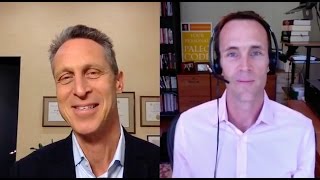
Dr. Mark Hyman talks with Chris Kresser about personalized nutrition and why a one-size-fits-all diet doesn't work. They discuss the paleo diet, cholesterol, statins, and the microbiome, grounded in research and clinical practice.
Hey everybody, it's Dr. Mark Hyman. Welcome to the Fat Summit and I'm here with my good friend and a wonderful man as well as an extraordinary investigative doctor and thinker in the field of nutrition who actually I've learned a lot from, Chris Kresser. And you know, you maybe know Chris because you probably get his blog I do. It's one of the few actually that I do subscribe to because I want to know what he's thinking and what he's saying because it's always something good. and if you haven't read the stuff that he's written, it's thoughtful, it's deep, it's investigative, it brings up issues that nobody else is talking about. And for me, it's just really enlightening because there's very few voices that are really inquiring in a very objective way about what the science says about food, nutrition, and health. And, you know, I'm just really excited to have you as part of the summit, Chris, because, you know, we know each other and we've, you know, had many conversations about this, and we're both seeking to find the truth. And this summit is really about getting the truth of what's going on. You wrote a fantastic book called the Paleo Code. It's in the personal Paleo Code, which is really an important word, like personal, because as we've had many conversations, there isn't one size fits all. It's not like a high fat diet works for everybody or a high carb diet works for everybody or high. It's like there's a personalized approach to this that we have to think about. And I really would love to sort of get into that with you. And we're going to cover a lot of ground in this conversation. so, so, so let's start with how you got started in understanding that, gee, maybe the Paleo concept was useful and why it had value. And tell us what you mean by Paleo, because, like, could that mean just eating, like, steak all day or, like, putting on a loincloth and going out and, like, hunting a buffalo? Like, what it, what is it?
Right?
I know.
You see my spear in the background there?
Yeah, I saw that.
You know, and then people are like.
Oh, I'm just like, all I'm doing is eating liver and brains and marrow bones. What is, like, what is all that?
All right, well first of all Mark thanks for having me on. It's always a pleasure to connect with you and I'm humbled by your introduction and it's just great to be here and have a chance to chat about these topics. So let's see, your first question about how I got onto the Paleo approach in general. I got really sick in my early 20s when I was doing some surfing in Indonesia. I was doing an around the world trip and I was living on a small island in Indonesia in a little village, surfing, and got the classic tropical illness, diarrhea, vomiting, delirium, fever, don't really remember much of the three days there that happened. It ended up being Giardia, Entamoeba histolytica, and amoebic dysentery, or Blastocystis hominis all together at the same time.
The whole family of parasites.
The whole family of parasites moved in, and it nearly killed me. It actually then was a long road even getting that diagnosis. It took many years to get the diagnosis. Then, as you know, some of the treatments for those parasites can be even worse than the parasites themselves. It took me about 10 years to rebuild my health. Along the way, just through a lot of experimentation on my own, I discovered I didn't even know it had a name at that time, but it was meat and vegetables, some starchy plants like sweet potatoes, nuts and seeds. I called it kind of a real food diet without any grains or legumes because I found that they irritated my gut. And then as I began to meet more people in the community and tell them what I was doing, they're like, you know there's a name for this, right? There's a whole community of people doing this. And I was introduced to Robb Wolf who's kind of one of the modern fathers of the modern paleo movement and we hit it off. But pretty soon, what I realized in my own journey is that no kind of canned approach that I had learned about, whether it was vegan or raw foods or macrobiotic, all of which I tried, by the way, and some for many years, none of those canned approaches worked for me. And I basically had to use myself as a kind of personal laboratory to figure out what did work. And that's why from the very beginning, I've just been really a big advocate of personalization both on my blog and also with the patients that I work with because you said it at the top, there really is no one size fits all approach and we have to, the more we learn about genetics and epigenetics and our relationship with our environment and the world around us, the more true that becomes in my opinion.
Yeah, so true. It's interesting, I remember we met at this event and I was sort of joking because I was on stage and on one side of me was like a sort of serious, like, meat paleo guy. And then I was like a friend. Both of them were really close friends of mine. The other one was like a vegan, and they're all doctors, and we're like sitting up there, and I'm like this.
Back and forth thinking. You were an excellent peace peacemaker moderator in that situation.
Wait a minute. If you're a paleo and you're a.
Vegan, I must be a vegan. Yeah, exactly. No, that's a great word. And I'm glad you, I mean, because the, the biggest misconception about paleo approach is like, is, is. You threw out a few of those, you know, it's all meat all the time. You know, we're living, we're sleeping out in the backyard in our loincloths and hunting all of our meals.
I mean, I think the best is a plant-based paleo diet, right? It's like, yeah, it's like, if you.
Look at it, I mean, you and I could go out to dinner, I'm sure our plates would look almost identical. You know, we'd have very, you know, and we did share meals together and our plates did look very similar. So a lot of people might be surprised to know that, like here's this paleo advocate and you. But the reality is most of the plate is vegetables, plant foods, and then there might be a little bit of meat or fish or poultry, not even necessarily with every meal.
Let's dig in here, okay? Because I kind of agree with you and I found for me it works best. But there's a whole group of colleagues who we know and respect and who are smart doctor scientists who are like, no, we should only be eating grains and beans. and meat is bad for you and fat is bad for you. Maybe not all fat now, maybe we can say, you can eat vegetable fat like olive oil avocados, although that's new. And then, although some people still are not saying that, but we should really be shunning animal foods and for many reasons. I mean, we can talk about the ecological reasons and the environmental reasons in a minute, but I think let's just talk about the health benefits because I'm a doctor first. And I'm curious about how do you answer that? Because it's a hard question.
Yeah, well, I try to answer it with the research and just look at what the research says. And of course, that's not always easy because there's often a lot of conflicting research. But I think it is possible to differentiate between good and bad research. And I mean, what we've seen just even in the last year is that the dietary guidelines no longer restrict cholesterol. The most recent published dietary guidelines no longer say that we should pay any attention at all to cholesterol in foods. And that's a remarkable reversal given that, you know, for the last 50 years we've been told that we shouldn't eat egg yolks or any other animal foods that have cholesterol because if we eat dietary cholesterol it will raise our serum cholesterol and everyone knows that high serum cholesterol is a risk factor for heart disease. But it turns out that this Dogma, which was everybody accepted, is not actually true. For the vast majority of people, dietary cholesterol has no relationship whatsoever to serum cholesterol. For the few people who do experience an increase in cholesterol when they eat it in their diet, in their blood, they get a simultaneous increase of both HDL, which is the good cholesterol, and LDL, which is the so-called bad cholesterol. That increase cancels each other out and it has no clinical significance in terms of heart disease risk. So I think that's a good lesson for all of us just to recognize that science is always evolving, that what we were absolutely sure was true 50 years ago, like we laugh at now. So it's almost certain that that's going to be true 50 years from now looking back. From what I've seen in all the most recent meta-analysis and reviews, the research that for so many years seemed to suggest that saturated fat and dietary cholesterol were the enemy is weak. It's weak enough that the dietary guidelines have already been changed for cholesterol.
Dr. Pompa:But they still came out and were like, no, no, no. Cholesterol, forget about it. Don't worry about it.
They're still talking about fat.
Yeah.
They're still saying saturated fat you should avoid, but you know, Mark, and many of people watching or listening this know that there have been several books published recently with a lot of research summarizing a lot of research showing that the relationship between saturated fat and heart disease is very tenuous. Many large reviews.
Nina Teicholz, you mean?
Yeah.
I just interviewed her. She's going to be on the summit, too.
Okay, cool. So, studies published in major, major journals, high impact factor journals showing that low carb diets, which are higher in saturated fat, not only don't have an adverse effect on heart disease risk factors, but actually improve heart disease risk factors. They increase HDL cholesterol, they decrease triglycerides, they decrease abdominal circumference and visceral obesity. They decrease blood pressure. They decrease C-reactive protein. So, there's all of these effects that are positive from these higher fat, lower carbohydrate diets.
That's the operative word, right? If you eat higher fat, if you have the bagel with the butter, that's not good, right?
Yeah, or the bun with the cheeseburger. Bun with the cheeseburger?
That's not good.
It's the bun. And the fries. And the big gulp. And the ice cream. After that.
The sugar that turns saturated fats into a problem, right?
That's right. Internationally, that's the context that they've been eating in, right? I mean, most people are eating donuts and burgers with buns and everything combined. I think that's—I'm really glad you brought that up because that's one of the big problems with a lot of the research, the observational research, is that they're just looking at saturated fat intake in the context of a standard American diet. They're not looking at how, you know, someone maybe like me wants to be in those foods. And, you know, in the few studies that we have that have done better comparisons, the relationship that's been proposed between saturated fat and heart disease is very weak. And as a matter of fact, there's an inverse relationship between saturated fat and stroke. so that people who eat more saturated fat, even have a lower incidence of stroke.
Yeah, the problem with all these studies we talked about is that there's population studies which don't look at cause and effect. They see patterns, but you can't really draw firm conclusions from that. And, the studies that are actually interventional studies where you actually give people the food and follow them for years and see what happens, those are far and few between and they're hard to do. One, if you just Tell people eat this way, good luck, they probably aren't going to. I mean, the Women's Health Initiative, they were like, Cut your fat from 38% to 20%. Well, they didn't do it. They got to 29%, which is still improvement, but like the critics will say, well, you know, of course it didn't work because they didn't go to 10% fat. So that's why it didn't work. And so, you know, we have a really mishmash of research, which leaves you and I and the rest of the humans out there who haven't read as much stuff as we, all confused. And, you know, so we kind of have to patch together the evidence from human studies, from animal studies, from small trials, from interventional trials, from population studies, from basic science, and come up with, like, a story that makes sense. And so that's what's so great about what you do. It's what I try to do. And it's like, it's just rare that that happens because, you know, you've got the scientists and also they actually are, you know, they actually just, like, focused on their little microcosm of their world and their work. which has allowed them to go deep, deep into these stories. But on the other hand, they don't have the 30,000-foot view, which is what's so great about what you do, Chris.
I actually have these three pillars that I kind of together form a lens that I look through. One is modern research, observational epidemiological research, and clinical research. Another is an ancestral perspective, which we can talk more about. And then the third is clinical experience. And I think when you look at it from all three of those perspectives, rather than just getting too myopic, myopically focused on one, you have a lot more balanced perspective. And the people that I respect, like you and others who are looking at it from all of those different perspectives instead of one, you know, I often encounter writers or people who are super dogmatic about one idea. and I say, well, you know, have you treated any patients? Have you, like, have you ever actually tried this in anyone other than yourself? And if the answer is no, I mean, to be honest, it's hard for me to really put a lot of faith in, in their opinion, you know?
I mean, I've seen, you know, I don't know, 15, 000, 20, 000 patients over 30 years.
And.
Yeah.
You know, over the years, I've tried low fat diets with them. I've tried higher fat, and I see even doing the same diets on different people with the same problem, there's different results. It's like, how does that work? Like one person, you give them 70% fat and their cholesterol bottoms out, right? It drops hundreds of points. Other people, you give them butter and their cholesterol goes right up.
It goes through the roof.
And I'm like, what's up with that? And then what are the clinical implications? And I think the message that you said really that I just want to come back to and have you discuss a little more is this concept of this ancestral diet and the concept of the cold context of our diet. It's not just one ingredient or one nutrient that matters. It's the entire context. And, yeah, if you eat saturated fat in the context of the standard American diet with 152 pounds of sugar and 146 pounds of flour, yeah, it's not good for you. And, if you eat if you look at the data on meat, you know, I looked at all the data. I mean, I wrote like 8,000 words on meat in my new book dissecting all the research. And it was like fascinating to look at because it was like, oh, well, you know, the meat eaters have way more heart attacks. So you should not eat meat. I'm like, oh, okay. Well, let's look at the study. Well, guess what? The ones who ate meat, well, they smoked more, they drank more, they ate more sugar, more sodas. they exercise less, they eat meat and vegetables, and they have more junk food. Well, guess what? That's all a recipe for heart attack. So is it the meat or is it the rest of the stuff? And they say, well, we control for variables. And I think it's impossible. You can't do that, really. It's, you know, there's a great book. It was published in the 50s called.
How to Lie with Statistics. One of my favorites. I love it.
Yeah.
There's no way you're going to control for those. And we're not controlling for for what we're not looking for. So microbiome, for example, what studies is controlling for the effects of these diets on the microbiome? None. And the more we know about that, the more we know how important it is. So totally agree.
So there's two big topics I want to dig in with you now. One is I want to talk about statins. And the second topic is I want to talk about fat and the microbiome because it's a tricky subject and I know you're into this. So I want to talk to you about that. So it's a tricky subject and I think we can together dissect it. Let's talk about statins because just to set the stage, the general consensus in the medical community is that statins are God's gift to doctors and to humankind. And that we should basically put it in the water and that we should get it cholesterol as low as possible and that they're extraordinarily effective and everybody should be on them, including 30 year olds and kids now and old ladies and old men. all of it.
So probably our pets eventually.
Yeah, our pets, right? So, you know, why stop with humans? They wanted to get an approval to sell them over the counter at McDonald's.
Yeah.
It's like an antidote to the burgers. I don't know. So how do you contextualize this mania about statins? You know, where are they showing real benefit? Where are the questions? And like, what is the harm risk of these drugs? And who actually should be taking them.
And who should Okay, yeah, so just contextually again, I think it's a really good example of the failure of conventional healthcare system, which as you well know, Mark, is not healthcare, it's disease management. And so that anecdote of wanting to give statins to people at McDonald's just sets a lot about the status of our healthcare system, right? I mean, maybe they shouldn't be there in the first place, and maybe that's why they need statins in the first place, or in theory. And we can of course discuss, yes, the realities of public health, and all of that, but focusing more on the statins and their effects. There was an analysis back in 2010 done by a doctor named David Newman. I'm not sure if you saw it, Mark. But they looked at two different populations, those with pre-existing heart disease, so this is secondary prevention. People have already had a heart attack. And then they looked at people who've never had any evidence of heart disease before, so this is primary prevention. And the people, and they did an analysis of what happens when those two groups take statins for five years. So in the people who had already had a heart attack, 96% who took statins for five years saw no benefit at all.
Who already had a heart attack.
Who already had a heart attack. That's the highest risk population, of course. 1.2%, which is 1 in 83, had their lifespan extended. meaning they were saved from a fatal heart attack by taking statins. But this was typically on the order of several months, not several years. 2.6% were helped by preventing a repeat heart attack. That's 1 in 39. But 10% were harmed by muscle damage. So you've got 96% with no benefit, 3.8% had some benefit, and 10% had muscle damage. And that's even in the highest risk population that statins are supposed to benefit from the most.
Right.
Not really that impressive in my opinion. I mean, certainly not as impressive as their sales statistics would lead you to believe.
Right, right.
Yeah.
I mean, is that the number needed to treat data that you're talking about?
Right? Yeah.
Yeah, but it's just an overall analysis of How many people, yeah, the number you would need to treat, but also specifically by category, what is the benefit that they're seeing? Lifespan, you know, because if a drug prevents a heart attack but increases your risk of cancer and doesn't extend your lifespan, that's just disease substitution. I mean, no—Dr.
So if you had a heart attack, Chris, would you take a statin?
No, I wouldn't.
Yeah, you probably won't get a heart attack, though.
Exactly. Because what this doesn't pay any attention to is what are the other possibilities? There was a study you probably saw on meditation in middle-aged African men who had already had a heart attack and showed that meditation reduced the risk of future heart attack by a greater margin than taking statins. I'm going to choose that intervention if I have a choice. The other population is the people who have no heart disease. This is the bigger pop. population of people. And this is the population that the drug companies are really targeting.
It's like 75 or more percent of the people who are actually recommended to take statins.
Exactly.
And who may not even have that many risk factors.
Exactly. Young women, for example, 35, 40-year-old women, no family history, total cholesterol maybe 210 or 220, which I would argue is actually probably normal for that age of a woman. 98% of these people who take statin for five years see no benefit at all. 1.6% are helped by preventing a heart attack. And then 10% were harmed by muscle damage and 1.5% were harmed by developing diabetes.
Right.
So you have an equal number that were harmed by developing diabetes that were helped by preventing a heart attack. Again, we're talking about disease substitution and what's one of the biggest risk factors for a heart attack? Diabetes. To me, statins make no sense in people who've not had a heart attack. Someone who's had a heart attack and has familial hypercholesterolemia, that might require more consideration. Then we get into more of an individual approach where you evaluate it on a case-by-case basis because that person may very well have a risk level if they have familial hypercholesterolemia, which means very, very high cholesterol and a strong family history, it may be that a statin makes sense in that case, but I don't think we can extend that to all of the other populations.
Yeah, it's tricky. I did a lot of research on this, too, and it was interesting. I'm a doctor. I see a lot of people taking statins, and I try to convince them about the risks and the benefits. I see a lot of people with muscle damage. I see a lot of people developing insulin resistance. I see issues with neurologic problems. I see all this stuff clinically. Sexual dysfunction. Yeah, sexual dysfunction. So, these are real things. It's not like, oh, take an aspirin. That's got even risks, right? Or let's say take vitamin C. Well, maybe we haven't proved that vitamin C is everything or does everything, but you could take it for 100 years.
Nothing bad is going to happen. That's right. Even at a high dose. Right. And, here's the thing too. I know you know this, but for the benefit of the listeners, The side effects and adverse effects of statins are certainly underreported. This has actually been studied by Dr. Beatrice Golomb at UC Berkeley here, right next to me. She's done some really interesting research showing the extent to which the side effects are underreported is hugely significant. We're not just talking about a small amount. We're talking about a large amount because let's imagine a middle-aged man who's typically a person who statins are prescribed for, goes into the doctor after having been prescribed statins and goes, oh, my muscles hurt or, you know, I'm, my libido is lower or I'm having some sexual dysfunction. The doctor's like, ah, you're just getting older, you know, just like we all have those symptoms and that's it, you know? And so the doctor's not going to report it because in the doctor's mind, here, he's read the pharmaceutical literature that says statins are safe and don't have side effects. So, yeah.
I mean, I'm a practicing physician, so I've seen so many people report this. And if it was a rare thing, it wouldn't be a weekly occurrence that I talk to people and finally have a reaction. It would be rare. And so, yeah, you're right. And also, these drugs can have benefit in some people, but actually we found that the benefit may not always be from the lowering of the cholesterol. It's from the anti-inflammatory effects, the antioxidant effects. that we didn't even know about before. And there's a lot of other ways to lower inflammation by eating the right diet. I think that's the key. And if people say, well, if you have a lot of risk factors, if you have high blood pressure, if you're overweight, if you don't exercise, if you smoke, yeah, then this benefit.
Well, guess what? Don't smoke, exercise, eat better, lose weight. It's like, yeah, it's the wrong conversation and the wrong focus. And of course, I don't need to tell you this. You've been beating this drum for Perhaps longer than anybody, but that's the biggest difference between functional and conventional medicine. Conventional medicine is, it's like if you have a rock in your shoe and your foot hurts, in conventional medicine, you just take Advil. In functional medicine, you take the shoe off and dump the rock out. I mean, that's the thing.
That's it. It's root cause. Functional medicine, that's what you do, Chris, which is so great. You have an incredible community of functional medicine doctors around the country and around the world, and you're one of the leading Doctors, you're training people, you're thinking about things, you're forcing people to change the way they think about health and disease. It's really awesome. And you know what? That's what medicine is becoming. Unless you actually find a functional medicine doctor and get this perspective, you're not going to learn about this different way of thinking is so critical. So, yeah, I mean, the status is a long conversation. I encourage people to read your, you've written a lot of sort of little e-books on this stuff that are great. It's a big section in my book on statins.
And I think that I tried to.
Create a dispassionate view, but I'm biased. I see what happens. I see that it's not all about cholesterol. And I think people are freaked out if their cholesterol is high. And I see that every day, people have bought the dogma that if your cholesterol is high, you're in trouble. So, I got to take medicine.
Here's one more thing I think we need to talk about, which is, and truly from a functional medicine approach, high cholesterol is a symptom. It's not a disease. Dr. Pompa:Right. Dr. Justin:And so if somebody comes into me and they have high cholesterol, I'm thinking, why is it high? Is it because they have thyroid hypofunction? We know that T3 is required to activate the LDL receptor and take LDL out of the circulation. So if you got someone with even subclinical hypothyroidism, they could have elevated cholesterol and just correcting that problem, that underlying problem, could lead to a reduction in their cholesterol. And in fact, back in the 70s and 80s, I think doctors were prescribing low doses of thyroid hormone for people with high cholesterol, even if they didn't have clinical hypothyroidism. Then we have a couple other things which are really interesting, is the connection between chronic infections and cholesterol. LDL particles play an antimicrobial role. When we have a chronic infection, especially a gut infection, and those endotoxins, like lipopolysaccharide, escape the gut and enter the bloodstream, the liver will make more LDL particles to deal with that situation. So you'll see an increase in LDL-P. I can't tell you how many patients, men, who've come into me, their main complaint is high cholesterol. They don't even have gut symptoms. I do gut testing. I find that they have a parasite or fungal overgrowth or something like this in a leaky gut. I fixed their gut and their LDLP goes from 2300 to 1300 with no statin, no dietary change, not even any supplements for high cholesterol. I have a checklist of six things that I look for when someone has high cholesterol, and we will systematically go through that list and address all of those before I even consider anything to lower their cholesterol.
Dr. Pompa:Right. Well, it's interesting. The other thing that I was just, I was reading a book on a vacation once. It was by Linus Pauling. It was like a biochemistry book and.
It was like, that's like you and me. That's what we read on our vacation.
I admit I'm kind of a nerd, but it makes me happy. I just want to know how things work. I understand. How do things work? That's what I want to know. And it's like I keep asking the question, why, why, why? And so I'm reading this and I'm like, It was about the biochemistry of fructose metabolism and how it affected things in the liver. And I'm like, it was like the light bulb went off. And I was like, it makes acetyl-CoA, which goes into production of triglycerides, it gets and it creates more lipids. So it's like this whole concept of de novo lipogenesis, which means our liver actually is induced to produce abnormal cholesterol from eating sugar. not fat. And that was like, what? I thought cholesterol came from eating butter and eggs and fat. And it was a big awakening for me. And I was like, holy cow, this is just basic biochemistry. It's what I learned in medical school but probably forgot. And the rest of the medical community is totally ignoring. And this isn't some quacky idea. This is just basic biochemistry. So the fascinating thing is when you look at the biochemistry of fructose and sugar, When you eat it, it actually induces what we call atherogenic dyslipidemia. So it may not be that you actually have high cholesterol even, but you could have really nasty cholesterol that actually is causing heart attacks, but it's, you know, you can have a cholesterol of 150, but you could have like 2000 small particles. They could all be small. You could have very slow HDL, high triglycerides, and all of that is actually what's driving heart disease. and that's a cholesterol pattern that is driven by eating sugar and refined carbs and insulin resistance and actually eating fat fixes it. So you get a fatty liver. One of the fascinating things I found when I was researching my book that the way to reverse a fatty liver is eating saturated fat. It's like eating coconut oil and like MCT oil. And they literally can reverse fatty liver by giving people tons of fat. And you think, how do we get foie gras, right? Which is fatty goose or duck liver that you eat at restaurants, right? Guess what? They force feed the ducks sugar, they feed them corn, and they feed them carbs, and then they get fatty liver. So we know this, but somehow it's not in the radar for doctors.
It's so important too because that pattern that you mentioned where the total cholesterol is normal or even low normal is just missed because that person will go into the doctor and get a big pat on the back as they're leaving the office. because most doctors don't know, unfortunately, to test for LDL particle number and the number of small or more atherogenic particles or lipoprotein little a and those markers, which are arguably much, much more important than total cholesterol.
So, to take home on that is you guys out there listening, there's a lab test that now is done by LabCorp in Quest called NMR, or it's like nuclear magnetic resonance.
Yeah.
And it's actually looking at your cholesterol under an MRI machine, like a mini MRI machine, and it tells you so much that you would never know by looking at a regular cholesterol test. And if you look at a regular cholesterol test, it's like a 20th century test. It's outdated. It shouldn't be done anymore. Everybody should have this.
It's not that expensive.
You can ask. And it's covered by insurance in most cases. So, like when you go to the doctor, say, Doctor, can I have that NMR? lipid test because I want that and I don't want the regular one. And, I want you to tell me what it means. And, if you don't know what it means, go look it up and help me. We're going to have on this.
Or, download my ebook on the Diet Heart Hypothesis and I tell you a little bit about what it means there.
Yeah, it's so important. And, I think the way to fix that actually is eating more fat. And, that's what I do for my patients who have this bad kind of cholesterol. I give them a lot of fat and really low sugar and refined carbs and lots of vegetables and they do amazing.
So, yeah. So, you take that one person who that's a lot of Americans, right? That body type, overweight with either borderline high blood sugar or frankly high blood sugar, insulin leptin resistance, that's the most common problem. But then there's another patient who I'm sure you have a lot of, Mark, I have more of these because so many people who come to me are already pretty healthy fit Paleo type of dieters. I don't see a ton of overweight people in my practice, which is unusual. But they started this diet with a lot of—California. Yeah, that's right. It's like selection bias. So, I get the person who switched to Paleo type of diet with more fat and their cholesterol went through the roof. In that case, I don't necessarily tell that person to eat more fat because eating more fat may actually take them in the wrong direction if their total cholesterol is 450. I think we can agree that there's been too much focus on high total cholesterol, but that doesn't mean that I'm going to see a total cholesterol of 450 and just shrug it off. There's obviously something that's not functioning well in that situation, whether it's genetic or environmental lifestyle, I want to address it.
Yeah.
One of the interesting studies that came across when I was researching my book was this survey of all these hospitals around the country where people had heart attacks. And, they measured the cholesterols of people who came in with a heart attack. And, they think they looked at like 500,000 admissions. It was like 60% of all the heart attacks in America or some crazy number like that. And, they found that 70% of them had normal cholesterol. And a huge chunk of them had even optimal LDLs under 100 or even under 70. And what they found was fascinating was that almost all of them, like everything except about 10% of them, had HDLs that were low.
Yeah. Right.
And triglycerides that were high. So, that pattern of high triglycerides and low HDL or good cholesterol, that's that bad cholesterol pattern, and you can have a totally normal LDL and a totally normal total cholesterol. That's kind of a lot of totallys in there, but anyway.
Are you sure you're not from California?
I might be totally from California. So, I was sort of stunned when I read that. I'm like, wow, that is really extraordinary. It's just ignored.
Yeah.
So, here's another interesting statistic. 90% of people with high cholesterol that have a heart attack have at least one other major risk factor for heart attack, like high blood pressure. So even when there's high cholesterol, how do we know it's not just a bystander? Just something that happened to be present. Because in nine out of 10 cases, someone else has a major risk factor like high blood pressure, which could very well be the precipitating event for the heart attack, not the high cholesterol. So we have to be careful not to confuse, as you said before, correlation with causation. I mean, that's like research 101. That's the first thing we learn in our research methodology classes, but it's amazing how often that is overlooked in literature.
Yeah, it's the time and they go for the headlines, not reading between the lines. It's kind of a problem. So I think that's the thing about you and I, we like to read between the lines and see what's actually going on. So I want to now dig into this next topic, which is like a whole nother can of worms or maybe a can of bugs, the microbiome, right? And, also, I want to talk about the effect of fat on that because it's kind of some questions about that and the effect of what you've talked about a lot, which is resistant starch. And, how do you eat a higher fat and even a higher protein diet and not mess up your gut bugs. Because I've seen literature where if you eat a lot of meat and fat, it changes your flora and it can actually create an adverse profile of bacteria that can increase inflammation, increase diabetes. You know, there's the work from Stan Hazen at Cleveland Clinic about TMAO and carnitine, and that gets converted to this compound that's inflammatory and causes heart attacks. And so I think people are scared about, I'm confused, and I just. You know, it took a long time for me to like figure this out and I used a lot of your work to help me think through it. So can you kind of help us as listeners think about the role of the microbiome and all that?
Sure.
So, you know, that's about like a two hour talk.
Yeah, I was gonna say, where to begin? So, I have a lot of problems. I mean, I have obviously great respect for Dr. Hazen and then so the other researchers that were on the paper, but I have definitely some issues with the TMAO research and the connection between TMAO and heart disease and the idea that eating meat and fat is the primary contributor to elevated TMAO. Because one of the things that they didn't address in their paper, and I still have yet to see them address, is that the biggest dietary source of TMAO is fish by far. We're talking about orders of magnitude higher than meat. If that's the case, then why aren't we seeing studies where people are keeling over and dying from excessive fish intake?
Actually, the heart disease, Chris, all the data show that fish is protective and we should all be eating fish.
Absolutely the opposite. And, you know, there's been a big focus on fish oil and some studies lately that have suggested that fish oil may not be as beneficial for heart disease prevention as we thought. But the research has been clear all along about whole fish consumption and seafood and the connection between heart disease, something like a 17% reduction in total mortality, overall risk of death from eating seafood, which is far greater than just about any other dietary factor that's ever been studied. So I think there's a lot more to the TMAO story. It gets pretty complex because there's some complex biochemistry involved, but if you search for my name and TMAO, There's a couple of articles that I've written on it if you're interested in it. But the short version would be, I don't find the evidence supporting the link between meat and fat consumption and a gut microbiome that is a bad microbiome or a microbiome that's inflammatory, very convincing. I think we're seeing another situation here where if you look at people If you take one person, let's say they're eating a standard American diet, they're eating McDonald's, lots of fried foods and processed and refined foods and sugar and refined carbs plus meat and fat, their microbiome is going to be a wreck. Is it because of the meat and fat or is it because they're eating all of these A-cellular carbohydrates, which we can come back to in a second? Highly processed and refined carbohydrates that have a ton of sugar accessible and they feed the bad bacteria in the upper gut and that is what creates the microbiome that is disadvantageous, not the meat that those people are eating.
Yeah, yeah.
So if you, you know, versus someone who's eating meat and pasture raised meat or wild caught fish and then, you know, a lot of plant foods, non-starchy vegetables and some starchy plants and some nuts and seeds. and even legumes that are rich in resistant starch, that person's gut microbiome is going to look very good. And I know anecdotally from talking with Jeff Leach from the Human Gut Project, he can kind of identify a paleo type of diet on the DNA analysis of the microbiome that they do.
Yeah.
And it looks very similar to what you see in hunter-gathers or people who have eaten these traditional diets who have the sort of Shangri-La gut microbiome that he's actually over there trying to preserve right now because that's the last normal human. Yeah, it's the last normal human microbiome.
Yeah, it's amazing. So, I want to come back to this sort of study on Dan Hayes in it because I think, you know, I'm at Cleveland Clinic. He's an amazing scientist, but I did see problems with it. Like, what they did was fascinating. They took people who, you know, regular Americans and, like, meat eaters and then, like, they did the effect of the meat and creating this toxic compound. And then they took, like, a vegan and they found, oh, the vegans, oh, they're, they're bacteria. They didn't have that. But then, like, they convinced a vegan to eat a steak. I know. I wondered how they did that. That's impressive. Okay. That's impressive. Anyway. I think they were like, what happened? And what happened was nothing happened. The steak didn't bother them and it didn't create this toxic chemical. So, the take home wasn't don't eat steak, is how do you have a microbiome that's more like a plant-based person's microbiome that has good bugs in it? And I think that's why I joke about the Pegan diet because it's really mostly plants with, you know, by volume, right? Not by calories, but by volume, your plate should be like 75% plant foods and then 25% protein and the rest is fats. And I put olive oil and other fats on my vegetables. So it's really understanding that if you actually grow an inner garden that's healthy, you have much more resilience. So that's really the key here. And I want you to talk a little bit about how do you grow a healthy inner garden in the context of a diet that has mean fat because that's the concern.
Yeah.
The Sonnenbergs, I believe, Justin Sonnenberg from Stanford, great microbiologist, wrote a book about the microbiome.
Good guy.
Yeah.
I mean, not you, but I know you read it.
Yeah.
Really good book.
Read it. It's awesome. I got a quote for it, but that's not why you should read it. It's a good book.
Yeah.
He's great. I think he coined the term microbiota accessible carbohydrates. This is what we need to be eating. These are carbohydrates that are not digested by humans, by us. we don't break them down into glucose and fructose and absorb those molecules into our bloodstream. They stay undigested in our gut all the way to the colon where most of the beneficial and harmful bacteria that we have resides. The bacteria metabolize these carbohydrates and they produce things like short-chain fatty acids like butyrate, which we know plays a potent role as an immunoregulator. It reduces inflammation, it promotes T regulatory cell differentiation, tons and tons of benefits. The way I like to explain it in layperson's terms to my patients is every bite of food that you put in your mouth, you need to be thinking about how it feeds you and how it feeds your gut bacteria. Because you have to do both. These microbiome accessible carbohydrates fall into three categories, basically: soluble fibers, which are found in a lot of plant foods. Fruits and vegetables, apples for example, and pears are really rich in soluble fibers. Bananas have soluble fiber. Berries have some soluble fiber, a lot of insoluble fiber too. Banana chip diet, I don't know. Yeah, carrots, squash, zucchini, all fresh vegetables and fruits. And then we've got non-starch polysaccharides. So these are long chain carbohydrates that are not starch. And these are things that you like inulin or fructooligosaccharides, and you find them in things like onions or garlic or Jerusalem artichokes or leeks. Some people might be familiar with the FODMAP approach. These are, a lot of the FODMAPs are non-starch polysaccharides. So if you look at a list of FODMAPs, which a lot of people are busy avoiding, For good reason. Because their guts are really screwed up. The FODMAPs are actually a lot of foods that will feed your beneficial gut bacteria. As a side note, there's been a few studies that have shown that a long-term low FODMAP diet—and I think this is going to get to one of your questions—has an adverse effect on the gut flora. It's one reason why a long-term high-fat diet I don't think is necessarily a good idea for people who are concerned about their gut. the gut, then there's a whole other category. And then eat those FODMAPs. Yeah. So that's the second category.
And the third category you mentioned was resistance. A little bit goes along with the idea that take an aspirin if you.
Have a pebble in your shoe, right? Exactly. Yeah. Just get on the low FODMAP diet, completely eliminate these foods for the rest of your life. Not only is it a huge bummer, I mean, try eating at a restaurant if you can't eat onions or garlic. It's really difficult. But yeah, so the third category is resistance starch. And this is a type of insoluble fiber that is actually fermentable by the gut bacteria. Some types of insoluble fiber are not very fermentable. They just, they're bulking agents. You know, they add bulk to the stool, but they don't, they're not fermented.
Aggressively by the bacteria.
Like, you know, bran, right? Like bran.
Yeah.
And resistant starch, you know, it's interesting. Resistant starch is harder to find in the diet than these other categories that I mentioned. Probably was easier in our ancestors diets.
Because they had, they ate a broader diversity of plant foods. Starches are resistant to digestion.
Exactly. By us.
But it's digested by the bacteria.
Our bacteria, particularly bifidobacteria, which is one of the major classes of good bacteria. Love it. Two of the easiest sources of dietary sources of resistant starch are legumes like lentils and potatoes. Just the old humble potato. The thing about potatoes is if you cook them and then cool them, the type of starch changes to resistant starch. And then, so like a summer potato salad, for example, it's not going to spike anyone's blood sugar because it's mostly resistant starch, which you can't convert into glucose, and you're going to be feeding your beneficial gut bacteria in the process.
Cold potatoes, what we're talking about.
Cold potatoes. And the more you warm them up and cool them, the more resistant starch forms.
Right.
So, you can do that several times. You can do it with lentils and their legumes are generally a really good source of resistant starch.
Rice, where you cook the rice. Yeah, white rice.
And then you cool it and then you cool it.
So, you don't eat it and then you put it in the fridge overnight, then you eat it, you don't heat.
It up too much. It's also more resistant. You got resistant starch. Exactly. And, I've confirmed this with patients with blood sugar issues with a glucometer. They can tolerate potatoes that have been cooked and cooled, whereas if they have a potato that hasn't been, it'll spike up their blood sugar. The other source would be green plantains, which are available in a lot of Latin food markets. What you can do is slice them up really thin and put them in a food dehydrator, and you make green plantain chips. You can take those around as a snack. They're wonderful.
Bob's Red Mill's potato starch. That's, that's what I've been using. And it's like, you know, it tastes a little bit like potatoes. It's not a bad taste. And you mix it in water and you drink it. And that really also helps, you know, I started using it just because I kind of like to experiment with stuff. And I found it really helps.
And also helps, like, you have a deeper sleep.
Right.
Yeah.
That's an interesting thing about resistant starch. You see a lot of discussion about that, and I, I think that's because of gut brain connection. You know, we know that, that our gut microbiota have a potent effect on neurotransmitter production and regulation. And, you know, there's even an entire theory about what causes depression now, the inflammatory cytokine model of depression, which holds that it's mostly an inflammatory condition and that inflammation is mostly coming from the gut. So, it's not a surprise to see that relationship.
No, and it's interesting about the resistant starch because when you think about like the thing, Dr. Hyman, why are you telling me these potatoes starch? Like, I think it was like the no Carb sugar guy.
What are you doing?
And I'm like, well, you know, it's a little more complicated and it doesn't actually get digested. In fact, when you look at the literature, it actually improves insulin sensitivity.
So like actually versus diabetes, which is kind of and lowers cholesterol. And, you know, I've had seen patients drop from fasting blood sugar in the pre-diabetic range to totally normal fasting blood sugar from just resistant starch. Yeah. One thing I do want to mention is in my practice at least, so the recommendation is often two to four tablespoons a day for resistant starch, but it's important for people, anyone who's had any history of gut problems to start slowly.
You're going to have explosions, right?
Yeah, start slowly and build up slowly. I had a patient who didn't get that memo who called me and told me that she was literally doubled up in pain. It was actually not funny for a week. from taking four tablespoons of resistant starch in the first day. Yeah, so be careful with that. Go very slowly, but it will build.
Up to a couple of tablespoons a day.
And I mean, that's also, I think the great thing about potato starch is it's easy. Legumes and so you get some additional benefits from those foods.
So.
The other thing that I just want to bring up which you're talking about poop and the gut and all that is as I began to research, I was like, oh, a lot of the studies where they tried to sort of induce inflammation in the gut, they gave the rats super high-fat diets and they got worse and it causes metabolic syndrome. And, I'm like, what's going on there? And, I have some thoughts about it. I don't want to hear your take on that? Because you see that in literature, like the metabolic endotoxemia study where they gave these rats high-fat diets and then they end up having inflammation and leaky gut and insulin resistance and diabetes and how.
Do you kind of make sense of that?
Yeah.
At this point, I'm not entirely sure how to make sense of that, to be honest. It is something that—I'll tell you, I.
Won'T put you on the spot. I'll tell you what I found out. Okay. Tell me what you think about this. When I began to look at it, it's like it depends on the kind of fat you eat. So when they did the studies, they were using corn oil and soybean oil and all these inflammatory Omega-6 oils, and it really altered the gut microbiome in a bad way. But when they actually gave them Omega-3 fats and good saturated fats, that didn't actually happen. It was fascinating to see that. There's not a ton of literature on it, but I was dug around, I found some interesting studies which sort of qualified it.
It's not like all fat will do that. No, I agree. I've seen those, and I think that's right. I have seen a couple studies where they were even using higher quality fats and they experienced that effect. The most obvious thing is, are we sure that rat digestion and gastrointestinal physiology is similar enough to humans that we can just extrapolate that from rats to humans? I'm not that sure about it. That's number one. Number two, I totally agree. This goes back to the distinction between the quality of macronutrients versus the quantity. We've been way too reductionist about this for too long where we just see a fat is a fat, a carb is a carb, protein is a protein, which is absurd. You don't need a degree in science to realize that eating an avocado is going to have a different effect on your body than completely rancid fired, you know, industrially processed seed oil like corn oil or soybean oil or cottonseed oil. By the same token, a sweet potato is not going to affect you in the same way as a donut.
Yeah.
So the third thing is, quite honestly, I do have some patients who have gut issues that don't respond very well to a super high fat diet. and this is one of the situations where I might recommend a more moderate fat, moderate carbohydrate diet. I myself, I don't eat a super high fat diet. I'm not afraid of fat, definitely not, and I eat a fair amount of fat. But I would say, if you look at my plate, pretty much every meal that I eat, I'll have non-starchy vegetables, some little bit of protein, and.
Fat.
That naturally occurs there. And I'll have some kind of starchy plant like a sweet potato or maybe yuca or taro or plantains or something like that. It's pretty balanced. It's pretty kind of ho-hum, nothing special, no extreme. I'm not counting my macronutrients. I'm just eating real food.
It's like if you focus on quality foods within each category, then you don't have to worry about counting calories, counting carbs, counting fat grams, and you naturally eat the right diet. Now, if 80% of your plate was sweet potatoes, that could be a problem.
It's pretty hard to do that, though, for most people. The thing that's interesting is I think that's why when you look at the studies on the Paleo diet, why it's so effective, is that It is kind of like just eat these foods, don't count anything, don't worry about the percentage of this or the percentage of that, just eat until you're satiated with this list of foods. It turns out that paleo is more satiating per calorie than Mediterranean or low-fat diets. People get full faster, they feel satiated, they eat less without even trying, and that's the Shangri-La for weight loss. Eat less without trying and not be hungry.
Yeah, you don't need to take Fenfen and get like heart palpitations. It's a pressure appetite.
Exactly.
I want to sort of like kind of end with this concept of.
This.
Sort of macro nutrient balance issue. Because I think if we sort of focus on the composition of our diet as opposed to the calories, you're right, we don't have to focus on it. So how would you create that perfect meal? You've kind of listed it, right?
It's a little protein.
Like greens, like non-starchy veggies, some starchy veggies, right?
Yeah. That's for me, that's what works really well. Like a little bit of protein, a lot of actually more non-starchy vegetables and then a serving of some kind of starchy plant because I'm active. Back there you can see my treadmill desk. So even when I'm working, I'm often walking and I'm pretty lean. I just have an active metabolism. I found that I just need more carbohydrates. then I tried a low-carb diet for a long time. It didn't work well for me. So for me, that's what it looks like. But I think the takeaway here when you're talking about macronutrient ratios is that for some of my patients, yeah, they absolutely do better on a low-carb diet. They just feel better that way, and it leads to more mental clarity. It manages their weight, and it just works for them. Then you've got someone over here, I have some patients who are high-level professional athletes, and they do highly glycolytic types of training that just burn through glucose.
Like.
There'S nothing else. They actually do better with 50% of their calorie intake as carbohydrates. But we're not talking about gels and all of the typical stuff that athletes use. They're eating higher quality nutrient-dense whole food plant-based carbohydrate sources.
But it's true also that there's guys like Jeff Follick and Steve Finney who've done work on the art of low carbohydrate.
Yeah. And, there's Peter Attia who's written about this. He's another low-carb. Ben Greenfield, they're all ketogenic guys who do well on very low-carb diet.
Absolutely. There's a whole range of human beings to deal with things. And you have to find out what's right for you.
That's really the, that's, I think, like if I get to the end of my life and people say, oh, that Chris Kresser guy, he said you have to do what's right for you and there's no one size fits all approach, I think I will accomplish my mission.
Awesome, Chris. Well, I want to ask one more question, which I think, you know, it's sort of always in the back of our minds, which is, what about all those guys like who are vegans and seem healthy or guys like Rich Roll who's like runs five Iron Mans in like seven days on like that guy's amazing.
And I like him a lot. He's such a nice guy.
You know, you've got like the Forks Over Knives stories where people look into the pounds and they reverse all sorts of diseases and guys like Neil Barnard who published research showing that all this works. And so how do you contextualize that?
Because that's part of the story we're all trying to figure out.
Yeah.
So I mean, work Dr. Ornish's studies, it's difficult to isolate what actually works when you're combining a lot of interventions. It's awesome if you get someone and you move them from standard American diet to a vegan diet, let's say. Okay, well, you're eliminating generally processed and refined foods, flour, sugar, crappy meat, meat that's cooked in inflammatory oils in restaurants. You're eliminating all the foods that we know are pro-inflammatory and cause problems. So are they improving their health?
It's not actually what they're eating, it's maybe what they're not eating.
Exactly. That's my point. Are you improving their health because they're eating vegan or because they're not eating all the crap that they were eating before? So that's one answer to the question. And something that works in the short term may not work in the long term. So there's such a thing as a therapeutic intervention. that has a dramatic impact that over time becomes problematic. Many years ago, I got into macrobiotics, and I was actually training with the macrobiotic chef, and we would cook for people who were really sick. We would often see this phenomenon where people would start the macrobiotic diet from their standard American diet. They would get better. They would feel a lot better. Then months would pass. They would start to develop dark circles under their eyes, really pasty complexion. You're nodding your head. Yeah. And then what's happened is that what worked initially stops working over time because they start to develop nutrient deficiencies and things like that.
I met Michio Kushi when he was alive and he's not looking healthy.
Not looking good. So, and then with Richard Roll and people like that, the first thing is there are always outliers. I mean, there are always people that I think just do their genetics. and other factors that we may not even fully understand would perform at an extremely high level almost no matter what they do. And we all know people like this too. People who eat like crap, they're just anomalies. So there is that. But the second thing is that for a vegetarian or a vegan diet, the key thing that determines how someone is going to do on that diet is how well they do converting precursors into more active forms of nutrients. Let's take beta-carotene. Beta-carotene doesn't really play an important role in the body, but it is a precursor to retinol, which is the active form of vitamin A, which plays an incredibly important role in the body. We can all convert some beta-carotene to retinol. Actually, there's a small percentage of people that can't make that conversion at all. Those are the people when they do a juice fast, they turn orange. because of all the carrot juice.
I'd be that guy because I was like, why are my palms orange?
Why are my palms orange? Yeah, so that might be why you feel better eating some animal products that have preformed retinal in them. So someone who can't make those convert. So then you have alpha-linolenic acid, which gets converted into EPA and DHA, which are the important flax, walnut. You have less than 3% One half of 1% actually gets converted into DHA, and that's in a healthy person. You take a person who's deficient in the nutrients that are required for those enzymatic conversions. They're not going to make that well. You've got vitamin K1 that needs to be converted into vitamin K2. Some people don't do that well. I would assume that Rich is awesome at those conversions.
Maybe he's taking vitamins.
Maybe he's taking vitamins, too. We don't know that. I'm willing to posit that there are people out there that do those conversions really well. Those are the people who, when they switch to a vegan or vegetarian diet, they do well for a longer period of time versus someone who switches to a vegetarian or vegan diet and within three months they're a total basket case. We've all seen these people.
There's low-fat and high-fat vegans, and I think they're quite different.
Absolutely.
There's some new work by Dr. Dr. Jenkins from the University of Toronto looking at high-fat vegan diets actually having better impact on weight and health and even lipid levels, creating better lipid profiles by eating avocados and olive oil and nuts and all the stuff that people are afraid of when they eat low-fat diets, right?
Yeah.
I mean, at the end of the day, human beings, when we're healthy, we're pretty adaptable. We have examples of people like the Tukic Santa and Papua New Guinea who ate 97% of their calories as carbohydrates. pretty much they ate sweet potatoes with the few bugs that happened to be on the sweet potato. That was their diet. They were lean. They didn't have a high blood sugar, obesity, any metabolic or health problems, no evidence of heart disease at all. Then you've got on the other end of the spectrum people like the Masai in Africa and Inuit in northern part of the world who eat very high fat diets and also seem not to have those diseases. But the difference is they weren't eating cheese doodles and drinking Big Gulps and sitting on their butt watching TV for eight hours a day.
It's all the overall quality that matters.
It's the quality that matters. It's eating real food. And of course, there are things we haven't even talked about like physical activity and sleep and stress management and other ways that our lifestyle today differs from the ancestral norm for human beings that I think are equally significant. We'll have to cover that on a different subject.
Chris, we could talk for hours. I know we could talk for hours.
We have.
So is there anything you're excited about coming up? Anything you want to share with the audience about what you're doing?
Yeah, sure. I just launched the Kresser Institute, which is an organization that I am really excited about. I established to train the next generation of practitioners who are interested in combining functional medicine with an ancestral perspective. so that training is starting next year. We've already finished enrolling the first cohort and got 180 people from around the world, doctors and naturopaths and people of all different disciplines. And I know you know this, Mark, with your role on the IFM, I just feel like, you know, my practice has been closed to new patients for the better part of the last four years. Yeah, there's only so much time we have and I think the biggest contribution I can make is to help get other people out there who are able to practice this kind of medicine. So important. Yeah, we have 1,200 people on our.
Waiting list to clean clinic. We are hiring doctors and nutritionists like crazy. We can't keep up with the demand. We have our IFM courses, the Institute for Functional Medicine. They're oversold. We have to add up. We used to have like 20 people in a class once a year. Now we have 400 people five times a year. And we can only do that because we need preceptors and proctors and we have to have the staff to come do it. So it's like we actually could do more and all the modules are sold out. I mean, I can't even get my friends in. We're like, can you get me into the course? I'm like, I know I'm the chairman, but like, I can't. Like, we're still.
Yeah.
Yeah. I mean, it's, in a way, it's a good problem to have, but it's, you know, it's the work you're doing at Cleveland Clinic. so grateful because a lot of people say, oh, well, the only way this is going to change is if we get this to be more legitimized. What you're doing in the Cleveland Clinic is such a huge step in that direction so that we can start getting insurance companies and a conventional model to pay attention. Eventually, they're going to figure out if they can prevent diabetes from ever happening in someone.
It's happening. Last week, I was in Minneapolis and the United Health Group is there and they asked me to come and they spent three hours with me basically picking my brain and wanting to collaborate to figure out how to scale functional medicine because they saw it as one of the greatest innovations in the future.
I'm like, holy cow.
That's an $80 billion insurance company. And it's not like I'm fighting down the door saying, Hey, listen to me. This is the future. They're like, Where are you? Come help. Can you work with us?
Can you quit your job?
No.
But it's a no-brainer, right? I mean, if people really understand it, there's no one that's not going to get behind this. So it's really exciting and thank you so much for all the work you've done and you've been such an inspiration for me and all of my patients and readers and I'm just grateful to be a part of it in some small way.
We're all doing our part. Thank you so much. I would check out Chris's website, chriscrester.com, I was serious. Like, I am on his blog list and I don't get a lot of junk mail because I don't like it, but this is the one I read and also all the little e-books and his book and, you know, he's just a great story. He's got podcasts. Like, it's just deep. It's like if you're a nerd like us, then, you know, if you, that's the place to go. Like, you know, it's not light, it's like deep dive and I love it. So thank you, Christopher, for contributing that to all of us and have an awesome day and And let's just keep on going with the conversation.
I'm right with you, Mark. Thank you.
More from AI




This Is Why 99% of Skin Conditions Don't Heal — And What Dermatologists Won't Tell You






Why you need to start strength training today #strengthtraining #healthyaging #fitness
